BRISTOL, England (AP) — Ireland has finally won in the Women's Twenty20 World Cup.
The Irish ended a 0-21 losing streak across five tournaments going back 12 years when they defeated the West Indies by six wickets with 11 balls remaining on Saturday.
The West Indies would have qualified for the semifinals if it had won. Instead, the defeat gave a lifeline to defending champion New Zealand.
The Kiwis will progress if they beat England later Saturday. If semifinal-bound England wins, the West Indies go on instead.
Ireland go home no longer burdened by the streak and adding to an historic weekend in which the men defeated India for the first time in a T20 in Belfast.
The women limited the West Indies to 128-7 and Orla Prendergast led the chase with a 44-ball 63. She was caught 21 runs from victory but Rebecca Stokell and Louise Little finished it off with Little hitting the winning boundary over mid-on for 129-4.
“(Winning) just means so much,” Prendergast said. “We have had the belief throughout but it had not come together just yet. Just so much relief to have that win and so much happiness.”
The West Indies struggled to get much going on a sticky pitch, especially against Irish bowlers Cara Murray and Aimee Maguire.
Captain Hayley Matthews and Deandra Dottin hit a slow 22 and 21 and Chinelle Henry added a quickfire unbeaten 27 at the end. Irish misfields gave the West Indies at least three boundaries.
Prendergast joined opener Amy Hunter in the fifth over and passed her score by the ninth. Hunter fed Prendergast the strike and they added 62 together.
Prendergast reached her second fifty of this World Cup off 36 balls and was given out on 56 but overturned that on review. She was caught at deep square leg in the 16th over but had done enough.
In a matchup of winless teams, Pakistan beat the Netherlands by 37 runs.
The Dutch, on debut, targeted this one for a win and did well to restrict Pakistan to 126-6. Only opener Gull Feroza prevented a much lower score. Dropped on 10, Feroza used the life brilliantly to carry her bat to her first T20 World Cup fifty and an unbeaten 63 off 52 balls including nine boundaries.
She featured in a 79-run stand with Ayesha Zafar, who scored 32.
Iris Zwilling (2-19), Heather Siegers (1-28) and Hannah Landheer (1-19) led the Dutch bowling but Pakistan was even better to dismiss the Netherlands for 89 in 18 overs.
Heather Siegers gave the Dutch chase a great launch but after the powerplay the brakes were applied by Nashra Sandhu, Tuba Hassan and Zafar, who earned a T20 career-best 3-13.
With the result secure, Pakistan captain Fatima Sana took three wickets — all bowled — in the 18th and last over, including Dutch top-scorer and captain Babette de Leede on 30.
AP cricket: https://apnews.com/hub/cricket

Pakistan's Fatima Sana celebrates bowling out Netherlands' Silver Siegers, not pictured, during the Women's T20 World Cup cricket match between Pakistan and the Netherlands, at Bristol County Ground, in Bristol, England, Saturday June 27, 2026. (David Davies/PA via AP)

Ireland's Orla Prendergast, left, scores four runs to reach a half century during the Women's T20 World Cup cricket match between West Indies and Ireland, at Bristol County Ground, in Bristol, England, Saturday June 27, 2026. (David Davies/PA via AP)

Ireland's Amy Hunter, center, celebrates with team-mates after catching out West Indies' Shemaine Campbelle, right, during the Women's T20 World Cup cricket match between West Indies and Ireland, at Bristol County Ground, in Bristol, England, Saturday June 27, 2026. (David Davies/PA via AP)
A fast-moving wildfire in Utah raced across the landscape overnight, fed by heat and dry wind and forcing more communities to evacuate, officials said Saturday.
Air tankers and helicopters were grounded Friday as winds picked up on the Cottonwood Fire, the largest blaze currently burning in the U.S. Gusts were clocked at 45 miles per hour (72 kph) and humidity levels were in the single digits, leaving crews with few options for slowing the flames, especially as they raced through the treetops.
The U.S. Forest Service said in a statement on Facebook that weather conditions are expected to slightly improve, but not by much.
“Weather conditions are slightly better for fire behavior today, but extreme fire behavior may occur in the afternoon as temperatures and wind speeds increase,” the U.S. Forest Service said Saturday in a statement on Facebook.
No injuries or deaths have been reported, said Jaclynn Swope, a spokesperson for the response team.
The National Weather Service in March said Salt Lake City, Utah's capital, had the warmest winter on record with an average temperature of 40.7 degrees Fahrenheit (4.8 Celsius), nearly 8 degrees above normal. Many other parts of Utah had warmer-than-usual winter.
Burning in a sparsely populated area of southern Utah, the Cottonwood Fire ballooned Saturday to more than 144 square miles (373 square kilometers).
One of several large wildfires burning in Utah, it severely damaged the Eagle Point ski resort in Beaver County and forced campground closures in Fishlake National Forest.
In the community of Marysvale, the smoke blocked out the sun Friday as ash rained down. Officials warned of unhealthy air quality there and elsewhere.
“We’re looking at a full 48 hours of critical weather that we have not seen in Utah in the last five years,” meteorologist Jason Straub told a community meeting in Beaver County Friday evening.
Elsewhere in Utah, evacuations were ordered Friday for several small communities southwest of Salt Lake City, including in Eureka, with a population under 1,000, and the Vernon Reservoir area, officials said. Highways running through the area have been closed.
Two wildfires in that area — the Iron and Cherry fires — ran together overnight, and they are about 38% contained, according to fire officials. The two fires combined are covering about 91 square miles (236 square kilometers).
The smoke pushed mostly east, meaning air quality at popular vacation spots like Zion and Bryce Canyon national parks — located far south of the flames — hasn’t been significantly affected beyond some haze in the Bryce area.
Still, the plume was visible from miles away, even as far as Colorado.
It's like nothing seen in recent memory, Utah state forester Jamie Barnes said earlier this week. She acknowledged that fires are spreading farther and faster “under conditions that defy historical expectations.”
Nationally, nearly 3 million acres have burned since the start of the year, pushing the U.S. ahead of the 10-year average.
Conditions including low humidity and strong winds have triggered red flag warnings across a wide swath stretching from California to southern Arizona and New Mexico. Some of the forecasts predicted winds of 25 to 35 miles an hour (40 kph to 56 kph), with the worst conditions expected from northern Arizona into central and southern Utah.
At Grand Canyon National Park in Arizona, officials were preparing for a power outage on Saturday. The utility that serves the area had warned that it would likely initiate a safety outage in hopes of lessening the risk of wildfire in the area.
Visitors will be able to purchase park passes at entrance stations as long as backup power systems remain operational, but park officials said visitors should come prepared. That means downloading maps and other important information before arriving and ensuring that phones and other electronic devices are fully charged.
Power shut-offs have become more common in the West as wildfire risk has expanded. It's usually a last resort after utility forecasters weigh factors like sustained wind and gust speeds, available fuels and topography.
With extreme fire conditions persisting, Rocky Mountain Power has issued a public safety power shut-off watch/warning for areas of central, southern and eastern Utah through the weekend.
Tim Brown, a research professor and director of the Western Regional Climate Center, said the potential for extreme fire behavior will remain as long as it’s hot, dry and windy. He pointed to parts of the West that have been mired by persistent drought, including Utah, Colorado, Arizona and New Mexico.
“I would not be surprised to see a lot of restrictions come out as we get closer to the July Fourth weekend,” he said. “People really need to be aware of their surroundings if they’re going to be out in the forested campground areas and grassland areas.”
Gov. Spencer Cox set the temporary fireworks restrictions through July 5 as the nation prepares to celebrate its 250th anniversary, saying “this year is different.”
While the Cottonwood Fire's cause was unknown, the governor’s order noted that humans have been the cause of most fires in the state so far this year.
Even in Florida, where there have been multiple brush fires, authorities are urging people to skip the personal fireworks and instead leave the pyrotechnics to professionals putting on carefully planned shows.
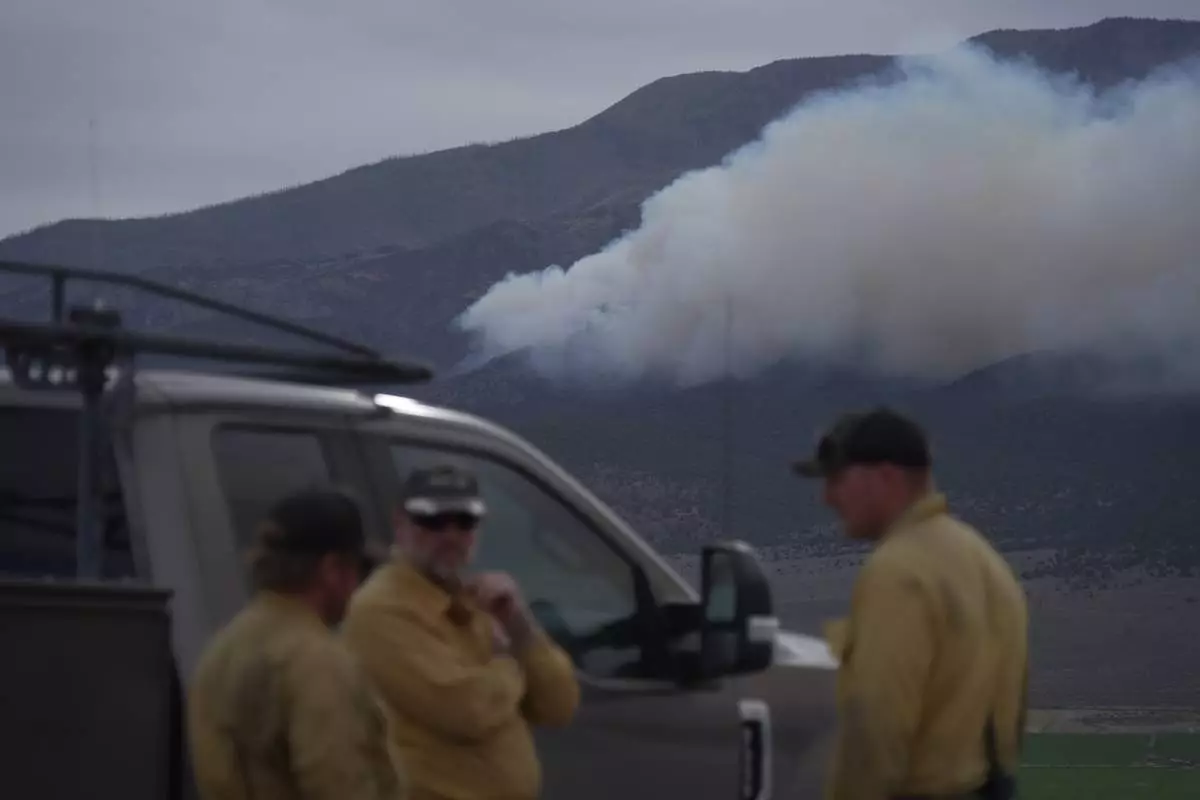
Firefighters gather near the Cottonwood Fire near Junction, Utah, on Friday, June 26, 2026. (AP Photo/Ty ONeil)
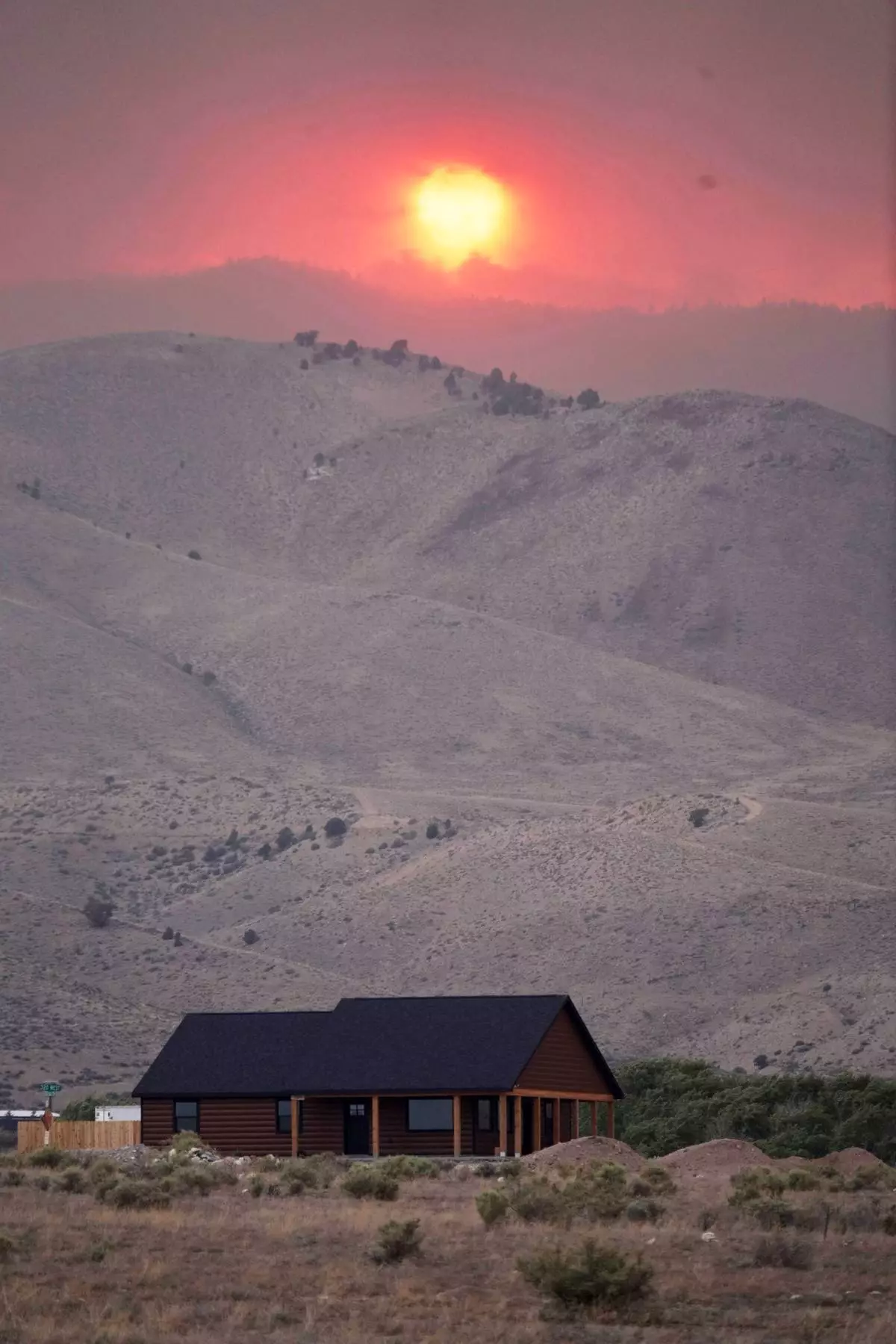
The sun sets over the Cottonwood Fire near Marysvale, Utah, on Friday, June 26, 2026. (AP Photo/Ty ONeil)
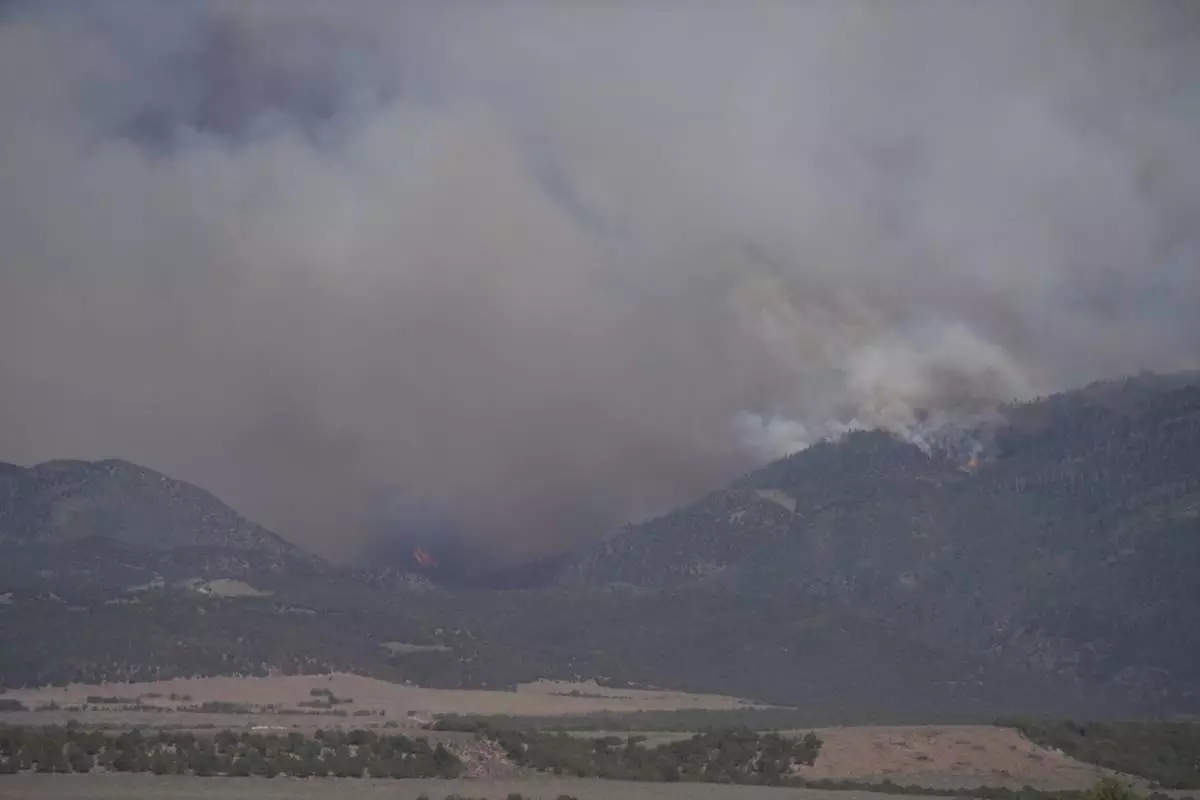
Smoke rises from the Cottonwood Fire near Beaver, Utah, on Friday, June 26, 2026. (AP Photo/Ty ONeil)
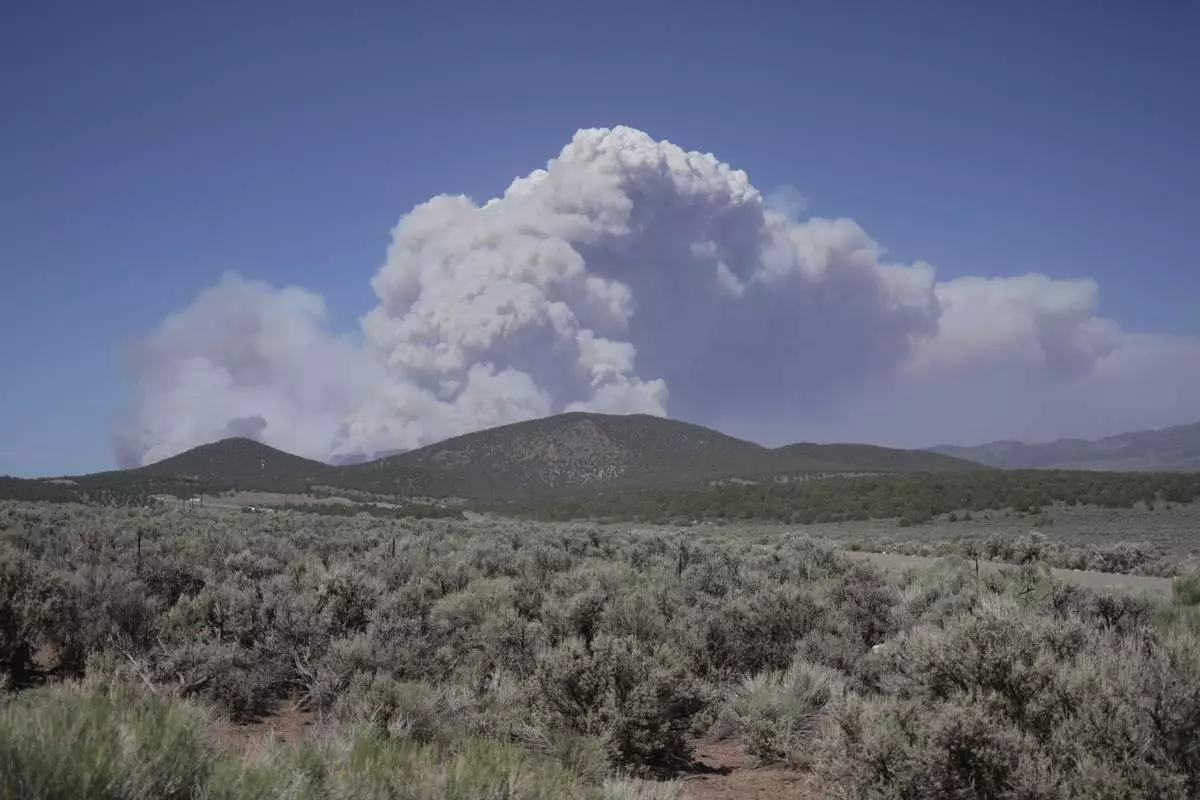
A plume of smoke rises from the Cottonwood Fire, Friday, June 26, 2026, near Beaver, Utah. (AP Photo/Ty ONeil)
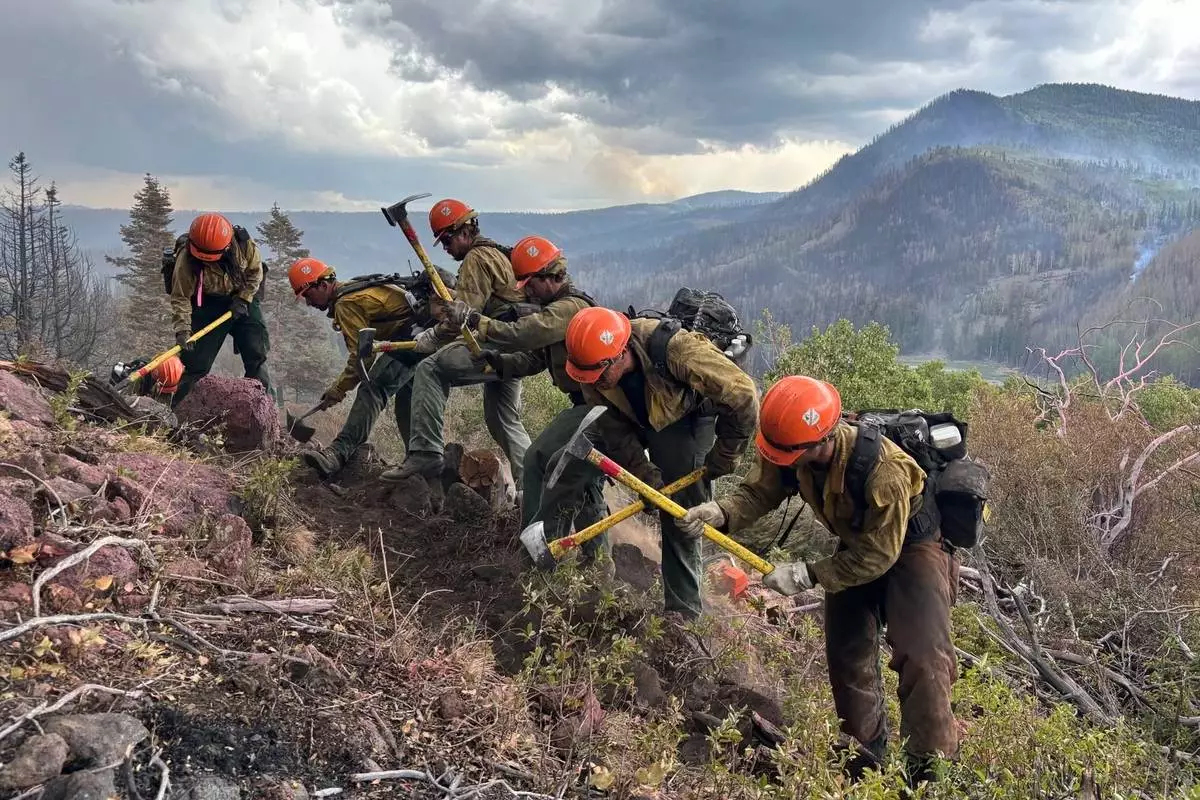
This undated image provided by the U.S. Forest Service Friday, June 26, 2026, shows firefighters responding to the Cottonwood Fire on Wednesday, June 24, 2026, above Birch Lake, near Beaver, Utah. (Mike McMillan/U.S. Forest Service via AP)
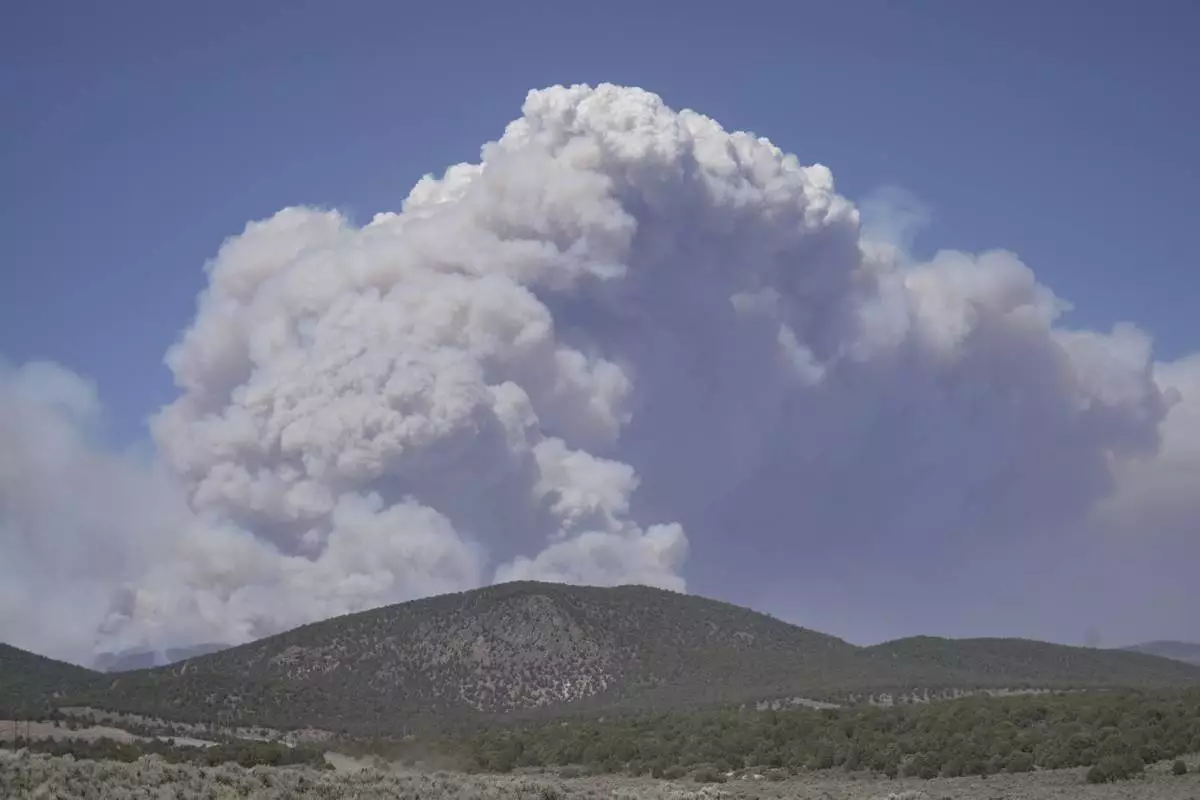
A plume of smoke rises from the Cottonwood Fire, Friday, June 26, 2026, near Beaver, Utah. (AP Photo/Ty ONeil)