Skip to Content Facebook Feature Image

3 firefighters killed in Colorado as wildfires stoked by heat, wind rage across the West

News

3 firefighters killed in Colorado as wildfires stoked by heat, wind rage across the West
News

News

3 firefighters killed in Colorado as wildfires stoked by heat, wind rage across the West

2026-06-29 08:15 Last Updated At:08:22

BEAVER, Utah (AP) — Blistering heat and strong winds Sunday stoked wildfires across the West after three firefighters were killed a day earlier in Colorado while battling a blaze along the state's border with Utah.

The National Weather Service said wildfire conditions “remain critical” across the Southwest, with risk high in the Four Corners region where Arizona, Colorado, New Mexico and Utah intersect. The agency warned of “extreme fire behavior” along the Utah-Colorado border, where “rapid fire growth is likely.”

More Images
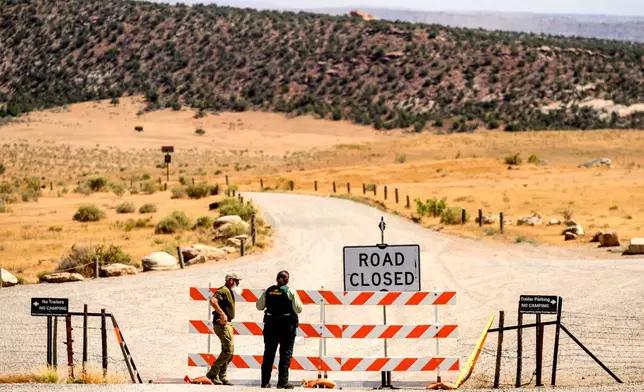
Law enforcement officers staff a roadblock as the Snyder Fire burns near Mack, Colo., on Sunday, June 28, 2026. (AP Photo/Noah Berger)
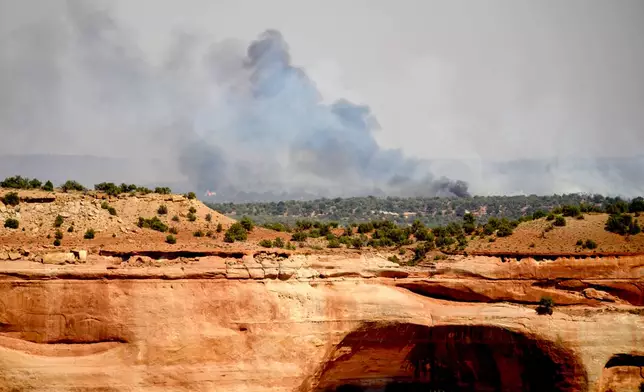
Law enforcement officers staff a roadblock as the Snyder Fire burns near Mack, Colo., on Sunday, June 28, 2026. (AP Photo/Noah Berger)

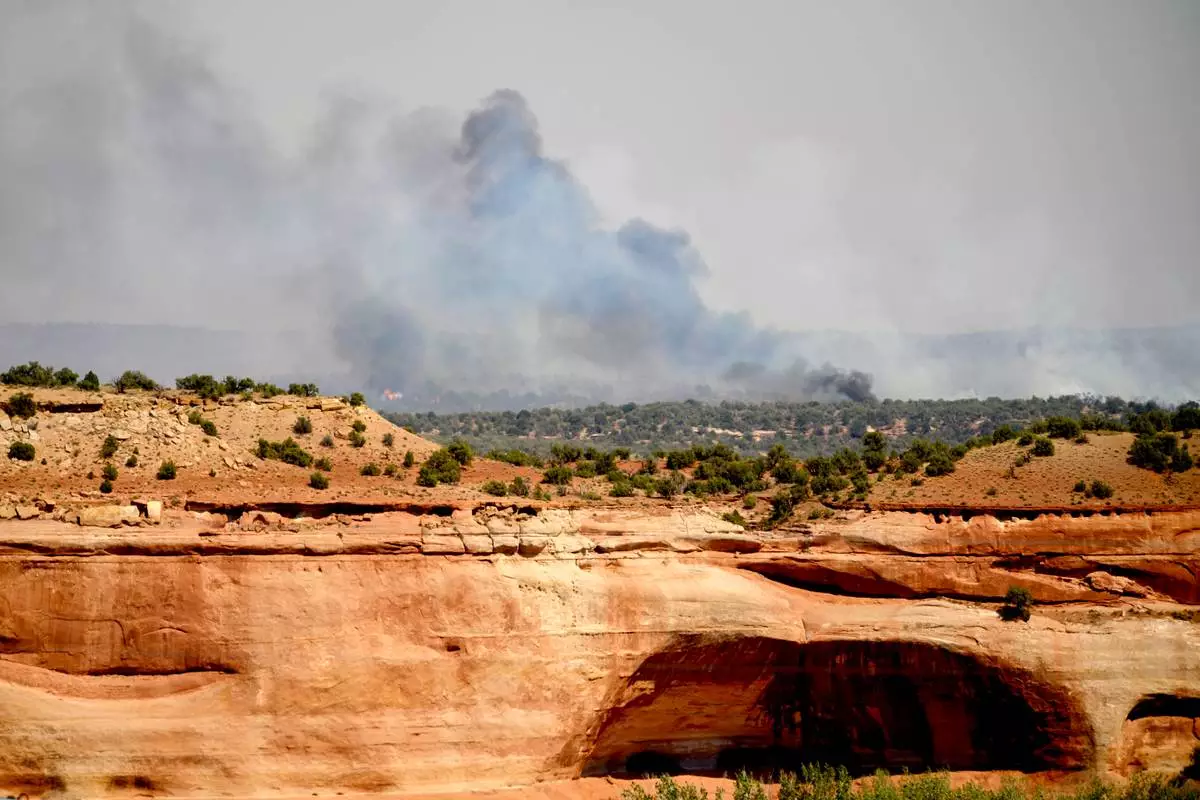
The Snyder Fire burns near Thompson Springs, Utah, on Sunday, June 28, 2026. (AP Photo/Noah Berger)
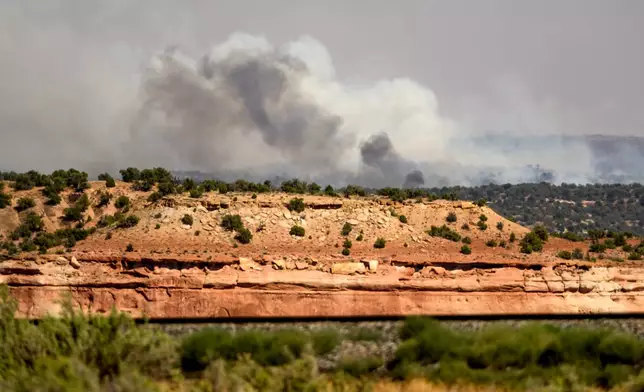
The Snyder Fire burns near Thompson Springs, Utah, on Sunday, June 28, 2026. (AP Photo/Noah Berger)
The Snyder Fire burns near Thompson Springs, Utah, on Sunday, June 28, 2026. (AP Photo/Noah Berger)

The Snyder Fire burns near Thompson Springs, Utah, on Sunday, June 28, 2026. (AP Photo/Noah Berger)

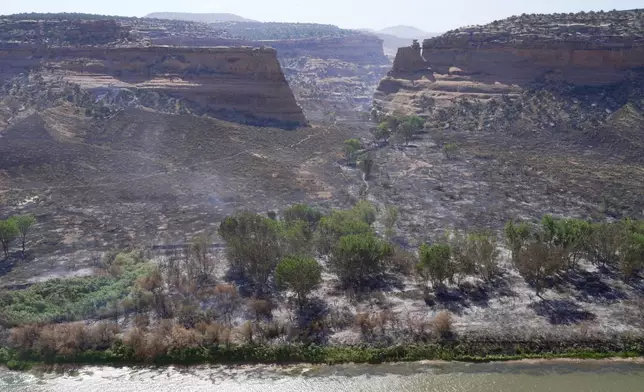
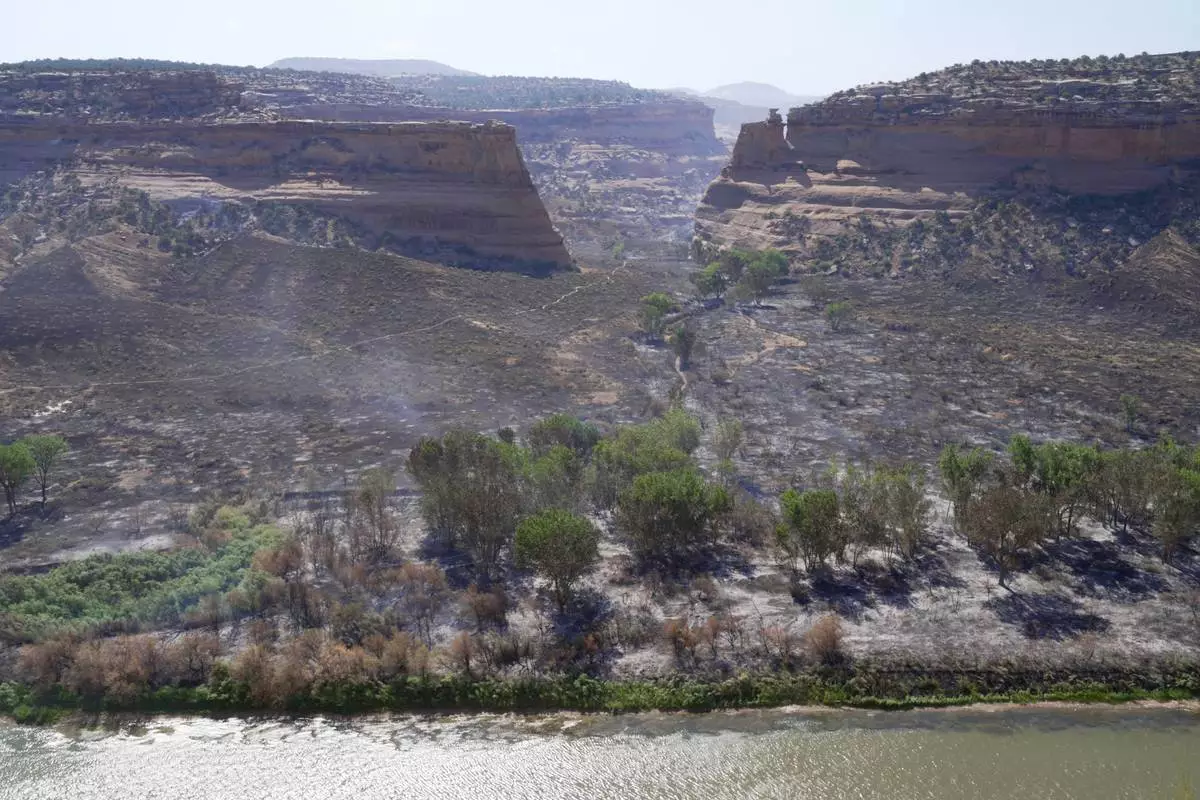
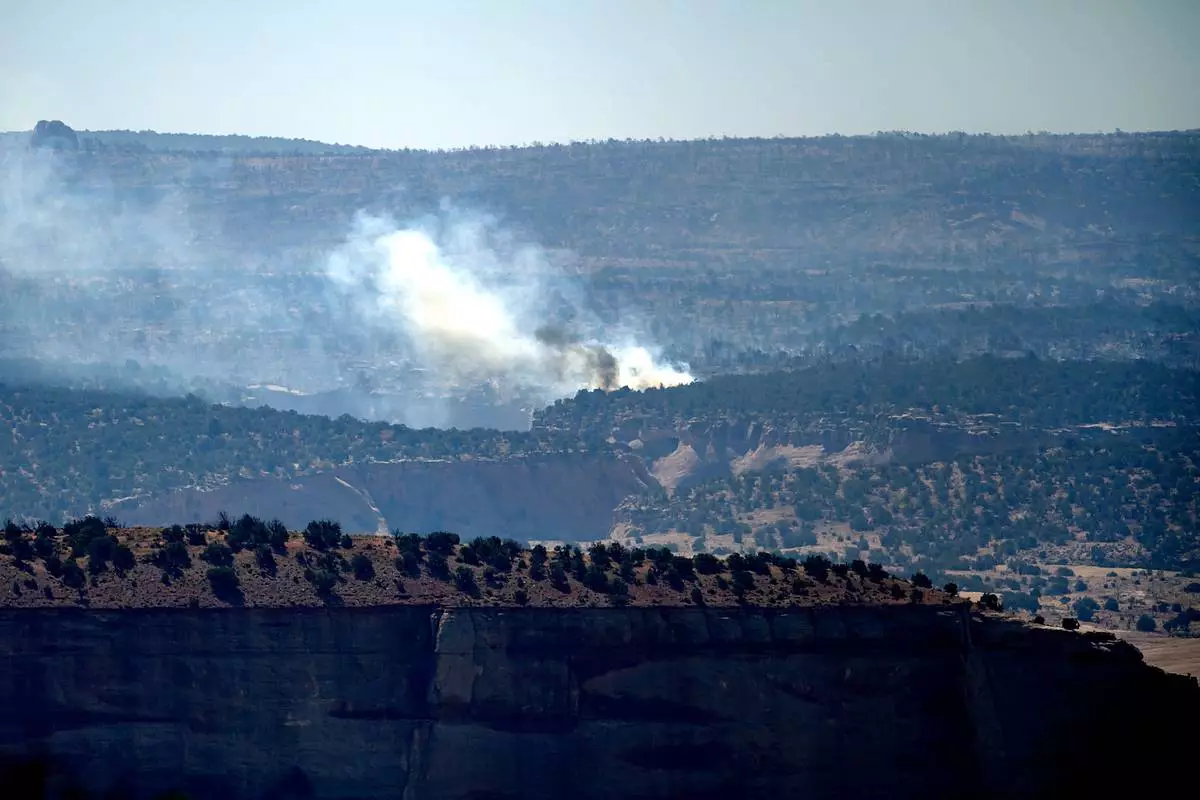
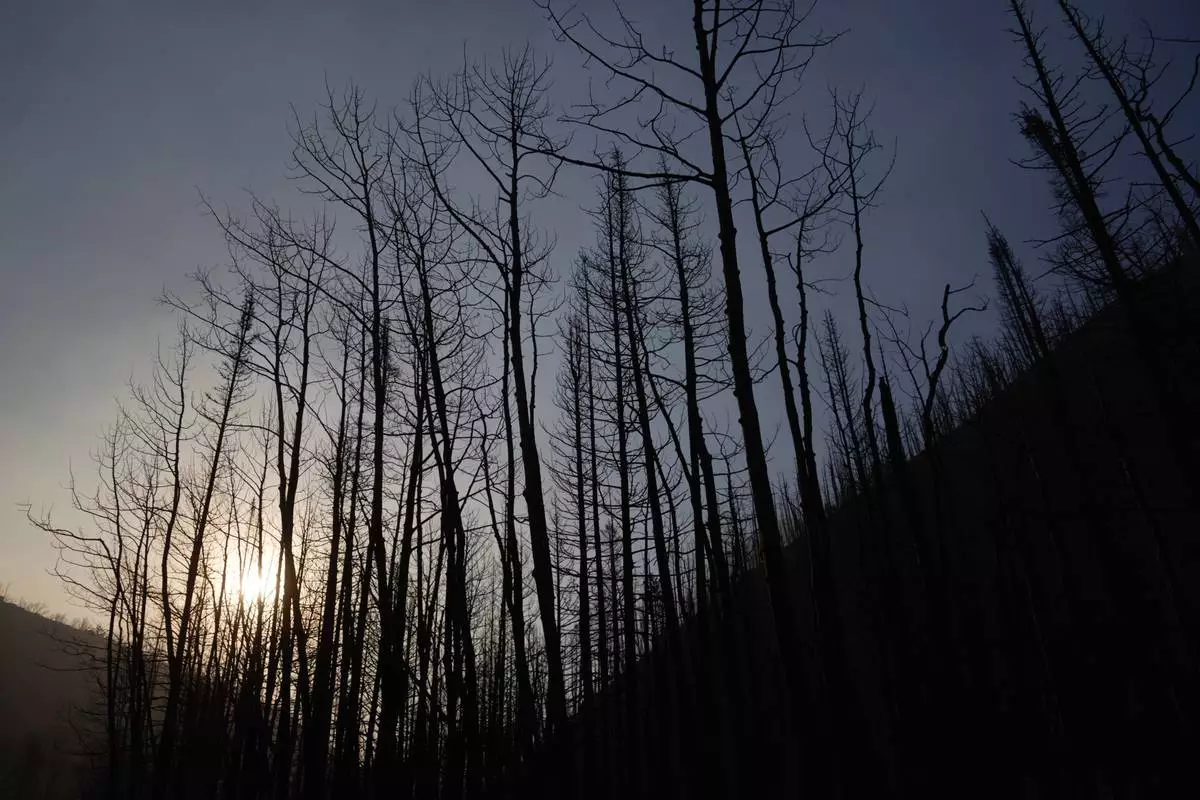
A burned section of the Snyder Fire seen from across the Colorado river in Mack, Colorado, on Sunday, June 28, 2026. (AP Photo/Ty O'Neil)
A burned section of the Snyder Fire seen from across the Colorado river in Mack, Colorado, on Sunday, June 28, 2026. (AP Photo/Ty O'Neil)

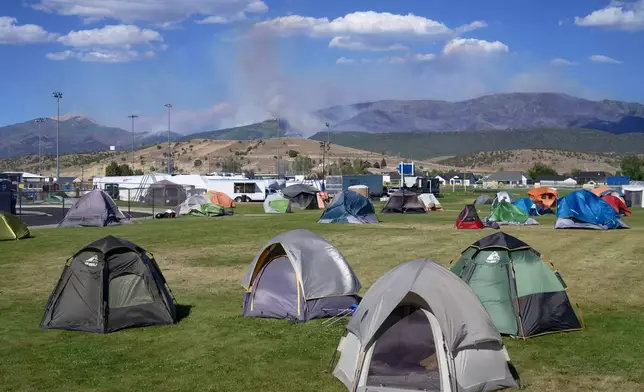
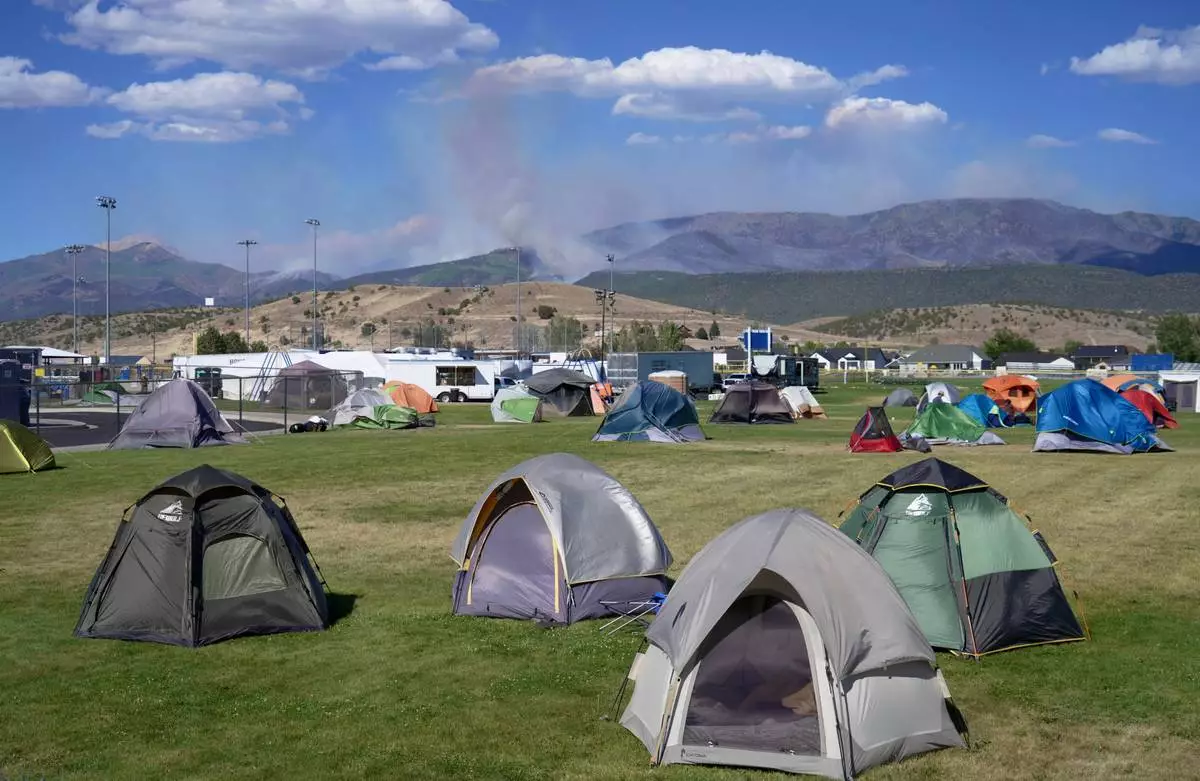
Firefighter tents sit across an elementary school lawn with the Cottonwood Fire in the background, in Beaver, Utah on Saturday, June 27, 2026. (AP Photo/Ty ONeil)
Firefighter tents sit across an elementary school lawn with the Cottonwood Fire in the background, in Beaver, Utah on Saturday, June 27, 2026. (AP Photo/Ty ONeil)

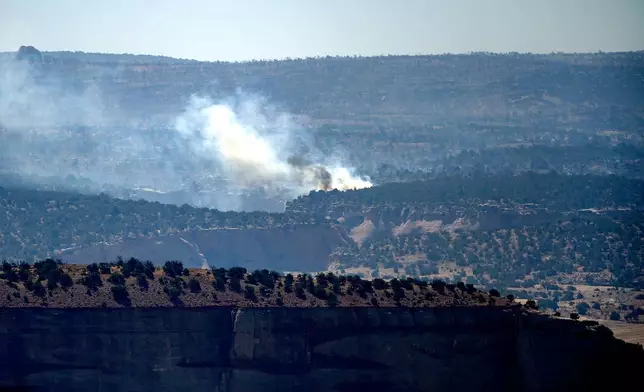
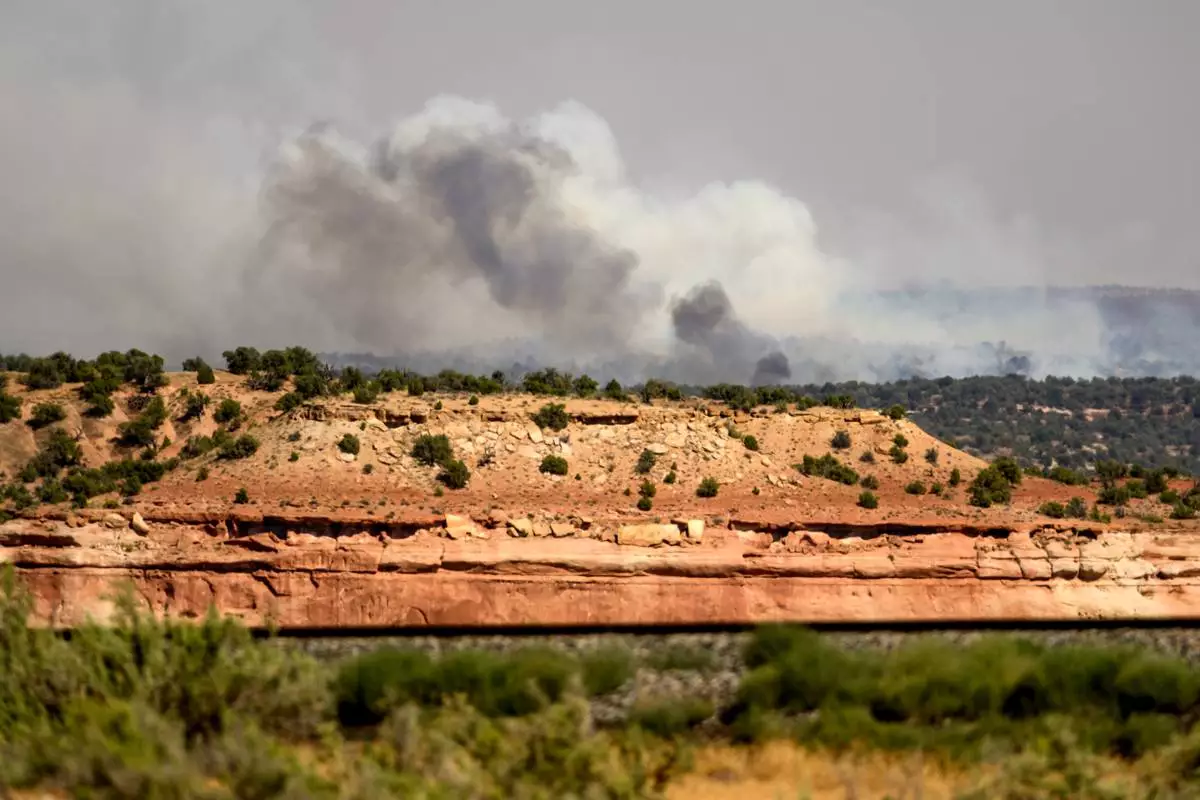
Smoke rises from the Snyder Fire burning near Thompson Springs, Utah, on Sunday, June 28, 2026. (AP Photo/Noah Berger)
Smoke rises from the Snyder Fire burning near Thompson Springs, Utah, on Sunday, June 28, 2026. (AP Photo/Noah Berger)

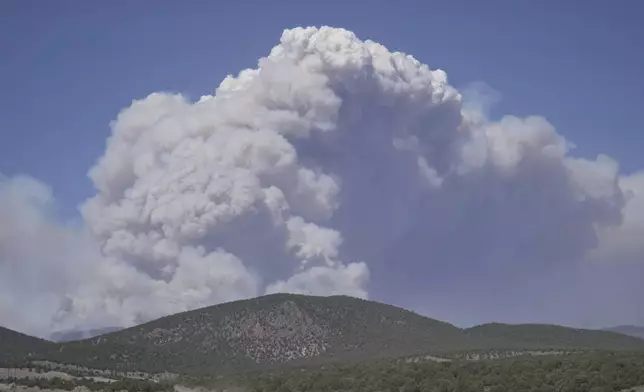
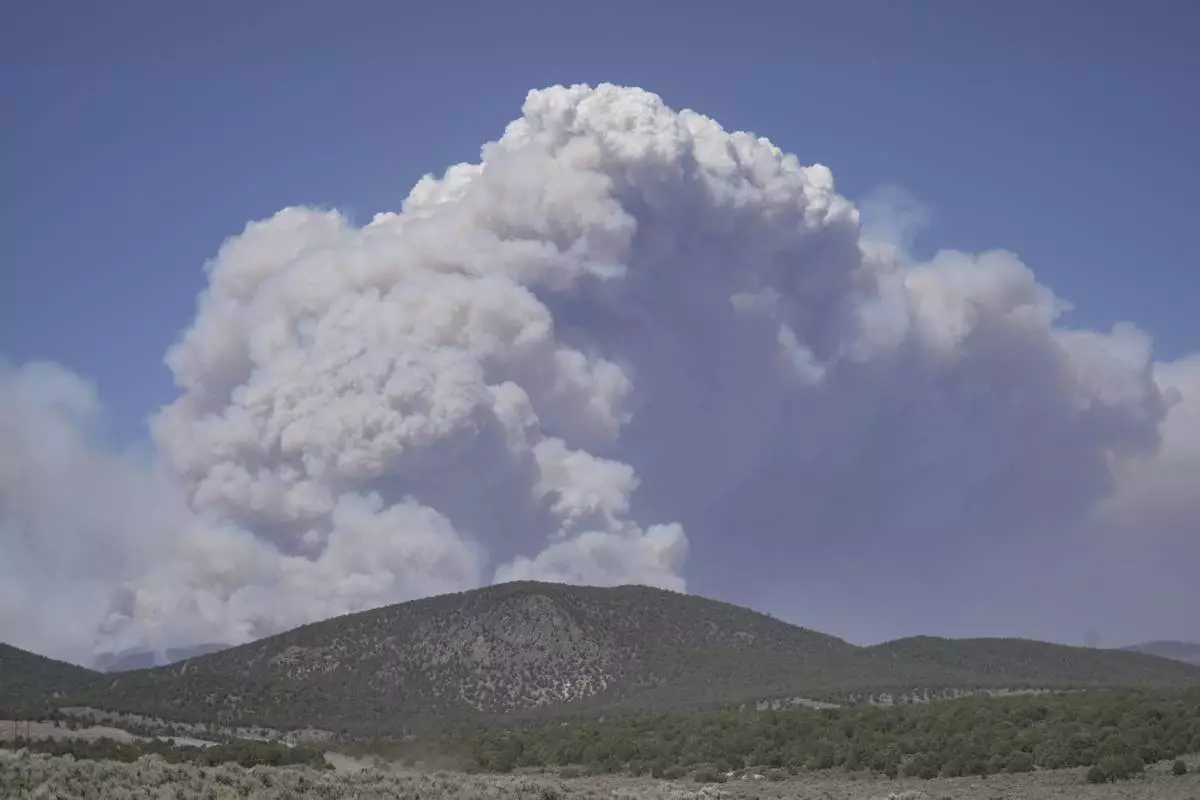
A plume of smoke rises from the Cottonwood Fire, Friday, June 26, 2026, near Beaver, Utah. (AP Photo/Ty ONeil)
A plume of smoke rises from the Cottonwood Fire, Friday, June 26, 2026, near Beaver, Utah. (AP Photo/Ty ONeil)

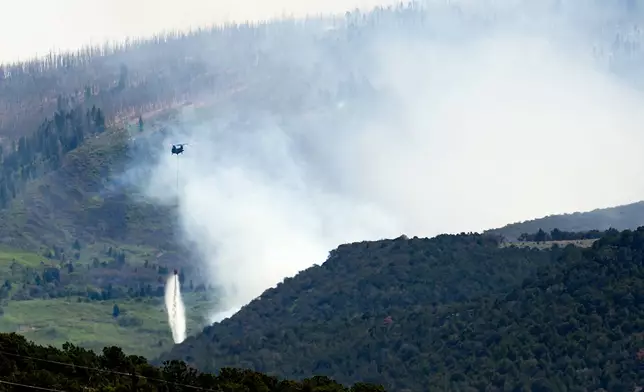
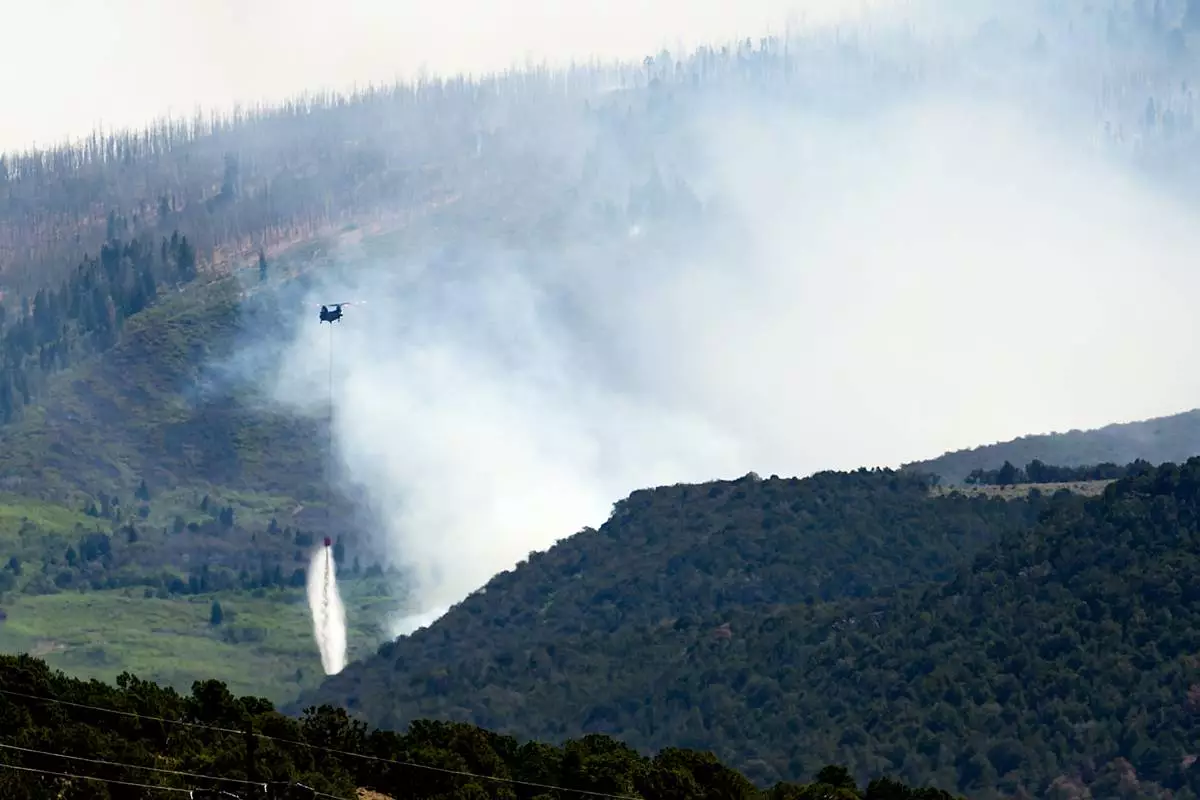
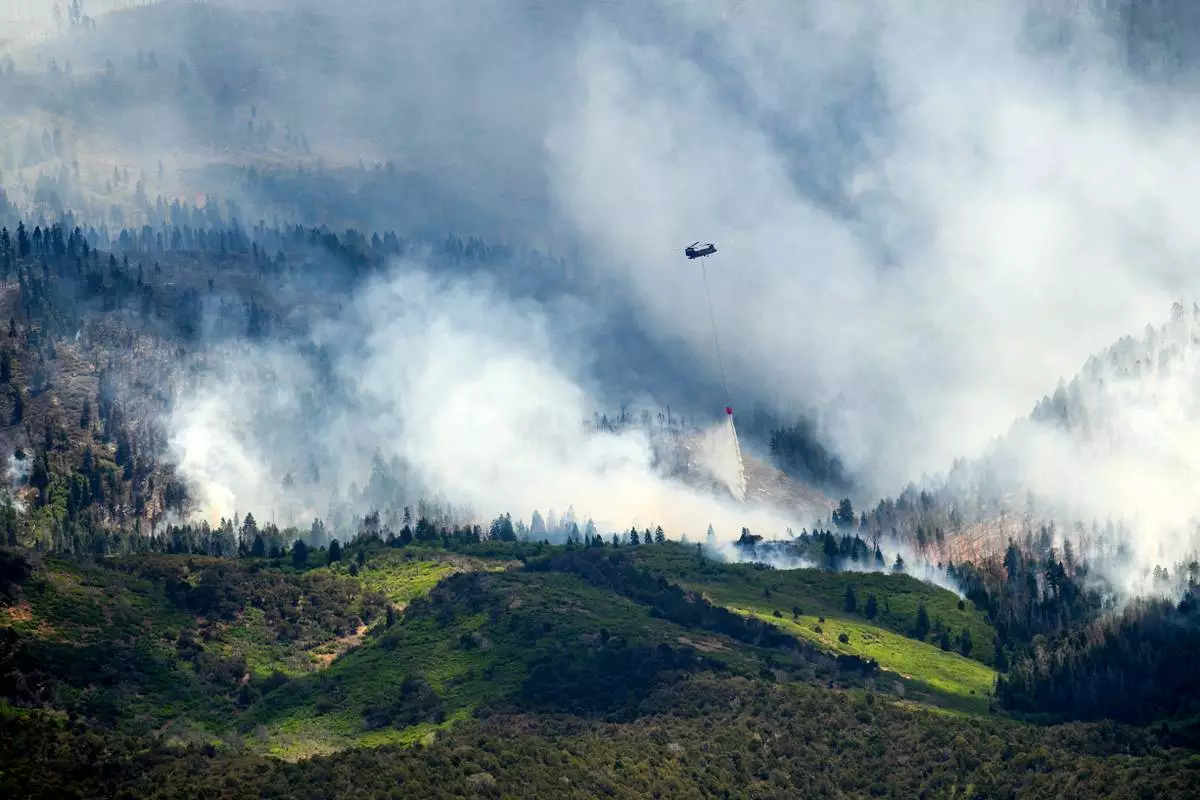
A helicopter drops water on the Cottonwood Fire burning near Beaver, Utah, on Saturday, June 27, 2026. (AP Photo/Noah Berger)
A helicopter drops water on the Cottonwood Fire burning near Beaver, Utah, on Saturday, June 27, 2026. (AP Photo/Noah Berger)

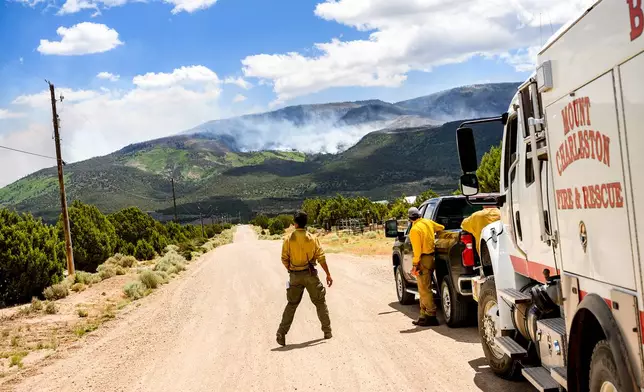
A firefighter watches as the Cottonwood Fire burns near Beaver, Utah, on Saturday, June 27, 2026. (AP Photo/Noah Berger)
A firefighter watches as the Cottonwood Fire burns near Beaver, Utah, on Saturday, June 27, 2026. (AP Photo/Noah Berger)

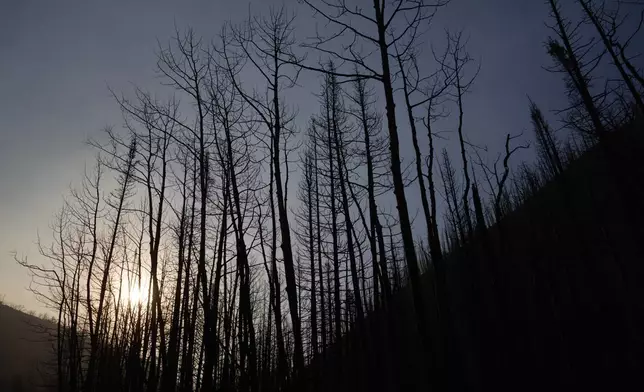
Sunrise on the Cottonwood Fire in Kingston, Utah, on Saturday , June 27, 2026. (AP Photo/Ty ONeil)
Sunrise on the Cottonwood Fire in Kingston, Utah, on Saturday , June 27, 2026. (AP Photo/Ty ONeil)

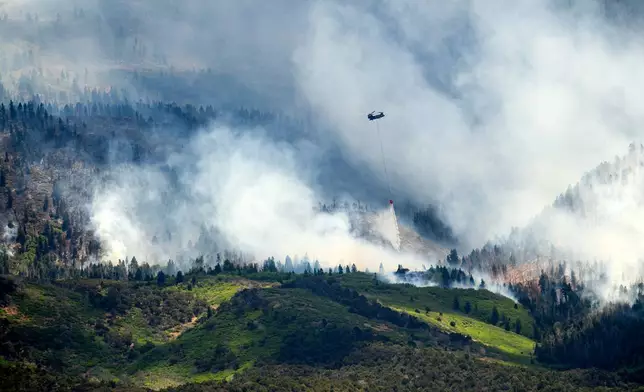
A helicopter drops water on the Cottonwood Fire burning near Beaver, Utah, on Saturday, June 27, 2026. (AP Photo/Noah Berger)

A helicopter drops water on the Cottonwood Fire burning near Beaver, Utah, on Saturday, June 27, 2026. (AP Photo/Noah Berger)

The firefighters were killed and two sustained burn injuries when they were overcome Saturday by flames from fast-moving fires. They deployed emergency protective shelters during the so-called burnover — which occurs when a fire spreads and closes off all escape routes — in Mesa County, the U.S. Interior Department said.

They worked for the U.S. Wildland Fire Service and U.S. Forest Service and were part of an interagency response to the Knowles and Gore fires, which merged with other fires to form the Snyder Fire. So far, about 44 square miles (114 square kilometers) have burned.

The Wildland Fire Service, created earlier this year to streamline firefighting on public lands, said in a statement that it “stands united” with the Forest Service in grief and “in our unwavering support for the loved ones left behind.”

The names of the firefighters were withheld pending notification to their loved ones, the Interior Department said.

Temperatures in Grand Junction — east of the fire — hit a high of 93 degrees Fahrenheit (34 degrees Celsius) Saturday, with winds gusting to 44 mph (71 kph), according to the National Weather Service.

The Mesa County Sheriff's Office asked people to evacuate the potential path of the fire and to turn on irrigation water to saturate the land. The federal Bureau of Land Management on Saturday closed public access to lands it manages nearby.

On Sunday, strong winds pushed waves of thick, gray smoke from the fire as it burned through a desolate stretch of scrub and red mesa.

Consecutive days of hot, dry and windy weather fueled fires in Colorado, Utah, Arizona and elsewhere. New fires popped up across the region.

The largest blaze, the Cottonwood Fire, burned out of control in rugged terrain in southwest Utah. It ballooned Sunday to more than 146 square miles (378 square kilometers) after marching through canyons and mountainsides, destroying part of a ski resort. The cause is under investigation.

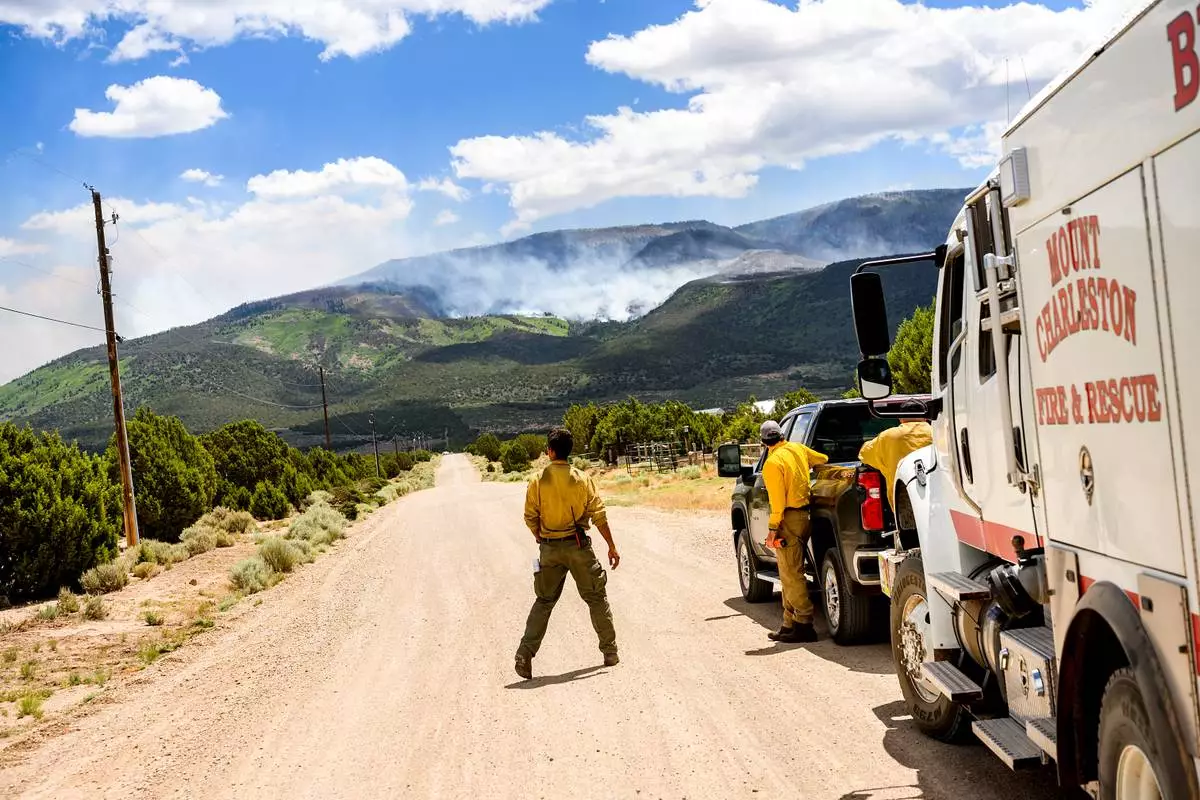
Firefighters worked on multiple fronts, using bulldozers to scrape away brush and trees to starve the fire of fuel.

No estimates of damage were immediately available. Gov. Spencer Cox in a post on social media thanked crews for what he called “several miraculous stops and saves.”

The danger is even higher this year because of Utah's record-low snowpack and its warmest winter on record. Much of the West is grappling with similar conditions, according to the National Interagency Fire Center. Some 12 fires were burning in Utah. None were contained by late afternoon Sunday.

Nationally, nearly 4,688 square miles (12,142 square kilometers) have burned since Jan. 1. That is more than the 10-year average.

Fully or largely uncontained wildfires burned across the desert Southwest on Sunday, according to Forest Service data, including in Nevada and Arizona. Their area totaled nearly 469 square miles (1,214 square kilometers).

Citing fire conditions, Cox declared an emergency last week and banned fireworks ahead of the July Fourth holiday. State officials said Utah has seen an increase in wildfire starts, with each fire showing unprecedented behavior and stretching wildland firefighting capabilities.

Colorado Gov. Jared Polis also declared an emergency on Saturday, authorizing the use of the National Guard to tackle the fires.

South of Grand Canyon National Park, authorities said a new wildfire was moving away from Grand Canyon Village on Saturday. But about 50 miles (80 kilometers) away, another fire prompted Coconino County officials to issue evacuation orders for those near Kendrick Mountain.

Parts of northern Arizona were without power Saturday as the utility serving the area initiated a safety shut-off in hopes of lessening the wildfire risk. On Sunday, officials said power had been restored to much of Grand Canyon National Park.

Power shutoffs have become more common in the West as wildfire risk has expanded. It is usually a last resort after utility forecasters weigh factors like sustained wind and gust speeds, available fuels and topography.

Smyth contributed from Columbus, Ohio. Sisak reported from New York. Associated Press writer Michael R. Blood in Los Angeles contributed.
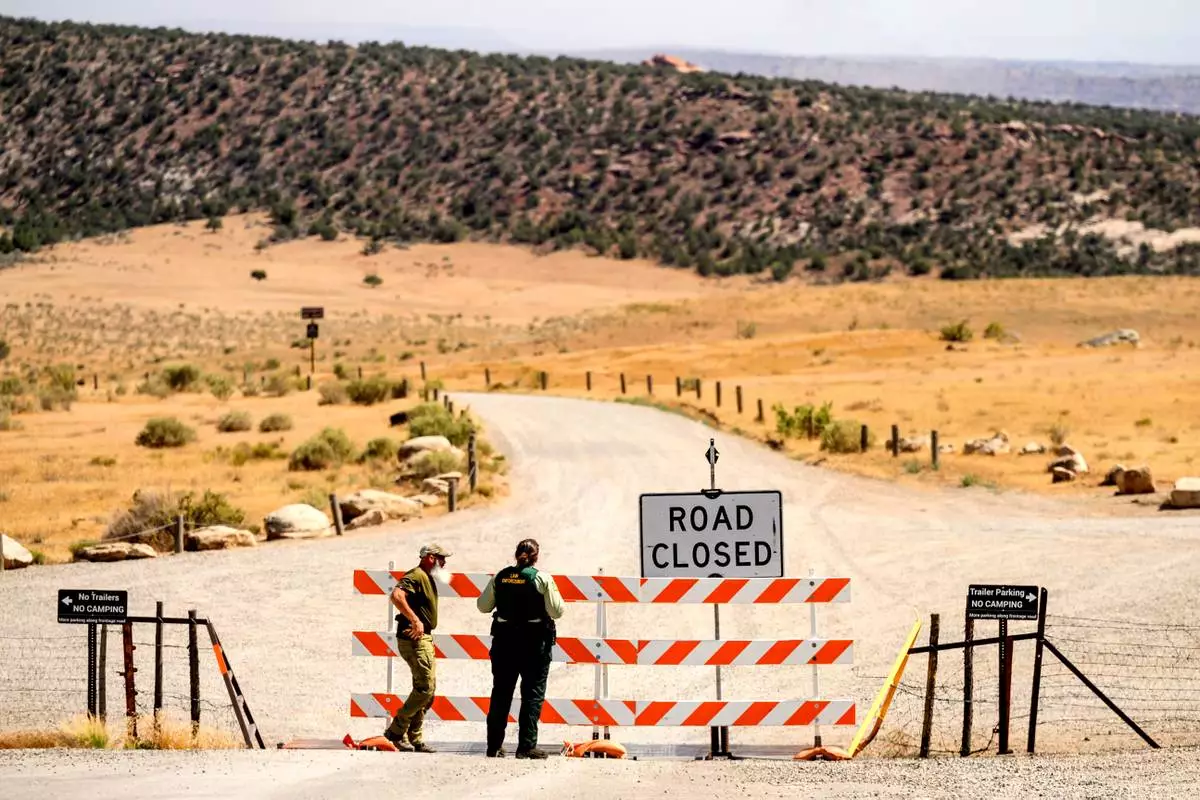
Law enforcement officers staff a roadblock as the Snyder Fire burns near Mack, Colo., on Sunday, June 28, 2026. (AP Photo/Noah Berger)
Law enforcement officers staff a roadblock as the Snyder Fire burns near Mack, Colo., on Sunday, June 28, 2026. (AP Photo/Noah Berger)

The Snyder Fire burns near Thompson Springs, Utah, on Sunday, June 28, 2026. (AP Photo/Noah Berger)
The Snyder Fire burns near Thompson Springs, Utah, on Sunday, June 28, 2026. (AP Photo/Noah Berger)
The Snyder Fire burns near Thompson Springs, Utah, on Sunday, June 28, 2026. (AP Photo/Noah Berger)

The Snyder Fire burns near Thompson Springs, Utah, on Sunday, June 28, 2026. (AP Photo/Noah Berger)

A burned section of the Snyder Fire seen from across the Colorado river in Mack, Colorado, on Sunday, June 28, 2026. (AP Photo/Ty O'Neil)
A burned section of the Snyder Fire seen from across the Colorado river in Mack, Colorado, on Sunday, June 28, 2026. (AP Photo/Ty O'Neil)

Firefighter tents sit across an elementary school lawn with the Cottonwood Fire in the background, in Beaver, Utah on Saturday, June 27, 2026. (AP Photo/Ty ONeil)
Firefighter tents sit across an elementary school lawn with the Cottonwood Fire in the background, in Beaver, Utah on Saturday, June 27, 2026. (AP Photo/Ty ONeil)

Smoke rises from the Snyder Fire burning near Thompson Springs, Utah, on Sunday, June 28, 2026. (AP Photo/Noah Berger)
Smoke rises from the Snyder Fire burning near Thompson Springs, Utah, on Sunday, June 28, 2026. (AP Photo/Noah Berger)

A plume of smoke rises from the Cottonwood Fire, Friday, June 26, 2026, near Beaver, Utah. (AP Photo/Ty ONeil)
A plume of smoke rises from the Cottonwood Fire, Friday, June 26, 2026, near Beaver, Utah. (AP Photo/Ty ONeil)

A helicopter drops water on the Cottonwood Fire burning near Beaver, Utah, on Saturday, June 27, 2026. (AP Photo/Noah Berger)
A helicopter drops water on the Cottonwood Fire burning near Beaver, Utah, on Saturday, June 27, 2026. (AP Photo/Noah Berger)

A firefighter watches as the Cottonwood Fire burns near Beaver, Utah, on Saturday, June 27, 2026. (AP Photo/Noah Berger)
A firefighter watches as the Cottonwood Fire burns near Beaver, Utah, on Saturday, June 27, 2026. (AP Photo/Noah Berger)

Sunrise on the Cottonwood Fire in Kingston, Utah, on Saturday , June 27, 2026. (AP Photo/Ty ONeil)
Sunrise on the Cottonwood Fire in Kingston, Utah, on Saturday , June 27, 2026. (AP Photo/Ty ONeil)

A helicopter drops water on the Cottonwood Fire burning near Beaver, Utah, on Saturday, June 27, 2026. (AP Photo/Noah Berger)

A helicopter drops water on the Cottonwood Fire burning near Beaver, Utah, on Saturday, June 27, 2026. (AP Photo/Noah Berger)
WASHINGTON (AP) — Americans have grown less proud of their country's history or the way its democracy works over the past decade, according to a new AP-NORC poll.

Americans’ pride in the U.S. on several key attributes has dropped since 2017 — including the nation's military and its political influence around the globe — according to the survey from The Associated Press-NORC Center for Public Affairs Research. This poll was conducted in April, as the United States and Iran fought over the Strait of Hormuz in a prolonged war that started with the U.S. and Israel launching strikes on Iran.

New Gallup polling also finds that only 53% of U.S. adults are “extremely” or “very” proud to be an American, the lowest reading in the trend dating back to 2001.

The findings point to a broad decline in patriotic sentiment over a tumultuous period that included most of President Donald Trump's first term, the COVID-19 pandemic and rising inflation that contributed to a backlash against President Joe Biden. That timeframe also covers Trump's return to the White House, where he's taken more aggressive actions on immigration and issues abroad.

Much of the falling positivity comes from Democrats, who have become increasingly disenchanted with the country since Trump's first term.

At the same time, most U.S. adults say that being an American is “extremely” or “very” important to their identity, highlighting an enduring connection, even as some become increasingly critical of the country's past or the government’s current actions.

Americans' pride in the way democracy works in the U.S. has declined 14 percentage points, falling from 42% in February 2017 to 28% now.

In addition, Americans' pride in their armed forces has dropped 19 percentage points since 2017, and pride in the U.S.’s history has declined 14 percentage points. In each case, the drop is largely driven by Democrats, with some movement among independents as well.

Karla Galdamez — a 48-year-old Democrat who used to teach U.S. history — believes America has regressed under the Trump administration. While the Californian is not proud of Trump, she is pleased with how far the U.S. has come in 250 years.

“It’s a country that really wanted to be different and really wanted to be better," she said. "Despite some of the very ugly history that we have of segregation and slavery ... if you look at the trajectory of the last 250 years, we’ve done nothing but get better and move toward a more egalitarian nation.”

Only 14% of Democrats and 28% of independents say they are “extremely" proud to be an American, according to Gallup's new poll, compared with 70% of Republicans.

The AP-NORC poll found that Republicans are especially likely to be proud of the nation's armed forces. About 9 in 10 Republicans say the military makes them “extremely” or “very” proud, compared with about 6 in 10 U.S. adults.

Samantha Fulks, a 40-year-old in San Antonio, Texas, says she’s proud to be an American and doesn't hide it. The Texas Republican showcases that pride with an American flag in her front yard — as well as Trump flags in the back yard — and she plans to wear red, white and blue on the Fourth of July. Fulks comes from a military family, and while she believes the country's involvement in Iran is unnecessary, she remains a proud supporter of the military.

“I still support our troops no matter what they do,” Fulks said.

Matt Stafford, a 39-year-old in Massachusetts, is proud of being an American, even if the U.S. political system frustrates him.

He has a bald eagle tattooed on his back to represent the United States, its freedoms and “all the things we’re supposed to stand for as a country.” But despite that national pride, he often finds himself frustrated by politicians on both sides. Stafford — a centrist who identifies as “politically homeless” — wants Democrats and Republicans to come together to look out for their constituents in middle America.

“I love America, but our biggest problem is how we’re pushing both sides — like the left and the right — to the extremes," he said.

For many Americans, their partisanship is often intertwined with their national identity. The poll finds that Republicans are much likelier than Democrats or independents to say being an American is “extremely” or “very” important to their personal identity.

Younger people are also much less likely than older people to say being an American is highly important to their personal identity. About three-quarters of Americans ages 60 and older say being an American is highly important to them, compared with only about one-third of U.S. adults under 30.

The AP-NORC survey found that the vast majority of Black Americans — 73% — say their race or ethnicity is “extremely” or “very” important to how they see themselves, higher than the share that say that about being an American.

Vincent Harris, a 60-year-old in California, says his identity as a Black man rises above other attributes for him because of how Black men are treated in America.

“A lot of people are scared of Black men just because we are Black and we are male. And that's crazy,” Harris said. “People don't even take you for who you are as a person; they just look at your race.”

About half of Hispanic Americans say their race or ethnicity is highly important to them, compared with 22% of white Americans.

Black and Hispanic adults are also more likely than white adults to say their family’s ancestry or country of origin is highly important to their personal identity.

Harris, who identifies as a gay man, says being an American is “a wonderful thing” because of the freedoms that Americans have, despite the obstacles he's had to overcome.

“It’s great to be an American — regardless of race, gender, sexual orientation, religion, or whatever. As long as you have that freedom of choice as an American, that’s a great thing," Harris said. "Right now, I wouldn’t live in any other country in the world. I’m here. I love it.”

The AP-NORC poll of 2,596 adults was conducted April 16-20 using a sample drawn from NORC’s probability-based AmeriSpeak Panel, which is designed to be representative of the U.S. population. The margin of sampling error for adults overall is plus or minus 2.6 percentage points.

FILE - People say the Pledge of Allegiance before a visit by President Donald Trump, May 1, 2026, in The Villages, Fla. (AP Photo/Phelan M. Ebenhack, File)

FILE - People say the Pledge of Allegiance before a visit by President Donald Trump, May 1, 2026, in The Villages, Fla. (AP Photo/Phelan M. Ebenhack, File)

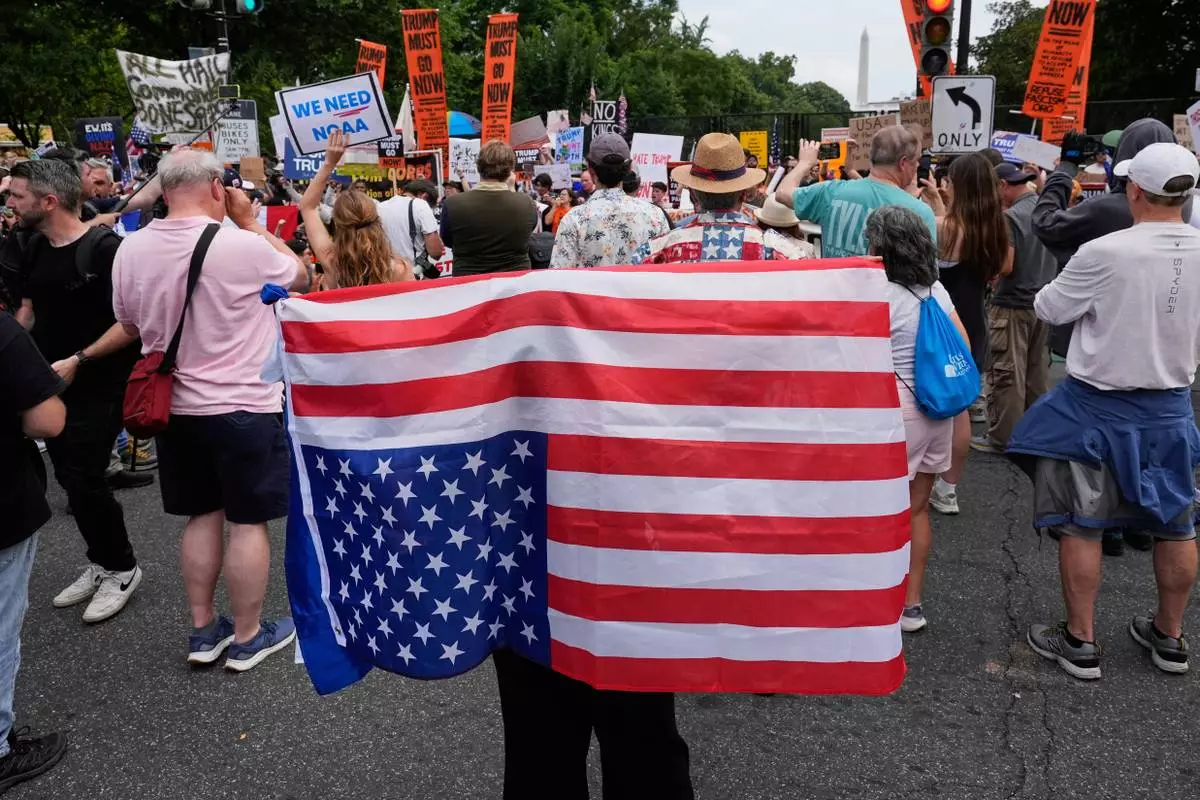
FILE - A demonstrator carries an American flag upside-down near the White House during a protest taking place on the day of a military parade commemorating the Army's 250th anniversary, coinciding with President Donald Trump's 79th birthday, June 14, 2025, in Washington. (AP Photo/Alex Brandon, File)

FILE - A demonstrator carries an American flag upside-down near the White House during a protest taking place on the day of a military parade commemorating the Army's 250th anniversary, coinciding with President Donald Trump's 79th birthday, June 14, 2025, in Washington. (AP Photo/Alex Brandon, File)

Recommended Articles