A long and dangerous heat wave will blast a large swath of the central and eastern United States this week, the National Weather Service said, with temperatures rising ahead of the July Fourth holiday and feeling even hotter because of the high humidity that's arriving with it.
Already, parts of the U.S., especially Phoenix and central Texas, and much of the Southwest were experiencing temperatures around 100 F (38 C) on Sunday, while the weather service warned of severe wildfire conditions developing across much of the West as new fires popped up across the region.
On Sunday, well over 130 million Americans across southern and Great Plains states were under moderate to severe heat risk conditions, according to weather service maps, with that area forecast to expand and temperatures to intensify as the week drags on.
Forecasters say several days of high temperatures — some above 100 degrees F — will settle in across the lower Great Lakes, the mid-Atlantic and the Mississippi and Ohio River valleys. Some record highs could be set in areas from the lower Great Lakes to the mid-Atlantic and New England later in the week, said weather service meteorologist Bryan Putnam.
A number of big cities could see their highest temperatures of the year so far as they host World Cup matches and celebrations for America’s 250th anniversary.
Feeling the heat will be the East Coast cities of New York, Philadelphia, Washington and Baltimore, and Midwestern and Great Lakes cities including Chicago, Indianapolis, St. Louis and Detroit. Southern cities including Dallas, Little Rock, Arkansas, and Memphis, Tennessee, will also see high temperatures.
High heat will last into next weekend across the Great Plains, the Southeast and the mid-Atlantic, the weather service said.
Temperatures will reach well into the 90s and low 100 degrees Fahrenheit (mid to high 30s Celsius), the weather service said. High humidity will lead to heat indexes of 100 to 110 degrees F (40 C to 43 C), and as high as 115 F (46 C).
“That’s heat that’s impactful to anyone,” Putnam said. “It’s not just older adults or younger children or people who are spending a ton of time outdoors, maybe straining themselves a little more than normal. This is heat that really could impact everyone, especially with people outdoors going into the holiday weekend.”
The heat index, which factors in humidity and is included on many weather forecasts, provides a sense of how hot it really feels — and what’s dangerous for prolonged exposure or strenuous activity.
AccuWeather meteorologist Tyler Roys said temperatures will be significantly above normal. For instance, in Washington, highs around July Fourth average around 89 degrees F (32 C), while Indianapolis averages around 85 degrees F (29 C). But this week, both cities will be hotter by 10 or 11 degrees F, Roys said.
The high pressure system — an area of dry, sinking air — creating the heat will act like a “rock” that will force storms to go around it and limit rainfall across the East, Roys said. That's sometimes called a “heat dome.”
Nightly lows in the 70s F (21 to 26 C) or even high 80s won’t provide much relief, meteorologists said.
For those who don't have air conditioning, especially in Eastern Seaboard cities like New York where lows may not dip below 80 F (27 C), it’s going be miserable to sleep, Roys said.
Roys also said this is a primetime for heat-related illnesses because people's bodies aren’t able to recover and cool off.
During extreme temperatures, limit outdoor activity, stay hydrated and ensure access to air-conditioning and other cooling areas, the weather service said.
The weather service said it expected extremely dry and windy conditions that could promote rapid wildfire spread across the Great Basin and the Southwest on Sunday.
In hot, windy conditions near the Colorado-Utah border, three firefighters working for the U.S. Wildland Fire Service and U.S. Forest Service were killed, and two others sustained burn injuries, when they were overcome by flames from fast-moving wildfires.
Wildfire activity has intensified across the Western U.S. as hot, dry and windy weather fueled flames in Utah, Colorado, Arizona and elsewhere.
Follow Marc Levy at http://twitter.com/timelywriter
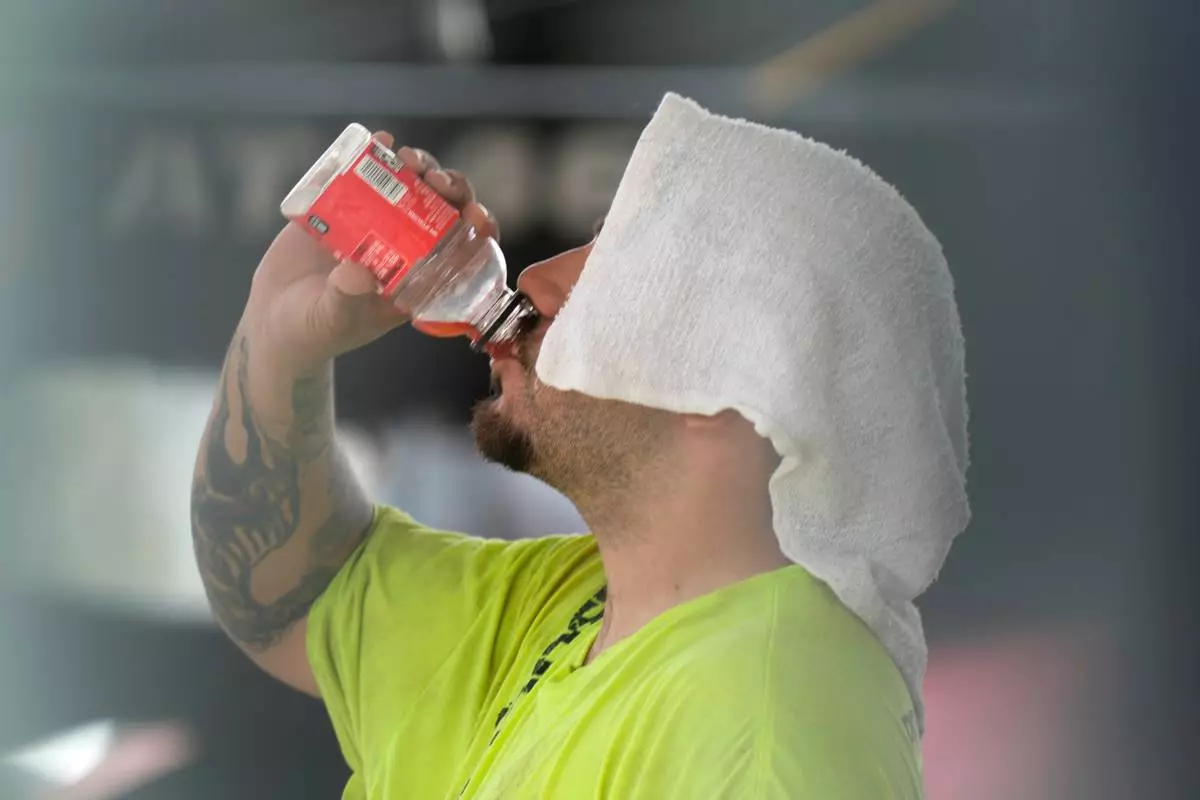
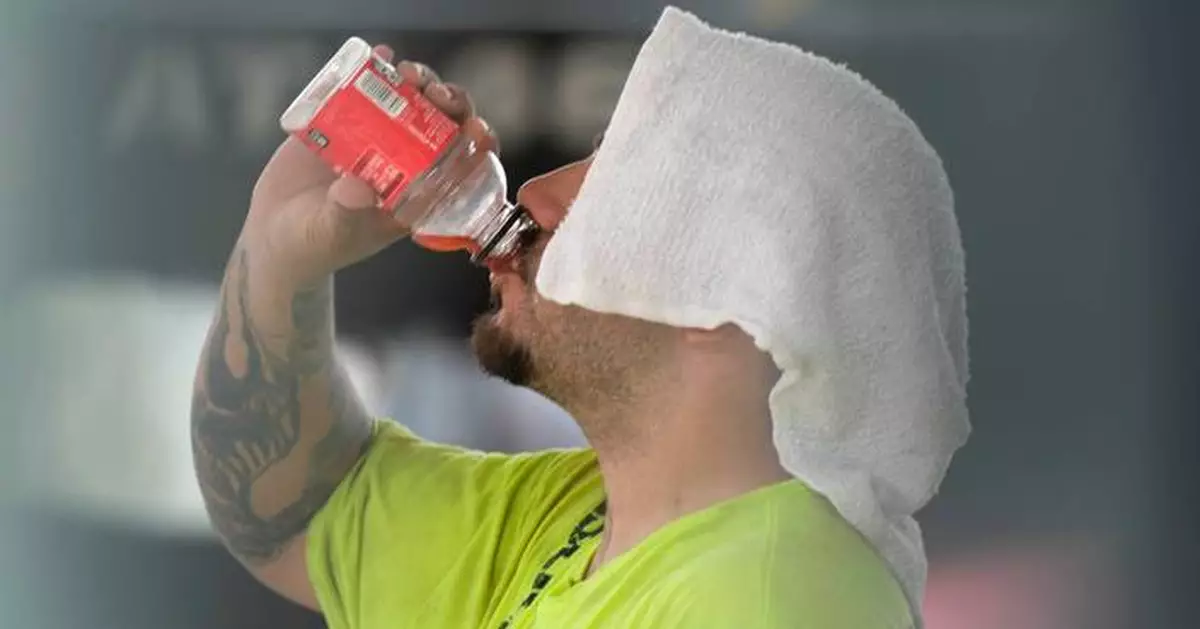
FILE - A construction worker hydrates at the Shedd Aquarium Tuesday, Aug. 27, 2024, as a second straight day of hot soupy temperatures approaching triple digits hung over much of the Midwest in Chicago. (AP Photo/Charles Rex Arbogast, file)
NEW YORK (AP) — Pride Month celebrations peaked Sunday with big parades in New York, San Francisco and some other cities on the anniversary of the 1969 Stonewall uprising, which accelerated and transformed the modern LGBTQ+ rights movement.
Pride events often mix celebration and calls to action, reflecting the political winds, cultural climate and news around LGBTQ+ rights.
This month's parades and festivals around the U.S. have unfolded as President Donald Trump works to roll back transgender rights and diversity, equity and inclusion initiatives. Among other moves, the Republican's administration removed a rainbow Pride flag from the Stonewall National Monument earlier this year, then ultimately relented amid a lawsuit.
“As LGBTQIA+ events and symbols are being erased, it’s vital that our community have safe spaces to show up and march to make clear: We are here,” Chris Piedmont, a spokesperson for New York parade organizers Heritage of Pride, said in a statement Friday. “We will not be erased.”
Carlos Duarte came in from Long Island to attend New York's parade.
“It’s very important for us to be here … to be all together for love, peace and to show the world who we are,” Duarte said.
Meanwhile, multiple Republican governors have promulgated conservative-friendly designations for June, such as “Nuclear Family Month,” sometimes openly describing them as a counter to Pride. Other prominent Republican politicians, including Vice President JD Vance, criticized Major League Baseball 's response to some San Francisco Giants players who added Bible verses to the rainbow-themed Pride Night caps they were issued.
Against that backdrop, the NYC Pride March and the San Francisco Pride Parade set out to further their legacies as some of the world's largest and oldest such celebrations.
Both trace their roots to events held in 1970 to commemorate the Stonewall rebellion on June 28, 1969, when patrons of a New York gay bar called the Stonewall Inn resisted a police raid and ended up kindling a wave of activism.
The Stonewall Inn still is a bar; the Stonewall monument centers on a small park across the street, about half a mile (about 0.8 km) from the Pride March route at its closest point.
The newer Queer Liberation March, founded by activists who saw the Pride March as too corporate and official, also was held in Manhattan on Sunday.
This year, some transgender rights activists pressured Pride organizers to bar some New York City hospitals' contingents from marching because the institutions announced in recent months that they would stop providing transgender youth treatments.
Christen Clifford, a mother of two trans children, said during a news conference before the parade that New York City needs to enforce state laws that protect gender-affirming care.
“How can you let institutions that are actively harming queer kids march in Pride?” Clifford said. “I hope that New York City Pride will ban these hospitals from any future Pride parades until they restart care and so that families like mine know that you are listening to our concerns.”
The cutoff came amid funding threats from the Trump administration, and at least some of the hospitals also got federal Justice Department subpoenas for transgender patients' medical records. A judge has temporarily blocked the document demand.
Heritage of Pride said it has been talking with the hospitals about the issue. The group also noted the parade contingents are organized by LGBTQ+ employee groups, not by the top administrators responsible for decisions about care.
A message was sent to San Francisco Pride organizers about whether they faced similar questions.
Other cities with Pride parades Sunday include Seattle, where a World Cup soccer match Friday took on a Pride dimension after the countries whose teams involved — Iran and Egypt — triedunsuccessfully to get the celebrations canceled.
Carlos Duarte came in from Long Island to attend the Pride parade.
“It's very important for us to be here … to be all together for love, peace and to show the world who we are,” Duarte said.
Fischer reported from Fort Lauderdale, Florida.
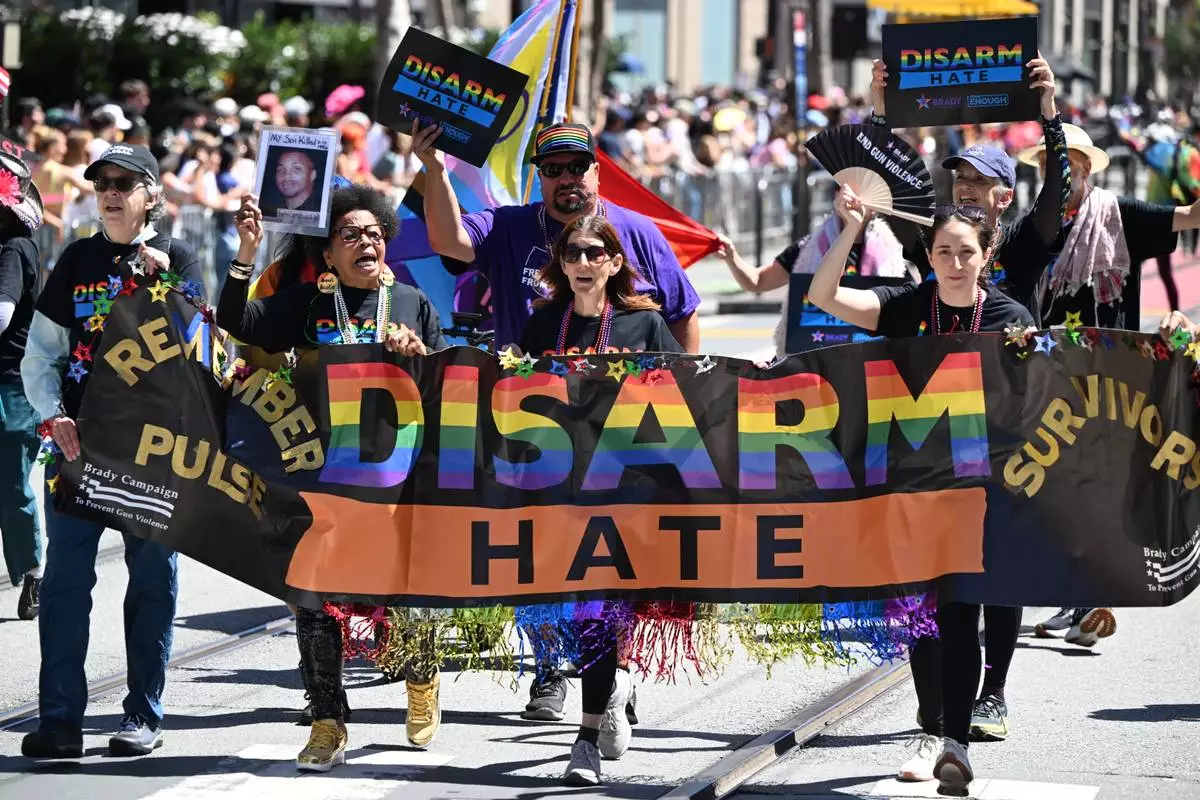
Revelers attend the annual Pride Parade in San Francisco, Monday, June 28, 2026. (AP Photo/Nic Coury)
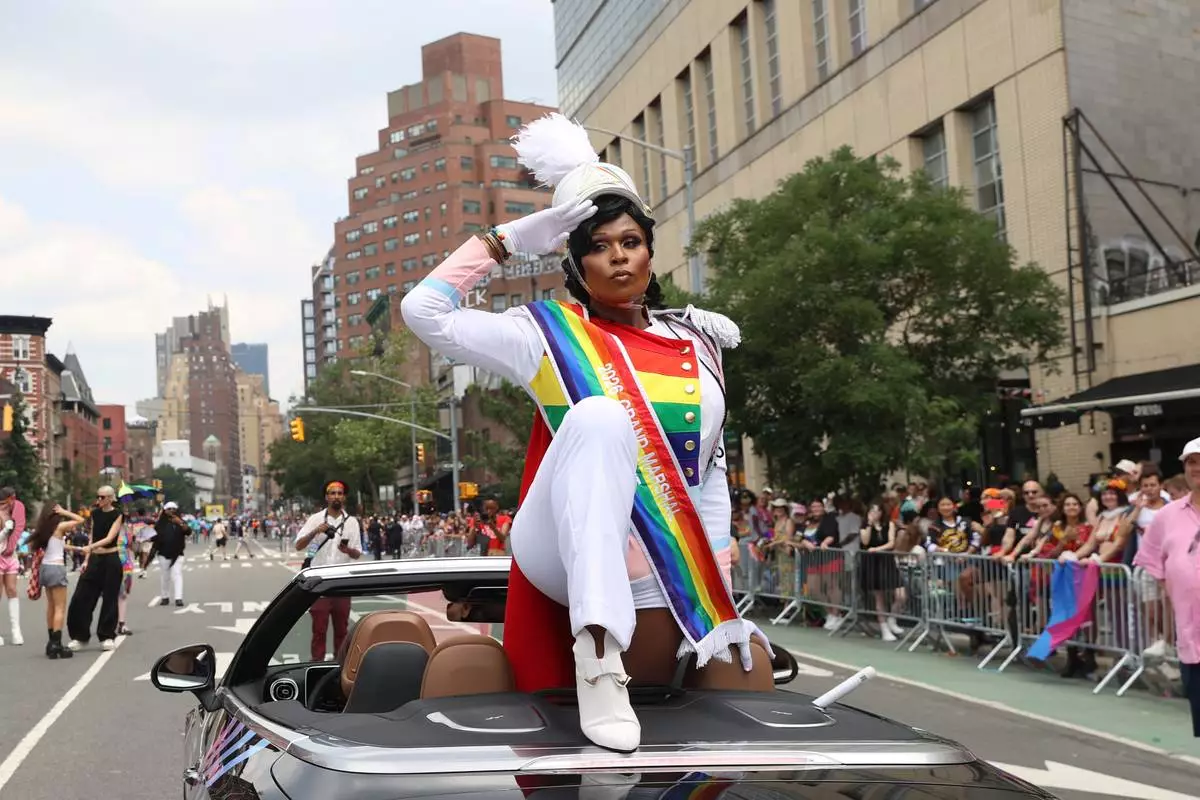
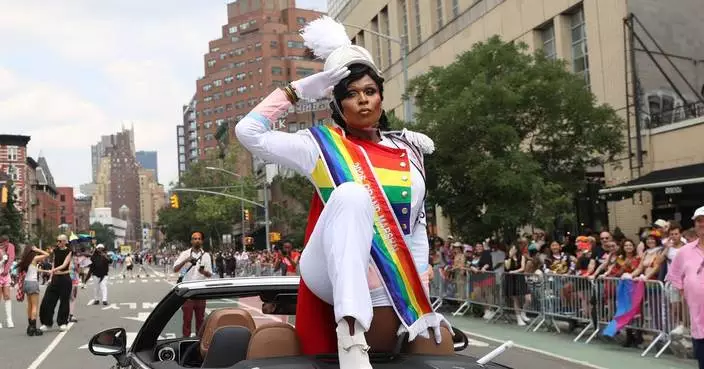
Peppermint, one of the official Grand Marshals for the 2026 NYC Pride March, salutes to parade-goers, Sunday, June 28, 2026 in New York. (AP Photo/Pamela Smith)
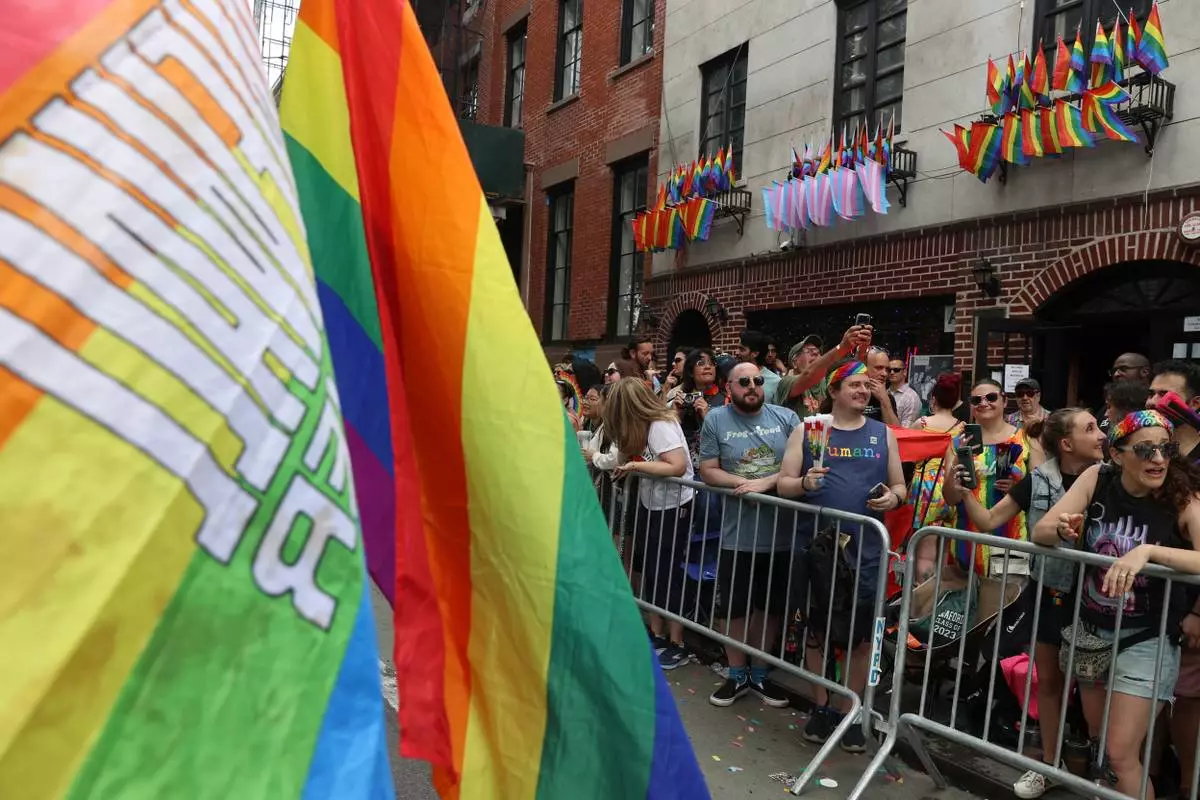
Parade-goers attend the NYC Pride March near the Stonewall Inn, Sunday, June 28, 2026 in New York. (AP Photo/Pamela Smith)
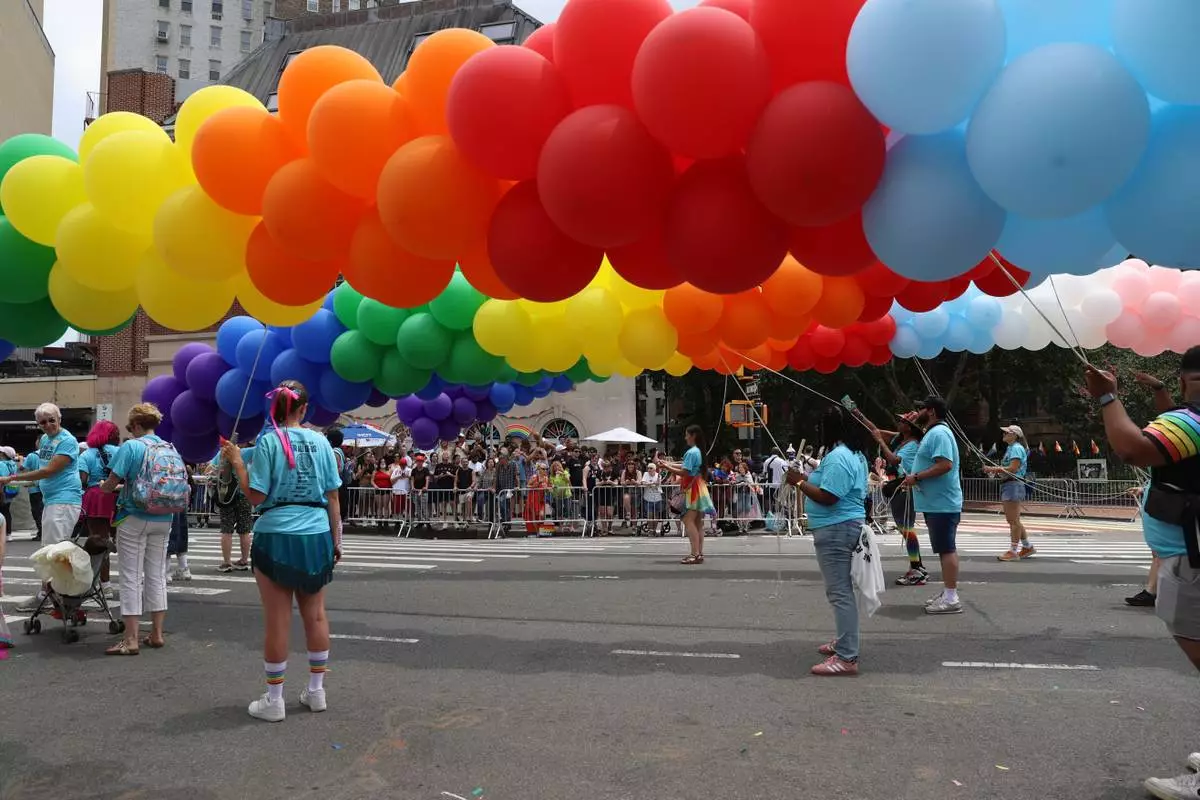
Parade-goers attend the NYC Pride March, Sunday, June 28, 2026 in New York. (AP Photo/Pamela Smith)
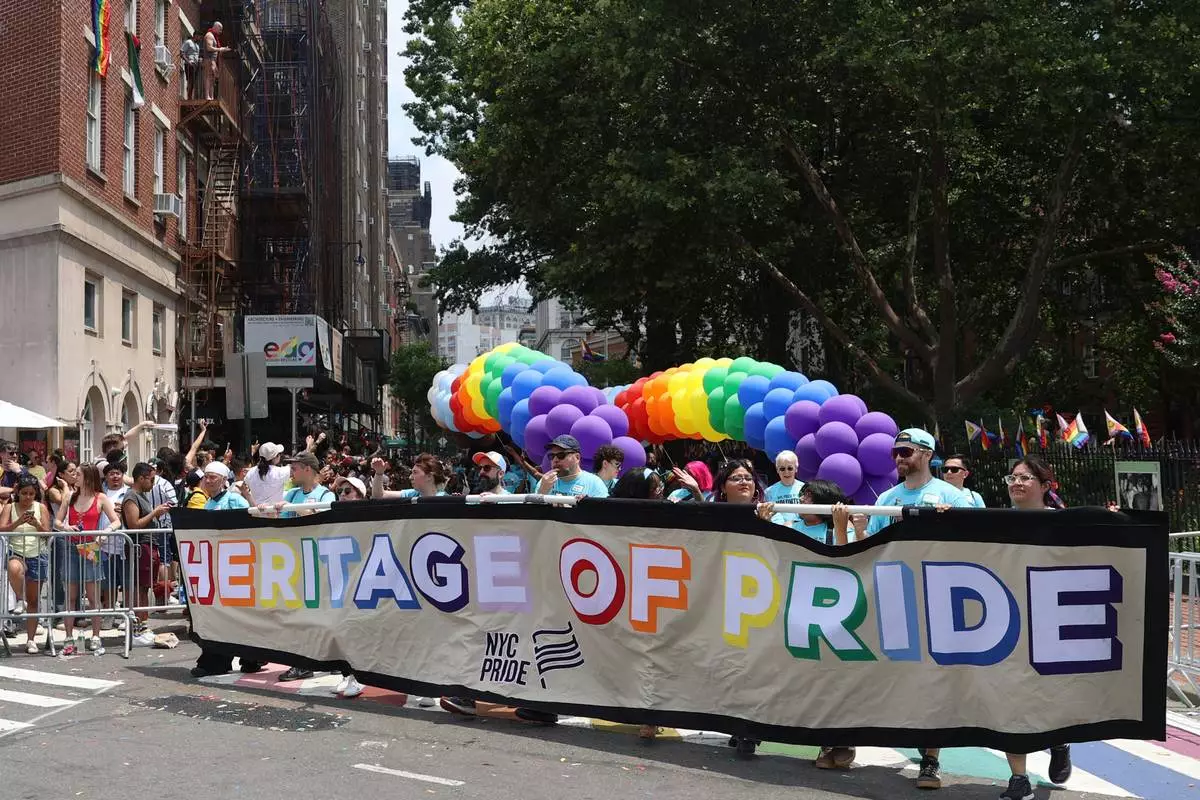
Parade-goers attend the NYC Pride March near the Stonewall Inn, Sunday, June 28, 2026 in New York. (AP Photo/Pamela Smith)
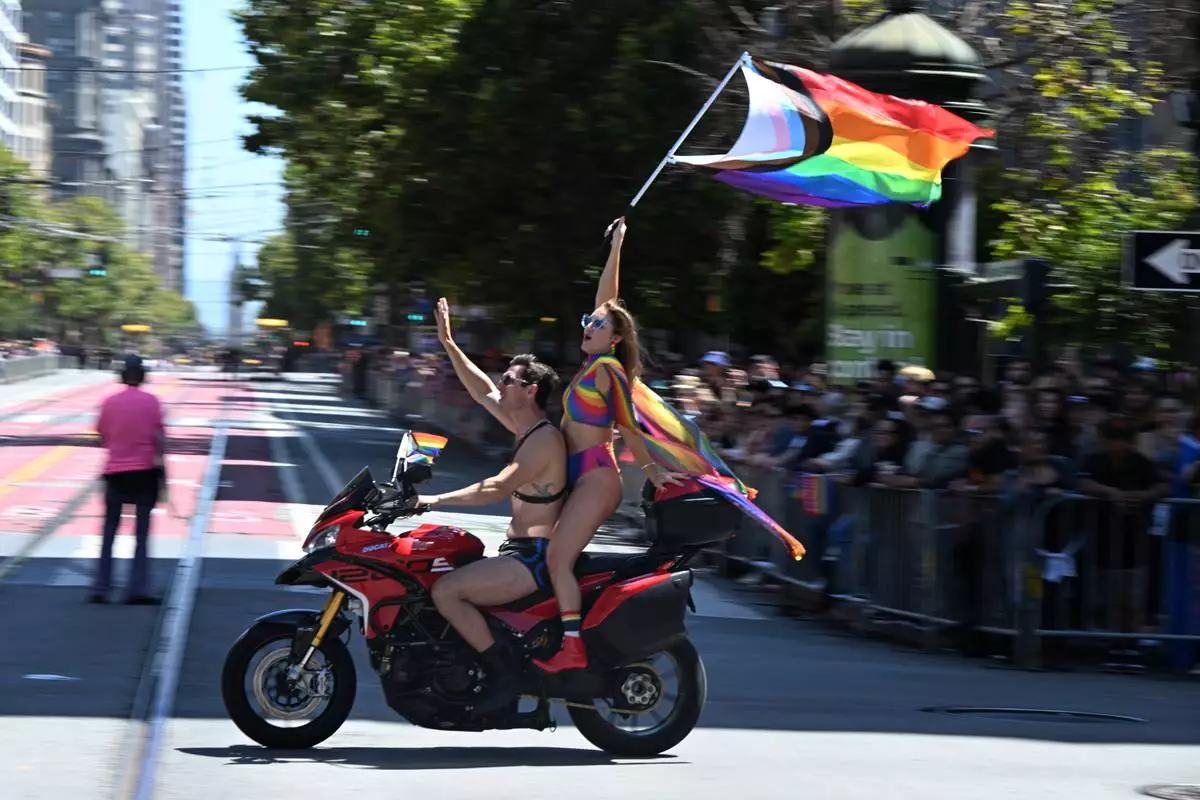
Revelers attend the annual Pride Parade in San Francisco, Monday, June 28, 2026. (AP Photo/Nic Coury)
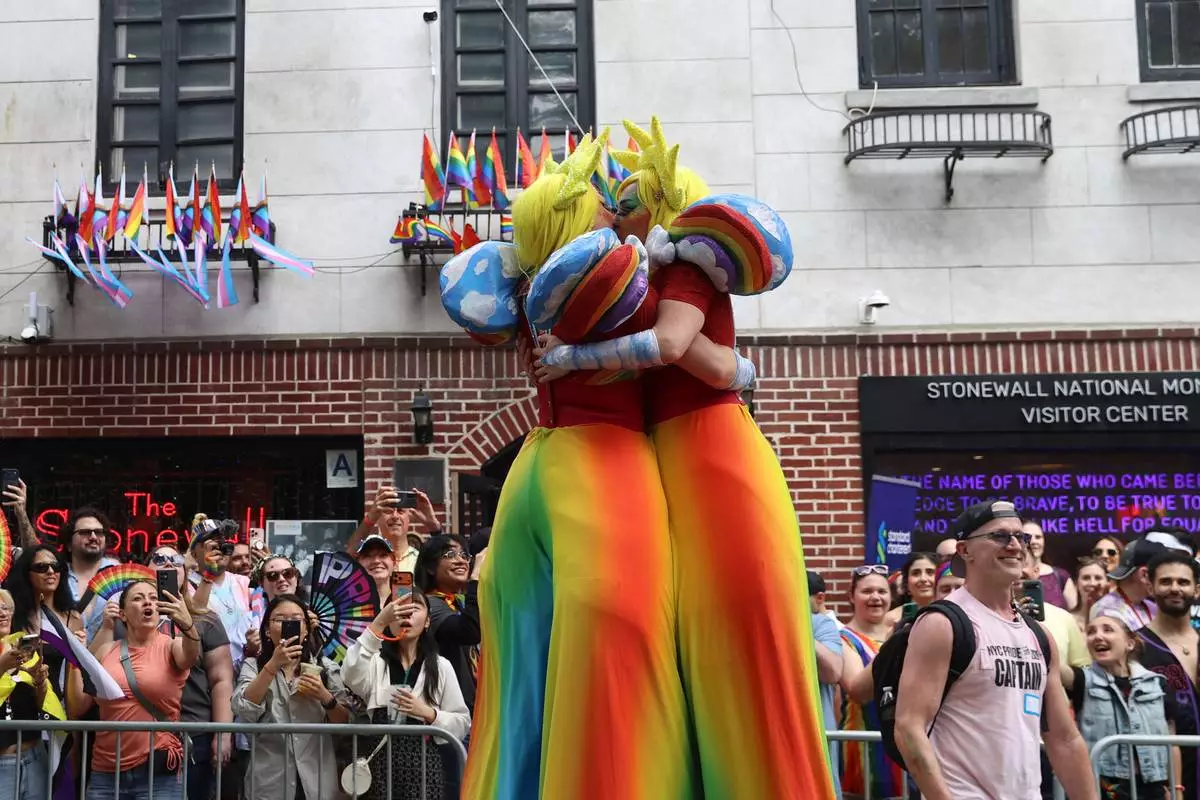
Parade-goers attend the NYC Pride March near the Stonewall Inn, Sunday, June 28, 2026 in New York. (AP Photo/Pamela Smith)
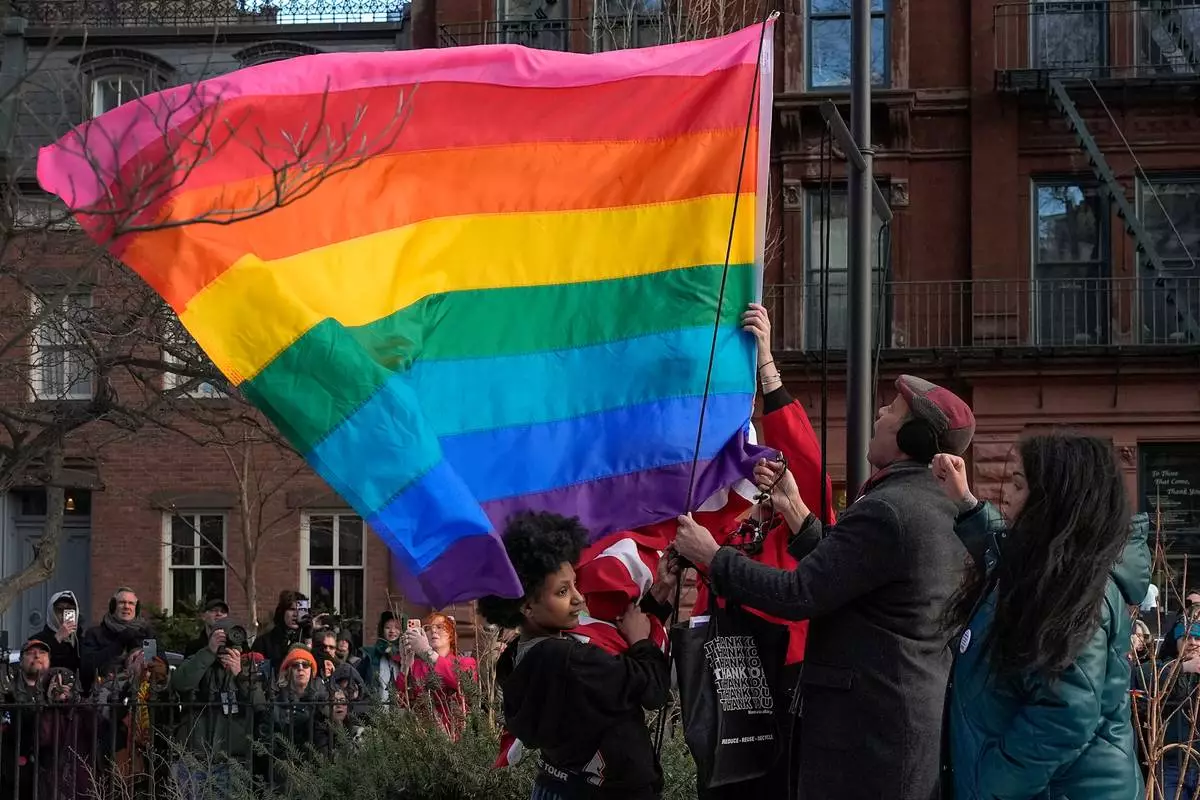
FILE - New York politicians and activists raise a rainbow flag on a pole in Christopher Park across the street from the Stonewall Inn, Thursday, Feb. 12, 2026, in New York, a few days after it was removed by the National Park Service to comply with guidance from the Trump administration. (AP Photo/Yuki Iwamura, File)