China on Monday delivered its third car carrier with a maximum capacity of 10,800 car equivalent units in Guangzhou City, south China's Guangdong Province, marking that China has achieved batch production and serialized building capabilities in this field.
The vessel was handed over to its owner in Guangzhou's Nansha District and will be leased to a logistics company based in the Republic of Korea (ROK) for operation.
Built by Guangzhou Shipyard International Co., Ltd. (GSI) under the China State Shipbuilding Corporation (CSSC), the vessel measures 230 meters in lengths and 40 meters in width. The vessel is powered by a dual-fuel system using liquefied natural gas and conventional fuel, meeting the latest emission standards set by the International Maritime Organization (IMO). The design emphasizes environmental protection, energy efficiency, safety and reliability.
The vessel is capable of flexibly loading electric vehicles, hydrogen-powered cars and heavy-duty trucks. With a maximum capacity of carrying 10,800 vehicles, the car it can carry would stretch over 50 kilometers if lined up bumper to bumper.
"The vessel has 14 vehicle decks and is equipped with more advanced intelligent ship management systems, such as smart visual security systems for the garage and 360-degree panoramic surround-view systems, to ensure safer and smarter navigation," said Lin Jiuyue, manager of the 10,800 car equivalent unit carrier project at GSI.
Following its delivery, the vessel will primarily serve automotive trade routes connecting Southeast Asia, North America and Europe. With global demand for car transportation continuing to rise, GSI has secured more than 40 orders for car carriers. Since their introduction, the 10,000-vehicle-class carriers have gained strong favor in the international market.
"All the 26 car carriers delivered so far have been completed ahead of the contractual schedule. The 11 vessels delivered in 2025 were handed over 151 days earlier on average," said Lin.
Guangzhou, one of China's major shipbuilding bases, has developed a complete supply chain. Local authorities have pledged to continue building Guangzhou into a hub for marine innovation, targeting cutting-edge sectors such as the deep sea, green and smart marine industries.
China's shipping volume and container throughput each exceeded one-third of the global total, while the country held more than 50 percent of global market share in shipbuilding and offshore engineering equipment, according to data released by the Ministry of Natural Resources.
In 2025, the country's three major shipbuilding indicators -- completed shipbuilding output, new orders and orders on hand -- accounted for the largest share of the global market for the 16th consecutive year, according to data released by the Ministry of Industry and Information Technology.
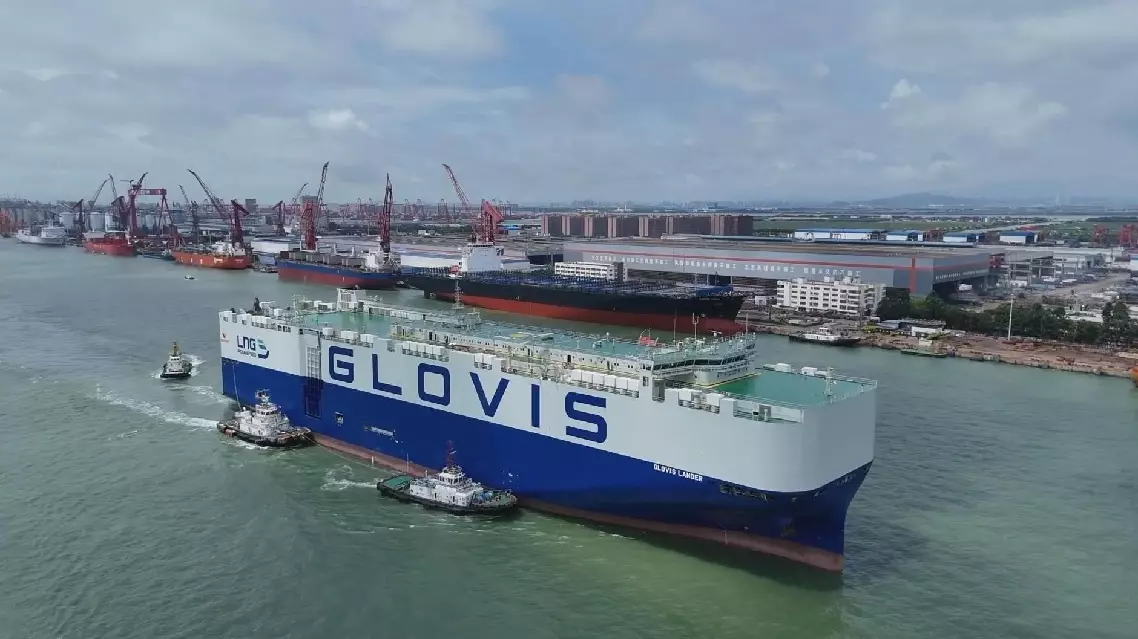
China delivers third 10,000-car vehicle carrier