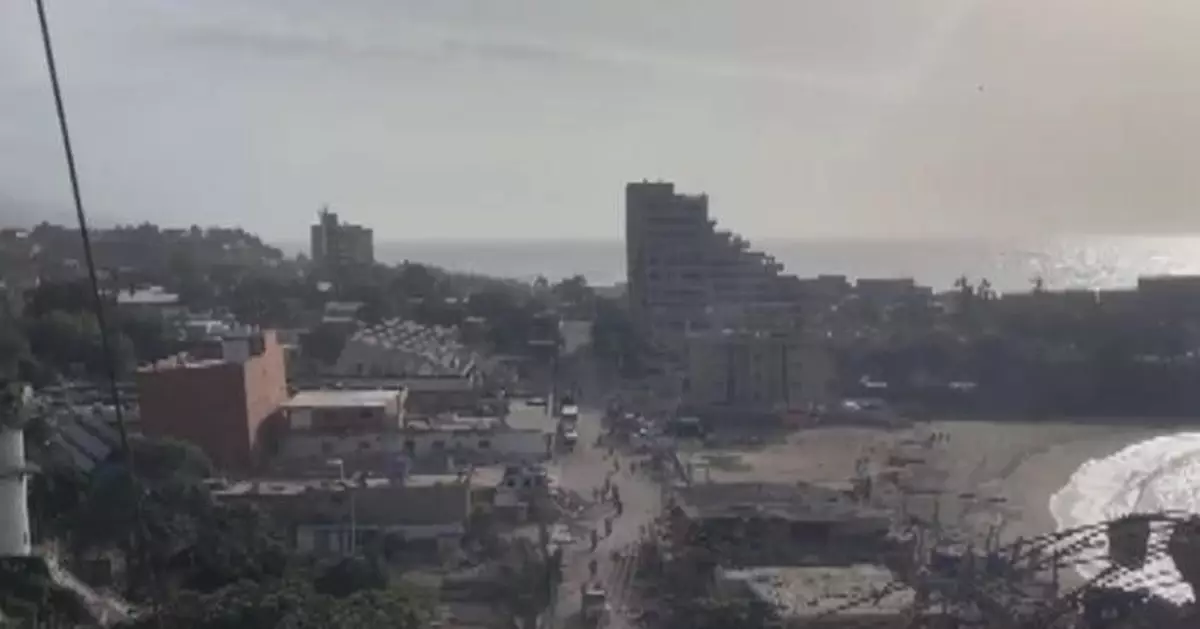
Thousands of families have been displaced after the devastating twin earthquakes struck Venezuela, prompting local governments to accommodate makeshift shelters. The two powerful quakes, with magnitudes of 7.2 and 7.5, hit central Venezuela less than a minute apart on Wednesday, according to the U.S. Geological Survey (USGS).
Venezuelan National Assembly President Jorge Rodriguez said Sunday that the death toll from the quakes had risen to 1,450. Tens of thousands are still believed to be missing.
Chacao, which falls under the jurisdiction of Miranda State and forms a key part of the Caracas metropolitan area, is one of the areas hit hardest by the disaster. In the municipality, many local residents are now living in temporary shelter.
At a makeshift shelter set up in Chacao's Bolivar Square, residents gathered in small clusters, sharing stories of survival and waiting for word on when they might return home.
For Carmen Rosa Vieira, a local resident, sleep had been impossible for three days until Saturday, when she finally found rest at the Chacao shelter and expressed gratitude for the mayor's help.
"I arrived here when the earthquake ended. I came down from my apartment and came here to the plaza, but I didn't want to have a spot here separately. I spent the whole night on a bench. I've gone three days without sleep. Last night was the first time I could sleep -- early this morning, here in this shelter -- thanks to the mayor. We are safe, with very good care from Mayor Gustavo Duque, the mayor of the Chacao municipality, who has looked after the entire community splendidly, including many people who came from outside," she said. Reinaldo Andres Gonzalez De Fuentes, another resident at the shelter, acknowledged that his own home had been spared the worst. Still, he said he would not go back until experts could confirm it was safe.
"Fortunately we didn't suffer as much damage, though we know that many other people are in far worse situations. But here we've had a lot of support from everyone: the mayor's office, and especially the neighbors, who have been bringing things over. They've really looked after us well, and at least here we feel safe, because even though the apartment is in decent condition, it doesn't feel safe to stay there until experts can assess whether it's safe to be there. That's why we have decided to stay here, and here we are doing well," he said. Maria Alexandar Silvia Mateus, another resident, said she was grateful to be alive, but anxious about what would happen if her building was declared uninhabitable.
"I think everyone counts. But we are in a state of uncertainty about what's going to happen -- in our case, or in my particular case -- if they declare the building uninhabitable, where will I have to go, what am I going to do. But we also move forward giving thanks to God that we are alive, because there have been many deaths, especially in La Guaira, where the greatest tragedy happened," she said.
Thousands of families displaced after Venezuela's deadly earthquakes