EDINBURGH, Scotland--(BUSINESS WIRE)--Jun 29, 2026--
A new partnership between two of Scotland's fastest-growing fintechs is set to simplify the regulated onboarding of clients and customers for financial services firms as the sector faces increasing pressure to implement digital infrastructure to meet compliance requirements.
This press release features multimedia. View the full release here: https://www.businesswire.com/news/home/20260629106849/en/
Legado and Amiqus have formed a technology partnership that brings together Amiqus's reusable digital identity and Anti-Money Laundering (AML) capabilities with Legado's regulated communications and electronic signature platform. The result is seamless, connected, compliance-driven client workflows - from verifying identity biometrics to collecting, signing and evidencing documents - in one auditable journey.
The partnership is designed to support a range of regulated workflows: investor, customer, and adviser onboarding; account opening; trust and beneficiary documentation; pension and investment instructions; consent forms; and any regulated document where firms need a clear, auditable record. As part of the collaboration, Legado's LegadoSign product will be fully integrated into the Amiqus platform.
Both companies were founded in Edinburgh and share a client base that includes Virgin Money, FNZ, Quilter, Scottish Building Society, Moneyhub, and Co-op Legal Services, with a growing presence in international markets.
Callum Murray, Founder and CEO of Amiqus, said: “Josif and his team had the foresight to recognise the regulatory shift in how financial institutions meet consumer duty obligations with client communications, now seen as regulated infrastructure by boards and exec teams, central to governance and operational resilience.”
“Our reusable identity wallet is perfectly aligned with their embedded digital signature product and with FNZ as a shared client and platform, there's a huge amount of value we can jointly deliver to their client base, supporting seamless and embedded investor onboarding experiences.”
Josif Grace, Founder and CEO of Legado, said: “Amiqus has been a peer with us amongst scaleups based in Edinburgh and connected via Fintech Scotland for more than a decade, and they're ahead of the curve in areas like AML. We can’t wait to begin working with Callum and his team on strategic opportunities that will benefit both companies and provide significant shared value for our clients.”
Niall Monteith, Head of UK Proposition at FNZ, said: “There are few processes as important as onboarding a new customer in financial services, balancing a truly frictionless experience with the highest standards of compliance and oversight. Having worked with both Amiqus and Legado through the FNZ venture partnership, I’ve seen firsthand the impact of their solutions. Together, they bring a compelling combination of capabilities across identity verification, AML, regulated communications and electronic signing. I’m excited to see how this collaboration develops to deliver a more innovative, integrated approach to onboarding, verification and document completion for regulated firms across the UK.”
For more information on Legado, please visit: https://www.joinlegado.com/
For more information on Amiqus, please visit: https://amiqus.co/

Left to right are Elaine Burgess (Amiqus), Josif Grace (Legado), Callum Murray (Amiqus) and Erin Whyte (Amiqus)
KABUL, Afghanistan (AP) — Overnight ground operations and strikes by Pakistani forces killed at least 36 civilians and wounded more than 160 others, Afghan officials said Monday, as tensions between the neighbors further escalated. One Afghan official said the attacks would be met with retaliation.
Pakistani security forces carried out a ground operation along the Pakistan-Afghanistan border late Sunday, followed by strikes against militant hideouts and safe havens, killing 29 fighters, Pakistan's Information Minister Attaullah Tarar said. Pakistan said the operations were launched in response to multiple militant attacks across Pakistan.
Afghanistan condemned the strikes as a “cowardly act of aggression” and an “act of brutality.” Hayatullah Mohajer Farahi, the deputy minister for publications at the Ministry of Information and Culture, said Afghanistan would respond “in due time.”
“The military regime in a cowardly manner bombed Paktia, Paktika, and Kunar provinces last night,” Farahi said. "This will definitely be retaliated against in due time. The decisions of the regime are not made based on emotions, but rather serious measures are taken at the right time.”
Hamdullah Fitrat, the deputy spokesperson for Afghanistan’s Taliban government, said the Pakistani forces targeted a home in Paktia's Chamkani district, killing an elderly man and a child, while other family members were wounded. When residents gathered to rescue people, the area was struck again, killing 28 villagers and wounding 158, he said.
Six people, mostly women and children, were killed in a village in Giyan district, Paktika province, when another home was struck, he said. A civilian home in Kunar province was also hit, causing no casualties but killing some 30 livestock.
Pakistani officials said an uneasy calm prevailed along the Pakistan‑Afghanistan border Monday, with security forces remaining on high alert.
On Monday, Afghanistan and Pakistan summoned each other's top diplomats to protest the attacks.
Zia Ahmad Takal, the Afghanistan Foreign Ministry's deputy spokesman, accused Islamabad of repeatedly blaming Afghanistan for security incidents inside Pakistan without “credible evidence.”
Pakistan’s behavior “seriously harms the atmosphere of trust between the two countries, good neighborly relations and the security and stability of the region,” Takal said.
Pakistan’s Ministry of Foreign Affairs said it summoned Afghanistan’s top diplomat in Islamabad to protest the involvement of Afghan nationals in recent attacks, including one in Karachi over the weekend.
Tarar, the Pakistani information minister, shared three videos on X that he said showed projectiles striking sprawling camps and safe havens of Jamaat-ul-Ahrar and Fitna al-Khwarij in Afghanistan’s Paktia, Paktika and Kunar provinces. Tarar said the overnight strikes killed “terrorists” and destroyed weapons and ammunition stockpiles.
Tarar said Pakistan’s relentless counter-terrorism campaign “will continue at full pace to wipe out the menace of foreign-sponsored and supported terrorism from the country.”
Pakistan uses the phrase “Khawarij” to refer to Indian-backed Pakistani Taliban and other militants. Jamaat-ul-Ahrar is a breakaway faction of the Pakistani Taliban.
India however, strongly denied any involvement, with Foreign Ministry spokesperson Randhir Jaiswal calling the statements “baseless allegations.” Pakistan should “look inwards, take credible action against the terror infrastructure on its territory,” he said.
Militant attacks targeting Pakistan's police and security forces have surged in recent years. Authorities have blamed the Pakistani Taliban, or TTP, and allied militant groups for most of the violence. The Pakistani Taliban are separate from but allied with the Afghan Taliban that returned to power in 2021.
The Pakistani security operation followed a militant attack targeting the regional headquarters of the paramilitary Rangers in Karachi that killed three soldiers. Security forces killed three attackers and arrested another assailant, whom the military identified as a wounded Afghan national.
Jamaat-ul-Ahrar claimed responsibility for the Karachi attack.
Officials in Pakistan claimed one Afghan suspect was captured following the attack, proving that “Afghan soil and Afghan nationals continue to be used to orchestrate terrorist attacks inside Pakistan.” Police later released the statement of the wounded Afghan detainee, who confessed the Karachi attack was planned by Jamaat‑ul‑Ahrar, though it remained unclear if the confession was made under duress.
Sunday’s cross-border strikes and ground operation came less than three weeks after Pakistan’s military launched airstrikes on what it said were militant hideouts in Afghanistan. They ended about a month of relative calm following what Islamabad had described as an “open war” between the neighboring countries, despite international efforts to broker a lasting peace.
The escalation follows months of tit-for-tat military action. Hundreds of people have been killed in cross-border fighting since February, when Afghanistan launched retaliatory strikes after Pakistan carried out airstrikes inside Afghan territory.
Multiple rounds of talks have failed to secure a lasting ceasefire. China also hosted the two sides in April and Beijing later said Pakistan and Afghanistan had agreed not to escalate their conflict and to explore a solution.
__
Fraser reported from Ankara, Turkey. Associated Press writer Munir Ahmed contributed from Islamabad.
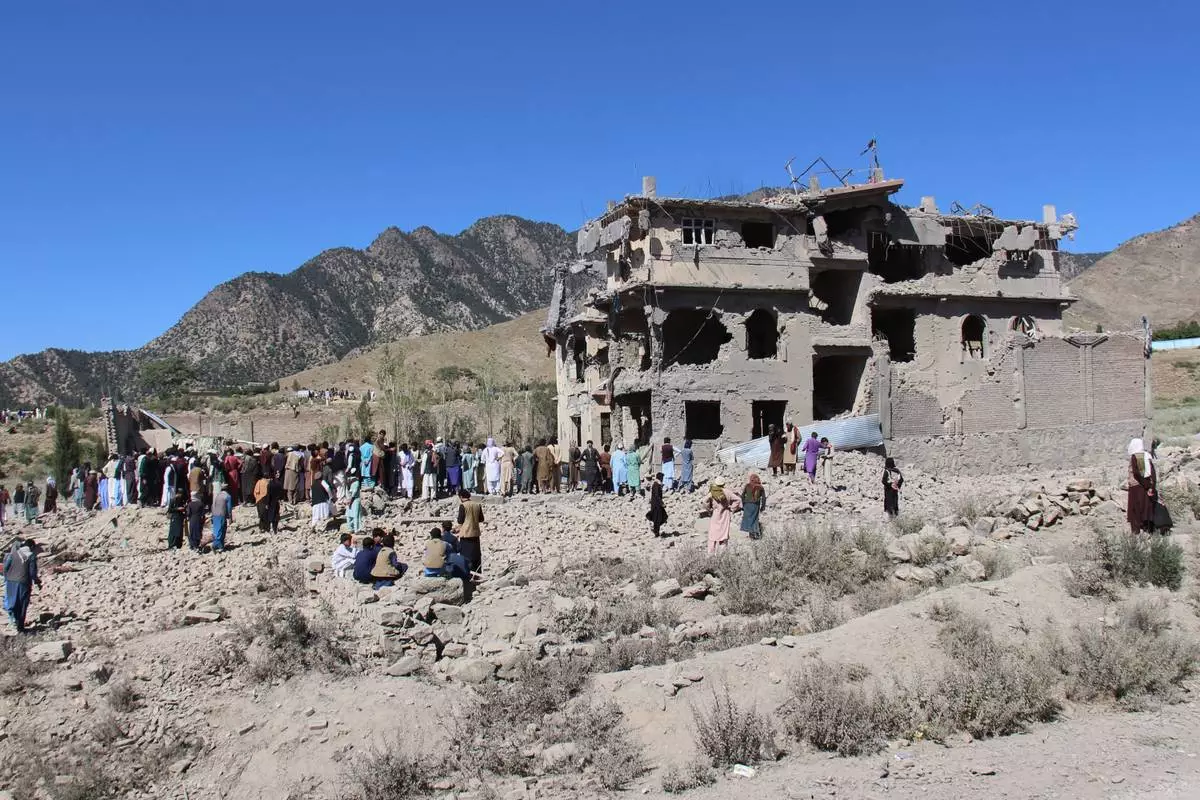
Residents walk through the rubble after what Taliban officials said were Pakistani airstrikes a day earlier that killed civilians, including children, in the village of Mandokhail, Chamkani district, Paktia province, Afghanistan, Monday, June 29, 2026. (AP Photo/Saifullah Zahir)
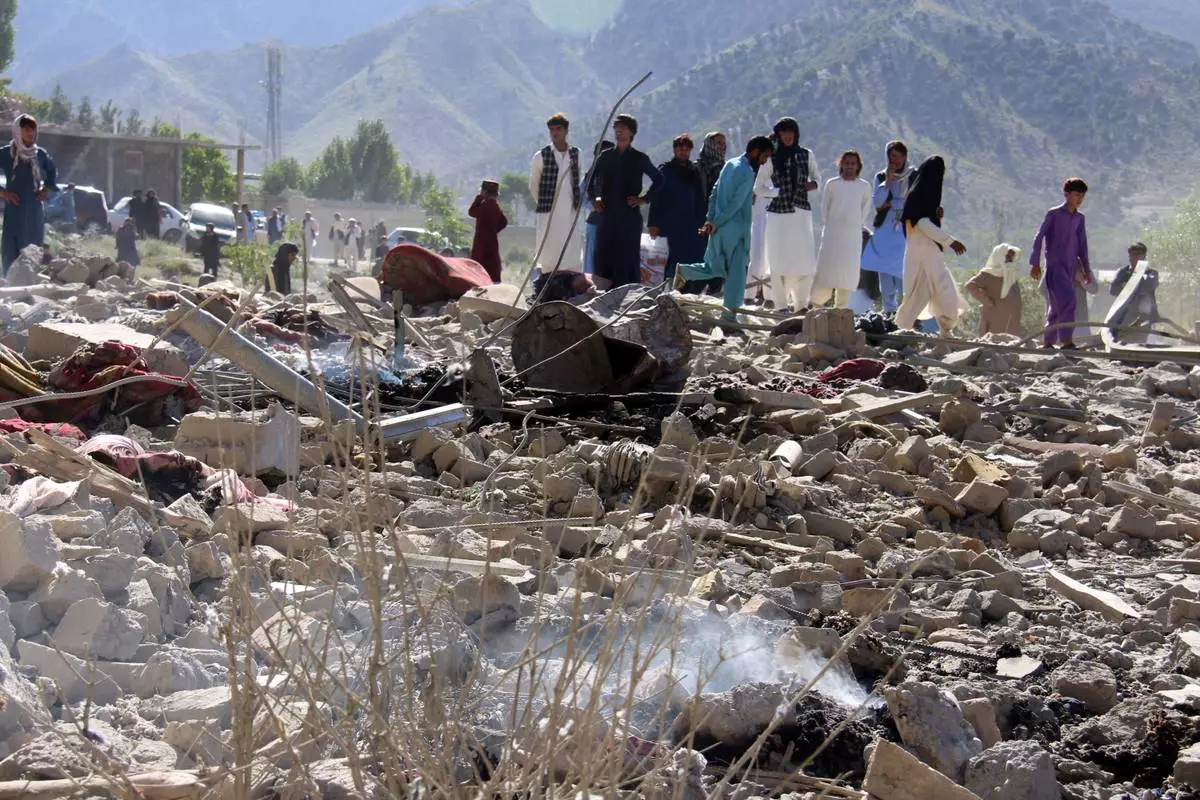
Residents walk through the rubble after what Taliban officials said were Pakistani airstrikes a day earlier that killed civilians, including children, in the village of Mandokhail, Chamkani district, Paktia province, Afghanistan, Monday, June 29, 2026. (AP Photo/Saifullah Zahir)
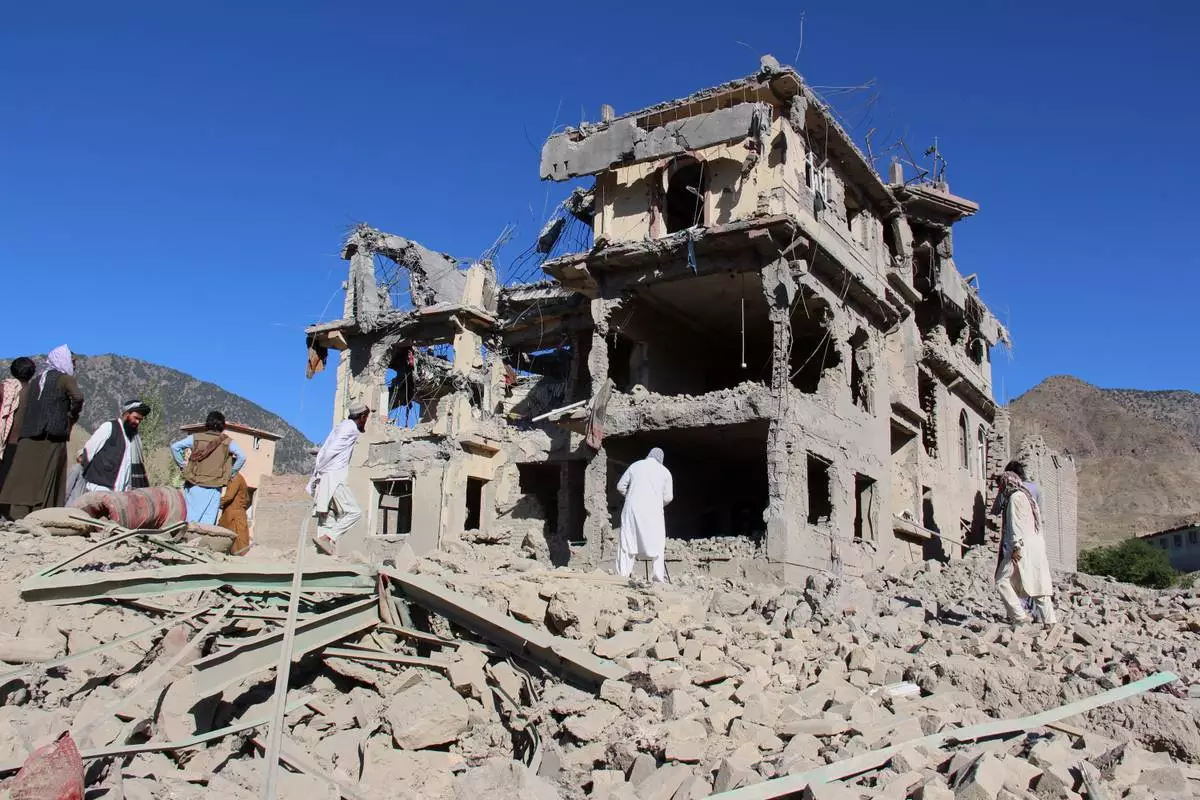
Residents walk through the rubble after what Taliban officials said were Pakistani airstrikes a day earlier that killed civilians, including children, in the village of Mandokhail, Chamkani district, Paktia province, Afghanistan, Monday, June 29, 2026. (AP Photo/Saifullah Zahir)
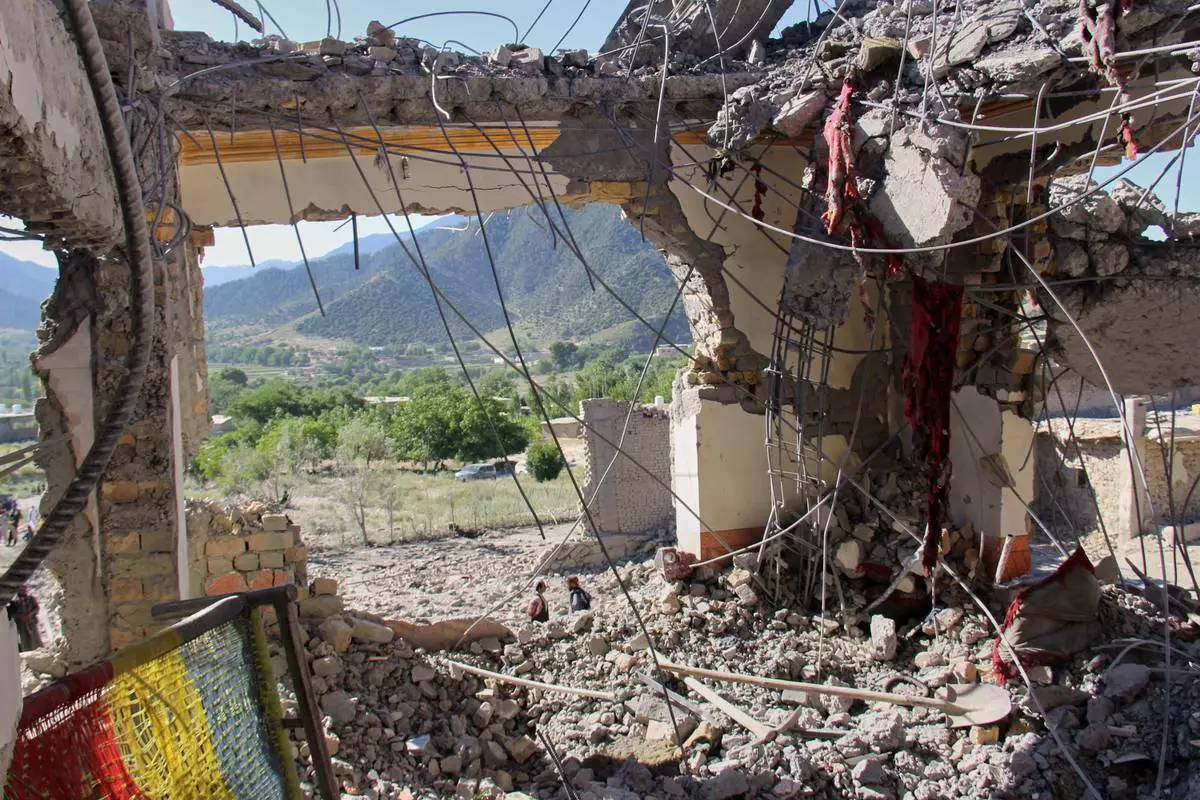
The remains of a destroyed house are seen after what Taliban officials said were Pakistani airstrikes a day earlier that killed civilians, including children, in the village of Mandokhail, Chamkani district, Paktia province, Afghanistan, Monday, June 29, 2026. (AP Photo/Saifullah Zahir)
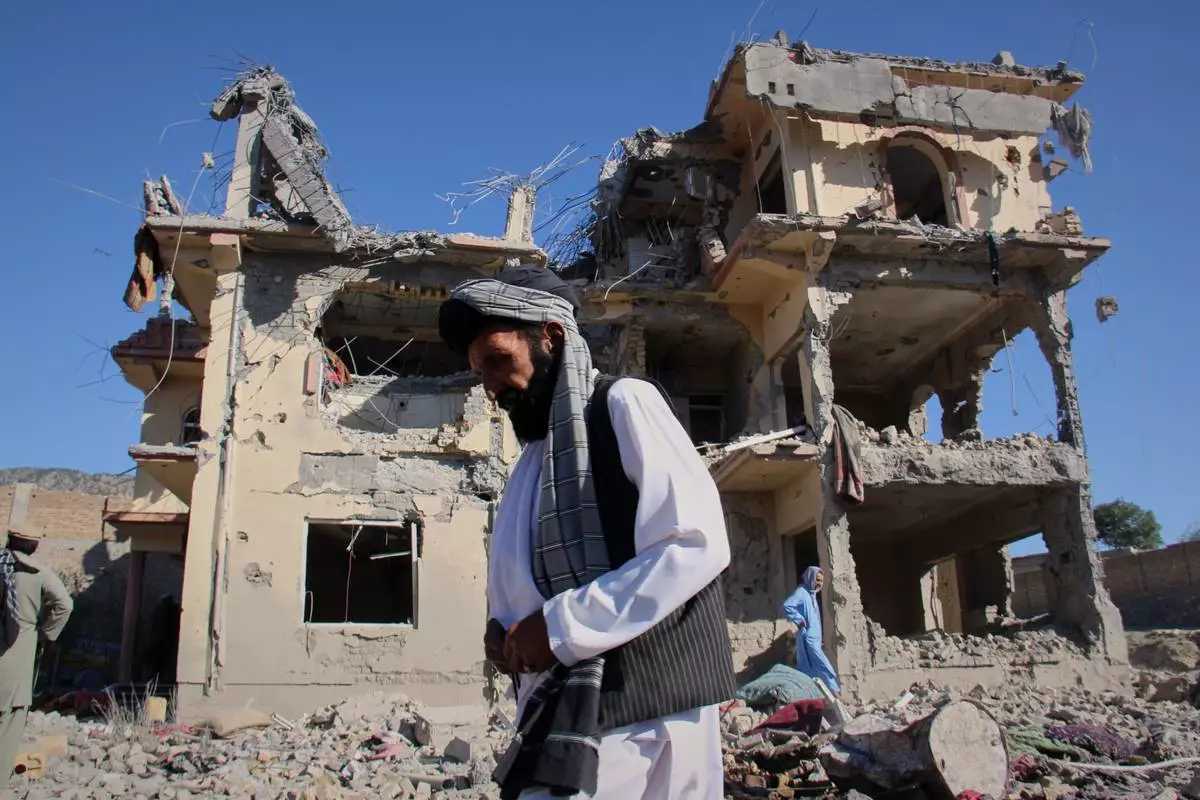
Residents walk through the rubble after what Taliban officials said were Pakistani airstrikes a day earlier that killed civilians, including children, in the village of Mandokhail, Chamkani district, Paktia province, Afghanistan, Monday, June 29, 2026. (AP Photo/Saifullah Zahir)
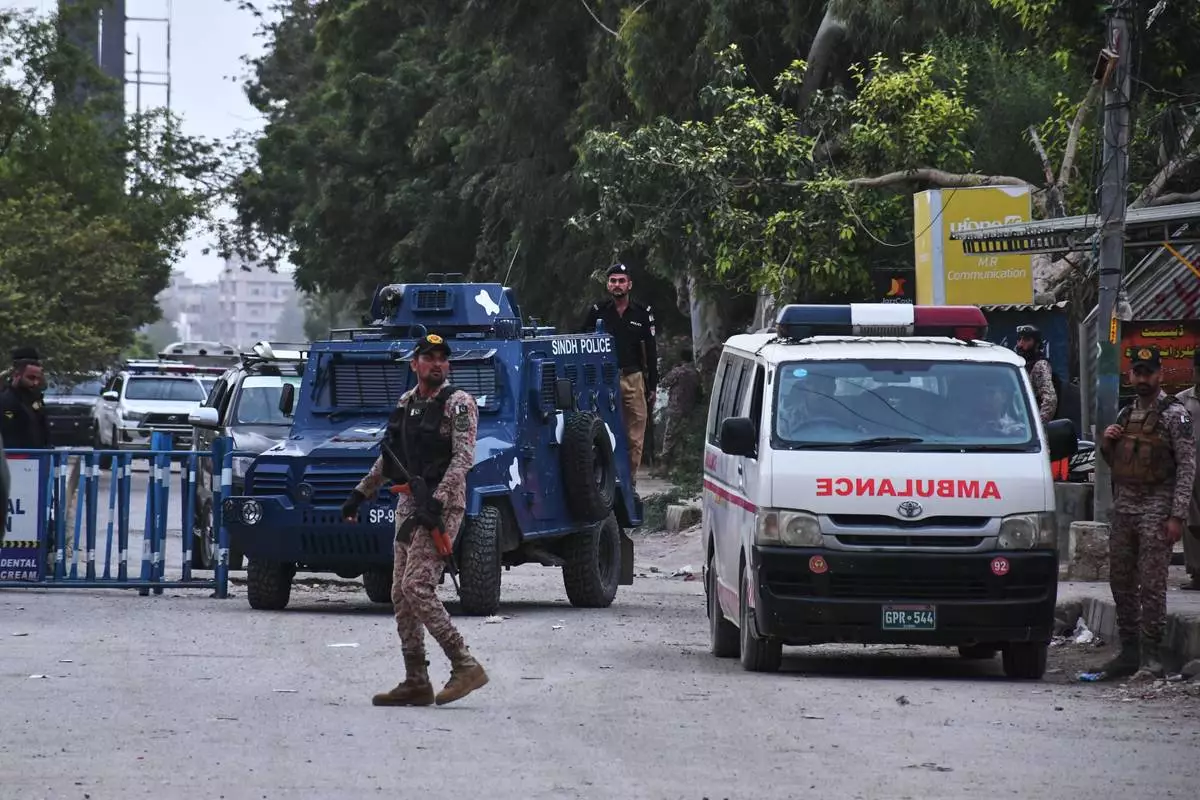
Paramilitary soldiers and police officers stand guard on a road cordoned off near the site of a militant attack at the provincial headquarters of the paramilitary Pakistan Rangers in Karachi, Pakistan, Sunday, June 28, 2026. (AP Photo/Ali Raza)