Skip to Content Facebook Feature Image

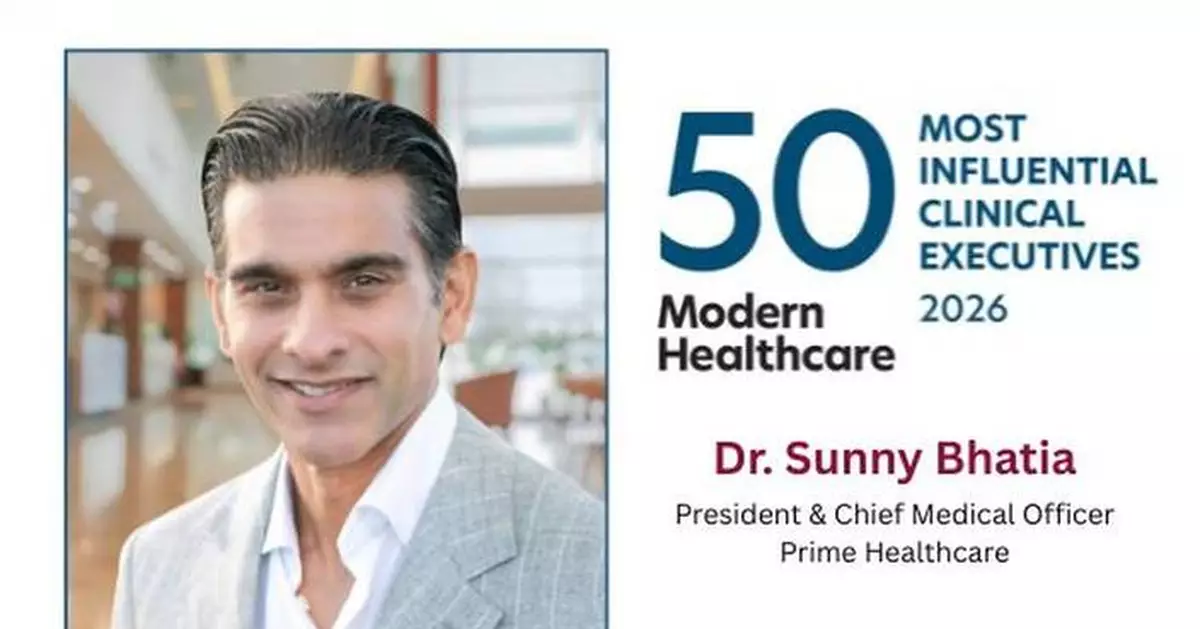
Dr. Sunny Bhatia Honored as One of Modern Healthcare’s 50 Most Influential Clinical Executives

Business

Dr. Sunny Bhatia Honored as One of Modern Healthcare’s 50 Most Influential Clinical Executives
Business

Business

Dr. Sunny Bhatia Honored as One of Modern Healthcare’s 50 Most Influential Clinical Executives

2026-06-29 23:48 Last Updated At:06-30 00:01

ONTARIO, Calif.--(BUSINESS WIRE)--Jun 29, 2026--

Prime Healthcare is proud to announce that Sunny Bhatia, MD, MMM, FACHE, FACC, FSCAI, President and Chief Medical Officer, has been named one of Modern Healthcare's 50 Most Influential Clinical Executives for 2026. The national recognition honors healthcare leaders who are using their medical expertise to improve patient care and shape the industry.

This press release features multimedia. View the full release here: https://www.businesswire.com/news/home/20260629534724/en/

Dr. Bhatia’s recognition reflects his leadership in advancing a physician-led model of healthcare focused on quality, access, clinical excellence, and the long-term sustainability of community hospitals across the country. As president and chief medical officer of one of the nation’s largest physician-led health systems, Dr. Bhatia has helped guide Prime Healthcare’s growth to 55 hospitals and more than 360 outpatient locations across 15 states, while championing initiatives that improve patient safety, outcomes, and broad access to compassionate care.

“I am deeply honored by this recognition, but even more proud of the extraordinary physicians, nurses, clinicians, caregivers, and leaders across Prime Healthcare for what we have accomplished together,” said Dr. Bhatia. “While healthcare continues to evolve, our goal remains unchanged: to deliver exceptional clinical care, improve outcomes, support our communities, and ensure that local hospitals remain strong, accessible, and a source of healing and hope for generations to come.”

This marks the second consecutive year Dr. Bhatia has been recognized among Modern Healthcare's 50 Most Influential Clinical Executives, reflecting the sustained impact of his leadership and commitment. Board certified in six specialties, he leads with a unique combination of hands-on medical experience and strategic oversight to improve patient care.

Under Dr. Bhatia's leadership, Prime Healthcare completed its largest acquisition in 2025, successfully integrating eight Illinois hospitals and affiliated care sites so they could continue to serve local communities. In year one, Prime invested more than $104 million in clinical technology, facility modernization, cybersecurity, telemedicine expansion, and advanced care capabilities, while preserving more than 13,000 healthcare jobs and creating more than 1,000 new positions.

In 2026, Prime expanded its presence in Illinois through the acquisition of Olympia Fields Hospital, earning praise from the Illinois Health Facilities and Services Review Board for its proven track record of strengthening hospitals, fulfilling commitments to communities, and advancing access to care.

Also in 2026, seven Prime Healthcare hospitals were named to Becker's Healthcare's "100 Great Community Hospitals" list, reflecting dedication to clinical excellence, patient safety, health equity, and expanding access to high-quality care in communities nationwide. Additionally, Dr. Bhatia’s leadership has also helped Prime hospitals earn more than 150 Healthgrades achievements throughout the past year for clinical excellence across numerous specialties.

This year, Prime Healthcare also expanded the footprint of its national nonprofit, Prime Healthcare Foundation, with the addition of Central Maine Healthcare, bringing the Foundation's network to 21 nonprofit hospitals across eight states. It committed $150 million in investments to strengthen facilities, services, infrastructure, and medical education in Maine.

Dr. Bhatia's recognition reflects not only his leadership, but also Prime Healthcare and Prime Healthcare Foundation’s enduring commitment to saving struggling community hospitals and ensuring they remain vital community assets where patients can receive compassionate, high-quality care. Since its founding in 2001, Prime Healthcare has invested more than $3.65 billion in hospital improvements and provided more than $16 billion in community benefits and charity care. Today, as one of the nation's largest health systems, Prime remains focused on building a healthier future by investing in people, innovation, and the long-term sustainability of community-based healthcare.

About Prime Healthcare and Prime Healthcare Foundation

Prime Healthcare is an award-winning health system operating 55 hospitals and more than 360 outpatient locations in 15 states, providing over 3 million patient visits annually. It is one of the nation’s leading health systems, with more than 60,000 employees and physicians. Twenty-one of the Prime Healthcare hospitals are members of the Prime Healthcare Foundation, a 501(c)(3) not-for-profit public charity. Based in Ontario, California, Prime Healthcare is nationally recognized for award-winning quality care and has been named a 10 Top and 15 Top Health System by Truven Health Analytics. Its hospitals have been named among the nation’s “100 Top Hospitals” 75 times and is one of Healthgrades most awarded health systems in the nation for patient safety. To learn more, please visit primehealthcare.com.

Find us on:

LinkedIn: linkedin.com/company/prime-healthcare/
Facebook: facebook.com/primehealthcare/
Instagram: instagram.com/prime_healthcare/

Dr. Sunny Bhatia Honored as One of Modern Healthcare’s 50 Most Influential Clinical Executives

Dr. Sunny Bhatia Honored as One of Modern Healthcare’s 50 Most Influential Clinical Executives
NEW YORK (AP) — U.S. stocks are rising Monday and recovering some of their losses from a rare losing week.

The S&P 500 climbed 0.8% after erasing a midmorning stumble and was on track to break a five-day losing streak. It’s coming off just its second losing week in the last 13. The Dow Jones Industrial Average was up 243 points, or 0.5%, as of 11:45 a.m. Eastern time, and the Nasdaq composite was 1.4% higher.

Comcast helped lead the way and jumped 6.6% after saying it will split off its NBCUniversal media business and Sky from its broadband and wireless business. Its stock came into the day with a loss of 17.3% for the year so far.

Several stocks boosted by the artificial-intelligence boom also rose after Samsung Electronics and SK Hynix said they will invest roughly $518 billion in a new chipmaking hub in South Korea, as its president hopes to capitalize on surging AI demand.

Applied Materials, whose equipment helps make semiconductors, rallied 10.9% to bring its gain for the year so far to roughly 170%.

AI stocks have been on a roller-coaster ride recently after soaring to tremendous heights. They’re under pressure because of worries that their profits can’t possibly keep pace with the huge gains for their stock prices. And the drops have an outsized effect on investors because AI stocks have become some of Wall Street’s largest and most influential, giving them more weight on indexes than others.

SpaceX, which owns the xAI business along with rockets, has already become worth more than $2 trillion after its stock made its debut on the Nasdaq earlier this month, with sharp rises and falls along the way. It’s become big enough that Nasdaq said Elon Musk’s company will join the Nasdaq 100 index before trading begins on July 7, which will force funds tracking the index to buy the stock.

SpaceX rose 1.9%.

That helped offset a 7% drop for Verizon Communications, which said it's paying $625 million as part of a deal to combine its international wireline connectivity and managed network services business with some of London-based BT Group's subsidiaries in a joint venture.

The gains for the stock market came even though oil prices rose. The price for a barrel of Brent crude, the international standard, climbed 1.6% to $73.77, pulling slightly above where it was before the war with Iran began. A barrel of benchmark U.S. crude rose 1.9% to $70.57.

Following attacks across the Persian Gulf over the weekend, President Donald Trump said Monday on social media that Iran had requested a meeting with U.S. counterparts, though one of Iran’s top negotiators said no further talks had been scheduled.

The hope is that an end to the war with Iran will give oil tankers full access again to the Strait of Hormuz, allowing them to exit the Persian Gulf and deliver crude to customers worldwide. That would help lower the price of oil, whose jumps because of the war have sent a punishing wave of inflation around the world.

If oil prices do recede and stay low enough, it could keep enough pressure off inflation to allow the Federal Reserve and other central banks to keep interest rates steady or even cut them instead of hiking them. Higher interest rates can keep a lid on inflation, but they also slow the economy and hurt prices for all kinds of investments. High yields worldwide have been rattling investors since oil prices burst above $100 per barrel.

The yield on the 10-year Treasury edged down to 4.37% from 4.38% late Friday and from 4.56% early this month.

In stock markets abroad, indexes were mixed across Europe and Asia.

Stocks jumped 1.6% in Hong Kong and 1.2% in Shanghai for two of the world’s biggest gains, while South Korea’s Kospi slipped 0.2%.

AP Business Writers Chan Ho-him and Matt Ott contributed to this report.

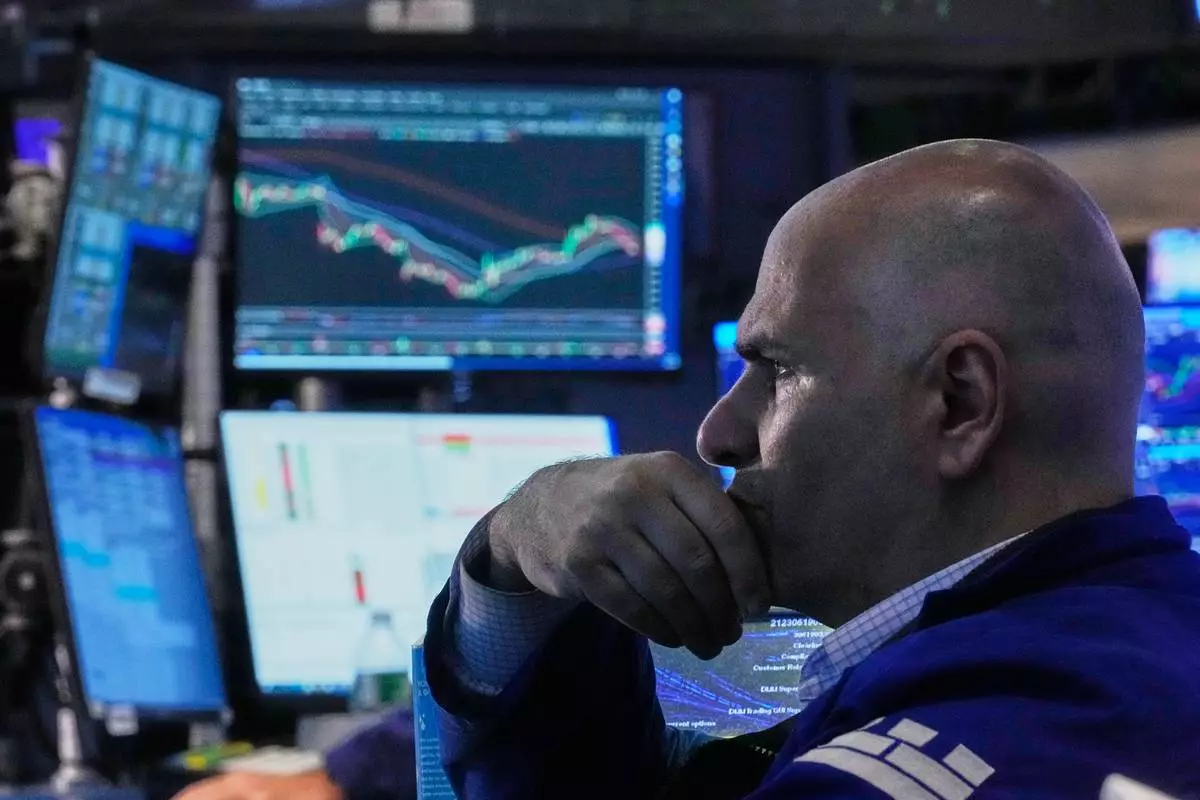
Specialist Philip Finale works on the floor of the New York Stock Exchange, Friday, June 26, 2026. (AP Photo/Richard Drew)

Specialist Philip Finale works on the floor of the New York Stock Exchange, Friday, June 26, 2026. (AP Photo/Richard Drew)

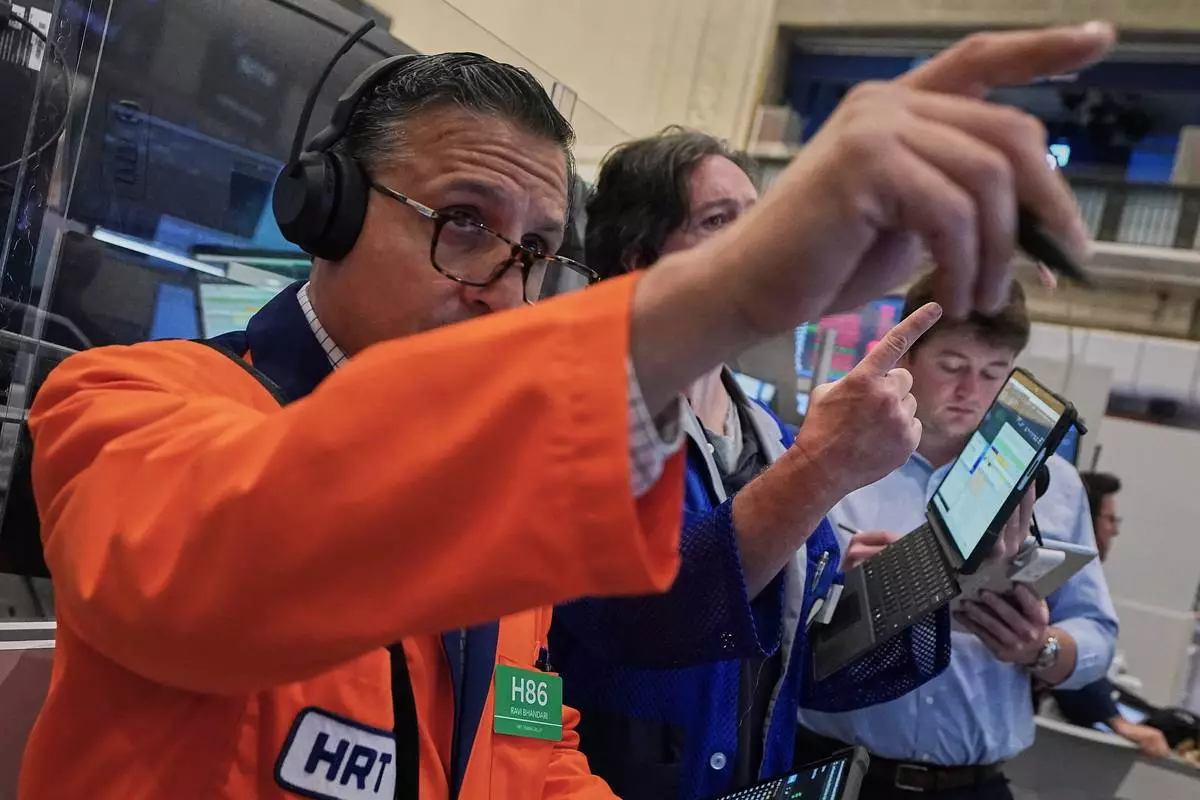
Ravi Bhandari, left, works with fellow options traders on the floor of the New York Stock Exchange, Friday, June 26, 2026. (AP Photo/Richard Drew)

Ravi Bhandari, left, works with fellow options traders on the floor of the New York Stock Exchange, Friday, June 26, 2026. (AP Photo/Richard Drew)

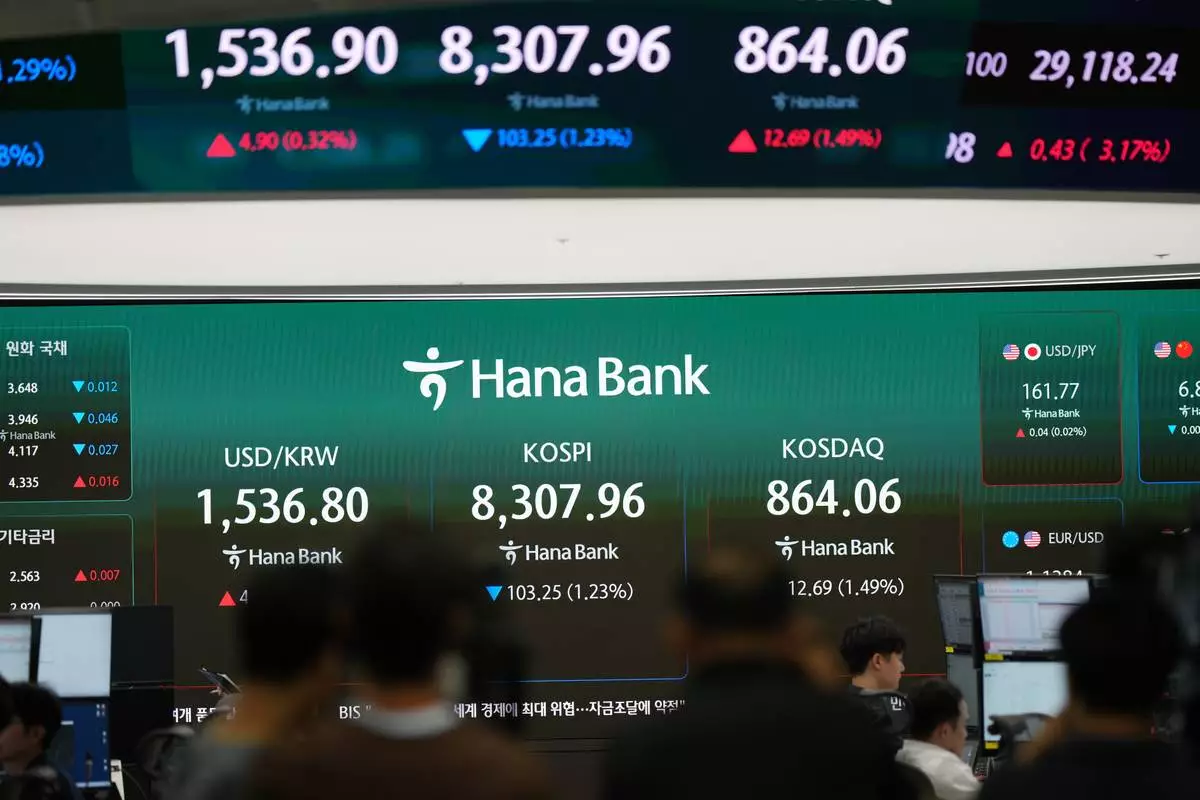
Media cover near the screens showing the Korea Composite Stock Price Index (KOSPI), the foreign exchange rate between U.S. dollar and South Korean won and the Korean Securities Dealers Automated Quotations (KOSDAQ) at a dealing room of Hana Bank in Seoul, South Korea, Monday, June 29, 2026. (AP Photo/Lee Jin-man)

Media cover near the screens showing the Korea Composite Stock Price Index (KOSPI), the foreign exchange rate between U.S. dollar and South Korean won and the Korean Securities Dealers Automated Quotations (KOSDAQ) at a dealing room of Hana Bank in Seoul, South Korea, Monday, June 29, 2026. (AP Photo/Lee Jin-man)

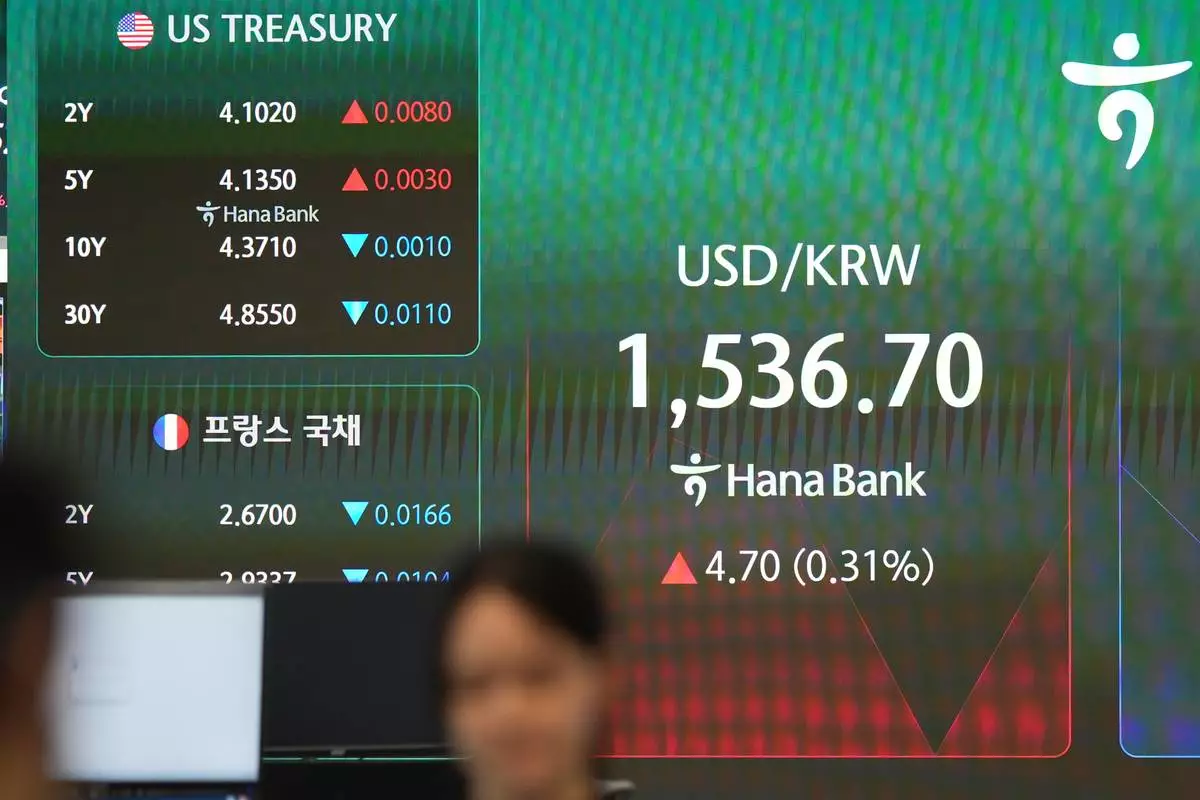
A dealer stands near the screen showing the foreign exchange rate between U.S. dollar and South Korean won at a dealing room of Hana Bank in Seoul, South Korea, Monday, June 29, 2026. (AP Photo/Lee Jin-man)

A dealer stands near the screen showing the foreign exchange rate between U.S. dollar and South Korean won at a dealing room of Hana Bank in Seoul, South Korea, Monday, June 29, 2026. (AP Photo/Lee Jin-man)

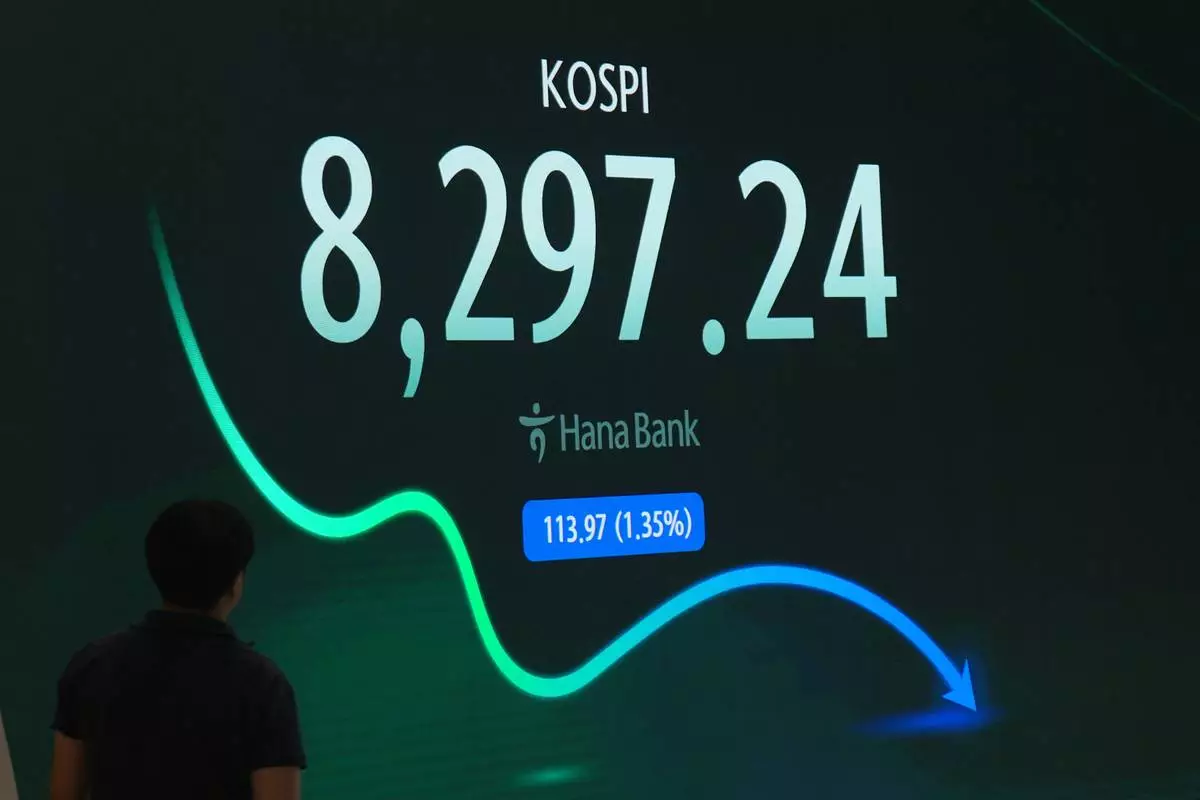
A member of media looks at the screen showing the Korea Composite Stock Price Index (KOSPI) at a dealing room of Hana Bank in Seoul, South Korea, Monday, June 29, 2026. (AP Photo/Lee Jin-man)

A member of media looks at the screen showing the Korea Composite Stock Price Index (KOSPI) at a dealing room of Hana Bank in Seoul, South Korea, Monday, June 29, 2026. (AP Photo/Lee Jin-man)

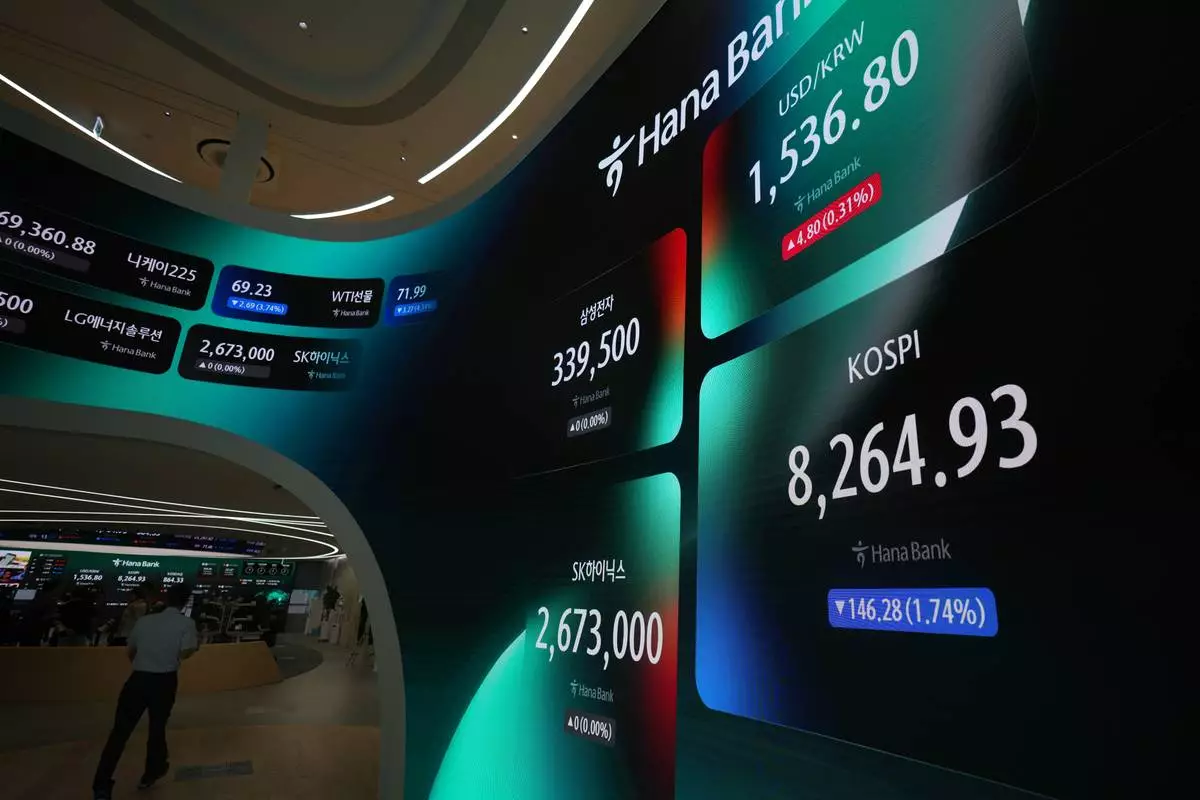
A huge screen shows the Korea Composite Stock Price Index (KOSPI) and the foreign exchange rate between U.S. dollar and South Korean won at a dealing room of Hana Bank in Seoul, South Korea, Monday, June 29, 2026. (AP Photo/Lee Jin-man)

A huge screen shows the Korea Composite Stock Price Index (KOSPI) and the foreign exchange rate between U.S. dollar and South Korean won at a dealing room of Hana Bank in Seoul, South Korea, Monday, June 29, 2026. (AP Photo/Lee Jin-man)

Recommended Articles