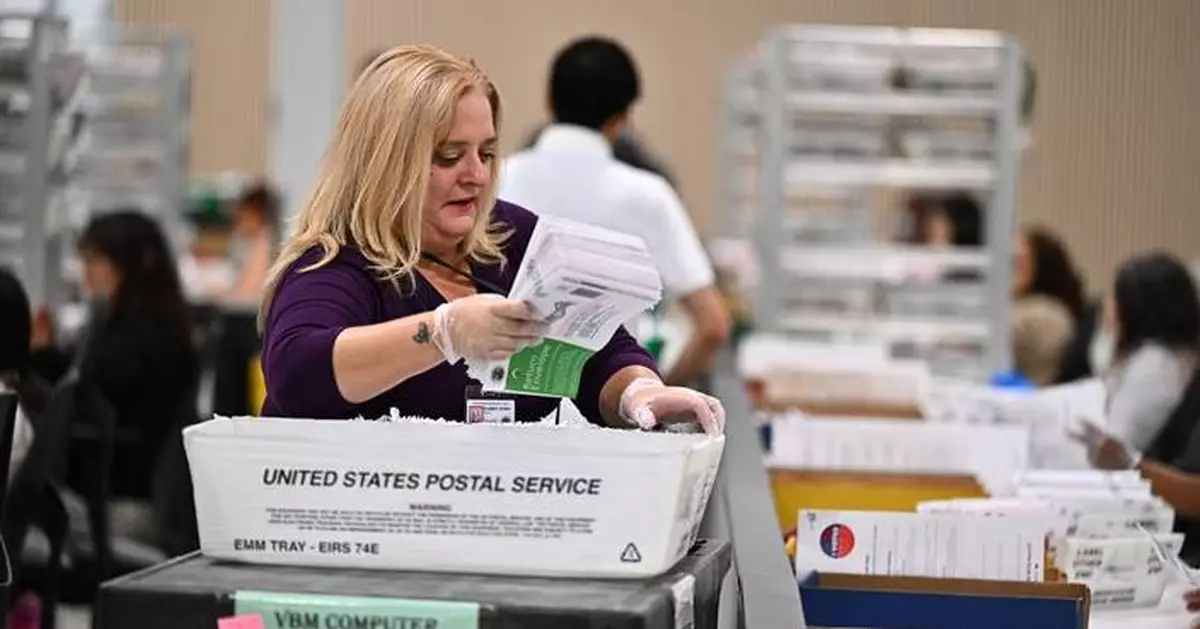
States that allow mail ballots to be counted after Election Day reacted with relief Monday after the U.S. Supreme Court rejected a Republican effort to outlaw the practice.
A decision favoring the state of Mississippi over the Republican National Committee delivered an immediate reprieve to the 14 states with grace periods for regular mail ballots, as well as heading off what was expected to be a scramble to alter the practice and inform voters just months ahead of the midterm elections.
At least one state, Ohio, had preemptively changed its law in anticipation of a different result from the high court, and 15 other states have such grace periods specifically for military and overseas voters.
Washington Secretary of State Steve Hobbs said the ruling means "the thousands of voters whose ballots are postmarked on time but received after Election Day still have their voices heard.”
Mail ballots, also called absentee ballots, have been the source of conspiracy theories from President Donald Trump, who groundlessly blames them for his loss in the 2020 election. The RNC and Libertarian Party had sued to overturn a Mississippi law that permits the counting of mail ballots that are postmarked by Election Day and arrive up to five days later, on grounds that it violated federal law.
Justice Amy Coney Barrett, a Trump appointee, wrote for the majority that the practice is legal.
"Nothing in the federal election-day statutes requires ballots to be received by Election Day,” she wrote, adding that the court considered that very narrow question without wading into more sweeping declarations about absentee voting in general or the authority of Congress versus states over election law.
In Illinois, where mail-in ballots accounted for up to a quarter of this year's primary vote, the state elections board had budgeted $300,000 for a television and radio ad campaign to educate voters about potential changes to the mail ballot deadline. Spokesman Matt Dietrich said that campaign will be called off after the court's ruling. Illinois allows mail ballots to be counted if they are postmarked by Election Day and received within 14 days.
“Anytime you have a change in the administration of elections that affects voters, it is a big challenge to us to make sure that voters understand what that change is,” he said.
California, which has a seven-day grace period, has been a regular target of Trump and other Republicans who criticize the state's slow-counting of late-arriving ballots and have used the gap to spread conspiracy theories about voter fraud.
California Secretary of State Shirley Weber called Monday's ruling "a win for voters, for the rule of law, and for the future of our democracy.”
Mississippi Secretary of State Michael Watson called the decision a victory for states' rights, including the ability to set election rules as long as they don't conflict with federal law.
In addition to California, Illinois and Mississippi, the other states that count regular mail ballots received after Election Day are Alaska, Maryland, Massachusetts, Nevada, New Jersey, New York, Oregon, Texas, Virginia, Washington and West Virginia.
Data shows that mail ballots are popular options across all 50 states for both Republican and Democratic voters.
Although the RNC was party to the case and not the Trump administration itself, national party committees of a sitting president’s party typically operate in concert with the president’s political strategies. Trump also has effectively taken over operations of the RNC, the GOP's main fundraising and political operation.
Calling Monday's ruling “a tremendous loss,” Trump used it as a way to push his sweeping election law bill that has stalled on Capitol Hill despite Republican control in both chambers of Congress.
In a Truth Social post, the president declared it “more important than ever to pass THE SAVE AMERICA ACT,” his name for legislation that would require voters nationally to document their U.S. citizenship to register to vote, show certain photo identification to cast ballots and limit who can vote with a mail ballot. RNC Chairman Joe Gruters issued a statement aligning with Trump, saying Monday's ruling was justification to pass the congressional proposal.
Lower federal courts have issued rulings blocking the Trump administration’s efforts to impose new restrictions on mail ballots and to create a national voter list, among other proposed changes. Judges in those cases have consistently said the Constitution vests authority for setting election rules with Congress and the states, not the president.
While Barrett framed Monday’s opinion on the narrower question of the mail ballot deadline, the decision could bolster hopes among Democrats that the high court will look skeptically on the president’s assertion of power over elections if other cases land before it.
Massachusetts Secretary of State Bill Galvin said he was relieved because the ruling was a potential sign that other cases could go Democrats' way. But he accused the president and RNC of trying to disenfranchise voters and said he was alarmed by the narrow 5-4 decision in the case.
“What’s troubling was that so many of the other justices were willing to sacrifice the rights of voters,” said Galvin, a Democrat.
Perhaps nowhere was the case being watched more closely than Alaska, where Native and rural communities dotted across a vast landscape rely on the state's grace period to ensure their ballots get counted. Planes are often the only way ballots can get from polling locations to counting locations.
Jacqueline De León, a senior staff attorney with the Native American Rights Fund, was among the attorneys who filed a brief with the Supreme Court on behalf of Alaska Native and Native American groups. The brief highlighted the challenges they face, in particular where many communities are accessible only by air or water and rely on air service for mail.
“For many Native communities, voting by mail is shaped by long distances to election offices, no home mail delivery, unreliable postal service, lack of access to transportation, and the realities of living in rural and remote areas,” she said. “Ballots cast by election deadlines should not be discarded simply because substandard service or weather delays cause them to arrive after Election Day.”
Associated Press writers Bill Barrow and Sudhin Thanawala in Atlanta, Becky Bohrer in Juneau, Alaska, John Hanna in Topeka, Kansas, Josh Kelety in Phoenix, Ali Swenson in New York and graphic artist Kevin Vineys in Washington contributed to this report.
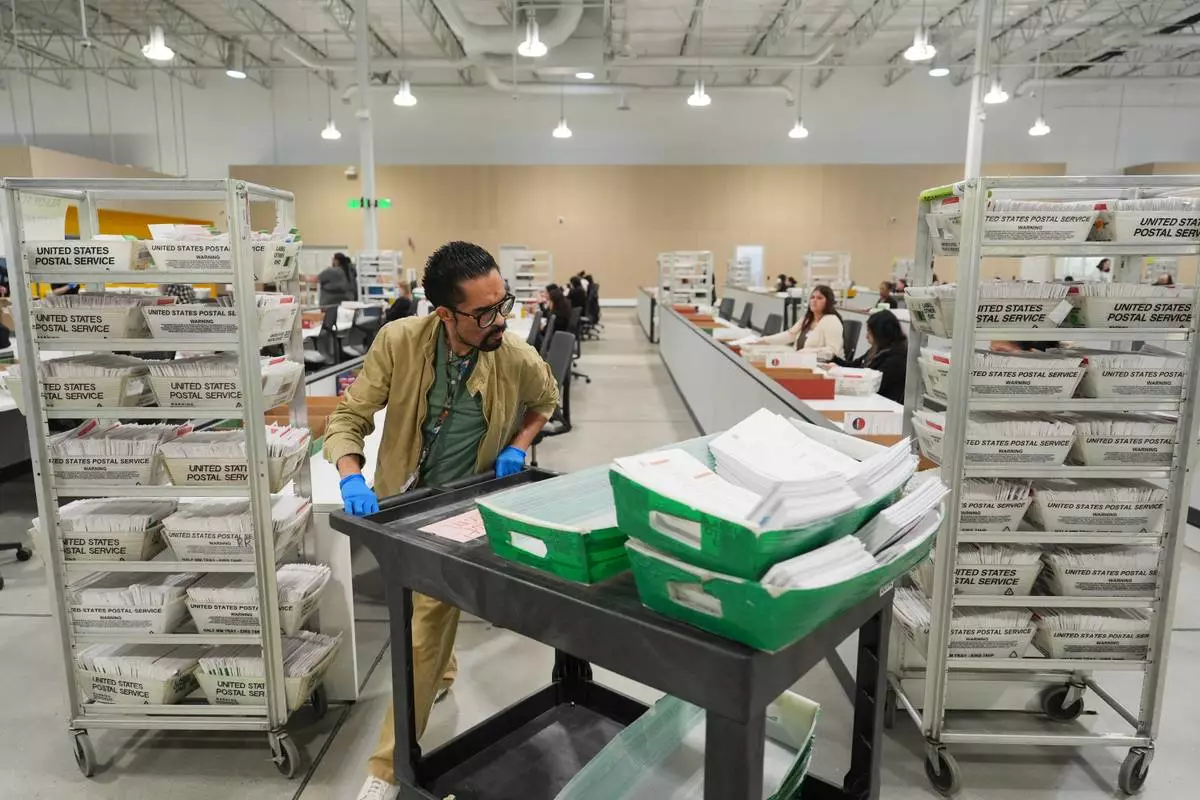
FILE - Ballots are sorted the day after California's primary election at the LA County Ballot Processing Center, June 3, 2026, in City of Industry, Calif. (AP Photo/Jae C. Hong, File)
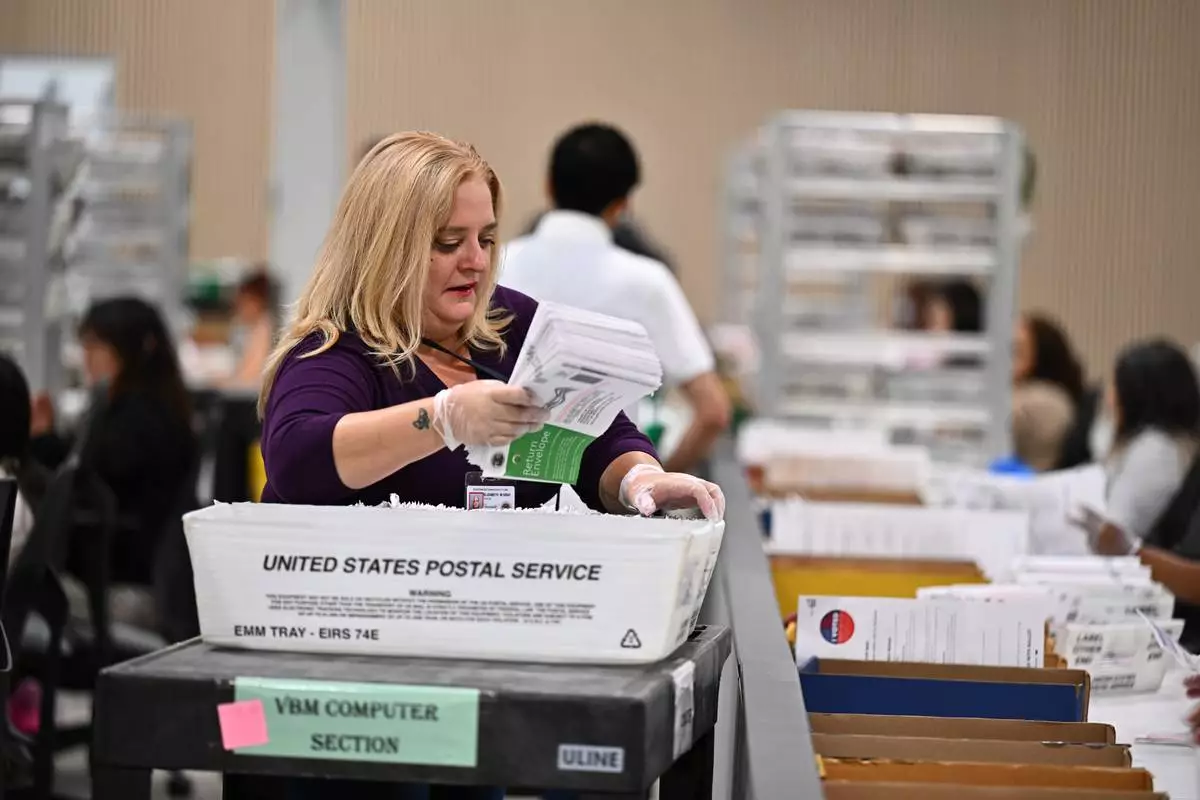
FILE - Ballots are counted at the L.A. County Ballot Processing Center during the California primary election, June 2, 2026, in City of Industry, Calif. (AP Photo/William Liang, File)
President Donald Trump has won and lost some as the Supreme Court wraps its final week of a term focused on executive power.
The justices said Monday that Trump can fire leaders of independent agencies with one exception, ruling that central banker Lisa Cook can keep her job at the Federal Reserve for now.
The court said states can count late-arriving mailed ballots, rejecting a Trump-led challenge. It declined to consider Trump’s push to toss a $5 million jury verdict that he sexually abused writer E. Jean Carroll. And it turned away Trump defender Alan Dershowitz ’s effort to rewrite the U.S. libel law standards.
Here's the Latest:
He said U.S. delegates had either just left or were getting ready to leave for negotiations to end the war with Iran. But he offered a lukewarm view of the talks.
“The meeting in Doha is going to be perhaps important, perhaps not — we’re going to find out,” Trump told reporters in the Oval Office on Monday.
Trump last week abruptly canceled a ceremony to sign the bill, saying he would not approve the bipartisan legislation aimed at lowering the cost of housing until Congress acts on legislation to require proof of citizenship to vote.
House Speaker Mike Johnson said over the weekend he would send Trump the bill on Monday anyway. When asked by reporters about whether he’d sign it, Trump gave an exasperated response and drew out his words, saying, “I don’t knooow.”
He proclaimed to have more knowledge about housing than anyone in the history of the presidency, but said the bill was “so important” compared to the voting legislation.
“When I look at that bill, it’s a bill,” Trump said. “But when I look at the Save America Act, it’s about saving America.”
Secretary of State Marco Rubio has met with the son of a powerful Libyan warlord as signs grow that the U.S. is intensifying efforts to broker a unity agreement between the Libya’s fractured eastern and western factions.
Rubio met on Monday with Saddam Hifter, the deputy general commander of the self-styled Libyan national army, based in the east of the country. Hifter is the son of Khalifa Hifter, widely seen as the most powerful figure in eastern and southern Libya.
The two men “discussed ongoing Libyan-led efforts to unify the country’s military, economic, and political institutions” and “possible avenues for cooperation to advance unity and peace in Libya,” the State Department said.
The U.S. is reportedly pushing an initiative under which Saddam Hifter would head a presidential council in a new unified administration that would also include Abdul Hamid Dbeibah, who runs the government in western Libya.
Monday’s meeting came after a senior official from Dbeibah’s defense ministry met with U.S. officials in Washington last week.
The U.S. president said he signed a memo to allow Americans to fix their own vehicles, saying that people had been arrested for trying to do so.
“It came to my attention because they noticed they were arresting people for fixing their car,” Trump said.
The president appeared to be referencing a diesel mechanic, Troy Lake, who violated the Clean Air Act by disabling emissions monitoring systems on trucks. Trump pardoned Lake last November.
The memo also addresses the use of aftermarket auto parts. It would supersede the ability of the California Air Resources Board to evaluate parts that affect vehicle emissions.
The top election officials in Washington and Oregon — states that conduct elections mostly by mail — commended Monday’s U.S. Supreme Court ruling allowing states to continue counting late arriving mail ballots.
Oregon allows mail ballots that are postmarked by Election Day and received in the seven days following to be counted. In Washington, mail ballots can be counted if they are postmarked by Election Day and received 21 days after a general election or 14 days after a primary.
“The decision is a win for voters, particularly for Oregon voters,” Oregon Secretary of State Tobias Read said in a phone interview.
“The ruling upholds our longstanding ballot return rules, which support accessible and fair elections,” Washington Secretary of State Steve Hobbs said in a news release.
Senate Democratic leader Chuck Schumer says the Supreme Court’s decision giving presidents free rein to fire agency heads at will gives Trump a “permission slip to turn independent federal agencies into members-only clubs for his golf buddies and cronies.”
The justices ruled in the case of former Federal Trade Commission member Rebecca Slaughter, whom Trump fired without cause despite a provision of federal law that requires a reason. The logic of the court’s decision extends to other agencies where Trump has fired board members.
Slaughter once served as Schumer’s chief counsel. Schumer says she was fired for no other reason than doing a good of a job protecting consumers.
“Instead of preserving independence intended to keep markets fair and protect consumers, Trump’s instead catering to fraudsters and monopolists. And the Supreme Court is giving him a green light to do it,” Schumer said.
California’s Secretary of State hailed Monday’s decision by the U.S. Supreme Court as a win for voters, the rule of law and democracy.
Shirley Weber, California’s first Black secretary of state, said in a statement the court “protected an important safeguard” that helps make sure voters are not disenfranchised by mail delays.
“This ruling makes one thing clear,” the Democrat said in a statement. “Our elections belong to the people, not to partisan agendas.”
Under California law, ballots received within seven days of an election are counted as long as they are postmarked by Election Day.
Anna Gomez is one of the few Democrats who have held onto their seats at federal agencies after Trump fired most of them, partly because her presence allows for a quorum that allows Chairman Brendan Carr to enact his agenda.
She warned the Supreme Court’s ruling “puts at risk how Congress intended independent agencies to function in American democracy.”
“Those who argue these agencies are unaccountable misunderstand how they were designed, as the FCC answers to Congress, the democratically elected body that created it, through oversight, appropriations, and legislation,” she said in a statement following the Court’s ruling. “When commissioners can be removed for their policy views rather than for cause, the inevitable result is an agency that pulls its punches and defers to political winds rather than the record before it.”
She said consumers “will pay the price” in higher costs, fewer choices and slower progress toward connectivity.
RNC Chairman Joe Gruters said the court’s decision upholding state practices of accepting all ballots postmarked by Election Day is a reason to pass the president’s proposed elections bill that is stalled on Capitol Hill.
“If we want fair and secure elections, Election Day should mean exactly what it says, which is why this decision makes it even more imperative that Congress pass the SAVE America Act,” Gruters said.
RNC aides distributed the statement after Trump made the same argument Monday morning. Trump’s proposal would virtually eliminate absentee voting nationally, require voters to provide citizenship documentation to register and then present certain photo identification at polling places.
Gruters said Democrats “are inviting chaos at the ballot box by allowing elections to drag on.” He did not offer any examples of such chaos, and it was the original plaintiffs who wanted the court to overturn long-established rules months before November’s elections.
Federal law enforcement is preparing for one of the capital’s largest and most complex security operations as hundreds of thousands of people visit Washington for the 250th anniversary of the nation’s freedom.
The security challenge comes amid rising political violence, including recent incidents near the White House, and a president who enjoys being at the center of public pomp yet has repeatedly faced attempts on his life.
The nation’s capital “is a target-rich environment” on a normal day, said Darren B. Cox, assistant director in charge of the FBI’s Washington Field Office. “We are prepared for any threats.”
The throngs will be joined by thousands of law enforcement officers and agents and 5,000 National Guard troops, along with military-style vehicles and other hardware not often seen on American streets.
▶ Read more
The president said in a social media post that it was “a Fake Case” brought against him by a woman he claims he never met.
“I will continue the fight against this Weaponization and Lawfare Case against me, including the ridiculous claim of Defamation, with all of my power and strength,” Trump wrote.
He also said the case, in which a jury found that he sexually abused the writer E. Jean Carroll in New York City in the 1990s and and later defamed her, is “really against the United States of America, and all it stands for.”
In a statement Monday, Carroll said the decision affirms the jury’s verdict will stand. “His multiple efforts to appeal that verdict have all failed and today’s ruling ends his quest to avoid accountability for his actions,” she said.
Trump said he lost his effort to remove the Federal Reserve’s Lisa Cook “on a strictly procedural basis” and would still seek to remove the central bank governor.
The court ruled 5-4 that the Federal Reserve’s Lisa Cook can remain on the Fed board as she challenges the administration’s attempts to fire her over claims of mortgage fraud, which she has denied.
Trump said in a social media post that “we will take appropriate action immediately to make sure that someone who has committed wrongdoing will not be making vital decisions concerning the Welfare of the United States of America!”
Trump called a Supreme Court ruling that ballots postmarked by Election Day can be counted days after an election a “tremendous loss.”
Trump posted on social media that the decision makes it more important for his SAVE America Act to pass. The measure would require proof of citizenship and include a ban on mail-in ballots unless that person is sick, disabled, traveling or deployed by the military, Trump noted.
“There is only one reason to oppose — CHEATING!” Trump said.
The president then called out Republican senators who have objected to the measure: Lisa Murkowski of Alaska, Susan Collins of Maine, Thom Tillis of North Carolina, Bill Cassidy of Louisiana and Mitch McConnell of Kentucky.
The firing attempt “was never about mortgage documents signed years ago” but rather “was an attempt to remove me on a manufactured pretext because I refused to bow to political pressure” from Trump, who has long sought lower interest rates from the central bank, Cook said in a written statement reacting to the court’s ruling.
Trump fired Cook last August, citing allegations that she had committed fraud in mortgage documents she signed in June and July of 2021. The Biden appointee sued to keep her job, and lower courts ruled she could remain while the case is litigated. The Supreme Court Monday upheld those rulings.
“Today’s ruling affirms a principle that has underpinned sound economic stewardship for generations: that the Federal Reserve must make all its policy decisions guided by evidence and independent judgment, free from political interference,” Cook’s statement said.
A majority of the justices ruled presidents have free rein to fire agency heads at will, despite federal laws that require a cause for such dismissals and a previous court ruling from 91 years ago.
“It is such an Honor to be the sitting President who won this Historic and Unprecedented Ruling, one of the most important ever given with respect to Presidential Powers,” Trump posted on social media.
The justices ruled in the case of former Federal Trade Commission member Rebecca Slaughter. The decision’s logic extends to National Labor Relations Board, the Merit Systems Protection Board and the Consumer Product Safety Commission.
Trump did not acknowledge that the court recognized some limits on his authorities by also ruling 5-4 that Lisa Cook can remain a central bank governor while challenging unproven mortgage fraud allegations, which she has denied.
The Supreme Court on Monday dramatically expanded presidential power, upholding Trump’s firings of the heads of independent federal agencies with one important exception, the Federal Reserve.
The justices allowed Fed governor Lisa Cook to stay in her job while she fights the Republican president’s effort to fire her over allegations of mortgage fraud, which she has denied.
But other than at the nation’s central bank, with its role of setting interest rates, the court held that presidents have free rein to fire agency heads at will, despite federal laws that require a cause for such dismissals and a 91-year-old decision that had limited executive authority. That decision, Humphrey’s Executor, was overturned.
White House press secretary Karoline Leavitt said on Monday that Steve Witkoff, who is the special envoy, and Jared Kushner, Trump’s son-in-law, are flying to Qatar to meet with the Iranians.
Leavitt said in an interview with Fox News’ “Fox & Friends” that those talks would be “high level” and that technical negotiations would occur on the sidelines. Iran has denied that the talks are happening.
Trump accused Iran of violating the ceasefire by attacking a ship last week in Strait of Hormuz, but so far the interim deal for negotiations to take place appears to have held.
The Court said states can count ballots that arrive after Election Day, a persistent target of Trump.
The decision Monday rejects a Republican-led attack on laws in more than half the states and the District of Columbia that permit mailed ballots to arrive and be counted some number of days after the election, provided they are postmarked by Election Day. The outcome spares officials the headache of changing their ballot rules just a few months before the 2026 midterm congressional elections.
In just over half those states, the more forgiving deadlines apply only to ballots cast by military and overseas voters.
Trump has claimed most mail balloting breeds fraud despite strong evidence to the contrary and years of experience. He keeps repeating that fraud caused his loss to Joe Biden in 2020 even though more than 60 court decisions and his own attorney general said that argument had no merit.
▶ Read more
The Supreme Court refused Monday to revive the prominent attorney’s defamation lawsuit against CNN over its coverage of remarks he made while defending Trump during his 2020 impeachment.
Justices Neil Gorsuch and Clarence Thomas dissented from the majority decision, saying legal standards for public figures who claim defamation should be reconsidered.
Alan Dershowitz said the news network aired only part of a comment he made, distorting his meaning to make him look like he’d “lost his mind,” according to court documents.
The network said that multiple outlets had interpreted his remarks in a similar way, and Dershowitz couldn’t show CNN was trying to mischaracterize what he said.
Dershowitz had urged the justices to reconsider New York Times Co. v. Sullivan, the landmark First Amendment case that made it harder for public figures to win libel lawsuits by requiring proof that an outlet either knowingly published something false, or showed a reckless disregard for the truth.
The Supreme Court said Monday it will consider a Republican push to enforce strict Arizona voting laws passed in the swing state after the 2020 election.
The high court has allowed some similar rules to take effect temporarily before, including Arizona’s proof-of-citizenship requirement for state and local elections and a Virginia purge of voter rolls that the state said was aimed at keeping noncitizens from voting.
President Donald Trump’s Republican administration joined the appeal after lower courts found the measures violated federal voting laws.
The high court is expected to hear arguments in the fall and hand down an opinion after the midterm elections.
▶ Read more
Trump wanted the justices to throw out a jury’s finding that he sexually abused the writer E. Jean Carroll at a New York City department store in the mid-1990s and later defamed her. The high court, in a typically brief and unexplained order, declined to take up the case.
Trump’s lawyers had argued that allegations leading to the verdict were propped up by “highly inflammatory” evidentiary rulings, including those that allowed the testimony of two other women who accused Trump of sexual abuse decades ago. Trump has denied all three women’s allegations.
Trump’s attorneys also framed the case as a distraction from Trump’s unique duties as president, though the verdict came before his return to the White House. A jury also awarded Carroll an additional $83.3 million after a second defamation trial. Trump also appealed that ruling, which is not yet before the Supreme Court.
Oil prices have inched up amid escalating tensions, with Tehran launching fresh drone and missile attacks on Bahrain and Kuwait in response to new U.S. airstrikes over the weekend.
Brent crude, the international standard, was up 58 cents to $73.18 a barrel early Monday, up from about $72 before the war. Benchmark U.S. crude gained 73 cents to $69.96 a barrel.
But there’s still plenty of risk regarding ship safety in the Strait of Hormuz following the latest attacks on vessels. ING commodities strategists Warren Patterson and Ewa Manthey said in a commentary Monday that oil traders have been “too optimistic” about the timeline for a recovery in Persian Gulf supplies.
“This complacency is odd and clearly leaves significant upside risk if the supply recovery proves slow — or if we see significant re-escalation,” the commentary said.
▶ Read more
Most Black Americans — 73% — say their race or ethnicity is “extremely” or “very” important to how they see themselves, according to the new AP-NORC poll. Only about half of Black adults say that being an American is highly important to their personal identity.
About half of Hispanic Americans say their race or ethnicity is highly important to them, compared to 22% of white Americans.
Vincent Harris, a 60-year-old in California who participated in the poll, says his identity as a Black man rises above other attributes for him because of how Black men are treated in America.
“A lot of people are scared of Black men just because we are Black and we are male. And that’s crazy,” Harris said. “People don’t even take you for who you are as a person; they just look at your race.”
With a social media assist from President Donald Trump, House Speaker Mike Johnson is looking this week to ease the divisions in his Republican ranks and make progress on key legislative priorities before this fall’s elections.
Johnson sent lawmakers home early last week and went to the White House after GOP tumult prevented the House from voting on two spending bills and a measure dealing with veterans’ benefits. Meanwhile, the list of legislative priorities only grew with Trump requesting another $87.6 billion, mostly to cover the war with Iran.
Johnson emerged from his White House visit with a coveted Trump social media post telling Republicans to quit voting down procedural rules that allow for final votes on their legislative priorities. “No more grandstanding, please!” Trump wrote.
Before Trump’s message, Republican and Democratic lawmakers were openly doubting whether the House would even return this week.
▶ Read more
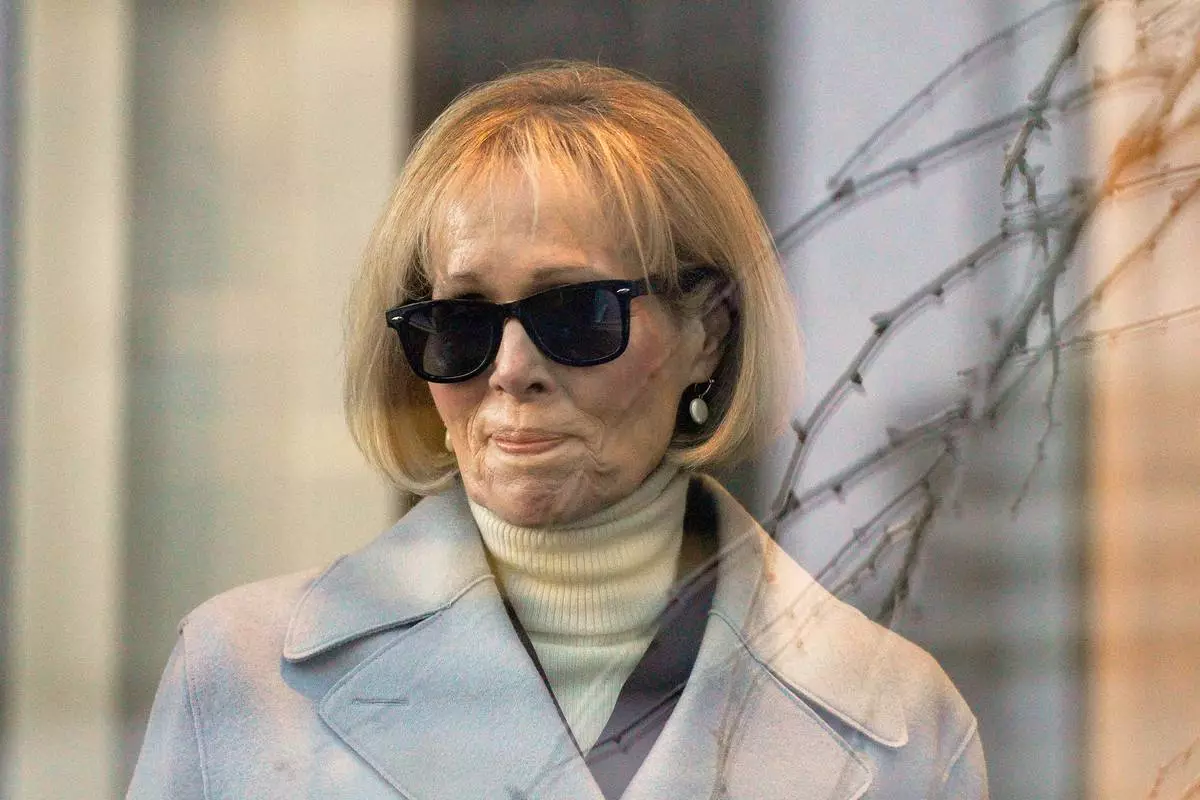
FILE - E. Jean Carroll arrives at Manhattan federal court, Jan. 17, 2024, in New York. (AP Photo/Eduardo Munoz Alvarez)
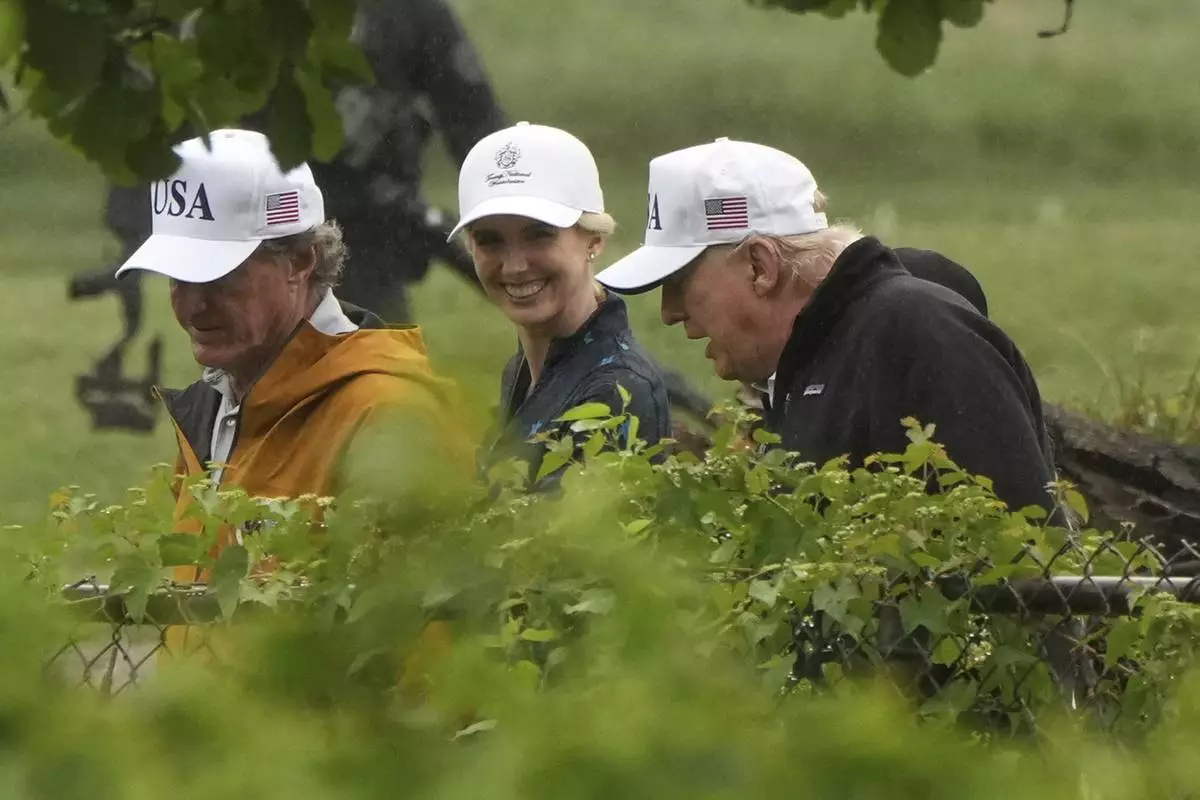
President Donald Trump, from right, White House aide Natalie Harp and Interior Secretary Doug Burgum walk during a tour of the East Potomac Park golf course, Sunday, June 28, 2026, in Washington. (AP Photo/Mark Schiefelbein)

A small motorboat passes anchored vessels in the Strait of Hormuz off Bandar Abbas, Iran, Wednesday, June 17, 2026.(Amirhosein Khorgooi/ISNA via AP)
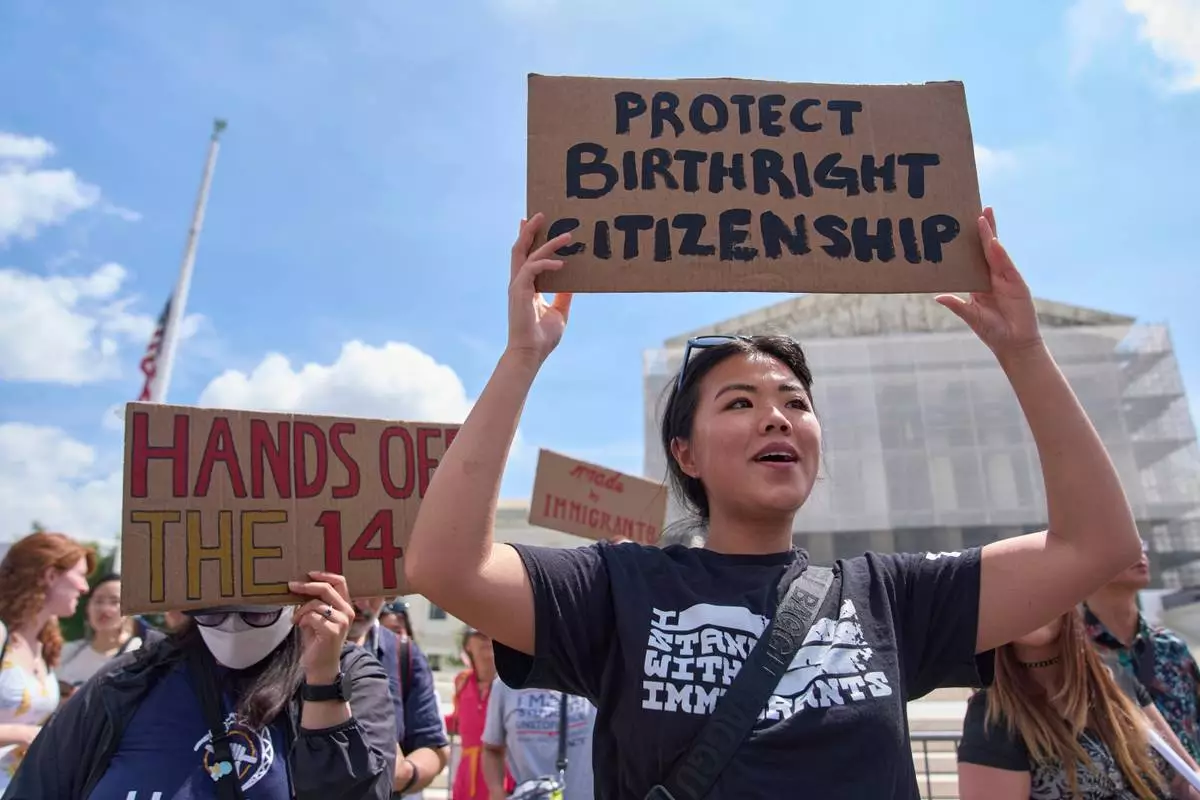
FILE - Hannah Liu, 26, of Washington, holds up a sign in support of birthright citizenship, May 15, 2025, outside of the Supreme Court in Washington. (AP Photo/Jacquelyn Martin, File)
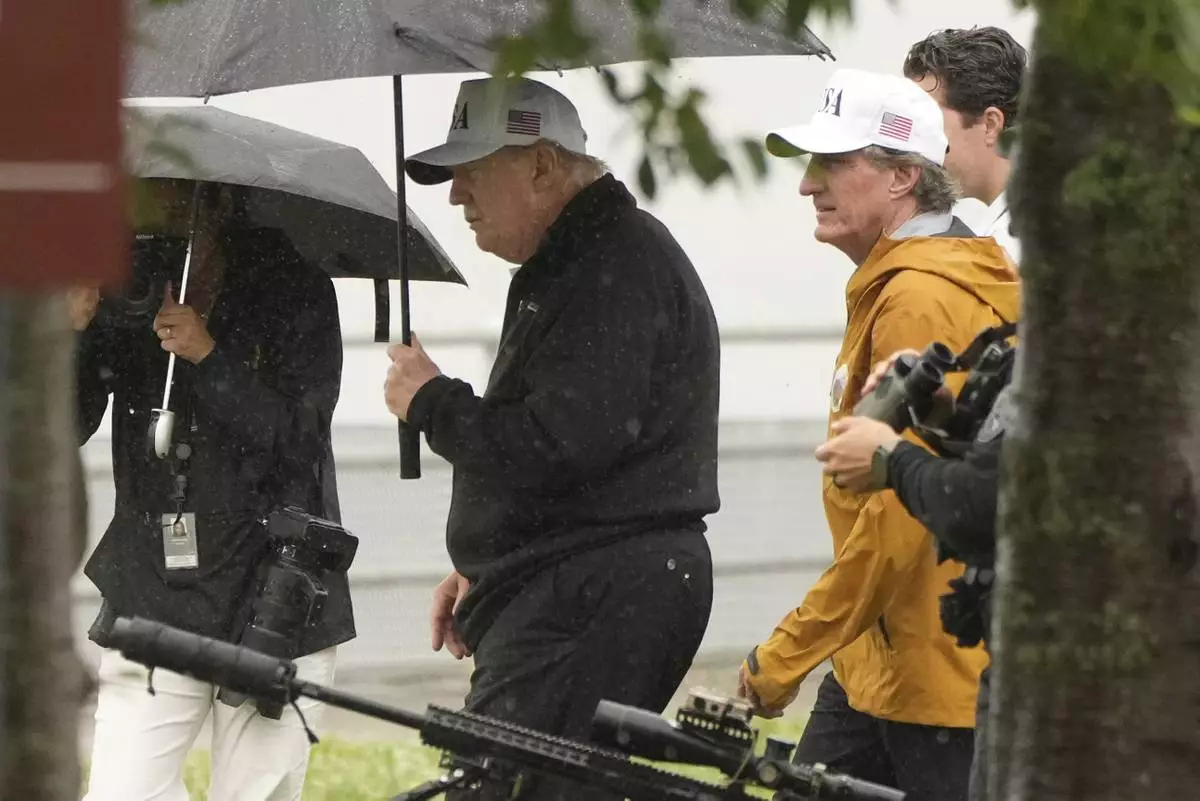
President Donald Trump walks carrying an umbrella alongside Interior Secretary Doug Burgum, right, at East Potomac Park golf course, Sunday, June 28, 2026, in Washington. (AP Photo/Mark Schiefelbein)
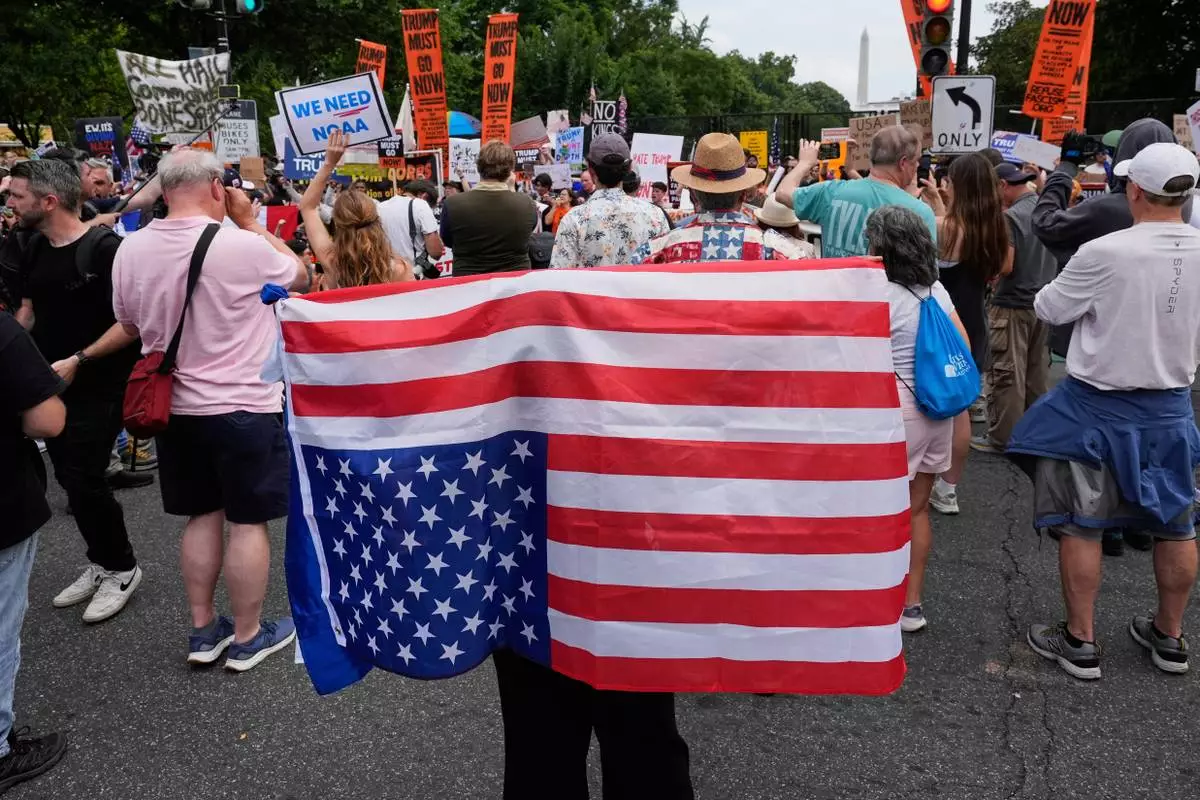
FILE - A demonstrator carries an American flag upside-down near the White House during a protest taking place on the day of a military parade commemorating the Army's 250th anniversary, coinciding with President Donald Trump's 79th birthday, June 14, 2025, in Washington. (AP Photo/Alex Brandon, File)