SAN FRANCISCO (AP) — The San Francisco Catholic Archdiocese has agreed to pay $395 million to settle more than 500 lawsuits alleging child sexual abuse by church officials, plaintiffs' attorneys said Monday.
San Francisco Archbishop Salvatore Cordileone will have to write an apology letter to each survivor as part of the settlement.
The settlement also requires the archdiocese to implement a series of child protection and transparency reforms, including creating a list of clergy accused of abuse, said Jeff Anderson, an attorney representing dozens of child sexual abuse victims.
The settlement comes three years after the archdiocese filed for bankruptcy and will cover approximately 530 survivors of child sexual abuse, Anderson said. It is the latest agreement over clergy sexual abuse claims. In 2024, the Archdiocese of Los Angeles agreed to a record $880 million settlement.
Several archdioceses in California filed for bankruptcy after facing hundreds of lawsuits brought under a California law approved in 2019 that allowed decades-old claims to be filed by Dec. 31, 2022.
Cordileone, the archbishop, said in a statement that he believes the settlement provides “a path toward fair compensation for survivors who have borne the weight of this abuse for a lifetime.”
“The hope is that this proposal will allow us collectively to move forward,” he said.
“We accept full responsibility for what happened, and I sincerely apologize to all those who have been harmed,” Cordileone added.
Margie O’Driscoll sued the archdiocese alleging she was sexually abused almost 50 years ago by a priest while she was a student at Marin Catholic High School in Kentfield, a community north of the Golden Gate Bridge. She said the settlement was hard-fought and puts the responsibility on church officials, not survivors.
“I, like every survivor, have carried this pain and shame along like a ball and chain for a very, very long time,” O'Driscoll said during a news conference. “Ashamed and confused about what happened, scorned by the archdiocese, and sometimes not even believed by family and friends, and I think today shame is gonna change sides.”
The San Francisco Archdiocese serves about 440,000 Catholics in the counties of San Francisco, Marin and San Mateo.
Anderson said a committee of survivors who spent thousands of hours over the last three years negotiating with Cordileone is empowered with establishing protocols on how to distribute the funds. He said every survivor will be given an opportunity to submit their story of abuse to an allocator hired by the committee to receive what Anderson said would be “an equitable distribution based on the unique circumstances of that survival.”
Besides the funds, the archdiocese will be required to follow 14 child protection and transparency demands that include maintaining and making public a comprehensive, up-to-date list of all accused clergy that details allegations and the outcomes of investigations. The archdiocese will also be banned from imposing confidentiality agreements that silence survivors.
“I’ve been working with survivors for decades and I’ve never heard of anything quite as significant, as rigorous, as robust as what is being required of the Archdiocese of San Francisco," Anderson said.
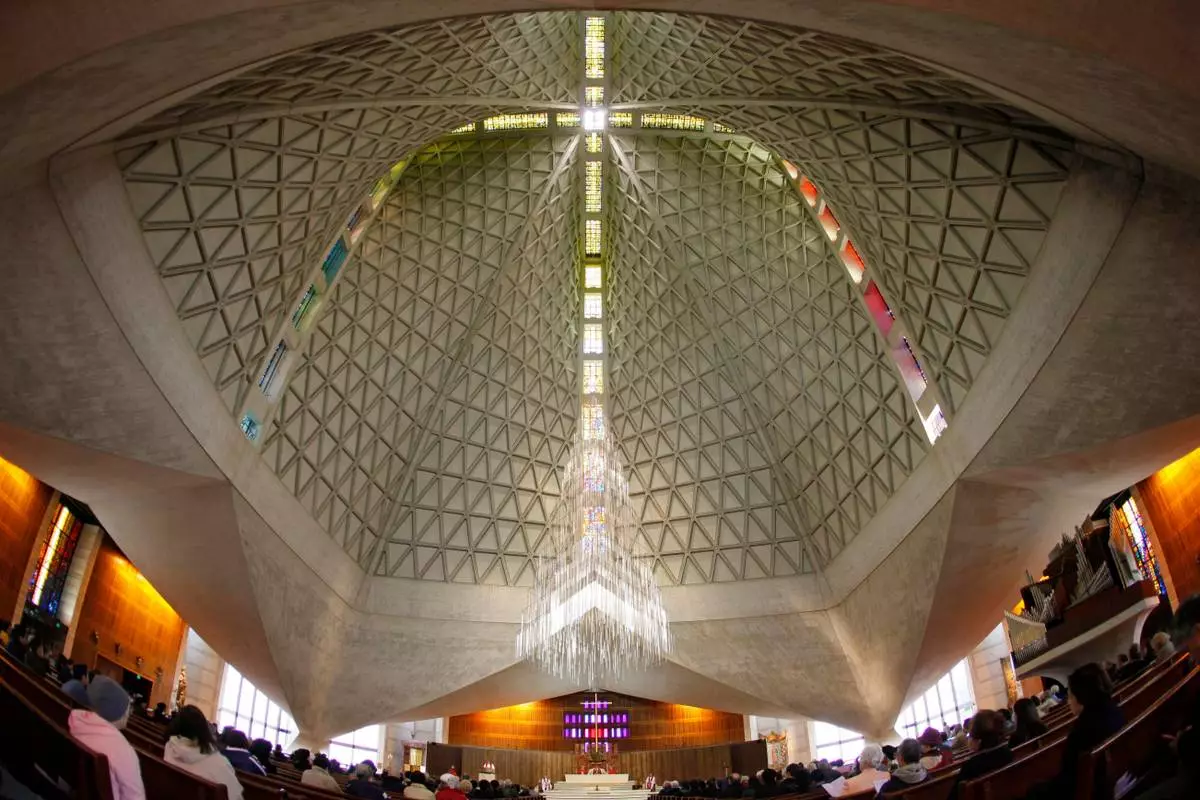
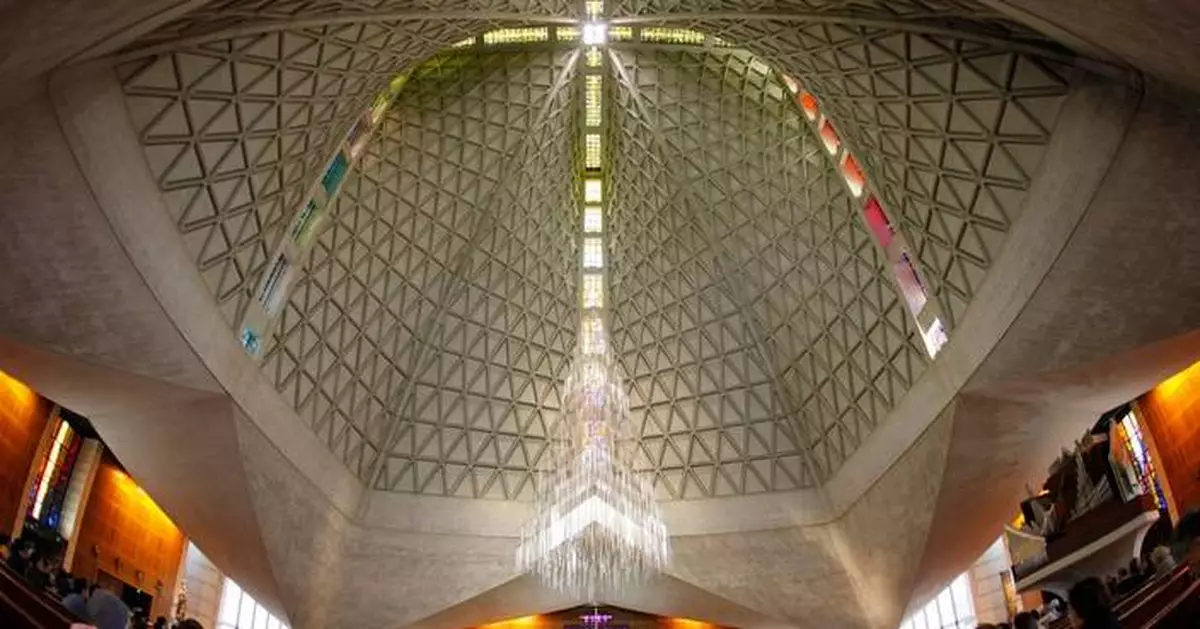
FILE - Parishioners attend a service at St. Mary's Cathedral, the mother church of the archdiocese in San Francisco, on April 2, 2010. (AP Photo/Eric Risberg, File)
GRAND JUNCTION, Colo. (AP) — Three firefighters killed over the weekend in a wildfire along the Colorado-Utah border were trying to shield themselves from flames by deploying tent-like shelters when they were overcome, authorities said.
The firefighters were part of a specialized crew that goes into remote areas by helicopter to quickly put out new and rapidly escalating wildfires, federal officials said Monday.
Their deaths Saturday came almost 13 years to the day since an elite crew of 19 wildland firefighters died when they were trapped in a steep canyon in Yarnell, Arizona.
Like this weekend's victims, the men in Arizona tried to deploy emergency shelters that are a “last resort” for firefighters when there's no other way out. Investigators didn't blame anyone for the deaths in 2013, but cited radio communication problems that contributed to the Granite Mountain Hotshots becoming trapped. Arizona's workplace safety commission also fined the state's forestry division for not pulling them out.
Wildfires have erupted over the past week all across the West, fueled by months of dry weather and a record lack of snow in some places this past winter. Wildfire experts have warned for months that extreme fire dangers are likely this summer.
U.S. Wildland Fire Service Chief Brian Fennessy said he would not speculate about whether the crew overrun by the weekend fire in Colorado should have been where they were.
“I will say the fact that they were there was, I’m 100% sure, based on good decision-making,” Fennessy said during a news conference Monday. “The fires in this region over the decades, you know, killed many firefighters. They weren’t being foolish. They weren’t being careless. They were there because they thought they could do what needed to be done to suppress that fire. And many times the weather changes.”
With more than two dozen large fires burning, almost 8,000 wildland firefighters and dozens of firefighting helicopters have been deployed. About half the largest blazes are in Alaska while the rest are mostly in Western states.
Even as firefighting resources were increasingly strained, evacuations were ordered near seven fires, including in Arizona, Washington state, New Mexico and Utah. About 800 people living in and around the small town of Beulah in eastern Colorado were told to evacuate as a wildfire threatened the area on Monday afternoon, Gov. Jared Polis said.
“We're really at the mercy of the winds,” Polis said.
The U.S. Forest Service and Interior Department identified the firefighters killed as Emily Barker, 38, of Clinton Township, Michigan; Nick Hutcherson, 27, of Glendale, Arizona; and Sydney Watson, 26, of Warrior, Alabama.
Two others who were with them sustained burn injuries. They were in stable condition but remained hospitalized in the Denver area, officials said at Monday's news conference.
“The loss we experience here is not felt by just one agency. It is felt by an entire wildland fire community,” Fennessy said. “We grieve together, we support one another, and we continue the mission together.”
The three killed were assigned to a Helitack crew that can be dropped into remote areas by helicopters and whose mission is to prevent new fires from growing into out-of-control blazes. But it can be extremely dangerous, often taking place in areas where fires are rapidly expanding.
Watson worked for the Wildland Fire Service and the other two firefighters who died were assigned to the Forest Service. All were part of an interagency response to fires just west of Grand Junction, Colorado.
The Snyder Fire in the area has burned about 44 square miles (114 square kilometers), authorities said.
Watson's death was the first within the the new Wildland Fire Service, which was created within the Department of Interior earlier this year to coordinate firefighting on public lands.
The deaths are being investigated by the Forest and Wildland Fire services, a process that typically results in recommendations for how to prevent or reduce the risk of a similar accident. Agencies can also convene an accident review board to suggest any further actions.
More hot, dry and windy weather across the Southwest will elevate the fire threat at least until the weekend, according to the national Storm Prediction Center.
Among the concerns were high winds in the mountains of Colorado and Wyoming, in the Black Hills of South Dakota and across portions of the High Plains.
Utah already has restricted firework usage going into the July Fourth holiday.
The national “preparedness level” for wildfires was increased to a 4, on a scale of 1 to 5, the National Interagency Fire Center said Monday. That’s a sign resources are beginning to be strained, and officials warned of a high potential for new, large fires in multiple parts of the country in coming days.
There are enough firefighting resources for now across the Rocky Mountains to deal with the blazes, said Mike Morgan, director of Colorado’s Division of Fire Prevention and Control. But that could change quickly if conditions worsen in other parts of the country, Morgan said, adding that crews that battle fires on the ground already are in short supply.
“We know hand crews are always a hot commodity. We're getting a little short on those, so that would be one I would say we're a little concerned with,” Morgan said. “At the moment, I would say I feel pretty good about where we're at, but I'm very concerned about where we go.”
So far this year, wildfires have burned more than 4,800 square miles (12,400 square kilometers) — the most by this point in the year since 2022 and significantly above the 10-year average.
Brown reported from Billings, Montana, and Seewer from Toledo, Ohio.
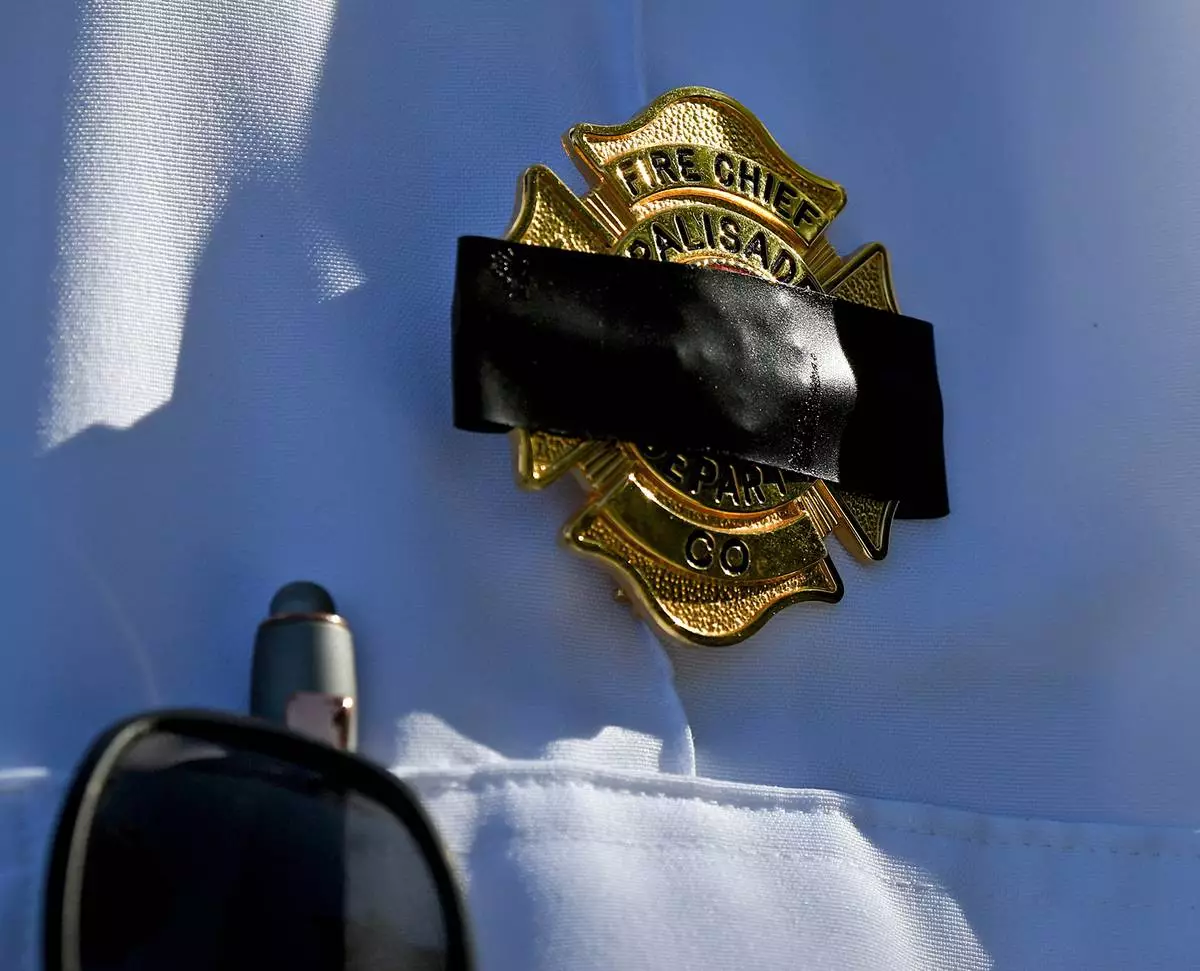
Charles Balke, of the Palisade Fire Department, wears a black band across his badge to honor three firefighters killed while fighting the Snyder Fire in Grand Junction, Colo. Sunday, June 28, 2026. (Gretel Daugherty via AP)
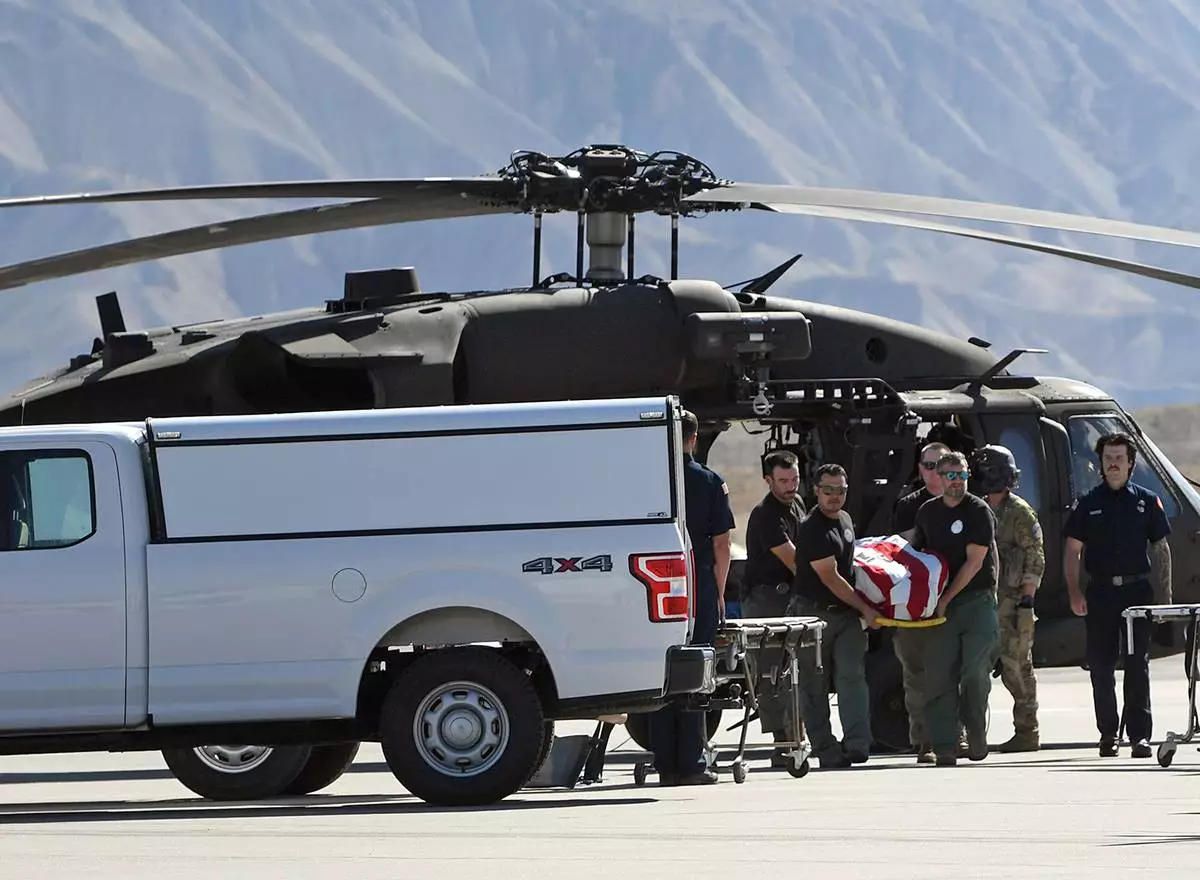
Firefighters carry the flag-draped body of one of the three firefighters killed while fighting the Snyder Fire in Grand Junction, Colo. Sunday, June 28, 2026. (Gretel Daugherty via AP)
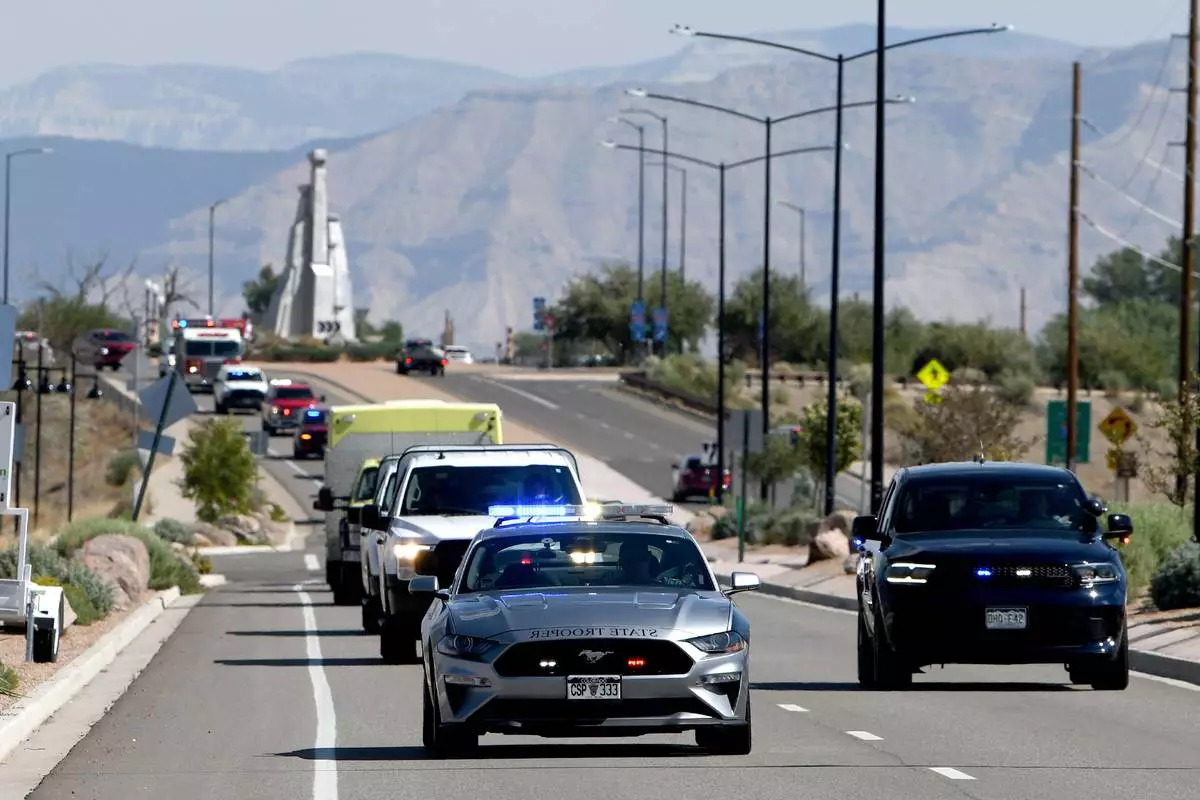
A Colorado State Patrol car leads a procession carrying the bodies of three firefighters killed while fighting the Snyder Fire in Grand Junction, Colo. Sunday, June 28, 2026. (Gretel Daugherty via AP)
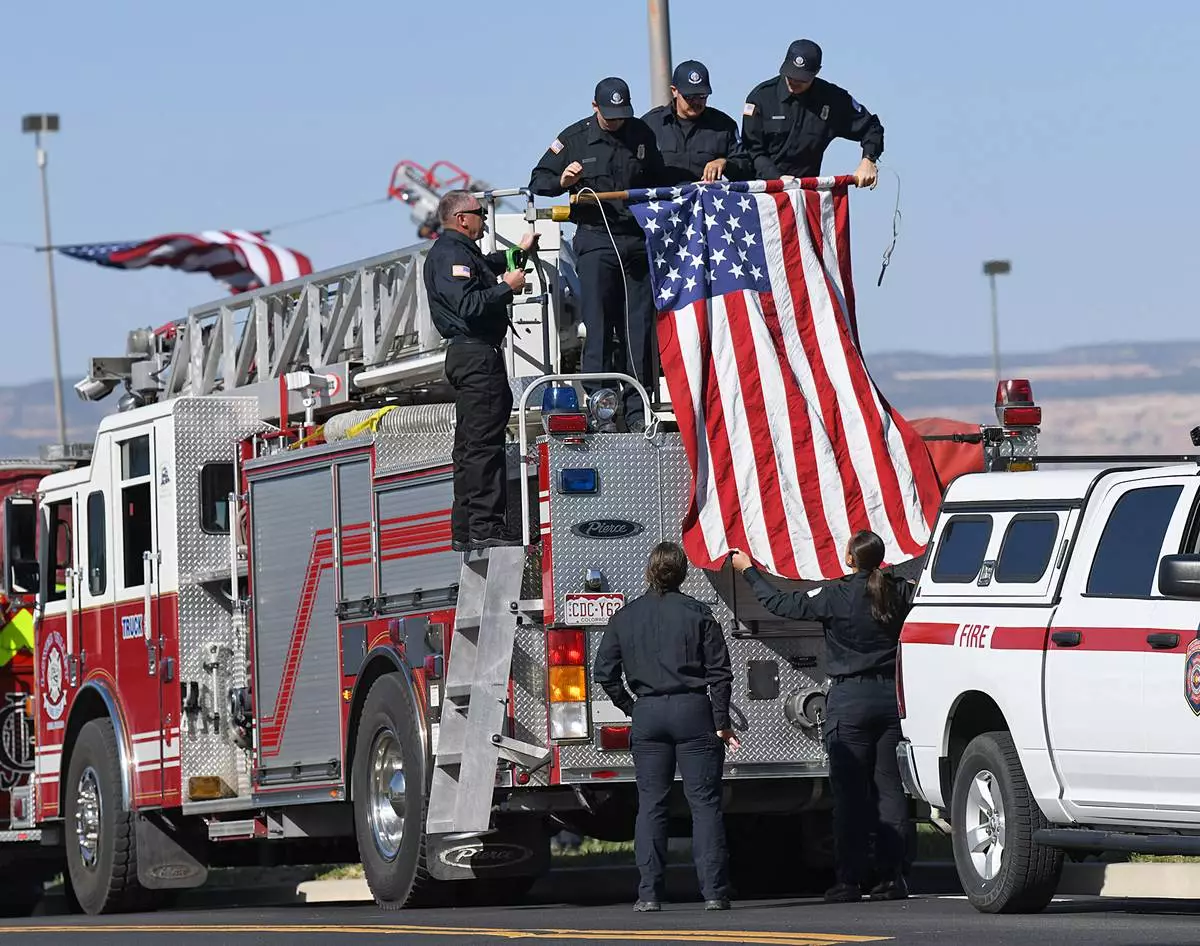
Firefighters with the Lower Valley Fire Protection District hang an American flag along a procession route in honor of three firefighters killed while fighting the Snyder Fire in Grand Junction, Colo. Sunday, June 28, 2026. (Gretel Daugherty via AP)
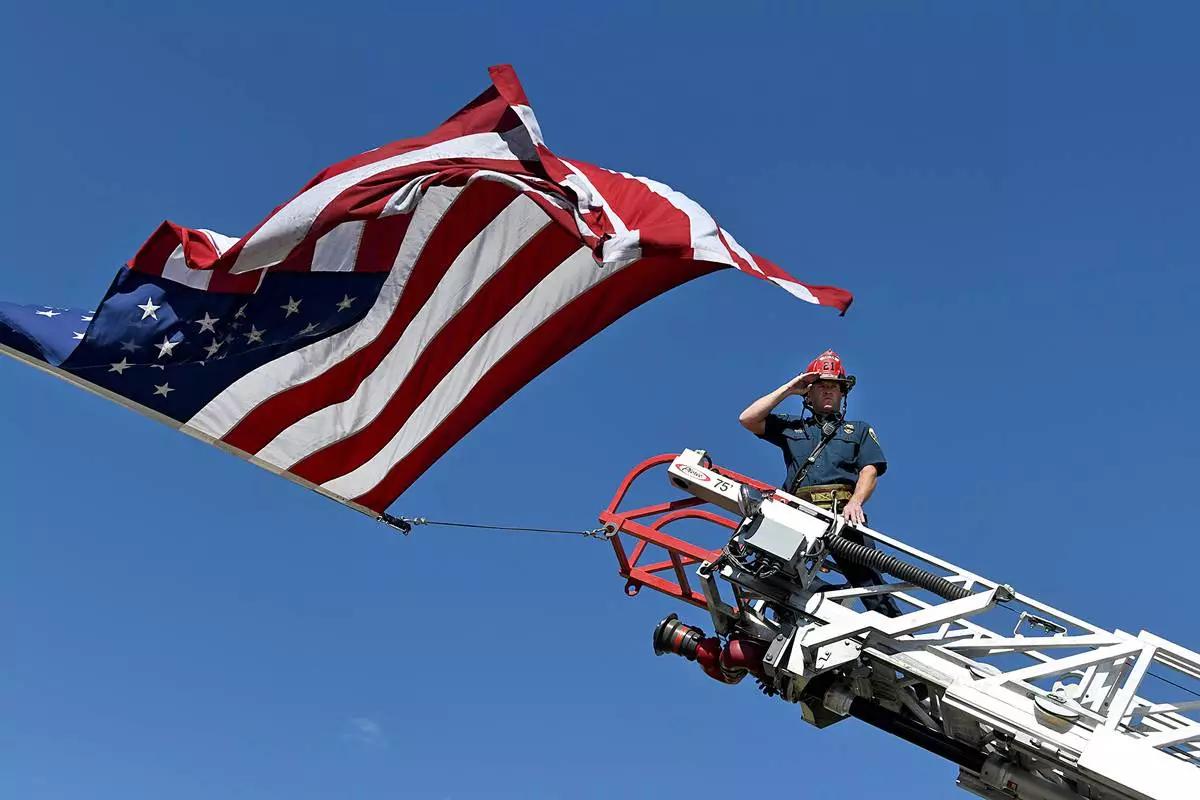
A captain with the Clifton Fire Protection District salutes the passing procession carrying the bodies of three firefighters killed while fighting the Snyder Fire in Grand Junction, Colo. Sunday, June 28, 2026. (Gretel Daugherty via AP)
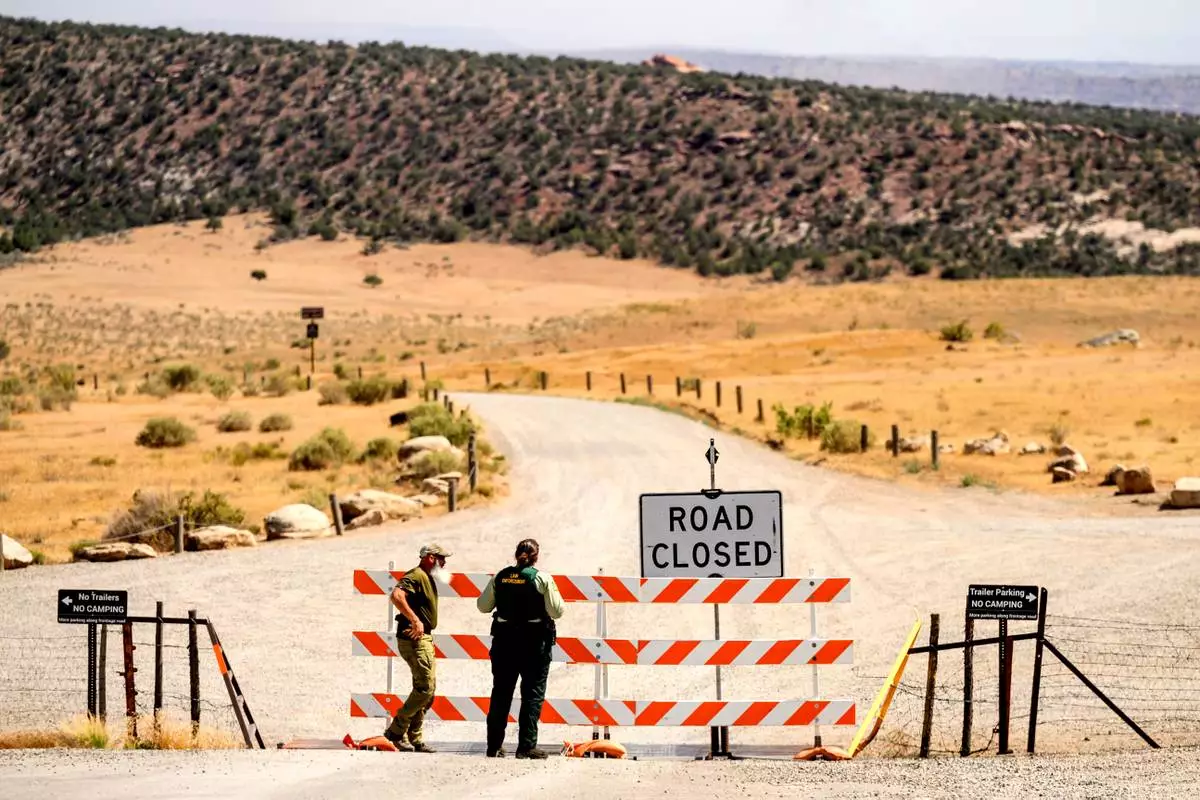
Law enforcement officers staff a roadblock as the Snyder Fire burns near Mack, Colo., on Sunday, June 28, 2026. (AP Photo/Noah Berger)
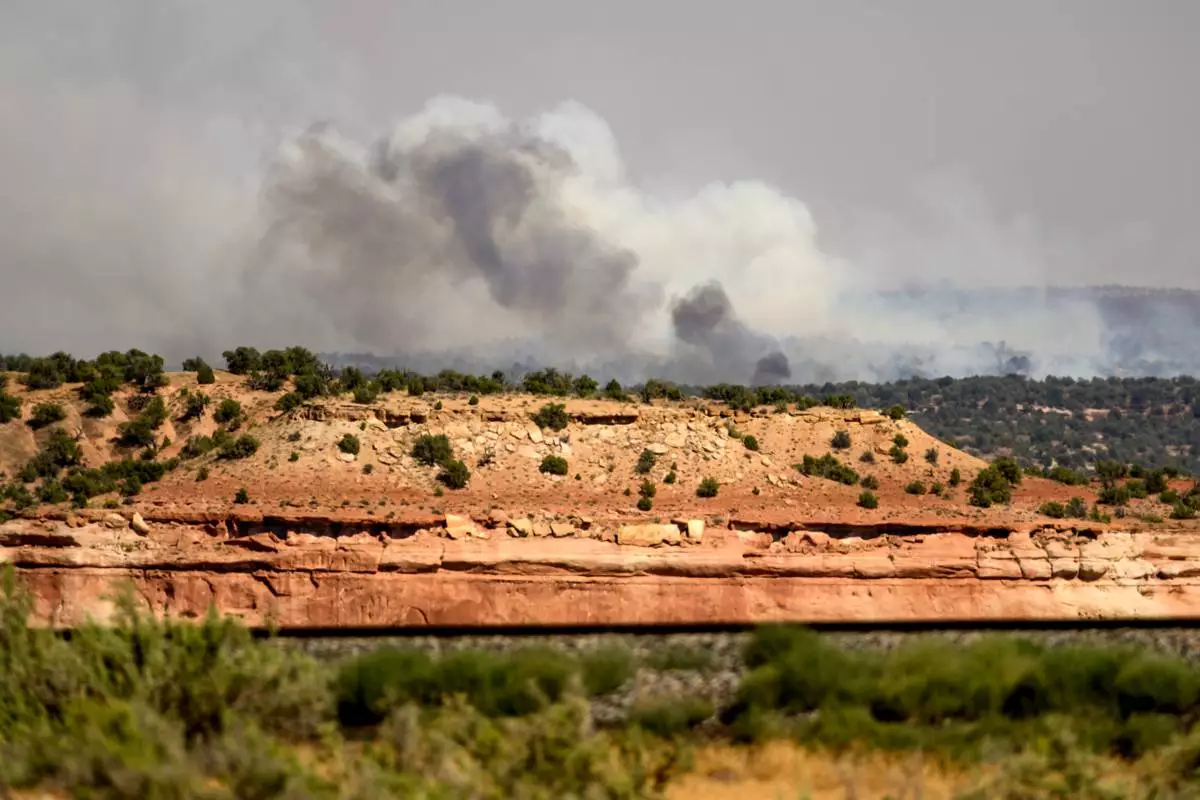
The Snyder Fire burns near Thompson Springs, Utah, on Sunday, June 28, 2026. (AP Photo/Noah Berger)
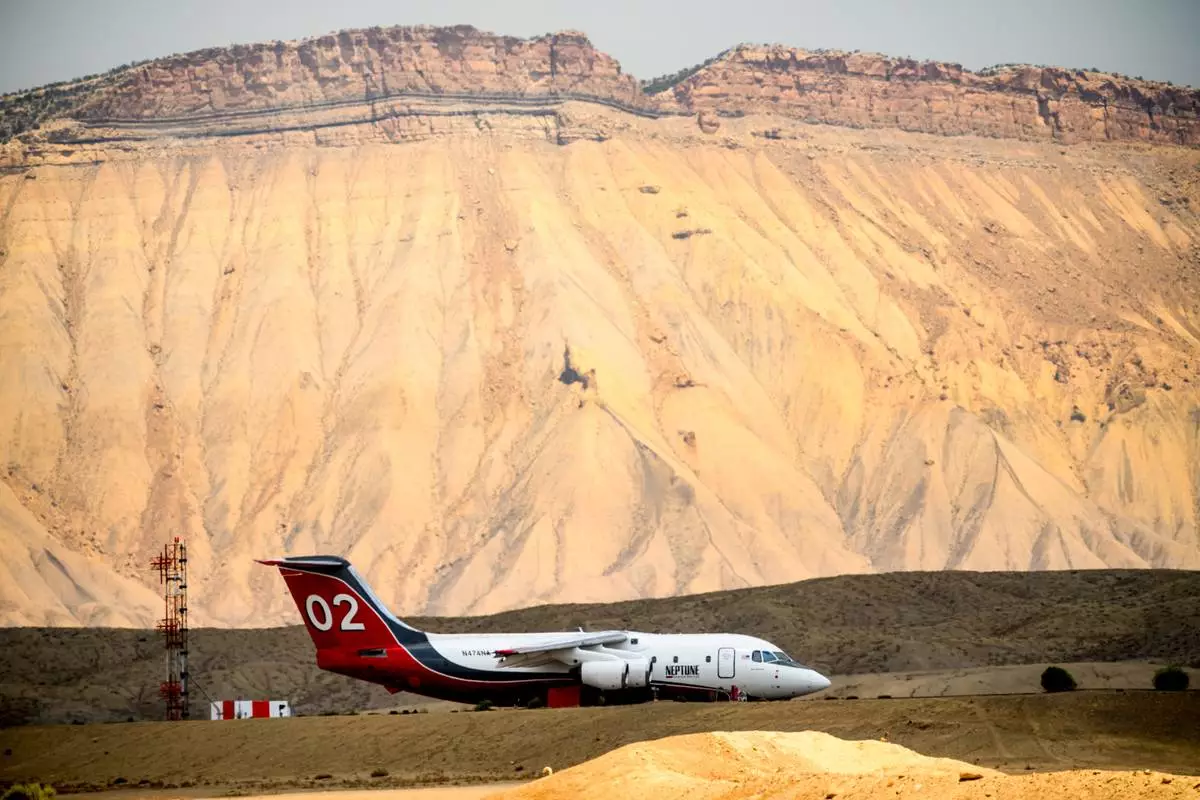
A firefighting aircraft rests on the tarmac at Grand Junction Regional Airport in Grand Junction, Colo., as the Snyder Fire burns nearby on Sunday, June 28, 2026. (AP Photo/Noah Berger)
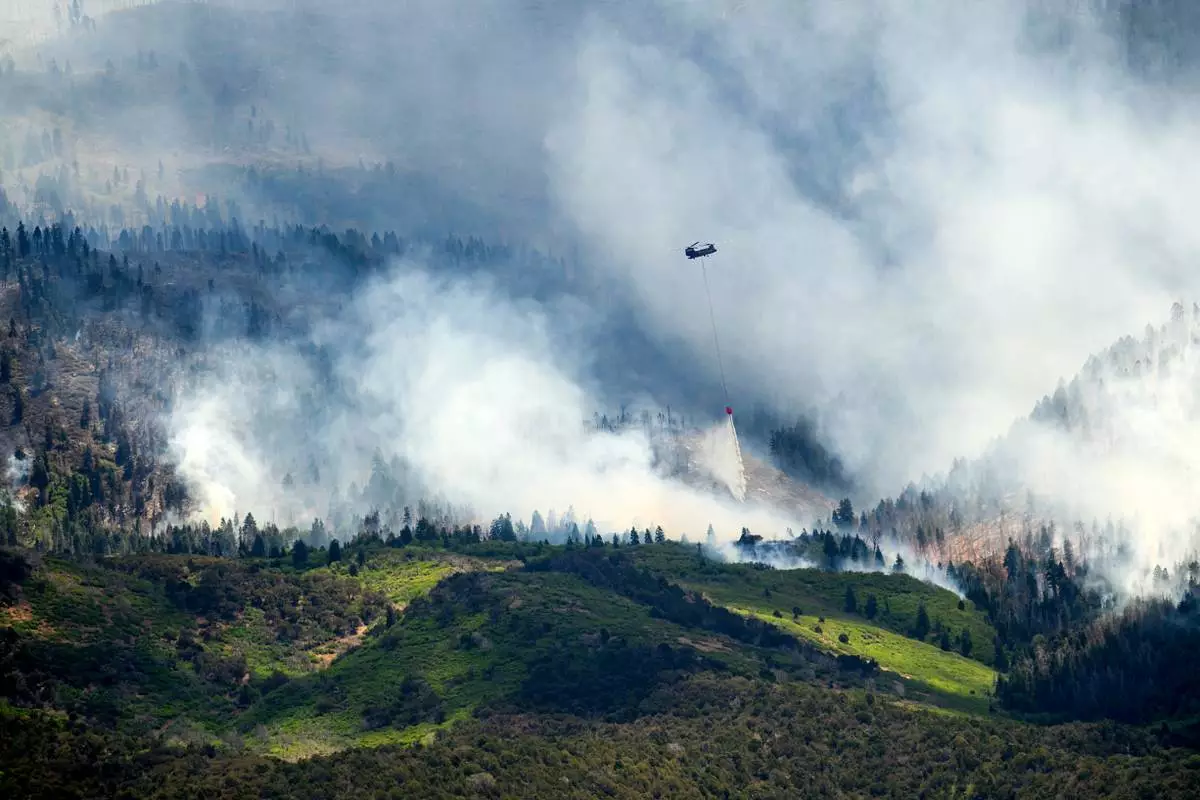
A helicopter drops water on the Cottonwood Fire burning near Beaver, Utah, on Saturday, June 27, 2026. (AP Photo/Noah Berger)
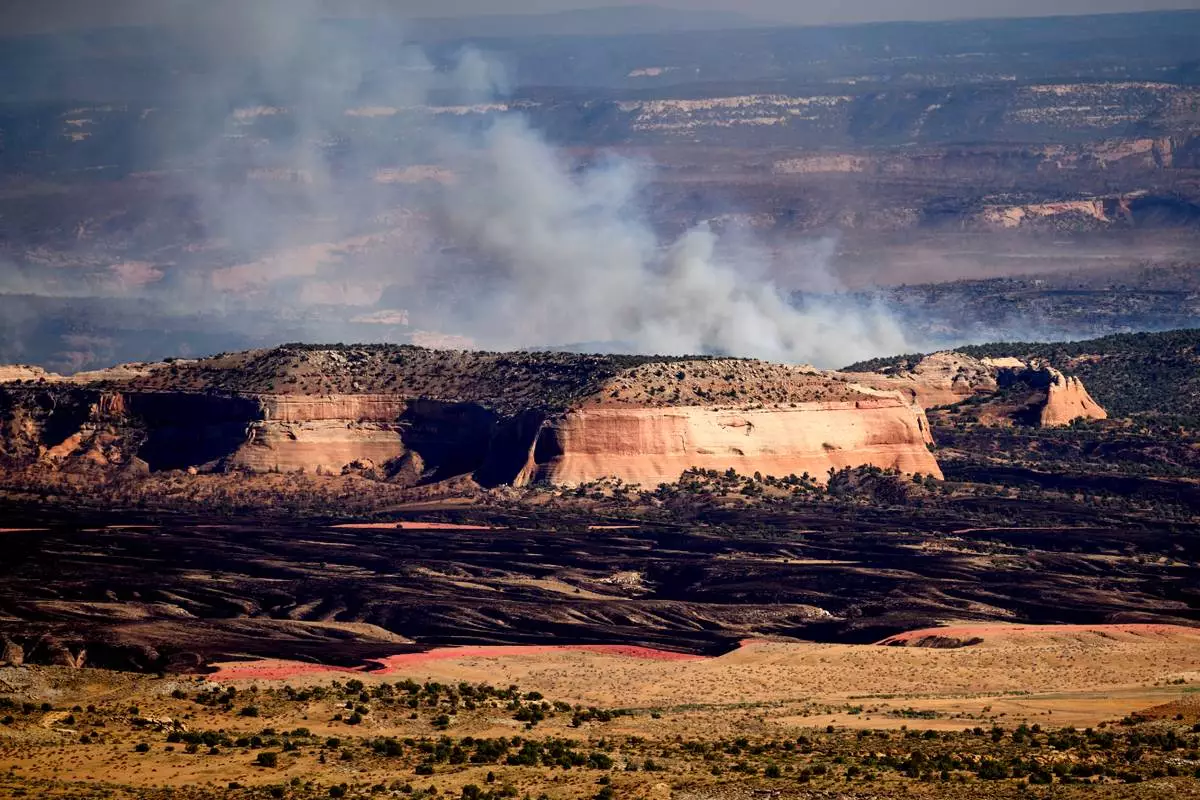
The Snyder Fire burns near Thompson Springs, Utah, on Sunday, June 28, 2026. (AP Photo/Noah Berger)