MEXICO CITY (AP) — Altitude may have helped Mexico achieve a perfect record in the group stage of this World Cup, but it isn’t likely to provide the same edge against Ecuador in the Round of 32.
Mexico swept through the group stage matches at the tournament for the first time in its history, but the unbeaten run came with a caveat. All three victories took place at venues more than 5,000 feet (1,524 meters) above sea level. El Tri often capitalized late, scoring five of its six goals after halftime, perhaps as fatigue began to take its toll.
“We have a massive advantage as the host country because we’re playing at the Estadio Azteca with our fans and the altitude,” Mexican football commissioner Mikel Arriola said before the tournament. “It is a very potent setting.”
Ecuador, unlike Mexico’s previous opponents, should be well-suited to playing at roughly 7,300 feet (2,200 meters) elevation at the Azteca in Mexico City — which FIFA has renamed Mexico City Stadium during the tournament. The South American nation often plays home matches at more than 9,000 feet (2,743 meters) in Quito, and, like Mexico, has used geography to its advantage. The Ecuadorians went unbeaten at home during qualifying and had victories over Uruguay, Chile, Peru and Venezuela in Quito. They also joined Argentina as the only nations to win a qualifier at Bolivia, which plays its home matches at almost 12,000 feet (3,657 meters) of elevation. The altitude has been such a factor in Ecuador’s impressive home record that the Ecuadorian Football Federation decided to move some qualifying matches to Guayaquil, which is close to sea level, in order to prove that Ecuador could compete in all environments. They did just that by beating Argentina and drawing with Brazil at lower elevation. The positive results have inspired confidence in Ecuador coach Sebastián Beccacece and he believes his team is ready for any environment. “We haven’t prepared in any way regarding the altitude,” Beccacece said. “Let’s trust these footballers, let’s trust what we’ve been working on, let’s trust what we’ve been doing.”
Players unfamiliar with the elevation typically fatigue quicker and have higher heart rates at any given running intensity. This results in a reduced capacity to sustain sprints, pressing actions, and rapid changes of pace. To attempt to address these challenges, South Africa and South Korea, Mexico’s first two opponents, spent significant time training high above sea level.
The Czech Republic, Mexico’s third opponent, did not take such precautions and voiced concerns about the elevation ahead of the match. Those fears were realized when the European team conceded three second-half goals to El Tri.
Ecuador chose to train at its base in Columbus, Ohio, the morning before the game, making the trip to Mexico City on Monday afternoon.
Ecuador will attempt to use its experience playing in altitude to become the first team to beat Mexico at Estadio Azteca in a World Cup. Having previously hosted in 1970 and 1986, El Tri is so far undefeated at the stadium across nine tournament games.
See more of AP’s World Cup coverage here

Players of Mexico celebrate after beating Czech in a World Cup Group A soccer match in Mexico City, Wednesday, June 24, 2026. (AP Photo/Silvia Izquierdo)
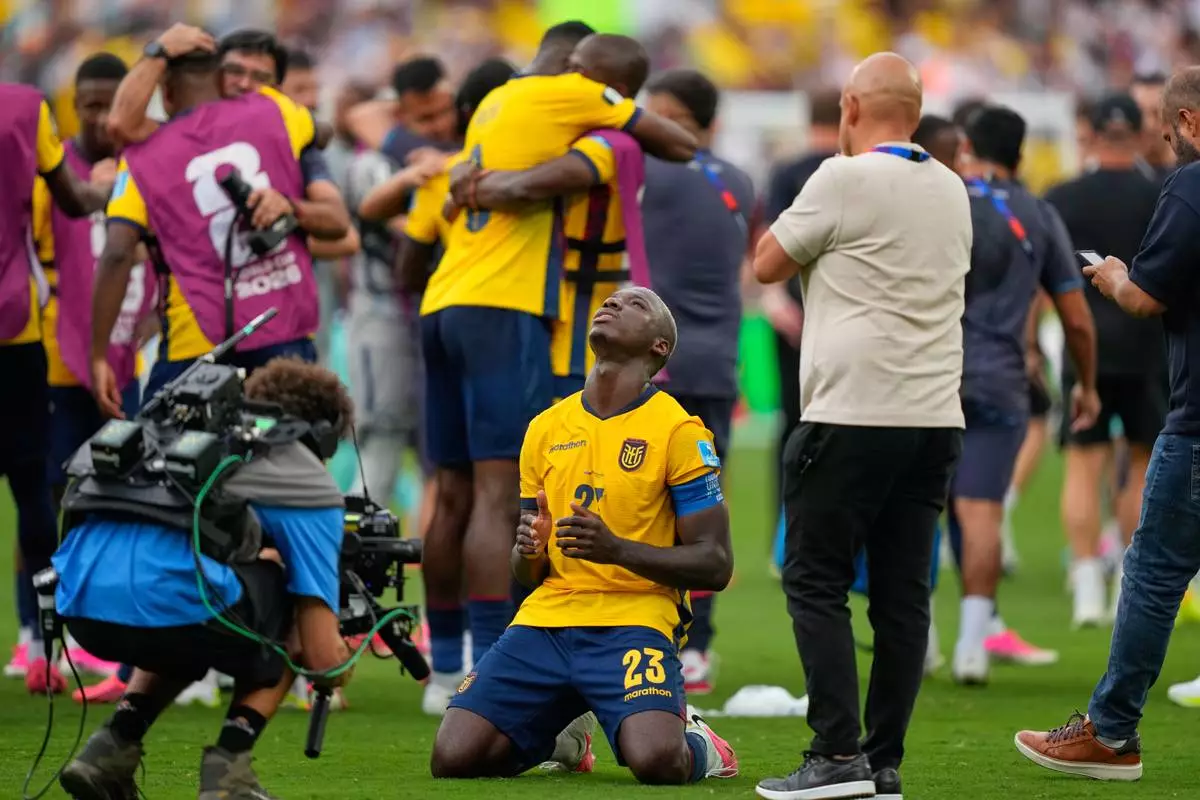
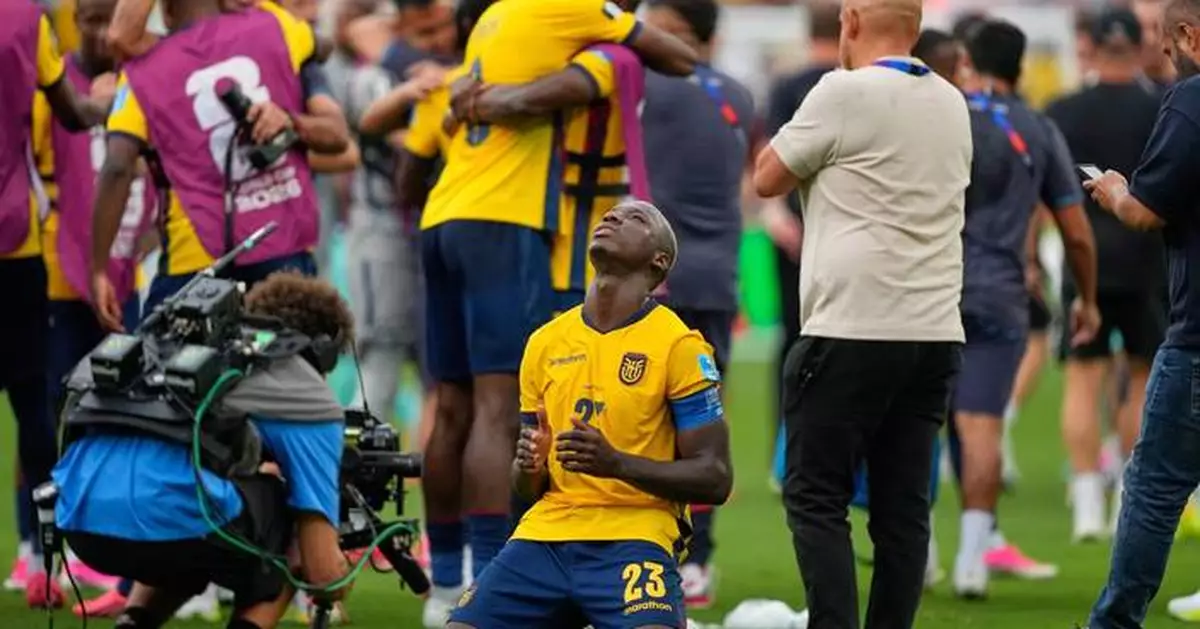
Ecuador's Moises Caicedo celebrates at the end of the World Cup Group E soccer match against Germany in East Rutherford, N.J., near New York, Thursday, June 25, 2026. (AP Photo/Yuki Iwamura)
ROME (AP) — Pope Leo XIV on Tuesday begged a breakaway group of traditionalist Catholics to call off its plan to consecrate new bishops without his consent, calling the move a schismatic act and a “sin of extreme gravity.”
“I plead with you and ask you with all my heart: please turn back!” Leo wrote in a letter to the Rev. Davide Pagliarani, the superior of the Society of St. Pius X.
Leo issued the last-ditch appeal a day before the society plans to consecrate four new bishops at its seminary in Econe, Switzerland. Under church law, the consecrations constitute a schismatic act, or an intentional rupture of the unity of the Catholic Church, and incur automatic excommunication for the four bishops and the bishop administering the consecration.
In response to the pope’s letter, Marc-André Mabillard, media manager for the society, expressed “great sadness to not be understood by our leader,” and added: “We are changing absolutely nothing in our plans.”
Asked by phone about the prospect of excommunication, Mabillard said: “We don’t fear it. It pains us immensely, but we believe that the good we seek is greater than the pain that will be inflicted upon us.”
The ceremony poses the first major crisis for the American pope, who has stressed the need for church unity since the start of his pontificate. He has worked especially hard to heal tensions with traditionalist Catholics who prefer the old Latin Mass, that worsened in some ways during the Pope Francis pontificate.
The society was founded in opposition to the modernizing reforms of the 1960s Second Vatican Council. Among other things, the council revolutionized the Catholic Church’s relations with other religions and the laity, and allowed Mass to be celebrated in vernacular languages rather than Latin.
Its members celebrate the ancient Latin Mass and have accused the modern church of being rife with heresies and errors. The society insists that only the SSPX is upholding the true faith of Christ and has justified the consecrations, citing a “state of necessity” to minister to its faithful.
In 1988, SSPX founder Archbishop Marcel Lefebvre consecrated four bishops without papal consent. The Vatican promptly excommunicated Lefebvre and the four other bishops, and the group today still has no legal status in the church.
The Vatican in 2009 lifted those original excommunications as part of its outreach to try to bring the group back under its wing. But the Vatican has warned that a similar fate awaits the new bishops if Wednesday's consecrations go ahead.
In his letter, Leo repeated the Vatican's offer of dialogue and said that going through with the consecrations would be counterproductive for the SSPX faithful.
“I urge you to consider carefully the spiritual good of the faithful, because the schismatic act you are about to undertake would deprive them of the licit, and in some cases, even valid reception of the sacraments,” he wrote.
Despite the original 1988 schismatic act, the group has continued to grow and today poses a threat to the Holy See as a parallel, ultra-Catholic, pre-Vatican II church. The SSPX counts two bishops, 751 priests, 264 seminarians, 145 religious brothers, 88 oblates and 250 religious sisters representing 50 nationalities, according to SSPX statistics.
Jamey Keaten in Geneva contributed to this report.
Associated Press religion coverage receives support through the AP’s collaboration with The Conversation US, with funding from Lilly Endowment Inc. The AP is solely responsible for this content.
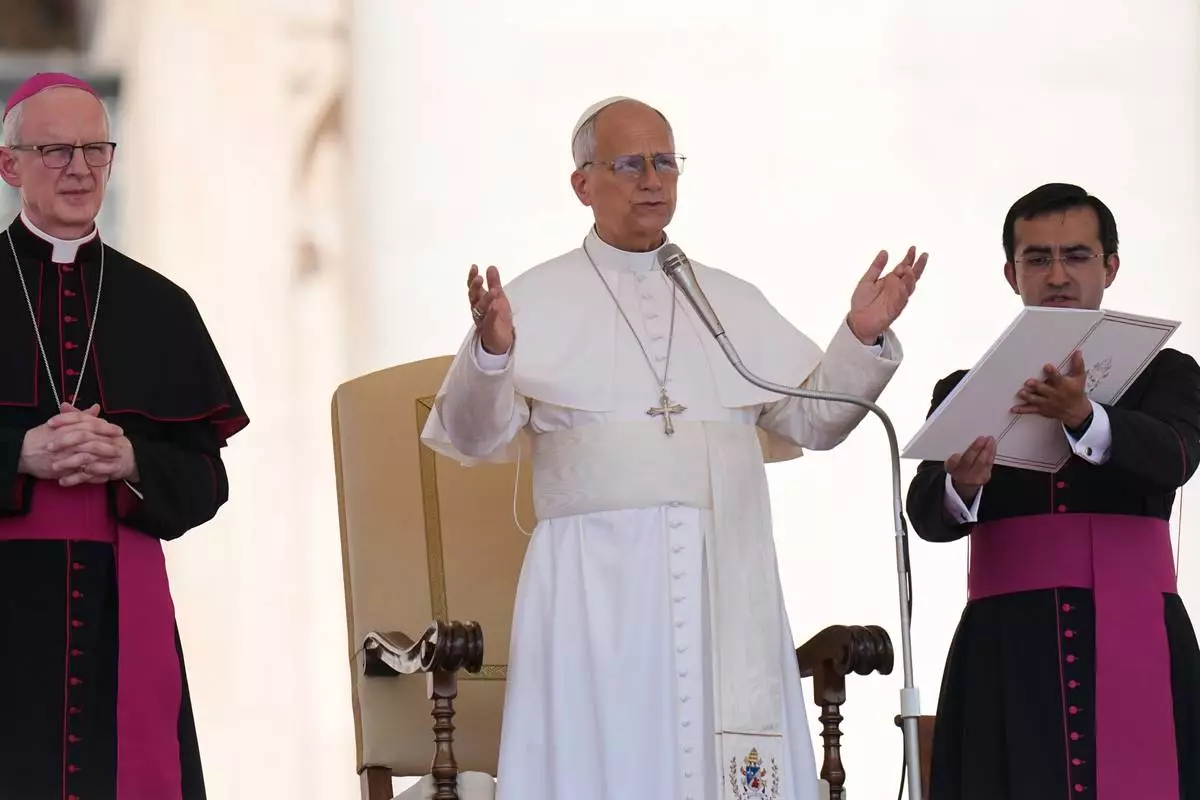
Pope Leo XIV holds his weekly general audience in St. Peter's Square at The Vatican, Wednesday, June 24, 2026. (AP Photo/Alessandra Tarantino)