Skip to Content Facebook Feature Image

CHP Investigates Severe Pediatric Influenza A Cases, Urges Public to Maintain Hygiene to Prevent Spread

HK

CHP Investigates Severe Pediatric Influenza A Cases, Urges Public to Maintain Hygiene to Prevent Spread
HK

HK

CHP Investigates Severe Pediatric Influenza A Cases, Urges Public to Maintain Hygiene to Prevent Spread

2026-06-30 19:47 Last Updated At:19:58

CHP investigates two cases of severe paediatric influenza A infection

The Centre for Health Protection (CHP) of the Department of Health is today (June 30) investigating two severe paediatric influenza A infection cases. The CHP urged the public to maintain good personal and environmental hygiene at all times to prevent influenza and other respiratory illnesses.

The first case involves a 12-year-old boy with underlying illness. He presented with a fever, cough and shortness of breath on June 27. He was brought to the Accident and Emergency Department of Tuen Mun Hospital for medical attention on the same day and was subsequently admitted to its paediatric intensive care unit (PICU). His respiratory specimen collected on June 29 tested positive for the influenza A virus. His clinical diagnosis was influenza A infection complicated with septic shock. He remains hospitalised in serious condition.

Another case involves a 6-year-old boy with good past health. He presented with a fever on June 27, and attended a private hospital the next day (June 28). Due to persistent seizure, he was transferred to the PICU of Pamela Youde Nethersole Eastern Hospitalfor treatment. His respiratoryspecimen collected on June 29 tested positive for influenza A virus and Haemophilus influenzae. His clinical diagnosis was a co-infection of influenza A and Haemophilus influenzae complicated with severe pneumonia and septic shock. He remains hospitalised in critical condition.

The CHP's preliminary investigation revealed that both boys had received the 2025/26 seasonal influenza vaccination. They had no travel history during the incubation period. There have been no recent influenza outbreaks at their schools. One of the household contacts of each boy developed upper respiratory symptoms and fever respectively but their conditions were mild and required no hospitalisation. The CHP will continue to investigate the cases.

According to the surveillance data, seasonal influenza activity has been increasing over the past few weeks. Although it still remains slightly below the baseline levels at present, based on past experience, Hong Kong typically experiences a flu season between July and August. Hence, the CHP anticipates a further rise in influenza activity with arrival of an influenza season shortly.

The CHP reminded members of the public, especially children, the elderly and those with underlying illnesses, to seek medical advice promptly for early treatment if they present with fever and respiratory symptoms. As the health condition of children with influenza can deteriorate rapidly, parents must pay close attention to their condition, and visit an accident and emergency department immediately if the child's condition deteriorates with symptoms such as shortness of breath, wheezing, blue lips, chest pain, confusion, a persistent fever or convulsions.

Separately, the public should maintain good personal and environmental hygiene at all times to prevent contracting influenza and other respiratory illnesses. High-risk individuals should wear surgical masks when staying in crowded places. People with respiratory symptoms, even if mild, should wear a surgical mask and seek medical advice promptly. They should also consider whether to attend work or school.

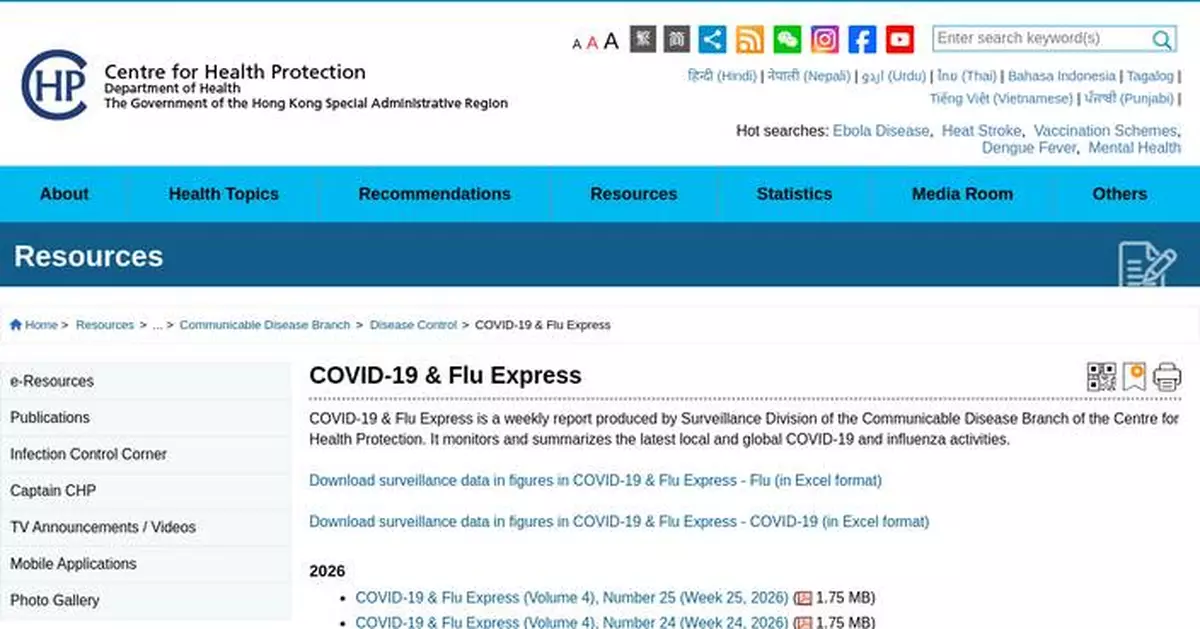
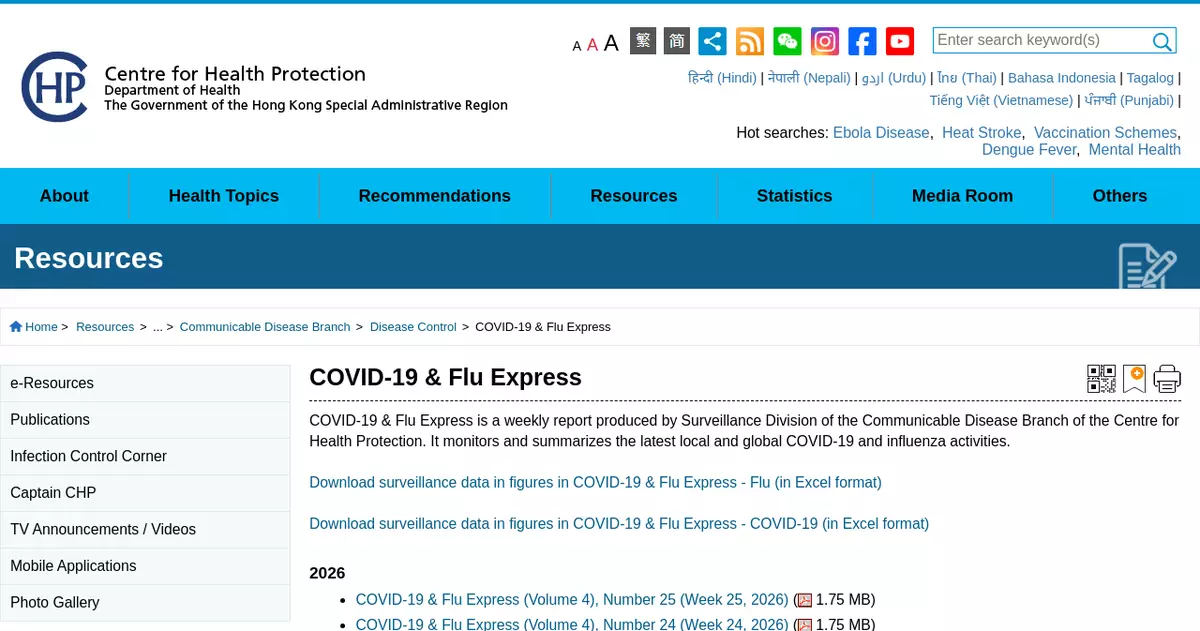
Members of the public may refer to the CHP'sCOVID-19 & Flu Express,Seasonal Influenza Webpage,COVID-19 Vaccination Programme Webpage, andVaccination Schemes Webpage, for the latest information.
Source: AI-found images

Source: AI-found images

CFS announces food safety report for May

The Centre for Food Safety (CFS) of the Food and Environmental Hygiene Department today (June 30) released the findings of its food safety report for last month. The results of about 6 000 food samples tested (including food items purchased online) were found to be satisfactory except for 19 unsatisfactory samples that were announced earlier. The overall satisfactory rate was 99.7 per cent.

A CFS spokesman said that about 2 100 food samples were collected for microbiological tests, and about 3 900 samples were taken for chemical and radiation level tests.

The microbiological tests covered pathogens and hygiene indicators; the chemical tests included testing for pesticides, preservatives, metallic contaminants, colouring matters, veterinary drug residues and others; and the radiation-level tests included testing for radioactive caesium and iodine in samples collected from imported food from different regions.

The samples comprised about 1 400 samples of vegetables and fruit and their products; about 500 samples of cereals, grains and their products; about 600 samples of meat and poultry and their products; about 1 100 samples of milk, milk products and frozen confections; about 900 samples of aquatic and related products; and about 1 500 samples of other food commodities (including beverages, bakery products and snacks).

The 19 unsatisfactory samples were a prepackaged dried lily bulb sample and a prepackaged dried porcini sample detected with metallic contaminants exceeding the legal limits; a tomato sample detected with a pesticide residue exceeding the legal limit; a beef congee sample found to contain sulphur dioxide; a beef skewer sample detected with a preservative exceeding the legal limit; a prepackaged pork floss sample detected with an antioxidant exceeding the legal limit; two soft ice-cream samples, a frozen confection sample and two imported frozen confection samples detected with coliform bacteria counts exceeding the legal limits; five imported frozen confection samples detected with coliform bacteria and total bacterial counts exceeding the legal limits; two bottled mineral water samples found to contain a trace amount of Enterococci; and a growing up formula powder sample found with the possible presence of Cereulide produced by Bacillus cereus.

The CFS has taken follow-up actions on the above-mentioned unsatisfactory samples, including informing the vendors concerned of the test results, instructing them to stop selling the affected food items, and tracing the sources of the food items in question.

The spokesman reminded the food trade to ensure that food is fit for human consumption and meets legal requirements. Consumers should patronise reliable shops when buying food and maintain a balanced diet to minimise food risks.

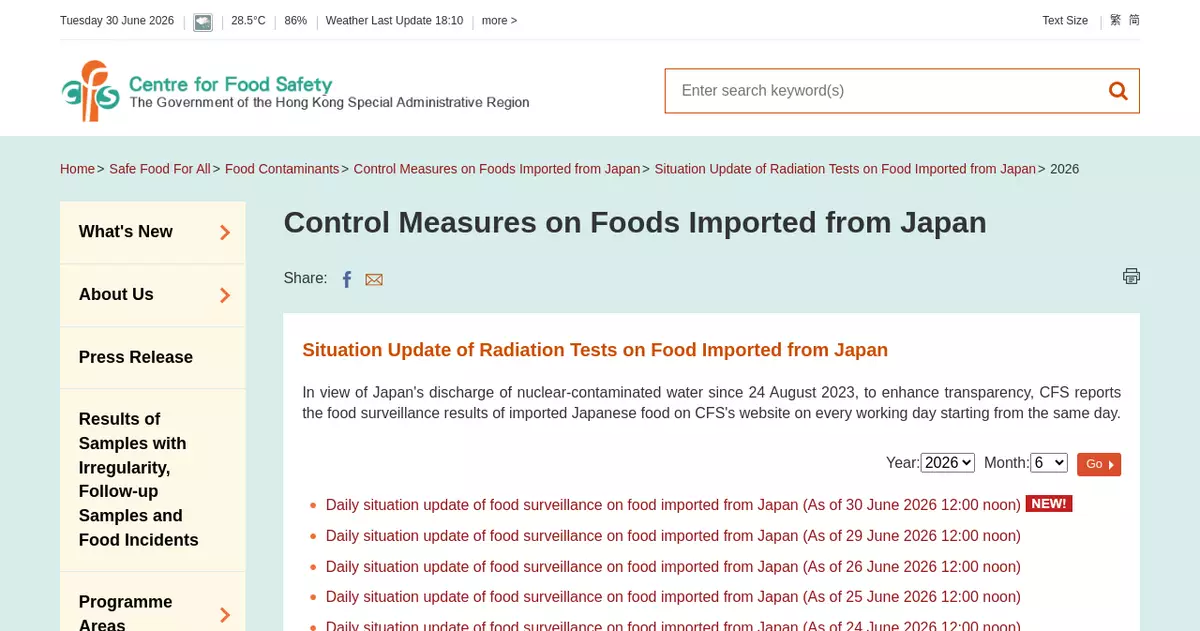
Separately, in response to the Japanese Government's discharge of nuclear-contaminated water at the Fukushima Nuclear Power Station, the CFS will continue enhancing the testing on imported Japanese food, and make reference to the risk assessment results to adjust relevant surveillance work in a timely manner. The CFS will announce every working day on its dedicated webpage (www.cfs.gov.hk/english/programme/programme_rafs/daily_japan_nuclear_incidents.html) the radiological test results of the samples of food imported from Japan, with a view to enabling the trade and members of the public to have a better grasp of the latest safety information.

Source: AI-found images

Source: AI-found images

Recommended Articles