NICOSIA, Cyprus (AP) — Natural gas could start flowing by 2033 out of two undersea deposits discovered by ExxonMobil off Cyprus, a senior executive with the company said Tuesday, helping to turn the east Mediterranean island nation into a new European energy hub.
The largest U.S. oil company and its consortium partner, QatarEnergy, consider the most likely option for getting the gas to market would be conveying it through a pipeline to existing processing facilities in Egypt where it can be liquefied for export, ExxonMobil's Vice President of Global Exploration John Ardill said.
Other options including building onshore facilities in Cyprus or a floating one in waters over the deposits are considered too costly at this point.
“Everything you’ve seen between the government of Cyprus and the government of Egypt gives us a lot of confidence that there’s good government to government coordination, the agreements in place to leverage that eastern Mediterranean energy hub concept,” Ardill said.
He was speaking after ExxonMobil and QatarEnergy signed a deal with Cyprus declaring the two deposits commercially viable.
The deposits — dubbed Glaucus and Pegasus — are located in Block 10 of Cyprus’ exclusive economic zone (EEZ) and are estimated to hold together roughly 7 trillion cubic feet of gas.
Ardill said the consortium is looking to expand its presence off Cyprus, expressing interest in exploring an area, or block, on the southwestern corner of the EEZ that is adjacent to an area where it already holds drilling licenses.
The consortium will carry out additional drilling at the Pegasus deposit around the end of this year to collect more key data for its development, he added.
“So what we should tell ordinary people is we have been working very diligently together between government and investor to make these discoveries and we’re working very diligently to get the gas flowing for the people of Cyprus,” Ardill said.
Cyprus is trying to position itself as a new energy source for Europe and beyond following the initial discovery of natural gas off its southern shore in 2011.
Apart from ExxonMobil and QatarEnergy, two other consortiums hold exploration licenses in the Cypriot EEZ.
A consortium composed of Italy’s Eni and French TOTAL holds licenses for four blocks where two deposits hold an estimated 5.6 trillion cubic feet of gas combined, while a partnership between Chevron, Dutch Shell and Israeli NewMed is licensed for one bloc where the oldest discovery — Aphrodite — holds approximately 5.6 trillion cubic feet of gas.
Earlier this year, Eni’s Chief Operating Officer Guido Brusco said the company was close to making a final decision on developing the Cronos gas field that could deliver the hydrocarbon to European markets by late 2027 or early 2028.
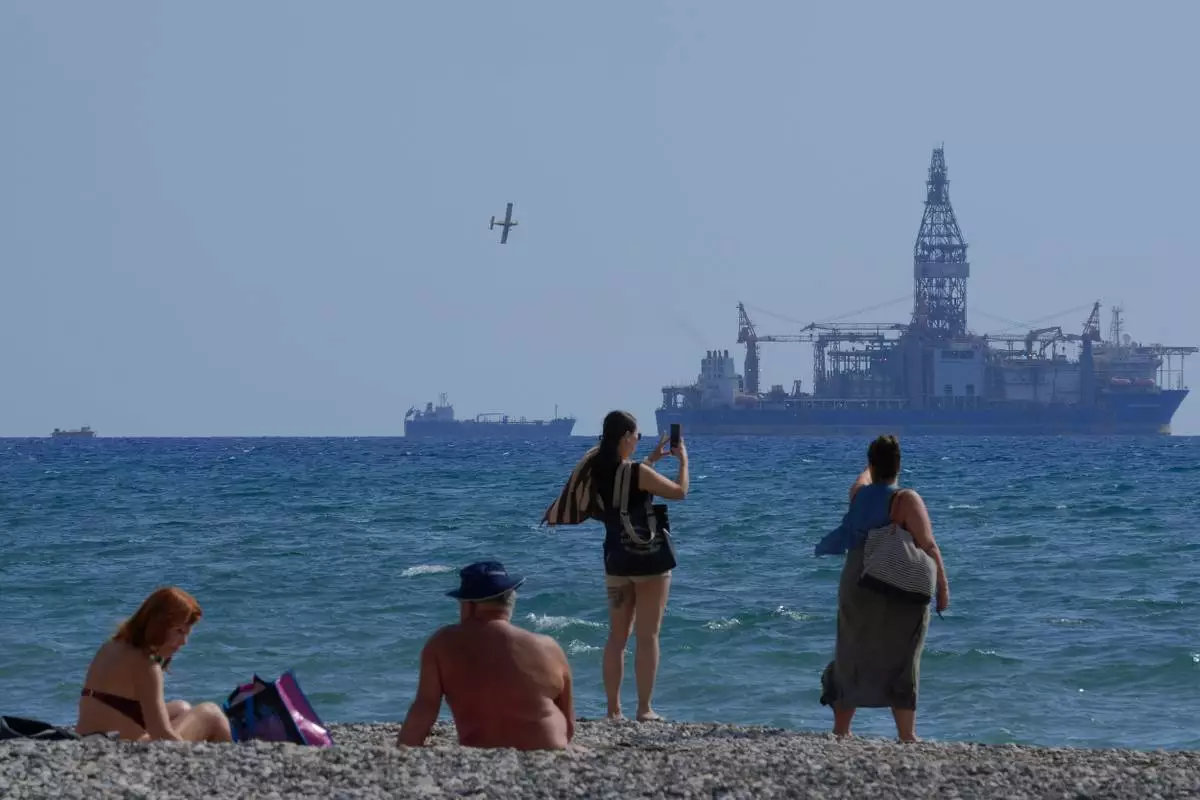
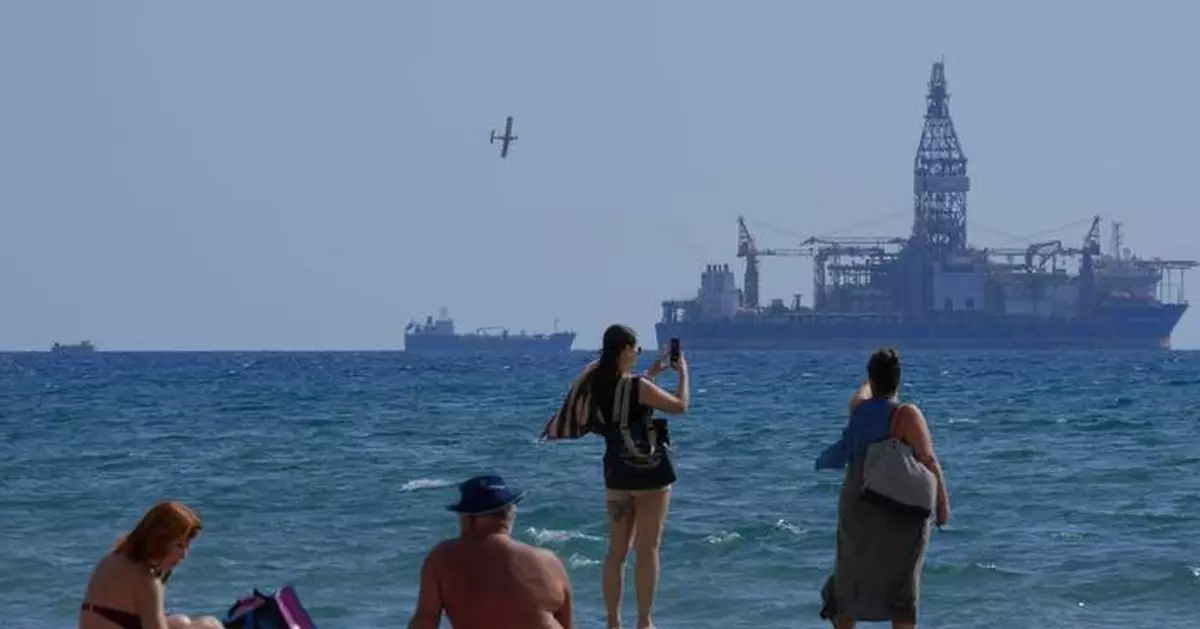
FILE - People on the beach take photos of the 'Tungsten Explored' drilling ship, in the southern coastal city of Larnaca, Cyprus, on Nov. 3, 2021. (AP Photo/Petros Karadjias, File)
DUBAI, United Arab Emirates (AP) — Two U.S. envoys arrived in Qatar on Tuesday for talks with mediators about the implementation of an initial deal to end the war in Iran, an official said.
The visit by Steve Witkoff, U.S. President Donald Trump’s special Mideast envoy, and Jared Kushner, his son-in-law, comes after a weekend of crossfire in the Persian Gulf over efforts to reopen the Strait of Hormuz to shipping traffic.
The envoys won’t be having direct negotiations with Iranian diplomats while in Qatar’s capital, Doha, said Majed al-Ansari, a spokesman for Qatar’s Foreign Ministry. Instead, mediators are working for the time being as go-betweens for the talks, which won’t include any high-level officials, he added.
Such indirect negotiations have happened in the past between Iran and the U.S. However, the two previous rounds of talks collapsed into the 12-day war Israel launched against Iran in 2025 and the recent Iran war.
“We’re not expecting any high-level Iranian officials at the moment, but as I said, the technical meetings are ongoing ... and they haven’t stopped since then,” al-Ansari told journalists at a weekly news conference.
Iran was also sending a delegation to Qatar this week. Iran’s Foreign Ministry spokesman Esmail Baghaei said Tuesday that Iran has had no plans for a meeting with the American side at any level in the coming days.
“What will take place in Doha tomorrow is a discussion with the Qatari side about implementing parts of the memorandum of understanding, including the release of Iran’s blocked assets,” Baghaei told journalists at his own briefing.
However, that left open the possibility of messages being passed to the Qataris between the two sides.
The U.S. and Iran agreed to an interim deal earlier this month that calls for Tehran to dilute its stockpile of enriched uranium. It also waives U.S.-backed oil sanctions on the country, calls for free traffic through the Strait of Hormuz and gives each side 60 days to hammer out broader agreements.
A fifth of the world's oil was shipped through the Strait of Hormuz before the war began Feb. 28. Iran’s attacks and threats stopped cargo ships and tankers from moving through the strait, creating a global energy crisis.
The strait has long been considered an international waterway despite being in Iran and Oman’s territorial waters.
Both sides traded strikes amid efforts last week to open Oman’s territorial waters in the strait to both inbound and outbound ship traffic from the Persian Gulf. That raised concerns that negotiations to formally end the war could be disrupted.
Iran twice attacked vessels in the strait — including a tanker filled with Qatari crude — and drew retaliatory American airstrikes. Iran also launched drone and missile attacks targeting Bahrain and Kuwait on Sunday.
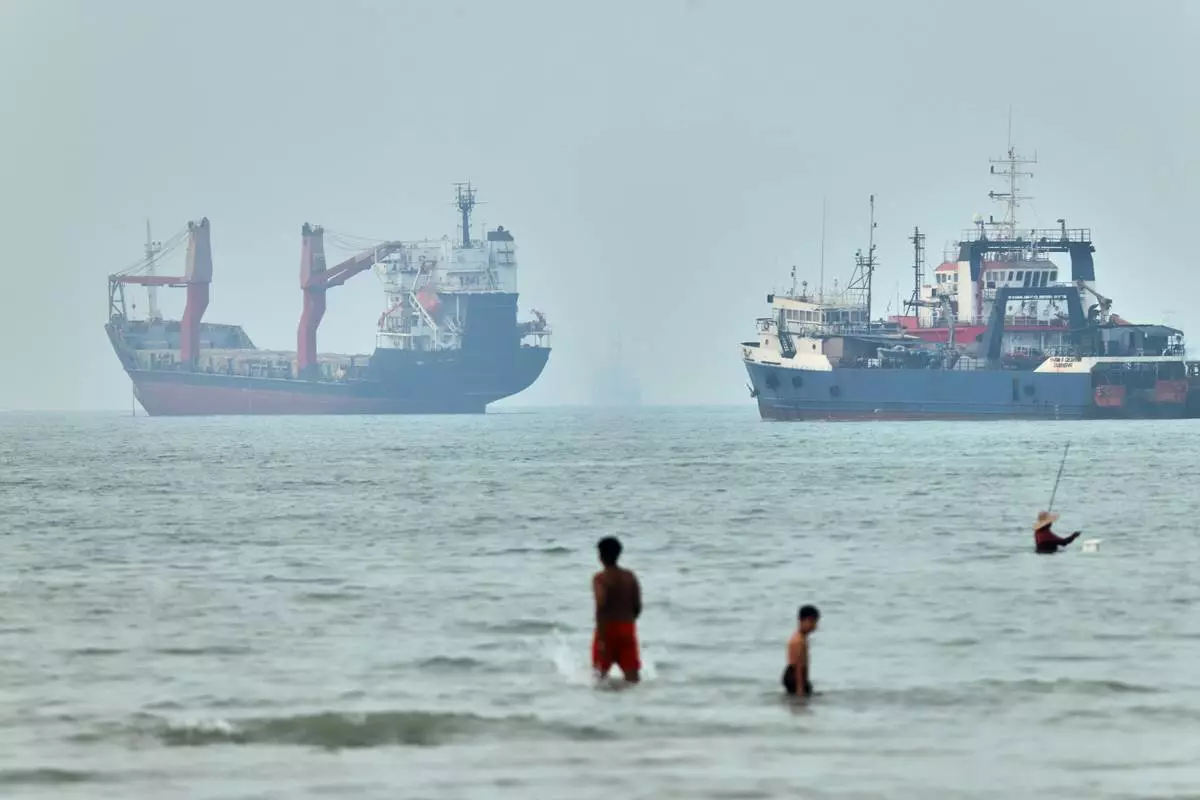
Children wade in the water with cargo ships at anchor in the background and a fisherman nearby, in the Strait of Hormuz off Bandar Abbas, Iran, Tuesday, June 30, 2026. (Amirhosein Khorgooi/ISNA via AP)
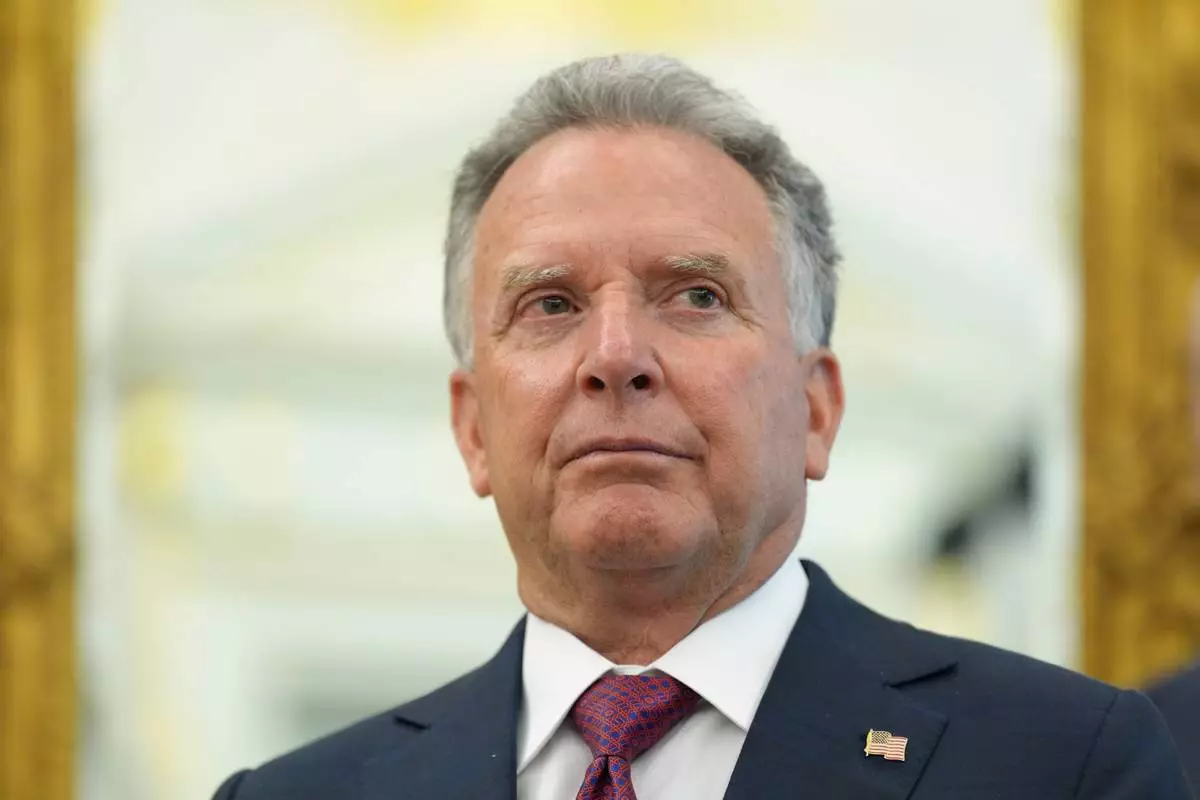
Steve Witkoff, special envoy to the Middle East, listens as President Donald Trump and NATO Secretary General Mark Rutte meet in the Oval Office at the White House, Wednesday, June 24, 2026, in Washington. (AP Photo/Jacquelyn Martin)