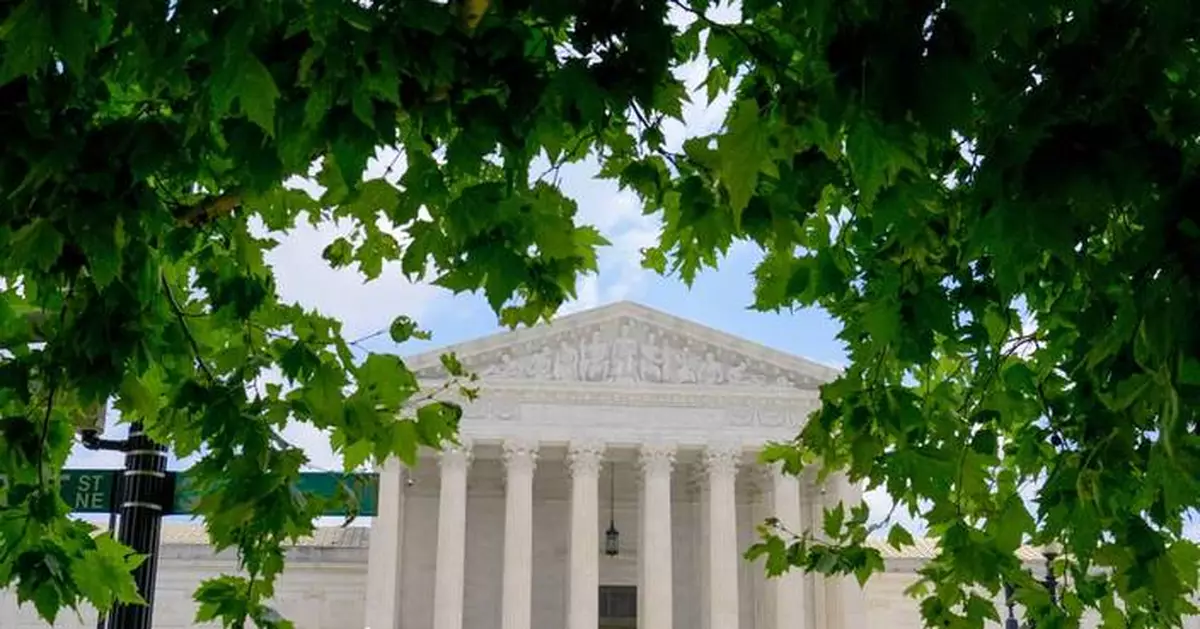
WASHINGTON (AP) — A divided Supreme Court on Tuesday upheld a broad conception of birthright citizenship, rejecting President Donald Trump’s executive order declaring that children born to people who are in the United States illegally or temporarily are not American citizens.
The justices relied on a long-settled understanding of the 14th Amendment, adopted after the Civil War, and more recent federal laws in ruling that anyone born in the country, with very limited exceptions, is a citizen.
“Citizenship, then and now, was the right to have rights—to freely participate in our political community. The Framers of the Fourteenth Amendment extended that promise to ‘every free-born person in this land,’” Chief Justice John Roberts wrote for the court, citing congressional debate over the amendment, “We keep that promise today.”
Three conservative justices would have allowed the restrictions to take effect.
“The Court today takes the extraordinary step of holding facially unconstitutional the President’s Order excluding from citizenship the children of foreign temporary visitors and illegal aliens,” Justice Clarence Thomas wrote in a 91-page dissent, more than three times as long as Roberts' opinion. “In doing so, the Court adds to the sad history of the Fourteenth Amendment, which was designed and understood to secure equal rights for the freed blacks but has instead been repurposed for political projects that the Reconstruction Congress did not support.”
The Republican president's restrictions had been blocked by several lower courts and had not taken effect anywhere in the U.S.
During arguments in April, both conservative and liberal justices questioned the order’s legality in a momentous case that was magnified by Trump’s unprecedented attendance in the courtroom.
The case framed another test of Trump’s assertions of executive power that defy long-standing precedent for a court with a conservative majority and a robust view of presidential power that has largely ruled in his favor. In the notable exceptions when the court has not, Trump has responded with starkly personal criticisms of the justices.
The justices ruled on Trump’s appeal of a lower-court ruling from New Hampshire that struck down the citizenship restrictions.
The birthright citizenship order, which Trump signed on the first day of his second term, is part of his administration’s broad immigration crackdown.
Birthright citizenship was the first Trump immigration-related policy to reach the court for a final ruling. The justices previously struck down global tariffs Trump had imposed under an emergency powers law that had never been used that way.
Trump reacted furiously to the late February tariffs decision, saying he was ashamed of the justices who ruled against him and calling them unpatriotic.
He also seemed to recognize the court was likely to rule against him on birthright citizenship, too, using his Truth Social platform to criticize “dumb judges and justices” and wealthy pregnant women from China and elsewhere who come to the U.S. to give birth so their newborns will have American citizenship.
Trump’s order would have upended widely held views that the 14th Amendment confers citizenship on everyone born in the U.S., excluding only the children of foreign diplomats and those born to a foreign occupying force.
The amendment was intended to ensure that Black people, including former slaves, had citizenship, though the Citizenship Clause is written more broadly. “All persons born or naturalized in the United States, and subject to the jurisdiction thereof, are citizens of the United States and of the State wherein they reside,” it reads.
In a series of decisions, lower courts have struck down Trump's executive order as illegal. The decisions have invoked the high court’s 1898 ruling in Wong Kim Ark, which held that the U.S.-born child of Chinese nationals was a citizen.
Roberts, joined by Justice Amy Coney Barrett and the three liberal justices, said the amendment's language, the historical context and the 1898 case make clear that children born to parents illegally or temporarily in the U.S. “are citizens at birth.”
But there was only a bare majority of five justices on the constitutional question.
Justice Brett Kavanaugh sided with the majority, but only because of a federal law that makes those children citizens.
Kavanaugh joined the dissenters in finding that Trump's order does not violate the Constitution. His view would enable a future Congress to change the law to restrict birthright citizenship.
The Trump administration had argued that the common view of citizenship is wrong, asserting that children of noncitizens are not “subject to the jurisdiction” of the United States and therefore are not entitled to citizenship.
More than one-quarter of a million babies born in the U.S. each year would have been affected by the executive order, according to research by the Migration Policy Institute and Pennsylvania State University’s Population Research Institute.
While Trump has largely focused on illegal immigration in his rhetoric and actions, the birthright citizenship restrictions also would have applied to people who are legally in the United States, including students and applicants for green cards, or permanent resident status.
Follow the AP’s coverage of the U.S. Supreme Court at https://apnews.com/hub/us-supreme-court.
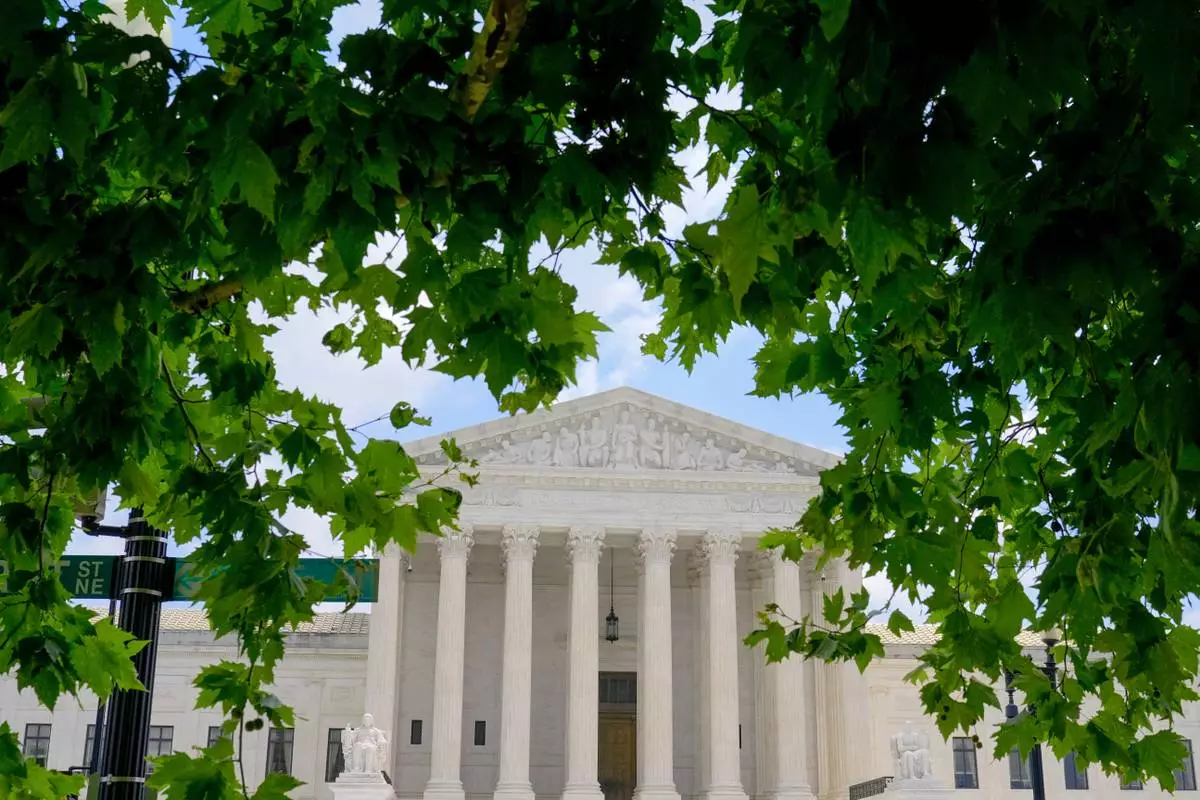
The U.S. Supreme Court is seen Monday, June 29, 2026, in Washington. (AP Photo/Mariam Zuhaib)
LONDON (AP) — Self-flying fighter jets, uncrewed submarines and drones will be at the center of Britain’s future military under a defense plan announced Tuesday that includes a 15 billion pound ($20 billion) spending boost.
Like other NATO countries, the U.K. is under pressure to increase defense spending to counter a more aggressive Russia and less reliable United States. But its Defense Investment Plan has been repeatedly delayed as military leaders and Treasury officials wrangled over the cost.
Prime Minister Keir Starmer said the plan reflects a world of conflicts transformed by technology and will keep Britain safe in “a more dangerous and volatile world."
“When the world is arming and aggression is rising, the best way to avoid war is to prepare for it," he said.
But the blueprint does not commit to spending 3% of U.K. GDP on defense by 2030, one of the factors that spurred John Healey to resign as U.K. defense secretary on June 11. Healey accused the government of underspending on the military at a time of “rising threats," citing a British intelligence assessment that Russia could attack a NATO member country by 2030.
In the House of Commons on Tuesday, Healey said that “with European security at stake,” Britain needs "to develop a clear, credible funding plan that will hit 3% and that will meet our NATO commitment of 3.5% by 2035."
Starmer said Healey’s successor, Defense Secretary Dan Jarvis, had worked to “sharpen and strengthen" the plan. Its 15 billion pounds in new spending is more than the 13.5 billion pounds ($18 billion) Healey was offered by the Treasury, but far less than the 28 billion pounds ($37 billion) that defense officials had called for.
Under the plan, defense spending will hit 2.7% of GDP by 2029. Starmer said the 3% target will be reached “in the next Parliament,” a period that could extend to 2034. The U.K. remains committed to hitting NATO’s 3.5% target by 2035, though it's unclear how it will get there.
The government said the new funding will boost spending on defense to almost 300 billion pounds ($400 billion) over the next four years. Big-ticket items include 5 billion pounds ($6.6 billion) for drone technology, 8 billion pounds ($10.6 billion) to build new stealth fighter jets alongside Japan and Italy, and 11 billion pounds ($14.5 billion) to increase weapons stockpiles. The U.K. will also spend 64 billion pounds ($85 billion) modernizing its nuclear weapons.
Starmer said some road and energy projects would be scrapped to help pay for the military.
The U.K. military is seeking to reverse years of decline in the face of an increasingly assertive Russia, which invaded its neighbor Ukraine in 2022 and increasingly tests the defenses of European nations with overt and covert activity.
The U.K. has watched how drones have transformed war in Ukraine, which uses 200,000 of them a month to defend against Russian forces. Britain plans to invest billions in drone systems across all branches of the military. Instead of a planned fleet of new destroyers, the Royal Navy will get hybrid vessels that will act as command hubs for drones.
“The very nature of conflict is changing before our eyes,” Starmer said during a speech at a drone manufacturer near London. He said that, armed with cutting-edge technology, Ukrainian forces have destroyed Russia’s Black Sea fleet, “struck deep into Russian territory and stopped the advance of one of the biggest armies in the world.”
Britain and other NATO member nations have faced pressure from U.S. President Donald Trump to increase military spending. Trump has long questioned the value of the military alliance and complained that the United States provides security to European countries that don’t pull their weight.
The resignations of Healey and junior Defense Minister Al Carns were among a series of blows that prompted Starmer to announce last week that he will resign. A NATO summit in Turkey on July 7 and 8 may be his final overseas trip as prime minister.
His replacement, likely the former Greater Manchester Mayor Andy Burnham, will be under pressure to stick to the commitments in the defense plan.
“It is a platform on which I know my successor will build," Starmer said.
Opposition Conservative Party defense spokesperson James Cartlidge said the plan was “too little, too late.”
And retired Gen. Richard Barrons, who helped lead a defense review in preparation for the investment plan, said “we have to find more money for defense sooner.”
“We’re not keeping up with our allies, we’re certainly not keeping up with our enemies, and we know that the U.S. is no longer going to come and save European security in the face of a Russian threat,” he told the BBC.

British Prime Minister Keir Starmer, left, hugs Chancellor of the Exchequer Rachel Reeves on the occasion of the announcement of a defense plan, in Berkshire, England, Tuesday, June 30, 2026. (Stefan Rousseau/Pool Photo via AP)

British Prime Minister Keir Starmer speaks on the occasion of the announcement of a defense plan, in Berkshire, England, Tuesday, June 30, 2026. (Stefan Rousseau/Pool Photo via AP)
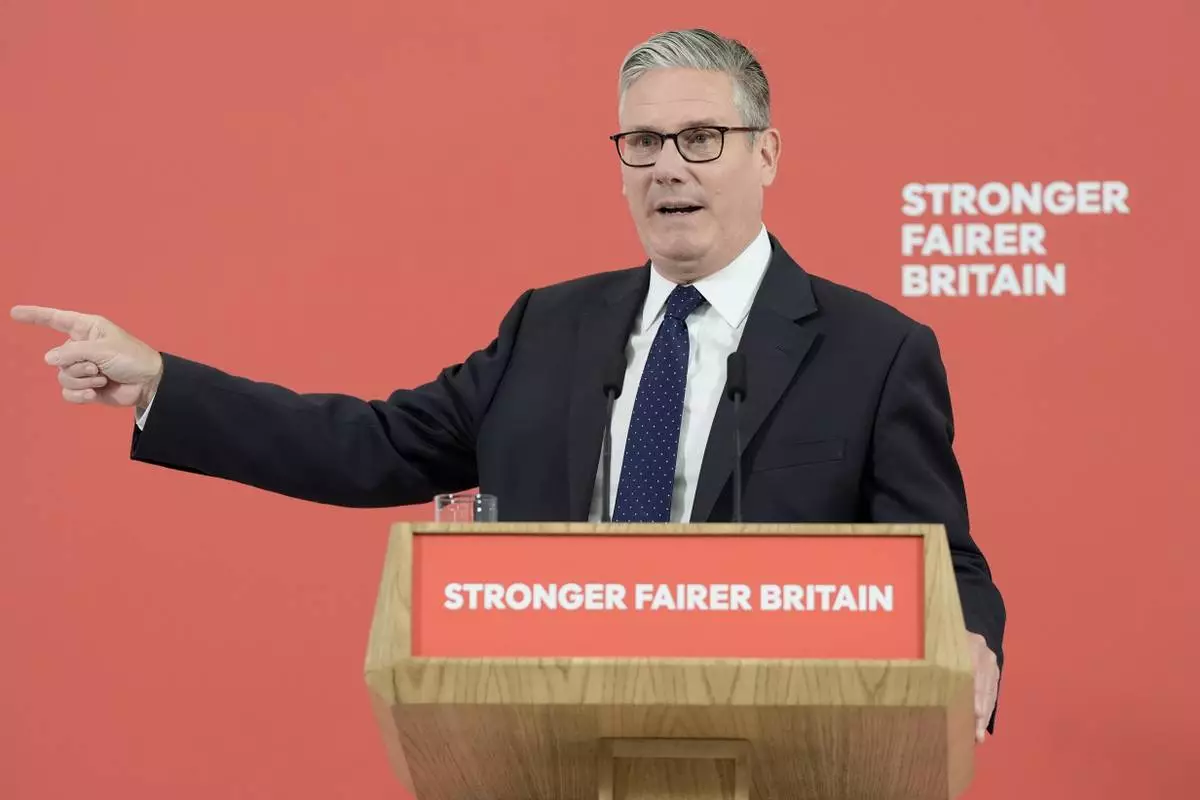
British Prime Minister Keir Starmer announces a defense plan, in Berkshire, England, Tuesday, June 30, 2026. (Stefan Rousseau/Pool Photo via AP)

British Prime Minister Keir Starmer, left, followed by Chancellor of the Exchequer Rachel Reeves and Defense Secretary Dan Jarvis arrive for the announcement of a defense plan, in Berkshire, England, Tuesday, June 30, 2026. (Stefan Rousseau/Pool Photo via AP)
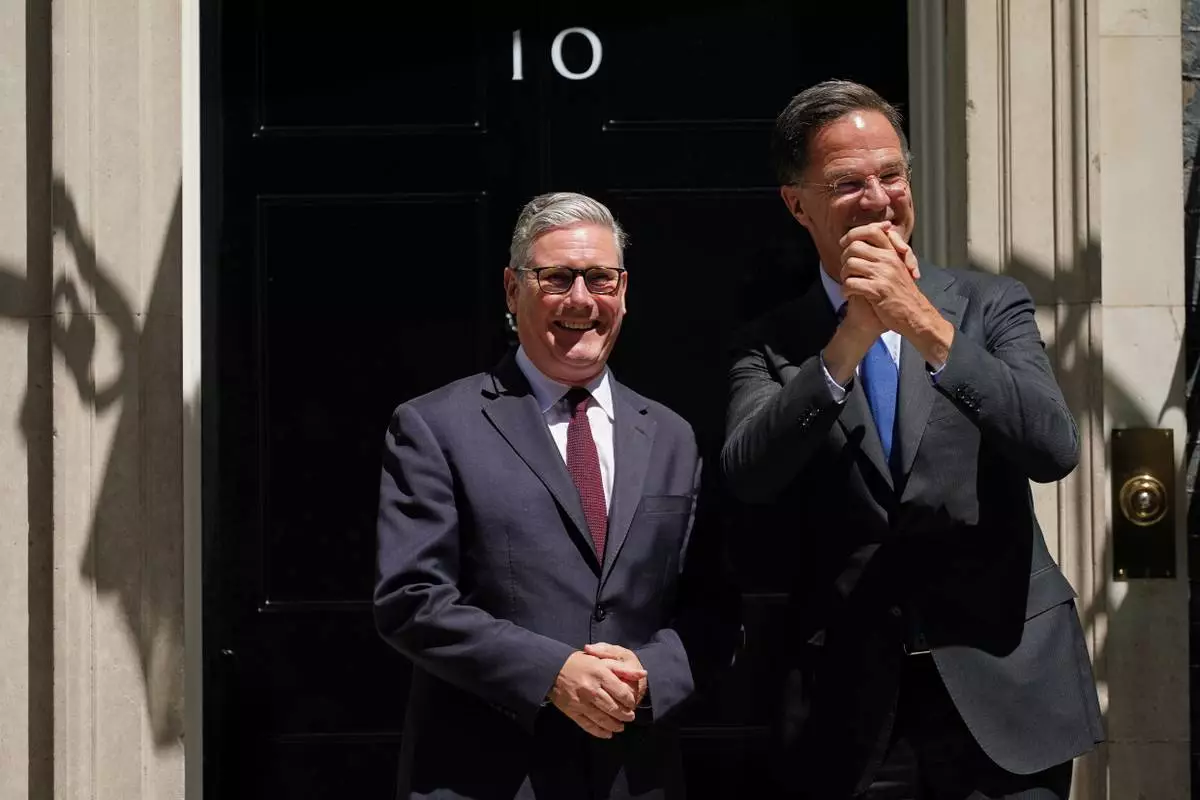
Britain's Prime Minister Keir Starmer welcomes NATO Secretary General Mark Rutte to 10 Downing Street in London, Monday, June 29, 2026.(AP Photo/Alberto Pezzali, Pool)
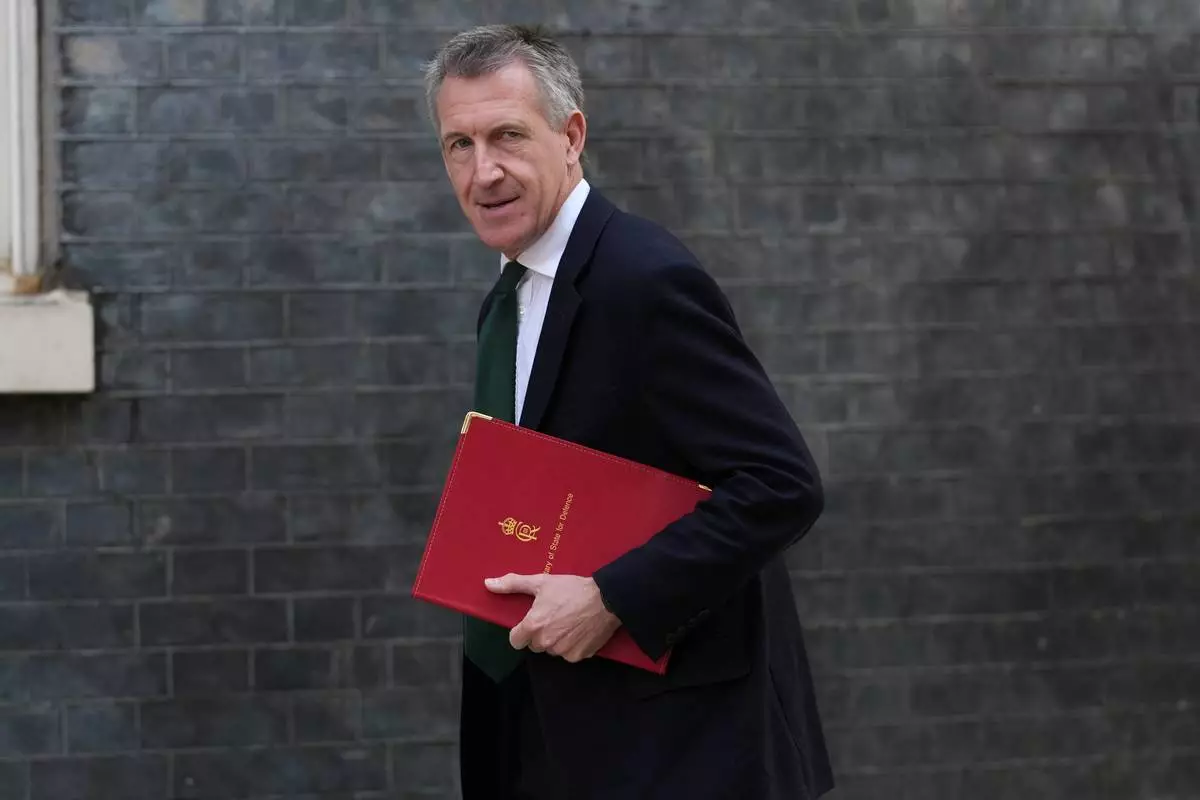
Britain's Secretary of State for Defence Dan Jarvis arrives for a cabinet meeting hosted by Britain's Prime Minister Keir Starmer at Downing Street in London, Tuesday, June 23, 2026.(AP Photo/Alastair Grant)