NEW YORK (AP) — New York Yankees starting pitcher Max Fried took another step in his recovery from a bone bruise in his left elbow, throwing about 30 pitches in a two-inning simulated game Tuesday.
Fried was on the mound for about 20 minutes and used all his pitches while facing Ryan McMahon and Trent Grisham, who are slated to be activated off the injured list Friday.
“It looked great, like really good,” manager Aaron Boone said before the Yankees faced Detroit. “Stuff was good. I thought he was really sharp.”
Fried recently started throwing bullpen sessions and will face hitters again before Sunday’s game against the Minnesota Twins.
The 32-year-old left-hander has been out since May 13, when he left a start in Baltimore after three innings when he velocity noticeably dropped and he threw only 34 of 61 pitches for strikes. He also had an MRI and CT scan that were reviewed by Los Angeles Dodgers team physician Dr. Neal ElAttrache.
McMahon, who is recovering from a throat infection, faced Fried three times. He popped out and struck out in the first two at-bats before seeing three more pitches in the final at-bat when Fried’s session ended.
“All over the zone,” McMahon said. “He threw every pitched, landed the curveball and sweeper for strikes to me and the sinkers were nasty. Everything was good."
Grisham, who is recovering from a strained right hamstring, saw about 10 pitches from Fried and struck out in his first appearance while fouling off a pair of pitches.
Fried did not face Giancarlo Stanton, who is recovering from a strained right calf that has kept him out since April 24. Boone said on Monday Stanton was going to face Fried, but Tuesday said he misspoke.
Fried is 4-3 with a 3.21 ERA in 10 starts after going 19-5 with a 2.86 ERA and making the All-Star team last season, his first with the Yankees. He left Atlanta as a free agent to sign a $218 million, eight-year contract with New York in December 2024.
Jazz Chisholm Jr. passed various concussion tests after the leaving Monday’s 7-3 loss following a violent collision with right fielder Jasson Domínguez.
With the Yankees down 7-0 in the fourth inning, Hao-Yu Lee hit a high pop to shallow right field. Chisholm ran back and attempted to make the catch, but Domínguez charged in and caught the ball as his glove struck the second baseman in the face.
“Getting hit like that I felt like I got punched in the face, but other than that, I was pretty good,” Chisholm said.
Chisholm was not in the lineup Tuesday and José Caballero made his third start at second base.
AP MLB: https://apnews.com/hub/mlb

New York Yankees' Jazz Chisholm Jr., left, walks to the dugout after colliding with Jasson Domínguez during the fourth inning of a baseball game against the Detroit Tigers, Monday, June 29, 2026, in New York. (AP Photo/Pamela Smith)

New York Yankees' Jazz Chisholm Jr., right, walks to the dugout after colliding with teammate Jasson Domínguez during the fourth inning of a baseball game against the Detroit Tigers, Monday, June 29, 2026, in New York. (AP Photo/Pamela Smith)

New York Yankees' Jasson Domínguez, top, checks on teammate Jazz Chisholm Jr., bottom, after they collided while pursuing a ball hit by Detroit Tigers' Hao-Yu Lee during the fourth inning of a baseball game Monday, June 29, 2026, in New York. (AP Photo/Pamela Smith)
BANGKOK (AP) — Floodwaters in Thailand ’s capital were slowly receding on Monday after nearly continuous rainfall over the weekend, although some neighborhoods and major roads remained inundated.
Rain continued intermittently, but Bangkok city officials said conditions had improved enough to accelerate drainage efforts. Water levels in four main canals had risen too high over the weekend to take in runoff from surrounding communities.
More rain was forecast across much of Thailand, although Bangkok was expected to receive less. Cambodia and Myanmar were also experiencing severe weather.
The weekend flooding affected 329,000 households, or about 700,000 people, the Bangkok Flood Control Center reported, according to Deputy Gov. Tavida Kamolvej. Thai media reported two flood-related deaths in the city and at least 10 nationwide.
Gov. Chadchart Sittipunt declared a flood emergency Saturday across all 50 city districts, although some were relatively unscathed. He said authorities were prioritizing assistance for vulnerable residents, including older people and those with disabilities, by delivering supplies or evacuating them. City officials said nearly 7,000 people were staying in shelters.
Neighborhoods in eastern Bangkok were hit hardest. Prime Minister Anutin Charnvirakul donned white rain boots Sunday night to inspect a heavily flooded housing estate in Bang Kapi district and help distribute relief supplies.
Water was about knee-deep Monday near a train station and shopping mall in Bang Kapi. Despite intermittent downpours, shoppers waded through the water carrying bags, backpacks and boxes of groceries. Some traveled to and from the station in a small boat provided by the mall.
For Naowarat Supanikorn, a 55-year-old maid who shares a single-story house with three dogs and six cats, the flooding was more than an inconvenience.
She said she realized at about 1:30 a.m. on Saturday that water was seeping into her home.
“I had to take my dogs and cats out,” she said. “I had to leave them with my neighbor. I have taken them back today because they said the sun would come out, but it looks like the rain will come back.”
She said the flooding in her neighborhood reached above her hips at its highest, and had since dropped to about knee-level. She said the bigger problem is that she has lost her job working at a condominium.
“My workplace also said if I can’t come to work, they’re happy to take my resignation. So I thought, that’s fine, I’ll quit.”
To try to generate some income, she bought supplies to make some food she can sell streetside, but business is slow in the flooded conditions.
“It’s stressful. If the bills come, I’d be cooked, because I don’t have work now. If I have to pay for water or electricity now it would be bad,” she said. “I’m not worried about me but I’m worried about my pets. I’ve lived with them my whole life. They’re my priority. It’s ok if I don’t have work and starve myself, but I’d like help for my pets.”
The flood also has had knock-on effects, including panic buying of food, disrupted supply chains for food and other items, and staffing problems at various enterprises whose employees were unable to get to their jobs.
The Thai Air Force announced it was sending 69 ground personnel to Bangkok's Suvarnabhumi Airport to help clear a backlog of passenger luggage caused largely by airport workers being unable to get to their place of work.
“This deployment is a vital mission to care for, assist, and facilitate travelers — including tourists from around the world — ensuring smooth operations and preventing delays in ground services, thereby upholding the nation’s positive image,” the air force said.
The airport previously attributed the baggage pileup to “insufficient staffing to support ground handling operations” and problems with some baggage carts.
The disruptions delayed some departures and forced arriving passengers to wait longer than usual for their luggage, with baggage from several flights still undelivered, the airport said.
The government declared special holidays on Monday and Tuesday for state offices. It advised state enterprises, financial institutions, private businesses and hospitals to determine whether they needed to remain open.
Thailand’s meteorological agency forecast heavy to very heavy rain across several parts of the country. It warned residents, particularly in northern, central and eastern regions, to prepare for possible flash floods, river overflows, forest runoff and landslides, especially near waterways, foothills and low-lying areas.
In neighboring Myanmar, at least 10 people were killed and dozens were missing after heavy rain triggered widespread flooding and landslides in the southern coastal region of Tanintharyi, local media reported.
Dawei township recorded 346 millimeters (13.62 inches) of rain Monday, breaking an 80-year-old record. Myanmar’s Meteorology Department warned that conditions could worsen as the storm front moved closer to Yangon.
Flash floods struck at least 10 provinces in Cambodia, affecting 44,889 families and forcing nearly 4,000 people to evacuate, according to disaster management officials.
The agency overseeing the archaeological park in Siem Reap province, home to the centuries-old Angkor temple complex, said it was operating water gates and diversion systems to reduce the risk of flooding.
——-
Associated Press writer Sopheng Cheang in Phnom Penh, Cambodia contributed to this report.
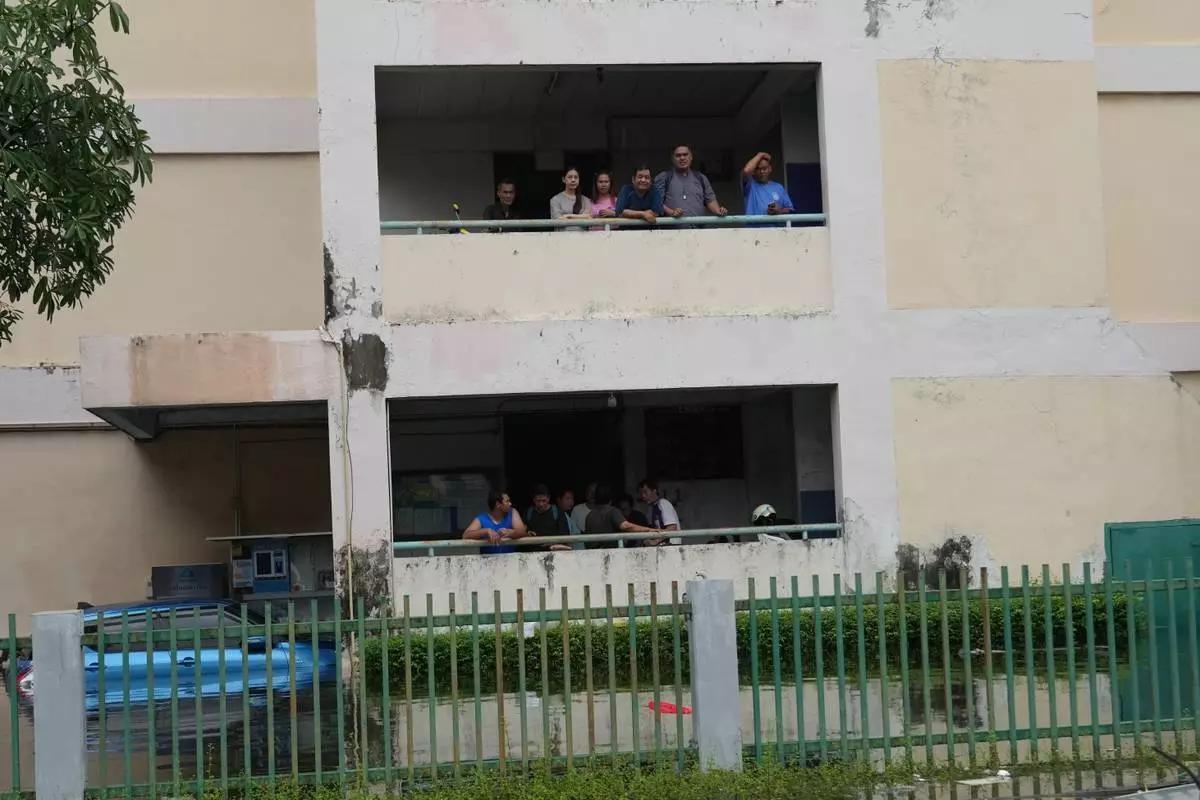
Residents of a building look out at the flooded street after heavy rain in Bangkok, Thailand, Monday, Sept. 28, 2026. (AP Photo/Sakchai Lalit)
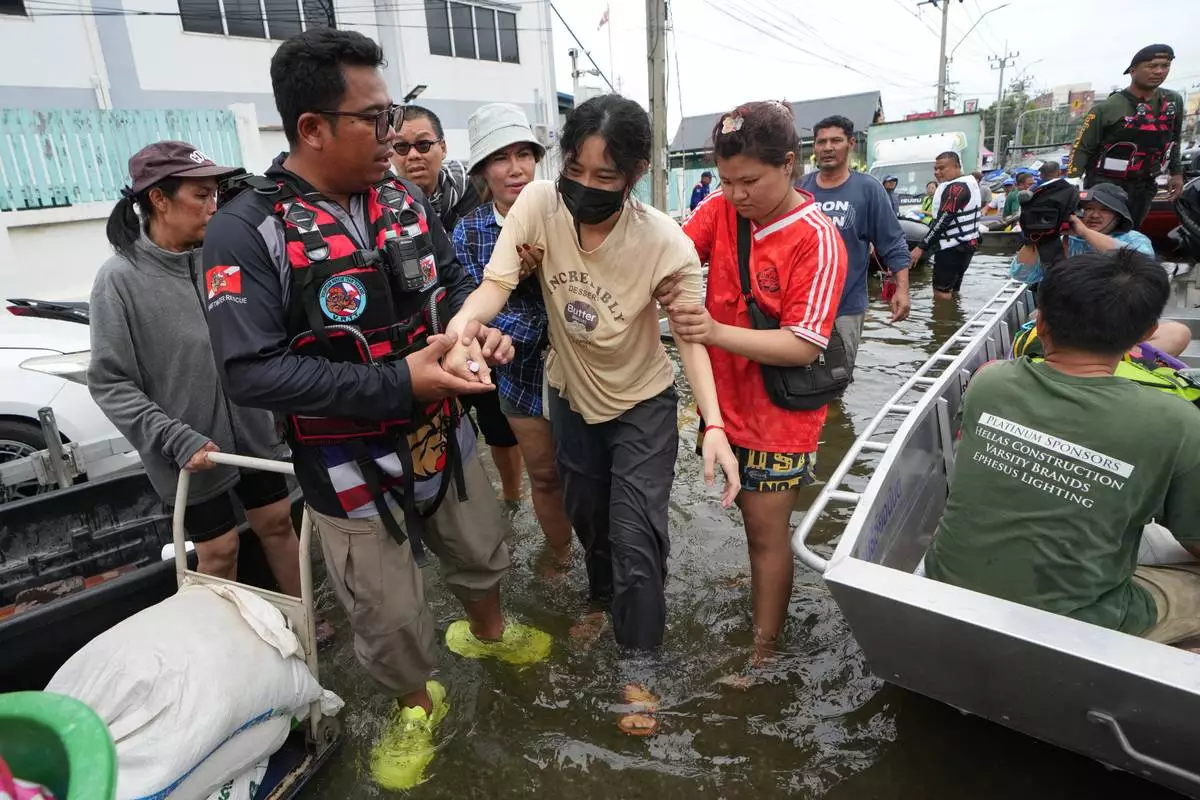
Rescuers evacuate a patient from a flooded area to a safer place in Bangkok, Thailand, Monday, Sept. 28, 2026. (AP Photo/Sakchai Lalit)
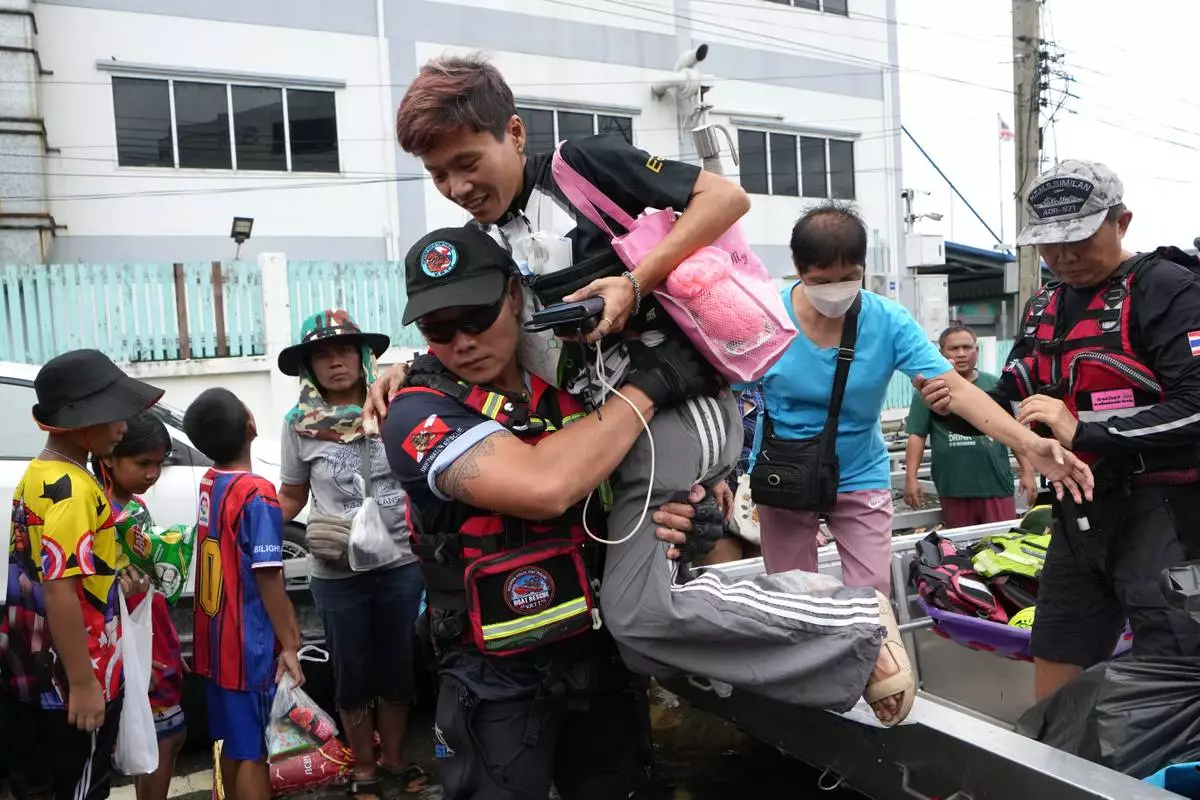
Rescuers evacuate people from a flooded area to a safer place in Bangkok, Thailand, Monday, Sept. 28, 2026. (AP Photo/Sakchai Lalit)
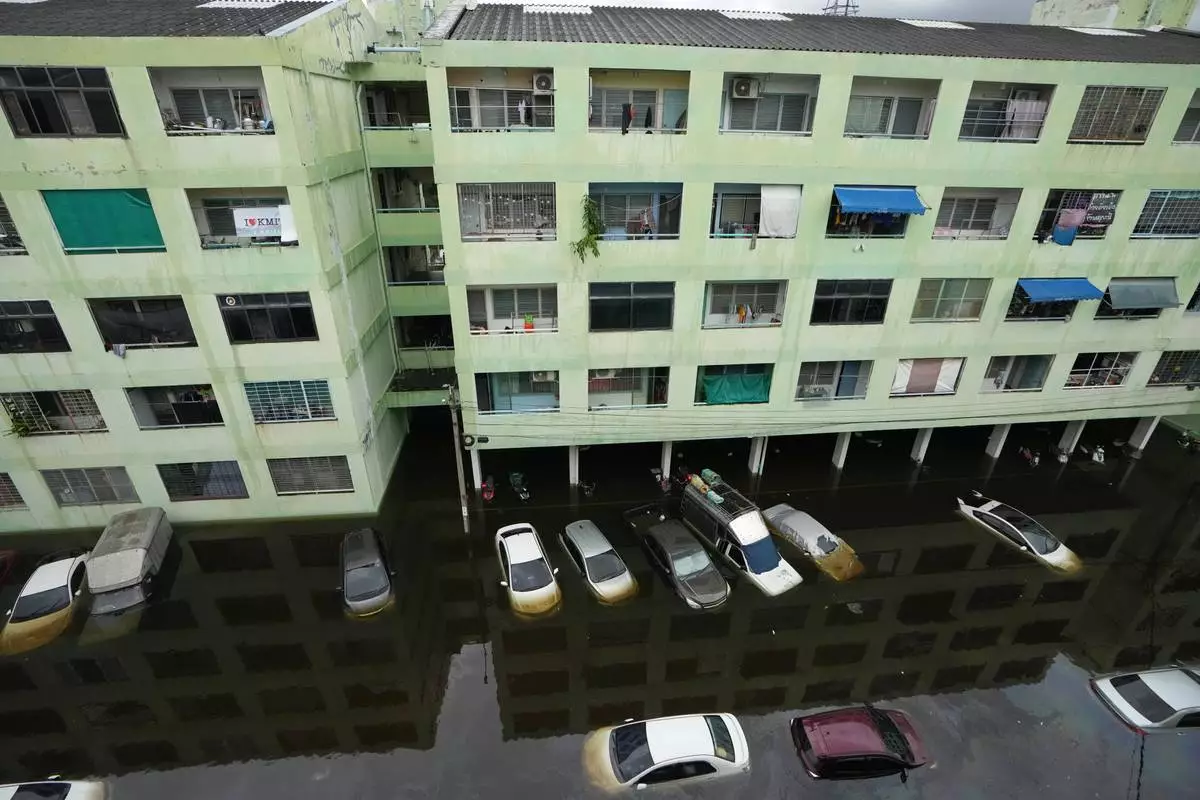
The streets are flooded after a heavy rain, in Bangkok, Thailand, Monday, Sept. 28, 2026. (AP Photo/Sakchai Lalit)
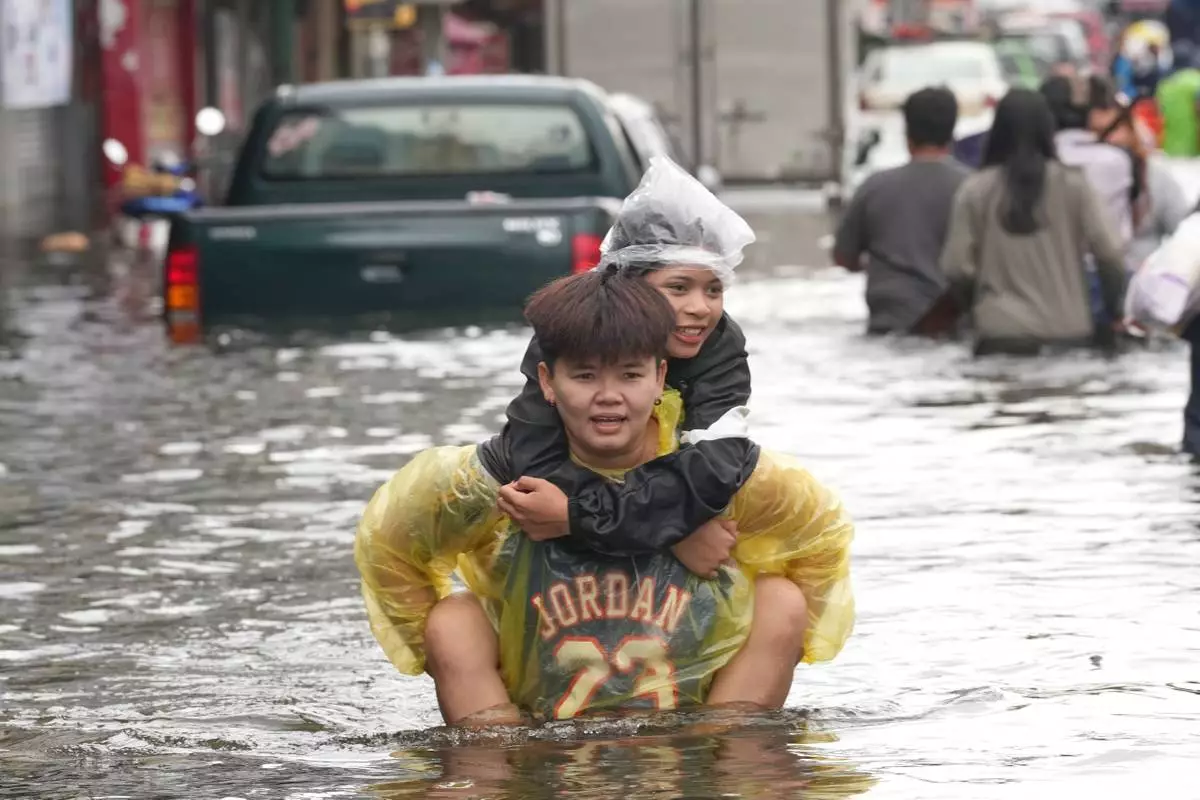
People wade through a flooded street after a heavy rain in Bangkok, Thailand, Monday, Sept. 28, 2026. (AP Photo/Sakchai Lalit)