The earthquakes that struck Venezuela have placed immense pressure on the country's medical system, with hospitals continuously overwhelmed by injured patients.
At Domingo Luciani Hospital in the nation's capital Caracas, medical staff are working around the clock, yet long-standing sanctions have caused shortages of medical supplies, increasing the difficulty of treatment efforts.
Over the past decade, affected by multiple factors including economic crisis, brain drain and sanctions, Venezuela's public healthcare system has faced problems such as aging equipment, insufficient drug supplies, and limited infrastructure investment.
The recent earthquakes have further exposed the medical system's vulnerability in the face of major disasters.
"We received a large number of wounded at our hospital after this severe earthquake, and medical supplies are tight. We are very fortunate to have received a large amount of medical supplies donated by the public and the civil sector," said a doctor of the hospital.
The hospital has begun implementing a priority-guarantee system for medical supplies, with limited resources being allocated to the treatment of critically injured patients.
At the same time, days of high-intensity work have left medical staff physically and mentally drained.
"Now the medical staff at our hospital are working in shifts to ensure 24-hour treatment for disaster victims. After many days of high-intensity work, the medical staff are very tired. I also try my best to arrange reasonable rest for everyone," said Moroni Rosales, deputy administrative director of Domingo Luciani Hospital.
As of Tuesday, the death toll from the two powerful earthquakes that recently struck Venezuela has risen to 1,943, with more than 10,000 injured.
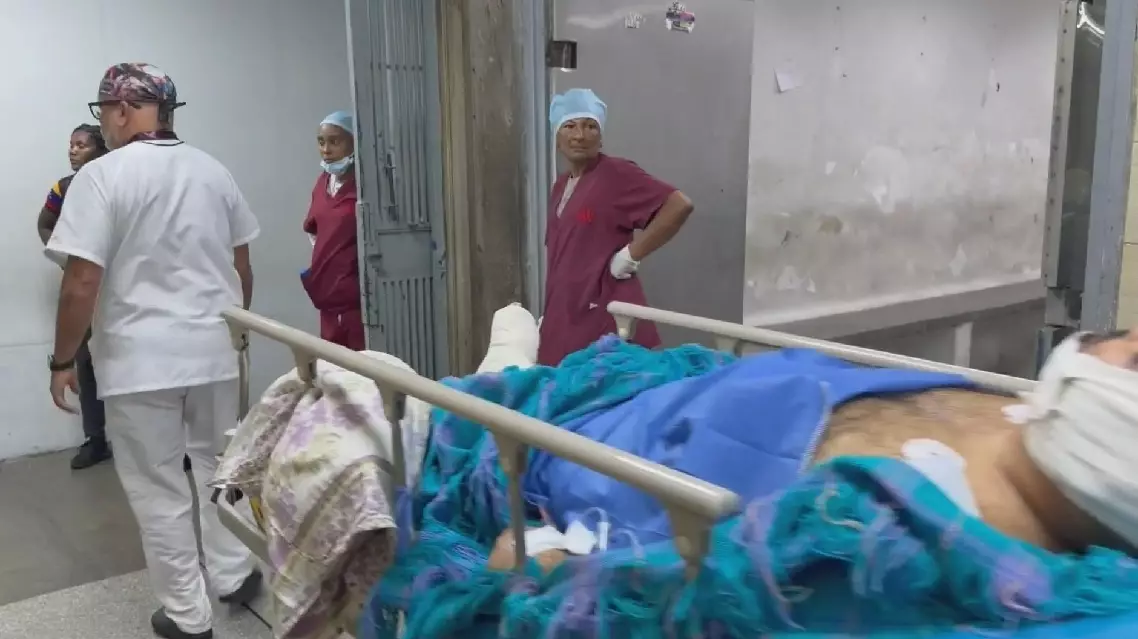
Hospitals struggle to treat surge of wounded after Venezuela earthquake
Uhas Sulayman, a model physician in Yumin County of northwest China's remote Xinjiang Uygur Autonomous Region, has devoted his career to safeguarding the health of local nomadic herders.
Sulayman was one of the eight recipients of the July 1 Medal, the Chinese Communist Party's highest honor, personally conferred by Xi Jinping, general secretary of the Communist Party of China (CPC) Central Committee, at a ceremony held in the Great Hall of the People in central Beijing on Wednesday morning.
For decades, Sulayman traveled through rugged mountains to provide medical care for herders in Yumin County.
"It was Dr. Uhas who brought me back from the brink of death. I'm 68 years old now, and I'm deeply grateful to him. Many of the people he saved have grown old or passed away, and he has delivered so many children here. He even delivered my brother's two kids. He is like family to us, and we respect him deeply," said Mushelbek Rahymbay, a local herder.
Since graduating in 1975, Sulayman turned down comfortable jobs in the city, choosing instead to serve these pastoral communities.
"The hospital told me back then that doctors were desperately needed in the pastoral areas and the herders had so many illnesses and hardships. So I said, 'I'll go.' The roads were terrible in those days. Most of the time, we had to walk for hours. In winter, the snow was so deep that we had to ride horses," he said.
Over the decades, Sulayman has treated over 100,000 patients and delivered more than 3,200 babies.
After retirement, he continues to serve at a health center in a community, offering free clinics three days a week.
Local herders speak of him with deep gratitude and affection. One of his patients recalled a life-threatening obstructed labor in the winter of 1987 and said he is a doctor that truly cares about people.
"When the baby was finally born, she was all purple and didn't make a sound. But Dr. Uhas didn't even hesitate, he just leaned right down and used his own mouth to suck the fluids out of her throat, bringing my baby back to life. He is a doctor who truly cares about people," said Algha Raykhan, a local herder, adding that the baby Sulayman saved is now a 39-year-old mother of four.
Sulayman knew that long-term healthcare could not rely on one man alone. In 2023, he launched a voluntary medical service project that has since grown into a 300-member team. Inspired by his spirit, a new generation has stepped up.
"I have been patrolling the pastures with him for 20 years. Seeing him -- day or night, in rain or snow -- always rushing to the herders whenever they needed him deeply moved me. His sense of responsibility inspired me to stay, take over his baton, and keep serving the herders," said Erjan Kukan, a pastoral doctor of the Yumin County Pastoral Hospital.
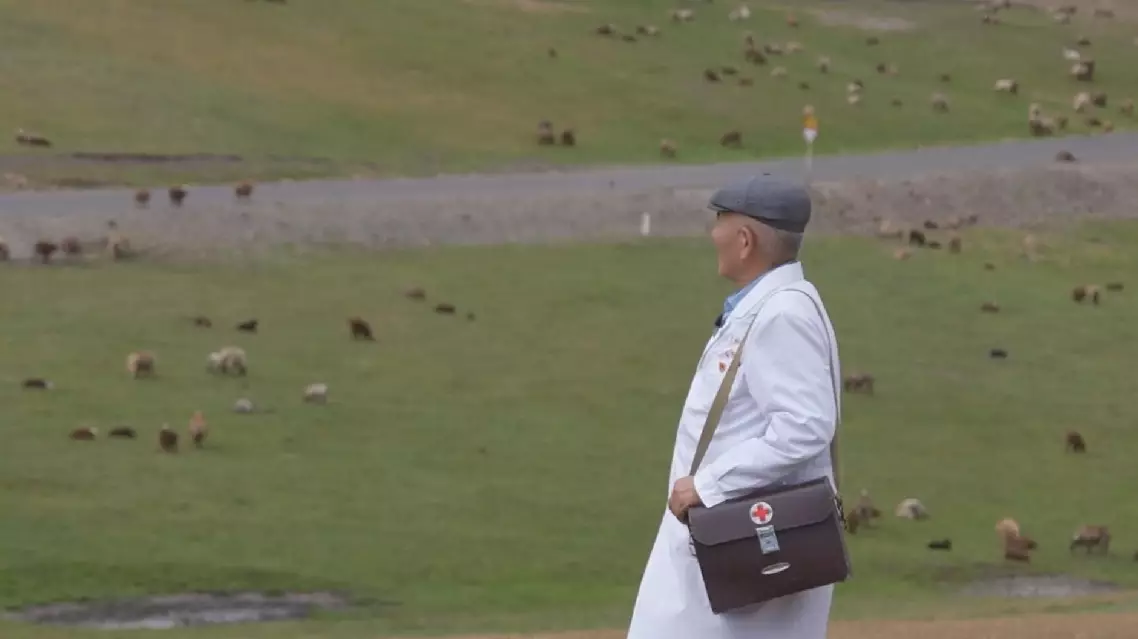
Model physician devoted to providing medical care for nomadic herders in northwest China's Xinjiang