Skip to Content Facebook Feature Image

How the Supreme Court became a pivotal force in Trump's immigration agenda

News

How the Supreme Court became a pivotal force in Trump's immigration agenda
News

News

How the Supreme Court became a pivotal force in Trump's immigration agenda

2026-07-01 20:05 Last Updated At:20:10

WASHINGTON (AP) — President Donald Trump's administration looked to the Supreme Court to greenlight its sweeping hard-line immigration agenda and, by and large, it got the backing it was looking for with one key exception — birthright citizenship.

After lower courts repeatedly ruled against the Trump administration, the nation's top court allowed it to terminate temporary protections for people fleeing war or strife. It gave immigration officers greater leeway in dealing with green card holders returning from abroad, and it allowed the government to limit the number of people who can apply for asylum.

In being asked to serve as an enabler of the Republican president's contentious immigration crackdown, the Supreme Court showed deference to constitutional guardrails in the key case of birthright citizenship that would have redefined who can be an American. In ruling against the administration, the court upheld the idea that people who are born in the United States, regardless of their parents' immigration status, are Americans.

Each decision could have far-reaching consequences for foreigners seeking to live in the country and could help shape public perceptions over whether America remains a beacon for migrants.

The Trump administration had sought to prevent children born to people who are in the United States illegally or temporarily from being entitled to American citizenship at birth.

A divided Supreme Court upheld the concept of birthright citizenship, with a bare majority of five justices saying that with very limited exceptions the long-settled understanding of the 14th Amendment, adopted after the Civil War, grants citizenship to anyone born in the U.S.

It was a blow to Trump's immigration agenda, a centerpiece of his second administration. The president signed the order seeking to restrict birthright citizenship on his first day in office, although it never went into effect due to legal challenges.

The court's decision was praised by advocates but led to calls by some Republicans to try to restrict birthright citizenship by other means.

Mark Krikorian, who heads the Center for Immigration Studies, which advocates for less immigration, said the decision makes the president's push for large-scale deportations “all the more urgent,” with the goal of removing people in the country illegally before they have children.

Krikorian said the decision means policies governing programs that allow foreigners to come to the U.S. to work or study at university need to be “tightened up” to prevent people from coming to the U.S. and having children who then become citizens. He also suggested the State Department could add a pregnancy question to visa applications of foreigners seeking to get a tourist or other visa to come to the U.S.

“I think it’s going to have real policy impact," Krikorian said.

The court allowed the Trump administration to end legal protections for migrants who have fled violence and natural disaster in Haiti and Syria. The 6-3 decision announced June 25 potentially leaves hundreds of thousands of more people unable to work in the U.S. and vulnerable to deportation by Immigration and Customs Enforcement.

Since Trump returned to the White House in January 2025, the Department of Homeland Security has moved to end the protections, including some that had been in place for more than a decade, for people from 13 countries.

Republican critics have said that these temporary protections effectively become permanent. But immigration lawyers said countries such as Haiti and Syria remain dangerous.

The court’s conservative majority found that the law doesn’t allow courts to question the process that immigration authorities use to revoke the protections. The high court sided with the administration before and allowed the end of the program for people from Venezuela.

It's unclear how quickly the court's ruling could translate into ICE trying to remove affected Haitians and Syrians from the country although fear of potential deportation has already ricocheted around the Haitian community.

David Bier, director of immigration studies at the Cato Institute, a libertarian think tank that advocates for more immigration, said the court's decision has a far wider impact than just the 350,000 Haitians and 6,000 Syrians covered by the case. Roughly 1 million others are covered by temporary protected status, or TPS, decisions, and Bier said the ruling leaves them without any meaningful way to challenge the administration's moves.

“It just fully closed the door to any challenges," Bier said.

Under U.S. law, migrants who set foot on American soil can apply for asylum. Although the number of migrants coming to the southern border has fallen dramatically during the Trump administration, the numbers of asylum seekers had ballooned under previous administrations.

Started under Democrat Barack Obama's administration and then expanded under Trump's first term, asylum-metering limited how many people could apply for asylum every day at the southern border with Mexico.

The ruling cleared the way for the Trump administration to potentially revive the policy, which isn't in place now, should it choose to do so.

The administration argued that asylum-metering was an important tool and that people turned away at the border could come back later. But advocates argued that at the time the asylum-metering was in place it led to chaos and a humanitarian crisis in Mexico as thousands of people waited for days and months in makeshift shelters in Mexico.

In another 6-3 decision, the court sided with the Trump administration in giving greater power to immigration officers when deciding how to treat green card holders returning to the country from abroad.

In 2012, Customs and Border Protection officers put lawful permanent resident Muk Choi Lau on immigration parole when he returned from a short trip to China and took away his green card. He had been accused of a counterfeiting crime, although not convicted.

Lau argued that the officer overstepped their authority and that when he eventually pleaded guilty to selling counterfeit clothes in New Jersey, the decision gave Homeland Security, then under the Obama administration, an easier path to remove him from the country.

Justice Ketanji Brown Jackson, in her dissent, wrote that she was worried that the court had given the government a “massive blank check” in dealing with millions of other lawful permanent residents who want to travel abroad.

The American Immigration Council, an advocacy group, wrote in an analysis after the court's decision that Congress gave lawful permanent residents special protections when they travel that make it harder to detain and remove them from the country.

There are exceptions that limit the special protections that green card holders have, including if the person has committed certain crimes in the U.S., the council wrote.

The council said there were still a lot of questions as to the effect of the court's decision but that it expects the government to argue that the decision can be applied more broadly.
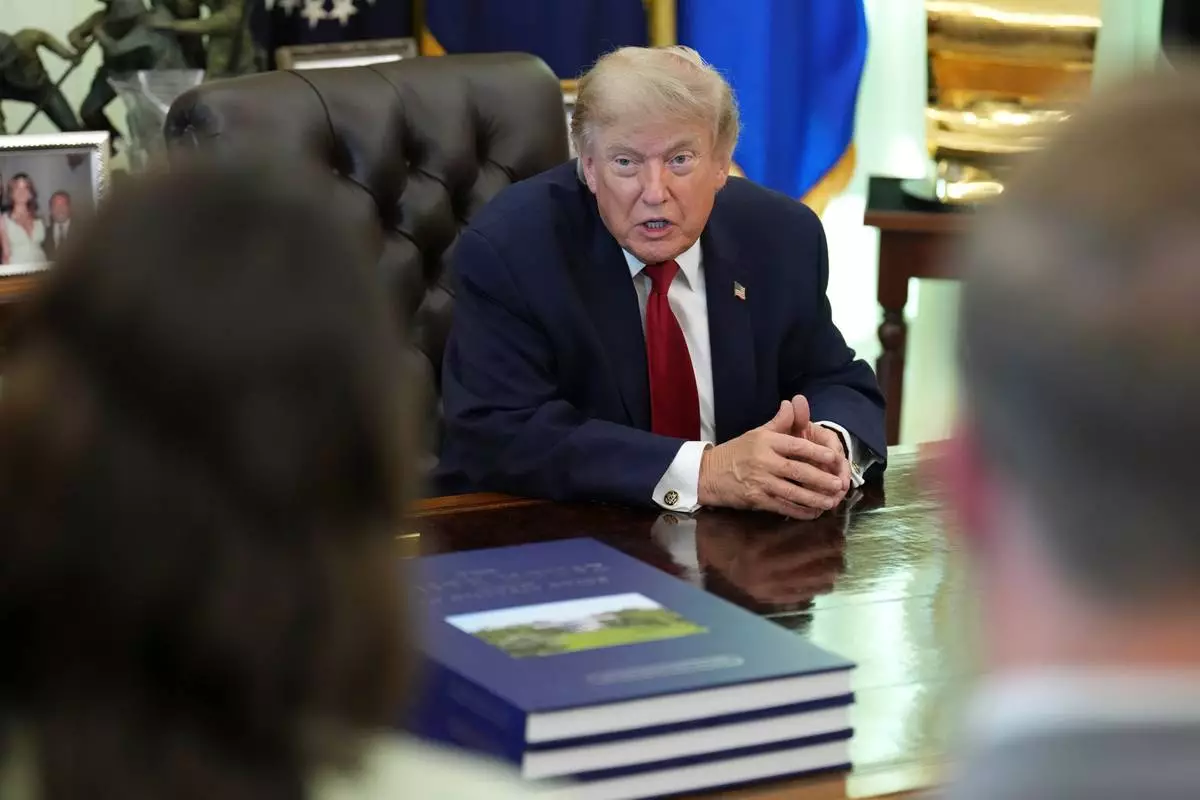
President Donald Trump speaks with reporters in the Oval Office of the White House, Monday, June 29, 2026, in Washington. (AP Photo/Jacquelyn Martin)
President Donald Trump speaks with reporters in the Oval Office of the White House, Monday, June 29, 2026, in Washington. (AP Photo/Jacquelyn Martin)

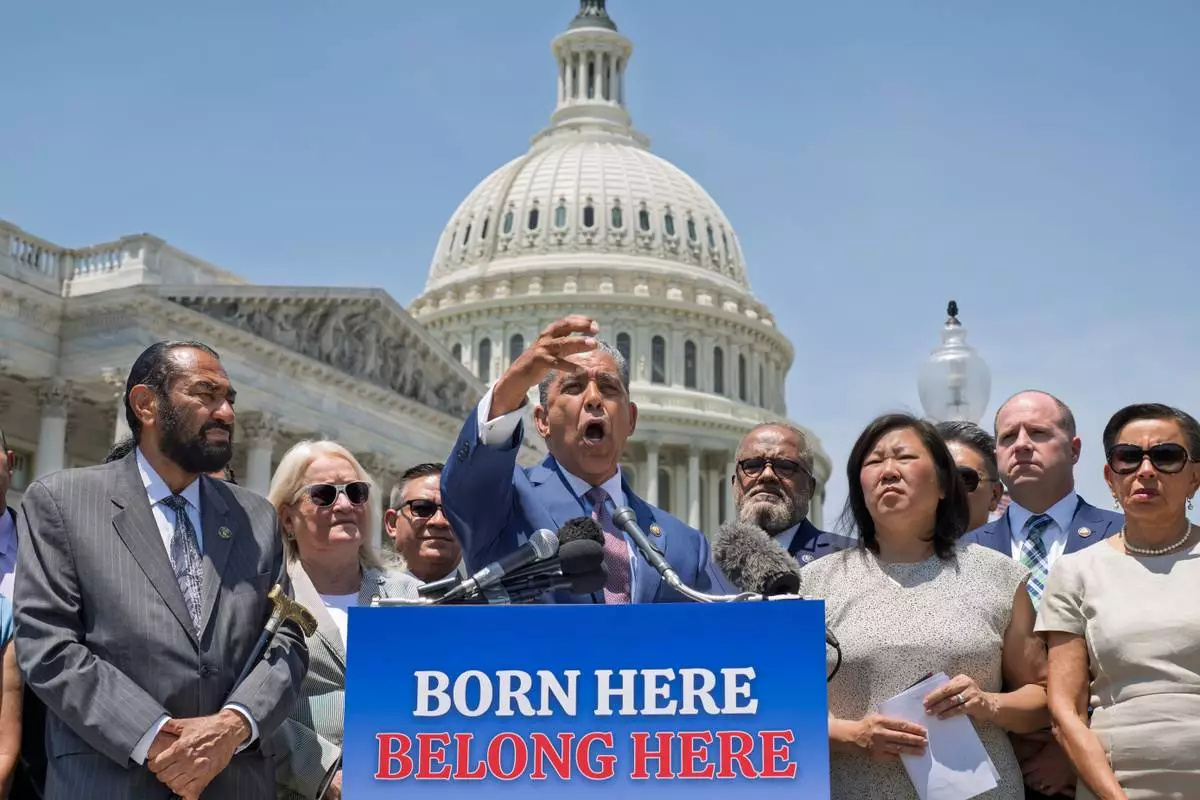
Congressional Hispanic Caucus Chairman Adriano Espaillat, D-N.Y., center, and other Democratic House members react to the Supreme Court's decision to uphold birthright citizenship at the Capitol in Washington, Tuesday, June 30, 2026. (AP Photo/J. Scott Applewhite)
Congressional Hispanic Caucus Chairman Adriano Espaillat, D-N.Y., center, and other Democratic House members react to the Supreme Court's decision to uphold birthright citizenship at the Capitol in Washington, Tuesday, June 30, 2026. (AP Photo/J. Scott Applewhite)

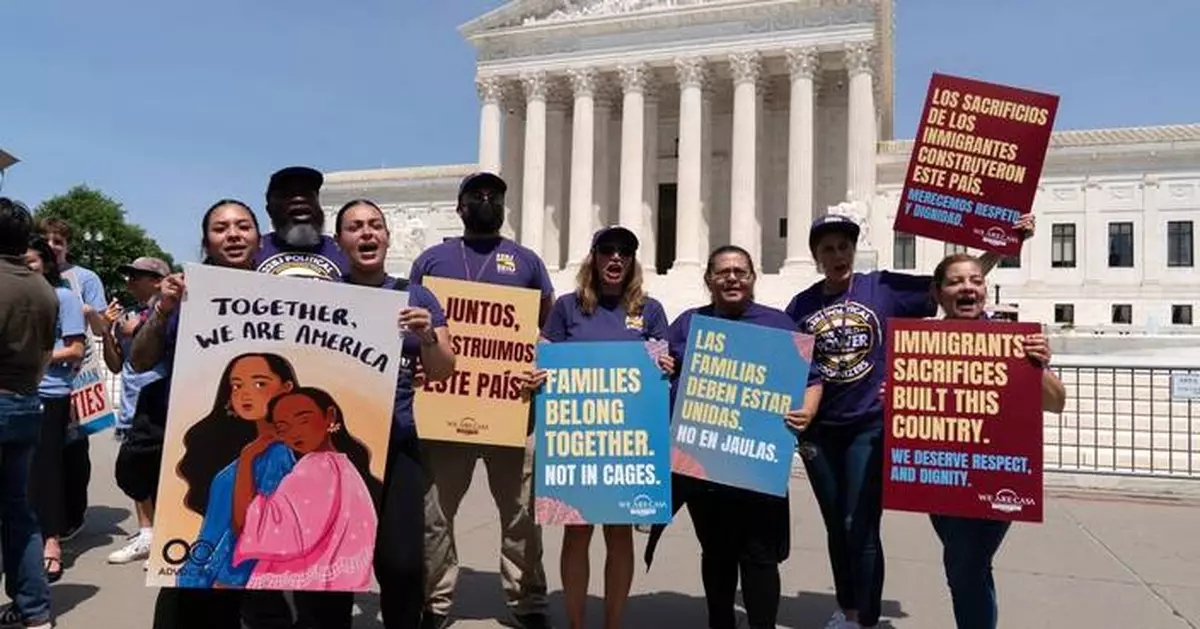
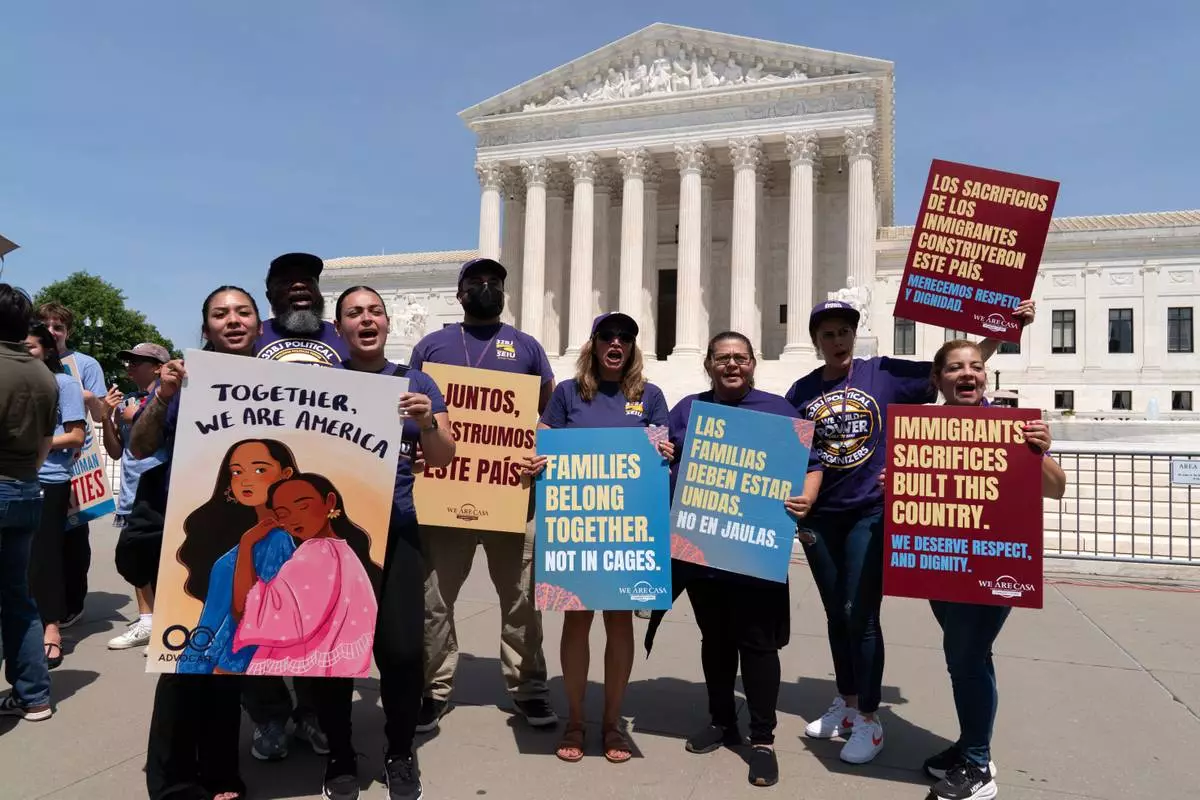
Activists celebrate the Supreme Court's birthright citizenship ruling outside of the Supreme Court on Capitol Hill, Tuesday, June 30, 2026, in Washington. (AP Photo/Jose Luis Magana)

Activists celebrate the Supreme Court's birthright citizenship ruling outside of the Supreme Court on Capitol Hill, Tuesday, June 30, 2026, in Washington. (AP Photo/Jose Luis Magana)
ANKARA, Turkey (AP) — Turkey is rolling out sweeping security measures for the upcoming NATO summit, deploying tens of thousands of police and placing air defenses on high alert, while banning public gatherings and imposing controversial restrictions on freedom of expression and assembly.

That's meant to safeguard the summit, but also to display strength and underscore Turkey’s commitment to the military alliance, even as it is often portrayed as an outlier within it.

On July 7–8, leaders from all 32 member states are expected convene in the Turkish capital, including U.S. President Donald Trump, whose threats to withdraw from NATO and reduce U.S. troop levels have cast uncertainty over the alliance’s future.

Turkey has also unveiled a new VIP airport, converted from a former military airfield, specifically to host NATO leaders.

At the Ankara summit, NATO members are expected to address questions over defense spending and the U.S.’s evolving role in the alliance.

The main agenda will center on unity after Trump has criticized allies for failing to support the U.S.-led war on Iran and efforts to reopen the Strait of Hormuz.

“The important aspect of the meeting is to what extent the rift between the United States and Europe can be healed or narrowed during the summit,” said Fatih Ceylan, a former Turkish ambassador to NATO and security analyst at the Ankara Policy Center. “We should not expect miracles, but nonetheless if there is a convergence of ideas emphasizing the importance of NATO, that should be seen as a success.”

Turkey's role as host seems to have helped win an appearance by Trump, who has a close rapport with Turkish President Recep Tayyip Erdogan.

“Well, except for the fact that it was being held in Turkey by President Erdogan, I don’t think I would have gone to it,” he told reporters following a meeting with NATO Secretary General Mark Rutte at the White House.

In the run-up to the summit, Erdogan described Turkey as a reliable ally that consistently shoulders responsibility on NATO’s southeastern flank and will continue to play a leading role in the alliance. He said his country was working to ensure that the Ankara Summit “will stand as a reference point in NATO’s history.”

A NATO member since 1952, Turkey has the alliance’s second-largest army after the United States, a fast-growing defense industry and a strategic location at the crossroads of Europe, the Middle East, the Black Sea and the Caucasus.

Yet it has often acted independently, frustrating allies by refusing to participate in sanctions on Russia, engaging in disputes with Greece, and purchasing Russian missile defense systems — a move that led to its expulsion from the U.S.-led F-35 program in 2019.

Turkey also delayed Finland and Sweden’s NATO membership until it secured concessions on counter-terrorism cooperation and the lifting of arms export restrictions, and blocked the appointments of NATO chiefs Anders Fogh Rassmussen in 2009 and Mark Rutte in 2024 until other demands were met.

But Turkey's independent streak has also enabled it to play a mediating role, from brokering a deal to ship grain across the Black Sea between Ukraine and Russia in 2022 to supporting recent initiatives aimed at ending the war in Iran.

Ankara, too, has at times been frustrated with its NATO allies, particularly over what it saw as the alliance’s lack of solidarity during a failed coup attempt in 2016, and the arms sales restrictions imposed on Turkey after its intervention in Syria.

Murat Aslan, an analyst at the Ankara-based SETA think tank, said Turkey learned to “play it alone” due to its turbulent relations with the United States and Europe, adding that Europe is now also talking about “strategic autonomy” from the U.S.

Turkey can help NATO navigate U.S.–Europe tensions by showing how to “balance” independence with alliance commitments, he said.

More recently, however, Turkey has leaned closer to NATO, whose importance was underscored during the Iran war when alliance missile defenses intercepted four missiles fired from Iran into Turkish territory. Weeks before the summit, Italy and Germany deployed air defense systems to help Turkey respond to heightened threats.

“Turkey wishes to distinguish itself as a foreign policy actor that is independent of NATO and the West,” wrote Hamish Kinnear, principal Middle East and North Africa analyst at risk intelligence company Verisk Maplecroft, in a note. “While Turkey is not abandoning its balancing approach, it is tilting closer to the West, primarily because of NATO.”

In Ankara, strict access restrictions will be imposed on several of the city's main arteries, around airports, the presidential complex where the summit will be held, and around hotels hosting the delegations, severely disrupting life in the city of nearly 6 million.

As the country prepares for the summit, Erdogan unveiled a new airport which was transformed from a former military airfield into a modern facility with expanded runways. The new Ankara Airport is expected to remain a VIP airport after the summit and is not expected to serve the general public, officials have said.

Facades of houses along the route from the new airport have been painted over as part of city beautification efforts, the newspaper Cumhuriyet reported.

With a history of terrorist attacks, Turkey's capital is no stranger to tight security, but the measures being taken in connection with NATO appear to go beyond the usual.

Authorities have also banned demonstrations, concerts, and graduation ceremonies during the summit, while nonessential state employees have been placed on leave to ease congestion.

Security units have detained more than 200 people suspected of links to extremist groups, including the Islamic State group, authorities said. Media reports said that several activists, lawyers and an academic were caught up in the sweep.

A Turkish court, meanwhile, blocked access to websites critical of NATO and the summit on security and public order grounds, according to Engelli Web, a website that tracks websites banned in Turkey. Several journalists from Turkish opposition-leaning media organizations were denied accreditation to cover the summit, sparking outrage from media rights groups.

“In the history of the organization, we have never witnessed security measures as stringent and suffocating in a host city for a summit as we are seeing this time in Ankara,” wrote Namik Tan, a former Turkish ambassador and legislator from Turkey's main opposition party.

Personal trainer Selin Karakoc said she breathed a sigh of relief after she was told that her wedding on July 5 falls just before the start of the restrictions.

“Ours could be one of the last weddings in Ankara that week,” she joked.

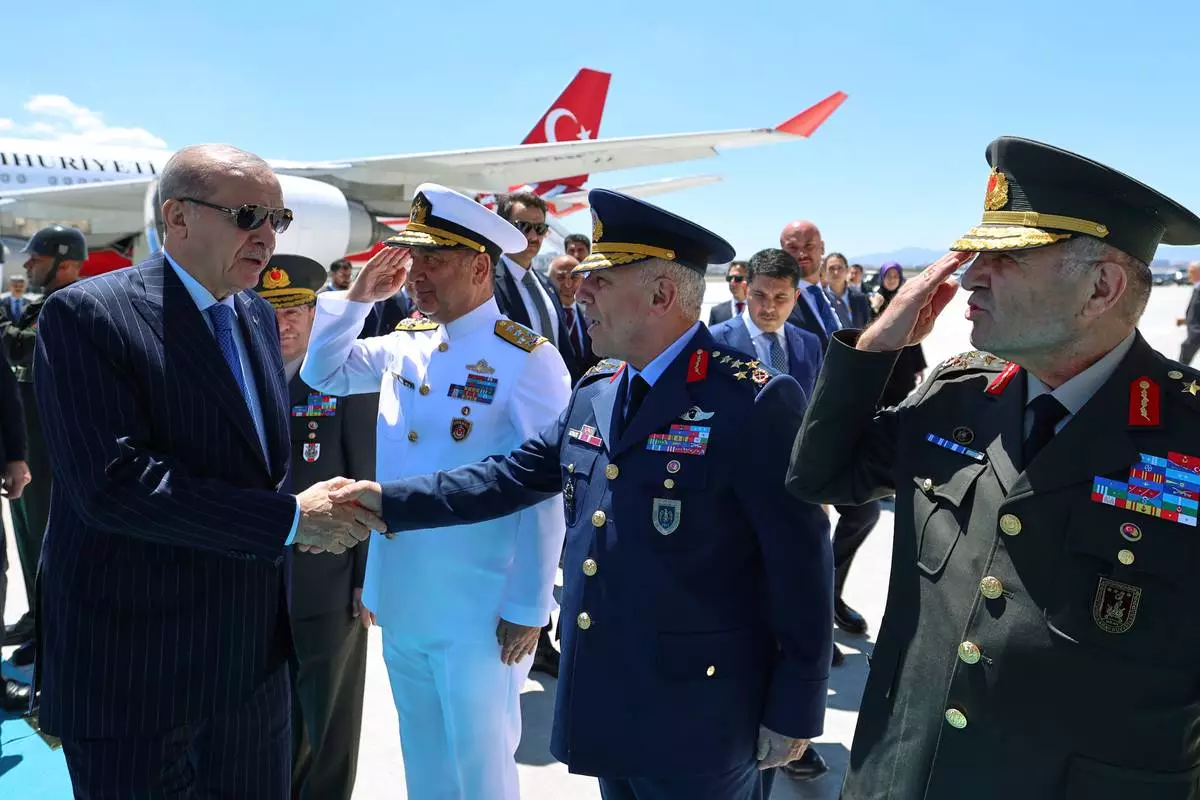
In this handout photo released by Turkish Presidency, Turkish President Recep Tayyip Erdogan, left, greets Turkey's army top commanders during the official opening ceremony of a converted military airport, in Ankara, Monday, June 15, 2025. (Turkish Presidency via AP)

In this handout photo released by Turkish Presidency, Turkish President Recep Tayyip Erdogan, left, greets Turkey's army top commanders during the official opening ceremony of a converted military airport, in Ankara, Monday, June 15, 2025. (Turkish Presidency via AP)

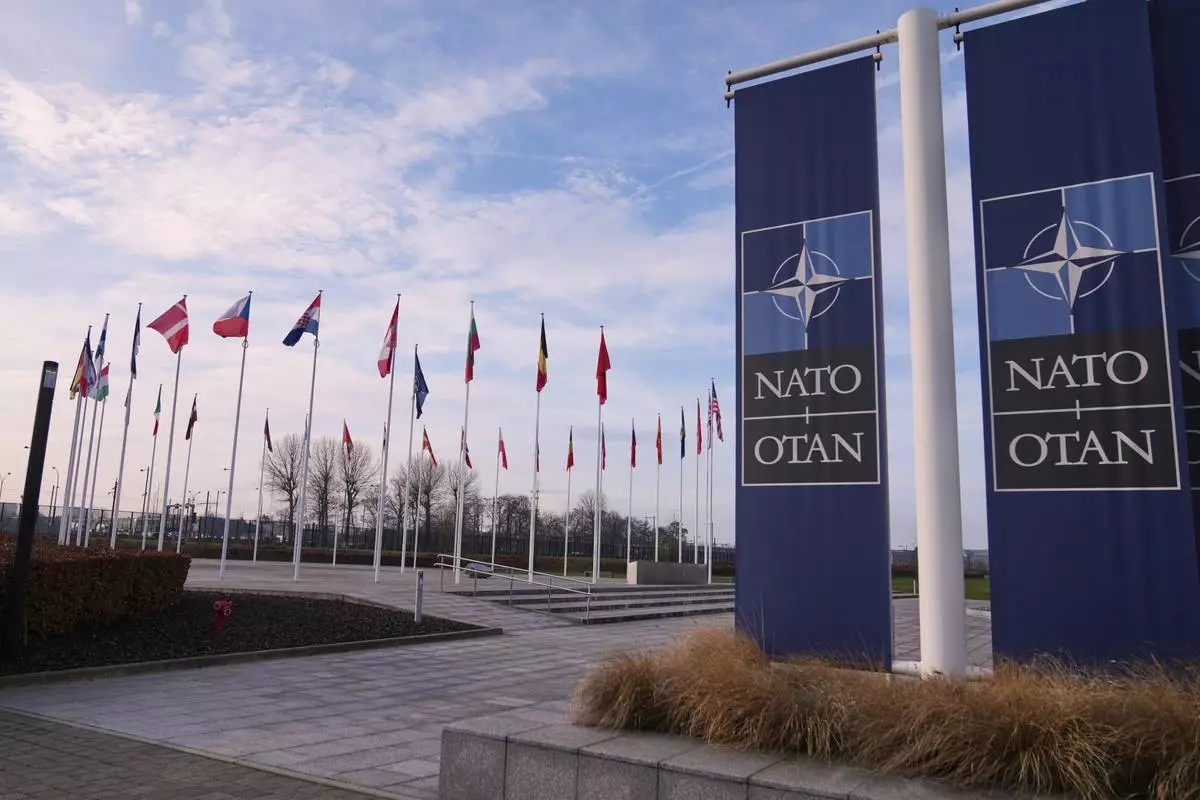
FILE - Flags flap in the wind outside NATO headquarters in Brussels, Jan. 19, 2026. (AP Photo/Virginia Mayo, File)

FILE - Flags flap in the wind outside NATO headquarters in Brussels, Jan. 19, 2026. (AP Photo/Virginia Mayo, File)

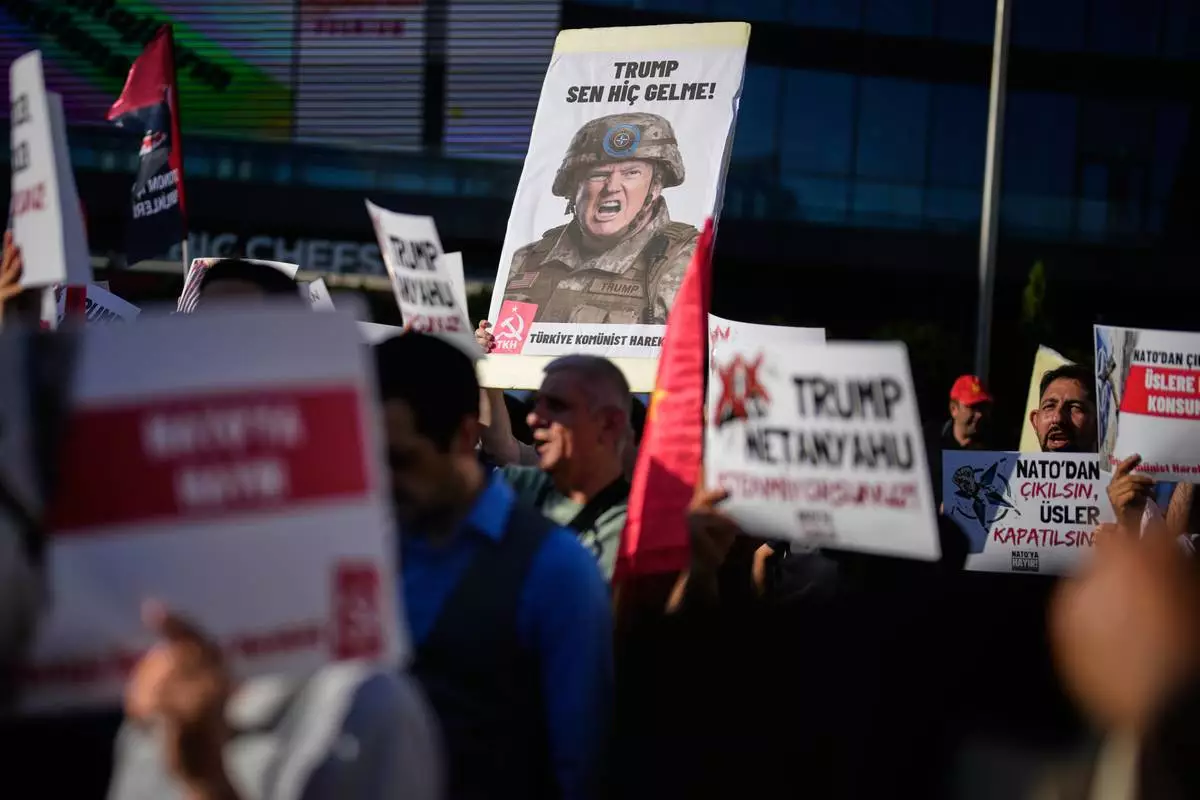
Demonstrators chant slogans and raise placards, including a sign depicting U.S. President Donald Trump, during an anti-NATO protest in Istanbul, Turkey, Saturday, June 27, 2026, days ahead of the NATO summit scheduled to be held in Ankara on July 7-8.(AP Photo/Khalil Hamra)

Demonstrators chant slogans and raise placards, including a sign depicting U.S. President Donald Trump, during an anti-NATO protest in Istanbul, Turkey, Saturday, June 27, 2026, days ahead of the NATO summit scheduled to be held in Ankara on July 7-8.(AP Photo/Khalil Hamra)

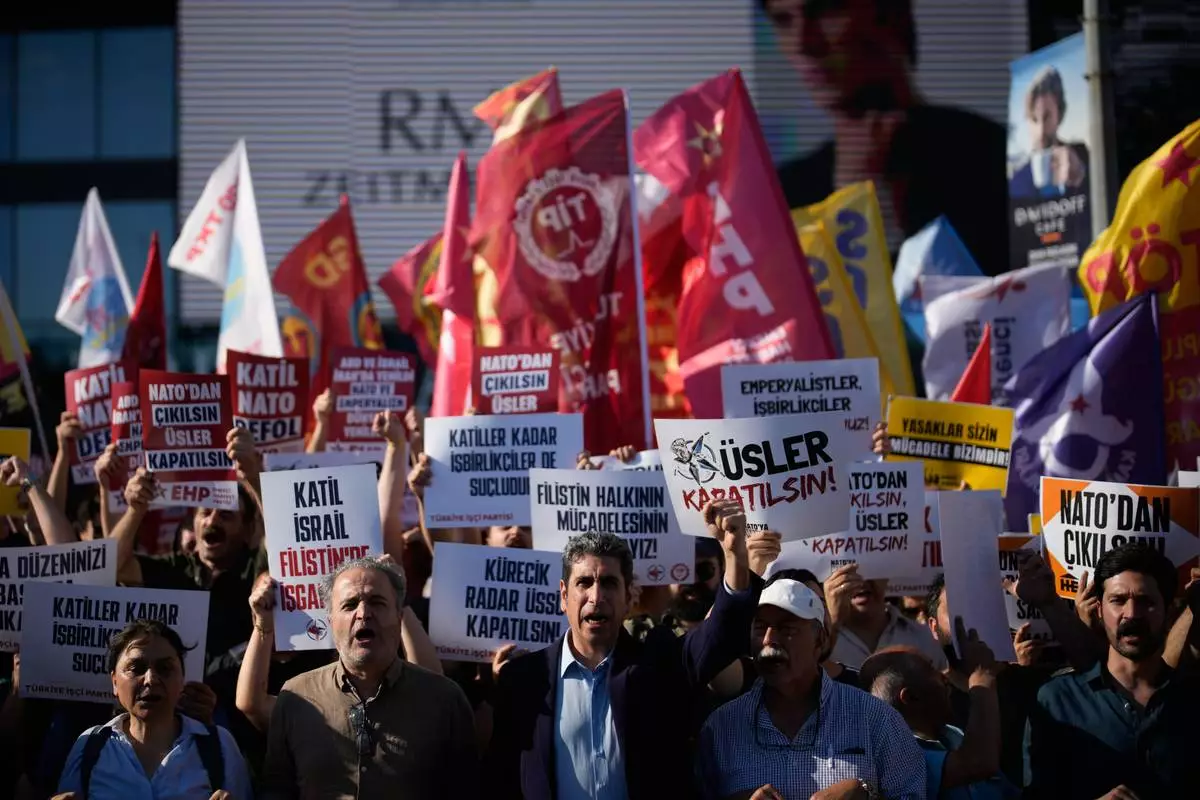
Demonstrators chant slogans and raise placards, during an anti-NATO protest in Istanbul, Turkey, Saturday, June 27, 2026, days ahead of the NATO summit scheduled to be held in Ankara on July 7-8.(AP Photo/Khalil Hamra)

Demonstrators chant slogans and raise placards, during an anti-NATO protest in Istanbul, Turkey, Saturday, June 27, 2026, days ahead of the NATO summit scheduled to be held in Ankara on July 7-8.(AP Photo/Khalil Hamra)

Recommended Articles