SAN FRANCISCO (AP) — Martial arts icon Bruce Lee, who was born in San Francisco, will become the first Chinese American in California history with an annual namesake day.
Gov. Gavin Newsom signed a law Tuesday afternoon officially designating May 17 as Bruce Lee Day, according to the office of state Assemblymember Matt Haney, who represents San Francisco.
An 18-year-old Lee returned to San Francisco on May 17, 1959, after spending his childhood in Hong Kong.
Lee's daughter, Shannon, who is CEO of the Bruce Lee Foundation, said the honor is a testament to her father's enduring legacy as a bridge between cultures.
“From young people who found confidence and possibility in his philosophy, to families who finally saw themselves represented on screen, to athletes who still draw on his teachings of discipline and inner strength, his reach is profound," Shannon Lee said in a statement.
Haney called Lee the epitome of the best of California.
“At a time when Asian Americans were too often absent from or stereotyped on screen, Bruce Lee helped generations see themselves represented with strength and dignity,” he said in a statement.
The foundation and various Asian American organizations hope Lee will be celebrated every year with voluntary commemorative activities around the state such as cultural exhibits, public events and classroom lessons.
Born in 1940 to Chinese parents who were touring with an opera, Lee was allowed to have birthright citizenship. A few months later, the family returned to Hong Kong where Lee became a child actor and began learning Chinese kung fu. He moved back to the U.S. in 1959 and enrolled in the University of Washington in Seattle two years later. He dropped out and threw himself into practicing and teaching martial arts.
In the ‘60s, Lee found work in Hollywood, most notably as Kato in the TV series “The Green Hornet,” but studios wanted him to play racist stereotypes and paid him less than his white counterparts.
He pivoted back to Hong Kong and soon became a megastar of martial arts flicks, including “The Big Boss” and “Fist of Fury.” Lee died in 1973 at 32 after an allergic reaction to pain medication.
Lee's name and likeness remain popular. Fans gather on his birthday. A treatment for a proposed TV action series he wrote inspired the HBO Max show “Warrior.”
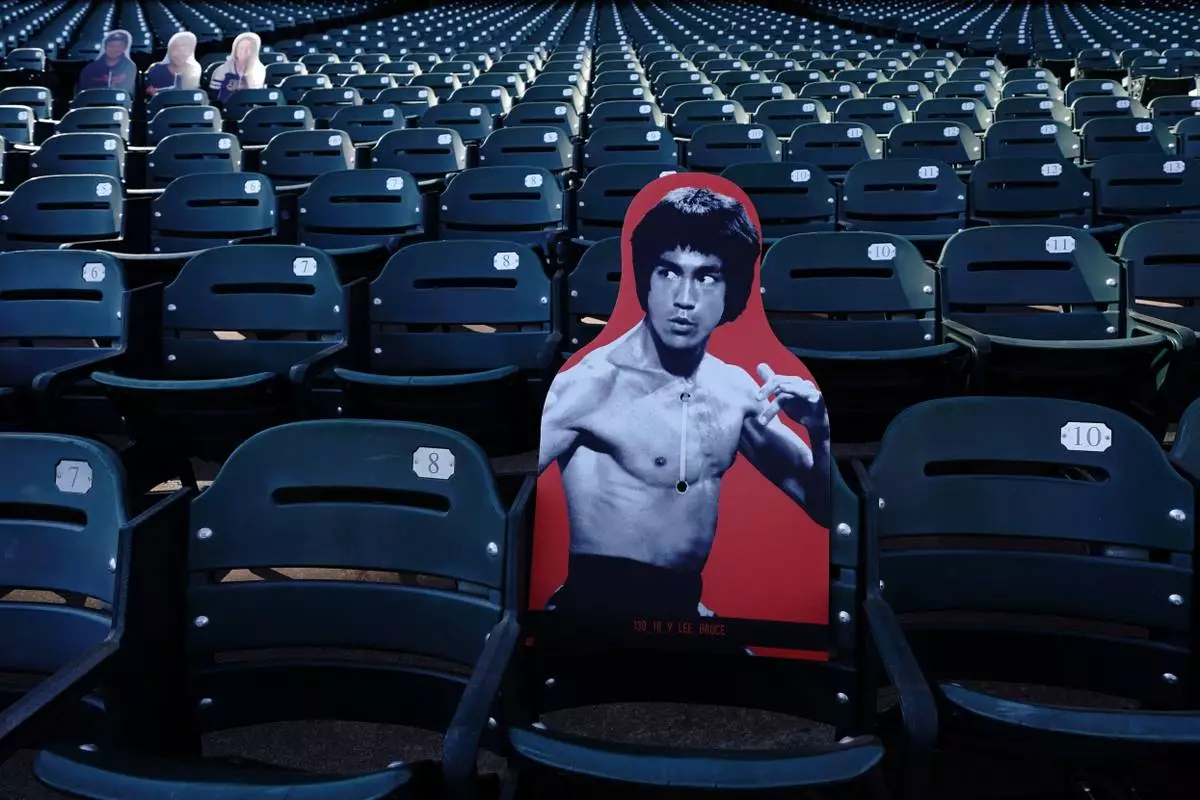
FILE - A cardboard cutout of martial artist Bruce Lee is displayed at Oracle Park before a baseball game between the San Francisco Giants and the San Diego Padres in San Francisco, July 30, 2020. (AP Photo/Jeff Chiu, File)
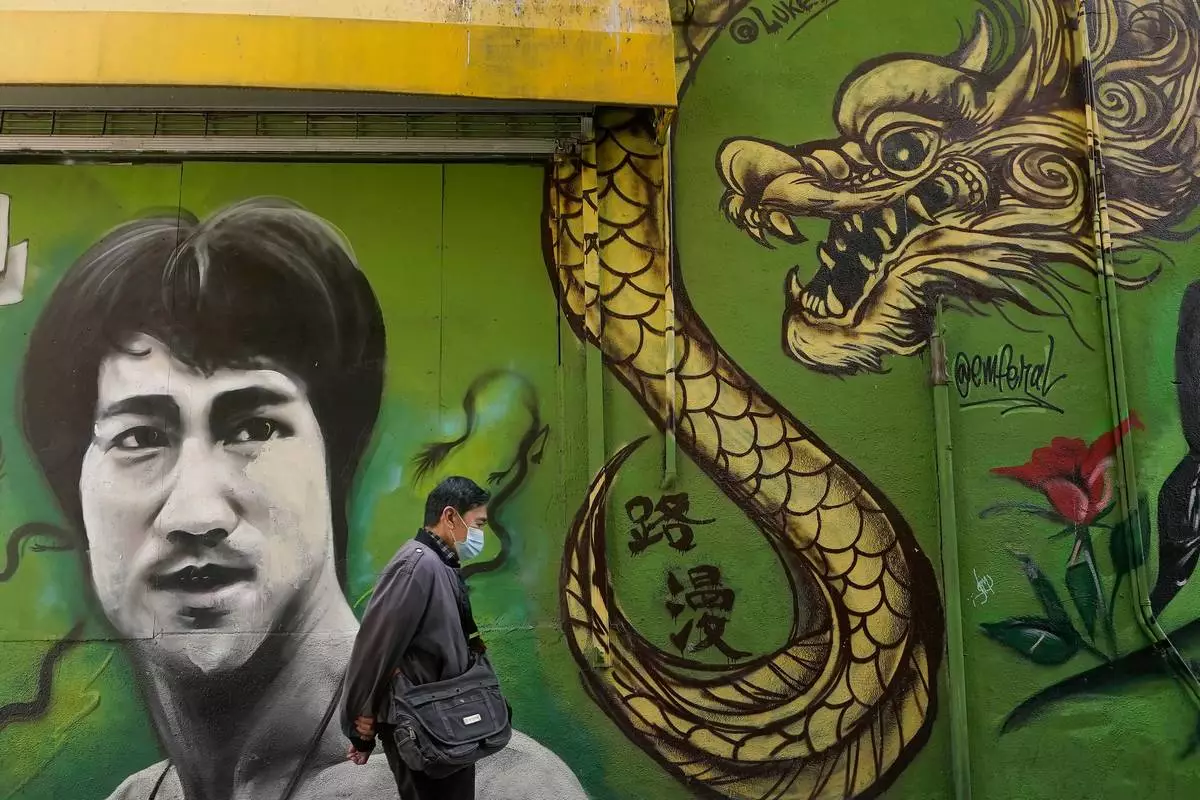
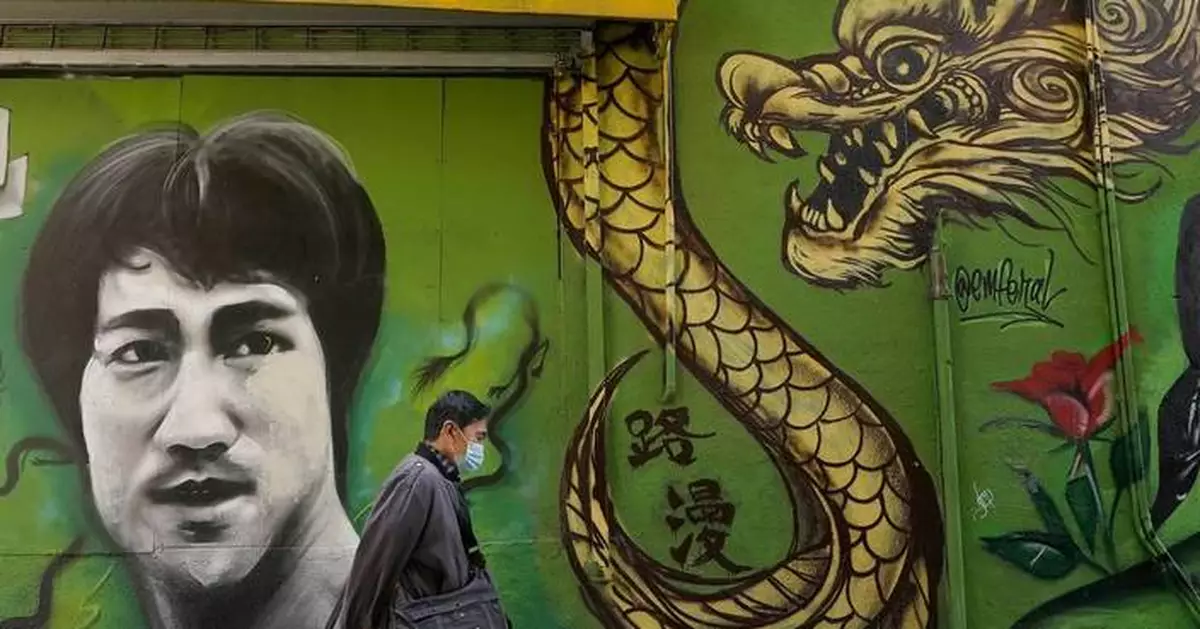
FILE - A man walks past a mural showing Bruce Lee and a dragon in San Francisco, Dec. 30, 2020. (AP Photo/Jeff Chiu, File)
SEOUL, South Korea (AP) — When he wanted to give a gift to his father who sacrificed much to raise him as a single parent, Lee Geon Hui settled on an unusual idea: an AI-animated video message from his late grandfather, whom his father misses dearly.
Lee, 28, wrote a message and hired the Seoul-based tech company Vaice in December to make a short video clip showing a digital likeness of his grandfather delivering it. The virtual character called his father “my most precious son,” and apologized for making him help with farm work when he was a child and for opposing his son's decision to become a hairstylist.
“My father said he wouldn't watch the video. But then he did, and he shed tears. So I felt rewarded,” Lee, a 28-year-old office worker, said in a recent interview. “I wrote the script ... as it was what I actually wanted to tell my father.”
A growing number of digitally-savvy South Koreans are experimenting with AI's ability to produce video recreations of the dead: a number of startups offering videos featuring AI-produced recreations of loved ones, while TV shows have featured AI versions of dead pop stars and actors.
This emerging industry is causing both hopes and worries. Some say the practice can comfort grieving people, but others say it raises thorny ethical, psychological and legal questions.
“It's a double-edged sword, as it deals with human emotions," said Yong Man Ro, an AI expert at the Korea Advanced Institute of Science and Technology. “As AI technologies become part of people's lives, they can also bring about cultural experiences and shocks that we have never experienced."
Vaice's CEO, Jeongu Won, said his company serves about 300 customers a month, mainly people in their 40s or 50s who want videos of their late parents. Others request videos of late grandparents as gifts for their own parents.
Won said his company needs a few photos and short voice samples of the deceased to make a likeness. A basic three-to-five-minute video costs 600,000 won ($390), he said.
Many customers play those AI videos when their family members get together for memorial rituals for their loved ones or major Korean holidays, said Won, adding that his clients typically write scripts. Won said most customers add the words “I love you," and some reference regrets over unresolved conflicts with their late parents and hopes to overcome them.
Lee's grandfather died unexpectedly in a car accident before he was born, and Lee said he felt his father regretted he wasn't able to show his grandfather that he was doing well as a hairstylist and that he has a son.
“I don't know much about my grandfather. But when I saw tears running down my father's face, I felt a bit emotional as I realized my father still misses him,” Lee said.
When JL Standard launched a similar service five years ago, said company executive Choi Yu Ha, it was met with suspicion from some bereaved target customers who feared it would open up their grief. But acceptance of AI grief technology is spreading, helped by dead celebrities making simulated appearances on TV.
Won says he hasn't heard from any customers who said his product made their grief harder to bear.
But observers warn that simulating the dead raises ethical questions, and could put some vulnerable people at risk if it blurs the line between reality and the virtual world.
Choung Wan, an emeritus professor at Seoul’s Kyung Hee University Law School, said laws are urgently needed to protect the dignity and other rights of the deceased. They should ban the creation of an AI-generated version of a dead person if the person opposed it before their death, he said, and put clear limits on commercial use of people’s images and voices.
Experts say the ethical issues could be much harder to manage as they look ahead to the possibility of so-called “griefbots” or “deathbots,” which simulate two-way conversations between bereaved people and AI versions of dead loved ones. Startups are already experimenting with such products.
“Psychologically, a healthy mourning involves a process to acknowledge the absence of the deceased and pass through the pains of their losses,” Chuong said. “But speaking with an AI system simulating a living person could undermine the process of accepting deaths and rather cause a negative effect of leaving bereaved families trapped in a fantasy.”
Won said he’s cautious about launching an AI chatbot service because real-time conversations with people could not be supervised by company officials and may cause unexpected ethical problems.
Still, both the technology and acceptance of it are moving quickly.
Choi said technological advances make it possible to replicate even the wrinkles and skin pores of a deceased person in remarkable detail, and that customers now say their loved ones’ AI likenesses really look like them.
Ro said interactive chatbots have technological hurdles to overcome, such as a mismatch between their verbal comments and their facial expressions. They also tend to seem less human when conversations get longer.
“Some people ask why we can’t have an hour-long conversation with chatbots, though we can talk with them for five minutes. There are efforts to develop the technology to make an hour-long conversation possible,” Ro said.
Ro said he made a one-minute video with AI likenesses of his own parents after they both died last year and played it at a gathering with his siblings. When the family saw digital versions of their parents saying “Don’t worry” and “Take care,” they were all very moved.
But Ro said he and his siblings didn’t watch it again. “One time was enough to watch it to honor our late parents who were quite elderly. We moved on,” he said.
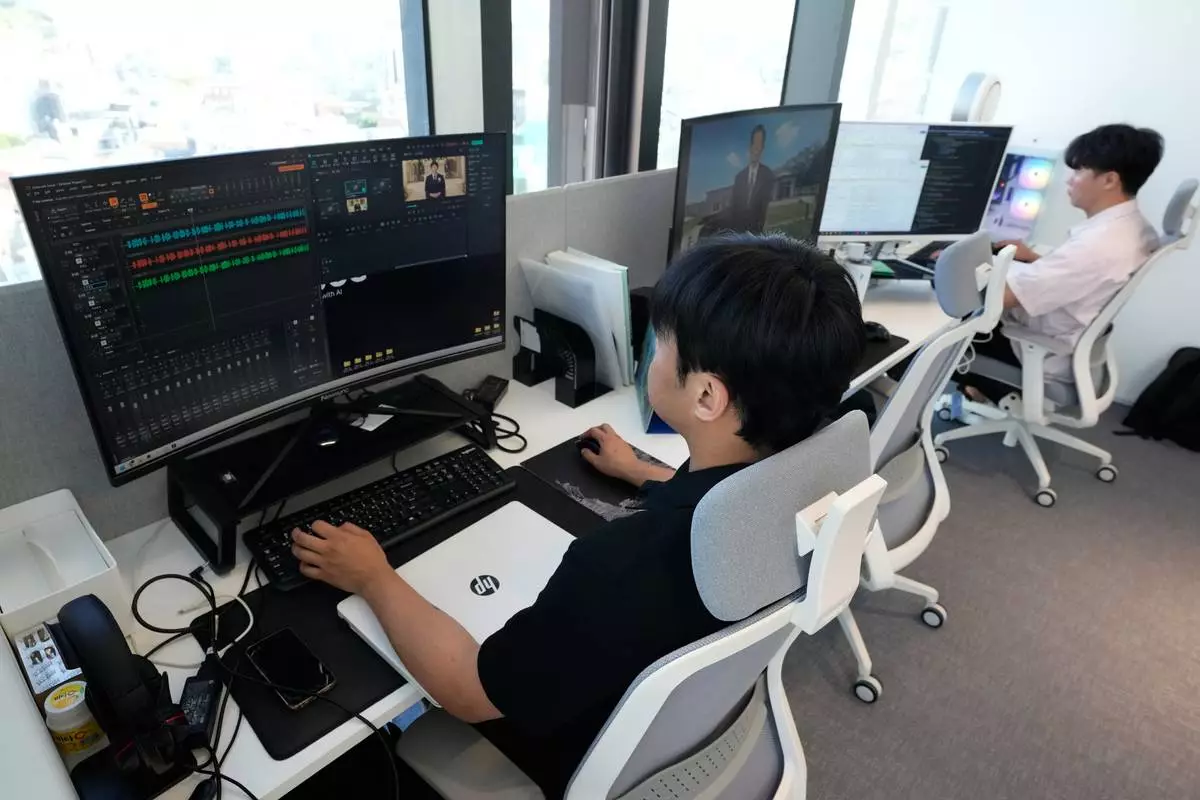
Employees at Seoul-based tech firm Vaice work at their office, South Korea, Friday, June 12, 2026. (AP Photo/Ahn Young-joon)
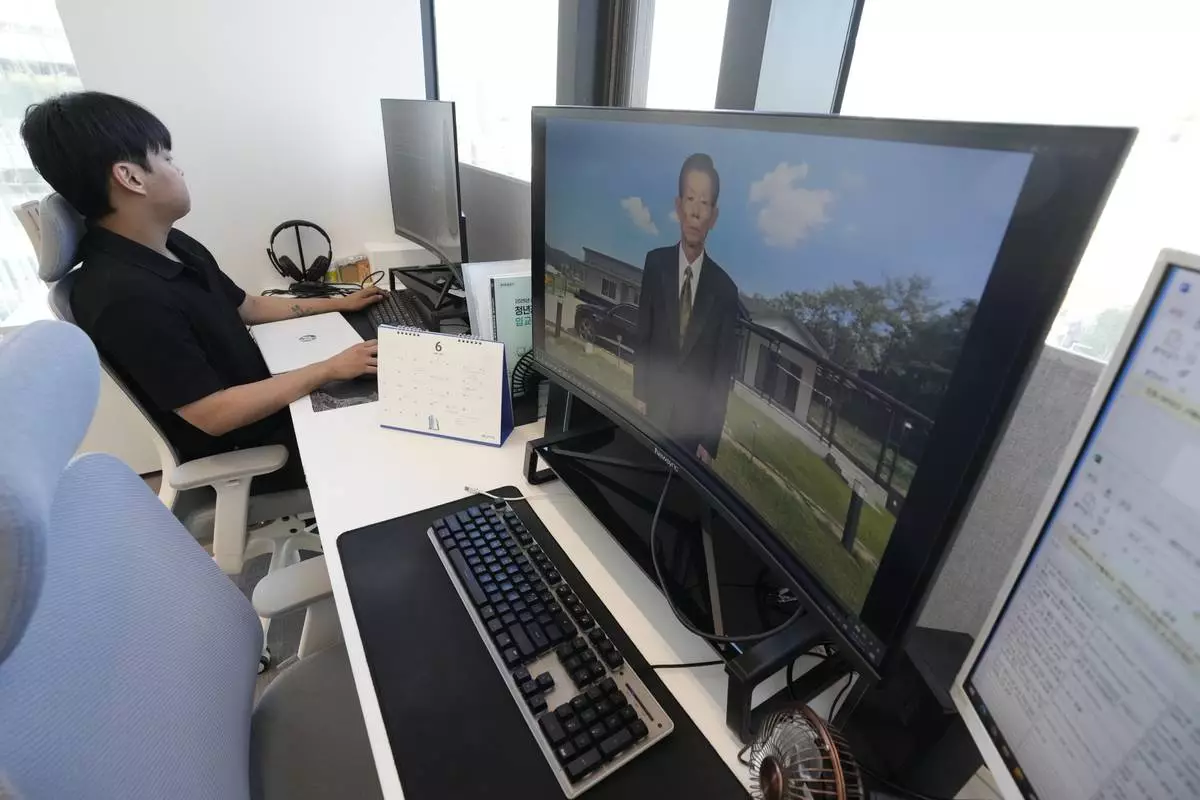
A computer screen as a video clip shows a digital likeness of Lee Geon Hui's late grandfather speaking at Seoul-based tech firm Vaice, South Korea, Friday, June 12, 2026. (AP Photo/Ahn Young-joon)
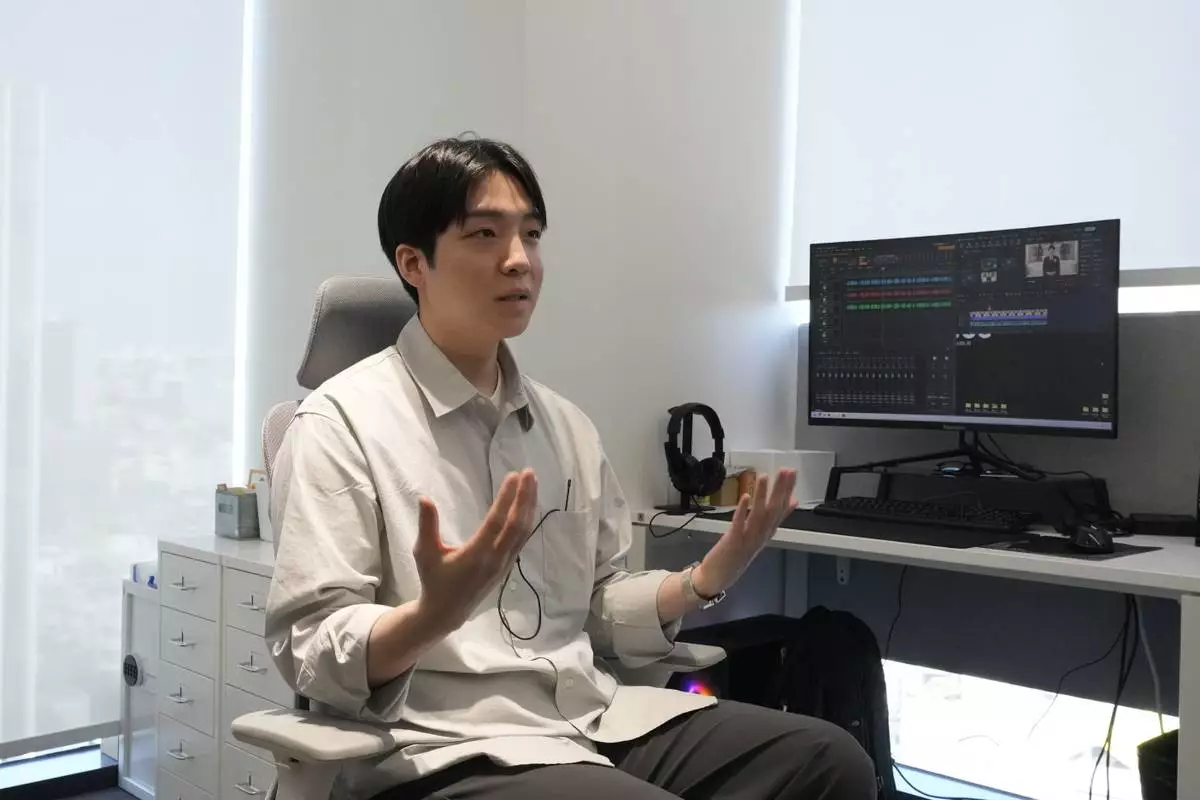
Vaice's CEO, Jeongu Won, speaks during an interview with The Associated Press at his office in Seoul, South Korea, Friday, June 12, 2026. (AP Photo/Ahn Young-joon)
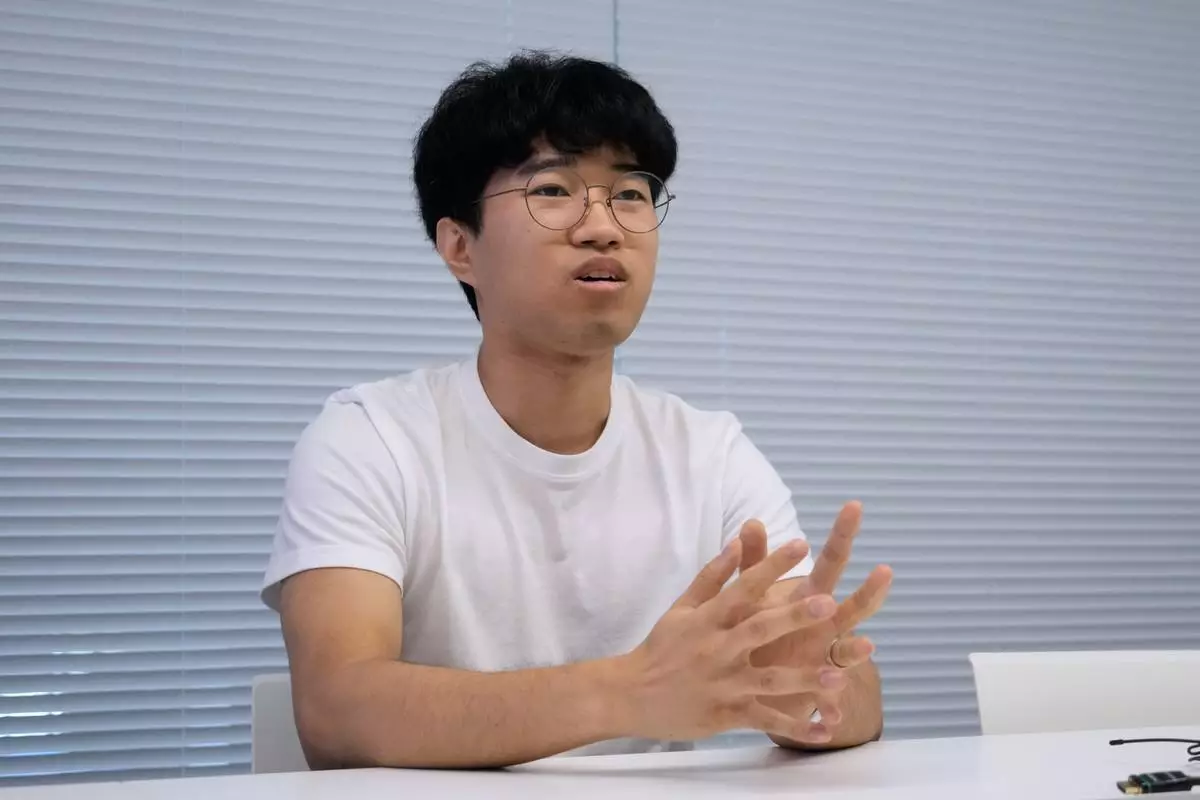
Lee Geon Hui speaks during an interview with The Associated Press at a conference in Seoul, South Korea, Friday, June 12, 2026. (AP Photo/Ahn Young-joon)
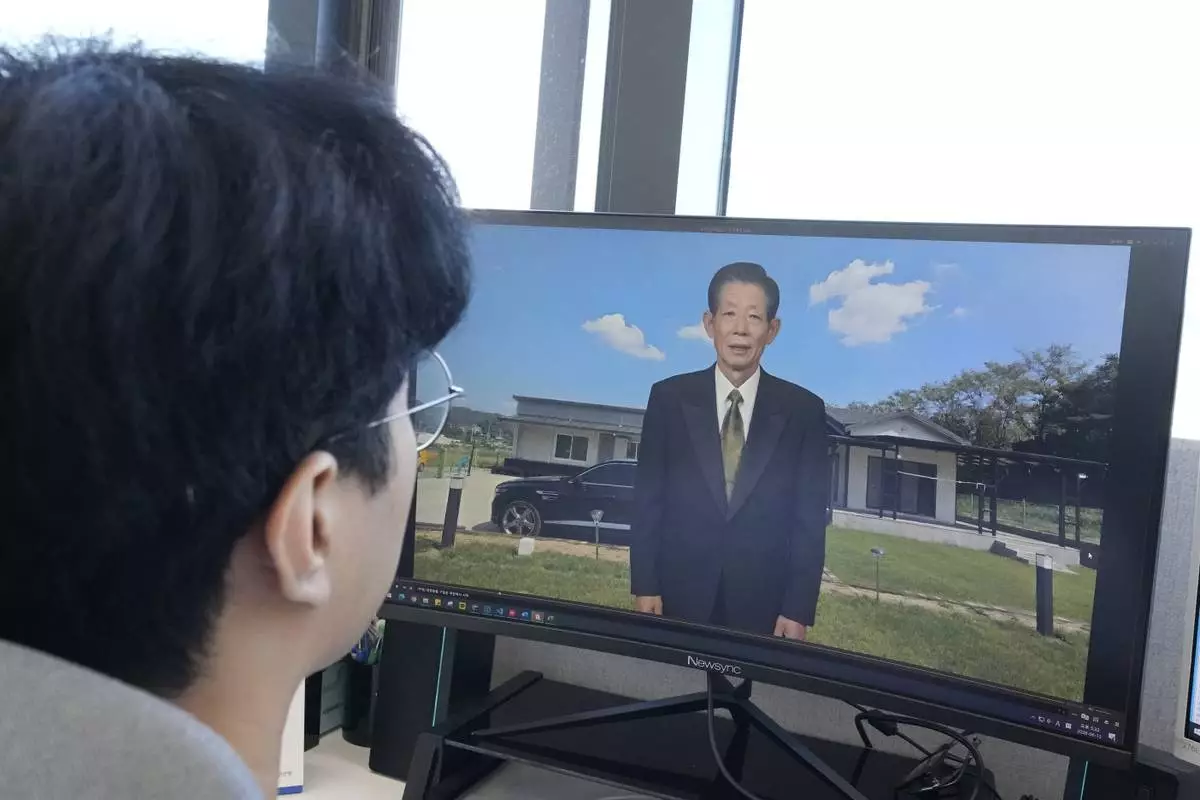
Lee Geon Hui looks at a computer screen as a video clip shows a digital likeness of his late grandfather speaking at Seoul-based tech firm Vaice, South Korea, Friday, June 12, 2026. (AP Photo/Ahn Young-joon)