A federal judge in Arkansas has thrown out a handful of state laws that put extra restrictions on citizen efforts to gather signatures for ballot initiatives, agreeing with challengers that they violated the constitutional free speech rights of voters.
The decision handed several victories to the League of Women Voters of Arkansas and other plaintiffs, which sued last year amid efforts in various states to make it harder for regular citizens to make laws or amend their states’ constitution through ballot initiatives.
One such measure required someone signing a petition to show photo ID. That and other additional ballot-initiative restrictions were imposed by Arkansas’ GOP-controlled state government after election officials cited a legal technicality to reject petitions submitted by abortion rights supporters in a 2024 effort to legalize abortion in the conservative state.
One of the plaintiffs, Protect AR Rights, called the decision an “important victory for the people of Arkansas and their constitutional right to direct democracy."
The decision, issued Tuesday by U.S. District Judge Timothy Brooks, also rejected some challenges by the league and its fellow plaintiffs, while Brooks sent three other disputes to trial.
The defendant, Arkansas Secretary of State Cole Jester, a Republican who had defended the laws in court, said in a statement that his office plans to appeal Brooks' decision and “will fight tirelessly for common sense safeguards like voter ID.”
Among the laws Brooks struck down are 2025 measures requiring canvassers to verify a petition signers' identity through a photo ID and to read the ballot question aloud or require a petition signer to read the entire ballot question before signing it. The ballot questions are often hundreds of words long.
Requiring a petition signer to possess and present a photo ID “before engaging in core political speech” plainly violates free speech laws, Brooks wrote, and noted that the Arkansas secretary of state's office reviews every signature to confirm that the petition signer is a registered voter.
The ID requirement regulates what a registered voter “must do before signing a petition and what a canvasser must do before allowing them to,” Brooks wrote. “This impedes supporters of a measure from expressing their views by signing a petition.”
State officials had contended that requiring a reading of the ballot question before anyone can sign a petition was necessary to prevent a canvasser from misrepresenting the ballot question.
But Brooks wrote that the state had refused to prosecute reported cases of such canvasser misconduct, and that it should enforce its existing laws before it chose a more restrictive alternative of “imposing burdensome speech codes on good and bad actors alike.”
Twenty-three states and Washington, D.C., allow citizen-initiated ballot measures, according to the nonprofit Ballot Initiative Strategy Center.
In March, the center reported that it had found a “sharp escalation” by lawmakers in both the number and severity of anti-democratic attacks on the ballot measure process over the past several election cycles.
Sponsors of such efforts, it wrote, framed them as steps to improve election integrity, administrative efficiency or voter protection.
One of the most common methods is making it harder for initiatives to qualify for the ballot by placing restrictions on where, when and how signatures are collected, it wrote.
It singled out efforts in Arizona, Arkansas, Idaho, Missouri, North Dakota, Ohio and Oklahoma.
Another common method of restricting ballot initiatives, it said, is requiring a larger majority of voters, rather than a simple majority, to approve a referendum, thus making it harder to pass. It cited efforts in Arizona, Florida, Missouri, North Dakota and Ohio.
Follow Marc Levy at http://twitter.com/timelywriter

FILE - Boxes containing signatures supporting a proposed ballot measure to scale back Arkansas' abortion ban are delivered to a room in the state Capitol, July 5, 2024, in Little Rock, Ark. (AP Photo/Andrew DeMillo, File)
HAMDEN, Ohio (AP) — Sixteen children from the same family who were rescued from a dilapidated home in rural Ohio were living in wretched conditions with human waste all around, confined to just one room over much of the past four years, authorities said Wednesday.
Some of the children discovered Tuesday were unable to speak and one — an 18-year-old who was developmentally disabled — could not even write her name, investigators said.
“Most of our livestock was kept in better conditions than the children,” said Vinton County Sheriff Ryan Cain. “Just a disgusting scene.”
The children's parents and two grandparents were charged with felony child endangerment, a prosecutor said.
Authorities found the children while carrying out a search warrant in an unrelated investigation, Ohio Attorney General Andy Wilson said Wednesday at a news conference.
Officials said it seemed as if no one outside the family knew about the children, who weren't enrolled in school.
“We didn’t know there were going to be 16 kids there,” said Wilson, who was nearly at a loss for words in describing what officials found in the tiny village of Hamden that sits in one of Ohio's poorest counties.
“It’s the type of thing that we’re not used to seeing here in America,” he said.
The sheriff said it appears the children spent most of their time in a room that was roughly 12 feet by 12 feet (3.5 meters by 3.5 meters). He didn’t disclose how the kids were kept inside the home, but said authorities didn’t find any cages in the house.
The children ranged in age from 1 1/2 years to 18 years old and included both boys and girls, officials said. Seven were transported to hospitals in Columbus and two were flown by helicopter. One was in critical condition on Tuesday while some of the others were admitted for care, Wilson said.
“They looked like almost feral animals,” Wilson said. “It was terrible.”
The children were in temporary custody of the Ohio Department of Jobs and Family Services.
Vinton County prosecuting attorney William Archer said the four adults were charged with second-degree felony child endangering because it involves “serious physical harm.”
Gary Siders Jr., Gary Siders Sr., Christina Siders and Elizabeth Siders appeared in court Wednesday where a judge entered not guilty pleas on their behalf and set bond at $300,000 for each. They have not yet been assigned lawyers.
Steve Irwin, a spokesperson for the attorney general's office, would not say whether all of the children are siblings or how they were related.
The house where the children were found sits on a road tucked away alongside a steep railroad embankment, where tracks carry rumbling trains through Hamden. The closest neighbors are separated by trees and thick brush, but the house is easily visible from the road.
An open door revealed bits of trash inside while a wooden deck and the backyard were filled with discarded tires, a high chair and other debris.
Investigators said members of the family had moved around southern Ohio over the past two decades and that it looks like they avoided setting up medical and government records.
“These folks were pretty good at hiding these kids,” Wilson said.
Investigators were reviewing whether the family was reported to any children’s services agencies in the past.
Neighbor Joseph Stewart, 60, said he saw “no kids at all” since the family moved in three houses down and that he could clearly see the house and yard when passing by.
“It’s a sad situation,” he said. Stewart has lived on the street for six years and called it “a quiet neighborhood.”
On Wednesday, the home's doors and windows stood open to the sweltering heat. A tangle of discarded children’s items -- two busted bicycles, a plastic play table, a beach pail and two infant carriers -- stood in a pile in the yard.
Hamden has a population of less than 1,000 people and is about 60 miles (97 kilometers) southeast of Columbus.
The discovery of the children is reminiscent of past horrific cases of family abuse.
In 2019, David and Louise Turpin pleaded guilty to torture and years of abuse that included shackling some of their 13 children at their home in California, starving them and providing only a minimal education.
They were sentenced to life in prison with the possibility of parole after 25 years. The couple were arrested in 2018 after their 17-year-old daughter escaped from the home and called 911.
Seewer reported from Toledo, Ohio. Associated Press writers Rebecca Boone in Boise, Idaho, and Julie Watson in San Diego contributed.

This combination of undated booking photos provided by Southeastern Ohio Regional Jail on Wednesday, July 1, 2026, shows, clockwise starting at top left, Gary Siders Sr., Christine Siders, Elizabeth Siders and Gary Siders Jr. (Southeastern Ohio Regional Jail via AP)
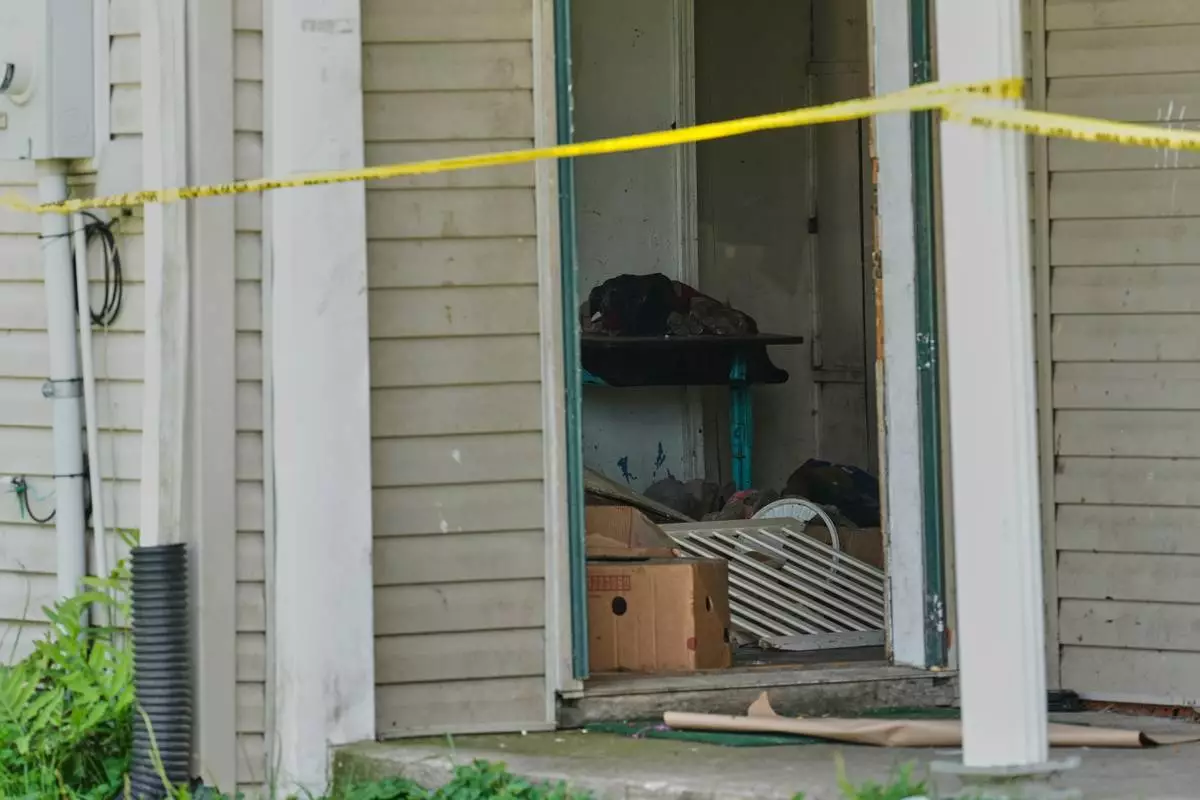
Items are seen beyond police tape in a home where authorities say they removed 16 children and arrested four adults in Hamden, Ohio, Wednesday, July 1, 2026. (AP Photo/Carolyn Kaster)

Debris is strewn on the front lawn of a home where authorities say they removed 16 children and arrested four adults in Hamden, Ohio, Wednesday, July 1, 2026. (AP Photo/Carolyn Kaster)
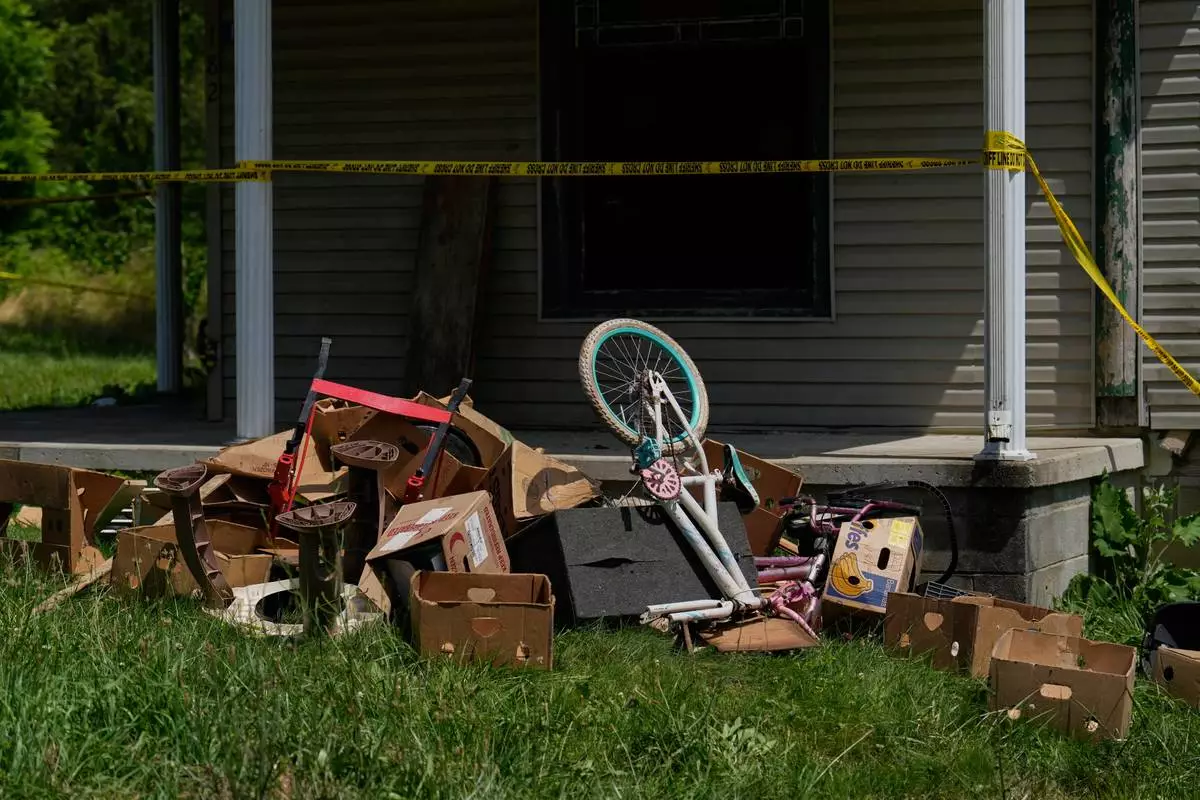
Police tape and debris are seen at a home where authorities say they removed 16 children and arrested four adults in Hamden, Ohio, Wednesday, July 1, 2026. (AP Photo/Carolyn Kaster)
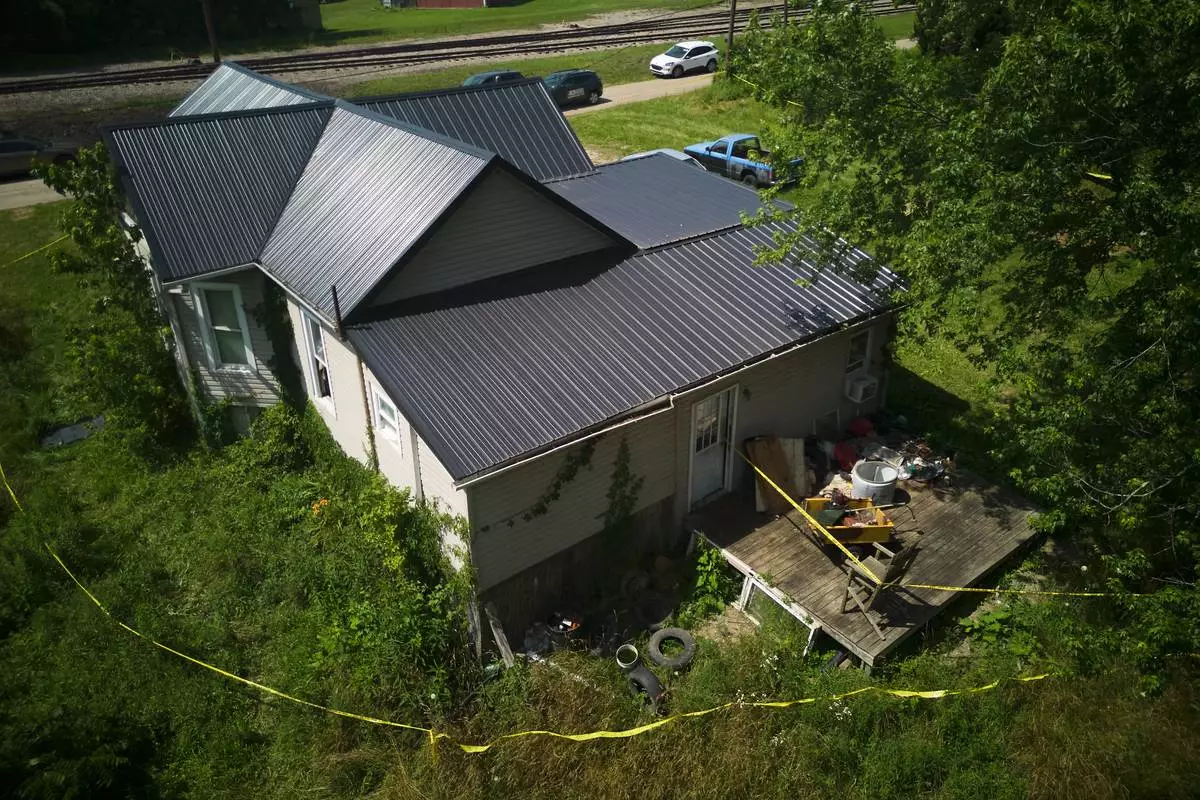
Police tape surrounds a home where authorities say they removed 16 children and arrested four adults in Hamden, Ohio, Wednesday, July 1, 2026. (AP Photo/Carolyn Kaster)

Police tape surrounds a home where authorities say they removed 16 children and arrested four adults in Hamden, Ohio, Wednesday, July 1, 2026. (AP Photo/Carolyn Kaster)

The dilapidated home where authorities say they removed 16 children and arrested four adults remains blocked off by crime scene tape on Wednesday, July 1, 2026 in Hamden, Ohio. (AP Photo/Julie Carr Smyth)

The dilapidated home where authorities say they removed 16 children and arrested four adults remains blocked off by crime scene tape on Wednesday, July 1, 2026 in Hamden, Ohio. (AP Photo/Julie Carr Smyth)
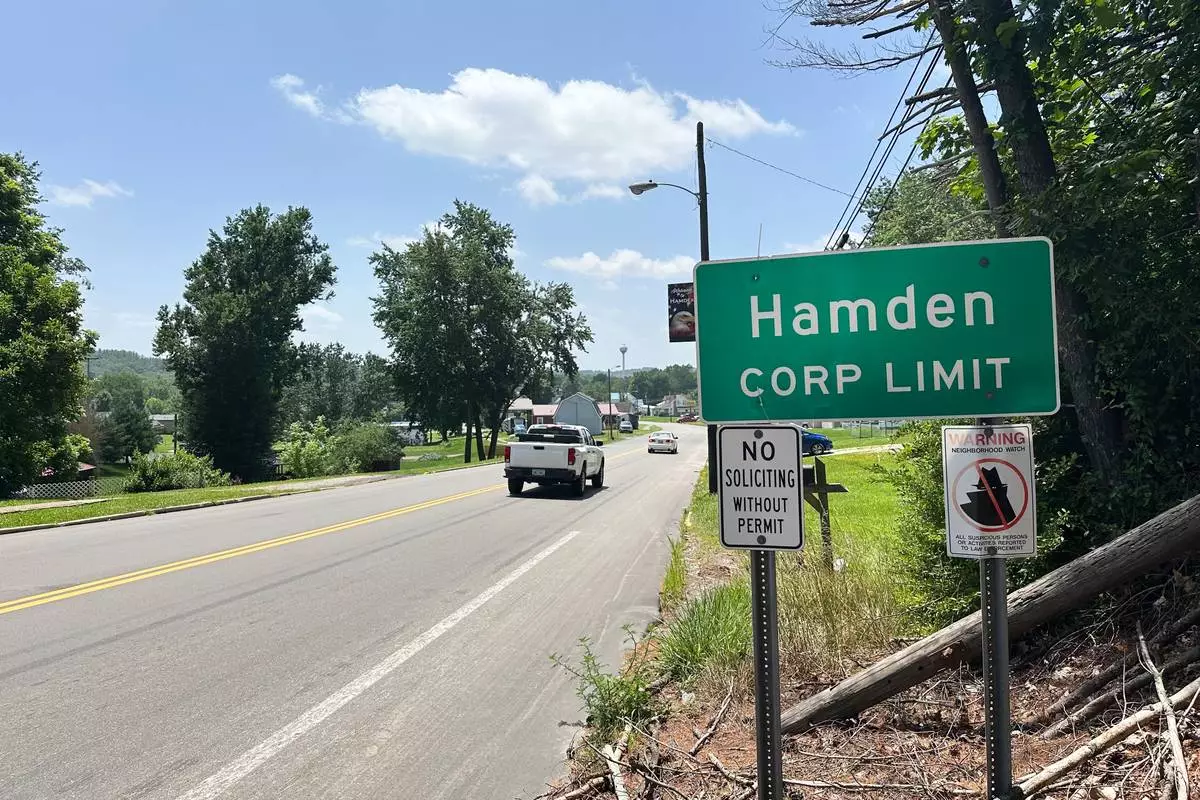
A sign marks the city's limits Wednesday, July 1, 2026 in Hamden, Ohio. (AP Photo/Julie Carr Smyth)

The dilapidated home where authorities say they removed 16 children and arrested four adults remains blocked off by crime scene tape on Wednesday, July 1, 2026 in Hamden, Ohio. (AP Photo/Julie Carr Smyth)

This image taken from video released by the Office of Ohio Attorney General Andy Wilson shows Wilson speaks during a press conference Tuesday, June 30, 2026. (Office of Ohio Attorney General Andy Wilson via AP)