BEIJING (AP) — The pilot who flew a small plane into Beijing's tallest building wrote in his diary about “ending his life,” Chinese authorities said Thursday.
Their investigation concluded the cause of the June 26 crash was “personal reasons,” according to a statement posted on social media by Beijing's Chaoyang district government.
The pilot, a 66-year-old man, died and 13 other people were injured. None of the injuries are life-threatening and one of the injured has been discharged from the hospital, the government statement said.
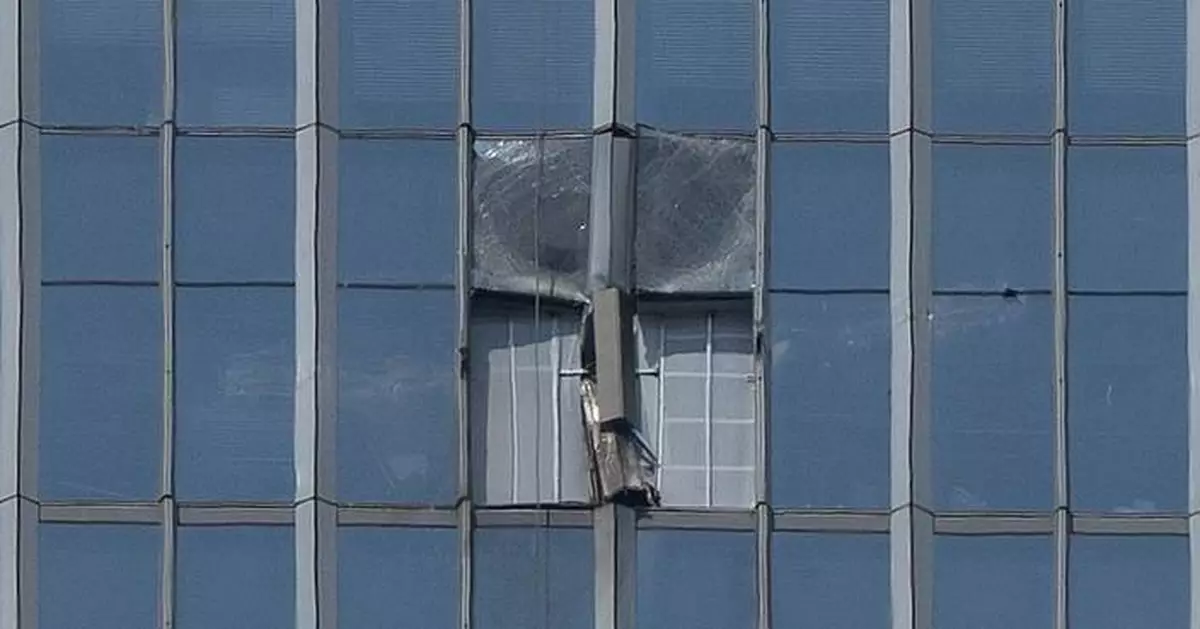
The crash, which happened in a downtown skyscraper district as people were leaving work around 6 p.m., raised questions about security in the Chinese capital. It left a hole in the glass facade of the 108-story CITIC tower, nicknamed the “Zun” building because it mimics the shape of an ancient wine vessel of that name.
The pilot, identified only by the surname Liu, took off on a solo flight in the two-seat training plane from a general aviation airport in the outskirts of Beijing, the Chaoyang statement said. He deviated from the designated flying area and contact with him was lost, it said.
Liu had no fixed job, was divorced and lived alone, according to the statement. He had insomnia and anxiety and his diary had multiple references to ending his life, it said.
Central Beijing, where China's leaders live and work, has strict airspace controls including a ban on drones.

A security camera is seen near a section damaged after a small plane crashed into the CITIC Tower, also known as China Zun, the tallest building in Beijing, on Saturday, June 27, 2026. (AP Photo/Ng Han Guan)
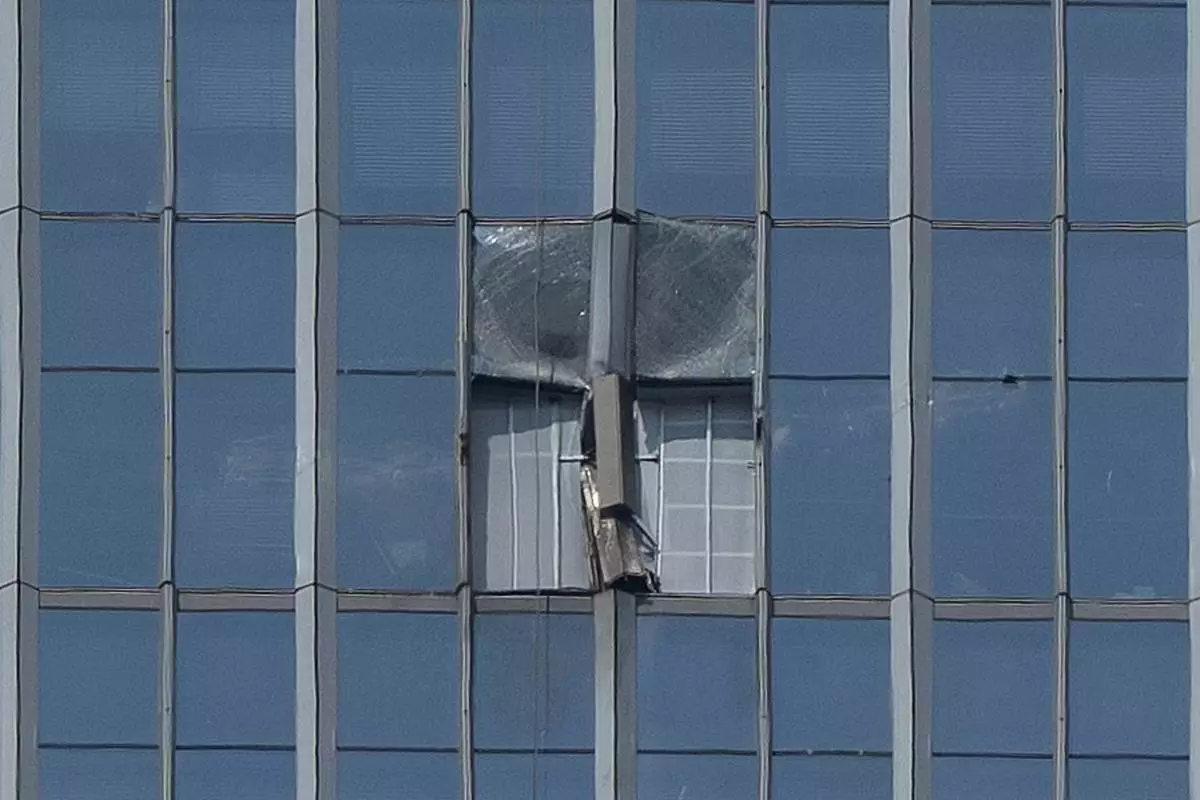
A section damaged after a small plane crashed into it is boarded up at the CITIC Tower, also known as China Zun, the tallest building in Beijing, on Saturday, June 27, 2026. (AP Photo/Ng Han Guan)
It’s the 1,000th day since a Hamas-led attack on Israel sparked the war in Gaza. Other conflicts have emerged in the region, and fragile ceasefires show scars of persistent attacks. Both Israelis and Palestinians are weary of the strain.
The fate of over 2 million Palestinians in Gaza, largely displaced and living amid ruins, remains uncertain. Israeli forces controlled over half of the territory under the ceasefire that took effect on Oct. 10, but Israel's government has expanded that and says it aims to hold 70%.
The Oct. 7, 2023, Hamas-led attack on southern Israel killed about 1,200 people and took 251 hostage. All hostages or their remains have been released or handed over. Many recounted long-term starvation, physical and psychological abuse and, in some cases, sexual abuse.
Israel’s retaliation has killed a total of 73,066 Palestinians as of Tuesday, Gaza’s Health Ministry says. Despite the ceasefire, few people can get in or out of Gaza. Further ceasefire steps, including Hamas' disarmament and the immense task of reconstruction, have stalled.
“Much more needs to be done so that even a semblance of normality can come back, and we are far, far away from this,” the International Committee of the Red Cross regional director, Nicolas von Arx, said this week.
Here’s a look at what has happened over the 1,000 days and what may lie ahead.
Israeli strikes have lessened considerably since the ceasefire took effect, but they continue almost daily.
Gaza’s Health Ministry counted 1,053 Palestinians dead since the ceasefire as of Tuesday, including over 350 women and children. In recent days, they included a teenage girl on her way to school and a mother with her 1-year-old daughter.
“Where is this ceasefire they keep talking about?! Shame on them,” one Palestinian, Wisal Abu Khater, said this week after another deadly strike, lashing out at Arabs who she said have failed Gaza's people and are busy watching World Cup games instead.
The United Nations on Wednesday warned that the Israeli expansion in Gaza increases deadly risks for civilians in “areas lacking clear demarcation on the ground."
The Health Ministry said over 3,400 people have been wounded since the ceasefire. The ministry is part of the Hamas-led government and maintains detailed casualty records seen as generally reliable by U.N. agencies and independent experts. It does not give a breakdown of civilians and militants but says women and children make up roughly half the dead.
Israel’s military says it targets Hamas and other militants, often asserting they were planning attacks, and accuses Hamas of using civilians as human shields.
The top diplomat overseeing the ceasefire, Nickolay Mladenov, has made it clear: The next steps in implementing the U.S.-brokered deal are stalled over the difficult issue of Hamas disarming.
This has been a high-profile test of the Board of Peace created and led by U.S. President Donald Trump. Launched with fanfare and billions of dollars in international pledges earlier this year with the sole aim of Gaza’s recovery from war, the board now says little publicly.
Hamas' disarmament would open the way for other steps, including new administration of Gaza and the deployment of an international stabilization force to assist with security and reconstruction efforts. While Hamas hasn’t outright rejected disarming, it has indicated it wants to hold on to some weapons and demanded further concessions from Israel.
Israelis over the past 1,000 days have been traumatized by the Oct. 7 attack — the deadliest in Israel's history — and other conflicts that followed: against the Iranian-backed Hezbollah militant group in Lebanon, the Iranian-backed Houthi rebels in Yemen and Iran itself.
Israelis marked the anniversary on Thursday in several spots across the country, including at the scene of a music festival where at least 364 people were killed and 40 taken hostage. Other people marked it at bomb shelters along the roads in the south where their relatives were killed as they tried to flee the Hamas onslaught.
“Today we mark 1,000 days, 1,000 days since the terrible day when our world collapsed, the day we lost our loved ones,” said Yoram Yehudai, whose son Ron was killed at the festival. "We are here at the Nova site, behind me was the party area itself. Children who came to dance and celebrate went home in coffins.”
Dozens of protesters gathered near the Israeli parliament, demanding the government establish a state commission of inquiry into the attack, which Netanyahu has tried to avoid.
These conflicts and their toll — including mounting deaths of Israeli soldiers, continuing attacks along Israel's border with Lebanon and international allegations of genocide in Gaza, which Israel rejects — are weighing on Israelis and the national mood as Netanyahu seeks reelection this fall.
Netanyahu has projected confidence, but he faces a tough challenge.
Over 60% of Israelis think he shouldn't run again, according to a poll by The Israel Democracy Institute published last month. Anger has been high over the security failures before Oct. 7, the lack of a state commission of inquiry to investigate them and unpopular exemptions from military service granted to Netanyahu's ultra-Orthodox governing partners.
Palestinians in Gaza say they are near their limit. Sheltering in vast tent camps with basic if any utilities, or in the skeletons of bombed-out buildings, they continue to live amid the hum of Israeli drones and the daily threat of strikes.
The ceasefire was meant to bring a surge in humanitarian aid like medicines and fuel. Aid groups and others say that has not happened. All of Gaza’s border crossings remain tightly restricted, and at times they have closed completely. The U.N. last month said 17 hospitals are still not functional.
“Cumbersome" Israeli approvals and customs procedures limit crucial supplies, U.N. humanitarian chief Tom Fletcher said last month, adding that even prosthetic limbs have been affected by concerns about having a potential "dual” use as weapons.
Famine was declared in Gaza City last August, but food security experts later said there were “notable improvements” after the ceasefire. The Israeli military body responsible for coordinating civilian affairs in Gaza, COGAT, said Wednesday that “the quantities of food that are being brought in far exceed the nutritional needs of the Gazan civilian population.”
With Israeli forces expanding in Gaza, and Hamas militants accused of illegally executing Palestinians for alleged collaboration with Israel or crimes like looting, people say they are stressed and exhausted.
“We had everything before the war,” said Mahmoud Ashour, a 33-year-old shop owner in Khan Younis. ”And now we’re just craving a bite to eat."
Associated Press writers Samy Magdy and Fatma Khaled in Cairo and Moshe Edri in Reim, Israel contributed to this report.
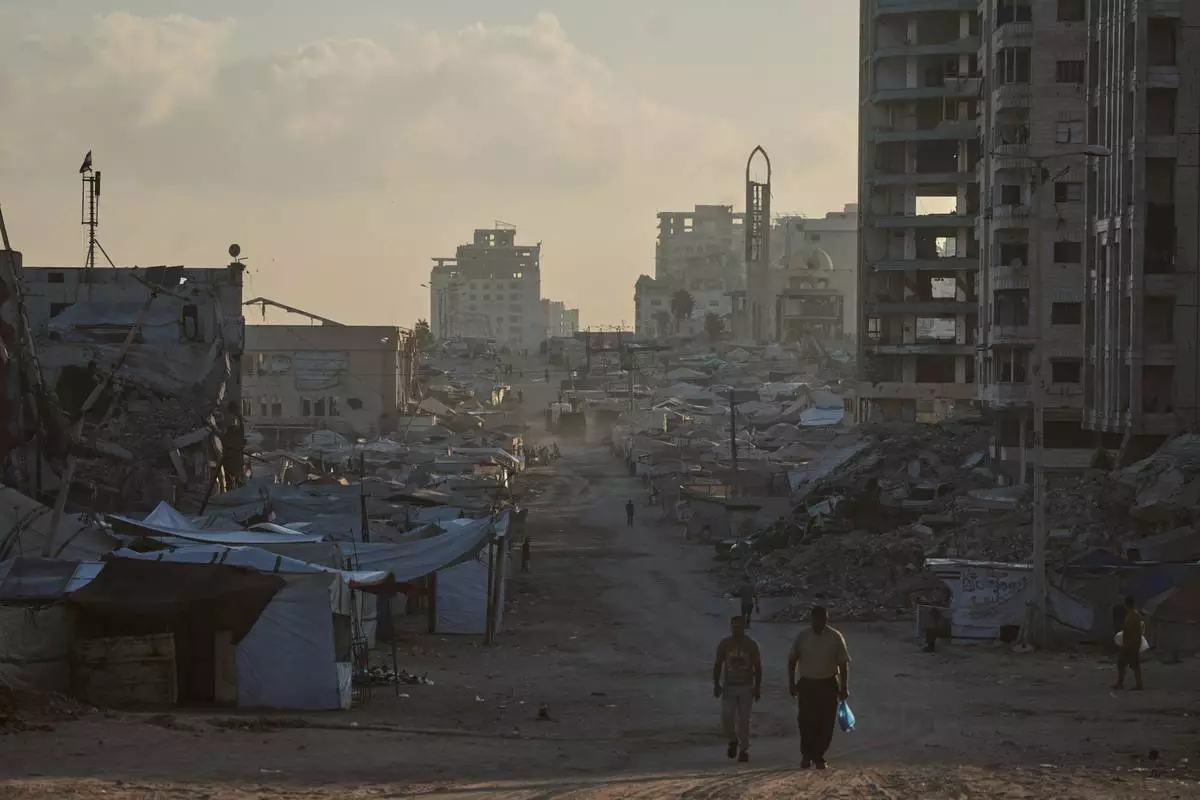
Palestinians walk along a street surrounded by buildings destroyed in Israeli military strikes during the Israel-Hamas war, in Gaza City, Thursday, July 2, 2026. (AP Photo/Jehad Alshrafi)
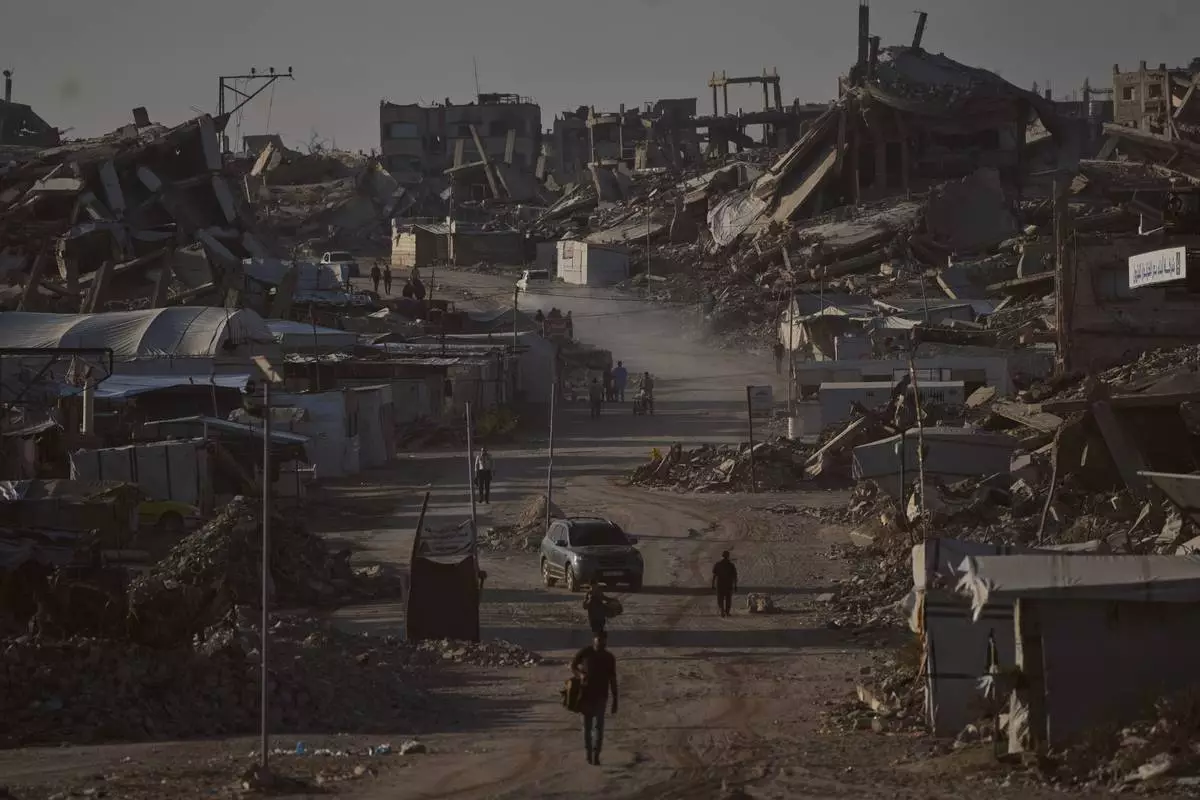
Palestinians walk along a road surrounded by buildings destroyed in Israeli military strikes during the Israel-Hamas war, in Jabaliya, Gaza Strip, Thursday, July 2, 2026. (AP Photo/Jehad Alshrafi)

Police disperse demonstrators during a protest marking 1,000 days since the Oct. 7 2003 Hamas-led attack on Israel, outside of the Knesset, Israel's parliament, in Jerusalem, Thursday, July 2, 2026. (AP Photo/Ohad Zwigenberg)
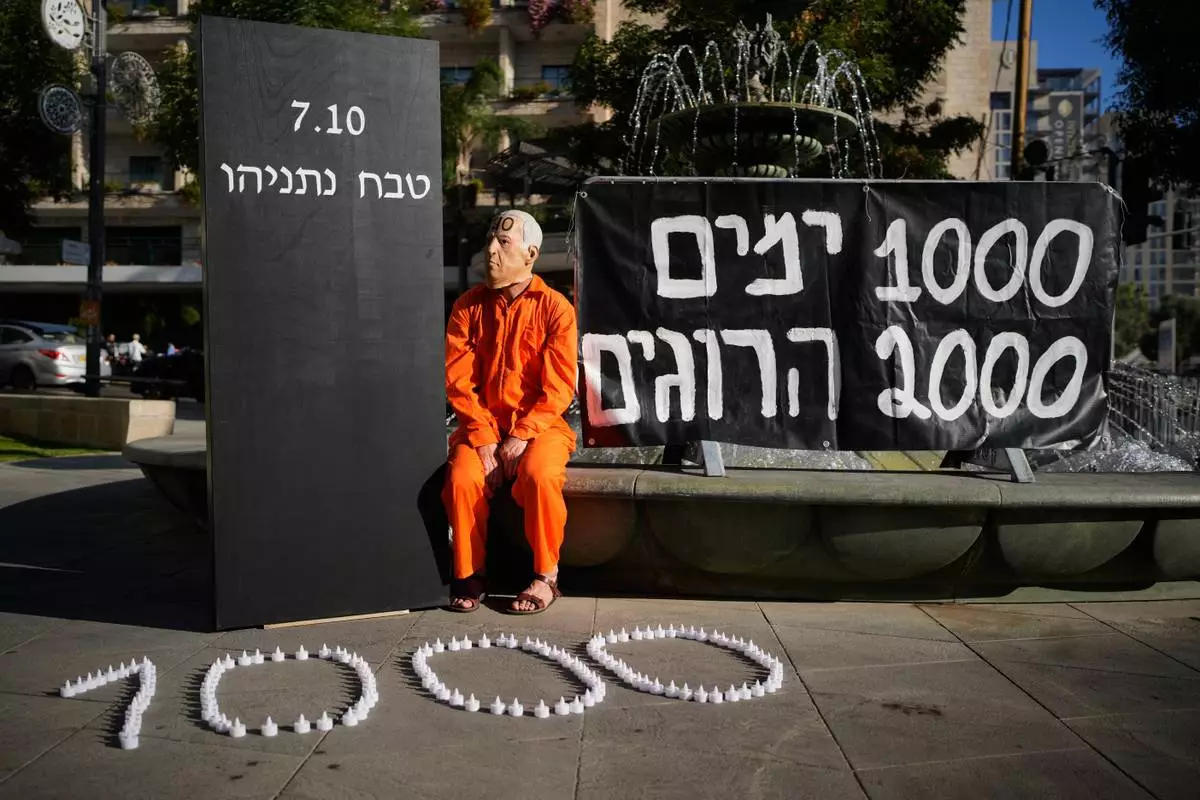
A demonstrator wearing a mask depicting Israeli Prime Minister Benjamin Netanyahu during a protest marking 1,000 days since the Oct. 7, 2023, Hamas-led attack on Israel, in Jerusalem, Thursday, July 2, 2026. (AP Photo/Ohad Zwigenberg)

Police disperse demonstrators during a protest marking 1,000 days since the Oct. 7 2003 Hamas-led attack on Israel, outside of the Knesset, Israel's parliament, in Jerusalem, Thursday, July 2, 2026. (AP Photo/Ohad Zwigenberg)

People protest outside the Knesset, Israel's parliament, in Jerusalem, marking 1,000 days since the Oct. 7, 2023, Hamas-led attack on Israel, Thursday, July 2, 2026. (AP Photo/Ohad Zwigenberg)

FILE - President Donald Trump signs the charter of his Board of Peace initiative at the Annual Meeting of the World Economic Forum in Davos, Switzerland, Jan. 22, 2026. (AP Photo/Markus Schreiber, File)
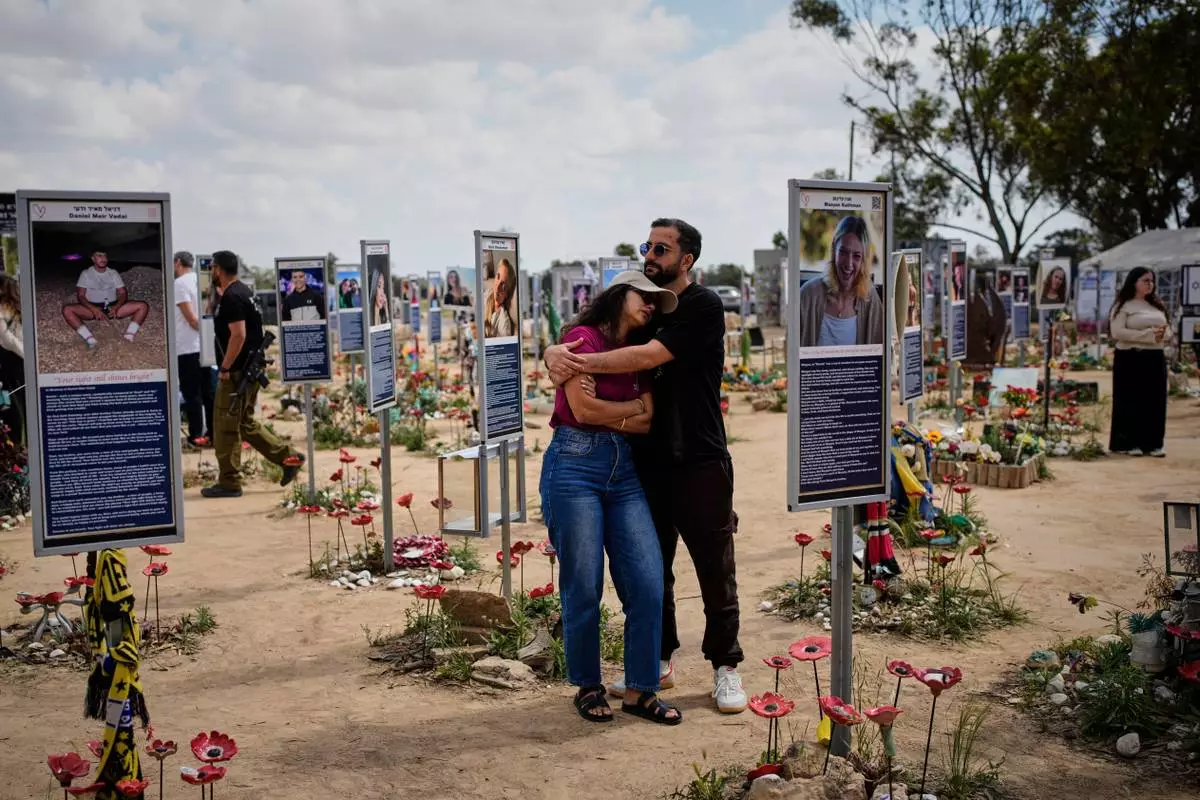
FILE - People mark Israel's annual Memorial Day at the site of the Nova music festival, where hundreds of revelers were killed and abducted in the Oct. 7, 2023 Hamas attack, near Kibbutz Reim in southern Israel, April 21, 2026. (AP Photo/Ohad Zwigenberg, File)
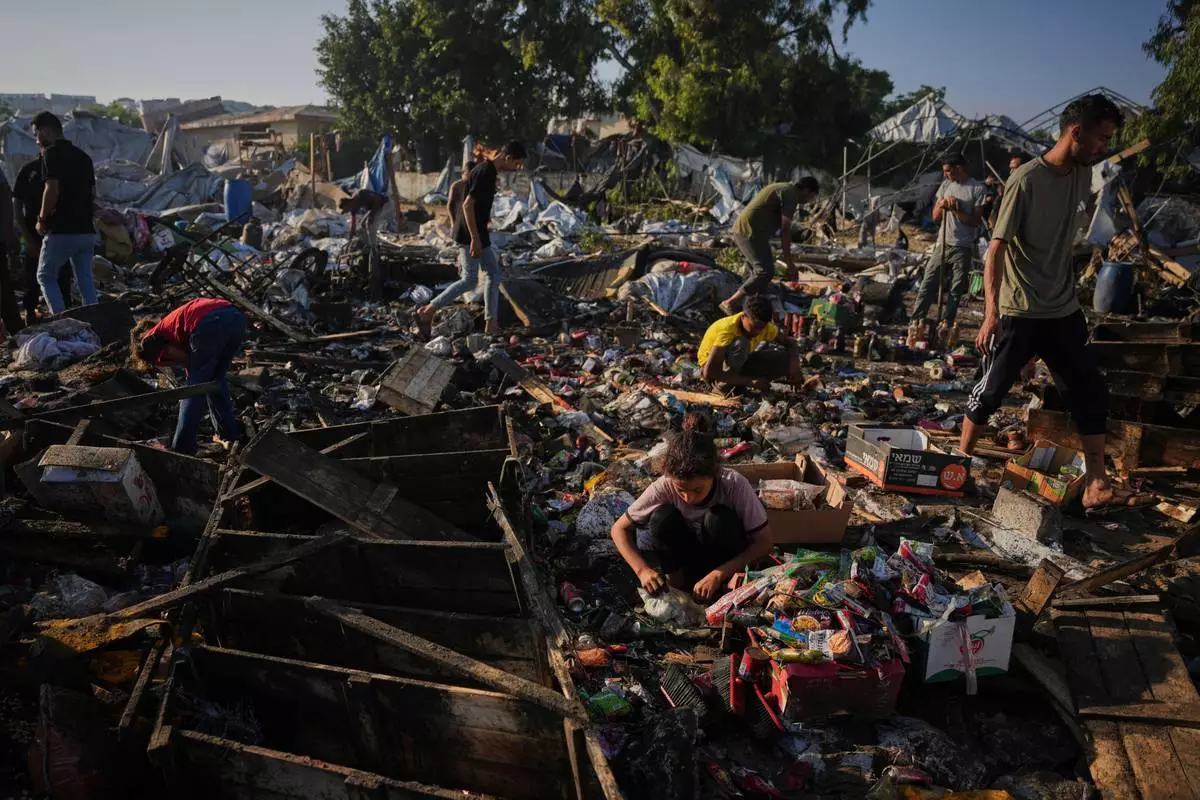
Palestinians collect food from the wreckage of their tents following an Israeli airstrike in Khan Younis, Gaza Strip, Tuesday, June 30, 2026. (AP Photo/Abdel Kareem Hana)
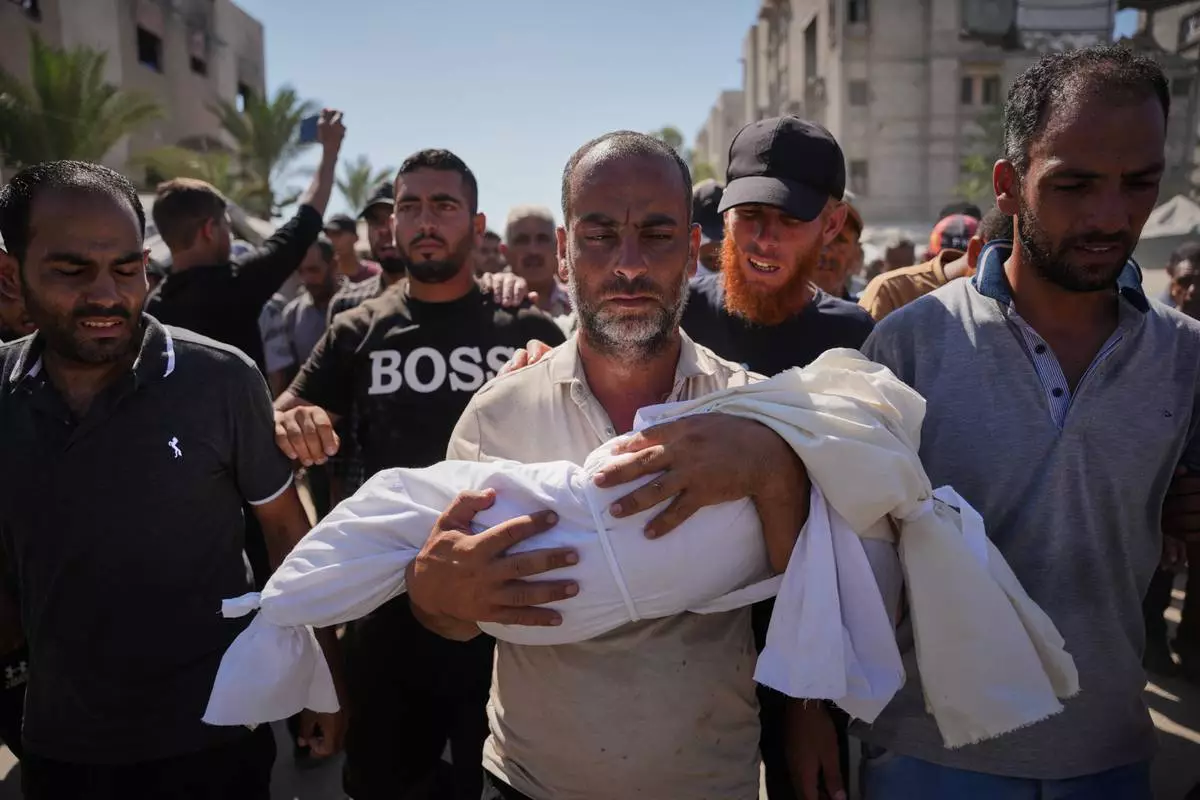
Thaer Abu Daraz carries the body of his infant daughter, Sewar, who was killed along with her mother in an Israeli airstrike that struck a tent camp for displaced Palestinians in Khan Younis, Gaza Strip, Tuesday, June 30, 2026. (AP Photo/Abdel Kareem Hana)
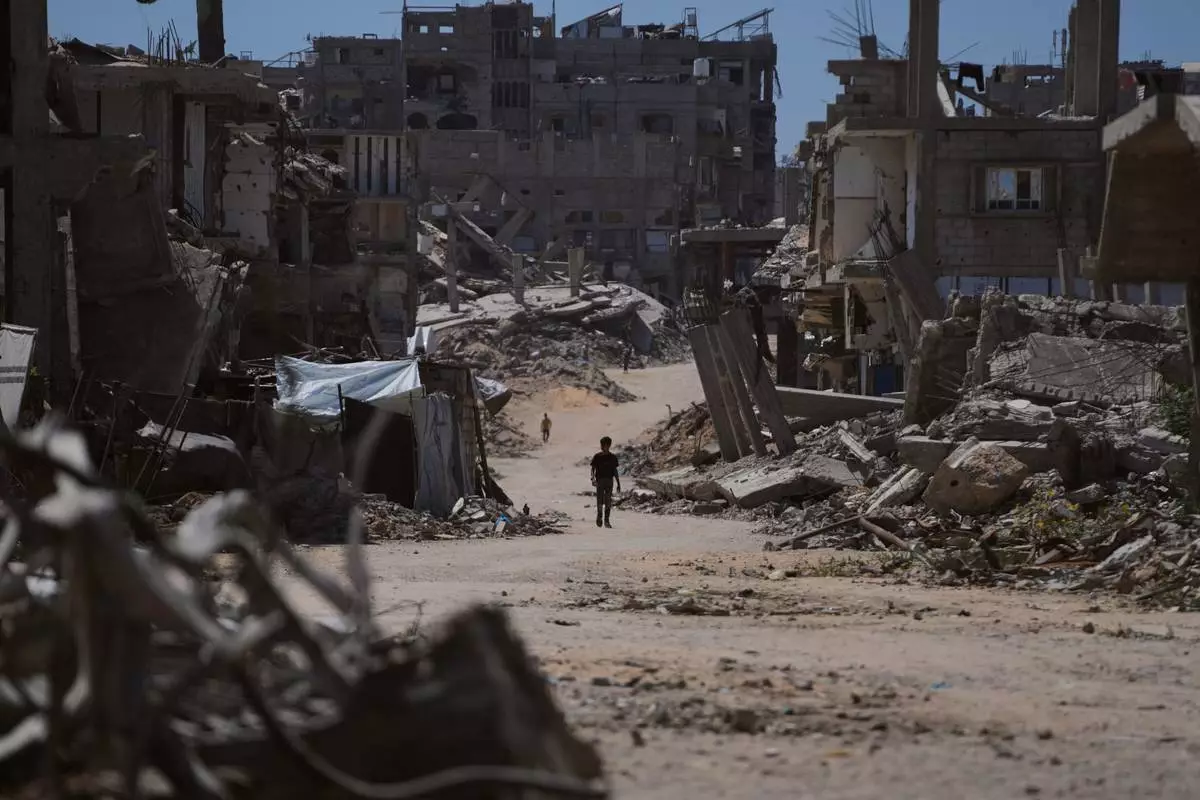
A Palestinian child walks along a street surrounded by buildings destroyed in Israeli military strikes during the Israel-Hamas war in Khan Younis, Gaza Strip, Wednesday, July 1, 2026. (AP Photo/Abdel Kareem Hana)