Skip to Content Facebook Feature Image

Merz unveils sweeping reform push for Germany: Tax cuts, pension overhaul and new sick leave rules

News

Merz unveils sweeping reform push for Germany: Tax cuts, pension overhaul and new sick leave rules
News

News

Merz unveils sweeping reform push for Germany: Tax cuts, pension overhaul and new sick leave rules

2026-07-02 18:13 Last Updated At:18:20

BERLIN (AP) — German Chancellor Friedrich Merz and his government coalition partners presented a comprehensive reform package Thursday with the goal of getting the country's sluggish economy back on track.

The 34 measures include cuts to income tax for low- and middle income families, an overhaul of the creaking pension system, tougher rules for employees' sick leave and a reduction of the country's stifling bureaucracy.

“These reforms all have one goal: We’re setting out into the future,” Merz said Thursday. “We’re strengthening ourselves so that we can live well in these new times.”

Merz’s coalition of center-right and center-left parties took office just over a year ago with pledges to reform and turn around Germany’s sluggish economy, Europe’s biggest. It has since become deeply unpopular, in part because of perceptions that it has squabbled but so far achieved little.

Merz is trying to cut his government coalition free from that negative reputation.

“From the very beginning, we set an agenda with a single goal in mind: We want to get Germany back on track. It is now clear that this is possible,” the conservative chancellor said.

Germany’s economy returned to modest growth last year after shrinking for two years in a row. The government expects underwhelming growth of 0.5% this year, a figure that has been pushed down by the fallout from the war in Iran.

The country of 83.5 million people already faced increasing competition from Chinese companies, higher energy costs following Russia’s full-scale invasion of Ukraine and issues including U.S. President Donald Trump ’s tariffs and trade threats. On top of that, it has deeper problems such as high production costs, lagging private investment and increasingly costly health and pension systems caused by an aging population.

On Thursday, the government coalition leaders said that the tax cuts, once fully implemented in 2028, would give an annual tax break of about 600 euros ($64.40) for a family with two working parents, two children and a total taxable income of 60,000 euros ($64,416). The total tax relief provided by the reform amounts to approximately 10 billion euros ($11.4 billion) per year.

The pension system reform would include gradually raising the retirement age, currently between 65 and 67 years depending on the number of years worked, in line with life expectancy. The coalition leaders said they would implement the recommendations presented by a government-mandated panel of experts and politicians last month to stabilize the pension system. The aim is to prevent the level of pensions from falling and ward off the need for a big, long-term increase of the levy employees pay into the pension system.

The tougher rules for sick leave would no longer allow employees to call in sick to work for up to three days without seeing a doctor or call up the doctor and ask for a sick leave letter of one week without actually seeing the doctor. Instead, employers would be able to ask for a doctor's certificate from the first day a person is on sick leave.

Merz had repeatedly complained that the rate of sick leave is too high in Germany, harming productivity.

When it comes to Germany's runaway bureaucracy, various reporting and documentation requirements are to be eliminated, and data protection is to be reduced to the European minimum, the government said, adding that there would also be less red tape when it comes to filing tax returns.

Alice Weidel, the co-leader of the far-right Alternative for Germany party, which placed second in national elections last year, derided the reform package.

On X, she called the measures an “even more left-wing redistribution, and minimal compromises that don’t deserve to be called ‘reforms’.”

“The fact that this is being sold as a ‘breakthrough’ shows only one thing: this government’s complete inability to reform,” she wrote.

Nonetheless, Merz appealed to all Germans to support the package.

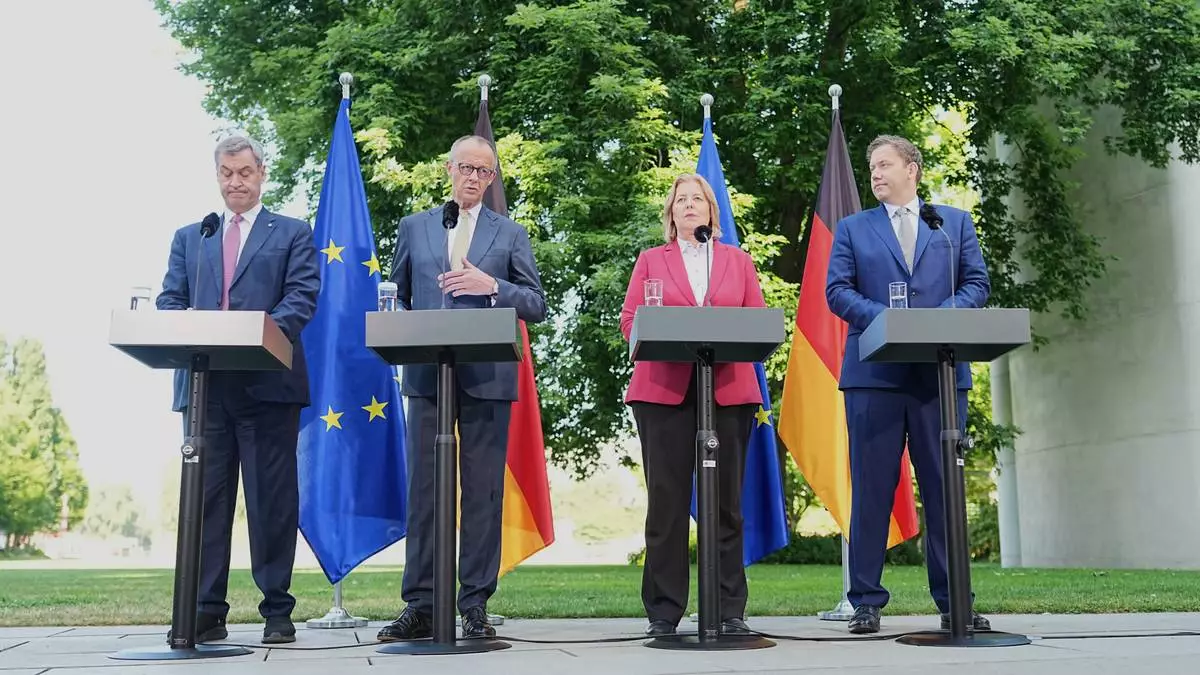
“We know that you, ladies and gentlemen — the citizens of our country — want decisions, and you don’t want conflict. And that is exactly what we have delivered,” he said at the chancellery’s garden in Berlin as the reforms were presented to the public.

“Join us; support us in carrying out the reforms that are now necessary.”
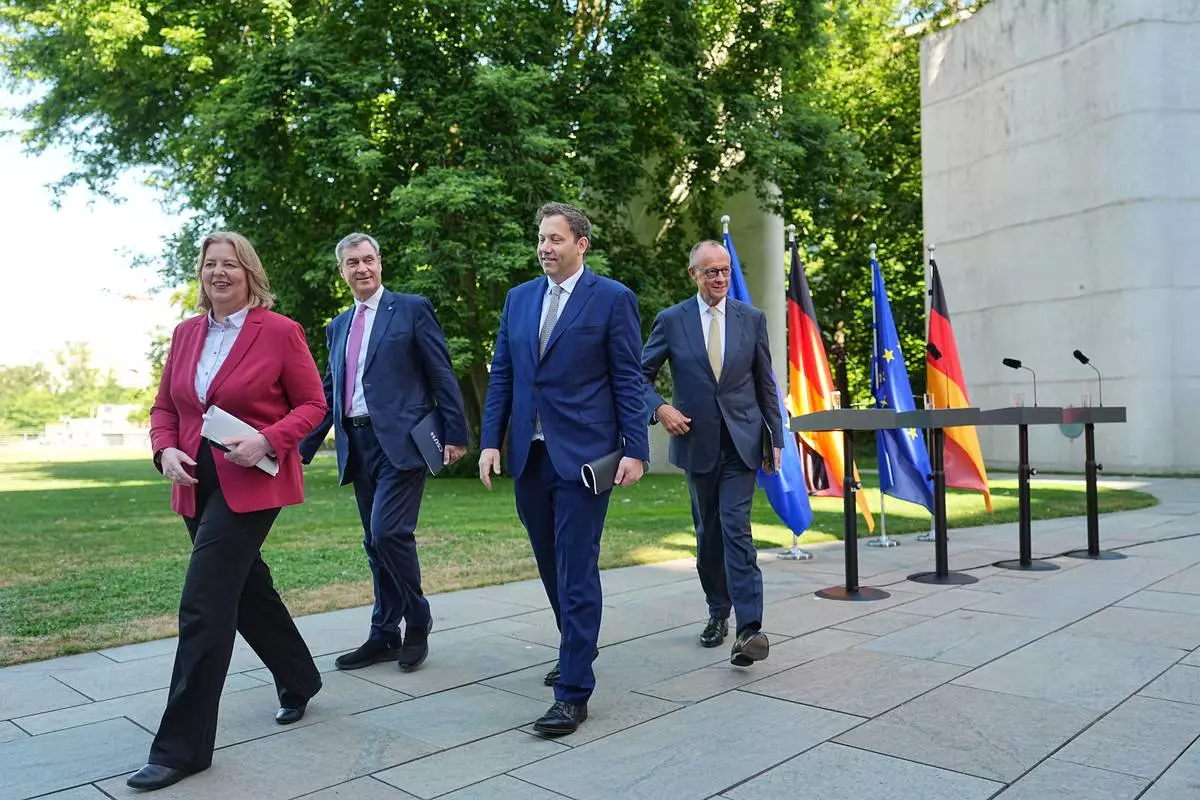
From left, Federal Minister of Labor and Social Affairs Bärbel Bas, Minister-President of Bavaria and CSU Chairman Markus Söder, Federal Minister of Finance Lars Klingbeil and Germany Chancellor Friedrich Merz leave, after a press conference in the garden of the Chancellery following the meeting of the coalition committee, in Berlin, Thursday, July 2, 2026. (Michael Kappeler/dpa via AP)
From left, Federal Minister of Labor and Social Affairs Bärbel Bas, Minister-President of Bavaria and CSU Chairman Markus Söder, Federal Minister of Finance Lars Klingbeil and Germany Chancellor Friedrich Merz leave, after a press conference in the garden of the Chancellery following the meeting of the coalition committee, in Berlin, Thursday, July 2, 2026. (Michael Kappeler/dpa via AP)
From left, Minister-President of Bavaria and CSU Chairman Markus Söder, German Federal Chancellor Friedrich Merz, Federal Minister of Labor and Social Affairs Bärbel Bas and Federal Minister of Finance, Lars Klingbeil hold a press conference in the garden of the Chancellery following the meeting of the coalition committee, in Berlin, Thursday, July 2, 2026. (Michael Kappeler/dpa via AP)

From left, Minister-President of Bavaria and CSU Chairman Markus Söder, German Federal Chancellor Friedrich Merz, Federal Minister of Labor and Social Affairs Bärbel Bas and Federal Minister of Finance, Lars Klingbeil hold a press conference in the garden of the Chancellery following the meeting of the coalition committee, in Berlin, Thursday, July 2, 2026. (Michael Kappeler/dpa via AP)
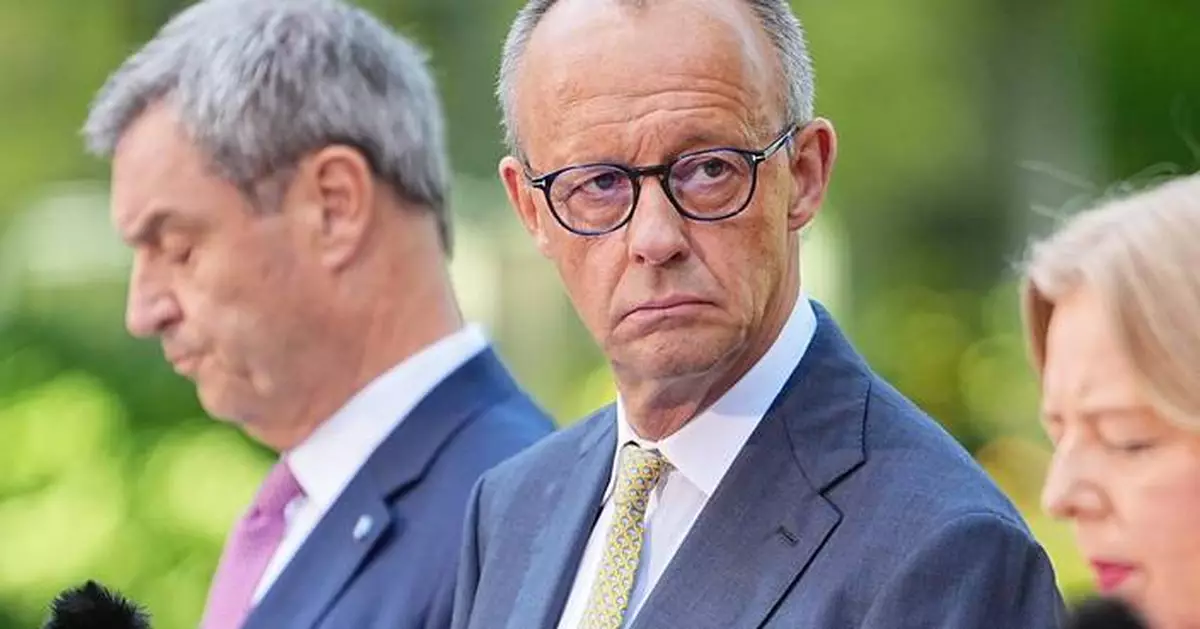
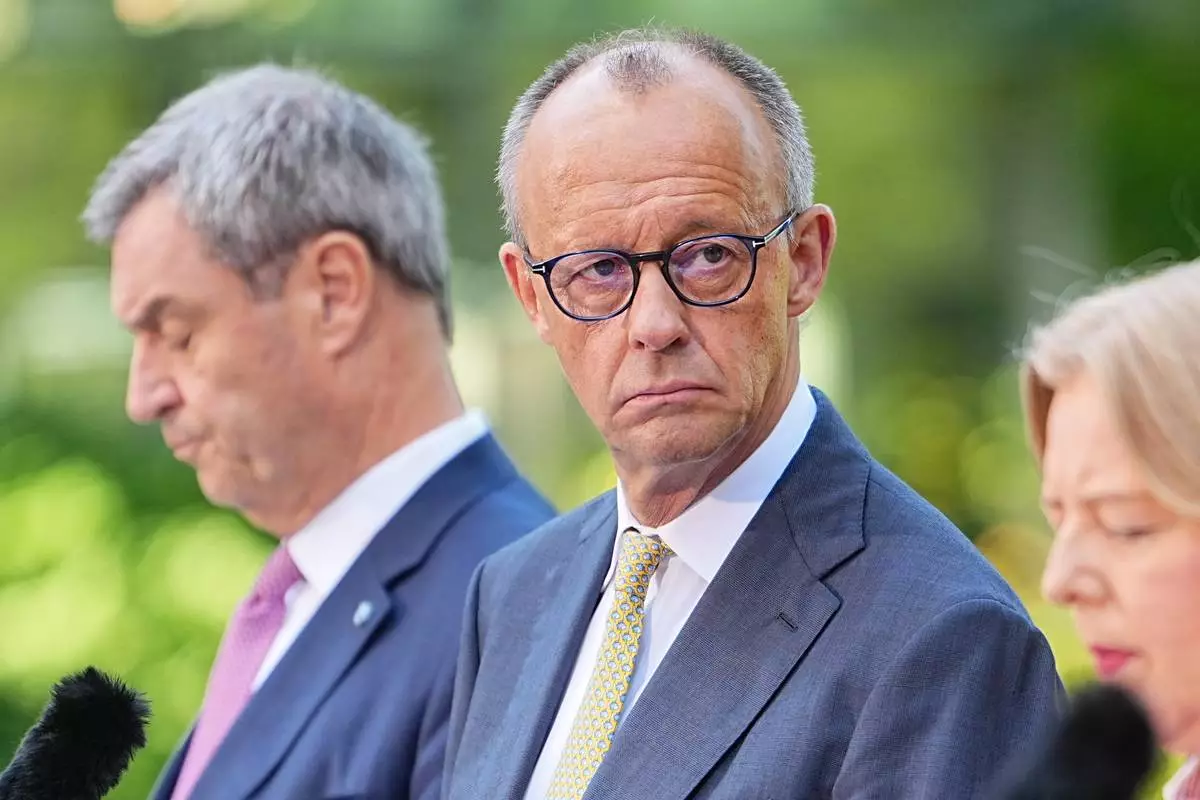
German Federal Chancellor Friedrich Merz, center, attends a press conference with Minister-President of Bavaria and CSU Chairman Markus Söder, left, Federal Minister of Labor and Social Affairs Bärbel Bas, right and Federal Minister of Finance, Lars Klingbeil, in the garden of the Chancellery following the meeting of the coalition committee, in Berlin, Thursday, July 2, 2026. (Michael Kappeler/dpa via AP)
German Federal Chancellor Friedrich Merz, center, attends a press conference with Minister-President of Bavaria and CSU Chairman Markus Söder, left, Federal Minister of Labor and Social Affairs Bärbel Bas, right and Federal Minister of Finance, Lars Klingbeil, in the garden of the Chancellery following the meeting of the coalition committee, in Berlin, Thursday, July 2, 2026. (Michael Kappeler/dpa via AP)

ALGIERS, Algeria (AP) — Voters in Alergia are casting ballots Thursday in parliamentary elections overshadowed by cost-of-living concerns and bans on candidates challenging the government.

Nearly 25 million voters across Africa's largest country by territory are choosing among 1,235 candidates for 407 seats with five-year terms in the lower house of Parliament.

Turnout is a big concern after voters largely snubbed campaign events. The government declared Thursday a paid national holiday to encourage turnout.

Rather than electoral politics, many people seem more concerned with everyday problems such as purchasing power and the decline of public services against a backdrop of shrinking political, media and union freedoms.

Many soccer-obsessed Algerians also are focused on the World Cup, where their national team faces Switzerland in a knockout match early Friday.

The outgoing pro-government majority holds some 300 seats, while the Islamist MSP party is the second largest political force with 64 seats.

Some MSP candidates were among 269 candidates barred from running, which notably included former leaders and activists of the Hirak pro-democracy movement that helped push out long-serving autocratic President Abdelaziz Bouteflika in 2019. The government has increasingly squeezed freedoms under his successor, President Abdelmadjid Tebboune, who was reelected to a second term in 2024.

The electoral authority said the rejected candidates were banned because of “links to illicit financial networks” and “suspicious political activities.''

Security measures were put in place Wednesday in front of polling stations in the capital Algiers.

In southern Algeria and Sahara Desert regions, voting was brought forward by 48 hours to allow the nomadic population to cast ballots in boxes transported in off-road vehicles belonging to the administration and escorted by police in Land Rovers.

In the Algerian diaspora, which numbers approximately 854,225 registered voters, particularly in France, home to the largest foreign community, voting took place Saturday and Sunday at various consular offices. There was high turnout and a “family atmosphere,” according to state news agency APS.

The government also moved up dates of end-of-year school exams to free classrooms and teachers, who are usually called upon to staff polling stations in exchange for a daily allowance.

Faced with largely empty campaign venues, parties and independent candidates have opted for “grassroots meetings” in the streets, markets and popular cafes with citizens. In a widely viewed video broadcast last week, the head of a political party is seen trying — and failing — to convince a young man to vote.

Parties campaigned anyway. The presidential majority, led by the long-serving FLN party, is urging broad turnout to strengthen Algeria domestically in the face of geopolitical challenges.

The Trotskyist opposition Workers' Party is campaigning for increased pensions and wages and against a mining sector reform favoring foreign investors.

The head of the Socialist Forces Front, the main party of the democratic movement, is urging the release of political prisoners and freer media and telling voters that boycotting the elections would only serve the government.

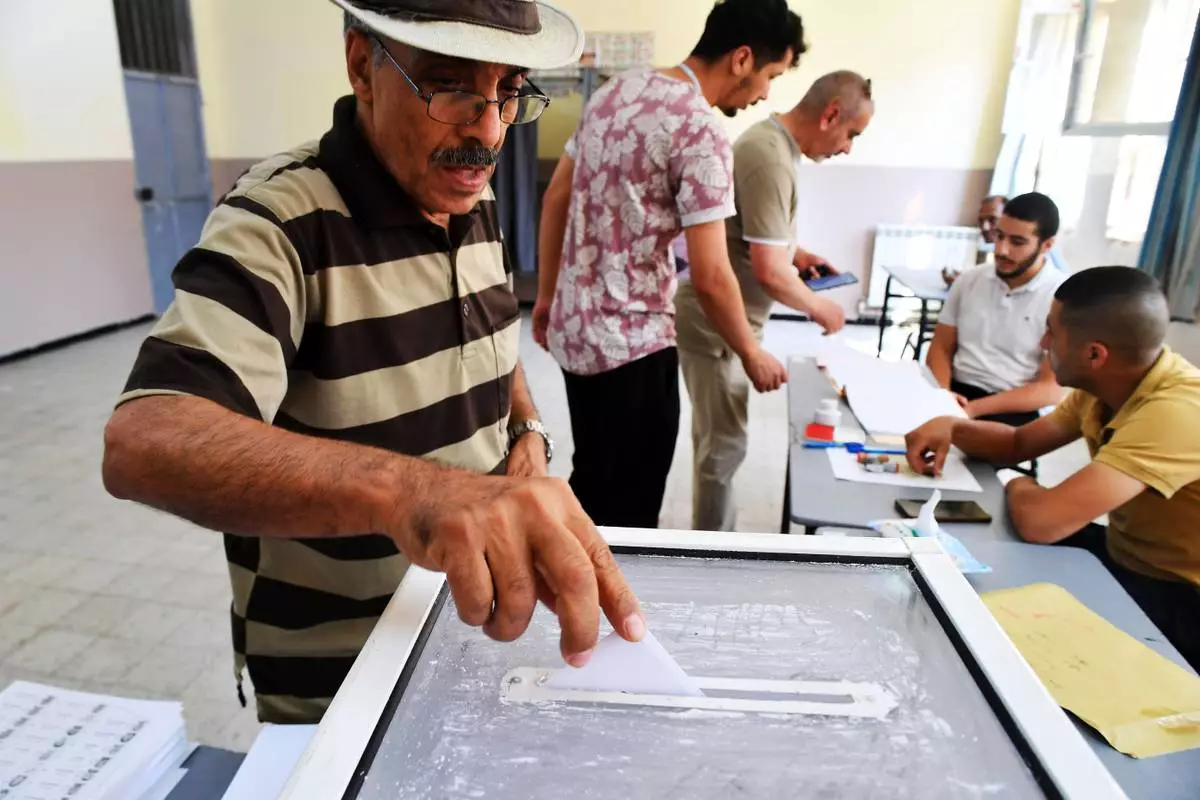
A man cast his vote for parliamentary elections in Algiers, Algeria, Thursday, July 2, 2026. (AP Photo/Fateh Guidoum)

A man cast his vote for parliamentary elections in Algiers, Algeria, Thursday, July 2, 2026. (AP Photo/Fateh Guidoum)

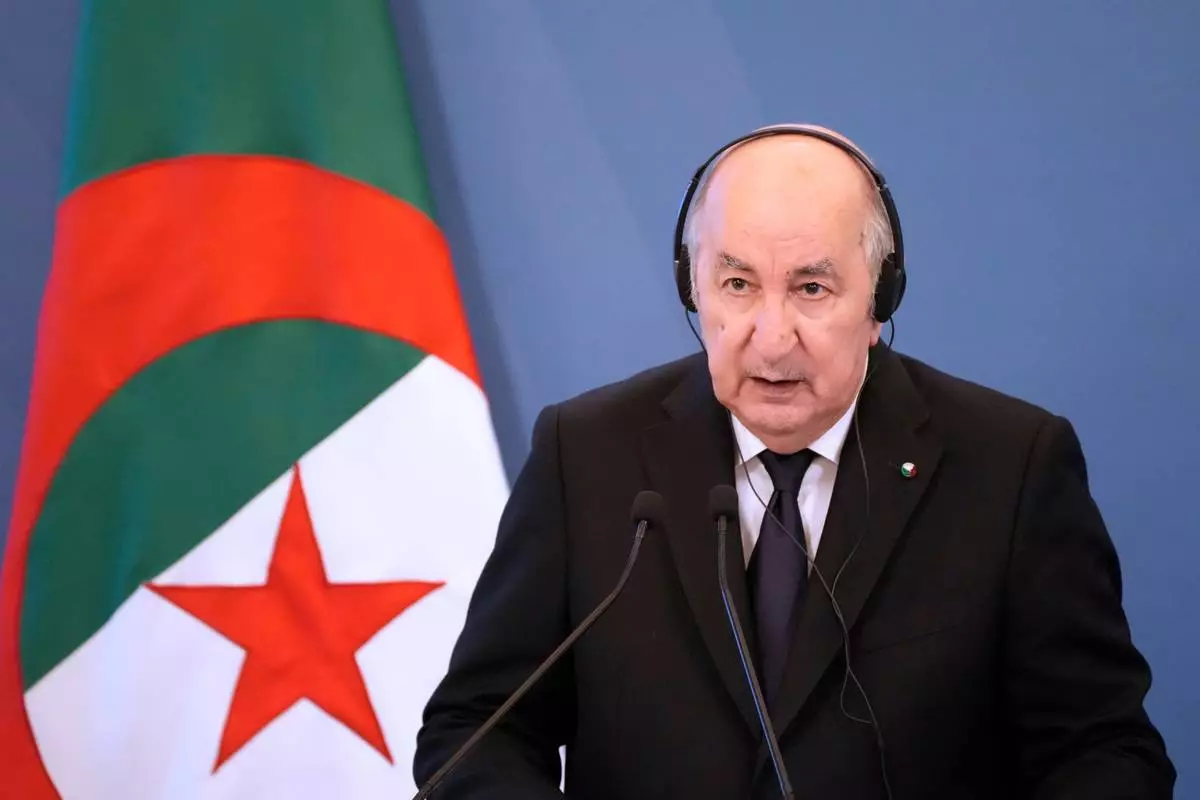
FILE -Algeria's President Abdelmadjid Tebboune during his meeting with Italian Premier Giorgia Meloni at Villa Pamphilj in Rome, July 23, 2025. (AP Photo/Gregorio Borgia, File)

FILE -Algeria's President Abdelmadjid Tebboune during his meeting with Italian Premier Giorgia Meloni at Villa Pamphilj in Rome, July 23, 2025. (AP Photo/Gregorio Borgia, File)

Recommended Articles