As Hong Kong enters influenza season, DH urges public to maintain good personal and environmental hygiene at all times
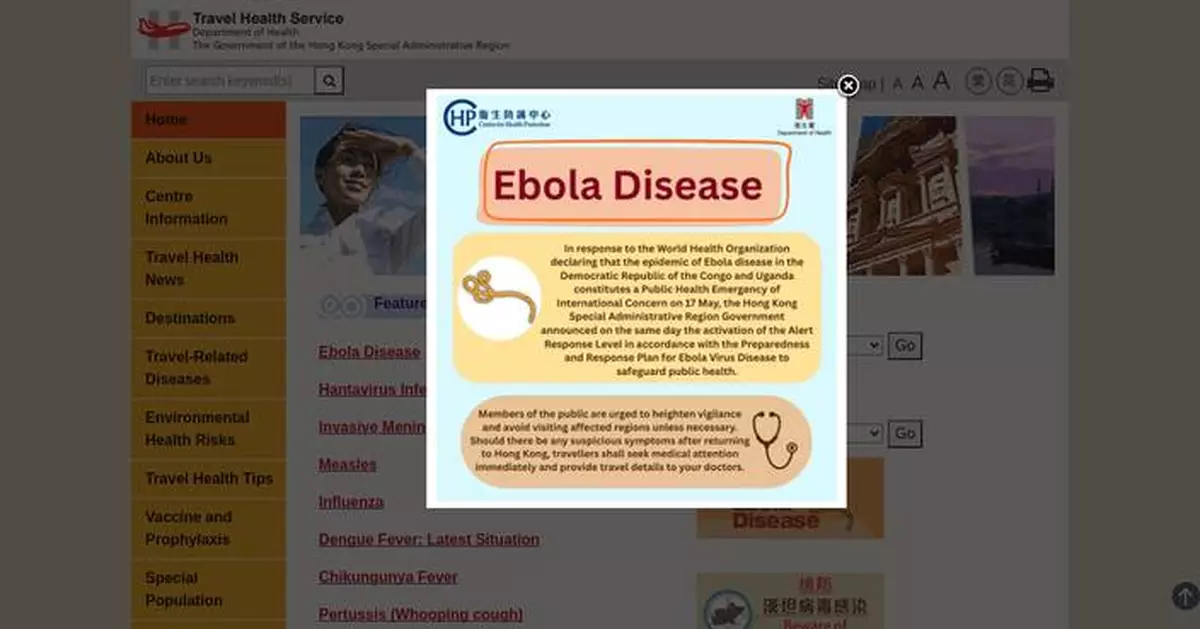
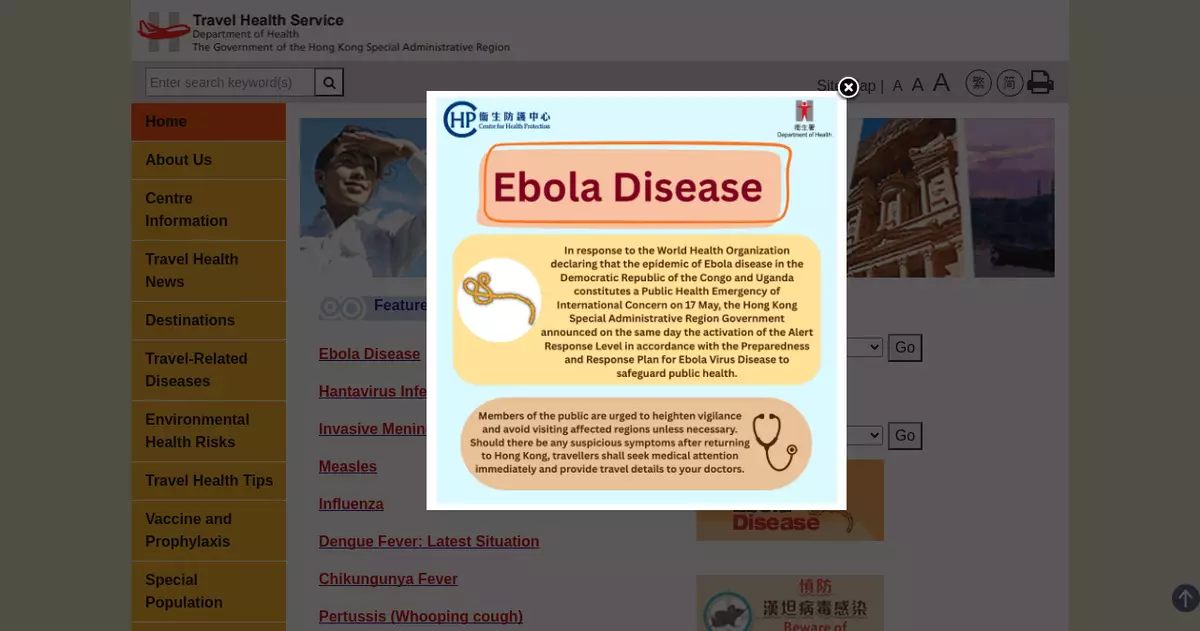
The Centre for Health Protection (CHP) of the Department of Health (DH) today (July 2) announced that the local seasonal influenza activity has increased further and exceeded the baseline levels, indicating that Hong Kong has entered the influenza season. In addition, the recent activity of COVID-19 has also continued to rise. The CHP urged the public to remain vigilant and maintain good personal and environmental hygiene at all times. Those planning to travel during the summer holidays are advised to visit the DH'sTravel Health Service webpagebefore departure and take appropriate precautions to prevent various common or travel-related infectious diseases.
Seasonal influenza
---------------------
According to the latest surveillance data (for the week of June 21 to 27), the percentage of respiratory specimens testing positive for seasonal influenza viruses was 6.69 per cent and the influenza admission rate in public hospitals was 0.38 cases per 10 000 population. Both indicators showed a significant increase from the previous week and have exceeded the baseline levels (4.94 per cent and 0.27 cases per 10 000 population respectively). The predominant influenza viruses detected were influenza A (H3) (59 per cent), followed by influenza A (H1) (23 per cent) and influenza B (18 per cent).
The number of influenza-like illness (ILI) outbreaks in schools and institutions increased to 46 last week, which is higher than the average of 24 per week over the previous four weeks. About 70 per cent of the outbreaks occurred in schools, approximately 70 per cent of which were in primary schools. Additionally, about 20 per cent of the outbreaks occurred in residential care homes for the elderly during the same period.
In Hong Kong, the influenza season generally occurs in the summer, between July and August. The influenza season which began last September was relatively long, lasting until early January of this year, while the influenza season that typically occurs in the first quarter of each year did not occur this year. Currently, the CHP is unable to predict how long this influenza season will last. However, based on historical surveillance data, viral activity tends to rise steadily for some time after the start of the influenza season before reaching its peak. Therefore, influenza activity is expected to increase further in the coming weeks. High-risk individuals should wear surgical masks when visiting public places. The general public should also wear surgical masks when using public transport or staying in crowded places. Individuals with symptoms of respiratory infections, even if the symptoms are mild, should wear a surgical mask, refrain from going to work or school, and seek medical advice as soon as possible to reduce the risk of transmission.
COVID-19
-----------
Regarding COVID-19, the overall level of activity in the local community has continued to rise since May. The percentage of respiratory samples testing positive for the SARS-CoV-2 virus rose from 0.45 per cent in early May to 6.02 per cent. In terms of sewage surveillance, the viral load per capita of the SARS-CoV-2 virus was approximately 470 000 copies per litre, which is a significant increase from approximately 36 000 copies per litre in early May. The latest sewage surveillance data and genetic analysis of positive respiratory specimens indicate that the lineages descended from JN.1 (including XFG and NB.1.8.1) are the variant strains currently circulating locally. No unusual increase in the proportion of other variant strains has been detected so far.
COVID-19 activity levels fluctuate, with an upsurge period generally occurring approximately every six to nine months in recent years. Each upsurge is associated with changes in predominant circulating variants and a decline in community herd immunity. Recent surveillance data showed that there is an ongoing increase in the level of activity of the virus in Hong Kong. The CHP anticipates that overall activity will increase further in the coming weeks, marking the onset of a new periodic upsurge in COVID-19 activity.
COVID-19 vaccines are effective in reducing hospitalisation and death rates after infection. The CHP appeals to individuals who have not yet received their initial dose of the COVID-19 vaccine, especially young children over 6 months old and the elderly, to receive an initial dose as soon as possible. Additionally, high-risk individuals should receive a booster dose at appropriate times six months after their last vaccine dose or COVID-19 infection, whichever is later, regardless of the number of doses received previously.
The CHP once again reminds the public that COVID-19 vaccine provided under the Government's COVID-19 Vaccination Programme (the Programme) for children and adults will expire in mid-July and early September this year respectively. As the production and delivery of COVID-19 vaccines to Hong Kong with the new composition take time, eligible persons will temporarily be unable to receive free COVID-19 vaccines through the Programme during the transition period before a new batch of vaccines arrive in Hong Kong. Therefore, those in need are advised to act promptly and make appointments as early as possible via the Government'sonline booking platform. Existing vaccination services will continue until the following dates:
- individuals aged 6 months to 11 years: COVID-19 vaccination services will be available until July 10, 2026.
- individuals aged 12 or above: COVID-19 vaccination services will be available until September 5, 2026.
Respiratory Syncytial Virus (RSV)
---------------------------------------
The epidemiological pattern of RSV is different from that of the seasonal influenza. RSV does not have distinct seasonal characteristics. In some years, the peak may occur between May and August. Nevertheless, there is no clear pattern in other years. The activity level of RSV has recently shown a slight upward trend. Laboratory surveillance data revealed that the percentage of specimens testing positive for RSV has climbed from a low at the beginning of this year to 2.59 per cent last week, though it remained below the 8 per cent to 10 per cent during previous peak periods.
RSV can cause respiratory tract infections, including infection of the airway, lungs and middle ear. The virus can be transmitted by direct contact with infectious secretions or droplets, or indirectly through contaminated hands, eating utensils or articles freshly soiled by nasal or throat discharges of an infected person. Most people experience only mild symptoms after infection. However, the elderly and young children are the most affected groups. Fatal cases primarily occur among the elderly, with mortality rates increasing with age. In addition, the hospitalisation rate associated with RSV is also higher among people aged 75 or above.
Preventing RSV infection is similar to that of other respiratory diseases (including seasonal influenza). The most important measure for members of the public is to maintain good personal and environmental hygiene at all times.
Beware of infectious diseases at destinations when travelling during summer holidays
-----------------------------------------------------------------------------------------------------
As the summer holidays are approaching, many members of the public will be travelling outside Hong Kong. Last week, the CHP issued a press release detailing the infectious diseases currently circulating in major travel destinations for Hong Kong residents, including measles; hand, foot and mouth disease; and mosquito-borne diseases. The CHP advised the public to visit the DH'sTravel Health Service webpagebefore departure to learn about the infectious disease situations in regions outside Hong Kong and take appropriate precautions. They should also pay attention to personal, food and environmental hygiene at all times, and receive relevant vaccinations early to prevent various common or travel-related infectious diseases.
Source: AI-found images