SINGAPORE--(BUSINESS WIRE)--Jul 2, 2026--
GigaDevice, a leading semiconductor company specializing in Flash memory, 32-bit microcontrollers (MCUs), sensors, and analog products, announced today the launch of its new GD24CL series I²C EEPROM. The series delivers outstanding performance, comprehensive security protection mechanisms, and excellent reliability that addresses the stringent requirements for stable and long-term storage of critical configuration data. These offered features will benefit applications in industrial, energy, Internet-of-Things (IoT), data centers, and networking. As GigaDevice’s first EEPROM product series, the launch further enhances the company’s non-volatile memory portfolio and provides customers with more dynamic storage solutions.
This press release features multimedia. View the full release here: https://www.businesswire.com/news/home/20260702394554/en/
The GD24CL series is designed with high reliability as a core objective from the outset. The products offer an endurance of up to 4 million program/erase cycles, which is four times higher than the industry standard and enables reliable operation under frequent parameter update scenarios. Data retention is up to 100 years, ensuring long-term stability of stored information. Additionally, the devices integrate a hardware-level Error Correction Code (ECC) functionality, significantly improving data integrity and system reliability. The series also supports an extended operating temperature range from -40°C to 125°C to fully adapt and operate in demanding application environments.
GD24CL series supports three clock frequency options of 100kHz, 400kHz, and 1MHz to support diverse I2C system communication requirements and to cover a wide range of applications from low-speed sensing devices to high-speed industrial control systems. In addition, the products support byte-level random read and write operations. These make them particularly suitable for applications with frequent updates of small data parameters and improve operational flexibility while further optimizing data write efficiency at the system level.
To address system security risks in complex operating environments, the GD24CL series integrates comprehensive hardware-based protection mechanisms to safeguard critical data assets. The devices include a Write Protect (WP) pin for hardware write protection function, effectively preventing erroneous writes caused by system anomalies, software malfunctions, or malicious attacks. Moreover, a write-lockable Security Page is also integrated. Once locked, the core data becomes permanently protected and non-writable, fundamentally eliminating the risk of data tampering and establishing a hardware-level data security barrier.
In terms of power consumption, the GD24CL series also demonstrates significant advantages. The products support a wide operating voltage range from 1.7V to 5.5V, with standby current as low as 1µA, read current as low as 1mA, and write current as low as 1.5mA. These low-power characteristics make the series well-suited for industrial IoT terminals, green data centers, and other power-sensitive applications, providing strong support for prolonged system operation.
A trend to downsize PCB design requirements in modern electronic products leverages the GD24CL series simple low-pin-count I²C bus interface support. The products are available in multiple smaller package options, including SOP8 150 mil, TSSOP8 173 mil, and the more compact UDFN8 2×3 mm package, which all help customers achieve efficient and space-saving system integration.
The GD24CL series EEPROM represents another milestone in GigaDevice’s memory product portfolio which will feature memory capacities from 32Kb to 1Mb. The GD24CL256B, a 256Kb device, is the first product in this series with available samples. The 128Kb and 512Kb variants are scheduled to be launched in the first half of next year, providing customers across industries with a richer and more competitive range of storage solutions. For detailed technical information or pricing inquiries, please contact your local authorized sales representative.
*GigaDevice, GD32, and their logos are trademarks, or registered trademarks of GigaDevice Semiconductor Inc. Other names and brands are the property of their respective owners.
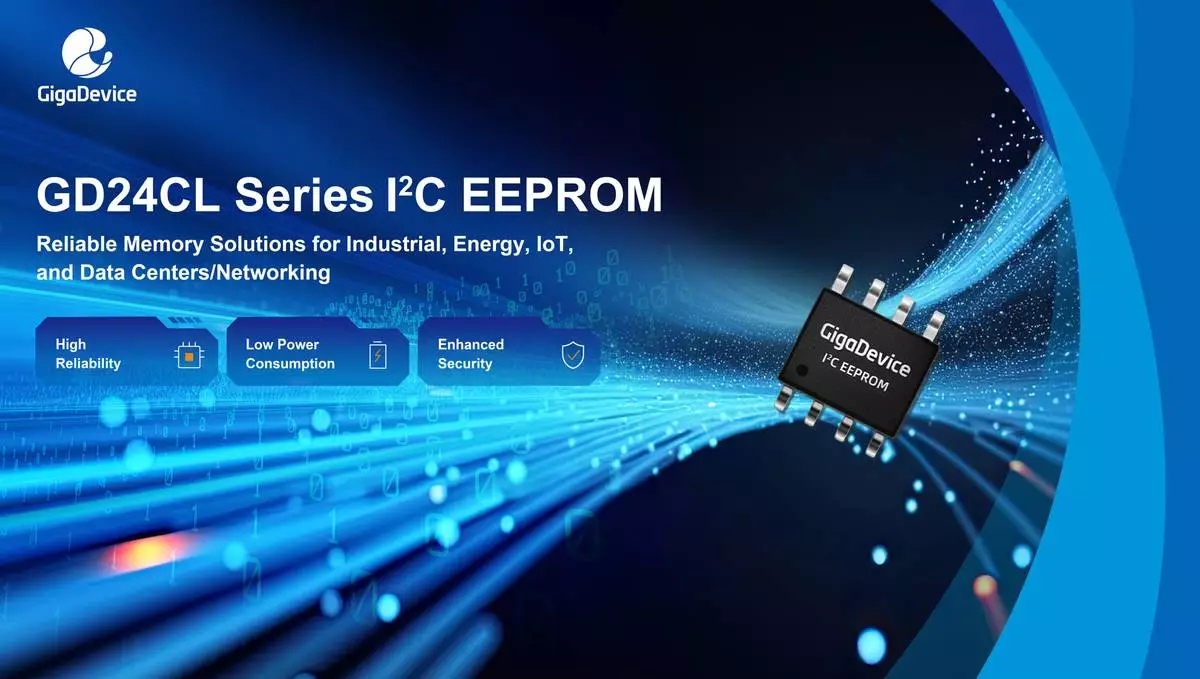
GigaDevice Launches First GD24CL Series I²C EEPROM, Further Expanding Its Non-Volatile Memory Portfolio.
NEW YORK (AP) — U.S. stocks are ticking higher Thursday after the latest update on the job market suggested the Federal Reserve may feel less pressure to hike interest rates.
The S&P 500 rose 0.4% and is on track to close out its best week in nearly two months. The Dow Jones Industrial Average was up 266 points, or 0.5%, as of 9:35 a.m. Eastern time, and the Nasdaq composite was 0.3% higher.
Stocks got some help from easing Treasury yields in the bond market, which fell after a report from the U.S. government said employers added 57,000 jobs to their payrolls last month. That’s growth, which is good for the economy, but it was also short of the 100,000 jobs that economists expected and a slowdown from May’s hiring pace.
The weaker-than-expected result could keep pressure off inflation, which has been accelerating worldwide because of jumps in oil prices caused by the war with Iran. And if inflation can slow in upcoming months, now that oil prices are back below where they were before the war, the Federal Reserve may feel less need to raise interest rates several times this year.
That would be a relief for investors, who tend to love lower interest rates because they can give the economy a boost by making it cheaper for U.S. households and businesses to borrow money and spend. Lower rates also tend to push upward on prices for stocks and other investments.
The yield on the 10-year Treasury got to 4.50% in the morning, up from the less than 4% before the war. But after the release of the U.S. hiring data, it immediately fell back to 4.47%.
The two-year Treasury yield, which more closely tracks expectations for the Fed, fell more sharply. Traders now see an 80% chance that the Fed and its new chair, Kevin Warsh, will not raise the federal funds rate at its meeting later this month. That’s up from the 71% chance seen a day earlier, according to data from CME Group.
“Warsh can wipe his brow,” said Brian Jacobsen, chief economic strategist at Annex Wealth Management. “The labor market isn’t overheating. Inflation expectations are moderating.”
Also helping Wall Street was a steadying for some stocks of computer chip companies. They’ve been under pressure recently on worries that their stock prices have shot too high in the frenzy around artificial-intelligence technology and that all the spending on chips and data centers may not result in as much profit and productivity growth as hoped.
After U.S. chip companies sank on Wednesday, South Korean chip giants tumbled even more sharply Thursday and dragged the Kospi index down 7.9%. That’s its worst drop since a 10% plunge a little more than a week ago.
On Wall Street, memory maker Micron Technology’s stock rose 2% Thursday and recovered some of its 10.6% drop from the day before. But Advanced Micro Devices fell 1.5% to add to its 6.9% loss from Wednesday.
Elsewhere on the U.S. market, the company behind LaCroix sparkling waters climbed 8.8% after National Beverage said it will pay a special dividend of $3.25 for each share that investors hold.
In the oil market, prices continued to sink on hopes for negotiations for a permanent end to the war with Iran. Brent crude, the international standard, fell 1.2% to $70.68 per barrel.
In stock markets abroad, indexes fell sharply in Tokyo and Shanghai, along with Seoul. Japan’s Nikkei 225 dropped 2.5%, while stocks sank 2% in Shanghai.
Indexes in Europe were stronger, and France’s CAC 40 rose 1.5%.
AP Business Writers Chan Ho-him and Matt Ott contributed to this report.

Trader Robert Charmak works on the floor of the New York Stock Exchange, Friday, June 26, 2026. (AP Photo/Richard Drew)
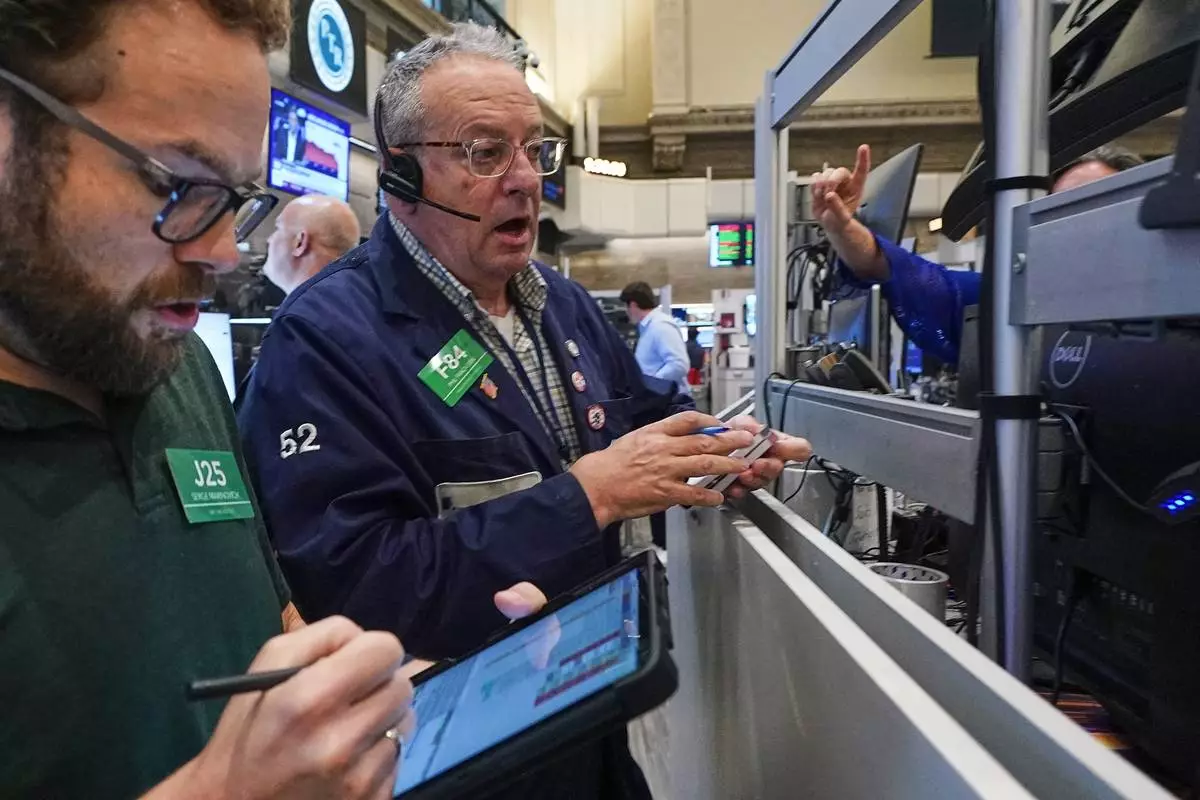
Options traders Serge Marinovich, left, and Phil Phil Fracassini work on the floor of the New York Stock Exchange, Friday, June 26, 2026. (AP Photo/Richard Drew)
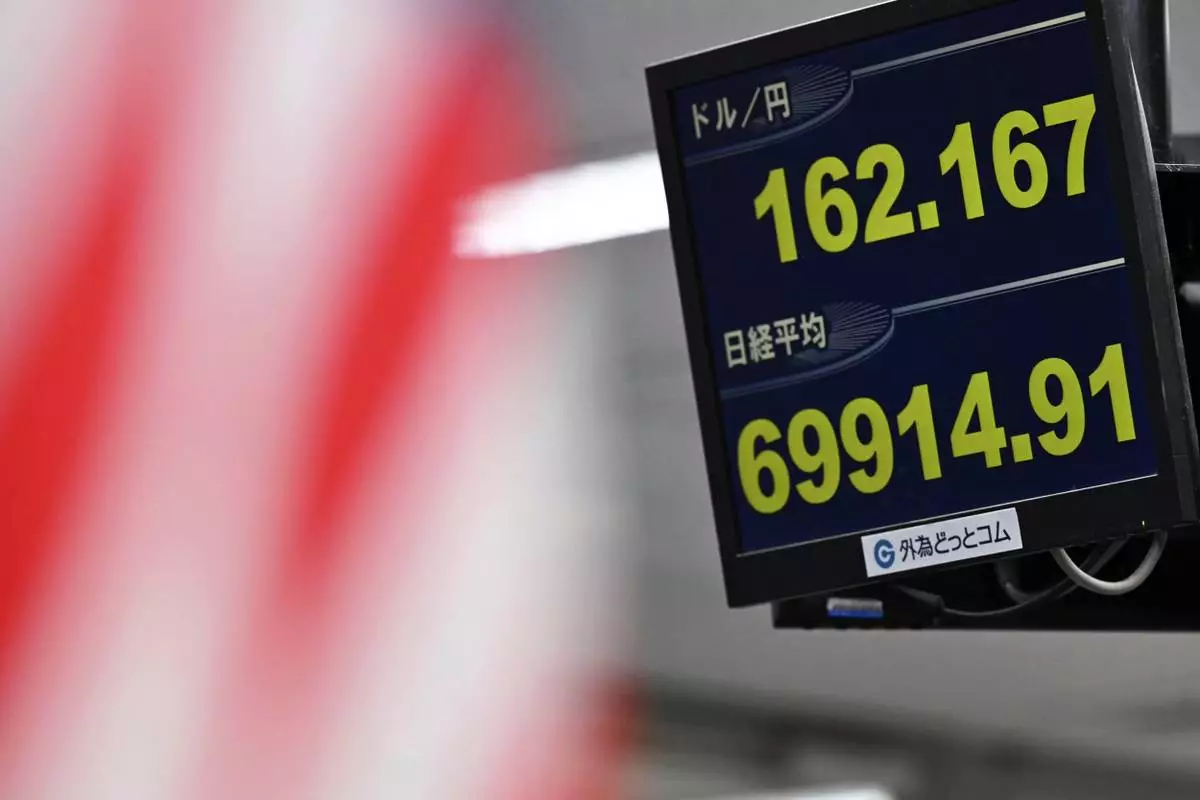
An electronic board shows Japan's benchmark Nikkei 225 index, bottom, and exchange rate of the Japanese yen against the U.S. dollar in Tokyo Tuesday, June 30, 2026. (Kenichiro Kojima/Kyodo News via AP)
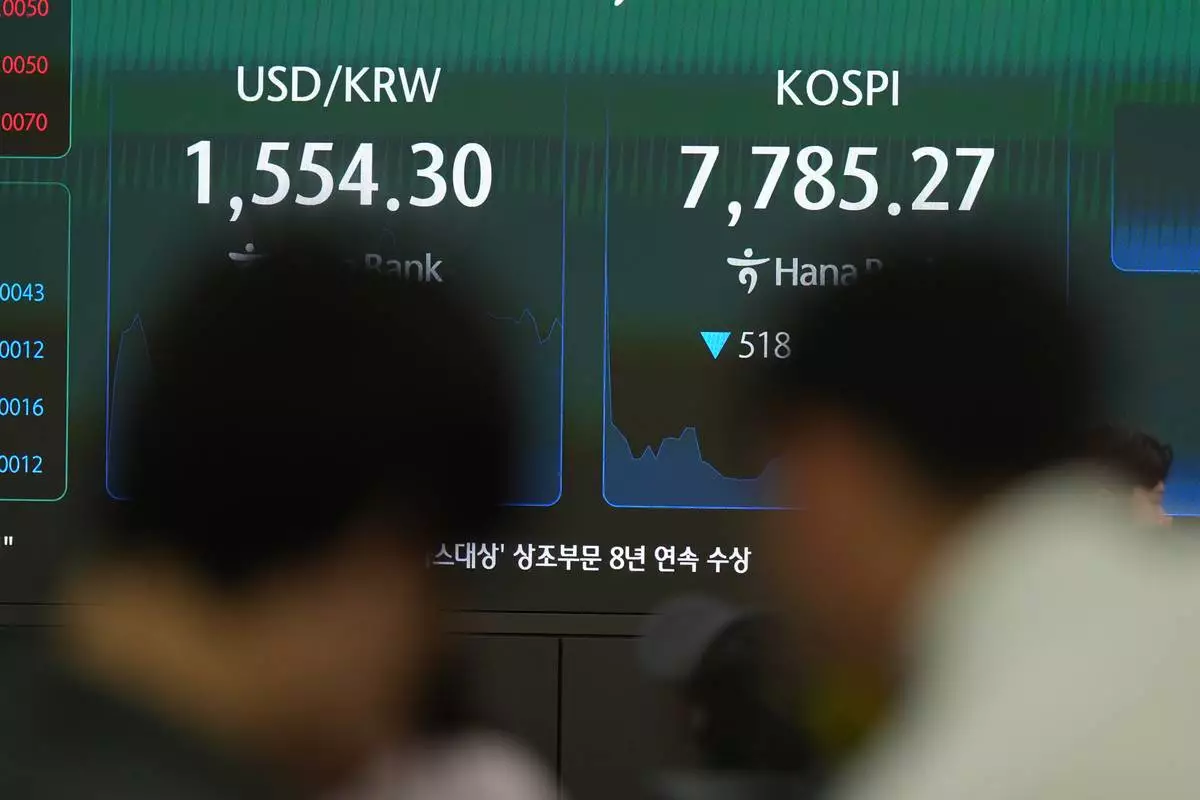
Members of media film near the screens showing the Korea Composite Stock Price Index (KOSPI) and the foreign exchange rate between U.S. dollar and South Korean won at a dealing room of Hana Bank in Seoul, South Korea, Thursday, July 2, 2026. (AP Photo/Lee Jin-man)

A dealer watches computer monitors at a dealing room of Hana Bank in Seoul, South Korea, Thursday, July 2, 2026. (AP Photo/Lee Jin-man)
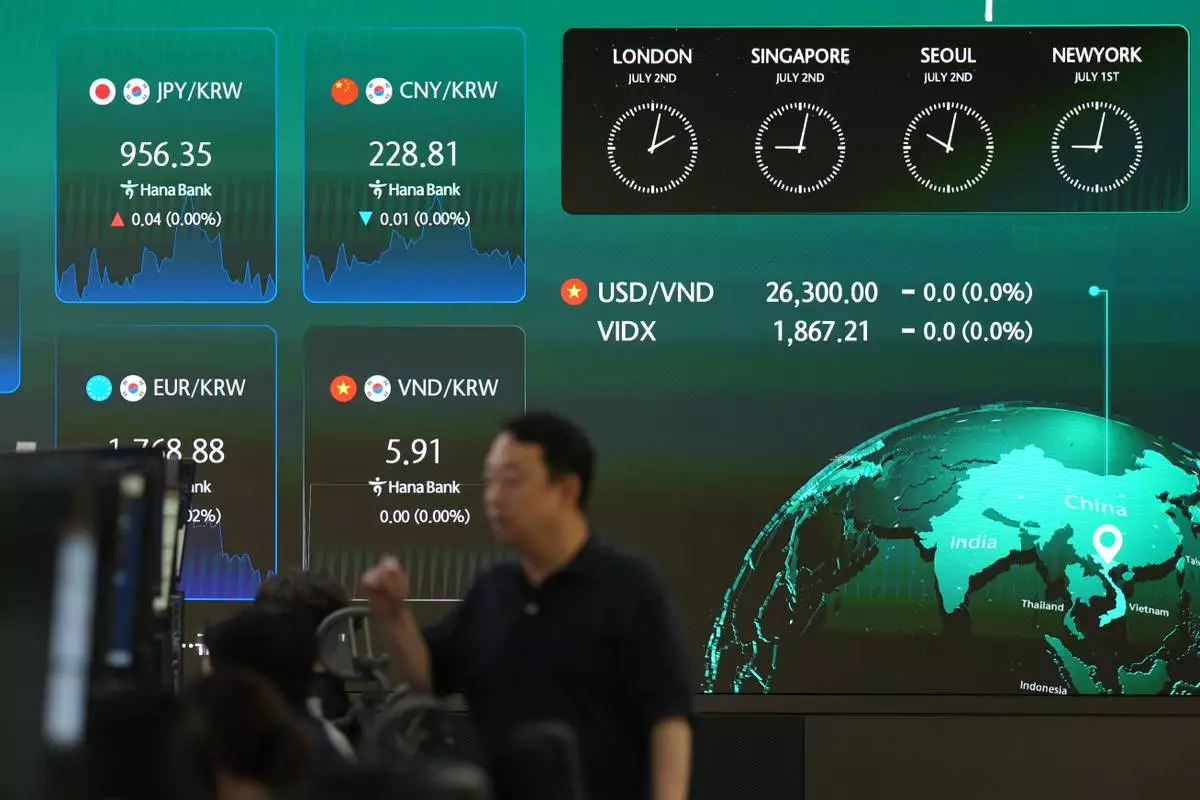
A dealer walks past near the screens showing the foreign exchange rates at a dealing room of Hana Bank in Seoul, South Korea, Thursday, July 2, 2026. (AP Photo/Lee Jin-man)

A currency trader watches monitors near a screen showing the Korea Composite Stock Price Index (KOSPI) at the foreign exchange dealing room of the Hana Bank headquarters in Seoul, South Korea, Wednesday, July 1, 2026. (AP Photo/Ahn Young-joon)