CHALAKUDY, India (AP) — The life-size robotic elephants in Prasanth Prakashan's backyard workshop have ears that flap, tails that swish and trunks that squirt water.
But that's about all they have in common with their real-life counterparts revered across India as manifestations of the divine. The animatrons, crafted from fiberglass, iron and rubber, are intended to take the place of live elephants in Hindu temples.
Click to Gallery
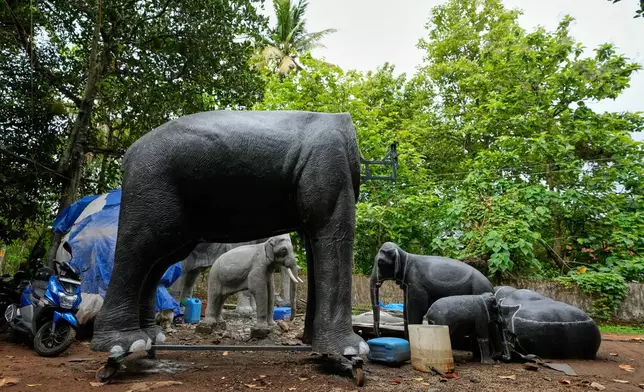
An unfinished robotic elephant stands alongside others at a backyard workshop in Chalakudy, in the southern Indian state of Kerala, Friday, May 22, 2026. (AP Photo/Aijaz Rahi)
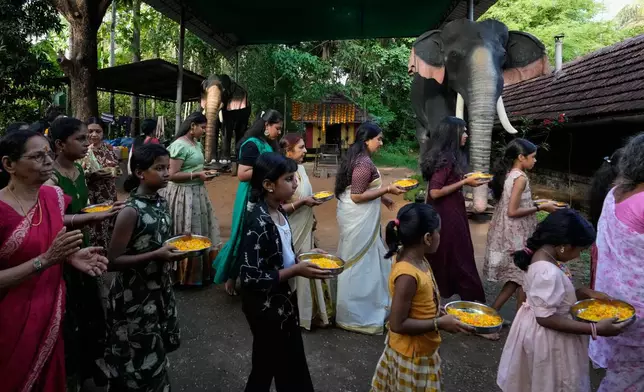
A group of Hindu devotees arrive for prayers, walking past two robotic elephants at Irinjadapilly Sree Krishna Temple in Thrissur, in the southern Indian state of Kerala, Friday, May 22, 2026. (AP Photo/Aijaz Rahi)
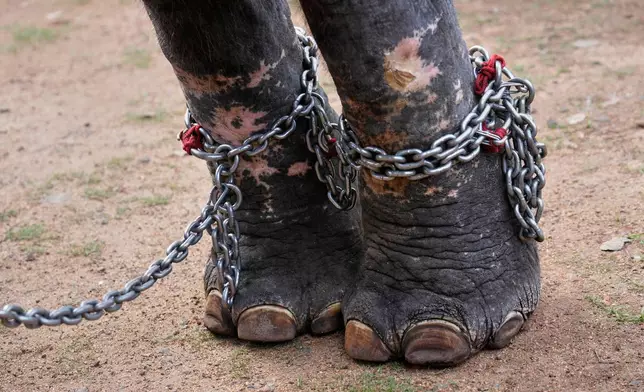
An elephant stands with its legs chained as it is prepared for participation in the elephant pageant, or Gajamela, held as part of an annual festival in Thiruvanvandoor, in the southern Indian state of Kerala, Tuesday, May 19, 2026. (AP Photo/Aijaz Rahi)
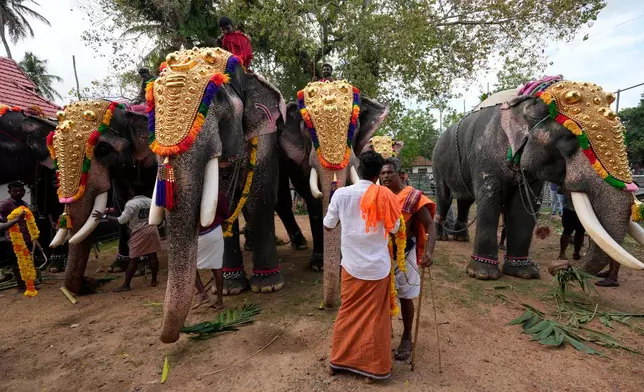
Mahouts prepare elephants for participation in the elephant pageant, or Gajamela, held as part of an annual festival in Thiruvanvandoor, in the southern Indian state of Kerala, Tuesday, May 19, 2026. (AP Photo/Aijaz Rahi)
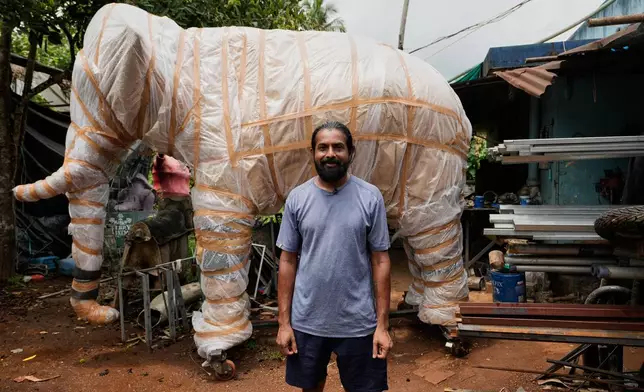
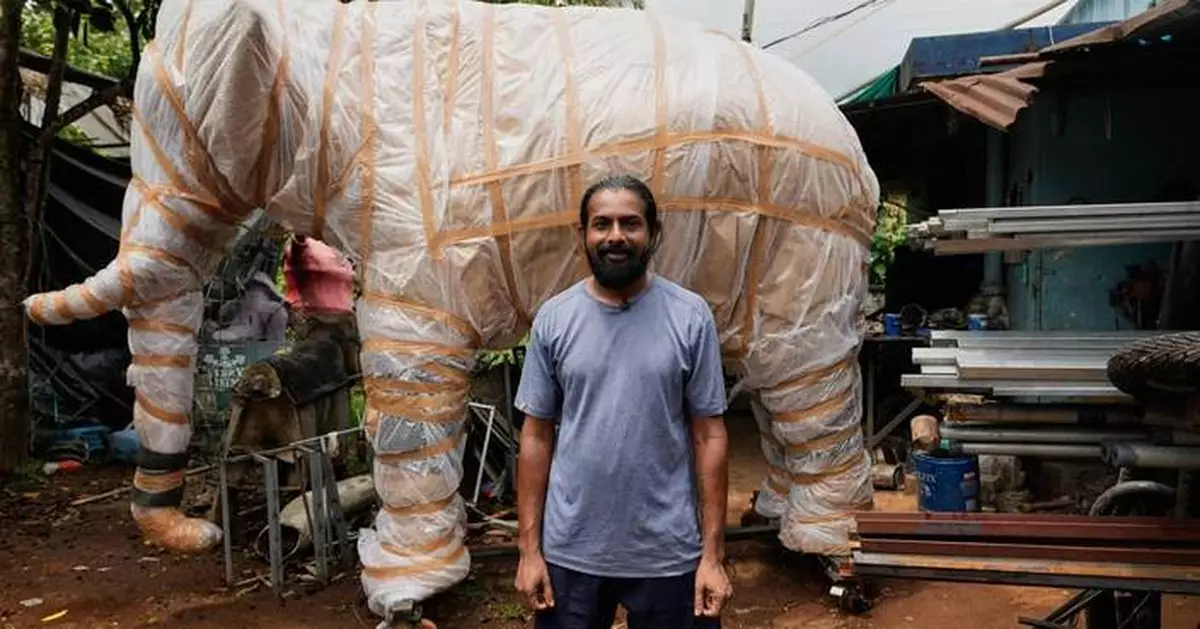
Prasanth Prakashan, a mechanical engineer, poses in front of a robotic elephant at his backyard workshop in Chalakudy, in the southern Indian state of Kerala, Friday, May 22, 2026. (AP Photo/Aijaz Rahi)
The change pleases animal welfare activists but upsets those who passionately believe real elephants are inextricable from the temple rituals and festivals where they are bestowed superstar status.
The animal welfare group PETA and other nonprofits have donated about 40 robotic elephants, costing about $6,000 each, to Indian temples to replace live elephants.
A robotic elephant is much lighter and lacks the fluid grace of the majestic pachyderm. Electric motors move its head and eyeballs. Body parts are pliable in an attempt to make them life-like.
Prakashan, who holds a mechanical engineering degree, knows his elephant is far from the real thing.
“You can’t create an original elephant just as you cannot duplicate a human,” Prakashan said. “But we try to capture the majestic animal’s essence as much as we can.”
One thing his elephants can’t yet do is walk.
“But they will,” Prakashan said, smiling. “I’m working on it.”
Venerating elephants is not a concept unique to Kerala or Hinduism.
Buddhists believe elephants are Buddha-like, symbolizing patience, wisdom and enlightenment. In Kandy, Sri Lanka, 100 decorated elephants parade the streets, the largest carrying the Buddha’s tooth relic in a golden casket.
In Kerala, festivals with live elephants are crowd-pullers. The Thrissur Vadakkunnathan temple’s annual Pooram parade features about 100 elephants adorned in golden headgear and colorful silk caparisons. The elephants are escorted by handlers who fan them with peacock feathers and yak-hair whisks.
About 40 miles (65 kilometers) away, the Guruvayur Sree Krishna Temple houses nearly 50 elephants. The temple also holds an annual elephant race and a feeding ritual where, following prayers, the animals are given rice, ghee, jaggery, fruits and vegetables.
Elsewhere in Kerala, St. George Orthodox Syrian Church in Kunnamkulam and the Pattambi Mosque in Palakkad district routinely feature elephant parades during their festivals.
Some temple elephants are celebrities.
An elephant named Thechikkottukavu Ramachandran has close to 150,000 fans on Facebook. Guruvayur Keshavan, arguably the most celebrated temple elephant who died in 1976, has been memorialized with a life-size statue near the temple he served; his life story has been the subject of a film and a television series.
Andrea Gutierrez, a University of Texas professor who researched captive elephants in South Asia, said Kerala's temple elephants are male, which poses a problem. Adult males go through musth, a periodic condition that heightens their aggression. It's a dramatic surge in testosterone — up to 60 times their normal levels.
“But people want these huge impressive tusks, which almost feels like a military presence,” Gutierrez said.
Despite tighter restrictions on owning and maintaining elephants, nearly 400 animals are still captive in Kerala, out of about 2,500 across India. That count is down by about half since 2010.
Khushboo Gupta, vice president of policy at PETA India, said the aesthetic appeal of live elephants doesn’t justify shackling, beating and separating them from their families. Stressed elephants can also be deadly. For example, nine people died in 2024 from elephant rampages at Kerala temple festivals.
“These elephants are forced to stand there for hours in the heat, with large crowds, drums and fireworks,” Gupta said. “Any trigger could cause them to go on a rampage.”
Prakashan, who builds animatronics for malls, parks and carnivals, got PETA’s attention in 2023 with a viral video of robotic elephants at a Dubai festival.
Gupta contacted him and Sooraj Nambiat, another Kochi-based artist who makes elephant sculptures, about making a robotic version for temples. Prakashan's elephants were immediately in demand.
His first was encased in rubber, but he's moved on to more durable fiberglass molds. The moving rubber parts are shaped by artists who pay close attention to minute details, from the animal's wrinkly skin to the veins that pop from its fanning ears. The entire process from mold making to animating the elephant now takes Prakashan and his crew about 15 days.
But being a pioneer comes with challenges.
“It was something we had to figure out on our own," Prakashan said.
Prakashan’s first robotic elephant, Irinjadapilly Raman, came to the Irinjadapilly Sree Krishna Temple in 2023.
On a recent afternoon outside the temple in central Kerala, Raman stood motionless as two children played, giggling and hugging its trunk.
Rajkumar Namboothiri, the temple’s head priest, said children would never be able to approach a live elephant so freely.
He said tantric texts, which spell out the rules for daily rituals in Kerala temples, don’t require live elephants. He believes the practice came about when elephants were a part of kings’ cavalries and palaces a few centuries ago.
“They had trees and forests before,” Namboothiri said. “Now, we have concrete jungles, heat and noise. … Elephants are tortured and abused. It's not right.”
The animals were also chosen as vehicles for deities during processions because of their height. But, that could be accomplished with portable palanquins and chariots, Namboothiri said.
P.C. Subhash, a temple devotee, said he is in favor of upholding tradition with live elephants in larger temples, but believes robotic elephants are more feasible for smaller temples, given the steep costs, including liability insurance coverage.
“I really hope more people come to accept them,” Subhash said.
K.I. Purushottaman, president of the Cheekamundi Sri Mahavishnu Temple in Thrissur, said their robotic elephant has brought him peace of mind because he and other administrators feared the possibility of a fatal elephant attack.
“With a robotic elephant, we don't have that fear,” he said. “That's a big relief.”
Still, many traditionalists don’t believe robotic elephants belong in temples. K. Mahesh rents out his real elephant for festivals about 45 days a year. He believes elephants are holy.
“If you don’t believe elephants are sacred, what’s the point of a robotic elephant in a temple?” he asked.
Mahesh has had his elephant for 25 years and says the animal “is like a family member or a pet” who brings joy to all, provided it is treated with care and caution.
Several temple administrators have denounced robotic elephants for rituals and festivals.
Nambiat, the artist, said he can't attend temple festivals anymore because many resent his work.
“This is my trade. … I'm not out to ruin their tradition,” he said. “But, if we don’t stop treating elephants like commodities, future generations won’t have them.”
P.S. Easa, a Kerala-based wildlife biologist and elephant expert, helped draft the state’s captive elephant regulations. While hard to enforce, they have helped protect elephants to some extent, he said.
“Sadly, there’s a lot of money to be made with elephants,” he said. “It’s not about spirituality or even tradition. It’s religious tourism.”
Easa is not sure if robotic elephants will be accepted in his lifetime.
“You cannot change centuries-old tradition anytime soon,” he said. “But who knows? Maybe if these robotic elephants can start walking.”
Associated Press religion coverage receives support through the AP’s collaboration with The Conversation US, with funding from Lilly Endowment Inc. The AP is solely responsible for this content.
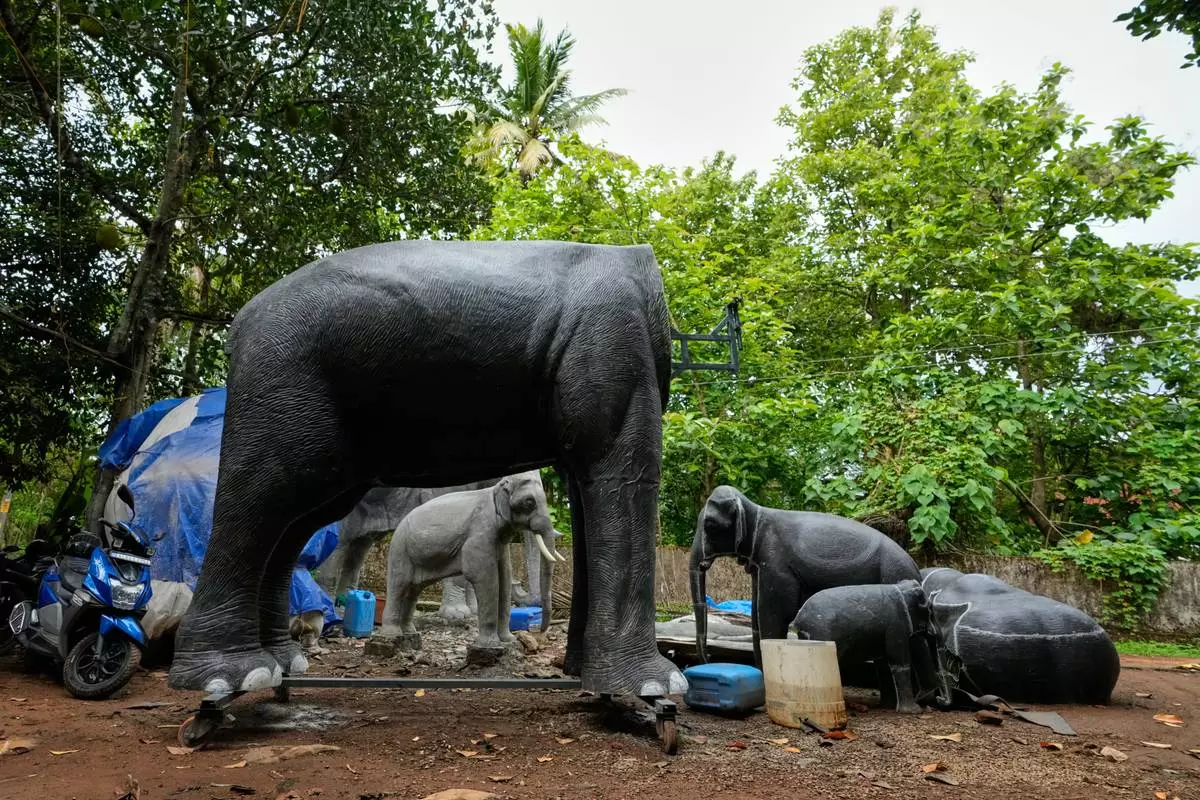
An unfinished robotic elephant stands alongside others at a backyard workshop in Chalakudy, in the southern Indian state of Kerala, Friday, May 22, 2026. (AP Photo/Aijaz Rahi)
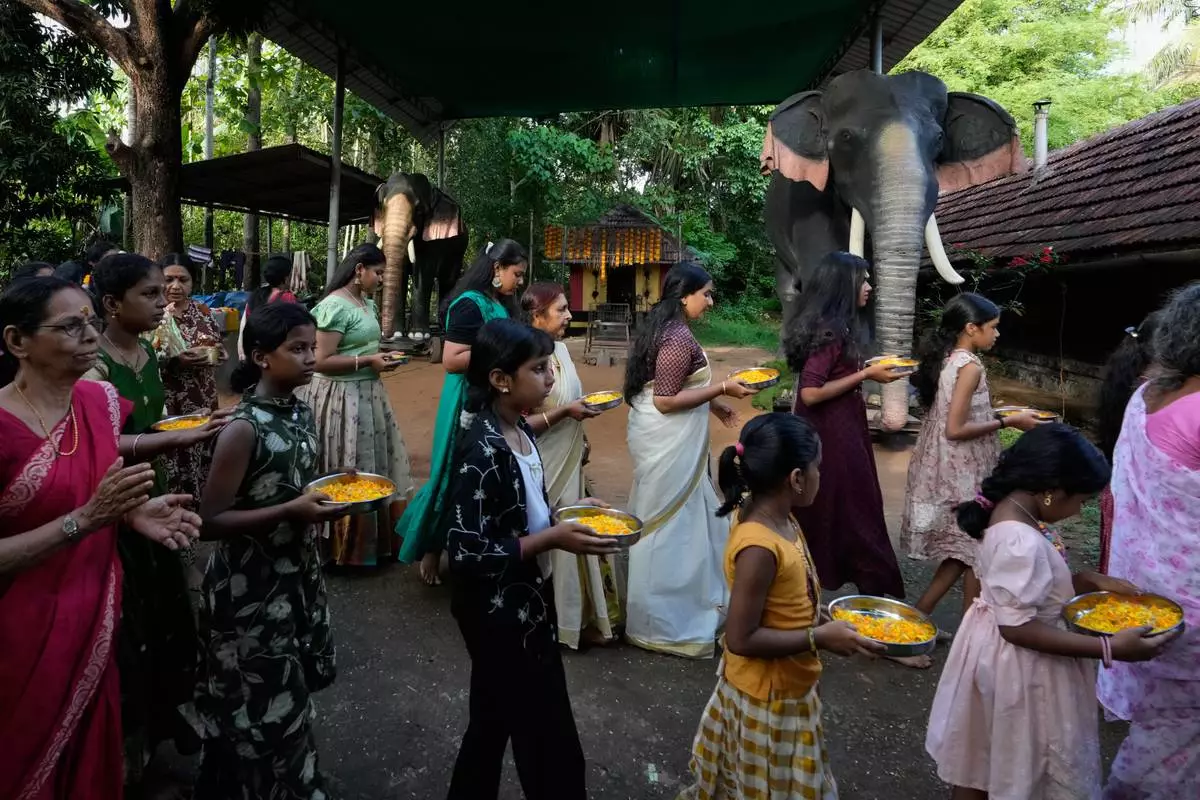
A group of Hindu devotees arrive for prayers, walking past two robotic elephants at Irinjadapilly Sree Krishna Temple in Thrissur, in the southern Indian state of Kerala, Friday, May 22, 2026. (AP Photo/Aijaz Rahi)
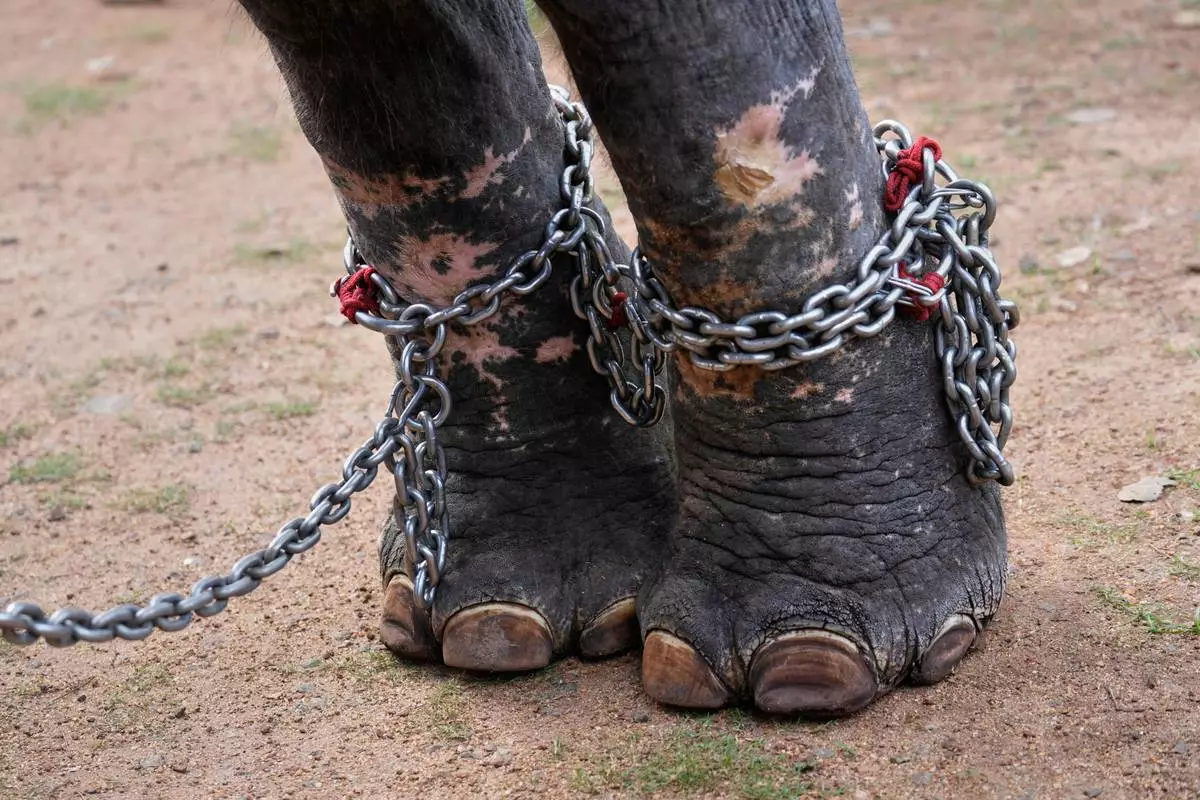
An elephant stands with its legs chained as it is prepared for participation in the elephant pageant, or Gajamela, held as part of an annual festival in Thiruvanvandoor, in the southern Indian state of Kerala, Tuesday, May 19, 2026. (AP Photo/Aijaz Rahi)
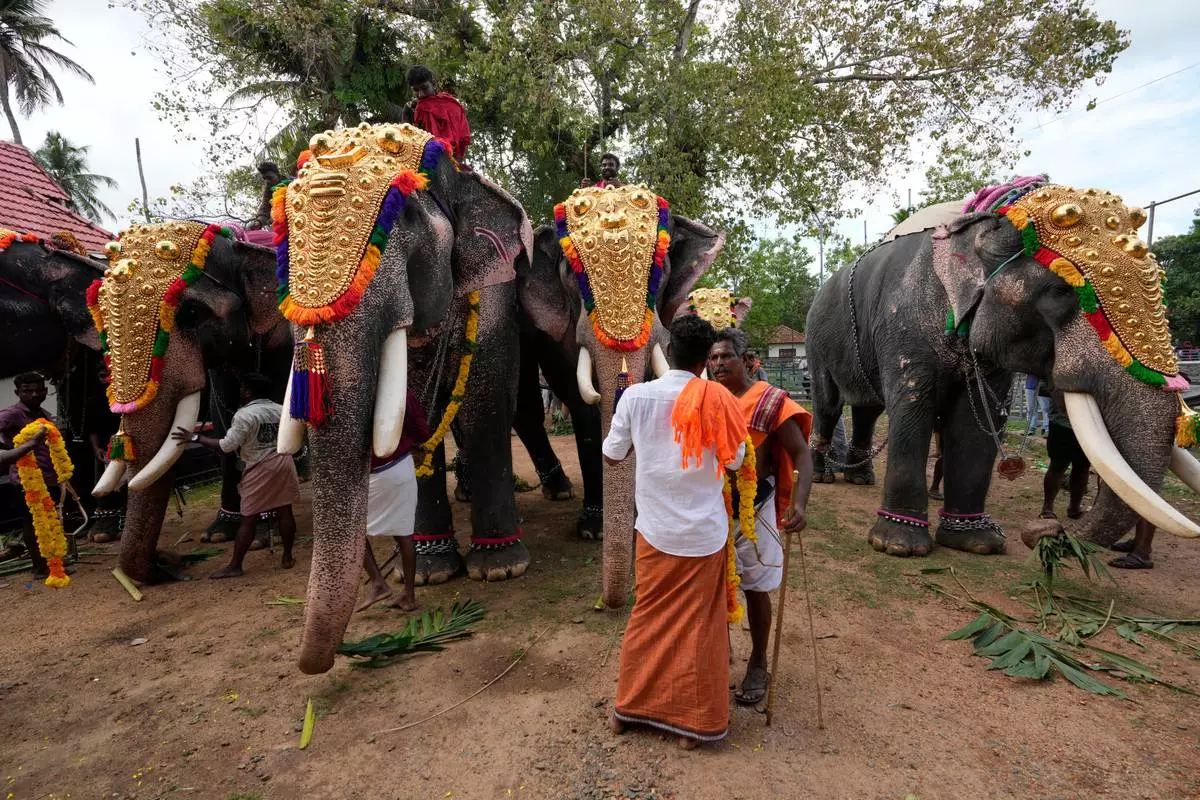
Mahouts prepare elephants for participation in the elephant pageant, or Gajamela, held as part of an annual festival in Thiruvanvandoor, in the southern Indian state of Kerala, Tuesday, May 19, 2026. (AP Photo/Aijaz Rahi)
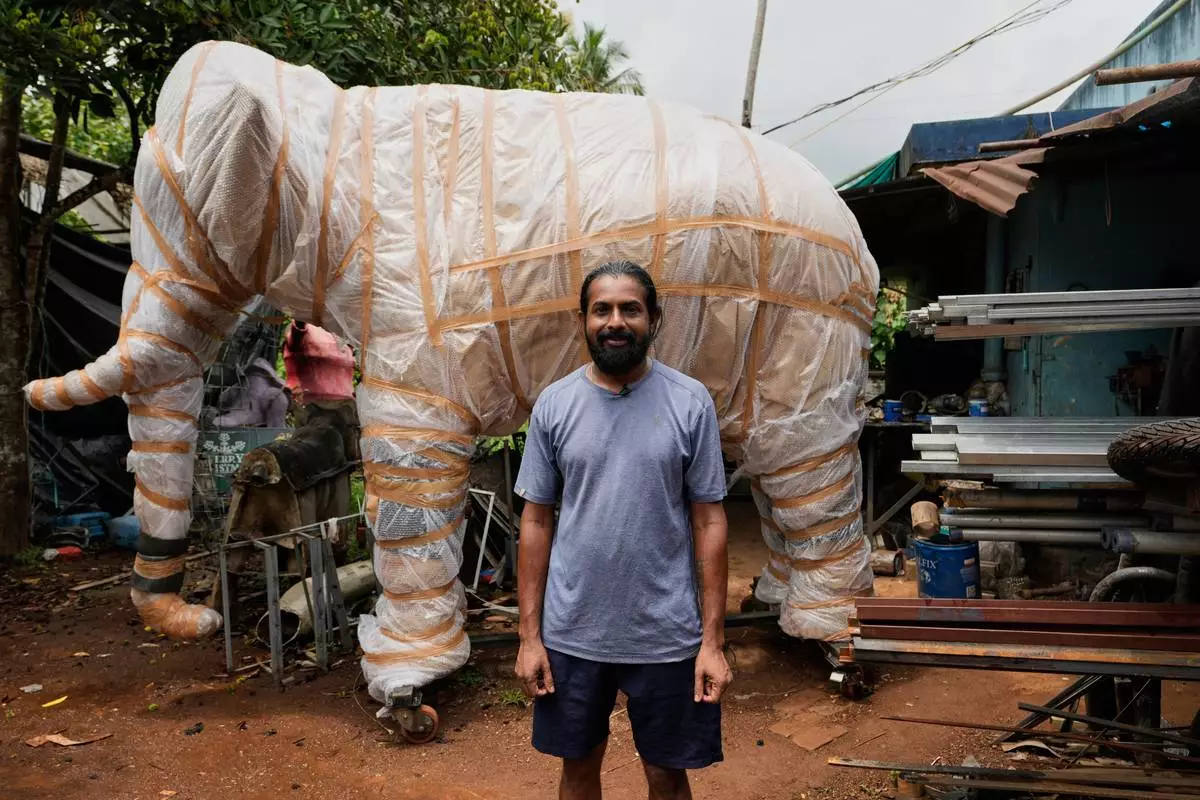
Prasanth Prakashan, a mechanical engineer, poses in front of a robotic elephant at his backyard workshop in Chalakudy, in the southern Indian state of Kerala, Friday, May 22, 2026. (AP Photo/Aijaz Rahi)