CE commends teachers for teaching excellence
The following is issued on behalf of the Chief Executive's Award for Teaching Excellence Steering Committee:
Click to Gallery
CE commends teachers for teaching excellence Source: HKSAR Government Press Releases
CE commends teachers for teaching excellence Source: HKSAR Government Press Releases
CE commends teachers for teaching excellence Source: HKSAR Government Press Releases
CE commends teachers for teaching excellence Source: HKSAR Government Press Releases
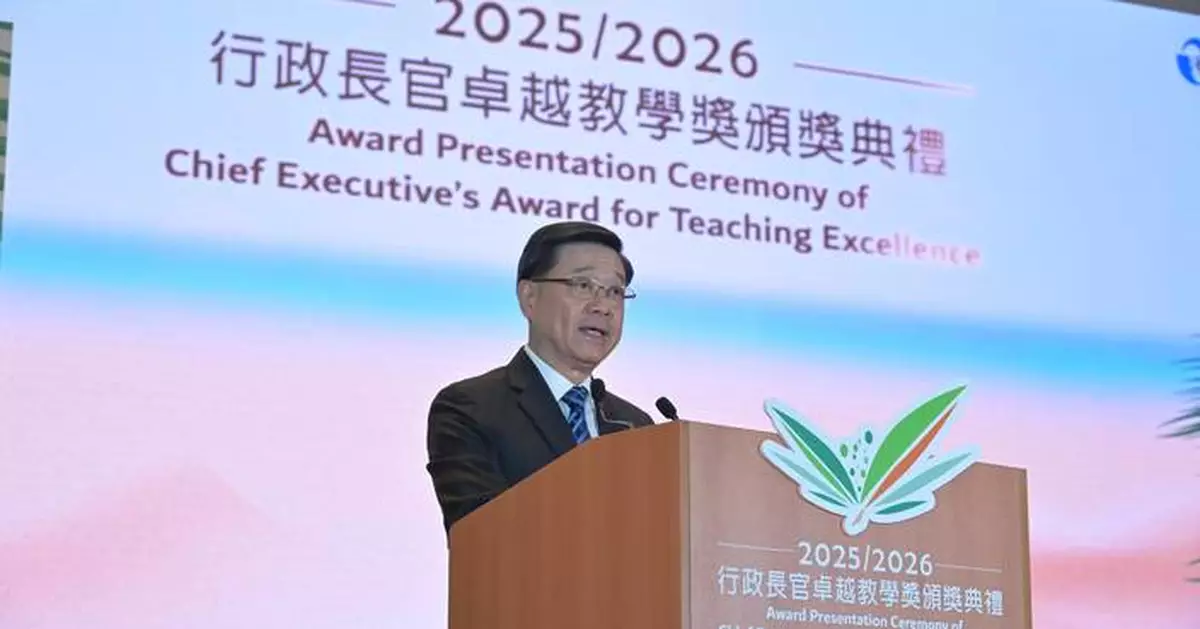
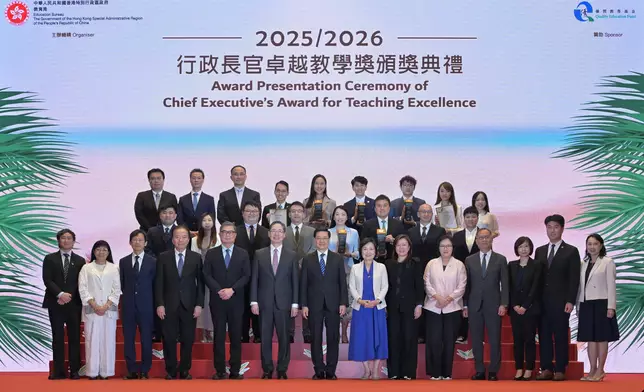
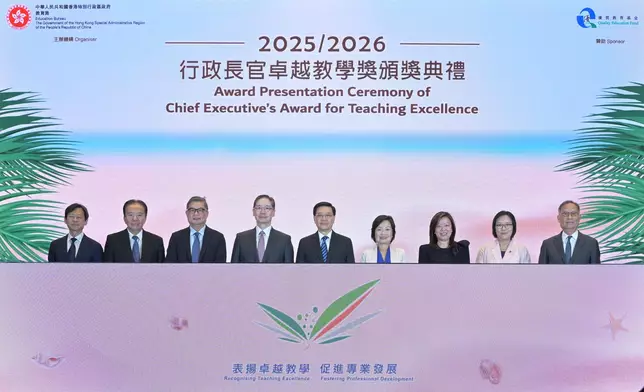
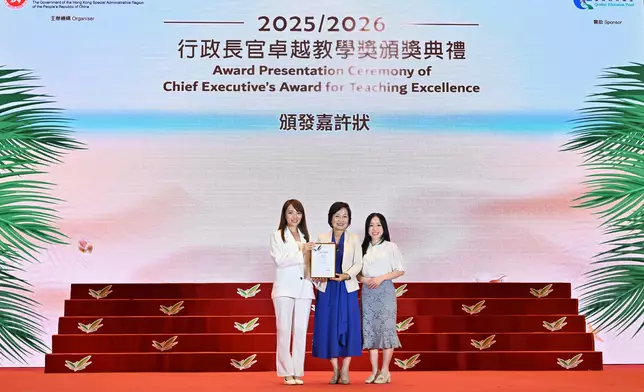
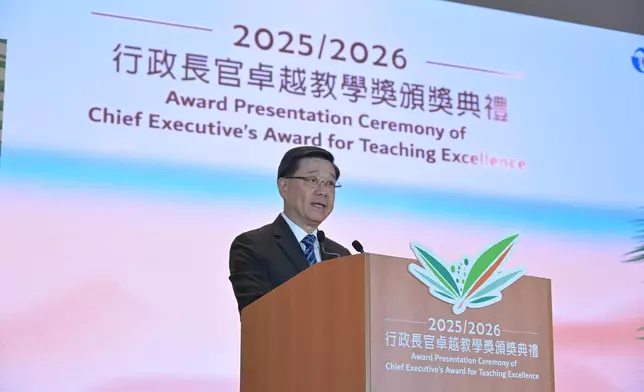
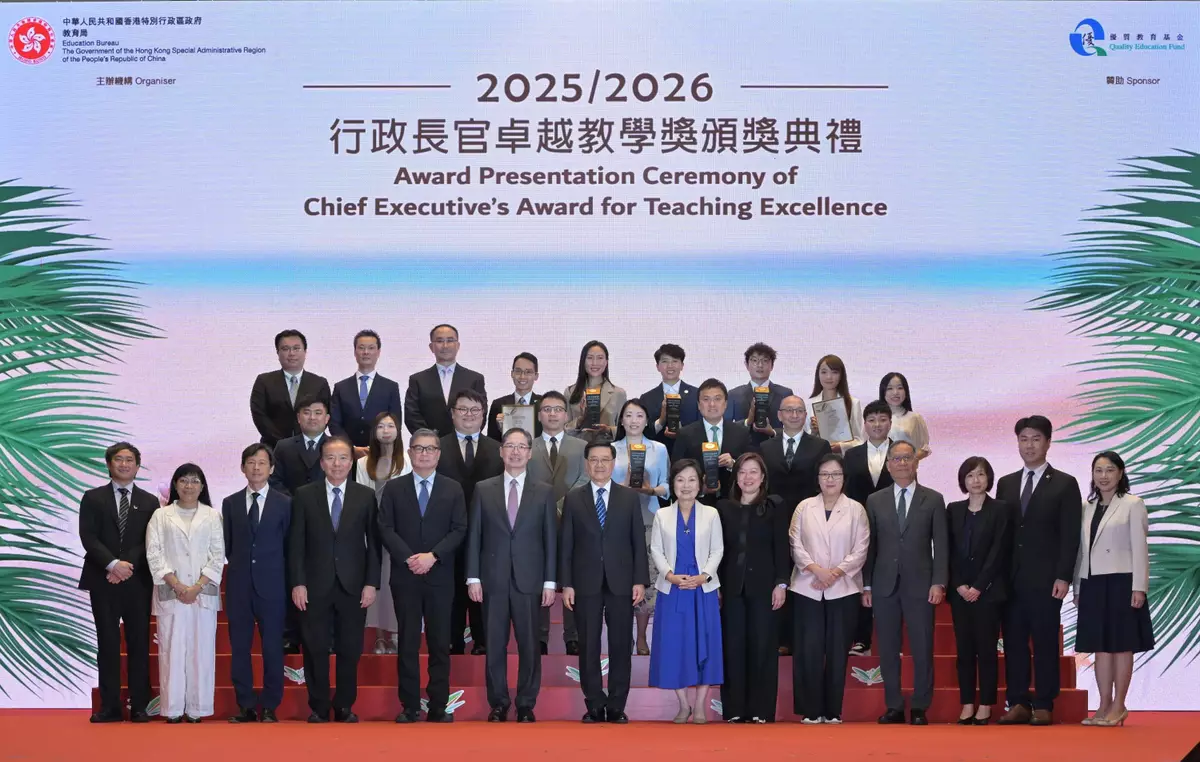
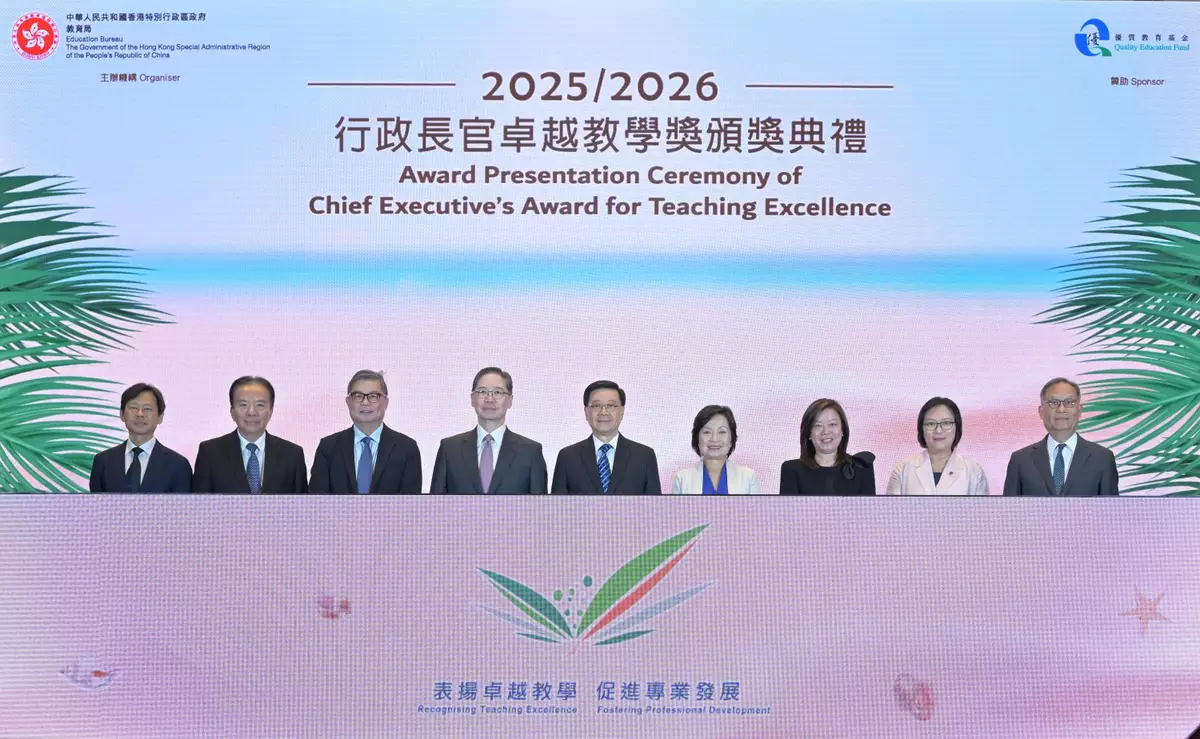
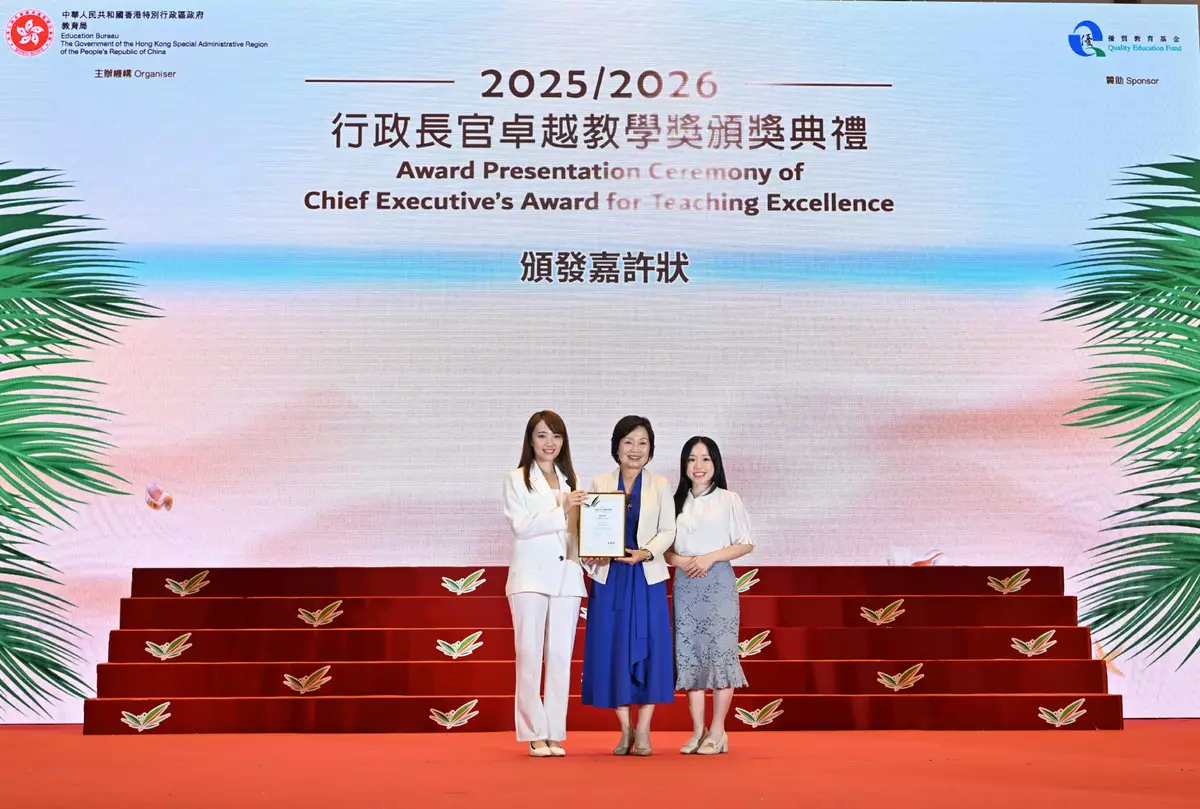
The Chief Executive, Mr John Lee, today (July 3) officiated and presented the Award for Teaching Excellence to eight teachers, the Award for Budding Teachers to two teachers, and the Award for Education Innovation to one teacher at the Award Presentation Ceremony of the Chief Executive's Award for Teaching Excellence (CEATE) (2025/2026), while six teachers received the Certificate of Merit from the Secretary for Education, Dr Choi Yuk-lin.
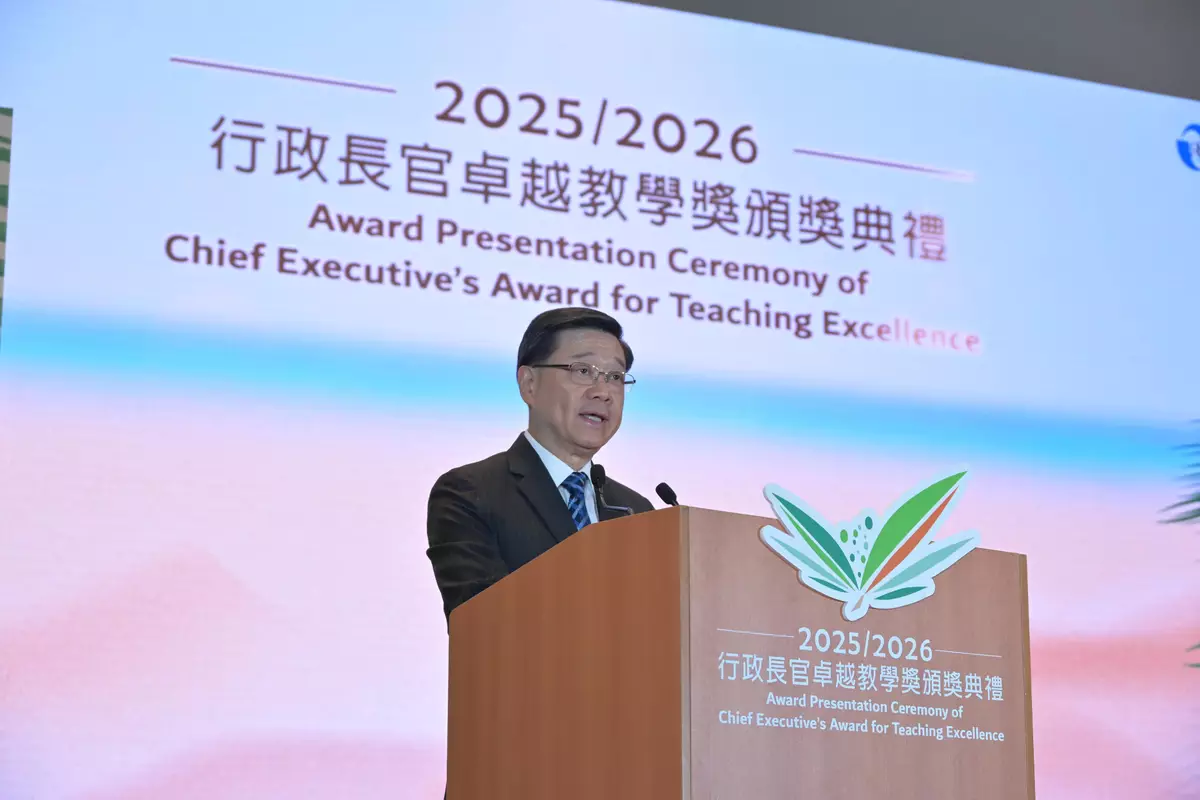
Speaking at the ceremony, the Chairman of the CEATE Steering Committee, Mr Dieter Yih, commended the awarded teachers, who not only adopted a student-centred approach by employing diversified learning and teaching methods and strategies, creating real-life learning contexts to effectively cater for students' diverse learning needs and enhance their learning motivation and effectiveness, but also actively made good use of digital tools to deepen students' learning experiences, cultivate their higher-order thinking, and guide them to care for the community while broadening their global outlook. He further encouraged the awarded teachers to continue striving for excellence, promote a culture of pursuing excellence in schools, and work together to nurture students to become future pillars of society who possess both virtue and talent, with a sense of national identity and a global vision.
Approximately 200 nominations were received from secondary schools, primary schools, kindergartens and special schools for the CEATE (2025/2026). After assessment, two nominations (comprising eight teachers) were presented with the Award for Teaching Excellence, along with two nominations (comprising six teachers) presented with the Certificate of Merit, two nominations (comprising two teachers) presented with the Award for Budding Teachers, and one nomination (comprising one teacher) presented with the Award for Education Innovation. Please visit the CEATE website (www.ate.gov.hk) for the list of the awarded teachers.
Other officiating guests at today's ceremony included the Permanent Secretary for Education, Ms May Chan; the Chairperson of the Committee on Professional Development of Teachers and Principals, Professor Tam Kar-yan; the Chairman of the Education Commission, Dr David Wong; the Chairperson of the Curriculum Development Council, Professor Isabella Poon; the Chairman of the Hong Kong Examinations and Assessment Authority, Professor Paul Lam; and the Chairman of the CEATE Assessment Working Group (2025/2026), Professor Lo Ming-tung.
Sharing activities involving the CEATE-awarded teachers are being rolled out gradually to disseminate excellent teaching practices. Details will be announced on the CEATE website and the Education Bureau's Training Calendar.
The CEATE (2026/2027) will cover three themes and two awards, namely "Arts Education Key Learning Area", "Technology Education Key Learning Area", "Special Educational Needs", the Award for Budding Teachers, and the Award for Education Innovation. Nominations will be accepted from July 6 to October 2. Relevant details will be available on the CEATE website from July 6.
Source: AI-found images
CE commends teachers for teaching excellence Source: HKSAR Government Press Releases
CE commends teachers for teaching excellence Source: HKSAR Government Press Releases
CE commends teachers for teaching excellence Source: HKSAR Government Press Releases
CE commends teachers for teaching excellence Source: HKSAR Government Press Releases
Source: AI-found images
Update on mosquito-borne diseases, dengue fever and chikungunya fever
The Centre for Health Protection (CHP) of the Department of Health today (July 3) announced the latest situation regarding dengue fever (DF) and chikungunya fever (CF). As temperatures rise and the humidity increases, creating favourable conditions for mosquito breeding, members of the public are reminded to take appropriate measures to prevent mosquito bites and mosquito breeding, both in Hong Kong and when travelling to areas affected by mosquito-borne diseases, in order to prevent mosquito-borne diseases.
Dengue fever
----------------
From June 26 to yesterday (July 2), the CHP recorded two imported DF cases. Both patients had travelled to Thailand during the incubation period.
Hong Kong has recorded 25 DF cases so far this year, comprising 23 imported cases and two local cases. A total of 59 DF cases were recorded last year (2025), all of which were imported cases. In 2024, 161 DF cases were recorded, comprising 156 imported cases and five local cases.
According to the World Health Organization (WHO), the global incidence of DF has markedly increased over the past two decades, posing a substantial public health challenge. In 2024, the WHO recorded over 14 million cases, which was a record number. In 2025, over 5 million cases and over 4 000 DF-related deaths were reported in over 90 countries/territories. From January to May 2026, over 1.4 million cases and over 500 DF-related deaths have been reported from over 80 countries/territories.
DF is prevalent in many neighbouring tourist destinations. In 2025, Indonesia, India and Vietnam each recorded over 120 000 cases; Cambodia, Malaysia, Sri Lanka and Thailand each recorded over 50 000 cases; and Singapore recorded over 4 000 cases. Meanwhile, according to the Guangdong Provincial Disease Control and Prevention Administration, Guangdong Province has recorded over 3 500 local cases in 2025. In 2026, up to May, Guangdong Province has recorded 131 DF cases; and among them 46 cases were recorded in May.
Detailed information on the latest DF situation in Hong Kong, as well as neighbouring and overseas countries and areas, has been uploaded to the CHP's website.
Chikungunya fever
-----------------------
From June 26 to yesterday, no new cases of CF had been recorded. Hong Kong has recorded two confirmed CF cases so far this year, both of which were imported cases. Hong Kong recorded a total of 82 confirmed CF cases last year. Among them, 11 were local cases and the rest were imported cases.
Last year, a total of 502 264 CF cases and 186 CF-related deaths were reported in 41 countries/territories. Cases have been reported in the Americas, Africa, Asia and Europe. According to the Guangdong Provincial Disease Control and Prevention Administration, in 2026, up to May, Guangdong Province has recorded 36 CF cases; and among them 32 cases were recorded in May.
Preventive measures to be taken by the public
----------------------------------------------------
According to the Food and Environmental Hygiene Department (FEHD), as compared with last year, the temperature began to climb earlier this year and the rainfall in June has increased substantially, creating favourable conditions for mosquito growth and breeding. Depending on factors like rainfall, the gravidtrap indexes for Aedes albopictus may rise further.
Therefore, the CHP reminds members of the public to maintain good environmental hygiene, and to take appropriate measures to prevent mosquito bites and mosquito breeding, both in Hong Kong and when travelling to areas affected by mosquito-borne diseases, in order to prevent mosquito-borne diseases. Mosquito-borne diseases such as DF and CF are endemic in various countries worldwide. The risk of importation persists. Members of the public should check the situation at their destinations before travelling abroad, especially when travelling to Southeast Asian countries. Additionally, whether travelling or not, members of the public should use DEET-containing insect repellents or other effective active ingredients properly to prevent mosquito bites, but the following precautions should be taken when using them:
- read the label instructions carefully first;
- apply right before entering an area with a risk of mosquito bites;
- apply on exposed skin and clothing;
- use DEET of up to 30 per cent for pregnant women and up to 10 per cent for children (for children who travel to countries or areas where mosquito-borne diseases are endemic or epidemic, and where exposure is likely, those aged 2 months or above can use DEET-containing insect repellents with a DEET concentration of up to 30 per cent);
- apply sunscreen first, then insect repellent;
- reapply only when needed and follow the instructions; and
- in addition to DEET, there are other insect repellents available on the market containing different active ingredients, such as IR3535 and picaridin. When using any insect repellent, the public should follow the usage instructions and precautions on the product label.
The FEHD also appeals to members of the public to continue to stay alert and work together to carry out mosquito prevention and control measures early, including inspecting their homes and surroundings to remove potential breeding grounds, changing water in vases and scrubbing their inner surfaces, removing water in saucers under potted plants at least once a week, and properly disposing of containers such as empty cans and lunch boxes. The FEHD also advises members of the public and property management agencies to keep drains free of blockage and level all defective ground surfaces to prevent the accumulation of water. They should also scrub all drains and surface sewers with an alkaline detergent at least once a week to remove any mosquito eggs.
The public should call 1823 in case of mosquito problems, and may visit the following pages for more information: the CF page of the CHP and the Travel Health Service, the latest Travel Health News, tips for using insect repellents, and the CHP Facebook Page, Instagram Account and YouTube Channel, and also the Mosquito Prevention and Control dedicated page of the FEHD.
Source: AI-found images