Skip to Content Facebook Feature Image

Catholic group that defied pope and caused schism defends its actions and casts itself as the victim

News

Catholic group that defied pope and caused schism defends its actions and casts itself as the victim
News

News

Catholic group that defied pope and caused schism defends its actions and casts itself as the victim

2026-07-04 01:09 Last Updated At:01:30

ROME (AP) — The traditionalist Catholics who defied Pope Leo XIV and caused a schism defended their actions Friday, insisting they were merely saving souls and were victim of an unjust sanction by the Holy See.

The head of the Society of St. Pius X wrote to Leo a day after the Vatican excommunicated the group’s bishops and priests and warned its faithful they too could be excommunicated for participating in the schism, or rupture in church unity.

More Images
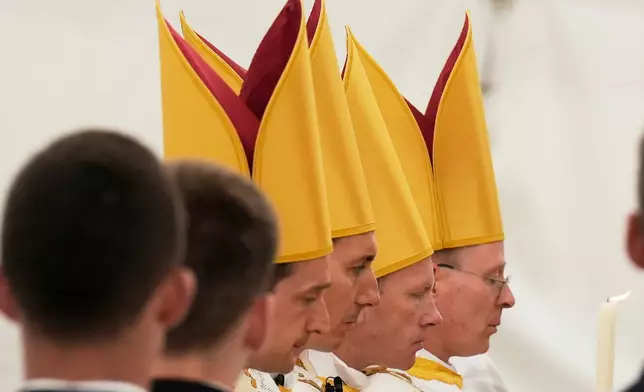
Newly consecrated bishops, from left, Marc Hanappier, Michel Poinsinet de Sivry, Michael Goldade and Pascal Schreiber, wearing their miters pray at the end of their consecration ceremony in a tent set up outside the Society of St. Pius X seminary in Econe, Switzerland, Wednesday, July 1, 2026. (AP Photo/Baz Ratner)
Newly consecrated bishops, from left, Marc Hanappier, Michel Poinsinet de Sivry, Michael Goldade and Pascal Schreiber, wearing their miters pray at the end of their consecration ceremony in a tent set up outside the Society of St. Pius X seminary in Econe, Switzerland, Wednesday, July 1, 2026. (AP Photo/Baz Ratner)
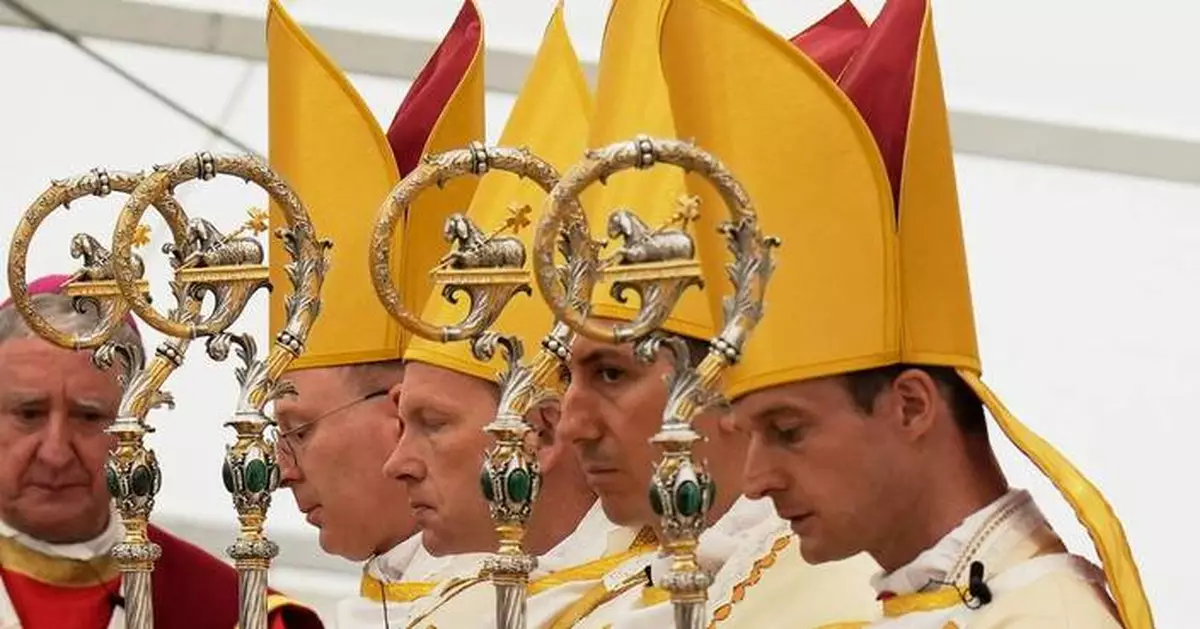
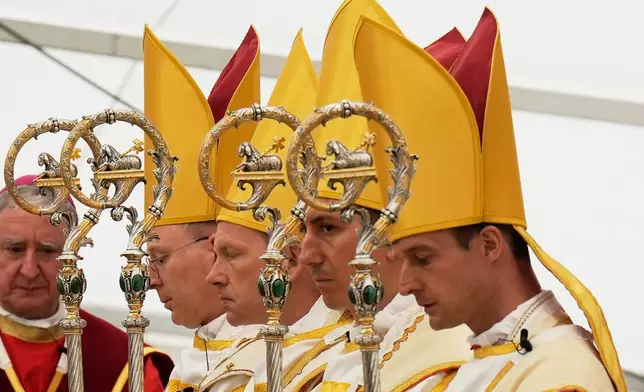
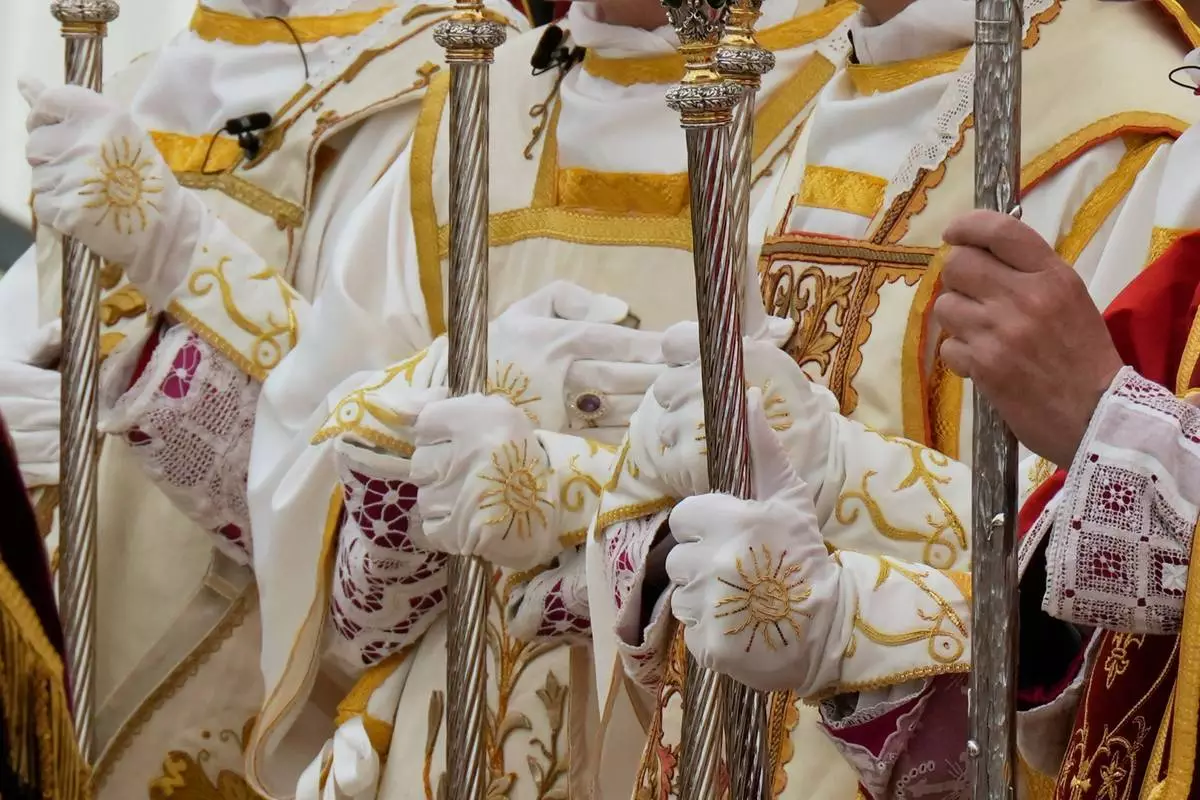
Newly consecrated bishops, from left, Pascal Schreiber, Michael Goldade, Michel Poinsinet de Sivry and Marc Hanappier hold their pastoral staffs at the end of their consecration ceremony in a tent set up outside the Society of St. Pius X seminary in Econe, Switzerland, Wednesday, July 1, 2026. (AP Photo/Baz Ratner)
Newly consecrated bishops, from left, Pascal Schreiber, Michael Goldade, Michel Poinsinet de Sivry and Marc Hanappier hold their pastoral staffs at the end of their consecration ceremony in a tent set up outside the Society of St. Pius X seminary in Econe, Switzerland, Wednesday, July 1, 2026. (AP Photo/Baz Ratner)
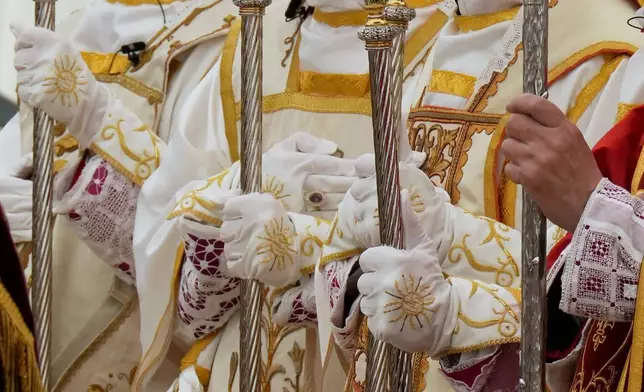
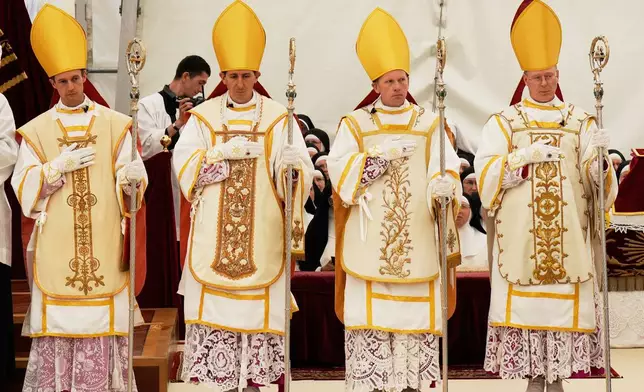
Newly consecrated bishops, from left, Marc Hanappier, Michel Poinsinet de Sivry, Michael Goldade and Pascal Schreiber wearing their miters and holding their pastoral staffs, stand at the end of their consecration ceremony in a tent set up outside the Society of St. Pius X seminary in Econe, Switzerland, Wednesday, July 1, 2026. (AP Photo/Baz Ratner)

Newly consecrated bishops, from left, Marc Hanappier, Michel Poinsinet de Sivry, Michael Goldade and Pascal Schreiber wearing their miters and holding their pastoral staffs, stand at the end of their consecration ceremony in a tent set up outside the Society of St. Pius X seminary in Econe, Switzerland, Wednesday, July 1, 2026. (AP Photo/Baz Ratner)

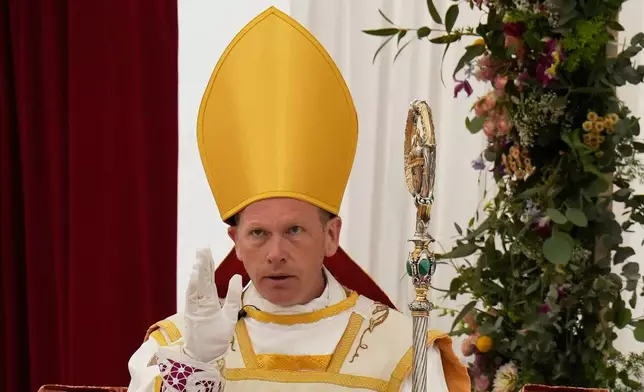
Newly consecrated bishop Michael Goldade delivers his blessing at the end of his consecration ceremony in a tent set up outside the Society of St. Pius X seminary in Econe, Switzerland, Wednesday, July 1, 2026. (AP Photo/Baz Ratner)

Newly consecrated bishop Michael Goldade delivers his blessing at the end of his consecration ceremony in a tent set up outside the Society of St. Pius X seminary in Econe, Switzerland, Wednesday, July 1, 2026. (AP Photo/Baz Ratner)

Newly consecrated bishops, from left, Pascal Schreiber, Michael Goldade, Michel Poinsinet de Sivry and Marc Hanappier, wearing their miters and holding their pastoral staffs, pray at the end of their consecration ceremony in a tent set up outside the Society of St. Pius X seminary in Econe, Switzerland, Wednesday, July 1, 2026. (AP Photo/Baz Ratner)

Newly consecrated bishops, from left, Pascal Schreiber, Michael Goldade, Michel Poinsinet de Sivry and Marc Hanappier, wearing their miters and holding their pastoral staffs, pray at the end of their consecration ceremony in a tent set up outside the Society of St. Pius X seminary in Econe, Switzerland, Wednesday, July 1, 2026. (AP Photo/Baz Ratner)

The society, known as SSPX, celebrates the ancient Latin Mass and opposes the modernizing reforms of the Catholic Church. On Wednesday, it consecrated four new bishops without papal consent during a massive ceremony at its seminary in Econe, Switzerland, committing one of the gravest crimes in church law.

Leo had begged the SSPX not go ahead with the ceremony, but the SSPX defied his will. Within 24 hours, the Vatican declared an exceptionally harsh punishment that surprised even the SSPX’s toughest critics.

In his letter to Leo, the SSPX superior, the Rev. Davide Pagliarani cast the SSPX as the defiant guardian of the church’s tradition and the victim of an unjust sanction by Rome.

“What the Society of Saint Pius X has done, and will continue to do, is nothing other than an extraordinary initiative for the salvation of souls, amidst the doctrinal and moral confusion into which the church is plunged,” he wrote.

Despite the “unjust and invalid” sanctions, the SSPX will love the church even more and “offers up the suffering caused by these new sanctions for the good of the universal church and of Your Holiness,” Pagliarani wrote.

French Archbishop Marcel Lefebvre founded the SSPX in 1970 in opposition to the reforms of the Second Vatican Council, which revolutionized the church’s relations with other Christians, Jews and people of other faiths and allowed Mass to be celebrated in the vernacular rather than Latin.

While now a fringe movement on the Catholic right, the SSPX has been a thorn in the Vatican’s side for five decades because it claims to be even more Catholic than the Holy See. The harshness of Vatican’s response suggested that after trying to negotiate with the SSPX over three pontificates, the Vatican under Pope Leo XIV had had enough.

The Rev. Robert Gahl, an ethics expert at The Catholic University of America, said the speed and decisiveness with which the Vatican responded to the consecrations was significant in clearly alerting the SSPX faithful that they were participating in a schism. Doing so, he said, exposed how the SSPX falsely claims to be “more Catholic than the pope.”

The SSPX claimed it had to proceed with the consecrations, "that they had a case of necessity because of the need of the faithful to receive their sacramental care, while claiming that their sacramental care is somehow better than what the rest of the church offers,” Gahl said. The Vatican's decisive response "calls them out and says, 'If you want the salvation that the church offers, you have to belong to the church, and you stepped out of full communion by disobeying the pope’s explicit command.”

Associated Press religion coverage receives support through the AP’s collaboration with The Conversation US, with funding from Lilly Endowment Inc. The AP is solely responsible for this content.
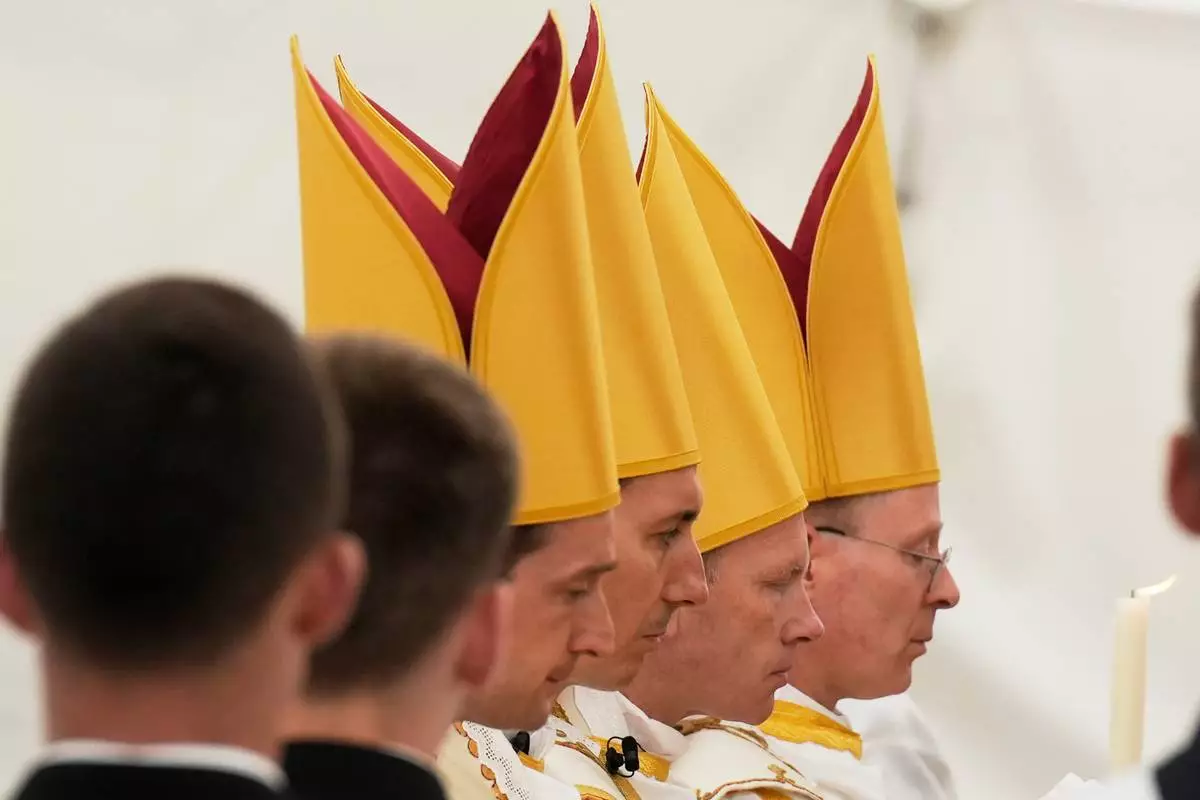
Newly consecrated bishops, from left, Marc Hanappier, Michel Poinsinet de Sivry, Michael Goldade and Pascal Schreiber, wearing their miters pray at the end of their consecration ceremony in a tent set up outside the Society of St. Pius X seminary in Econe, Switzerland, Wednesday, July 1, 2026. (AP Photo/Baz Ratner)
Newly consecrated bishops, from left, Marc Hanappier, Michel Poinsinet de Sivry, Michael Goldade and Pascal Schreiber, wearing their miters pray at the end of their consecration ceremony in a tent set up outside the Society of St. Pius X seminary in Econe, Switzerland, Wednesday, July 1, 2026. (AP Photo/Baz Ratner)
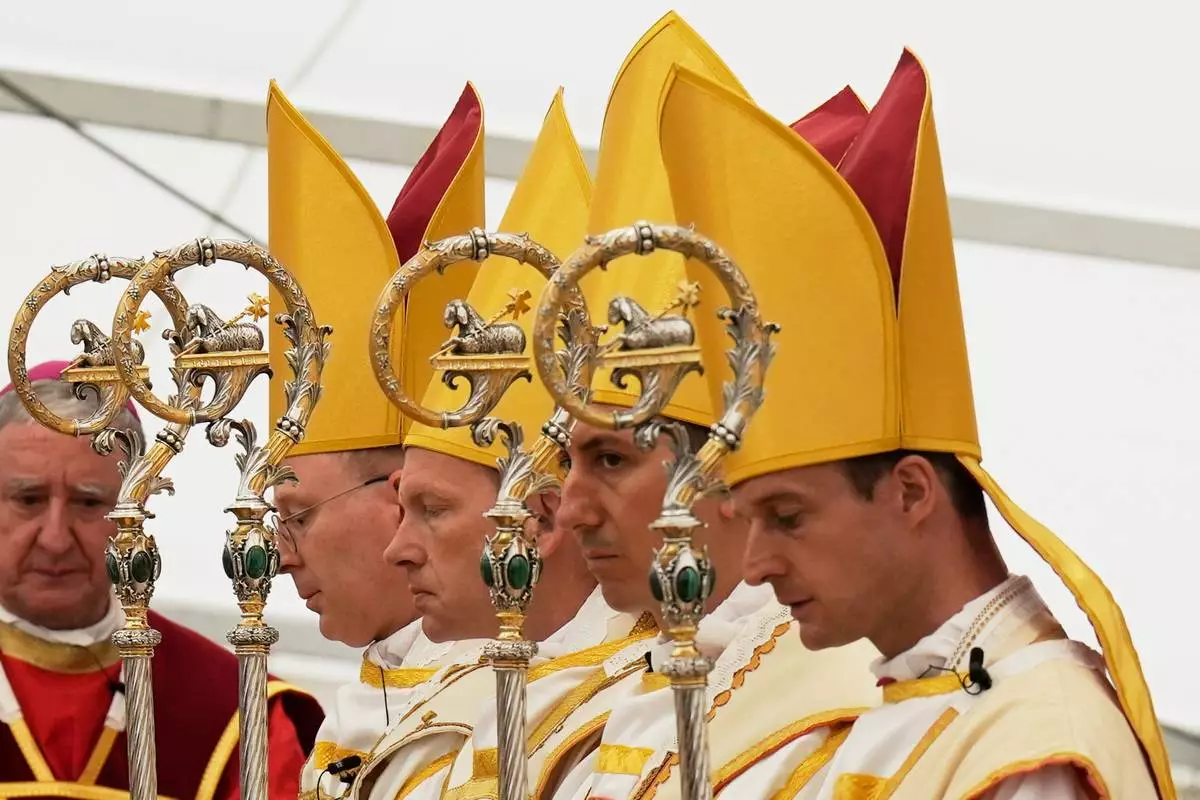
Newly consecrated bishops, from left, Pascal Schreiber, Michael Goldade, Michel Poinsinet de Sivry and Marc Hanappier hold their pastoral staffs at the end of their consecration ceremony in a tent set up outside the Society of St. Pius X seminary in Econe, Switzerland, Wednesday, July 1, 2026. (AP Photo/Baz Ratner)
Newly consecrated bishops, from left, Pascal Schreiber, Michael Goldade, Michel Poinsinet de Sivry and Marc Hanappier hold their pastoral staffs at the end of their consecration ceremony in a tent set up outside the Society of St. Pius X seminary in Econe, Switzerland, Wednesday, July 1, 2026. (AP Photo/Baz Ratner)
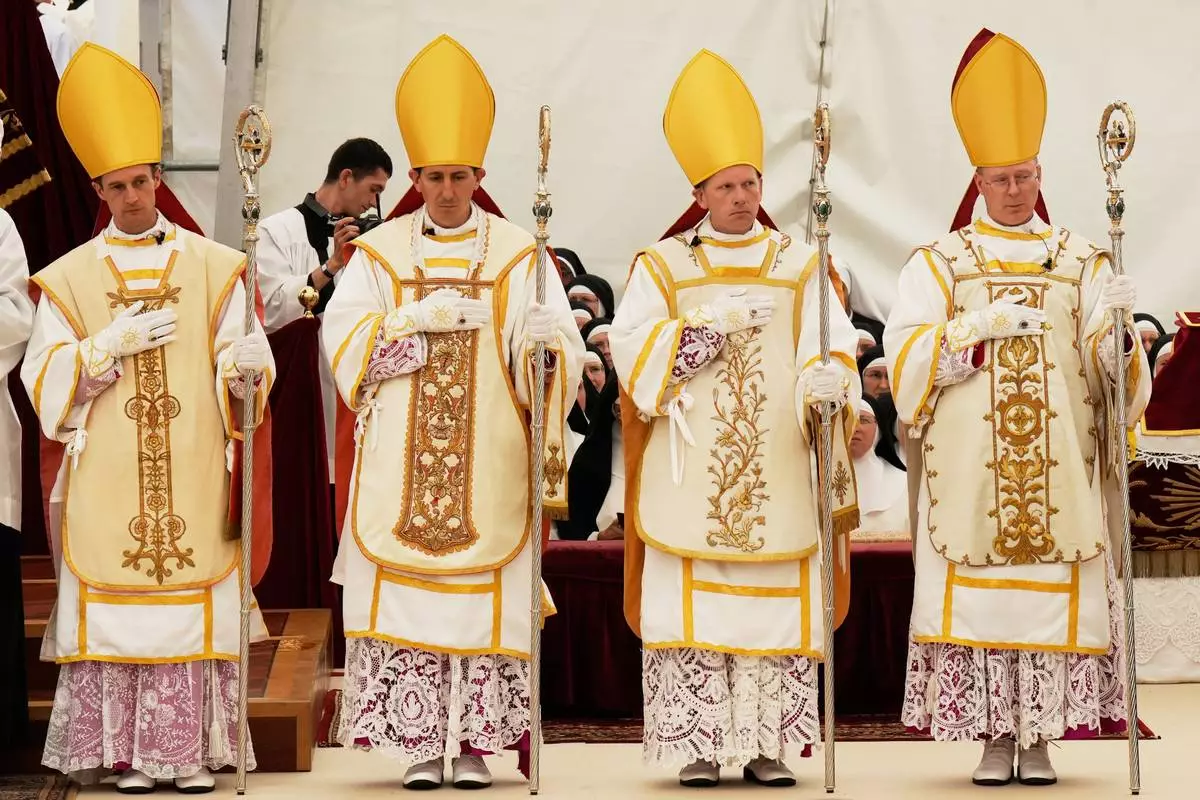
Newly consecrated bishops, from left, Marc Hanappier, Michel Poinsinet de Sivry, Michael Goldade and Pascal Schreiber wearing their miters and holding their pastoral staffs, stand at the end of their consecration ceremony in a tent set up outside the Society of St. Pius X seminary in Econe, Switzerland, Wednesday, July 1, 2026. (AP Photo/Baz Ratner)

Newly consecrated bishops, from left, Marc Hanappier, Michel Poinsinet de Sivry, Michael Goldade and Pascal Schreiber wearing their miters and holding their pastoral staffs, stand at the end of their consecration ceremony in a tent set up outside the Society of St. Pius X seminary in Econe, Switzerland, Wednesday, July 1, 2026. (AP Photo/Baz Ratner)
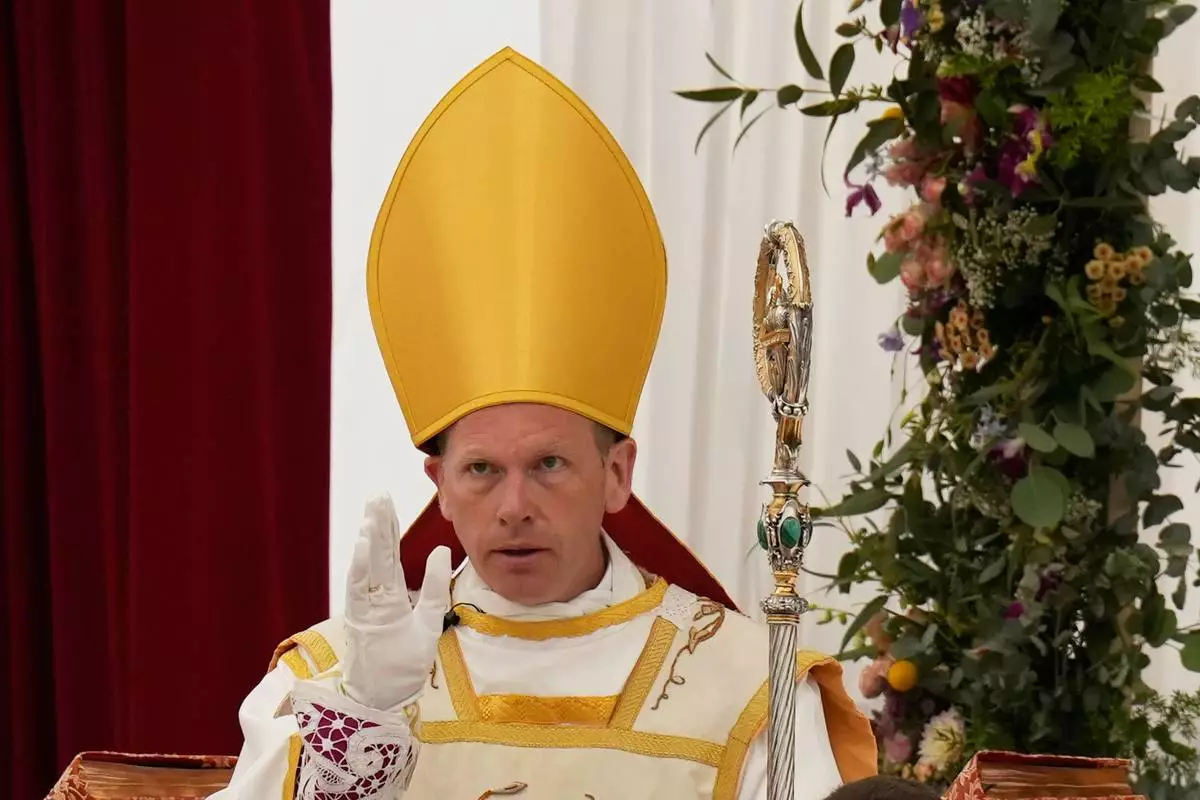
Newly consecrated bishop Michael Goldade delivers his blessing at the end of his consecration ceremony in a tent set up outside the Society of St. Pius X seminary in Econe, Switzerland, Wednesday, July 1, 2026. (AP Photo/Baz Ratner)

Newly consecrated bishop Michael Goldade delivers his blessing at the end of his consecration ceremony in a tent set up outside the Society of St. Pius X seminary in Econe, Switzerland, Wednesday, July 1, 2026. (AP Photo/Baz Ratner)

Newly consecrated bishops, from left, Pascal Schreiber, Michael Goldade, Michel Poinsinet de Sivry and Marc Hanappier, wearing their miters and holding their pastoral staffs, pray at the end of their consecration ceremony in a tent set up outside the Society of St. Pius X seminary in Econe, Switzerland, Wednesday, July 1, 2026. (AP Photo/Baz Ratner)

Newly consecrated bishops, from left, Pascal Schreiber, Michael Goldade, Michel Poinsinet de Sivry and Marc Hanappier, wearing their miters and holding their pastoral staffs, pray at the end of their consecration ceremony in a tent set up outside the Society of St. Pius X seminary in Econe, Switzerland, Wednesday, July 1, 2026. (AP Photo/Baz Ratner)

CAPE CANAVERAL, Fla. (AP) — A three-armed spacecraft rocketed into orbit Friday to rescue a NASA telescope that’s in danger of crashing back to Earth.

Northrop Grumman launched Katalyst Space Technologies’ Link spacecraft from the Marshall Islands in the Pacific. The Pegasus rocket blasted off from the belly of a modified airplane, putting Link on course to reach and capture NASA’s Swift Observatory in about a month.

Launched in 2004, Swift is sinking faster than ever because of recent solar storms. NASA is paying $30 million for Katalyst to capture the telescope and boost its orbit so it can continue tracking some of the biggest explosions in the universe, like gamma ray bursts and exploding stars.

If all goes well, Swift could be back scanning the cosmos by September. Observations are currently on hold to preserve the telescope’s orbit as long as possible.

NASA’s Hubble Space Telescope could be a candidate for a similar salvage operation in a few years. It’s also slipping in altitude because of increased atmospheric drag caused by the sun’s outbursts.

The 1.6-ton (1.4-metric ton) Swift currently is circling 224 miles (360 kilometers) above Earth. Katalyst aims to raise the telescope’s altitude by 150 miles (240 kilometers), back to where it all began. Link’s thrusters will fire to boost Swift slowly, so there's no heavy jostling.

Katalyst threw the mission together in just nine months. NASA insisted on a rush job because the telescope will be too low to recover by the fall. Without a boost, it’s predicted to plunge to its demise in October.

Bad weather and technical issues caused a series of last-minute launch delays.

“This is a high-risk, high-reward mission,” Katalyst Space CEO Ghonhee Lee said ahead of liftoff. “The biggest danger was always we don’t launch anything and we let Swift burn up in the atmosphere. So we were always trying to avoid that risk, and our team has done that.”

The Associated Press Health and Science Department receives support from the Howard Hughes Medical Institute’s Department of Science Education and the Robert Wood Johnson Foundation. The AP is solely responsible for all content.

This photo provided by NASA shows Kieran Wilson, LINK’s principal investigator, and Hunter Robertson, a space systems engineer, both at Katalyst Space, standing next to their spacecraft inside the SES (Space Environment Simulator) at NASA’s Goddard Space Flight Center in Greenbelt, Md., April 17, 2026, ahead of thermal vacuum testing. (Sophia Roberts/NASA via AP)

This photo provided by NASA shows Kieran Wilson, LINK’s principal investigator, and Hunter Robertson, a space systems engineer, both at Katalyst Space, standing next to their spacecraft inside the SES (Space Environment Simulator) at NASA’s Goddard Space Flight Center in Greenbelt, Md., April 17, 2026, ahead of thermal vacuum testing. (Sophia Roberts/NASA via AP)

Recommended Articles