The current heatwave gripping France for weeks has reignited a nationwide debate over air conditioning, with attitudes shifting from widespread opposition to urgent necessity.
Historically, most of the French people viewed cooling as unnecessary and environmental unfriendly, as summer temperatures typically hover around 25 degrees Celsius in the country.
However, the low penetration rate of air conditioning has been proven fatal in a baked France.
According to a report released by the French health authorities on Wednesday, deaths recorded by the SOS Médecins house-call service among individuals 75 and older surged by 85 percent during the week of June 22-28.
The week also saw 2,025 excess deaths across France, marking a rise of nearly 30 percent.
The extreme heat since June has also exposed glaring gaps in public infrastructure. Many schools and hospitals lack cooling systems, forcing school closures and leading to medical staff complaining about deteriorating working conditions as temperatures soar.
In fact, the increasingly frequent scorching spells have already promoted the installation of air conditioners among many French families.
The share of French households equipped with air conditioning rose from 18 percent in 2023 to 24 percent in 2025, according to the state environment agency Ademe.
"I installed air conditioning at home five years ago. Since France experienced heatwaves a few years back, I've been using a portable unit at home. I can't install a split air conditioner at home. The portable one is more affordable for me, and I have to comply with French and Paris city regulations," said a Paris resident.
"I drink lots of water, keep the fan running all day, and use the air conditioner at night -- the portable type," said another resident.
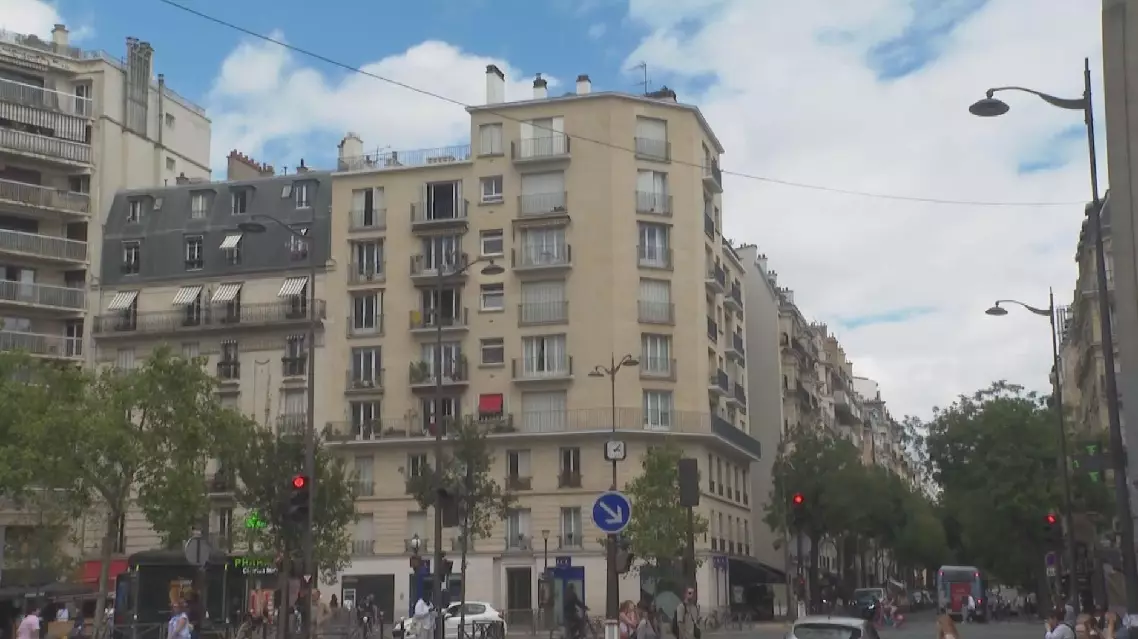
Many buildings in Paris are Haussmann-style structures built over 100 years ago, relying mainly on physical insulation. Moreover, most French buildings lack central heating and cooling ducts, making retrofitting central air extremely difficult and costly.
In addition, many properties fall under heritage protection rules, so altering outer surface -- including installing outdoor air conditioning units -- requires special permits that are rarely granted.
Despite the architectural barriers, cooling devices have been flying off shelves during the current heatwave.
Data show that from June 8 to 14, fan sales in France surged 253.9 percent year on year, while air conditioner sales skyrocketed 612.2 percent.
"I haven't bought an air conditioner, because I don't feel it's hot enough to need one. I never really thought about it. But now I need to discuss it with my wife. Maybe we will get one," said another resident. As the 2027 French presidential election draws nearer, the air conditioning question is no longer just a personal matter, but has become a political one. Parties across the spectrum are seizing on it to outline their election manifesto and sway voters early.
The Greens and some climate experts argue that air conditioning consumes large amounts of electricity and expels hot air outdoors, worsening the urban heat island effect.
On the other side, the far-right National Rally promotes air conditioning as a viable solution to heatwaves, calling for nationwide installations and framing it as a public health issue.
Scorching heat revives debate over air conditioning in France