KANSAS CITY, Mo. (AP) — Africa set a record by sending nine of its teams to the knockout rounds of the World Cup.
Seven of them were KO'd in the first round.
Click to Gallery
Egypts players celebrate after their teammate Hossam Abdelmaguid (4) score the winning penalty during World Cup round of 32 soccer match between Australia and Egypt in Arlington, Texas, near Dallas, Tuesday, Friday, July 3, 2026. (AP Photo/Sam Hodde)
Argentina's Lionel Messi (10) greets Cape Verde's Jamiro Monteiro (10) after the World Cup round of 32 soccer match between Argentina and Cape Verde in Miami Gardens, Fla., Friday, July 3, 2026. (AP Photo/Chris Carlson)
Colombia's Luis Suarez (25) and Ghana's Alidu Seidu (2) during the World Cup round of 32 soccer match between Colombia and Ghana in Kansas City, Mo., Friday, July 3, 2026. (AP Photo/Charlie Riedel)
Ghana goalkeeper Lawrence Ati-Zigi (1) is comforted by teammate Kojo Peprah Oppong (21) after the World Cup round of 32 soccer match between Colombia and Ghana in Kansas City, Mo., Friday, July 3, 2026. (AP Photo/John Locher)
Ghana was the last African team to play in the Round of 32 on Friday night, and the white-clad Black Stars went down with a whimper in a 1-0 loss to Colombia. That left only Morocco, which made a surprising run to the semifinals four years ago in Qatar, and Egypt to carry the hopes of the continent when they play for a spot in the quarterfinals.
Morocco faces Canada in the first Round of 16 matchup on Saturday in Houston. Egypt survived a shootout with Australia earlier on Friday to earn a date with Lionel Messi and defending champion Argentina on Tuesday in Atlanta.
La Albiceleste nearly made history of their own at the expense of Cape Verde on Friday, when the tiny island nation off the western coast of Africa took them to extra time. Argentina ultimately prevailed 3-2 in one of the best matches of the tournament.
“It’s a source of great pride so many African teams qualified for the round of 32,” Congo coach Sébastien Desabre said.
Africa has never sent three teams to the Round of 16. The most is two, when Senegal advanced alongside Morocco four years ago, and at the 2014 tournament in Brazil, when Algeria and Nigeria both made it — and were promptly beaten.
“For a long time, African nations have been doubted in what they can do at major competitions,” Ghana forward Brandon Thomas-Asante said earlier this week, “and I'm glad to see so much success among all the African nations, and it just shows much talent there is all across the world, and Africa is no different.”
Indeed, even in defeat, African teams acquitted themselves well at the World Cup.
Congo led most of its match against England before Harry Kane scored two late goals to rescue the Three Lions. Belgium needed two goals in the waning minutes of regulation before the eventual winner with seconds left in extra time against Senegal. Ivory Coast was even with Norway until Erling Haaland's goal in the 86th minute lifted the Vikings into the round of 16.
South Africa lost to Canada and Algeria to Switzerland when, like Ghana on Friday night, those teams were unable to score.
“Well, all teams that get to the Round of 32 have the will to go forward,” Algeria coach Vladimir Petkovic said. “Some get there wanting to continue — wanting to continue their adventure — and others will be happy (just to be there). There are certain teams that are a lot stronger on paper, but at this World Cup, we realize you can't really be sure of anything. You can't be sure that the strong teams will prevail over the less strong ones. We've had several examples of that.”
See more of AP’s World Cup coverage here

Egypts players celebrate after their teammate Hossam Abdelmaguid (4) score the winning penalty during World Cup round of 32 soccer match between Australia and Egypt in Arlington, Texas, near Dallas, Tuesday, Friday, July 3, 2026. (AP Photo/Sam Hodde)

Argentina's Lionel Messi (10) greets Cape Verde's Jamiro Monteiro (10) after the World Cup round of 32 soccer match between Argentina and Cape Verde in Miami Gardens, Fla., Friday, July 3, 2026. (AP Photo/Chris Carlson)

Colombia's Luis Suarez (25) and Ghana's Alidu Seidu (2) during the World Cup round of 32 soccer match between Colombia and Ghana in Kansas City, Mo., Friday, July 3, 2026. (AP Photo/Charlie Riedel)

Ghana goalkeeper Lawrence Ati-Zigi (1) is comforted by teammate Kojo Peprah Oppong (21) after the World Cup round of 32 soccer match between Colombia and Ghana in Kansas City, Mo., Friday, July 3, 2026. (AP Photo/John Locher)
MADRID (AP) — Protesters outraged by the eviction of an 87-year-old woman camped overnight in Madrid’s historic Puerta del Sol plaza, where more demonstrators — including multigenerational families — joined them on Sunday for a second day of protests over Spain’s housing crisis.
Tens of thousands marched through Madrid on Saturday to protest the eviction of María del Carmen Abascal from the apartment in the upscale Retiro neighborhood where she had lived for more than seven decades.
The demonstrators are demanding stronger tenant protections, measures to combat fraud and a ban on evictions when alternative housing is unavailable.
Many refused to leave after Saturday’s march and pitched tents in Puerta del Sol for the night.
“The housing situation is unsustainable,” said Natalia Navarro, a 27-year-old actress who was among those camping out at the plaza. “We are all out on the street because we are fed up.”
“The wave of indignation and anger that has been unleashed is now unstoppable,” said Alicia del Río, a spokesperson for the Madrid Tenants’ Union, which led the protests.
“We will remain here” until the government passes new laws, including indefinite rental contracts, and stops evictions like Abascal’s, del Río told journalists at the plaza on Sunday. Spain's Socialist-led government is expected to announce new measures in its weekly cabinet meeting next Tuesday.
On Sept. 23, Abascal was carried from her apartment on a stretcher and placed in an ambulance as supporters — who had tried unsuccessfully to stop the eviction — chanted her nickname, “Maricarmen.”
“I haven’t managed to defend my home, but I have fought so that others can learn to fight for what’s theirs,” Abascal said in a video recorded from her hospital bed after the eviction.
Images of the eviction spread widely across Spain, fueling outrage and criticism of public authorities and real estate investment companies accused of pricing residents out of their homes. Critics often refer to such companies as “vulture funds.”
“Maricarmen has been, in a way, the last straw that sparked this social unrest,” said Simón de la Riva, 43, a teacher who took part in Saturday's protests.
Speaking at a Socialist Party rally in Madrid, Prime Minister Pedro Sánchez addressed Abascal directly: “I have a message for you, Maricarmen: the government is working around the clock to bring a Royal Decree on housing next Tuesday. And I ask parliamentary groups to make one last effort to have it validated in the National Parliament for Maricarmen.”
Abascal has criticized Sánchez and blamed him for her ordeal.
“Does he not realize the quantity of evictions that there are daily?” she asked during an interview with Spain’s state broadcaster RTVE the day before she was forcibly removed from her home. “Does he not realize, or does he not want to realize?”
Spanish media reported that Abascal’s father first rented the apartment in 1956 and that she remained there as a tenant under rent controls after her parents died.
The building changed ownership in 2018, and Abascal was offered the opportunity to buy the apartment but could not afford it, according to the Madrid Tenants’ Union.
Urbagestión, an investment fund that later bought the unit, raised her monthly rent from 500 euros ($570) to 2,650 euros.
It subsequently lowered the rent to 1,650 euros, which Abascal still could not afford on her pension, the union said.
Rising costs and a housing shortage are pricing many Spaniards out of the market, despite strong economic growth in Europe’s fourth-largest economy. Incomes have not kept pace with the rising housing costs, and analysts say tourism and immigration-driven population growth in cities have placed further pressure on the limited housing supply.
The Bank of Spain estimated that the country had a shortage of about 550,000 homes last year, with Madrid, Barcelona and Valencia accounting for a substantial share.
The demonstrations in the symbolic Madrid plaza this weekend reminded many in Spain of the historic demonstrations starting May 15, 2011, when members of the “indignados movement” camped for 28 days straight, sparking similar sit-ins across the country and the world. That movement was a reaction to evictions and other issues following a global economic crisis, including unemployment, austerity measures and corruption.
Estefania Molina, a political scientist and columnist, said the stakes of popular frustration are growing. In 2011, "people protested because they couldn’t buy an apartment."
“Today, the protest is about not being able to rent a room in someone else’s home," she told Spanish television.
Spain ranks near the bottom of countries in the Organization for Economic Co-operation and Development for subsidized public rental housing, which represents less than 2% of the country's housing stock. The European Union average is 8%.
Brito reported from Barcelona, Spain. Associated Press journalist Suman Naishadham contributed to this report from Madrid.
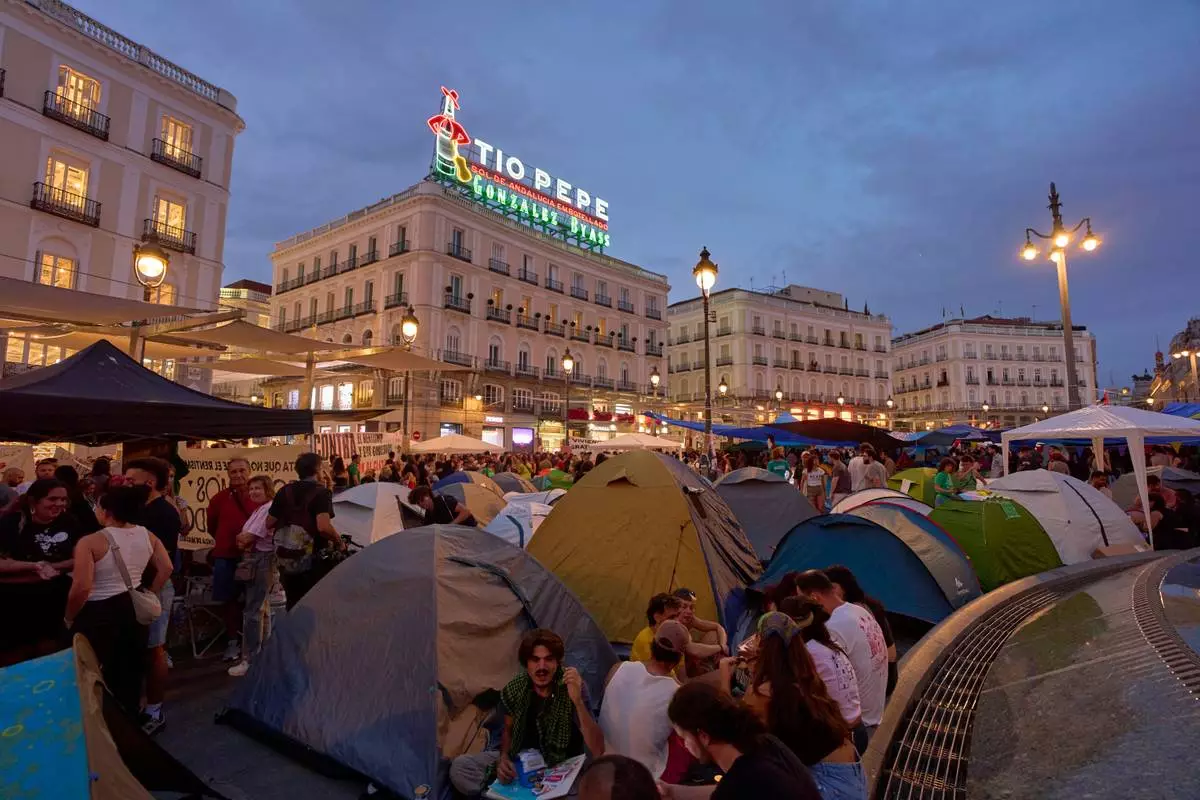
Protesters camp during a protest following the eviction last Wednesday of 87-year-old Maricarmen to demand stronger laws to protect renters at Sol square in Madrid, Spain, Sunday, Sept. 27, 2026. (AP Photo/Manu Fernandez)

Protesters camp during a protest following the eviction last Wednesday of 87-year-old Maricarmen to demand stronger laws to protect renters, at Sol square in Madrid, Spain, Sunday, Sept. 27, 2026. (AP Photo/Manu Fernandez)

A protester camps during a protest following the eviction last Wednesday of 87-year-old Maricarmen to demand stronger laws to protect renters at Sol square in Madrid, Spain, Sunday, Sept. 27, 2026. (AP Photo/Manu Fernandez)

Protesters camp during a protest following the eviction last Wednesday of 87-year-old Maricarmen to demand stronger laws to protect renters at Sol square in Madrid, Spain, Sunday, Sept. 27, 2026. (AP Photo/Manu Fernandez)

People gather during a protest following the eviction last Wednesday of 87-year-old Maricarmen to demand stronger laws to protect renters at Sol square in Madrid, Spain, Saturday, Sept. 26, 2026. (AP Photo/Manu Fernandez)

People gather during a protest following the eviction last Wednesday of 87-year-old Maricarmen to demand stronger laws to protect renters at Puerta del Sol in Madrid, Spain, Saturday, Sept. 26, 2026. (AP Photo/Manu Fernandez)
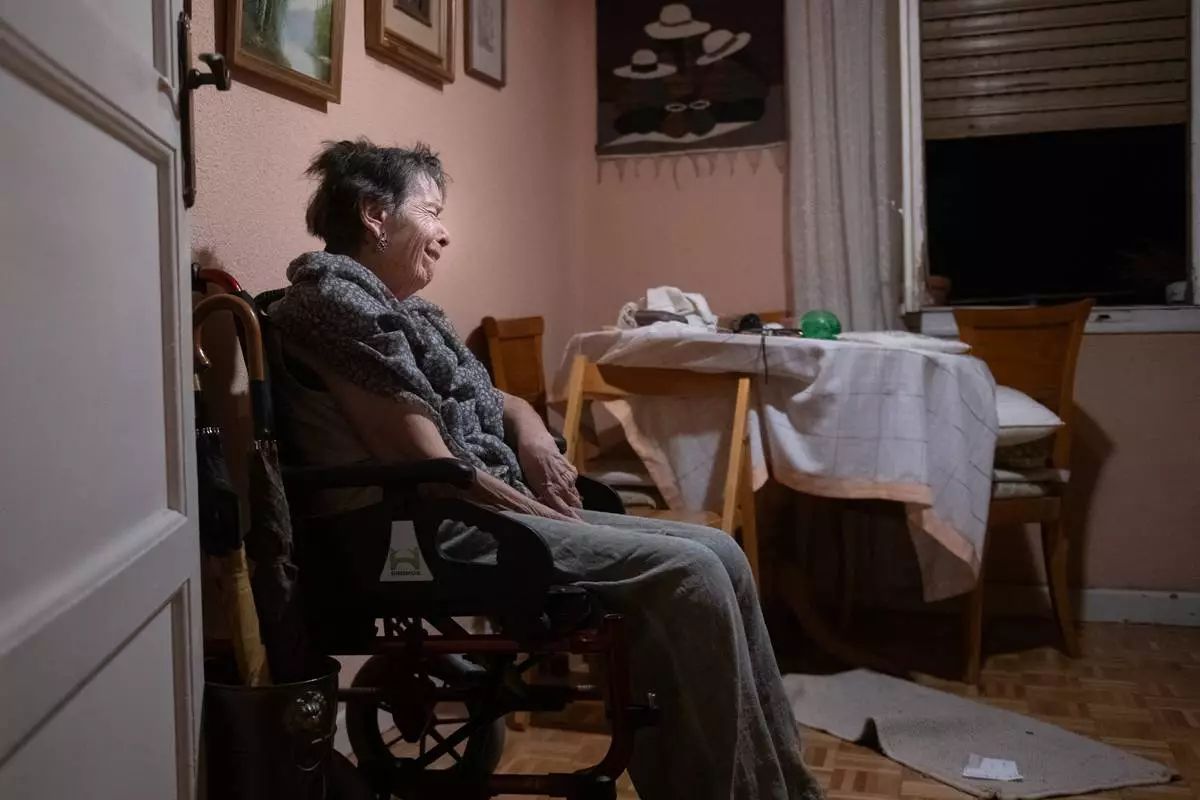
Maricarmen, 87, waits at home for police to arrive before being evicted from the home where she lived in Madrid, Spain, Wednesday, Sept. 23, 2026. (Fernando Sánchez/Europa Press via AP)
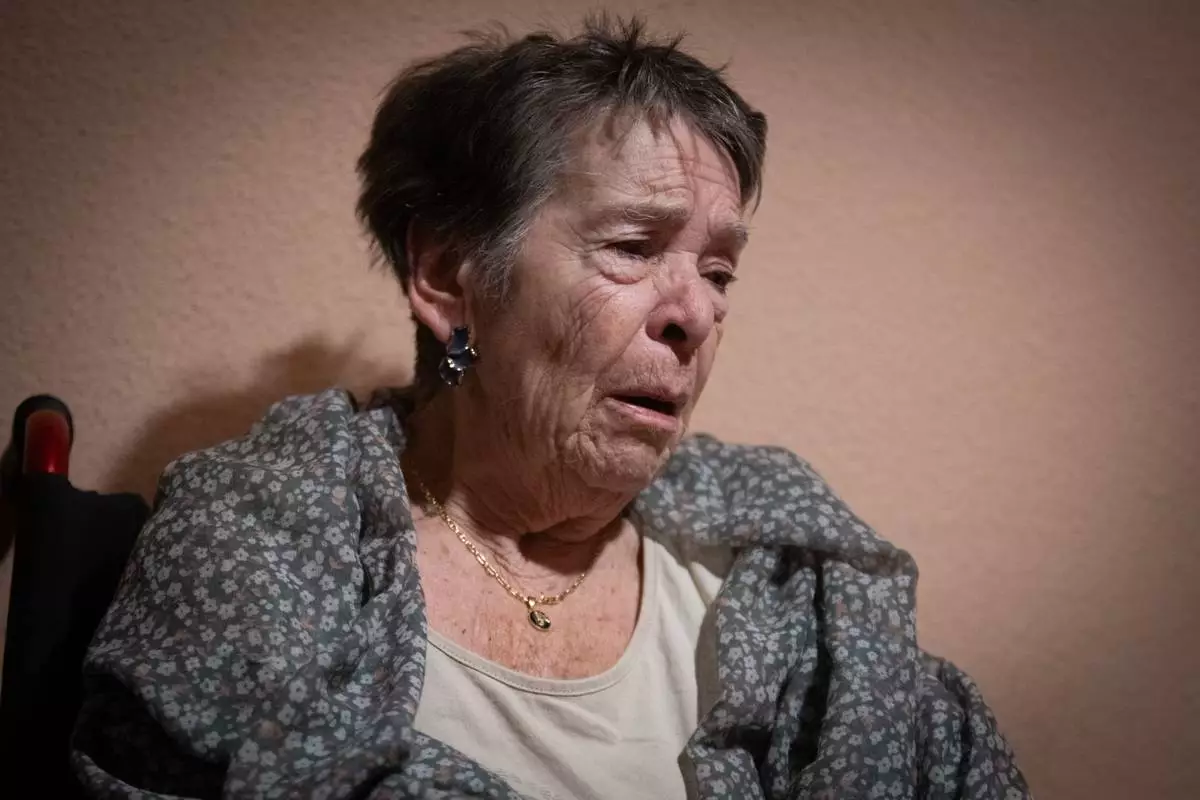
Maricarmen, 87, waits at home for police to arrive before being evicted from the home where she lived in Madrid, Spain, Wednesday, Sept. 23, 2026. (Fernando Sánchez/Europa Press via AP)

People gather during a protest following the eviction last Wednesday of 87-year-old Maricarmen to demand stronger laws to protect renters at Puerta del Sol in Madrid, Spain, Saturday, Sept. 26, 2026. (AP Photo/Manu Fernandez)

A woman holds a flare during a protest following the eviction last Wednesday of 87-year-old Maricarmen to demand stronger laws to protect renters at Puerta del Sol in Madrid, Spain, Saturday, Sept. 26, 2026. (AP Photo/Manu Fernandez)

People gather during a protest following the eviction last Wednesday of 87-year-old Maricarmen to demand stronger laws to protect renters at Sol square in Madrid, Spain, Saturday, Sept. 26, 2026. (AP Photo/Manu Fernandez)
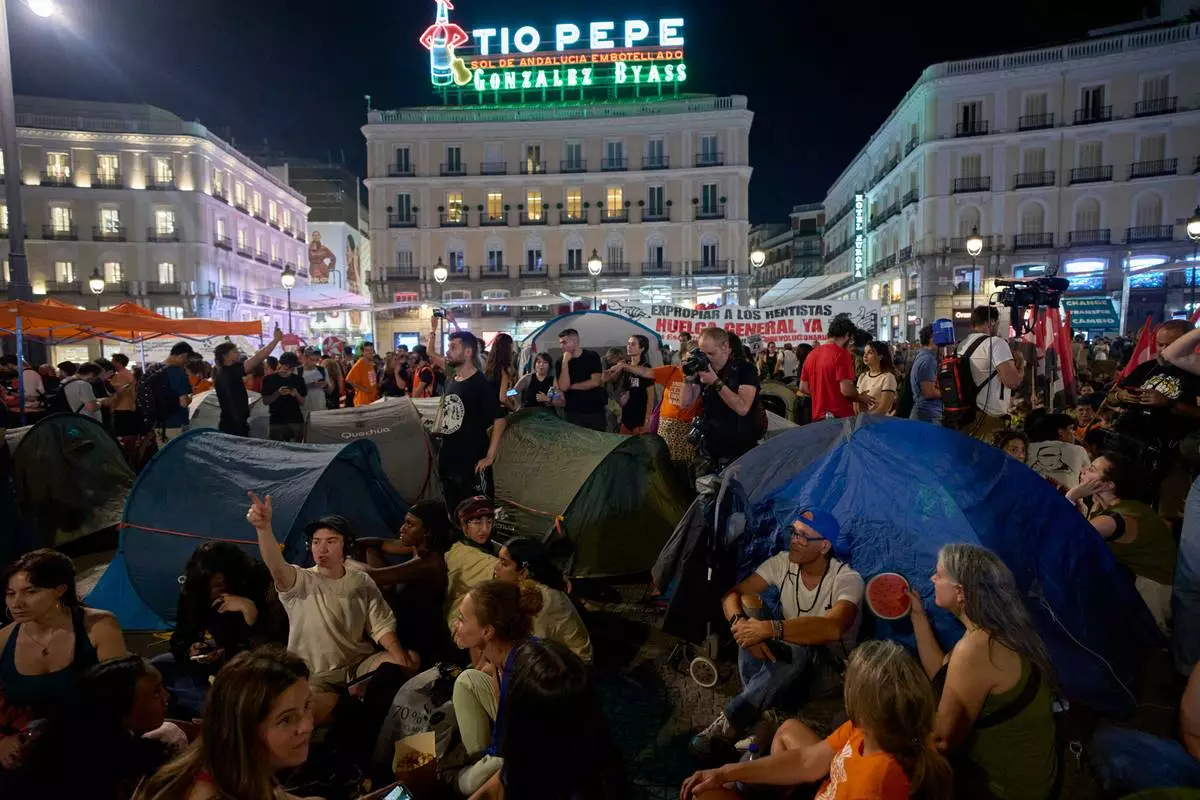
People set up tents during a protest following the eviction last Wednesday of 87-year-old Maricarmen to demand stronger laws to protect renters at Sol square in Madrid, Spain, Saturday, Sept. 26, 2026. (AP Photo/Manu Fernandez)