The economy, inflation and how those forces could impact the lives of Americans were front and center over the past week. Trips to the grocery store or gas station are more painful than they were last year, and rising costs are impacting the decisions of both households and businesses.
Here’s a snapshot of prominent economic data and news that occurred over the past week and what it potentially means for you.
Americans’ attitudes toward the economy improved slightly this month as gas prices declined, but their outlook is still mostly negative by historical standards.
The Conference Board said Tuesday that its consumer confidence index rose 0.6 point to 91.2 in June, a figure that is still below its year-ago reading of 95.2. Consumer attitudes worsened after the Iran war caused oil and gas prices to spike, accelerating inflation and causing Americans’ inflation-adjusted incomes to decline. Before the pandemic, the index regularly topped 120.
The report suggests that consumer confidence is recovering only slowly from the hit caused by the Iran war.
U.S. employers pulled back on hiring last month and added only 57,000 jobs, less than half the previous month’s total and a sign companies still have a cautious economic outlook.
The Labor Department said Thursday that the unemployment rate declined to a low 4.2% from 4.3% in May, though the decline mostly occurred because many people out of work gave up looking and were no longer counted as unemployed.
The figures suggest companies remain wary of the economy’s health, with inflation at a three-year high and consumer confidence near post-pandemic lows. The solid job gains that were initially reported in April and May were also revised lower.
U.S. applications for jobless aid inched down last week as layoffs remain at historically healthy levels.
The number of Americans filing for unemployment benefits in the week ending June 27 fell by 1,000 to 215,000, the Labor Department reported Thursday. That’s fewer than the 225,000 new applications forecast by analysts surveyed by the data firm FactSet.
Weekly filings for unemployment benefits are considered representative of U.S. layoffs and are close to a real-time indicator of the health of the job market.
The four-week moving average of jobless claims, which quiets some of the week-to-week noise, fell by 2,500 to 222,000.
The average long-term U.S. mortgage rate fell this week to its lowest level since mid-May, easing borrowing costs for prospective homebuyers.
The benchmark 30-year fixed rate mortgage rate fell to 6.43% from 6.49% last week, mortgage buyer Freddie Mac said Thursday. One year ago, the average rate was 6.67%.
The average rate has been mostly hovering around 6.5% in the months since the war between the U.S. and Iran began in late February, disrupting the flow of crude oil from the Persian Gulf to customers worldwide. That’s sent oil prices sharply higher, helping drive up inflation, bond yields and mortgage rates.
U.S. job openings stayed at a surprisingly strong 7.6 million in May as the American labor market remains resilient in the face of the economic shock from the Iran war.
Forecasters had expected employers to post just 7 million openings in May.
The job market is sturdy but not exactly booming. Layoffs rose in May, and the number of people quitting their jobs — a sign of confidence in their prospects — ticked up only slightly. That’s according to data from the Bureau of Labor Statistics released Tuesday.
Employers are advertising openings, but they aren’t actually doing much hiring. Gross hiring — before counting people who lost or quit their jobs — dipped to 5.17 million in May from 5.26 million in April. When the job market was booming from mid-2021 to mid-2023 after COVID-19 lockdowns, gross monthly hiring regularly topped 6 million.
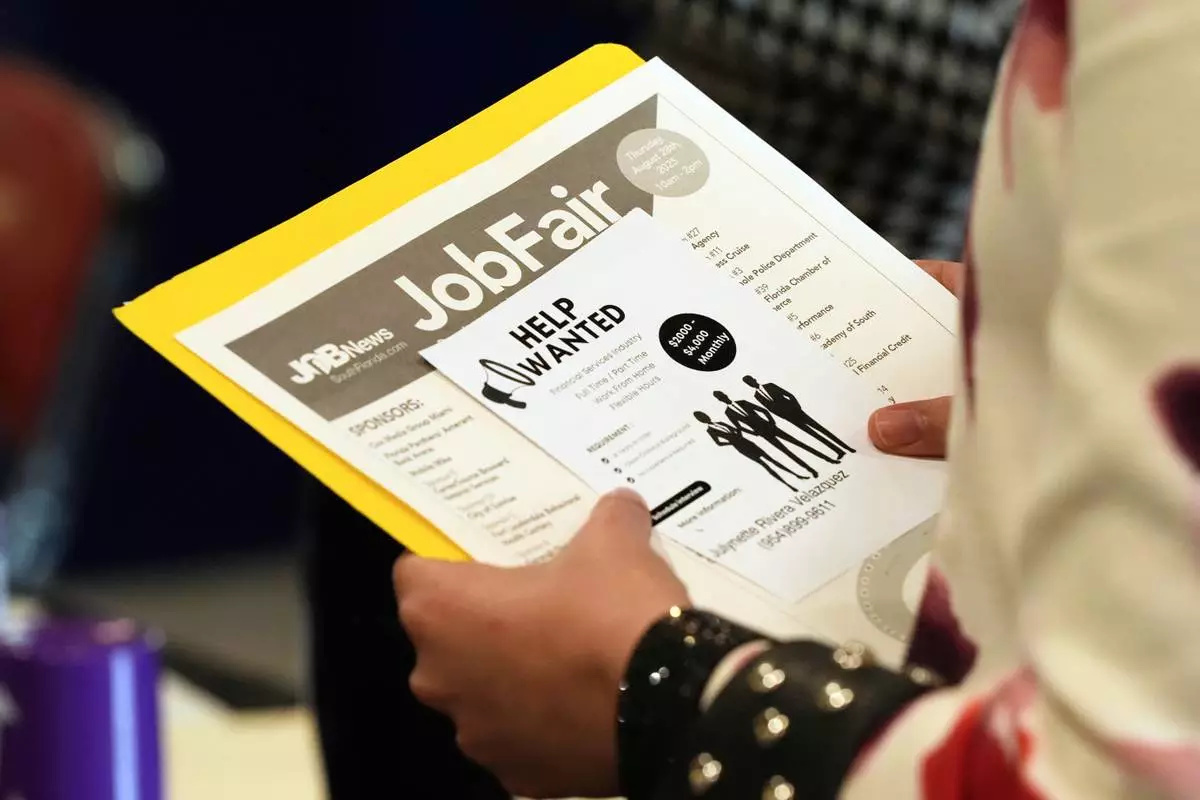
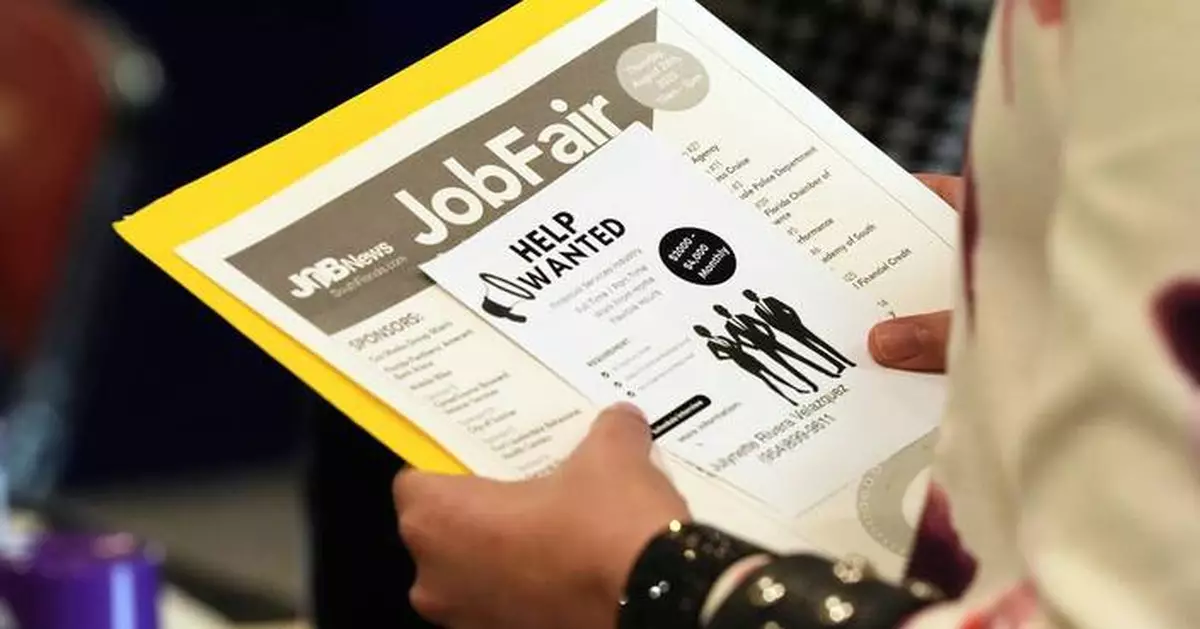
FILE - A job seeker waits to talk to a recruiter at a job fair Aug. 28, 2025, in Sunrise, Fla. (AP Photo/Marta Lavandier, File)
TEHRAN, Iran (AP) — Hundreds of thousands of mourners began a dayslong funeral Saturday for Iran's late Supreme Leader Ayatollah Ali Khamenei, beating their chests in sorrow before the glass case containing his flag-draped coffin in Tehran and calling for revenge against Israel and the United States.
The funeral for Khamenei, who ruled Iran for decades before he was killed at age 86 in a Feb. 28 airstrike in the opening moments of the Iran war, could provide a boost for the country's theocracy and its new supreme leader, his son Ayatollah Mojtaba Khamenei.
That is important as Iran tries to leverage its hold on the Strait of Hormuz in negotiations with the U.S. over a permanent end to the war and as concern lingers that Israel could attack again. The funeral was delayed as the war raged.
During the ceremony, Iran's top negotiator warned France and the United Kingdom over their comments about potentially launching joint patrols in the waterway, the narrow mouth of the Persian Gulf through which a fifth of all oil and natural gas once passed in peacetime.
Mourners wept at the sight of Khamenei's coffin alongside those of his family members also killed in the airstrike, with some chanting: “Our word is one! Revenge! Revenge!” Some carried banners and flags, while billboards across the city bore Khamenei’s image. Crowds of men rhythmically beat their chests in mourning, a common practice at Shiite funerals.
“Imam Khamenei was our heart, our father, our everything,” mourner Masoumeh Mohammadi said. “I still can’t believe they martyred him. We will not rest until we avenge his death.”
An outdoor stage set up at the Grand Mosalla resembled the stage where Khamenei once gave his speeches at a husseiniyah at his compound in downtown Tehran. There was a chair like the one he once sat in while giving his sermons, complete with a microphone on a stand and a table next to it. Above it hung an image of the late Supreme Leader Ayatollah Ruhollah Khomeini, who died in 1989.
Khomeini's funeral saw chaotic scenes as millions thronged his mourning ceremony and trip to the cemetery. Khamenei's death was only the second time Iran has lost a supreme leader since the 1979 Islamic Revolution.
On Saturday, volunteers sprayed cooling water on crowds in the summer heat. Men and women congregated separately inside the Grand Mosalla after being checked by metal detectors and body searches. Police with assault rifles stood guard on surrounding streets. Many people stayed outside in the street, lounging under the shade of trees because the city had shut down.
The caskets of his dead family members sat beneath Khamenei's, which had his black turban atop it, identifying him as a direct descendant of the Prophet Muhammad. The dead included the wife of Mojtaba Khamenei, whose possible appearance at the funeral remained unclear. He reportedly was wounded in the attack that killed his father and has not been seen publicly since the war began.
“We attended the funeral to show that we are all committed to defend our country and religion,” said Ali Kazemi, who came from the northwestern city of Tabriz, some 530 kilometers (330 miles) from Tehran.
Iran chose July 4, the 250th anniversary of the creation of the U.S., to begin the funeral. While authorities did not acknowledge the timing, crowds at the ceremony in Tehran chanted: “Death to America!” The refrain has been common in Iran since the 1979 Islamic Revolution and U.S. Embassy takeover and hostage crisis. They also cried: “Death to Israel!”
“We knocked the hell out of Iran,” U.S. President Donald Trump said in a speech at the same time in South Dakota in front of Mount Rushmore. “They want to settle so badly. We gave them a week off for a funeral.”
The U.S. president was not forgotten in Tehran. In the crowd in Grand Mosalla, several mourners held a large flag that read: “#KillTrump.”
As the ceremony went on, Iran's chief negotiator Kazem Gharibabadi criticized a joint statement overnight from British Prime Minister Keir Starmer and French President Emmanuel Macron which suggested their militaries stood ready to patrol the Strait of Hormuz.
Control of the strait has been a major point of leverage for Iran, which has suggested it wants to charge vessels passing through it, upending decades of it being widely considered an international waterway.
“The security of Hormuz lies with the coastal states — the crisis-makers will be held accountable for the consequences of their adventurism,” Gharibabadi wrote on X. “This is a serious warning.”
Khamenei’s body will be transported to cities in Iran and neighboring Iraq. Authorities have shut down streets, airspace and daily life for the mourning, which will end Thursday as he is buried at the Imam Reza shrine in Mashhad, Khamenei's place of birth.
Authorities offered no immediate attendance count for the event Saturday, which saw the crowds circulate in and out of the Grand Mosalla and surrounding streets. Other cities across Iran also held mourning ceremonies.
On Sunday, a prayer for the dead is planned at the Grand Mosalla. On Monday, Khamenei's body and those of his family will be taken through the streets of Tehran, which likely will draw large crowds.
“I am here to say goodbye to my beloved leader Ali Khamenei,” said a weeping Hananeh Mousavi, 27, who attended the funeral alongside her mother. “I never expected to see such a day. I wish I had died before this tragedy.”
Gambrell reported from Dubai, United Arab Emirates.
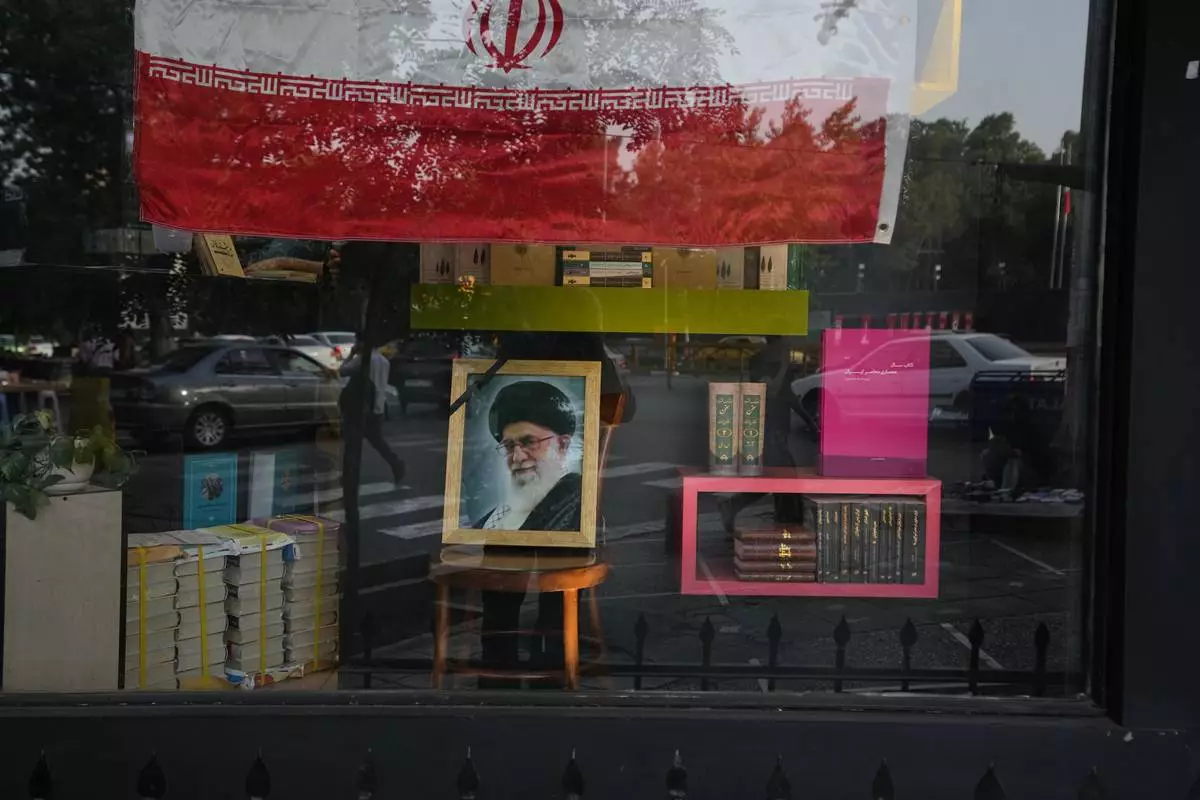
A portrait of the late Iranian Supreme Leader Ayatollah Ali Khamenei and an Iranian flag are displayed in the window of a bookstore ahead of Khamenei's funeral ceremonies, in Tehran, Iran, Thursday, July 2, 2026. (AP Photo/Vahid Salemi)
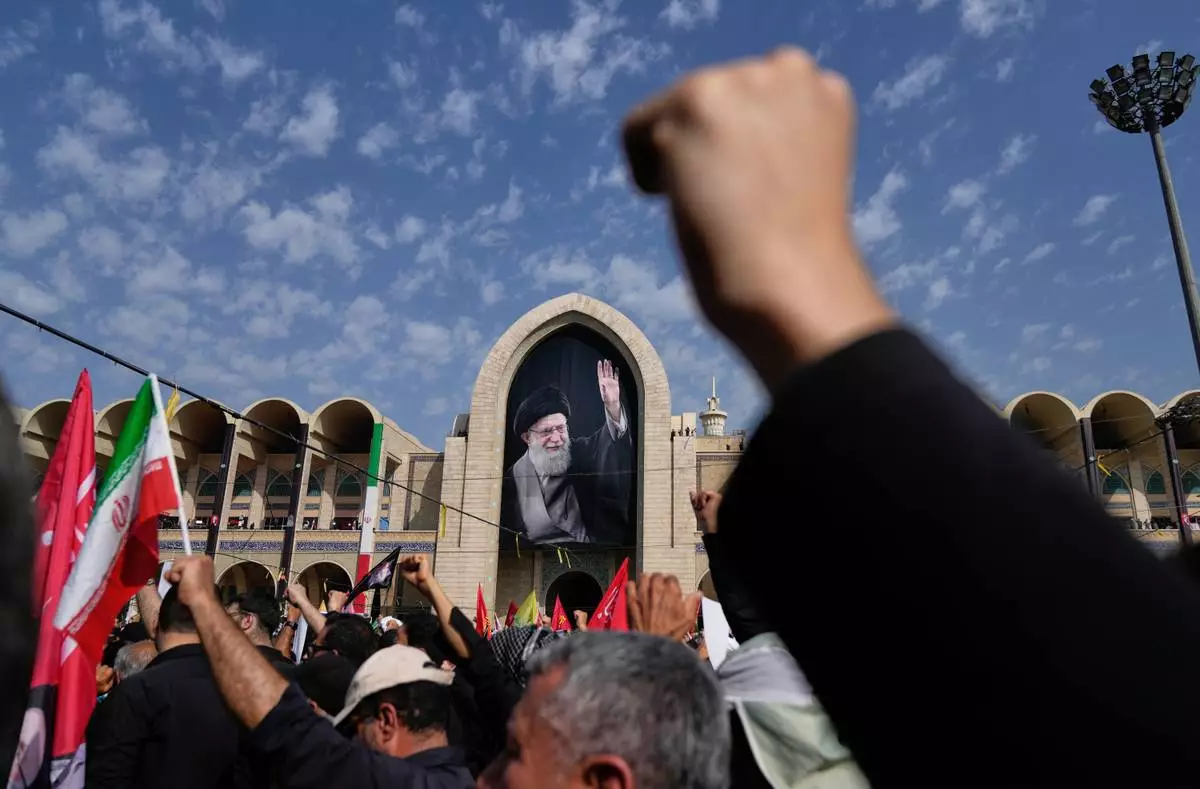
Mourners attend the start of the dayslong funeral ceremonies for slain Iranian Supreme Leader Ayatollah Ali Khamenei and members of his family at the Imam Khomeini Mosalla Grand Mosque in Tehran, Iran, Saturday, July 4, 2026. (AP Photo/Altaf Qadri)
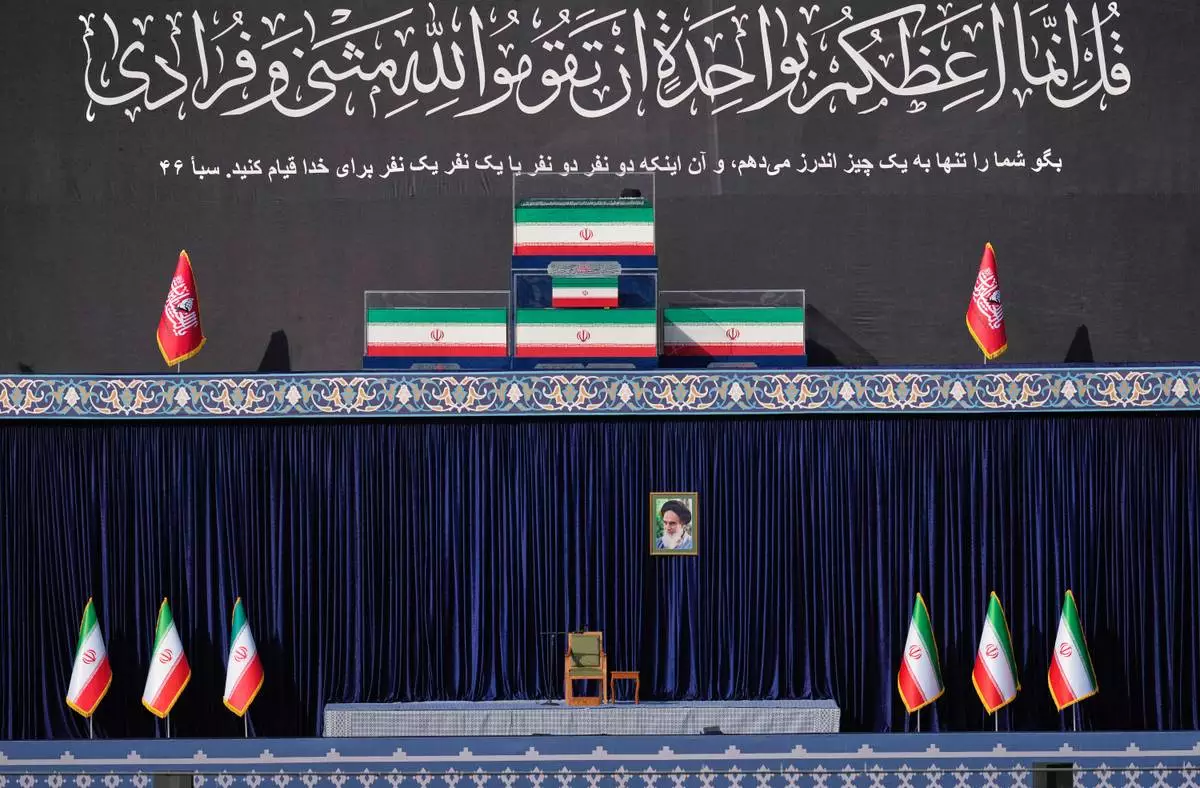
The coffins of slain Iranian Supreme Leader Ayatollah Ali Khamenei and members of his family are displayed on a platform above an empty chair at the start of the dayslong funeral ceremonies at the Imam Khomeini Mosalla Grand Mosque in Tehran, Iran, Saturday, July 4, 2026. (AP Photo/Altaf Qadri)
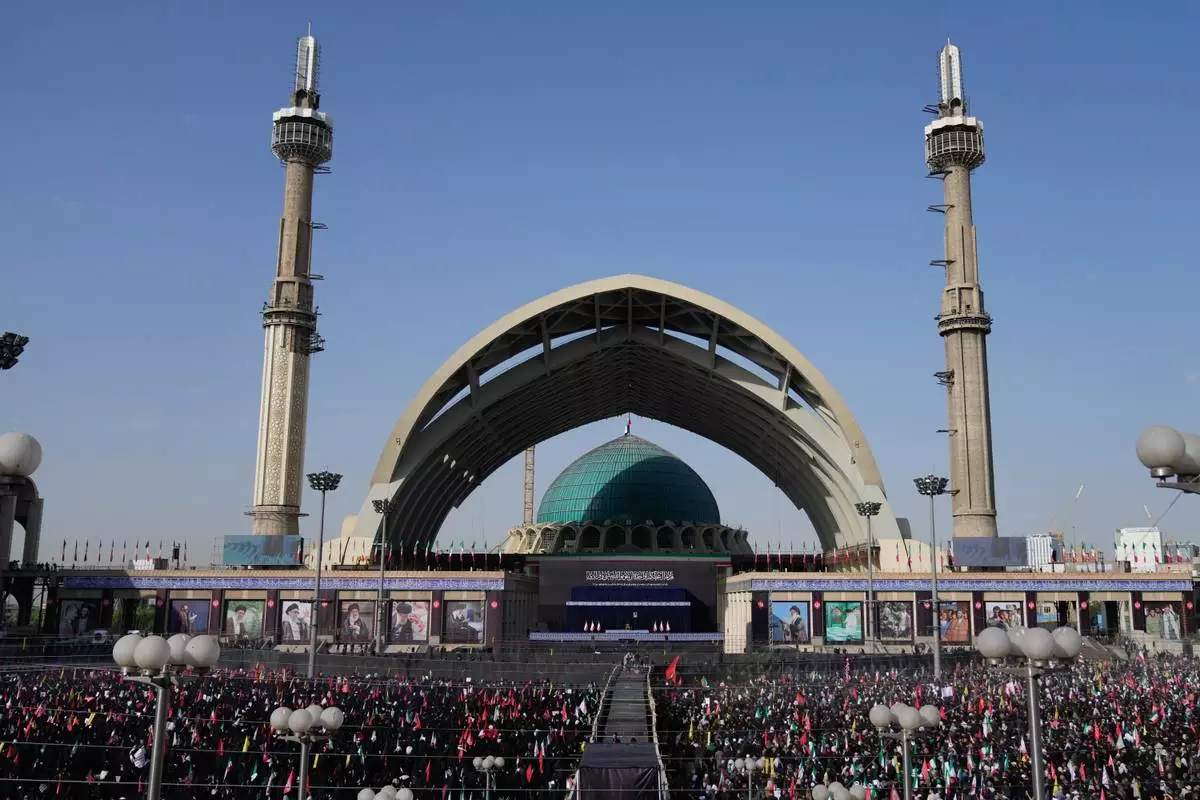
The coffins of slain Iranian Supreme Leader Ayatollah Ali Khamenei and members of his family are displayed on a stand at the start of the dayslong funeral ceremonies at the Imam Khomeini Mosalla Grand Mosque in Tehran, Iran, Saturday, July 4, 2026. (AP Photo/Altaf Qadri)
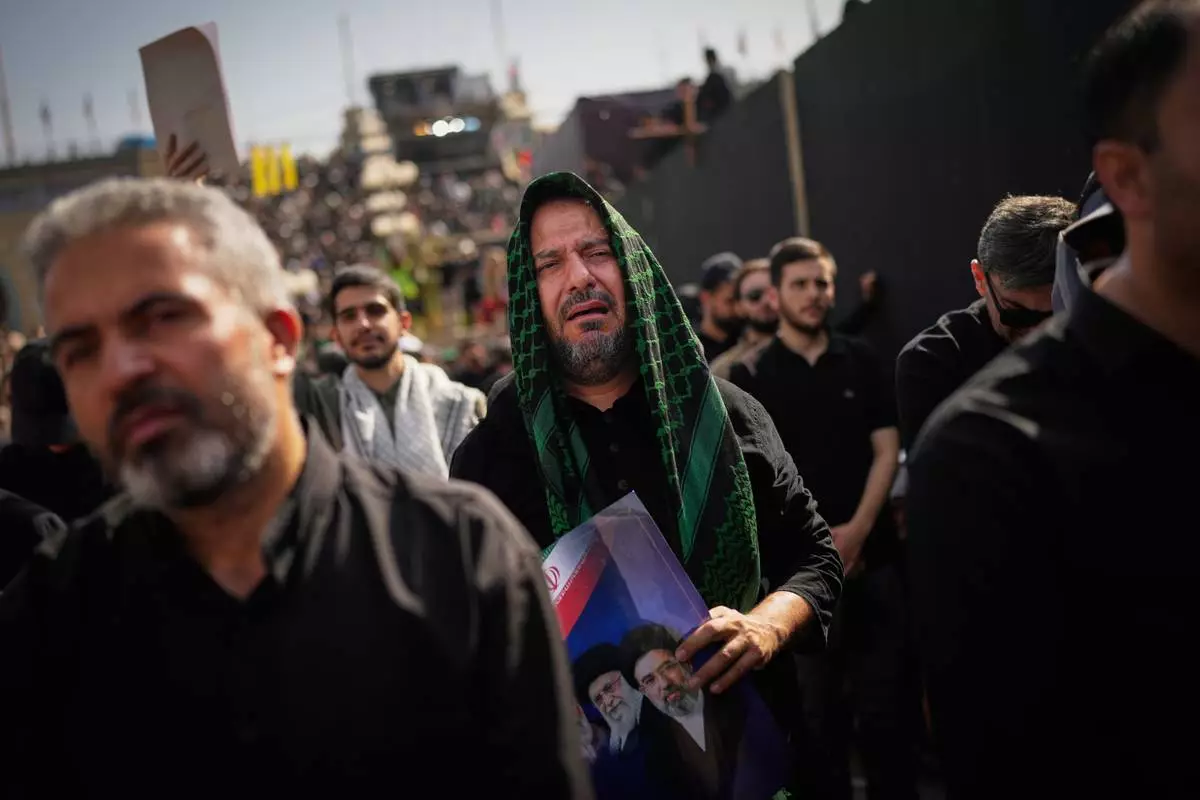
Mourners attend the start of the dayslong funeral ceremonies for slain Iranian Supreme Leader Ayatollah Ali Khamenei and members of his family at the Imam Khomeini Mosalla Grand Mosque in Tehran, Iran, Saturday, July 4, 2026. (AP Photo/Altaf Qadri)
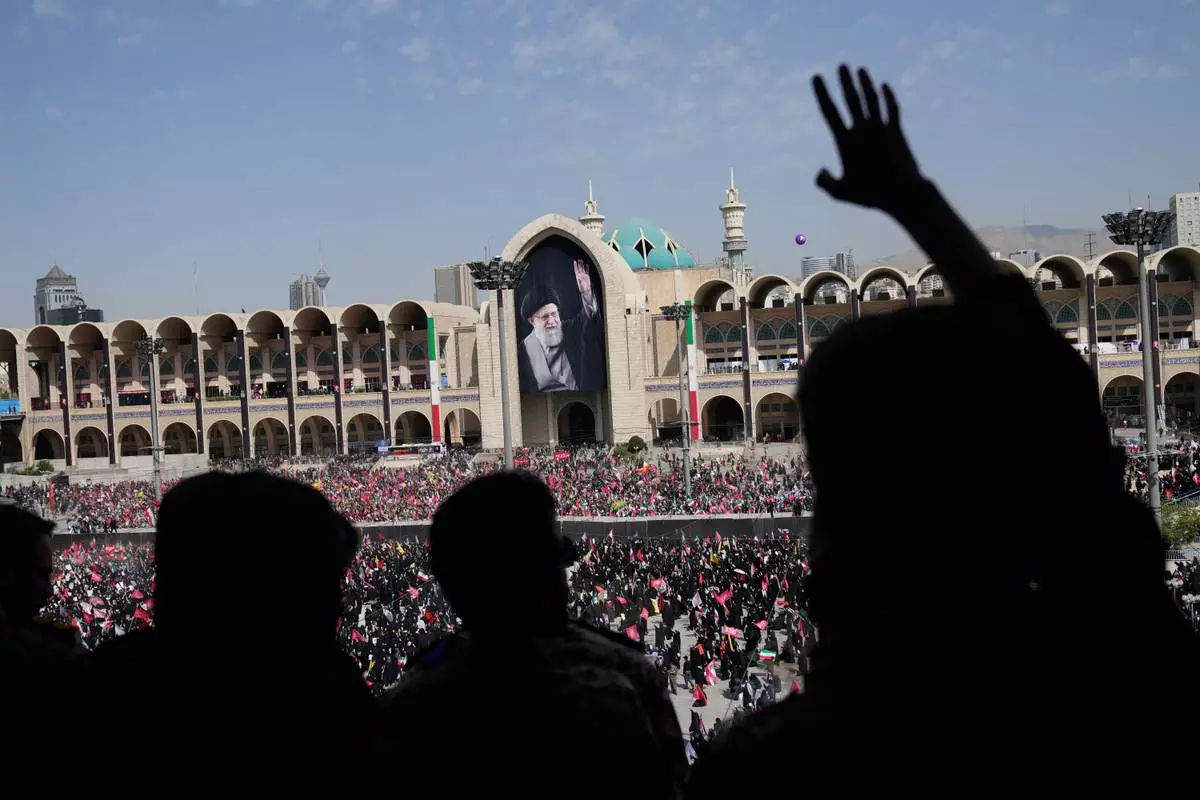
Mourners attend the start of the dayslong funeral ceremonies for slain Iranian Supreme Leader Ayatollah Ali Khamenei and members of his family at the Imam Khomeini Mosalla Grand Mosque in Tehran, Iran, Saturday, July 4, 2026. (AP Photo/Altaf Qadri)
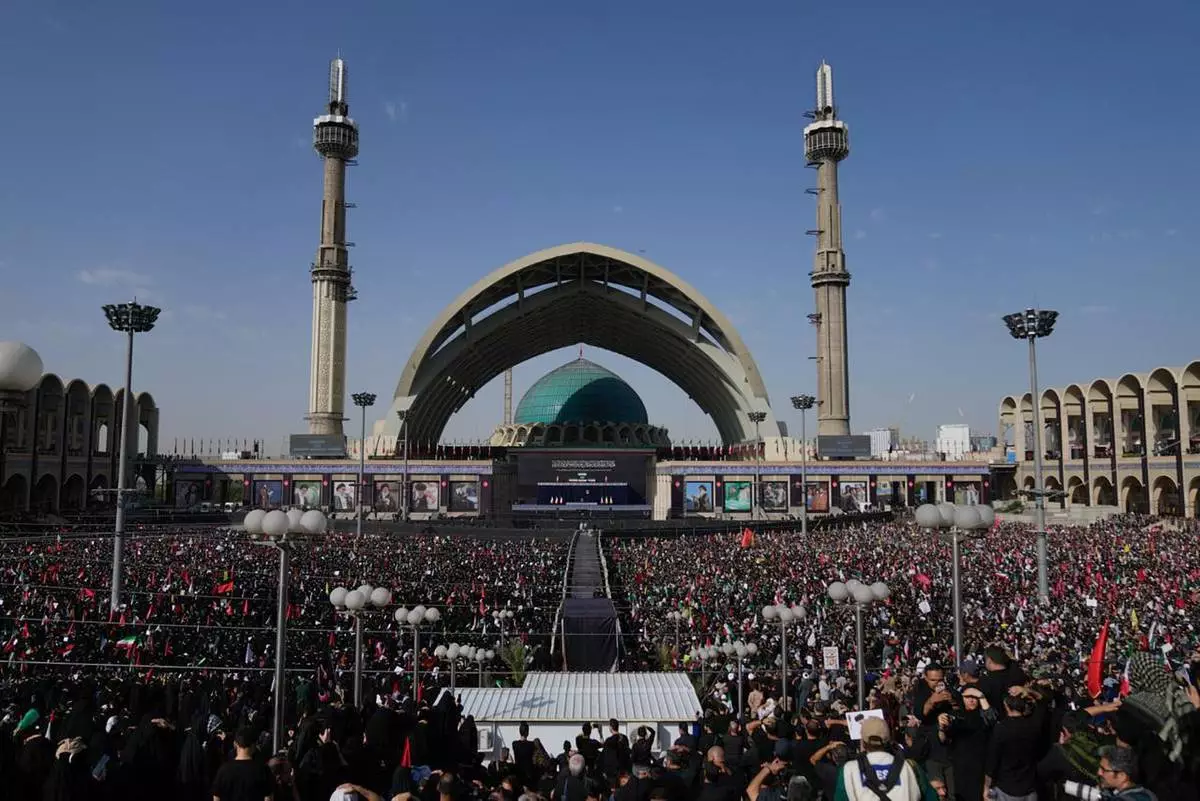
A crowd attends the start of the dayslong funeral ceremonies at the Imam Khomeini Mosalla Grand Mosque in Tehran, Iran, Saturday, July 4, 2026. (AP Photo/Altaf Qadri)
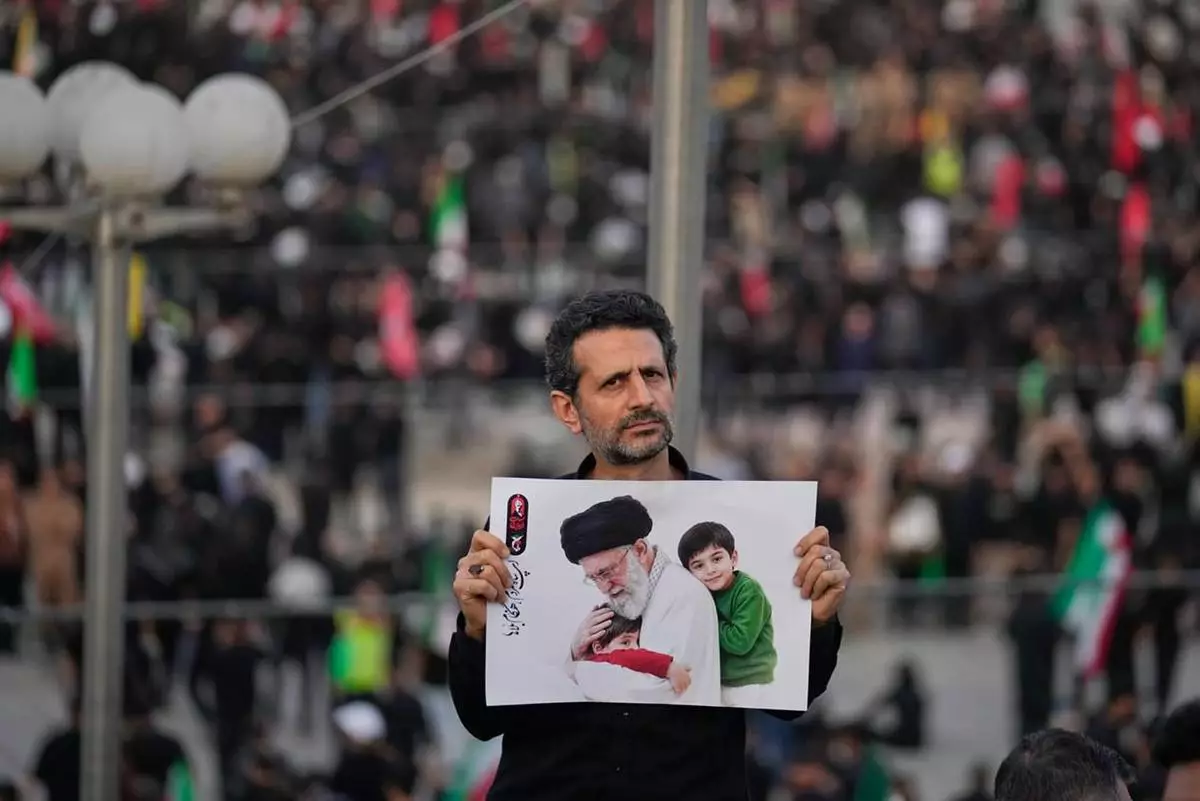
A man holds a picture of slain Iranian Supreme Leader Ayatollah Ali Khamenei as a crowd waits for his casket to arrive at the Imam Khomeini Mosalla Grand Mosque for the start of the dayslong funeral ceremonies in Tehran, Iran, Saturday, July 4, 2026. (AP Photo/Altaf Qadri)
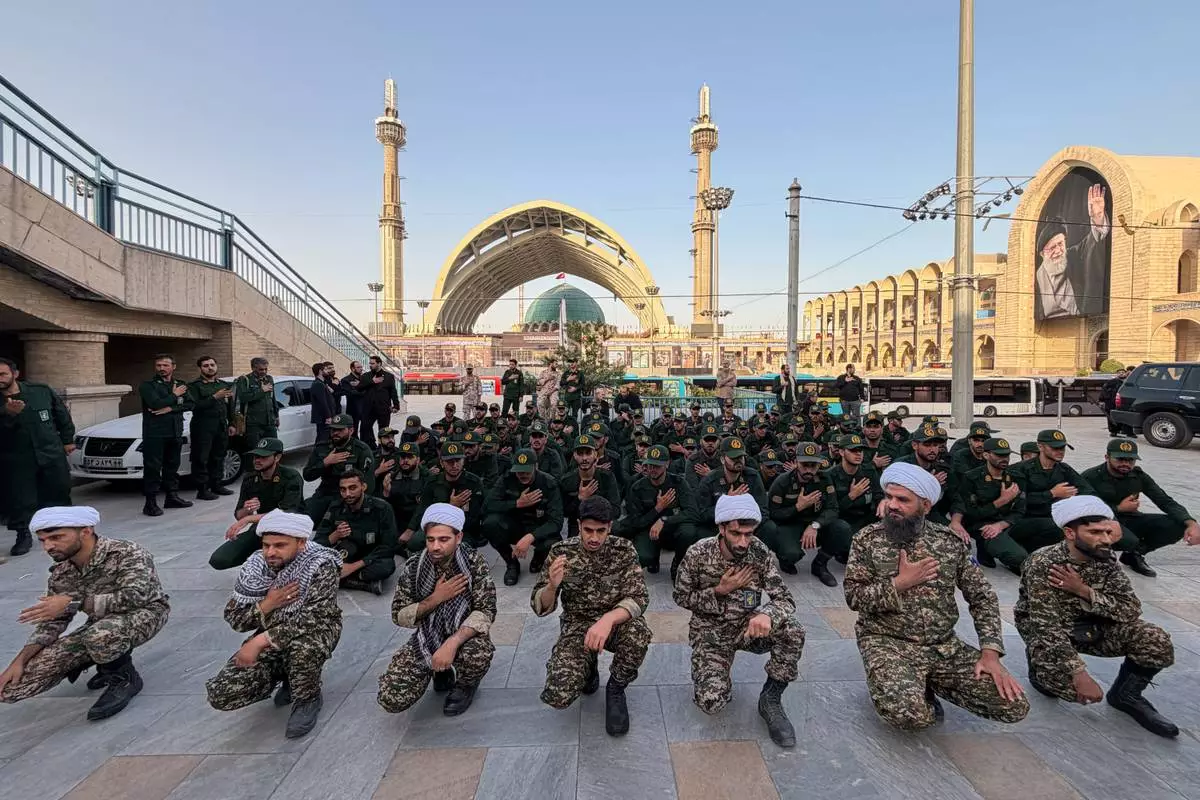
Revolutionary Guard members and clerics mourn on the esplanade of the Imam Khomeini Mosalla Grand Mosque as preparations are underway ahead of the dayslong funeral ceremonies for slain Iranian Supreme Leader Ayatollah Ali Khamenei in Tehran, Iran, Friday, July 3, 2026. (AP Photo/Vahid Salemi)
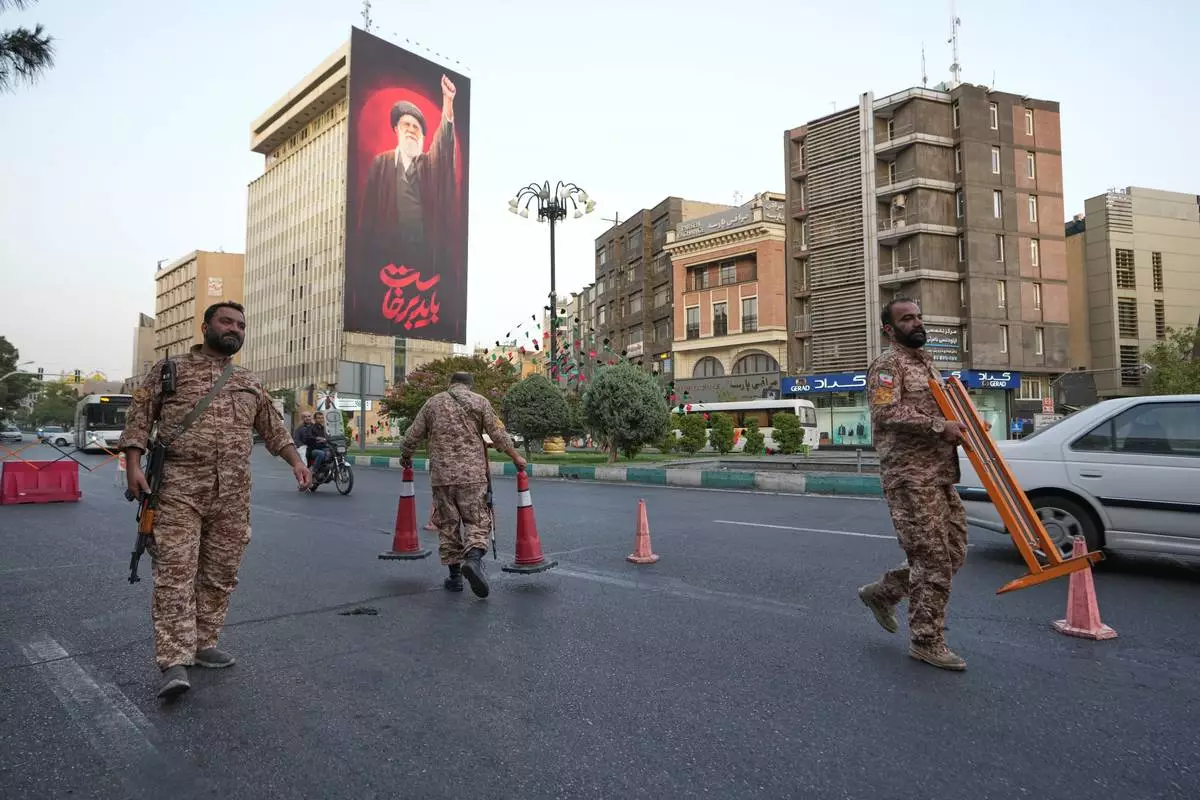
Iran's Basij paramilitary forces set up a checkpoint at a square ahead of the funeral ceremonies of slain Supreme Leader Ayatollah Ali Khamenei, shown at the billboard at rear, in Tehran, Iran, Thursday, July 2, 2026. (AP Photo/Vahid Salemi)
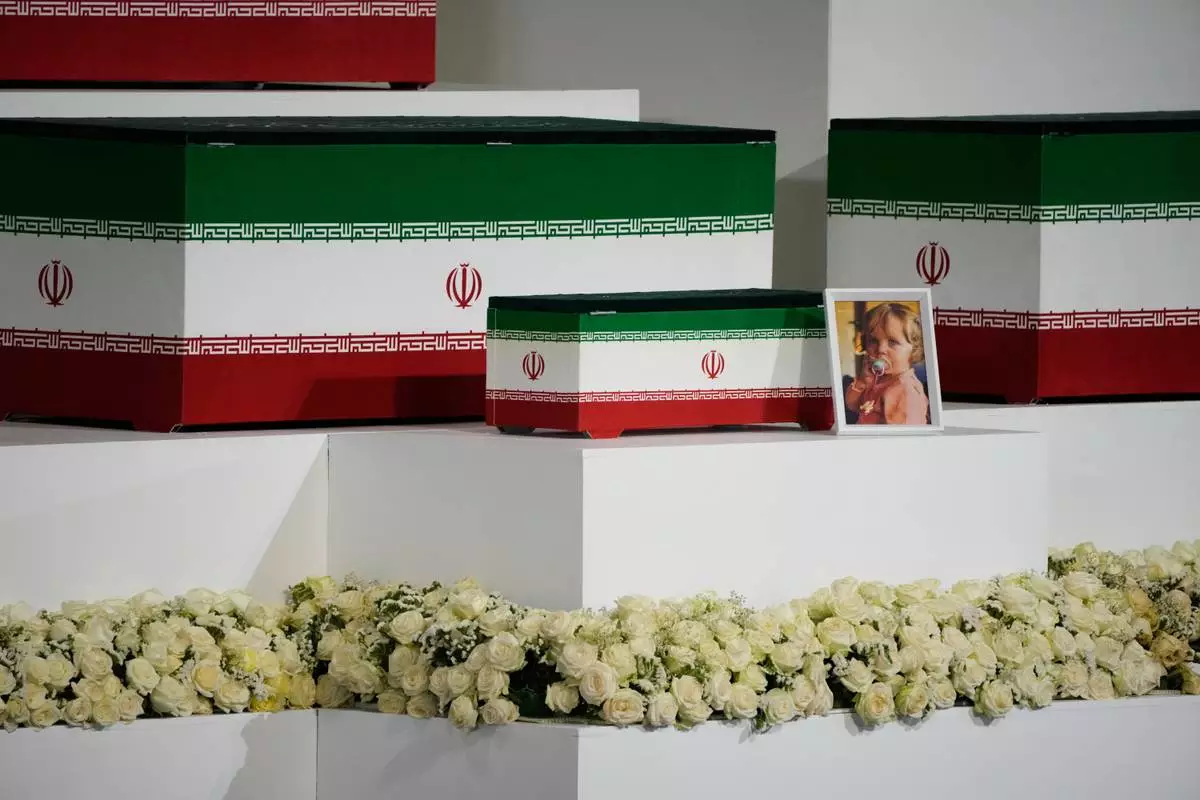
The casket of slain Iranian Supreme Leader Ayatollah Ali Khamenei's granddaughter, Zahra Mohammadi Golpayegani, is displayed alongside the caskets of Khamenei and other members of his family during a viewing ceremony ahead of the dayslong funeral ceremonies at the Imam Khomeini Mosalla Grand Mosque in Tehran, Iran, Friday, July 3, 2026. (AP Photo/Vahid Salemi)
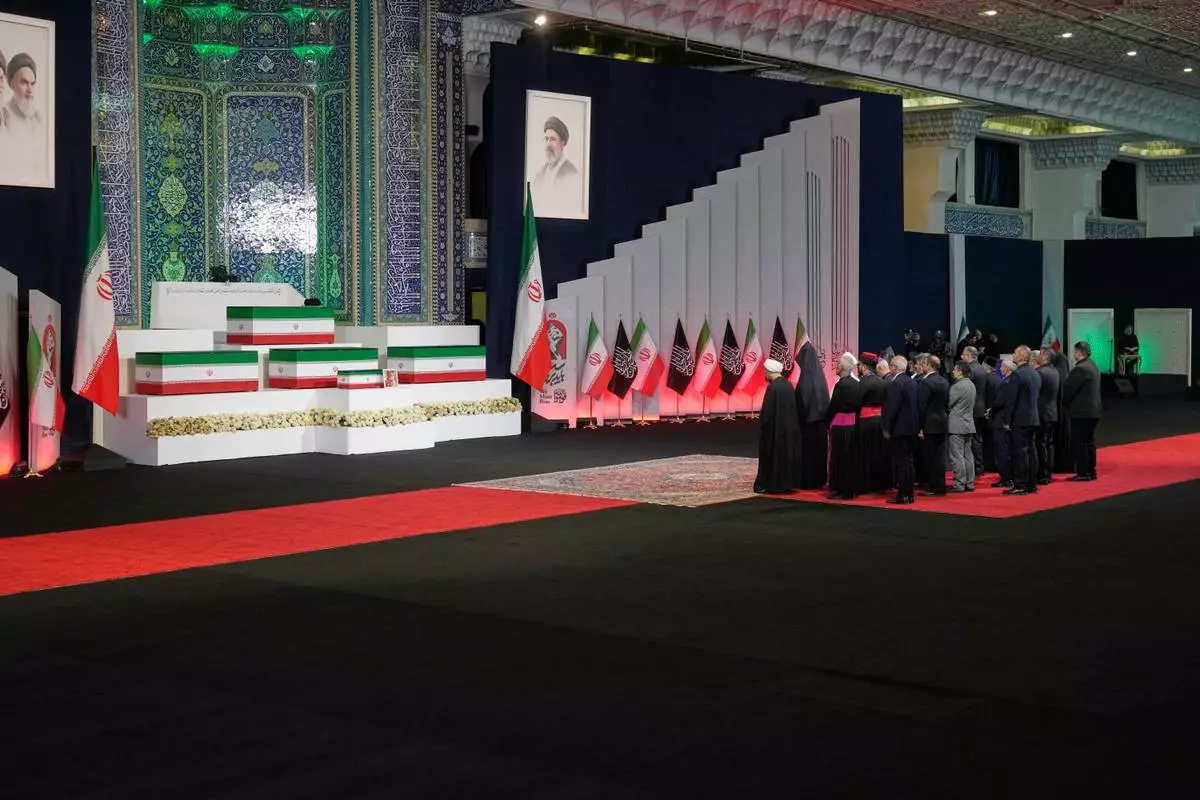
Iranian religious leaders and other mourners pay their respects before the coffins of slain Iranian Supreme Leader Ayatollah Ali Khamenei and members of his family during a viewing ceremony ahead of the dayslong funeral ceremonies at the Imam Khomeini Mosalla Grand Mosque in Tehran, Iran, Friday, July 3, 2026. (AP Photo/Vahid Salemi)