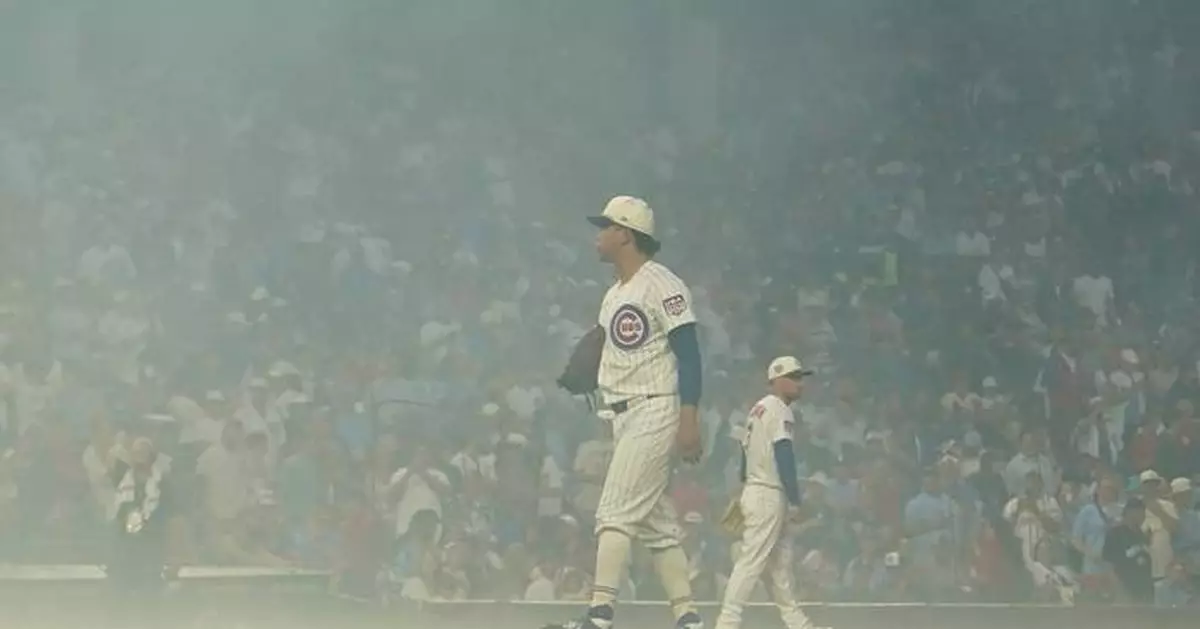
CHICAGO (AP) — Add the St. Louis Cardinals' 3-0 victory over the Chicago Cubs on Saturday night to the list of classically weird happenings at Wrigley Field.
The game at the iconic North Side ballpark was delayed by fog for 15 minutes after the sixth inning. The Cardinals led 2-0 when play was stopped, then went on to win their third straight.
Click to Gallery
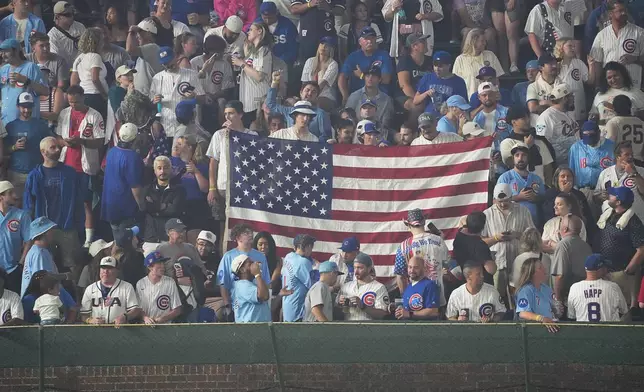
Fans hold a United States flag in the bleachers during the sixth inning of a baseball game between the Chicago Cubs and the St. Louis Cardinals, Saturday, July 4, 2026, in Chicago. (AP Photo/David Banks)
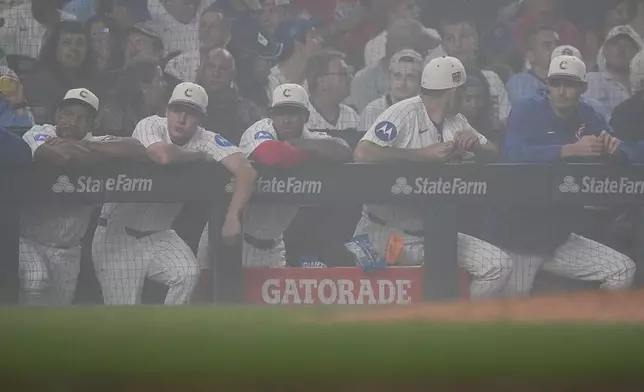
Chicago Cubs stand in the dugout during a fog delay during the sixth inning of a baseball game against the St. Louis Cardinals, Saturday, July 4, 2026, in Chicago. (AP Photo/David Banks)
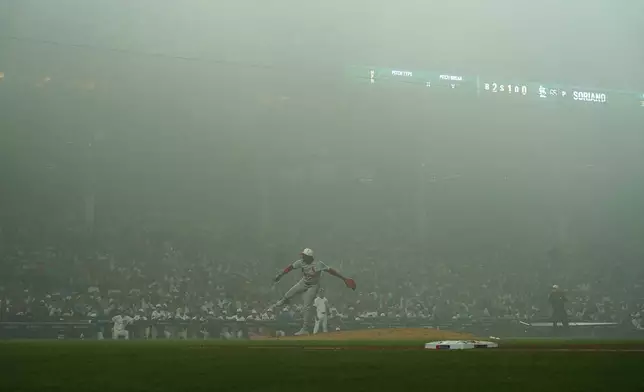
St. Louis Cardinals pitcher Kyle Leahy throws the ball in the fog against the Chicago Cubs during the sixth inning of a baseball game Saturday, July 4, 2026, in Chicago. (AP Photo/David Banks)
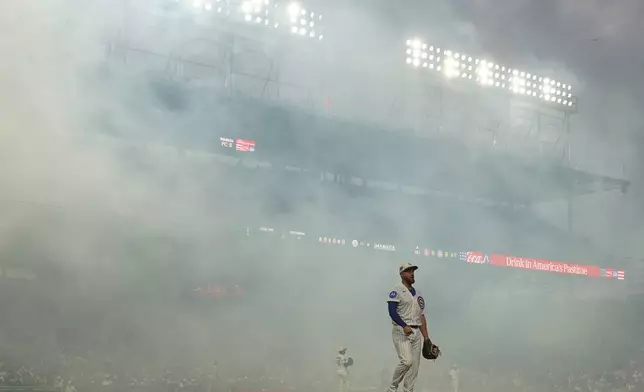
Smoke drifts as Chicago Cubs first baseman Michael Busch looks on after fireworks before a baseball game against the St. Louis Cardinals, Saturday, July 4, 2026, in Chicago. (AP Photo/David Banks)
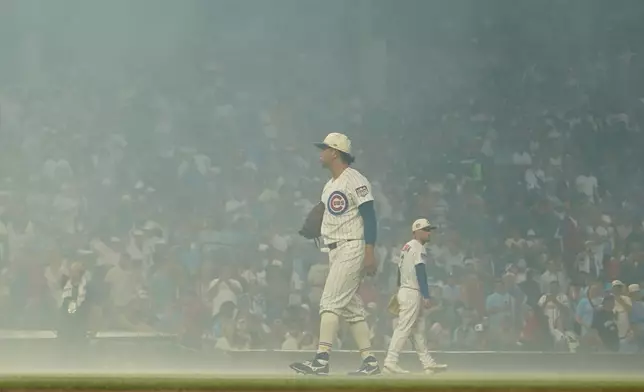
Chicago Cubs pitcher Shota Imanaga stands amidst smoke after fireworks before a baseball game against the St. Louis Cardinals, Saturday, July 4, 2026, in Chicago. (AP Photo/David Banks)
The crowd of 38,872 joined in singing John Denver’s “Take Me Home, Country Roads” as the delay began. The early 1970s hit song has re-emerged during the World Cup soccer tournament, with U.S. players joining tens of thousands of fans in singing it at the end of matches.
The rare Saturday night game at Wrigley started an hour late due to rain, then fog billowed in from the north starting in the second inning and got denser.
The visibility became so poor that players said they would lose sight of the ball. They struggled and called out tracking fly balls, but there were no misplays.
“Yeah, that was brutal,” Cubs All-Star center fielder Pete Crow-Armstrong said. "I've never seen anything like that so, I’ll just leave it at that. It was reminiscent of when like I was kid playing rec ball, soccer and stuff like that. Yes, you could see the ball hitting the bat, then not so much."
Crow-Armstrong, a Gold Glove winner last season, somehow caught Masyn Winn's deep fly for the second out of the sixth. He drifted to the edge of the warning track, then dropped to one knee to do it.
“I don't know how he saw my ball, to be honest with you,” Winn said. “When the ball was getting above the lights, I just thought it disappeared. I was crazy to me.”
Winn, the Cardinals shortstop, said he had a tough time seeing on the field.
“Right when they hit it, you could see kind of the direction of where the ball was going” Winn said. "And you know, as soon as it touched, like light level, it was gone. It was weird.
“At first I was like, ‘Oh this is pretty damn cool.' It felt like this was a sick game to play on July 4. But by the end of it, I was, like, ‘This is crazy.’ Nobody could see anything.”
Winn said Cardinals left fielder Lars Nootbar told him he couldn't see the hitters. Nootbar went on to catch Dansby Swanson's drive against the wall for the final out of the seventh after the fog subsided.
Nootbar said he thought Swanson's ball was headed to the stands for a two-run homer, but the wind that had pushed the fog into the ballpark kept Swanson's fly inside as well.
“I'm glad they didn't put more balls in the air, because we probably would have been in some trouble,” Winn said.
The umpires conferred with St. Louis manager Oliver Marmol and Chicago’s Craig Counsell after the sixth. Then the delay was announced on video boards as the result of “weather in the area.”
Marmol said it was the right call.
“There was a point there where no one on the field could see where the ball in play was,” Marmol said. "Thankfully we got a groundball to short with some punch-outs involved, because it would have been very circus-like otherwise.
“So good job pausing the game, letting (the fog) go through and then continuing, because that was different.”
AP MLB: https://apnews.com/hub/mlb
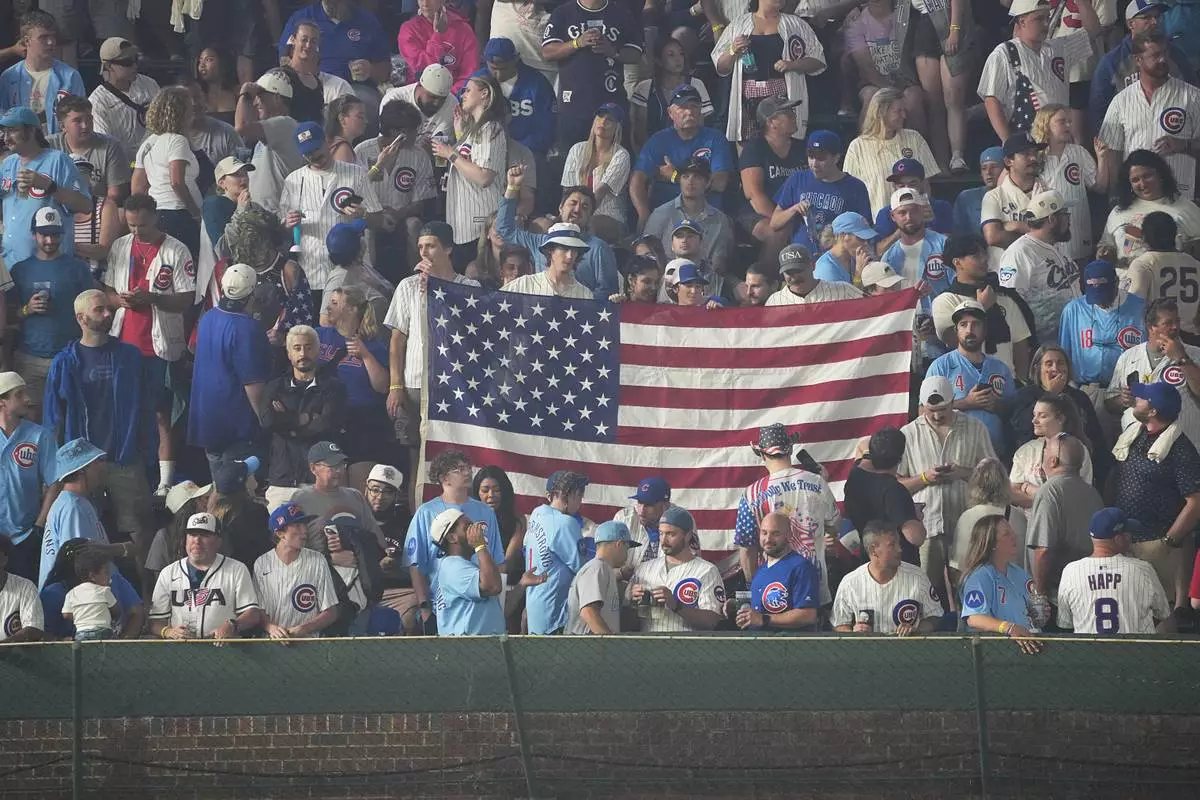
Fans hold a United States flag in the bleachers during the sixth inning of a baseball game between the Chicago Cubs and the St. Louis Cardinals, Saturday, July 4, 2026, in Chicago. (AP Photo/David Banks)
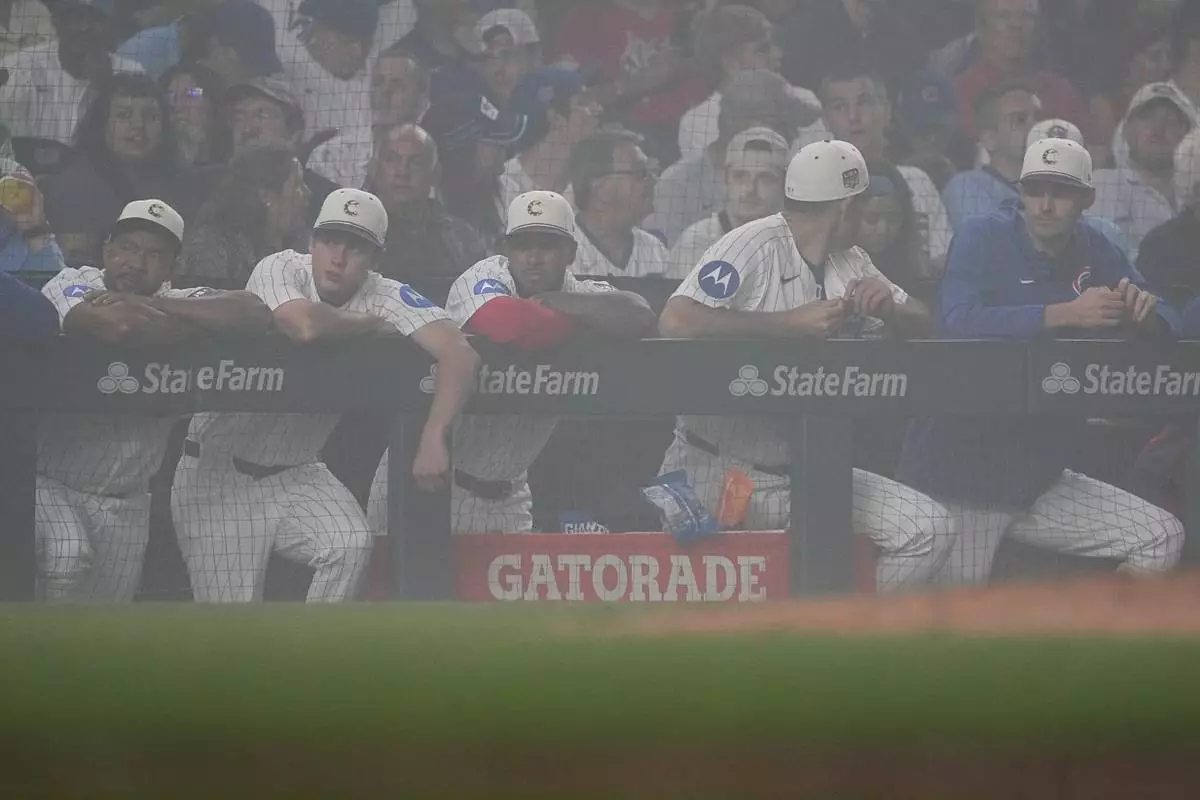
Chicago Cubs stand in the dugout during a fog delay during the sixth inning of a baseball game against the St. Louis Cardinals, Saturday, July 4, 2026, in Chicago. (AP Photo/David Banks)
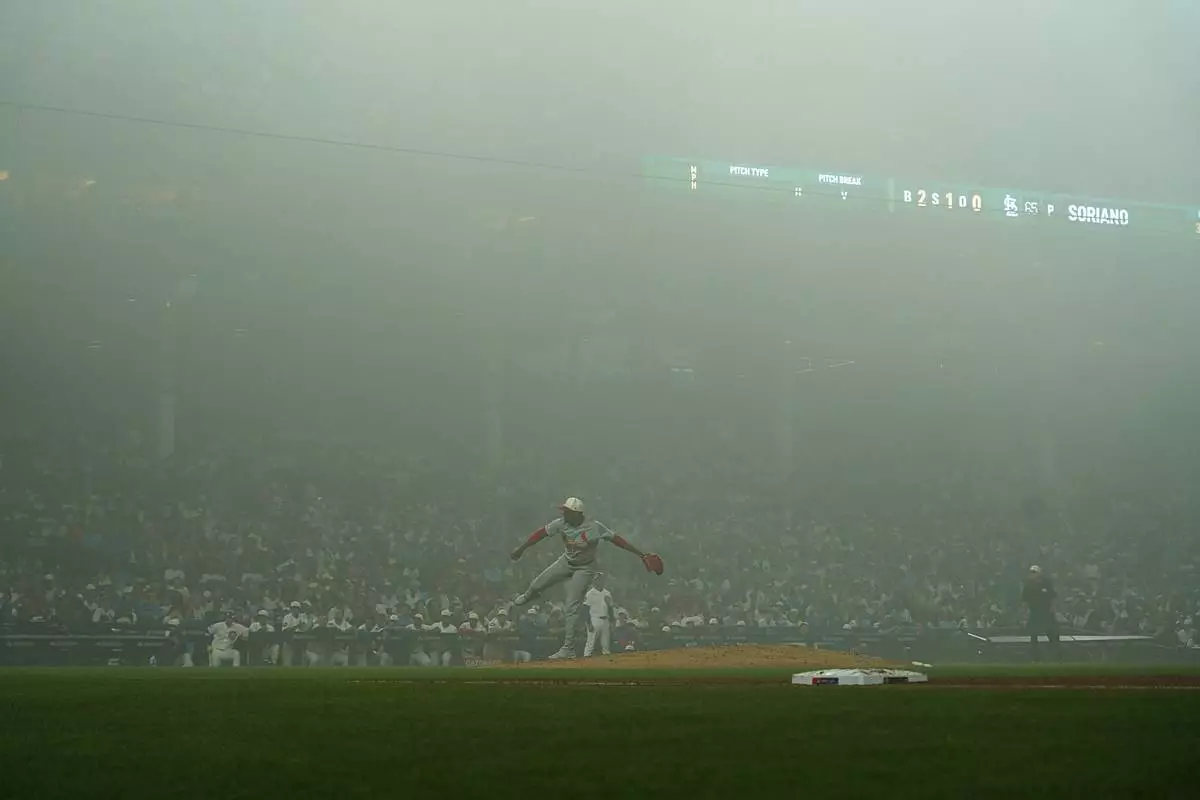
St. Louis Cardinals pitcher Kyle Leahy throws the ball in the fog against the Chicago Cubs during the sixth inning of a baseball game Saturday, July 4, 2026, in Chicago. (AP Photo/David Banks)
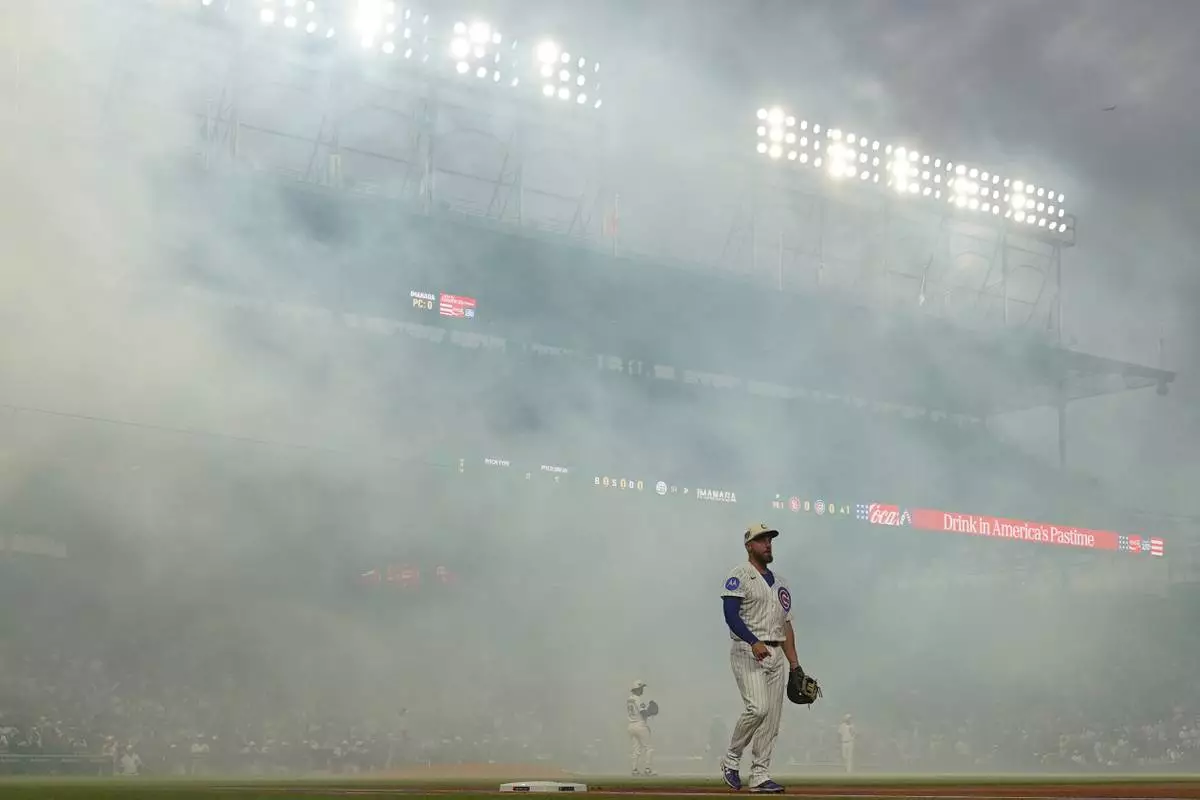
Smoke drifts as Chicago Cubs first baseman Michael Busch looks on after fireworks before a baseball game against the St. Louis Cardinals, Saturday, July 4, 2026, in Chicago. (AP Photo/David Banks)
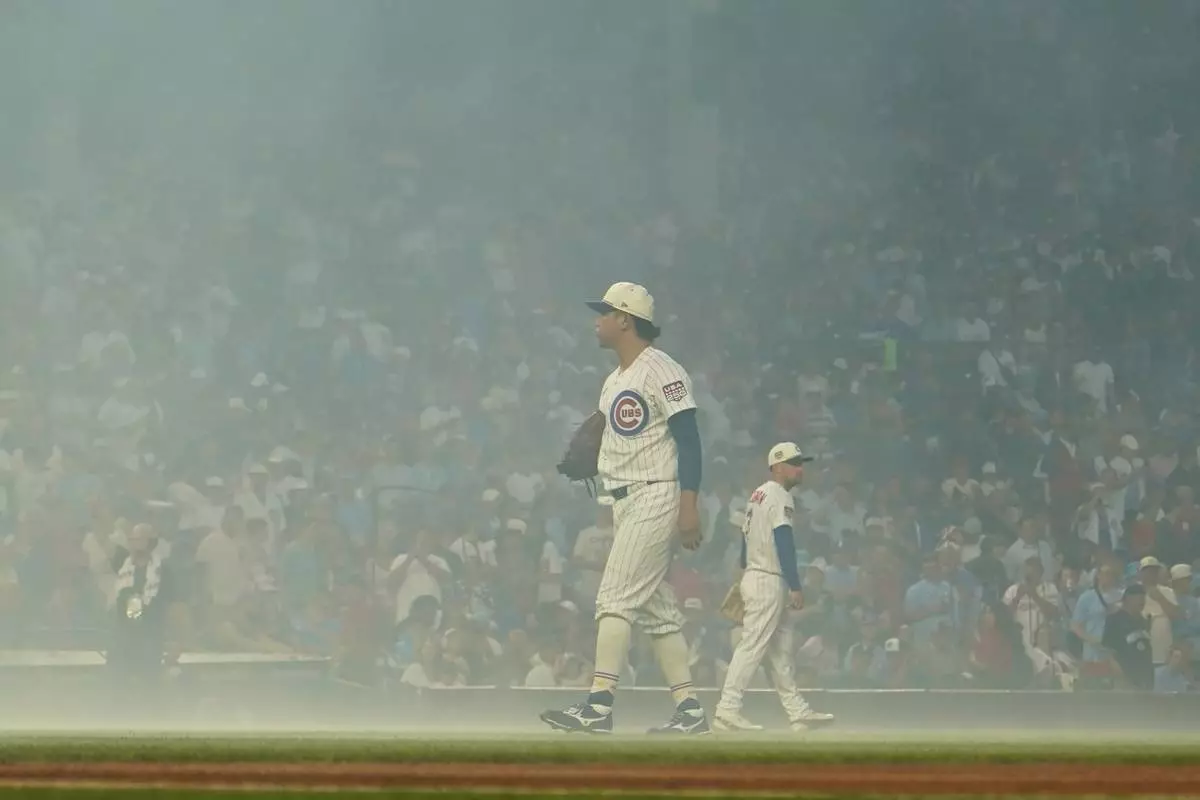
Chicago Cubs pitcher Shota Imanaga stands amidst smoke after fireworks before a baseball game against the St. Louis Cardinals, Saturday, July 4, 2026, in Chicago. (AP Photo/David Banks)

BOGOTA, Colombia (AP) — Ismael Arias was headed to the market when the devastating 7.4 magnitude earthquake hit western Colombia last week, sowing death and destruction. His home region of Choco was the epicenter.
Leaving home early that day likely saved his life, he says — the two-story home he had spent years building with his modest wages collapsed during the quake.
“The house is completely destroyed,” said the 66-year-old math teacher in Quibdo, the regional capital.
At least 312 people were killed by the Aug. 10 quake, according to figures published Wednesday by the central government, and 29,000 homes were destroyed.
Recovery will be particularly challenging for Choco, which was already struggling with high poverty rates, poor infrastructure and underfunded health and education services.
According to the United Nations Office for the Coordination of Humanitarian Affairs, 69,000 people in Choco were affected or displaced by the earthquake — about 10% of its population.
The regional government says more than 200 schools were damaged, and poor internet access will make it difficult for children to take online lessons. With around 600,000 inhabitants, mostly Afro-Colombian or Indigenous people, Choco has long been one of the country's most neglected regions.
Largely covered by mountains and rainforests, only two precarious roads connect Choco to the rest of Colombia. Many towns are only reachable by plane or boats, and the rivers can be dangerous. There are no roads linking communities along the more than 650 kilometers (406 miles) of Choco's coastline hugging the Pacific Ocean to the interior.
In large swaths of the region, rebel groups fight over the control of illegal mines and drug trafficking routes, displacing civilians or imposing lockdowns that prevent villagers from working their fields for days at a time.
“We are facing a triple crisis,” said Luis Mora, the United Nations Population Fund's representative in Colombia. “You have the humanitarian crisis caused by the earthquake, now joining the under development crisis and the crisis caused by armed conflict in this territory.”
The agency has been supplying kits with personal hygiene products to women affected by the earthquake and working to create safe spaces for women within shelters.
Cristian Maturana, a doctor at Quibdo’s only public hospital, said that after the earthquake hit, the emergency room overflowed with patients with broken bones and other injuries.
In the days that followed, 36 patients with multiple fractures were flown to a hospital in the city of Medellin, in the neighboring region of Antioquia — because his hospital lacked enough personnel and equipment to treat them, Maturana said.
The hospital’s only refrigerator capable of storing blood donations was also damaged by a power surge following the quake, rendering transfusions impossible. It was replaced over the weekend with a fridge donated by a group of oncologists in Bogota, the country's capital.
“These have been tough days,” Maturana said, adding that support from elsewhere in Colombia and abroad "has been crucial.”
The emergency room is currently operating at twice its capacity, with patients being treated in chairs or on stretchers in the hospital’s hallways, Maturana said.
Donations of antibiotics, bandages, blood pressure monitors and other equipment have been helpful, but the hospital still needs wheelchairs and more beds.
“These seem like basic things,” Maturana said. “But they are items we have long had shortages of.”
Camilo Prieto, a doctor with the Colombian Environmental Movement, a humanitarian group, said his organization brought in more than 2 tons of medical supplies, including electrocardiogram and ultrasound machines last week. The group also flew some of the aid to remote towns with helicopters and small planes.
“By land it would be very difficult,” Prieto said. “But some companies and owners of private planes have given us flight hours.”
Wiston Mosquera, the Roman Catholic bishop of the Quibdo diocese, said he hopes the quake brings attention to many of Choco’s structural problems, like poor healthcare facilities, the lack of roads or the permanent problems with the power supply.
“We are decades behind the rest of Colombia’s regions,” said Mosquera, who was born and raised in Choco.
Colombian President Abelardo de la Espriella has visited Choco twice since the earthquake, and promised a plan that will include billions of dollars in infrastructure investment and programs to generate jobs.
Choco’s unemployment rate was the highest in Colombia last year, according to DANE, the nation’s statistics agency. The region’s GDP per capita was 14.3 million Colombian pesos in 2025, or about $3,500 dollars, a quarter of Bogota’s per capita income.
De la Espriella said he will designate a government official to oversee Choco’s recovery, and provide subsidies to families left homeless by the earthquake so that they can rent new homes.
Arias, the math teacher who lost his home, said he’s skeptical of such promises because of the region's history of neglect. He said he spent around $32,000 building his home, taking out loans from banks, and will be hard pressed to raise those kinds of funds with his current teacher's salary.
“Even if I am helped, I don’t think I will get enough,” Arias said. He and his partner are for now staying at a relative's home.
“It's not the same,” he says. “You don’t have the freedom there that you get in your own house.”
People gather at a vigil for earthquake victims in Cali, Colombia, Saturday, Aug. 15, 2026. (AP Photo/Santiago Saldarriaga)
A crane lifts a concrete slab to clear the way for rescuers searching through the rubble three days after an earthquake hit Pereira, Colombia, Thursday, Aug. 13, 2026. (AP Photo/Brandon Pinto)
Volunteers in Bogota, Colombia, sort aid for people affected by the earthquake, Thursday, Aug. 13, 2026. (AP Photo/Fernando Vergara)
A backhoe clears earthquake debris in Quibdo, Colombia, Monday, Aug. 17, 2026. (AP Photo/Paula Orozco)
Volunteers sort aid bound for people affected by the earthquake in Choco department, in Bogota, Colombia, Tuesday, Aug. 18, 2026. (AP Photo/Fernando Vergara)