Skip to Content Facebook Feature Image

White House report brands Smithsonian leadership as radical activists who can't be trusted

ENT

White House report brands Smithsonian leadership as radical activists who can't be trusted
ENT

ENT

White House report brands Smithsonian leadership as radical activists who can't be trusted

2026-07-06 01:50 Last Updated At:02:01

NEW YORK (AP) — A White House report brands the leadership of the Smithsonian Institution, especially at the National Museum of American History, as radical activists who cannot be trusted, indicating that President Donald Trump may be preparing to install his own team.

The report released late on Independence Day by the White House Domestic Policy Council comes in the midst of Trump’s aggressive campaign to overhaul some of Washington's most sacred cultural and historic institutions. Trump in March revealed his intention to force changes at the Smithsonian Institution with an executive order that targeted funding for programs that advanced “divisive narratives” and “improper ideology,” as he continued a broadside against culture he deems too liberal.

"The Smithsonian Institution, and the National Museum of American History in particular, under its current leadership and current interpretive ideology, cannot be trusted to tell America’s story honestly and in a way that is inspiring, unifying, and worthy of our great republic,” according to the report by the council, which is led by a former top Trump speechwriter.

The authors added: “As this report shows, confirmed in the words of Museum leadership, this ideological capture has moved the Museum’s mission away from straightforward historical education and scholarship toward an extreme political activism that seeks to transform our country.”

The Smithsonian did not immediately respond to requests for comment Sunday.

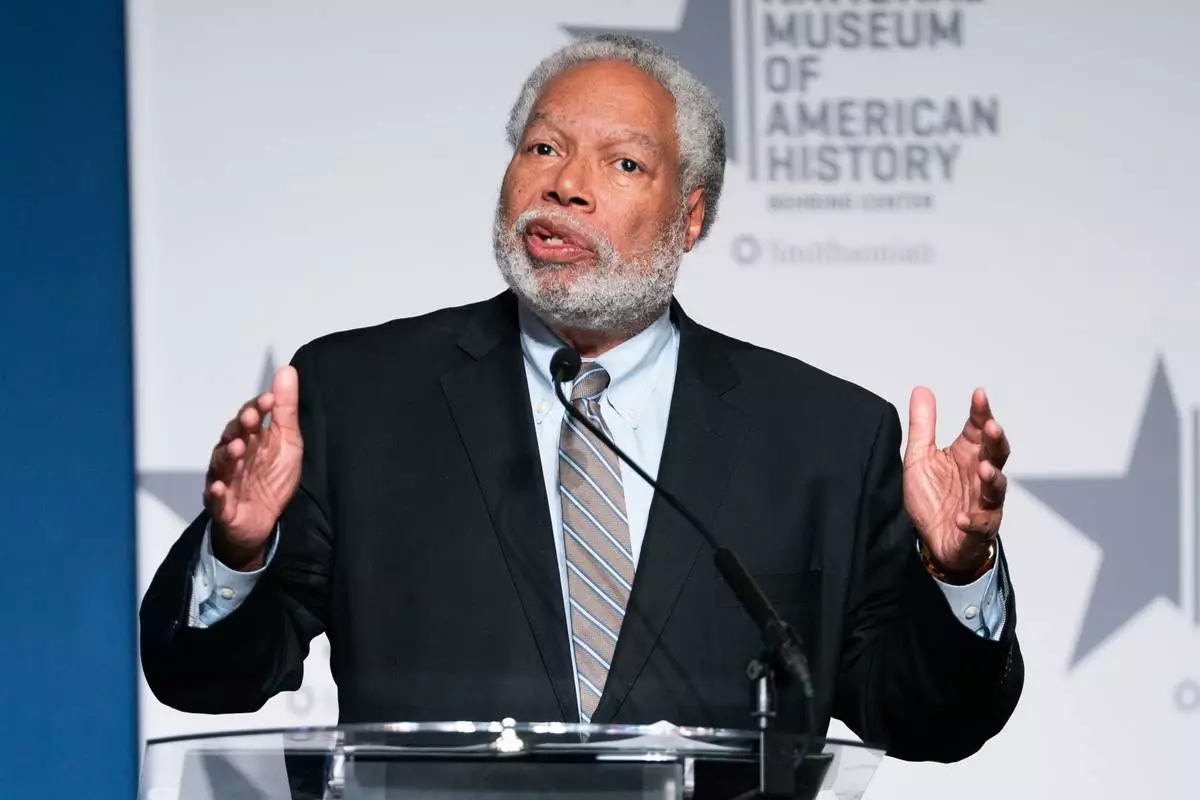
Historian Lonnie Bunch, the Smithsonian's current secretary, is the first African American to lead the institution. In an unrelated interview that aired Sunday on NBC's “Meet the Press,” Bunch said “the notion of being a more perfect union, not the perfect union, is really what motivates me.”

“I think what I want people to understand is that there is a responsibility to continue to make those aspirations available, accessible, meaningful to a whole range of people,” Bunch said. “And that, in essence, America’s greatest strength, it’s not running away from its history, but it’s understanding how that history shaped us and continues to shape us.”

Historian Anthea M. Hartig is the first woman to serve as director of National Museum of American History.

Trump's escalating effort to force changes at the Smithsonian marks the Republican president's latest move to transform cultural pillars of society, such as universities and art, that he considers out of step with conservative sensibilities. Trump had himself installed as chairman of the John F. Kennedy Center for the Performing Arts with the aim of overhauling programming, and his handpicked board voted to add his name to the building, only to have a federal judge later order the signage to be removed.

The administration also forced Columbia University to make a series of policy changes by threatening the Ivy League school with the loss of several hundred million dollars in federal funding.

Trump has also imposed changes on historical sites beyond Washington, including in Philadelphia, where the administration won a court ruling last week allowing it to reinstall interpretive panels that critics say whitewash the history of slavery at the site of President George Washington’s home. Advocates, academics and officials have been concerned for months that the version that complies with Trump’s order could give a history that plays down the pain in the nation’s past in favor of a more triumphant view.

Gov. Josh Shapiro, D-Pa., accused Trump and his allies of trying to “rewrite history."

“There’s not one individual narrative that a president gets about our history,” Shapiro, a potential presidential prospect, said in an interview that aired Sunday on CNN's “State of the Union.” “And any president should want to make sure that that full history is shared, that the American people are able to draw their own conclusions.”

Shapiro added, “If we understand where we came from, we’re going to have a better path forward."

Trump's Domestic Policy Council does not necessarily agree.

The National Museum of American History "confronts visitors with materials intended to undermine faith in American institutions and the longstanding shared ideals of the American people,” the council's report said. “We must be committed to restoring truth and sanity in how American history is presented and taught.”

In seeking to fulfill Trump's order, which he called “Restoring Truth and Sanity to American History,” the review concluded by finding that the museum “by the intention and at the direction of current Museum and Smithsonian leadership, has become subject to institutional capture by a radical, activist ideology that is fundamentally opposed to telling the noble, honest story of the great country we know and love.”
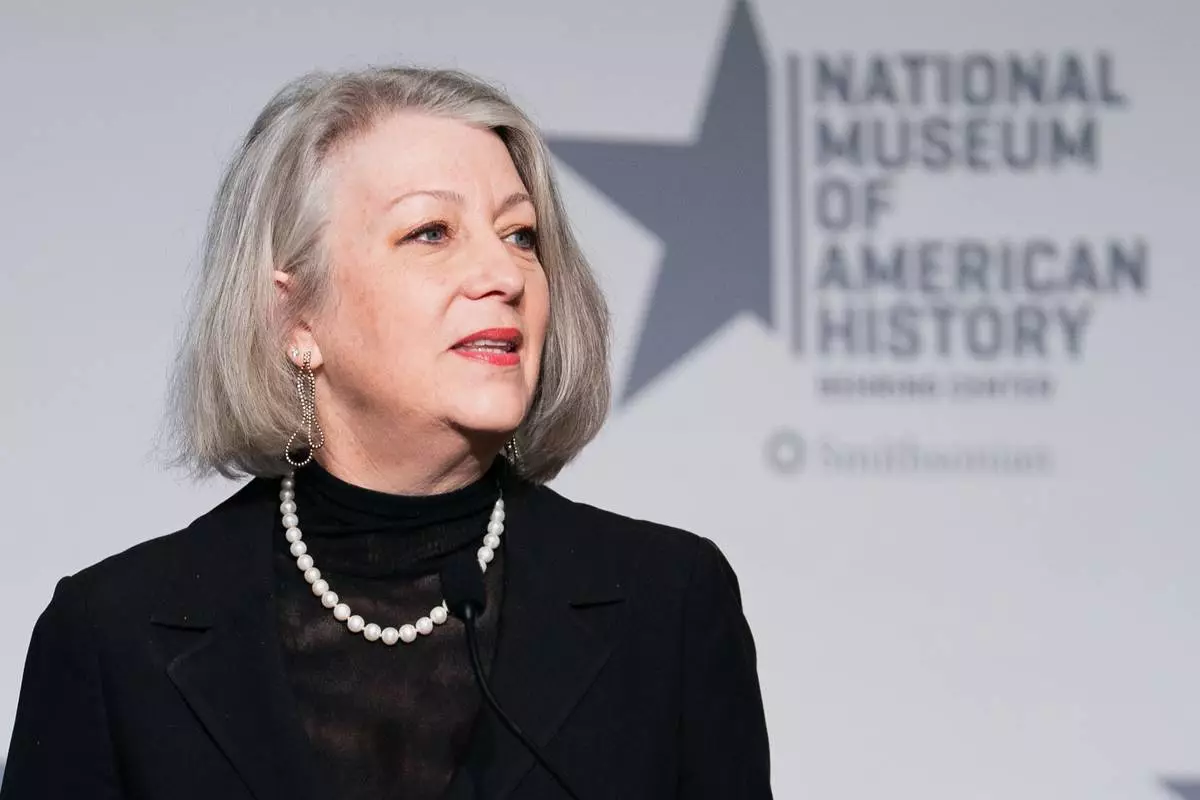
FILE - Anthea Hartig, of the National Museum of American History, speaks at an event, Feb. 20, 2026, in Washington. (AP Photo/Allison Robbert, File)
FILE - Anthea Hartig, of the National Museum of American History, speaks at an event, Feb. 20, 2026, in Washington. (AP Photo/Allison Robbert, File)

FILE - Secretary of the Smithsonian Institution Lonnie Bunch speaks at an event, Feb. 20, 2026, in Washington. (AP Photo/Allison Robbert, File)
FILE - Secretary of the Smithsonian Institution Lonnie Bunch speaks at an event, Feb. 20, 2026, in Washington. (AP Photo/Allison Robbert, File)

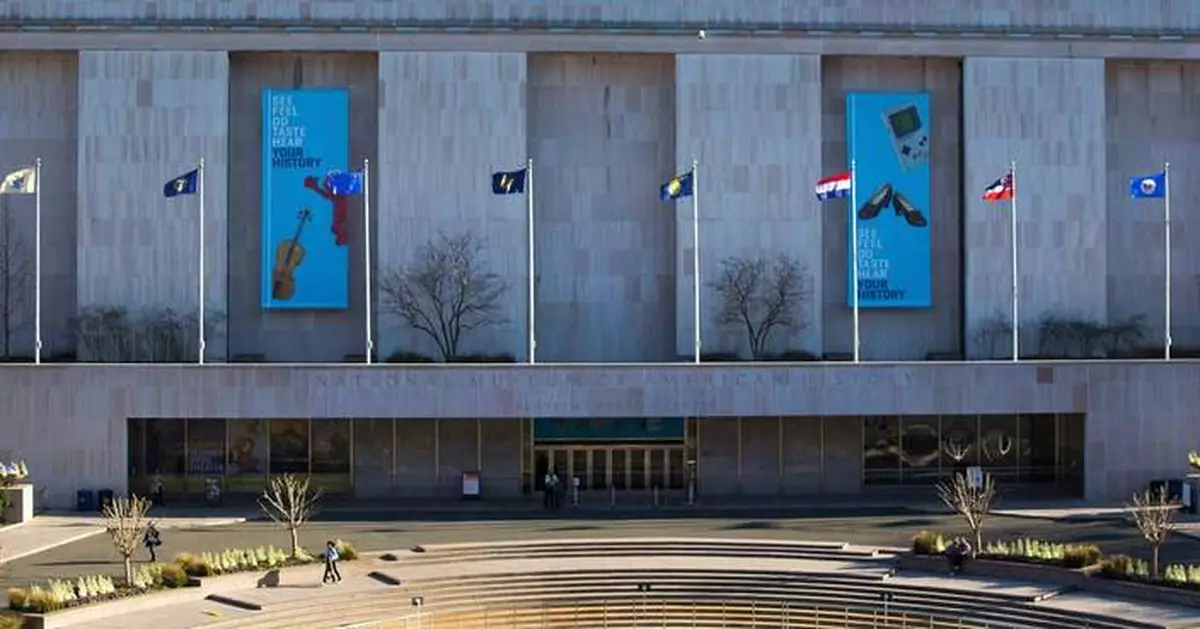
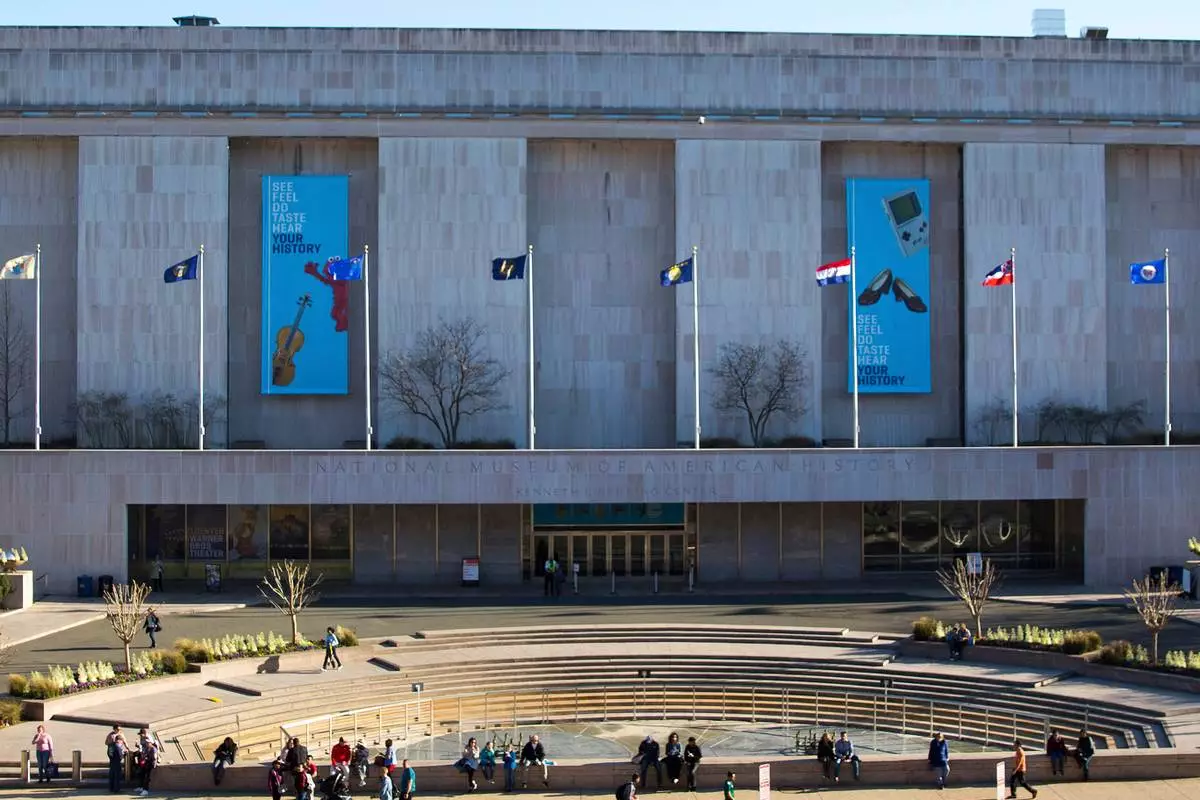
FILE - The Smithsonian Museum of American History is pictured on the National Mall in Washington, April 3, 2019. (AP Photo/Pablo Martinez Monsivais, File)


FILE - The Smithsonian Museum of American History is pictured on the National Mall in Washington, April 3, 2019. (AP Photo/Pablo Martinez Monsivais, File)

ANKARA, Turkey (AP) — Since he started work as NATO secretary-general almost two years ago, Mark Rutte has spent much of his time trying to keep the United States anchored to the world’s biggest military alliance, employing outright flattery to dissuade U.S. President Donald Trump from acting on threats to abandon it.

But the goalposts keep shifting, raising the stakes ahead of this week’s summit in Turkey.

Initially, it was about money. Trump has long railed against NATO allies for spending too small a fraction of their national budgets on defense. But those problems were addressed at their summit last year, when U.S. allies committed to invest as much as America, in gross domestic product terms.

NATO's real problem now is turning that money into military capabilities, particularly as European countries worry about a possible attack from Russia.

Still, Rutte tried to put to bed any lingering concerns at a White House meeting last month, with a new pitch using a chart labeled the “The Trump Trillion” in gold letters — showing $1.2 trillion in spending by European allies and Canada since 2017.

But Trump appeared unmoved, saying he was still disappointed at some NATO allies’ refusal to join the Iran war, which he had launched alongside Israel without consulting them.

“We don’t need their money — we don’t need anything,” Trump said. “I just want loyalty.”

Trump suggested he might have skipped the upcoming summit entirely were it not being hosted by Turkish President Recep Tayyip Erdogan. It’s a sign that even Erdogan and Rutte — foreign leaders Trump seems to hold in rare esteem — will have their work cut out for them in keeping the summit on track.

Historically, the prime tasks of NATO’s top civilian official — always a European, never an American — have been to encourage consensus in an organization that makes its decisions unanimously, and to speak on behalf of all 32 member countries.

But during both of Trump’s terms, Rutte and his predecessor at the helm of NATO, Jens Stoltenberg, have dedicated a huge amount of energy just to keep the United States inside their alliance.

Trump has threatened to leave NATO, dallied with pulling U.S. troops out of Europe and vowed to take over the island of Greenland — a semiautonomous part of ally Denmark. He has cast doubt over whether he would defend another member not spending enough on their military, eroding trust.

Rutte’s approach has been heavy on flattery. Last month’s carefully choreographed pitch in the Oval Office — with props redolent of an American flag — laid down a new marker, even for a man heavily criticized for likening Trump to a “daddy.”

The charts showed tens of thousands of U.S. jobs were being created and a backlog of $300 billion in European orders for military equipment — all thanks to the “leader of the free world,” Rutte said.

He pushed back, gently, on Trump’s complaints that NATO did not support the U.S. against Iran, noting that up to 5,000 U.S. planes took off from bases in Europe before an April ceasefire.

NATO cannot function without its biggest and most powerful ally. Europe is being pushed to fend for itself even as Russia, the historical reason for the alliance, poses a greater threat.

Last month, the Pentagon surprised its NATO allies by announcing that it was scaling back the number of troops, warships, aircraft and drones it would provide if one of them came under attack. Trump has also sent conflicting messages about whether U.S. troop numbers would be lowered or increased.

The cutbacks and mixed messaging has undermined unity at the alliance, just as Russia has been probing Europe's defenses with drone flights near military bases across multiple countries, according to a study released on Thursday.

Each summit is meant to showcase the commitment to collective security — the all-for-one, one-for-all pledge enshrined in Article 5 of NATO’s treaty. It’s only been invoked once, when allies came to America’s aid after the Sept. 11 attacks.

The last NATO summit was held in The Hague, the hometown of Rutte, a former Dutch prime minister. The Dutch royal family hosted dinner, and Trump stayed overnight at the king’s palace.

Rutte got the allies behind a major defense spending pledge, and Trump left a happy man, calling his NATO partners a “nice group of people.”

This year, the summit will be hosted by Erdogan, another key NATO member with an independent streak. His close ties to Trump may keep the American president at the table, but it’s unlikely to mend the rifts.

Rutte has tried to convince Trump that his European partners are spending so much more that America can safely turn its attention to security challenges posed by China while they handle the war in Ukraine.

But Trump wants more now, and his demand for “loyalty” is hard to capture on any chart.

Rutte’s predecessor, Stoltenberg, has written in his memoir about chairing a 2018 summit that Trump nearly upended.

“If an American president says he no longer wishes to defend the other allies and leaves a NATO summit in protest, then the NATO treaty and its security guarantee aren’t worth very much,” Stoltenberg wrote.

NATO Secretary General Mark Rutte prepares to deliver an address during the America 250 event in Brussels, Sunday, June 28, 2026. (AP Photo/Virginia Mayo)

NATO Secretary General Mark Rutte prepares to deliver an address during the America 250 event in Brussels, Sunday, June 28, 2026. (AP Photo/Virginia Mayo)

NATO Secretary General Mark Rutte speaks during a meeting with President Donald Trump in the Oval Office at the White House, Wednesday, June 24, 2026, in Washington. (AP Photo/Jacquelyn Martin)

NATO Secretary General Mark Rutte speaks during a meeting with President Donald Trump in the Oval Office at the White House, Wednesday, June 24, 2026, in Washington. (AP Photo/Jacquelyn Martin)

President Donald Trump listens as he meets with NATO Secretary General Mark Rutte in the Oval Office at the White House, Wednesday, June 24, 2026, in Washington. (AP Photo/Jacquelyn Martin)

President Donald Trump listens as he meets with NATO Secretary General Mark Rutte in the Oval Office at the White House, Wednesday, June 24, 2026, in Washington. (AP Photo/Jacquelyn Martin)

President Donald Trump meets with NATO Secretary General Mark Rutte in the Oval Office at the White House, Wednesday, June 24, 2026, in Washington. (AP Photo/Jacquelyn Martin)

President Donald Trump meets with NATO Secretary General Mark Rutte in the Oval Office at the White House, Wednesday, June 24, 2026, in Washington. (AP Photo/Jacquelyn Martin)

NATO Secretary General Mark Rutte speaks during a meeting with President Donald Trump in the Oval Office at the White House, Wednesday, June 24, 2026, in Washington. (AP Photo/Jacquelyn Martin)

NATO Secretary General Mark Rutte speaks during a meeting with President Donald Trump in the Oval Office at the White House, Wednesday, June 24, 2026, in Washington. (AP Photo/Jacquelyn Martin)

Recommended Articles