NEW YORK (AP) — A handful of countries in the OPEC+ oil-producing alliance plan to increase their outputs modestly next month, which would bring more oil online after fuel prices have fallen to levels not seen since before the U.S. and Israel's war with Iran.
The Organization of the Petroleum Exporting Countries and its allies — collectively known as OPEC+ — announced on Sunday that seven countries would expand oil production by a combined total of 188,000 barrels per day in August. It was the fifth consecutive month OPEC+ agreed to raise oil outputs.
Click to Gallery
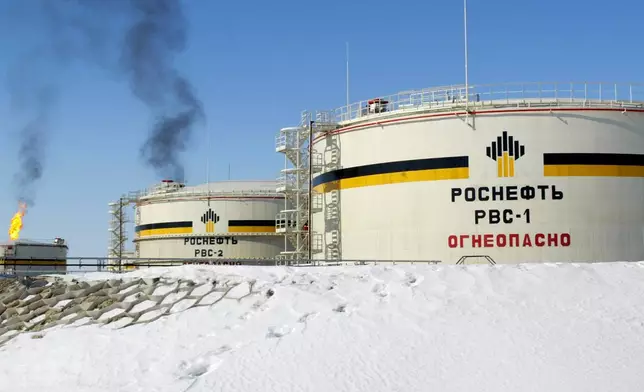
FILE--Reservoirs seen at Priobskoye oil field near Nefteyugansk, in western Siberia, April 5, 2006. (AP Photo/Misha Japaridze, File)
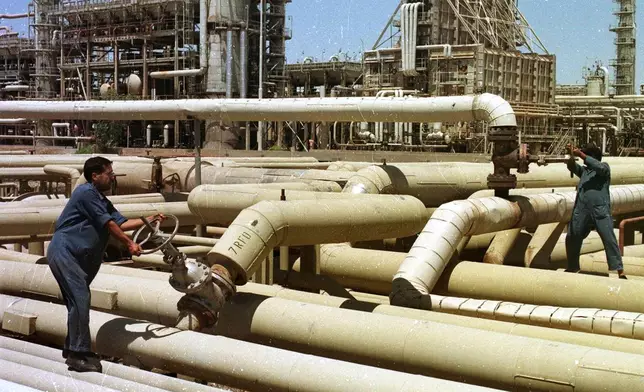
FILE - Iraqi oil workers at an oil installation at Beiji in northern Iraq Tuesday, February 29, 2000. (AP Photo/Jassim Mohammed, File)
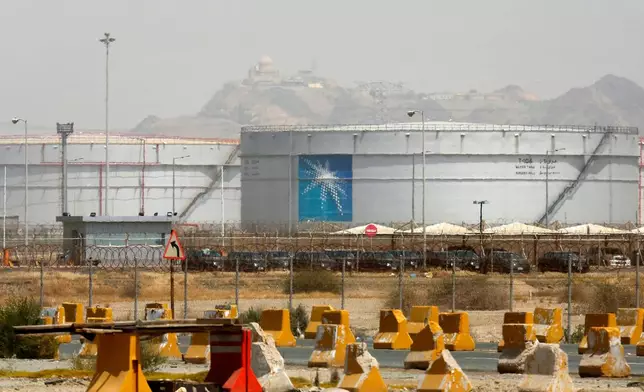
FILE - Storage tanks are seen at the North Jiddah bulk plant, an Aramco oil facility, in Jiddah, Saudi Arabia, on March 21, 2021. (AP Photo/Amr Nabil, File)
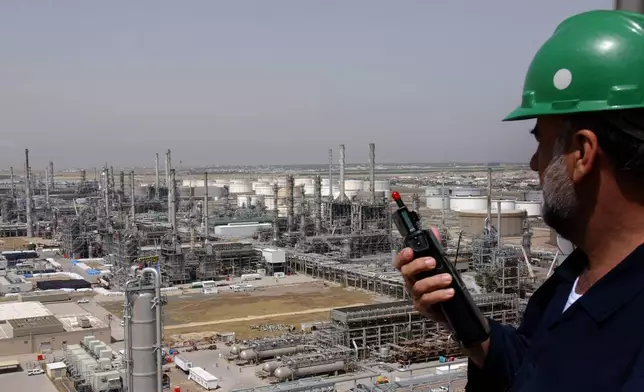
FILE - A Kuwaiti oil worker talks on his radio at Mina Abdulah Oil Refinery, 50 Km South of Kuwait City in this file photo taken April 2005. (AP Photo/Gustavo Ferrari, File)
The participating countries in Sunday's decision are Saudi Arabia, Russia, Iraq, Kuwait, Kazakhstan, Algeria and Oman.
“The countries will continue to monitor and assess market conditions, and in their continuous efforts to support market stability, they reaffirmed the importance of adopting a cautious approach,” the group of oil producers said in a statement.
In the last month, market optimism caused crude oil prices to tumble before and after the U.S. and Iran reached an interim deal to end their fighting. As part of a broader memorandum of understanding, Iran agreed to allow ships to pass unimpeded through the Strait of Hormuz, and the U.S. agreed to end its blockade of Iran's ports.
More and more commercial vessels have since transited the strait, which before the war was a conduit for roughly a fifth of the world's oil. But ship traffic remains below pre-war levels, and tensions over the waterway continue. Iran’s joint military command warned as recently as Thursday that all oil tankers moving through the strait must use its approved routes or face a “forceful response."
Oil prices have continued to decline while negotiators for Iran and the U.S. try to reach a final peace agreement. Brent crude, the international benchmark, closed at under $72 a barrel on Friday. That's close to what it cost before the U.S. and Israel launched strikes on Iran in late Feburary — and far below soaring prices that in March climbed to nearly $120 per barrel.
The war created an energy crisis in much of the world. With most shipping blocked in the Strait of Hormuz, the limited production hikes pledged by OPEC+ in previous months could not counteract the impact on global oil supplies.
Early in the war, many major oil producers across the Middle East had to cut production because their crude had no where to go. S&P Global Energy said in a recent estimate that it did not expect Gulf oil production to rebound fully until at least the first quarter of 2027.
Energy experts have repeatedly warned that fuel prices and the cost of consumer good were likely to stay elevated long past the conflict's end.
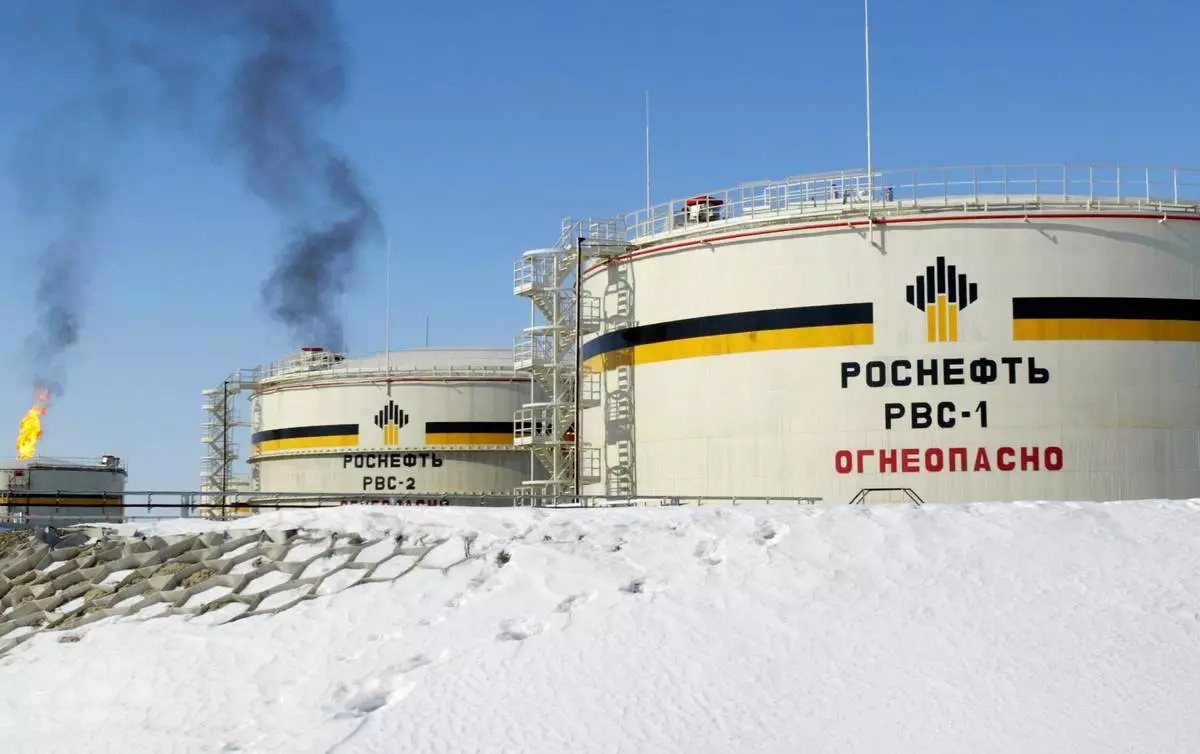
FILE--Reservoirs seen at Priobskoye oil field near Nefteyugansk, in western Siberia, April 5, 2006. (AP Photo/Misha Japaridze, File)
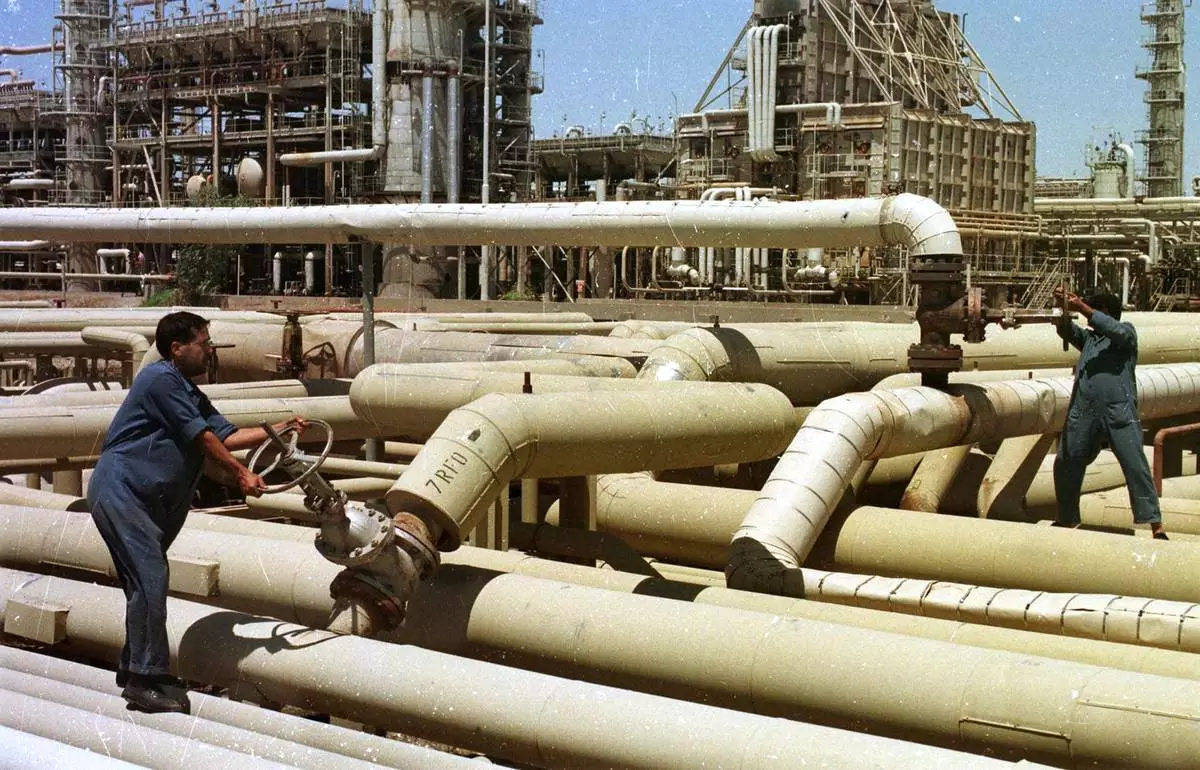
FILE - Iraqi oil workers at an oil installation at Beiji in northern Iraq Tuesday, February 29, 2000. (AP Photo/Jassim Mohammed, File)
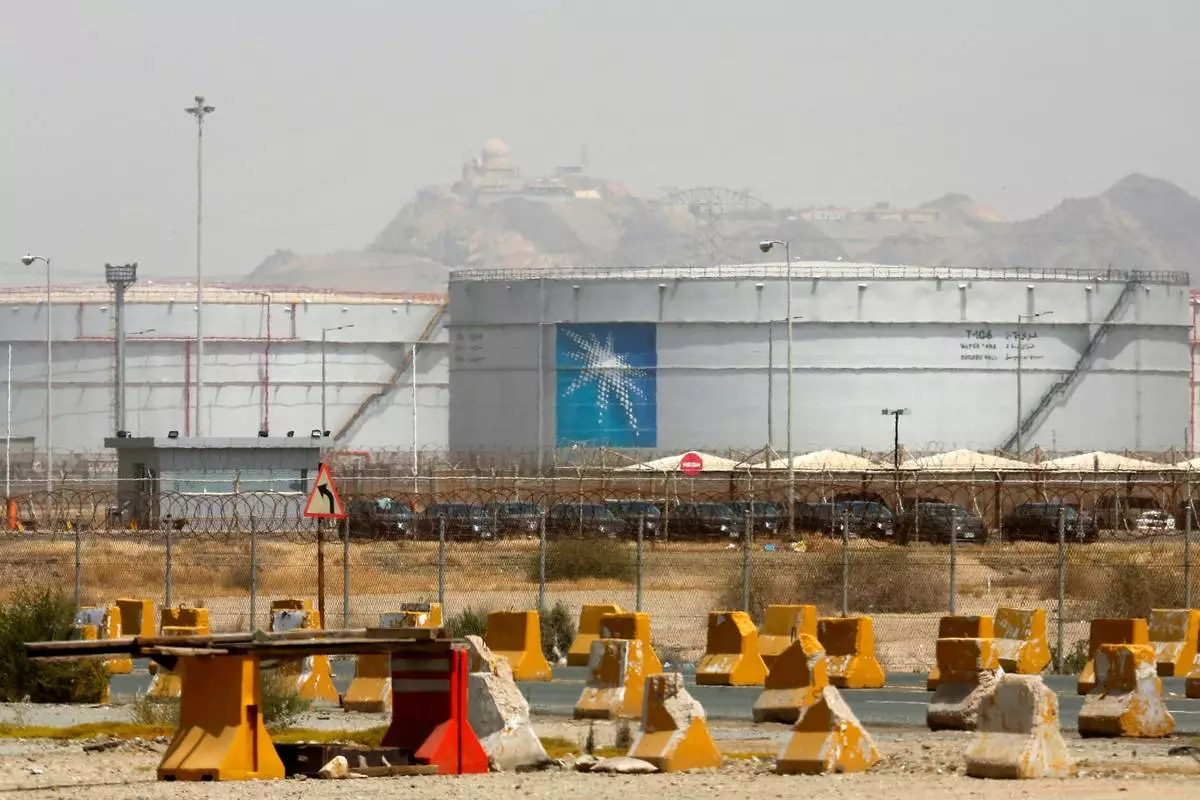
FILE - Storage tanks are seen at the North Jiddah bulk plant, an Aramco oil facility, in Jiddah, Saudi Arabia, on March 21, 2021. (AP Photo/Amr Nabil, File)
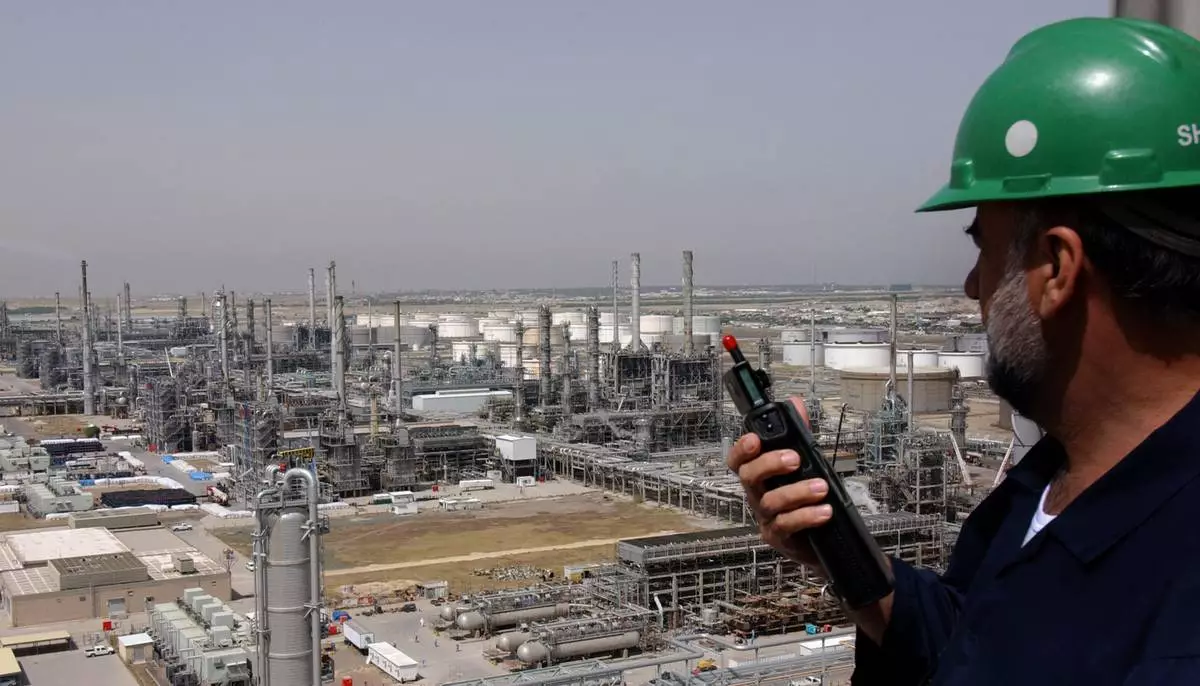
FILE - A Kuwaiti oil worker talks on his radio at Mina Abdulah Oil Refinery, 50 Km South of Kuwait City in this file photo taken April 2005. (AP Photo/Gustavo Ferrari, File)
SEATTLE (AP) — Folarin Balogun’s one-game ban was surprisingly suspended by FIFA, clearing the U.S. forward to play in the team’s World Cup round of 16 match against Belgium, a decision that was praised by President Donald Trump.
Balogun, who leads the Americans with three goals, received a red card for stepping awkwardly on a foot of Tarik Muharemović of Bosnia and Herzegovina in a 2-0 round of 32 win on Wednesday.
A red card calls for an automatic one-game suspension but players learned of Balogun's availability when social media posts started popping up during the 10-minute bus ride Sunday from their hotel to training at the University of Washington.
“I think a lot of us thought it was AI at first,'” defender Chris Richards said. “We weren’t sure if it was true or not.”
Trump praised FIFA’s decision. FIFA President Gianni Infantino has repeatedly made efforts to grow close to Trump, even awarding him a FIFA Peace Prize at the World Cup draw.
“Thank you to FIFA for doing what was right, and reversing a great injustice!” Trump said in a social media post.
Balogun’s red card and suspension for the round of 16 match had been one of the most controversial and consequential decisions of the World Cup.
“If you look at the foul, it was just zero intent at all,” U.S. star Christian Pulisic said. “I felt like there was much worse ones that went on this tournament.”
The U.S. Soccer Federation learned of the decision in a message sent by FIFA in its portal at 10:31 a.m. EDT.
“The implementation of the match suspension is suspended for a probationary period of one year,” FIFA announced. “If Folarin Balogun commits another infringement of a similar nature and gravity during the probationary period, the suspension shall be revoked and the sanction enforced without prejudice to any additional sanction imposed for the new infringement.”
Balogun's three goals included one to give the U.S. the lead against Bosnia. He has matched Landon Donovan in 2010 for the second-most goals by an American in a World Cup, behind only Bert Patenaude’s four in the initial tournament in 1930.
A 25-year-old who plays for Monaco, Balogun scored 13 Ligue 1 goals last season. He has 12 goals in 30 international appearances. He was born in Brooklyn to Nigerian parents who were living in London and in 2023 opted to change his national team affiliation from England, which he had represented at the under-21 level.
“He strikes fear into a lot of defenders,” Richards said.
The host U.S. is seeking to reach the quarterfinals for the first time since 2002. The Americans lost in the round of 16 to Ghana in 2010, Belgium in 2014 and the Netherlands in 2022. They failed to advance from the group stage in 2006 and didn’t qualify for the 2018 tournament.
The USSF said it will not make Balogun available for comment Sunday, but Balogun posted on social media a picture of himself in front of U.S. fans and overlaid with music of Michael Jackson's pop single “Bad.”
On Friday, Balogun said he thought a yellow card instead of red “would have been fair."
FIFA said its decision relied on Article 27 of disciplinary committee rules.
"The judicial body may decide to fully or partially suspend the implementation of a disciplinary measure. By suspending the implementation of the sanction, the judicial body subjects the person sanctioned to a probationary period of one to four years," the rule states.
FIFA in November deferred the final two games of a three-match ban for Portugal's Cristiano Ronaldo for a red card against Ireland in a World Cup qualifier, allowing him to play at the start of the World Cup.
Argentine defender Nicolás Otamendi and Ecuadoran midfielder Moisés Caicedo in April had one-game bans deferred for red cards in qualifiers, also allowing them to be available for World Cup openers.
Brazil’s Garrincha was ejected from a 1962 semifinal but allowed to play in the final against Chile after political pressure.
AP Soccer Writer James Robson and AP Sports Writer Jim Vertuno contributed to this report.
See more of AP’s World Cup coverage here
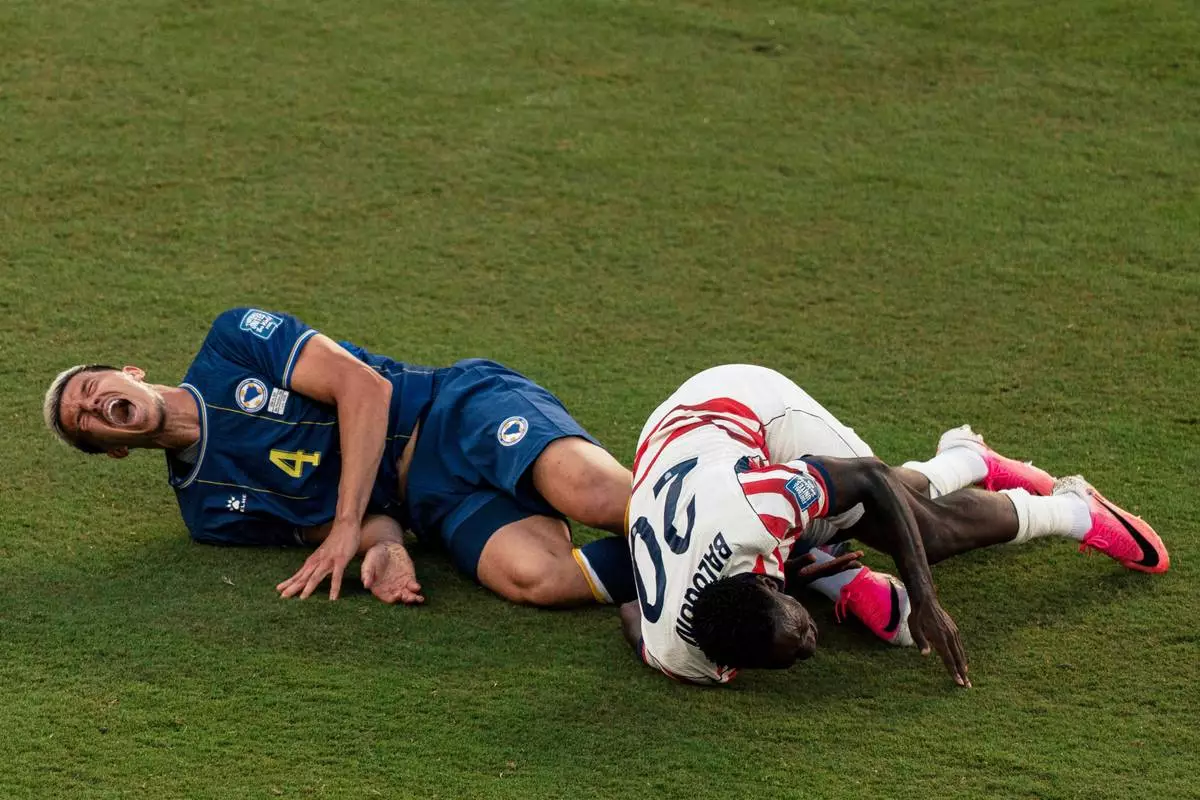
United States' Folarin Balogun (20) and Bosnia's Tarik Muharemovic (4) react after Balogun fouled Muharemovic during the World Cup round of 32 soccer match between the United States and Bosnia in Santa Clara, Calif., near San Francisco, Wednesday, July 1, 2026. Balogun received a red card on the play. (Stephen Lam/San Francisco Chronicle via AP)
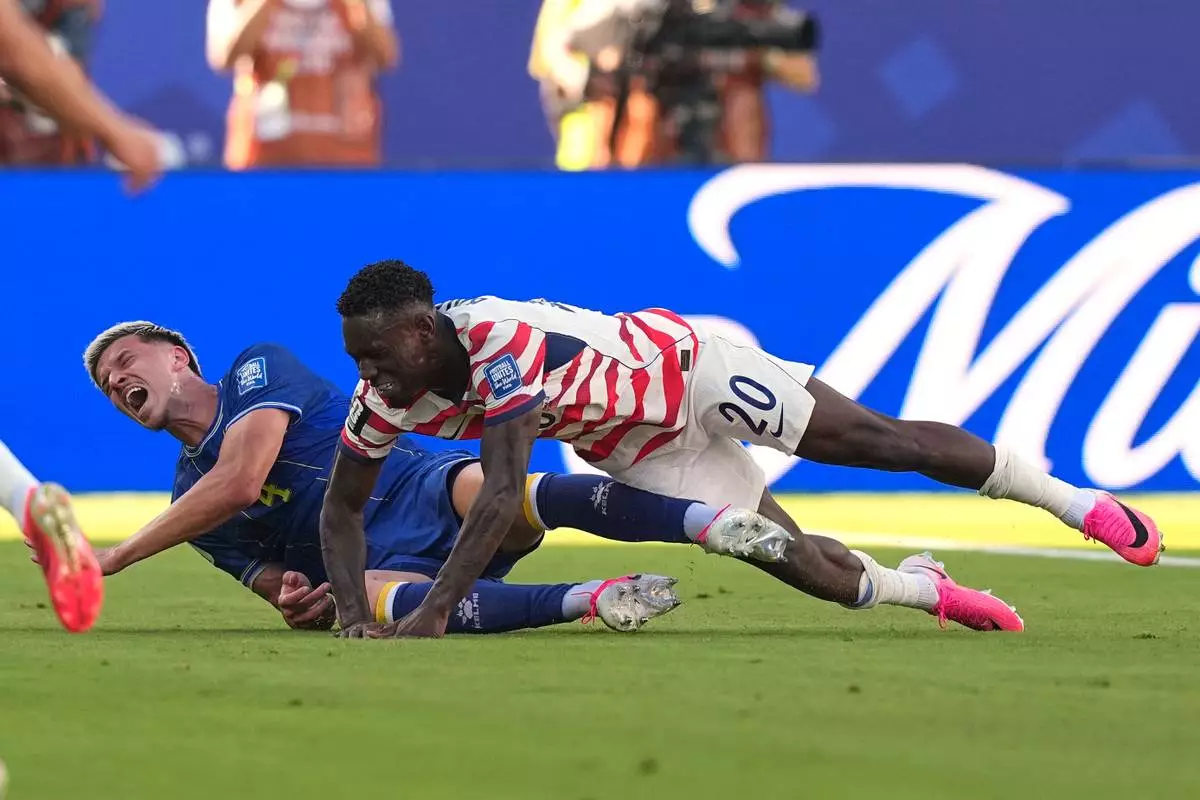
Bosnia's Tarik Muharemovic (4) reacts after a tackle form United States' Folarin Balogun (20) during the World Cup round of 32 soccer match between the United States and Bosnia in Santa Clara, Calif., near San Francisco, Wednesday, July 1, 2026. (AP Photo/Julio Cortez)
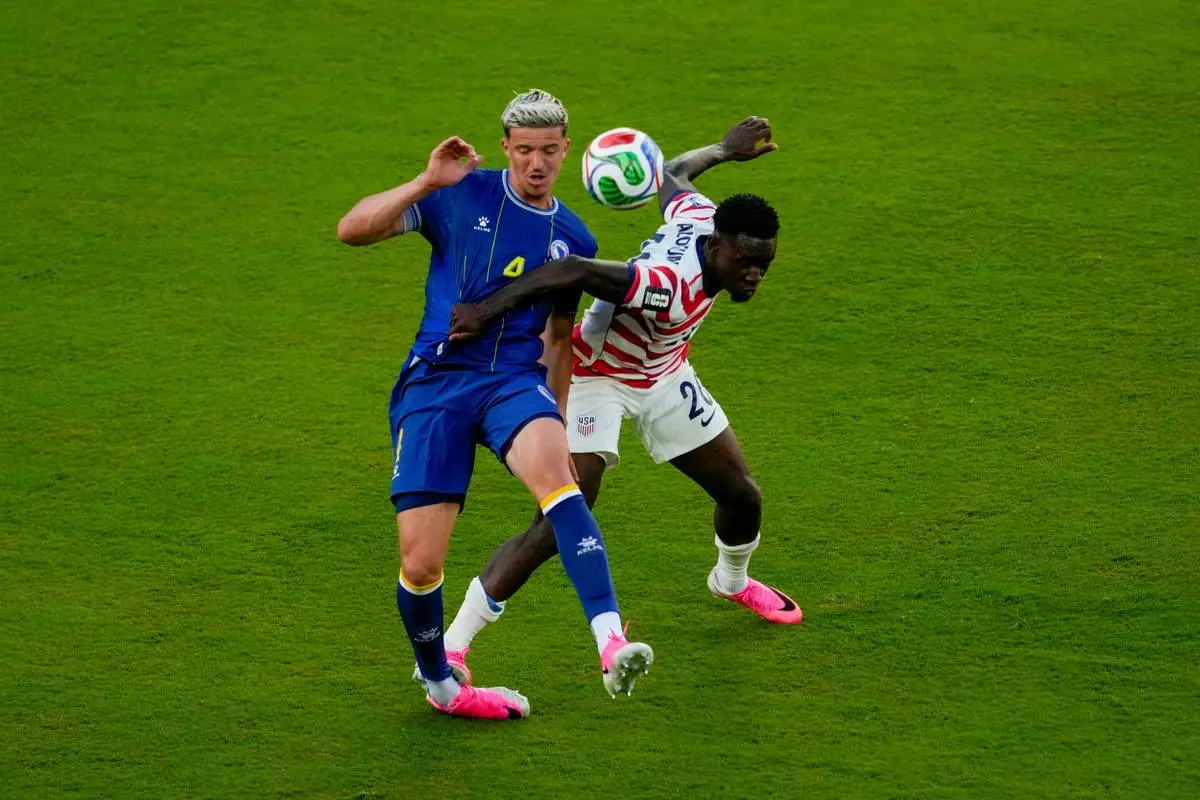
United States' Folarin Balogun (20) fouls Bosnia's Tarik Muharemovic (4) during the World Cup round of 32 soccer match between the United States and Bosnia in Santa Clara, Calif., near San Francisco, Wednesday, July 1, 2026. Balogun received a red card on the play. (AP Photo/Jeff Chiu)
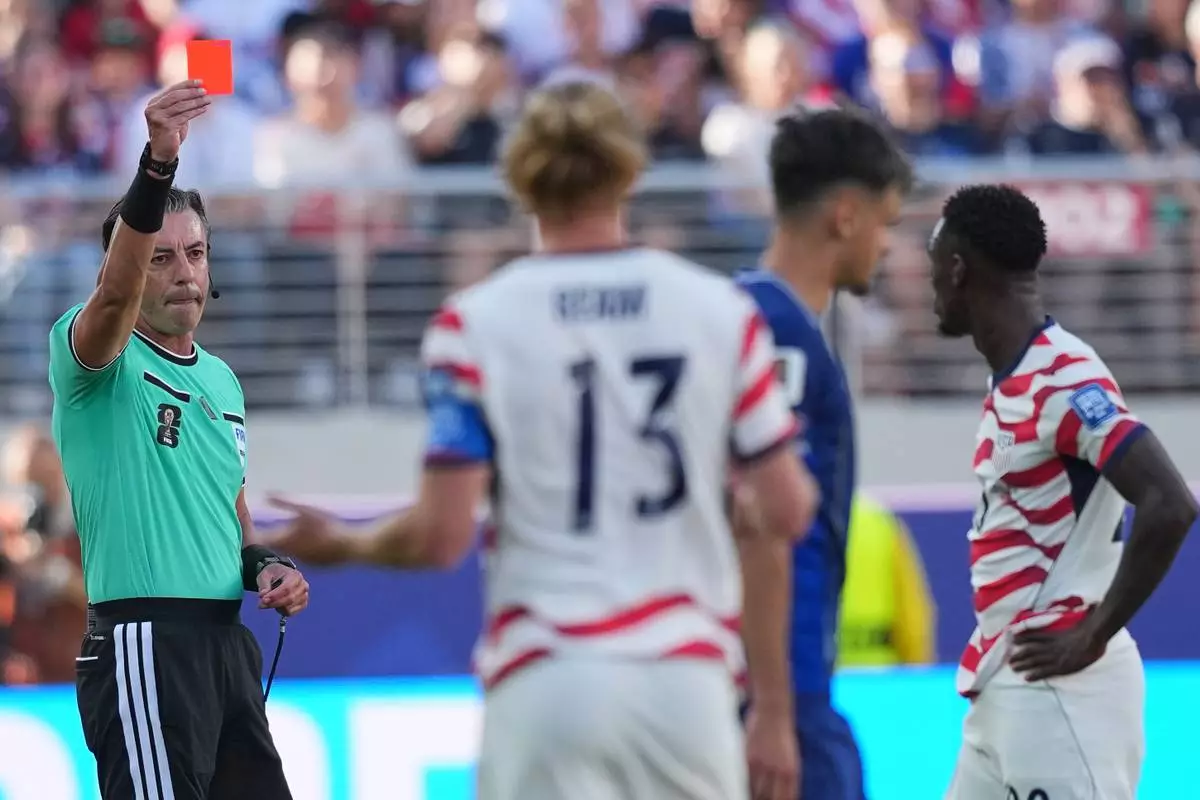
Referee Raphael Claus of Brazil shows a red card to United States' Folarin Balogun, right, during the World Cup round of 32 soccer match between the United States and Bosnia in Santa Clara, Calif., near San Francisco, Wednesday, July 1, 2026. (AP Photo/Julio Cortez)
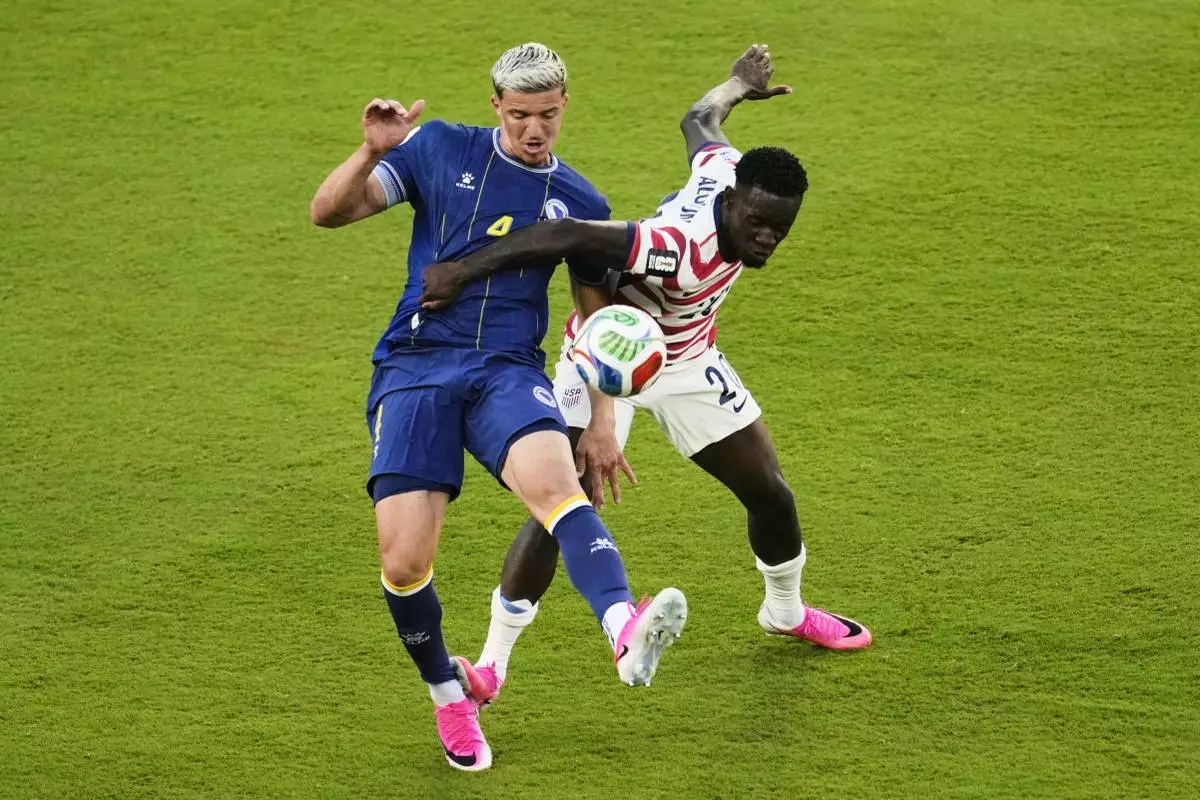
United States' Folarin Balogun (20) fouls Bosnia's Tarik Muharemovic (4), resulting in a red card go Balogun, during the World Cup round of 32 soccer match between the United States and Bosnia in Santa Clara, Calif., near San Francisco, Wednesday, July 1, 2026. (AP Photo/Jeff Chiu)
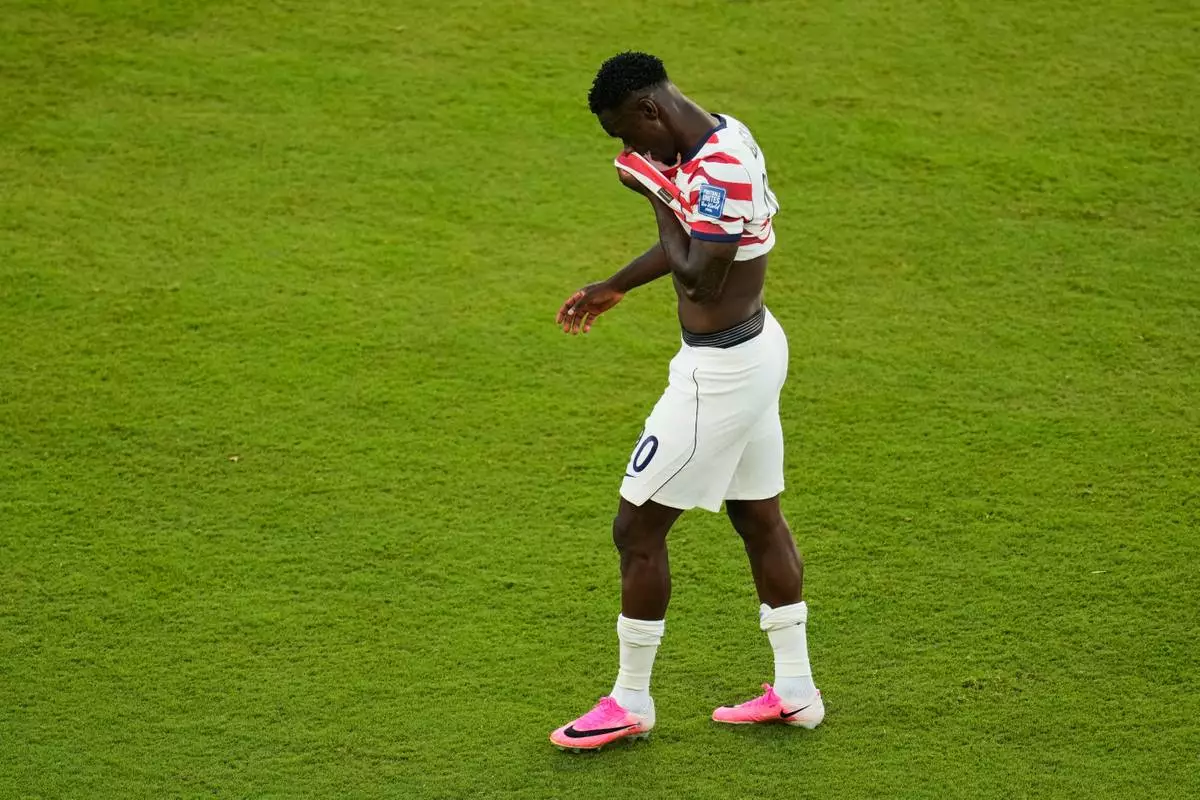
United States' Folarin Balogun (20) walks off the field after receiving a red card during the World Cup round of 32 soccer match between the United States and Bosnia in Santa Clara, Calif., near San Francisco, Wednesday, July 1, 2026. (AP Photo/Jeff Chiu)