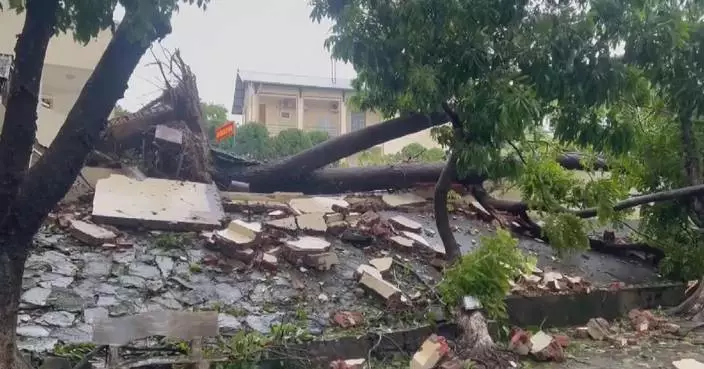
The first shipment of China’s emergency humanitarian aid departed from Beijing for Caracas on Sunday night, carrying 80 tonnes of relief supplies for area affected by the twin earthquakes that struck Venezuela on June 24.
The cargo includes 20 electric generators, eight water purification units, 200 disinfection machines, 200 sets of solar-powered lighting equipment, more than 1,700 tents and over 6,700 blankets. Additional batches of relief materials will be sent in the coming days.
China provided immediate cash assistance to Venezuela after the powerful earthquakes struck the country. In a further commitment, Beijing pledged an additional 100 million yuan (about 14.73 million U.S. dollars) in emergency humanitarian supplies to support the country's recovery efforts.
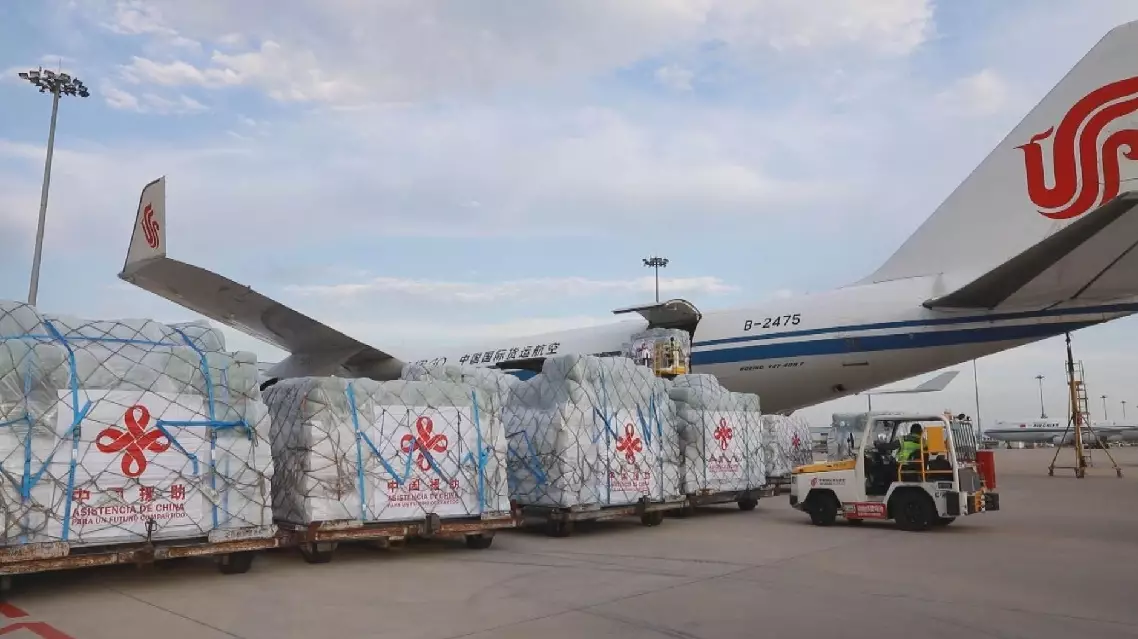
China sends first batch of humanitarian supplies to quake-hit Venezuela
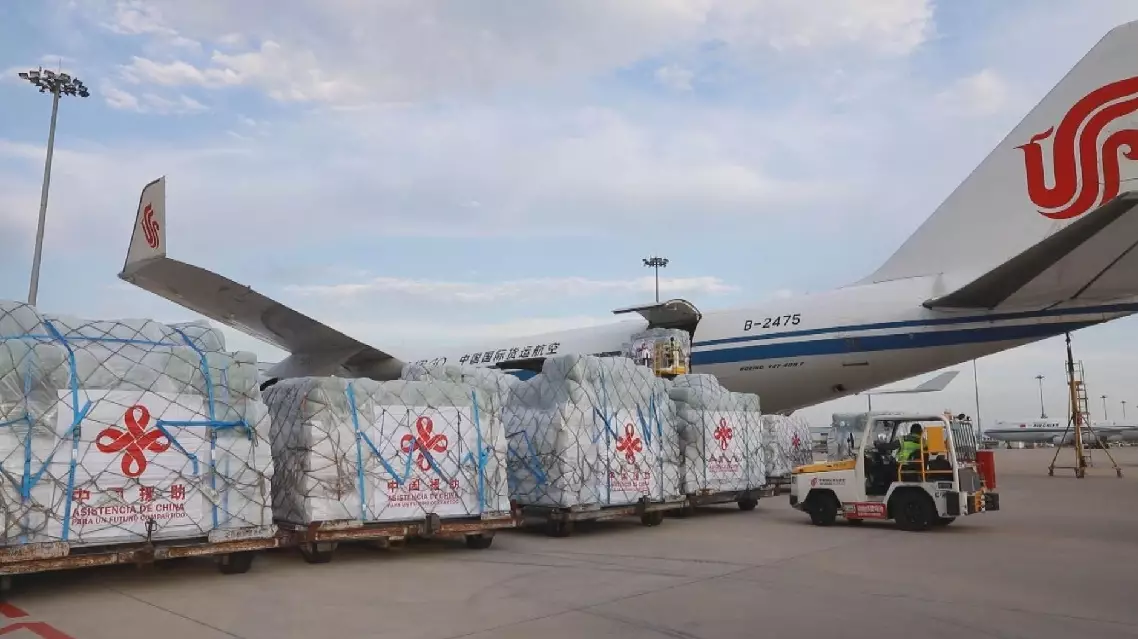
China sends first batch of humanitarian supplies to quake-hit Venezuela
China's Tianwen-2 probe has successfully arrived at a distance of 20 kilometers from the asteroid 2016HO3, enabling it to begin scientific exploration after an approximately 400-day journey of about 1 billion kilometers, the China National Space Administration (CNSA) announced on Monday.
China launched its first asteroid sample-return mission, Tianwen-2, on May 29, 2025, aiming to achieve multiple goals over a decade-long expedition: collecting samples from the near-Earth asteroid 2016HO3 and exploring the main-belt comet 311P, which is more distant than Mars.
During the approach phase, the probe acquired imagery of the asteroid. The mission team leveraged optical navigation data gathered during the close approach to refine the asteroid's ephemeris, reducing the positional uncertainty, previously determined solely through ground-based observations, from hundreds of kilometers down to the kilometer scale, according to the CNSA.
On its voyage to the asteroid, the probe executed deep-space maneuvers and trajectory correction operations. On June 6, 2026, the probe achieved its first detection of the asteroid. On June 7, at a range of 30,000 kilometers, it entered a coplanar trajectory with the asteroid, while on June 19, it approached the asteroid to within 2,000 kilometers.
Next, the probe will progressively conduct more detailed scientific exploration to acquire data on the asteroid's morphology, material composition and internal structure, laying the groundwork for subsequent sample collection operations, the CNSA said.

China's Tianwen-2 probe reaches target asteroid, starts scientific exploration