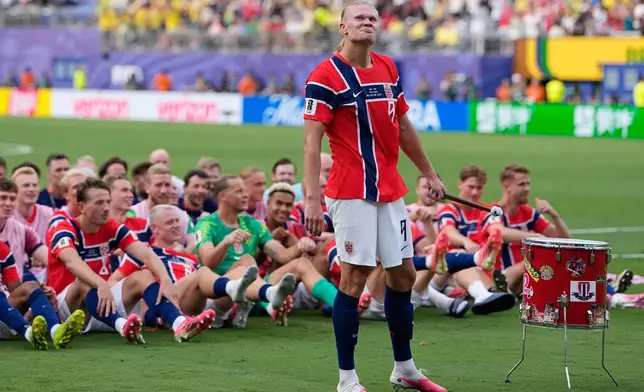
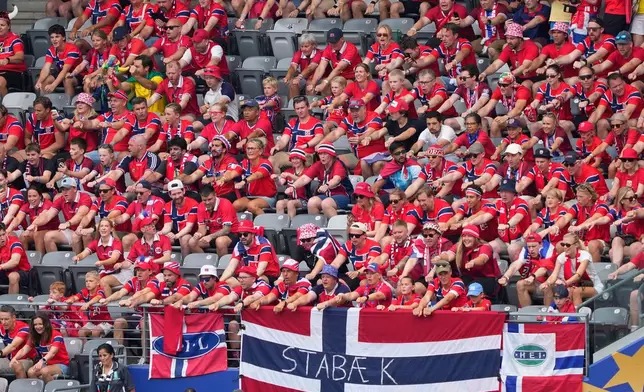
EAST RUTHERFORD, N.J. (AP) — Erling Haaland banged the drum to lead Norway fans in the Viking Row that has become a signature part of the World Cup.
After celebrating carrying his nation into the quarterfinals of the tournament for the first time by scoring both goals in a 2-1 win over Brazil on Sunday, his thoughts drifted to the scene back home where tens of thousands of Norwegians partied into the night.
Click to Gallery
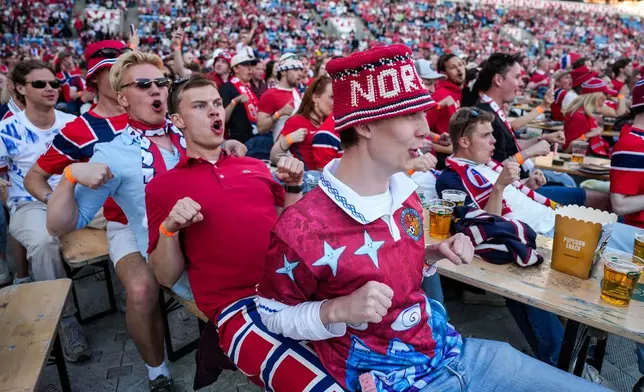
People gather to watch the World Cup soccer match between Brazil and Norway shown on a big screen at Ullevaal Stadium in Oslo, Sunday, July 5, 2026. (Javad Parsa/NTB Scanpix via AP)
Norway soccer fans gather at Slottsplånse and Karl Johans gate in Oslo, Sunday, July 5, 2026, to celebrate Norway's 2-1 victory over Brazil in a round of 16 World Cup match. (Javad Parsa/NTB Scanpix via AP)
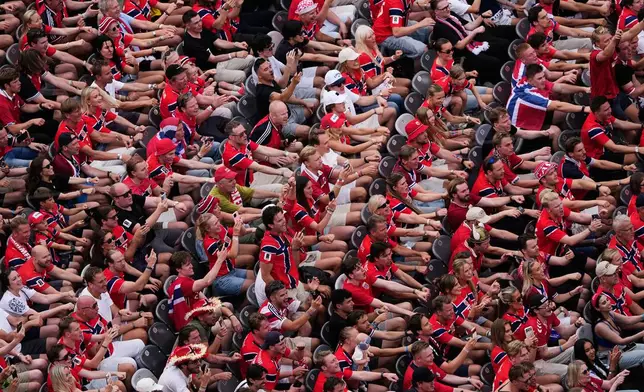
Norway fans celebrate with a viking row chant after the World Cup round of 16 soccer match between Brazil and Norway in East Rutherford, N.J., near New York, Sunday, July 5, 2026. (AP Photo/Matt Slocum)
Norway's Erling Haaland (9) leads the team as they participate in a viking boat row after the World Cup round of 16 soccer match between Brazil and Norway in East Rutherford, N.J., near New York, Sunday, July 5, 2026. (AP Photo/Frank Franklin II)
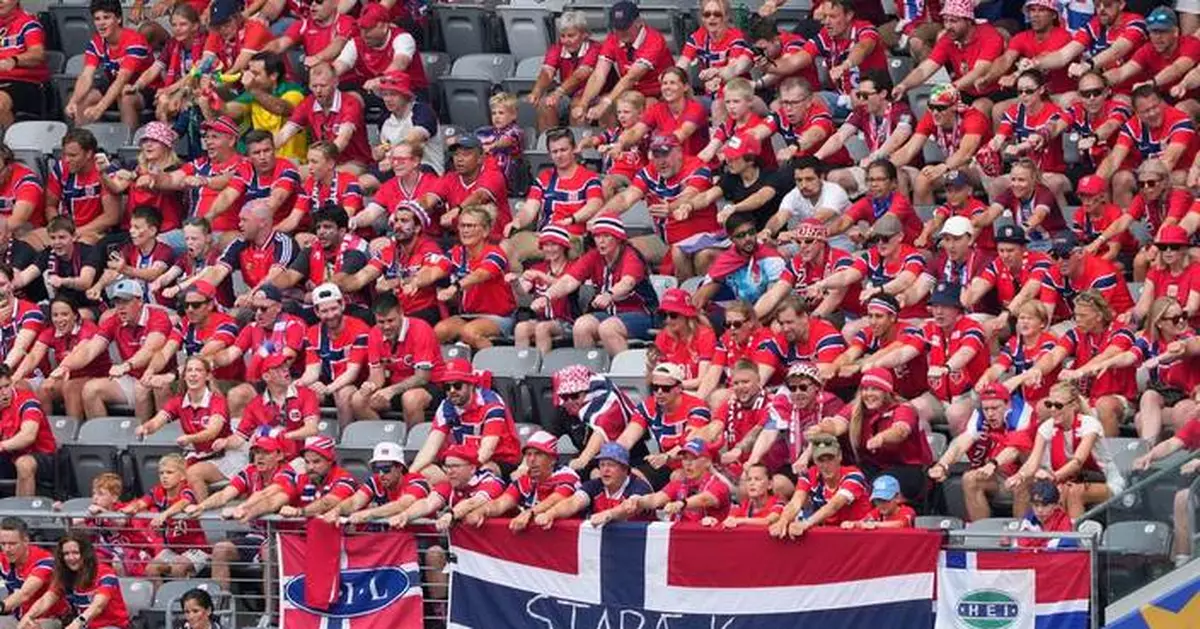
Norwegian fans perform a viking boat row before the World Cup round of 16 soccer match between Brazil and Norway in East Rutherford, N.J., near New York, Sunday, July 5, 2026. (AP Photo/Yuki Iwamura)
And, of course, performing the Viking Row themselves.
“Look at the streets in Norway,” Haaland said. “I’ve never experienced anything like it before. I kind of wish that I was in Oslo now celebrating with all the people.”
Thankfully for his teammates, the Manchester City striker is in the U.S. piling up the goals and making this the best World Cup in the history of Norway's men's national team.
This improbable run that took another leap forward by knocking off five-time champion Brazil is stirring up pride in fans at stadiums and in the streets where the games are taking place, and across the Scandinavian country of just over 5.5 million people.
As many as 50,000 people were watching the match against Brazil at Rådhusplassen — the square outside the town hall — in Norwegian capital Oslo, according to the city council. Wearing a Norway soccer scarf around his neck, Crown Prince Haakon even met a throng of fans outside the royal palace and was seen taking part in a mass Viking Row after the game.
Fireworks exploded at Ullevaal Stadium, the home ground of Norway's national team and where thousands more sat on long tables to view the game.
“The whole nation is rowing together,” coach Ståle Solbakken said. “We are having a great party here and in Oslo and in all the other big and small cities all the way through Norway, and the rowing is in a way a symbol of that and that we’re all together.”
Giant crowds of fans in the red, white and blue colors of the flag turned the rowing into a viral sensation by taking over Times Square and doing it in the stands at a New York Mets baseball game. They will get at least one more chance to see Norway play, against England on Saturday outside Miami with the chance to reach the semifinals.
“We have to keep the feet on the ground,” captain Martin Ødegaard said. “We’ve shown that we can beat anyone and that we are really enjoying what we’re doing. We’re having fun, and in football everything is possible so just keep the foot on the floor, keep working hard and we’ll see what happens and just go with the flow.”
Norway is in the World Cup for just the fourth time and the first since 1998 after failing to qualify each of the past six times. Haaland, who turns 26 on July 21, was not even born then and joked that no one can blame him for previous defeats when he wasn't playing.
“You can blame me for coming here,” said Haaland, whose seven goals at his first World Cup are tied with Argentina's Lionel Messi and France's Kylian Mbappé. “It’s unbelievable. I’m proud. I’m proud of my country, and I’m proud of everyone.”
Indeed, it continues a fairytale season for Norwegian soccer, with Bodø/Glimt — a tiny team that plays in an 8,000-capacity stadium — delivering one of the most extraordinary stories for years in the European game by qualifying for the Champions League and beating a string of top teams, including Haaland's Man City, to reach the knockout stage.
Now the national men's team is taking center stage in its first major international tournament since 2000. The players are looking to emulate Norway's women's team, which won the World Cup in 1995 and has long been a top international side.
Haaland said several times after beating Brazil that he could not believe such a victory was possible and that it was beyond his wildest dreams to pull it off.
He also hopes Norway's success transcends this year and makes kids want to represent their country.
“I want to actually also cultivate a culture where we are proud to play for the national team, and if you play for Norway then you should do it proudly and I think we should cultivate this kind of attitude in young people,” Haaland said.
“To all the kids who see and watch now, I want you to do like me, and I want you to play proudly when you grow up.”
Douglas reported from Sundsvall, Sweden.
See more of AP’s World Cup coverage here
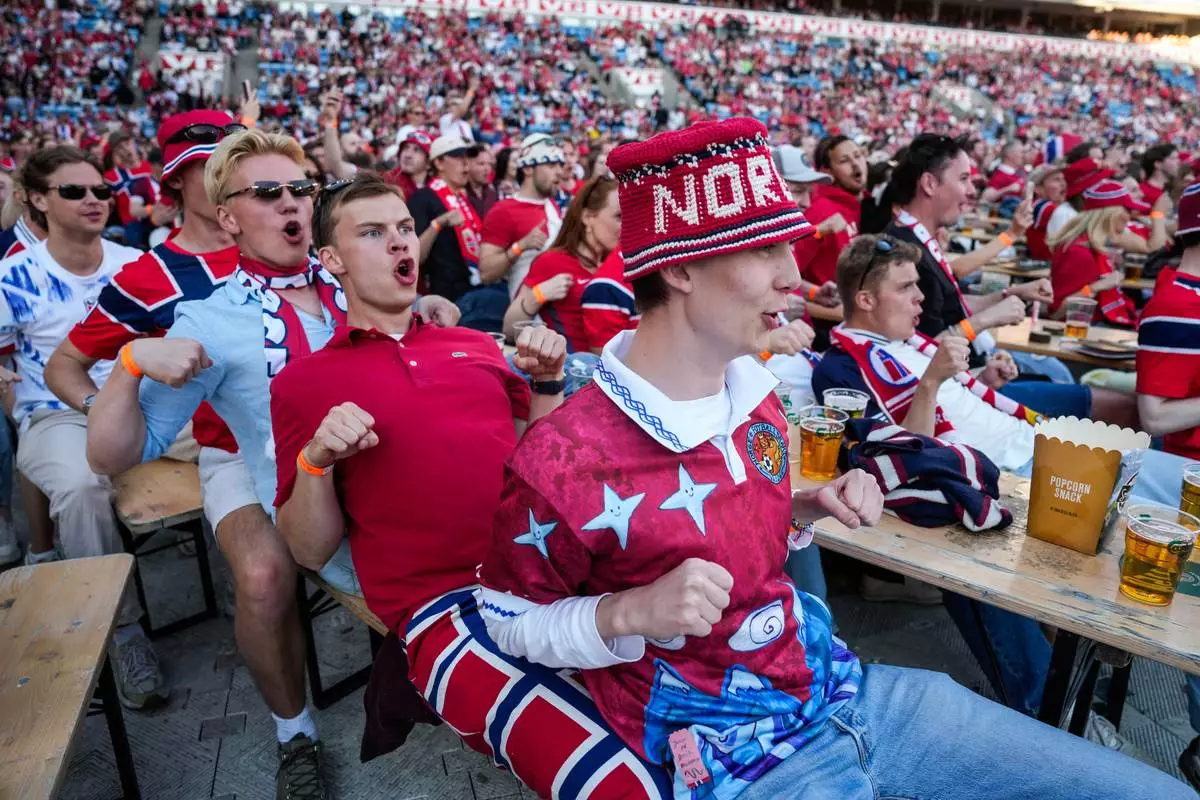
People gather to watch the World Cup soccer match between Brazil and Norway shown on a big screen at Ullevaal Stadium in Oslo, Sunday, July 5, 2026. (Javad Parsa/NTB Scanpix via AP)
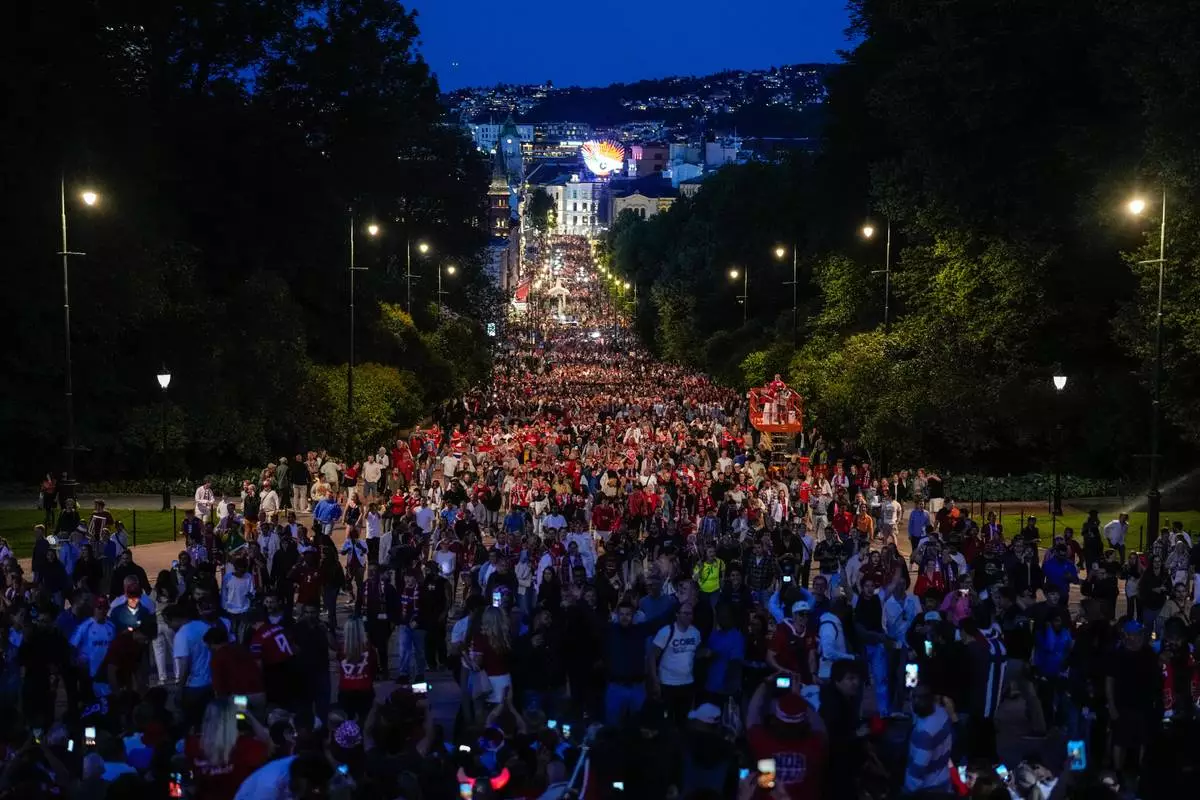
Norway soccer fans gather at Slottsplånse and Karl Johans gate in Oslo, Sunday, July 5, 2026, to celebrate Norway's 2-1 victory over Brazil in a round of 16 World Cup match. (Javad Parsa/NTB Scanpix via AP)
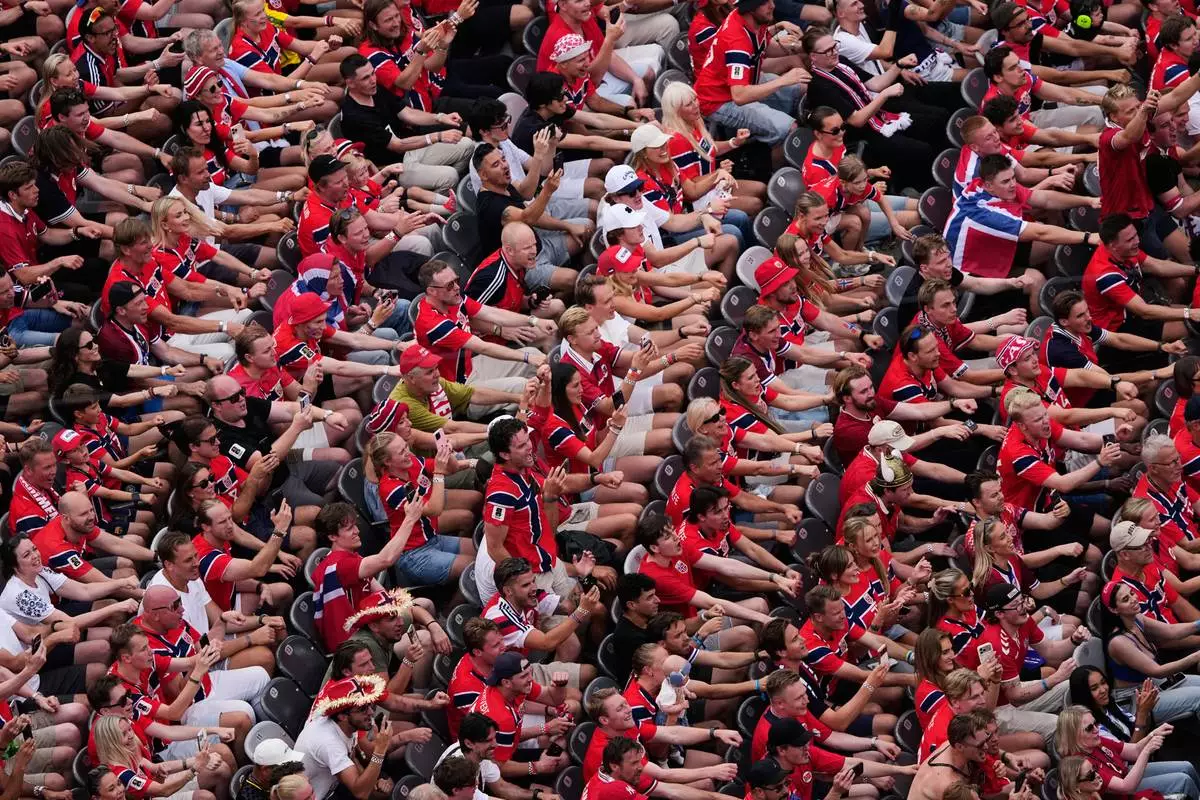
Norway fans celebrate with a viking row chant after the World Cup round of 16 soccer match between Brazil and Norway in East Rutherford, N.J., near New York, Sunday, July 5, 2026. (AP Photo/Matt Slocum)
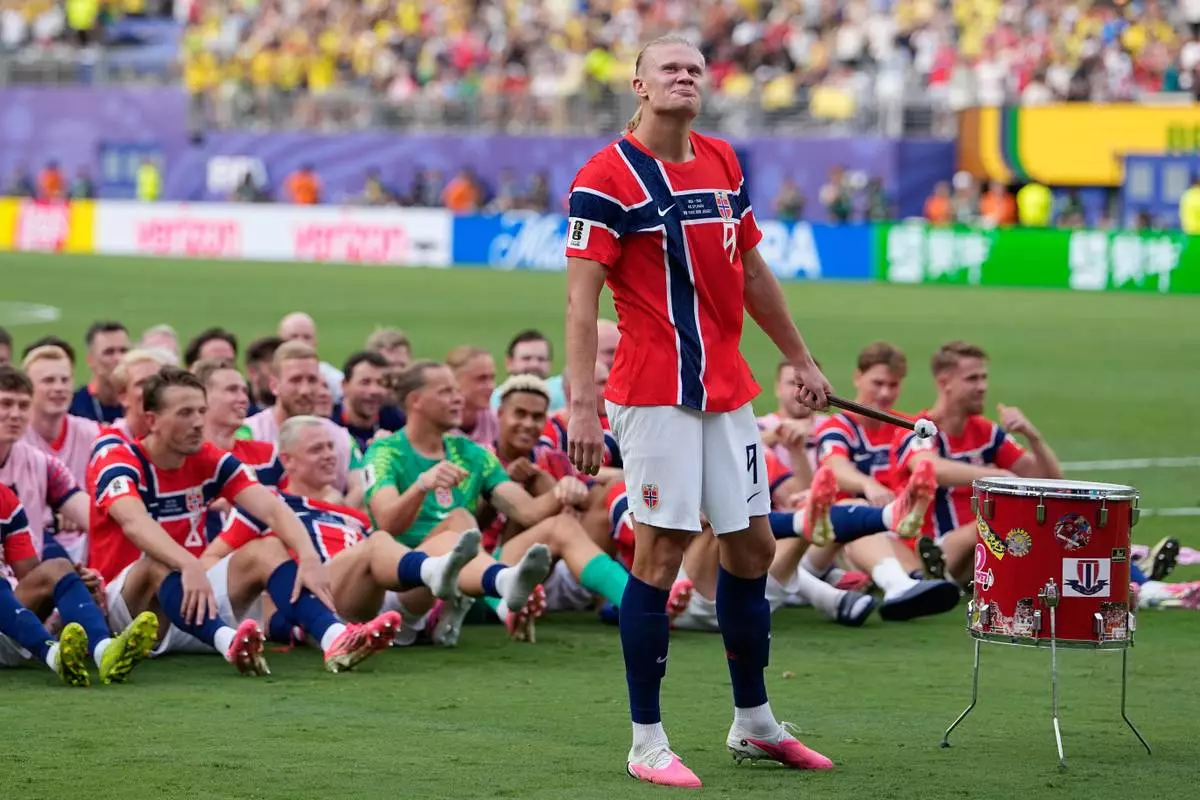
Norway's Erling Haaland (9) leads the team as they participate in a viking boat row after the World Cup round of 16 soccer match between Brazil and Norway in East Rutherford, N.J., near New York, Sunday, July 5, 2026. (AP Photo/Frank Franklin II)
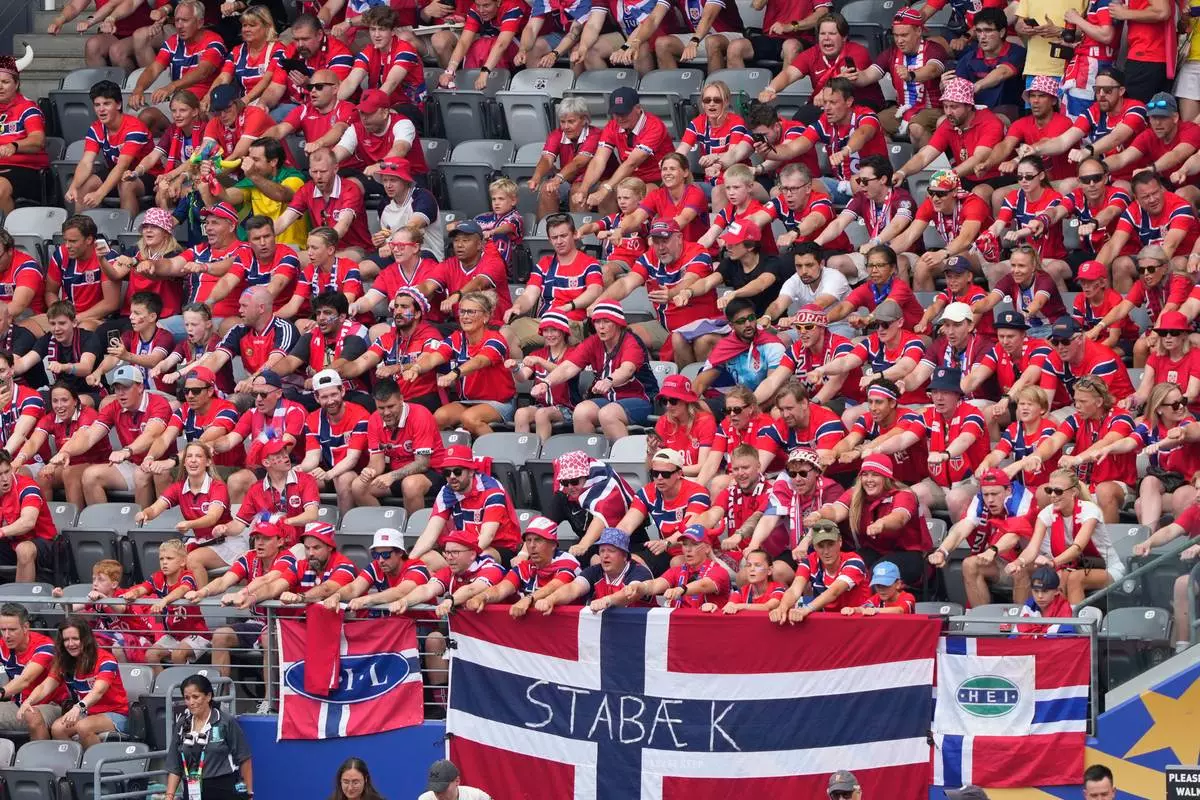
Norwegian fans perform a viking boat row before the World Cup round of 16 soccer match between Brazil and Norway in East Rutherford, N.J., near New York, Sunday, July 5, 2026. (AP Photo/Yuki Iwamura)
PAMPLONA, Spain (AP) — Bill Hillmann has been gored three times while running with the bulls in Spain, but he wouldn’t miss this year’s San Fermin festival for anything.
It marks the 100th anniversary of the publication of Ernest Hemingway ’s book that launched the future Noble Laureate to literary fame and put Pamplona on the map for millions of people around the world.
Hemingway’s 1926 novel “The Sun Also Rises” has captivated generations of readers with its sexy Jazz Age tale of American and British bohemians trying to fill some inner void with the distractions of exotic travel, vast quantities of alcohol and the anguishing pursuit of impossible love.
Its success established “The Sun Also Rises” as a cornerstone of the American literary canon, right up there with F. Scott Fitzgerald’s “The Great Gatsby.” It also popularized the term “lost generation” to describe the tight-knit group of early 20th-century writers expatriated in Paris. Hemingway's terse style forever changed American literature.
Hillmann, who hails from Chicago, was 19 when Hemingway’s vivid depiction of the bull running festival first enthralled him, especially descriptions of average Spaniards risking their lives sprinting through the streets to guide the bulls to the bull ring during the nine-day festival. It kicks off with a firework blast over a packed plaza on Monday, and the first of eight bull runs is on Tuesday.
“It was the first book I ever read,” Hillmann told The Associated Press in Pamplona as he looked down on the pen where the bulls are held before being set free on the cobblestoned route. “I sat there for about six hours, well past midnight, reading the book. And by the time I was done with that book, I was going to be a writer and I was going to be a bull runner.”
Since that literary encounter, the 44-year-old Hillmann has run with the bulls in Spain hundreds of times, counting both his trips to Pamplona and his participation in dozens more bull runs in other Spanish towns. His infatuation with Hemingway and Pamplona has never waned, even though he nearly died one time that he was gored by a bull horn.
Hillmann’s appreciation led him to earn a doctorate in English, and now it is his turn to teach “The Sun Also Rises” at East-West University in Chicago and write about bull running.
Hillmann is just one of many Americans inspired to travel to Spain to see the festival firsthand. Americans are still the leading group of foreigners who run at the San Fermin festival. In 2022, 16% of the bull runners were Americans, the largest percentage among foreigners and four times more than those from neighboring France, according to Pamplona’s City Hall.
Dallas-based tour operator Bruce Anderson, whose company “Running Of The Bulls” has helped thousands of Americans attend San Fermin over the years, says that Hemingway’s work made the festival a bucket-list destination. This year, his company is bringing 1,400 people to the festival, with over two-thirds from the United States.
“There’s a lot of energy, a lot of excitement around just remembering that book and the impact that it’s had,” said Anderson, himself a lifelong Hemingway fan. He spoke in Pamplona’s art deco Café Iruña, which features heavily as a drinking spot in “The Sun Also Rises” and today houses a life-size statue of Hemingway bellying up to the bar.
And Anderson, with his thick white beard, is something of a Hemingway look-alike. Local Spaniards often call out to him: “Papa!” – a nickname for their adopted hero.
Hemingway is etched into the landscape of Pamplona. Hotels and bars have busts of him or signs up that he was once there. Outside the Pamplona bull ring, which also has a statue of the writer, a huge banner hangs in honor of the novel, including a quote that shows how the festival left the writer speechless: “At noon of Sunday, the 6th of July, the fiesta exploded. There is no other way to describe it.”
When Hemingway made his last visits to Pamplona, he would frequent the Perla Hotel; his suite still has furniture from the 1950s when he stayed there. The room, which overlooks the bull run route, also has two glass book cases holding dozens of copies of “The Sun Also Rises.”
“Hemingway did a lot for Pamplona because he made it known around the world,” said Fernando Hualde, who worked for four decades as a receptionist in the hotel.
Hemingway’s local legacy, however, is mixed.
Besides a feminist critique of his hyper masculine public persona, Hemingway has drawn criticism from the animal rights movement for his praise of bull fighters. In “The Sun Also Rises,” he spills far more ink on descriptions of their bravery than on the bull runs.
Animal welfare activist Brook Spurling said during a protest against the San Fermin bullfights that “Hemingway wrote about many, many themes that today would not be accepted into society. He writes about hunting, about war, and we don’t want to be appreciating these themes today.”
Hualde says that some Pamplona residents rue his early promotion of the festival due to the ills of overtourism the sleepy provincial city is now experiencing.
Pamplona has 200,000 residents and receives over a million more people for the festival. While most are Spaniards, around 15% of the revelers are from abroad. And many, especially the younger visitors, follow Hemingway’s example of drinking to excess.
Some locals take pride in spots that weren’t touched by Hemingway. Local literature professor Gabriel Insausti of Pamplona’s University of Navarra recalls being in a bar with a sign that read “Hemingway was not here.”
“In general, Hemingway has become a product of a franchise associated with San Fermin festival that has obscured his novel,” Insausti said. “People know who Hemingway is, but they haven’t read his novel.”
Hillmann said that the high percentage of inexperienced foreigners today makes the Pamplona bull runs particularly dangerous. The last death was in 2009 but gorings and other injuries are common. Novice runners can easily panic and make a wrong move that can cause a pileup or send someone into the path of a bull.
He was badly gored in 2014 when he said a bad maneuver by a fellow runner left him exposed to a bull. He thought he was dying, such was the quantity of blood gushing from his leg.
After another goring in 2017, Hillmann told the AP from his hospital bed in Pamplona that he would not stop running. “People think this is just crazy people running. There is real art. If you pay attention, you can see it,” he said then.
Hemingway's granddaughter, the actress Mariel Hemingway, recalls being treated “like royalty” when she attended San Fermin years ago. Mariel, who has written and spoken about her grandfather as a sufferer of mental illness that led to his suicide in 1961, is convinced his work will endure.
That fascination with death is likewise timeless.
“Identity, love, purpose, and how to rebuild after profound loss ... those themes haven’t ever changed. That’s what’s great about my grandfather,” Mariel Hemingway told the AP from her home in Idaho.
“I think he captured something that will never go away.”
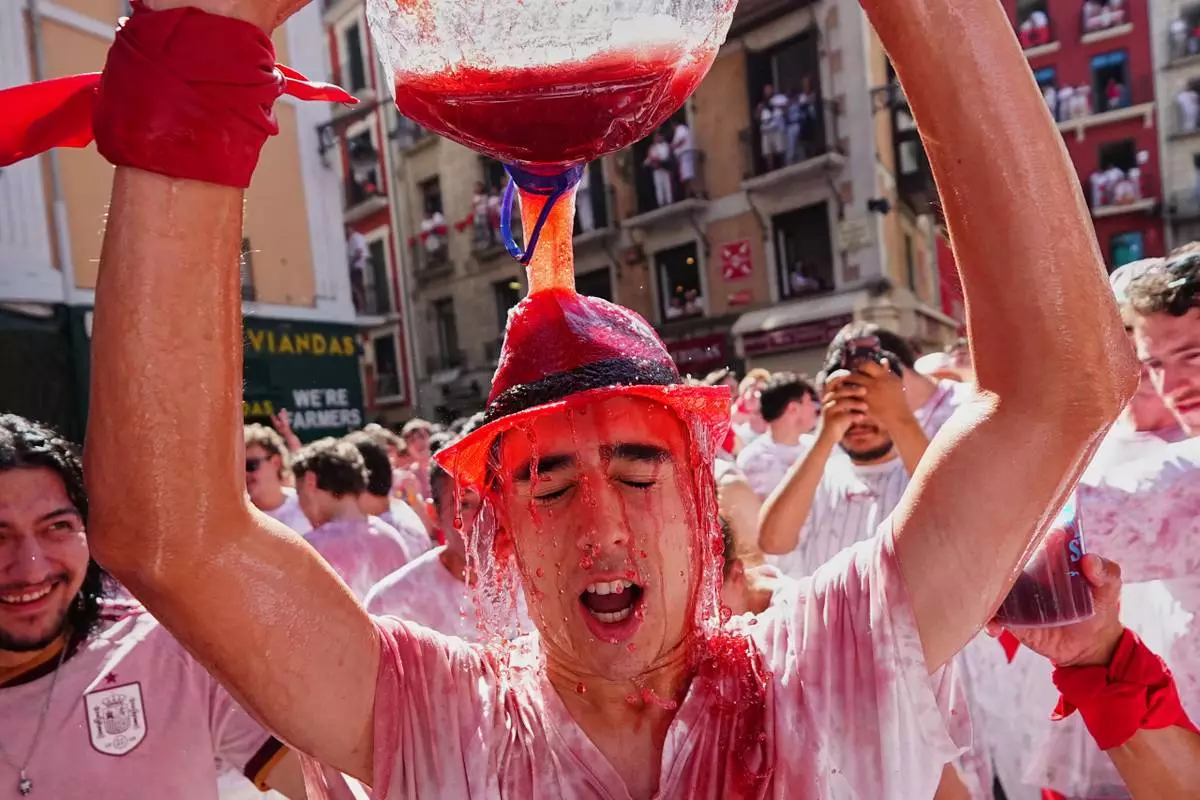
Revelers celebrate as the txupinazo, the traditional rocket marking the start of the San Fermín festival, kicks off nine days of uninterrupted festivities in Pamplona, Spain, Monday, July 6, 2026. (AP Photo/Miguel Oses)
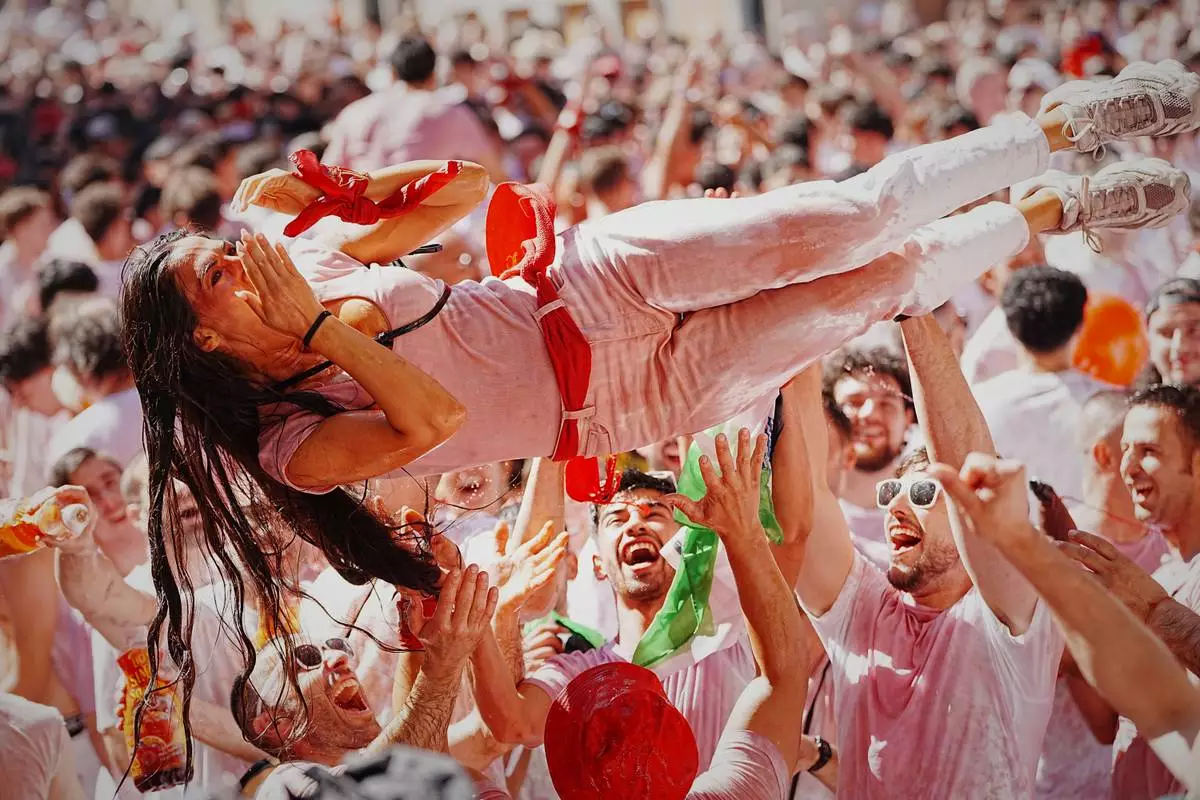
Revelers celebrate as the txupinazo, the traditional rocket marking the start of the San Fermín festival, kicks off nine days of uninterrupted festivities in Pamplona, Spain, Monday, July 6, 2026. (AP Photo/Miguel Oses)
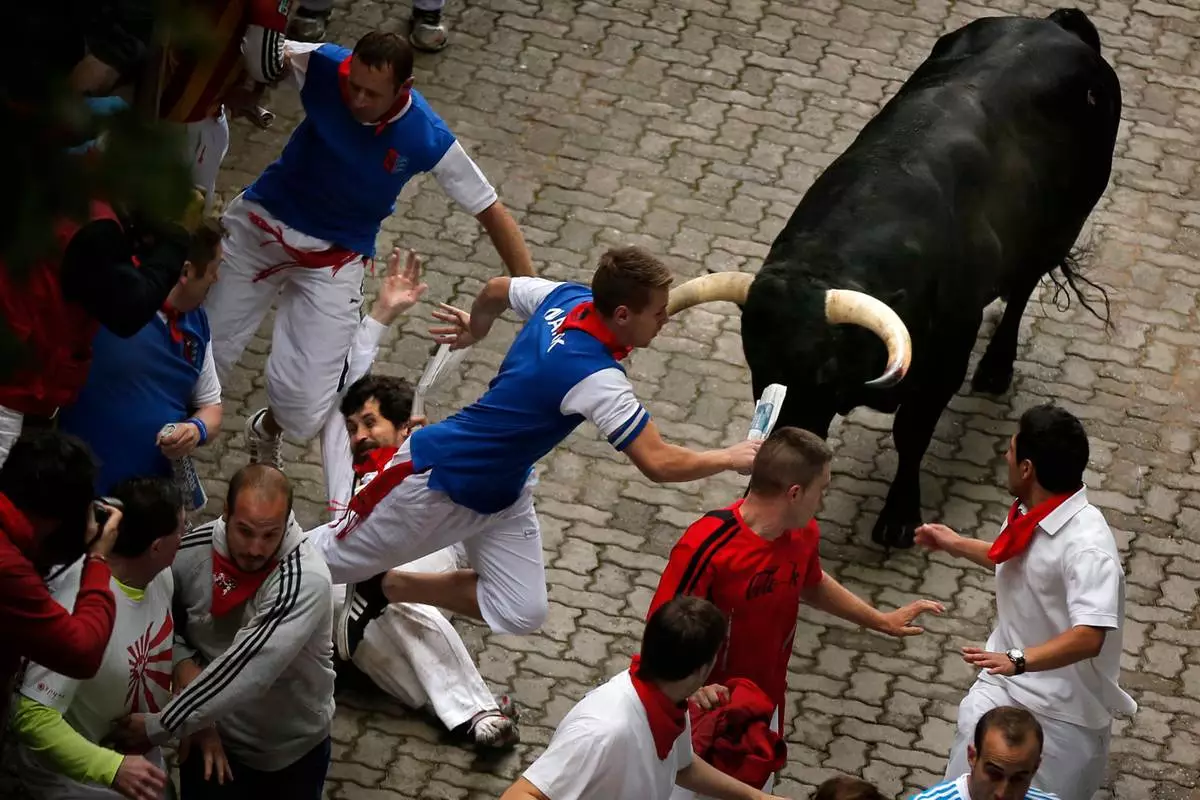
FILE - U.S. runner Bill Hillmann, 35, from Chicago, center left, falls seconds before a Victoriano del Rio ranch fighting bull gored him on his right leg during the running of the bulls of the San Fermin festival, in Pamplona, Spain, Wednesday, July 9, 2014. (AP Photo/Daniel Ochoa de Olza, File)
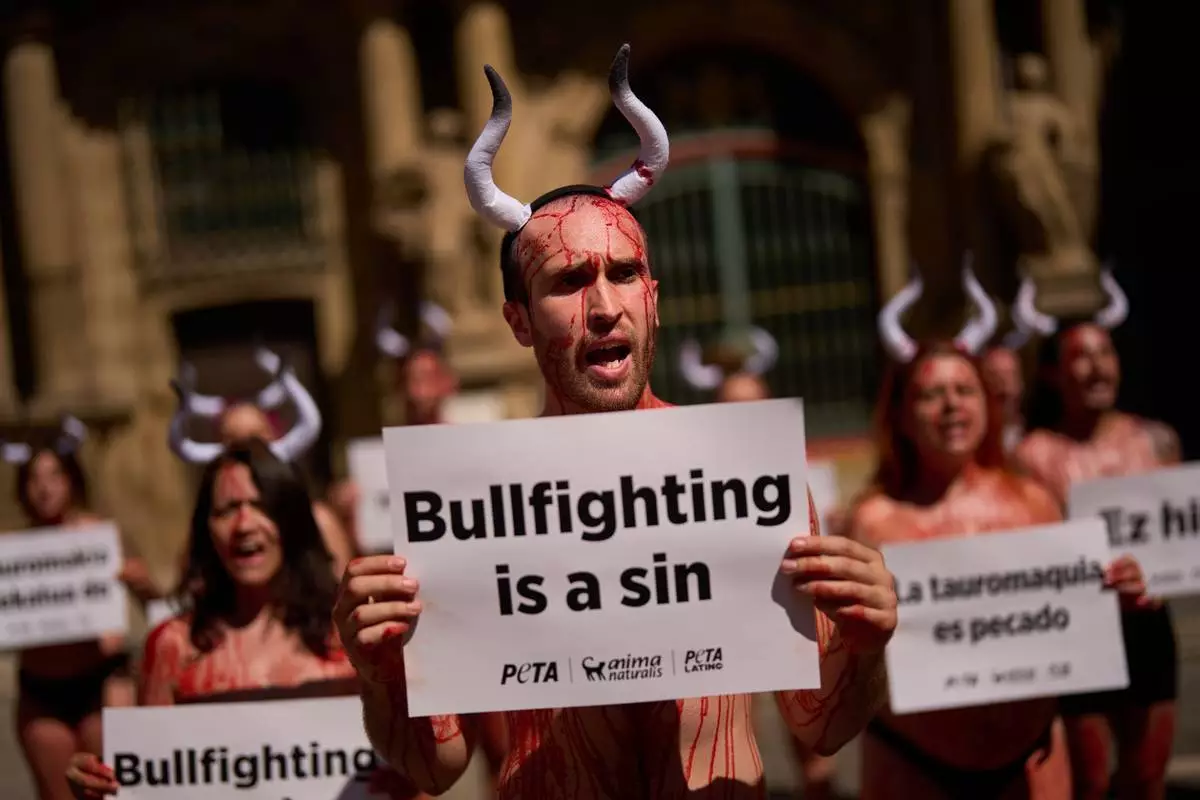
Animal rights activists participate in a protest against bullfighting ahead of the first running of the bulls during the San Fermin festival in Pamplona, northern Spain, Sunday, July 5, 2026. (AP Photo/Miguel Oses)
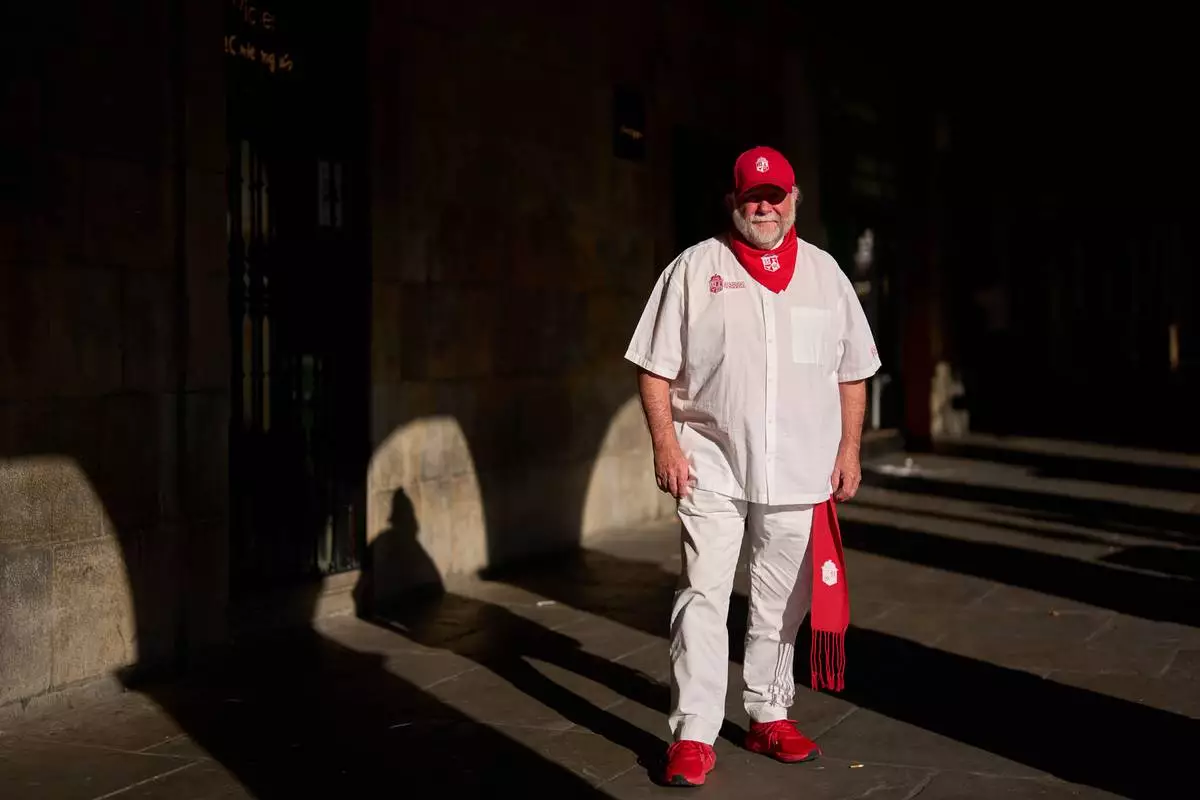
San Fermin tour operator Bruce Anderson poses in Pamplona, northern Spain, Thursday, July 2, 2026. (AP Photo/Miguel Oses)
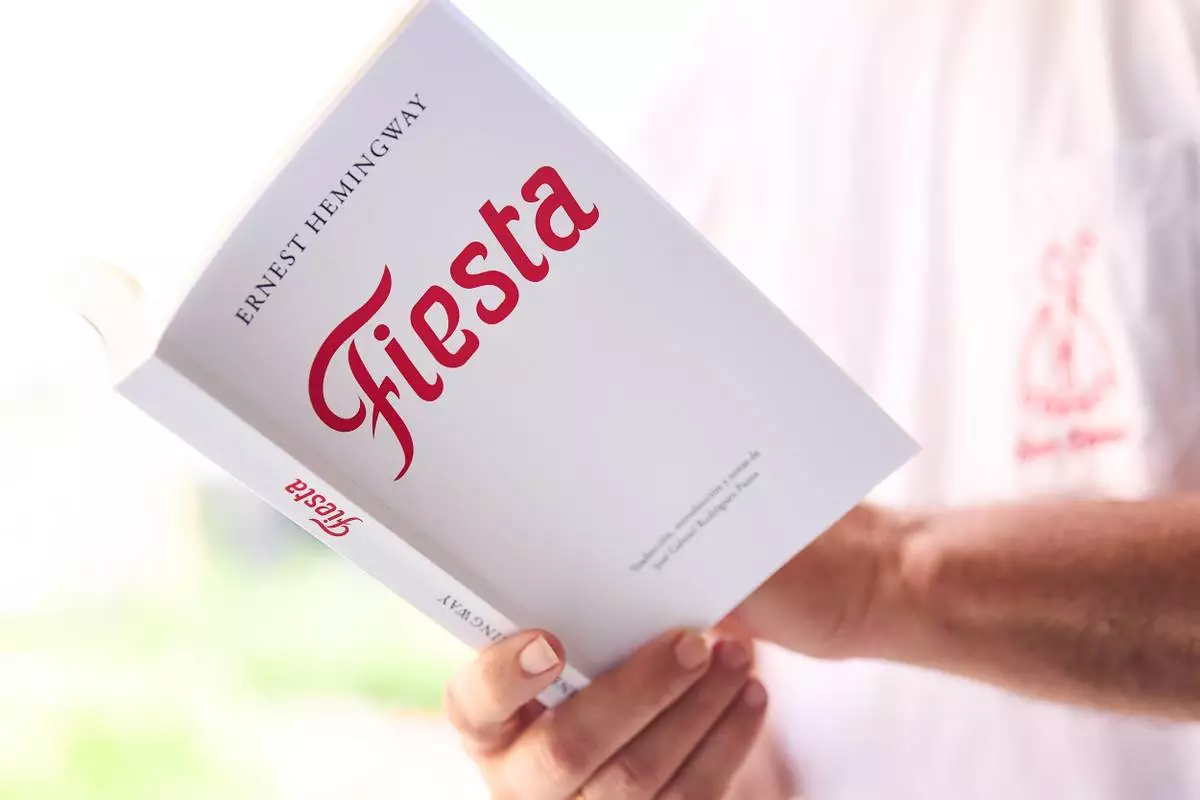
Former concierge and receptionist Fernando Hualde holds Ernest Hemingway's novel Fiesta in the Ernest Hemingway Suite at the Gran Hotel La Perla in Pamplona, northern Spain, Thursday, July 2, 2026. (AP Photo/Miguel Oses)
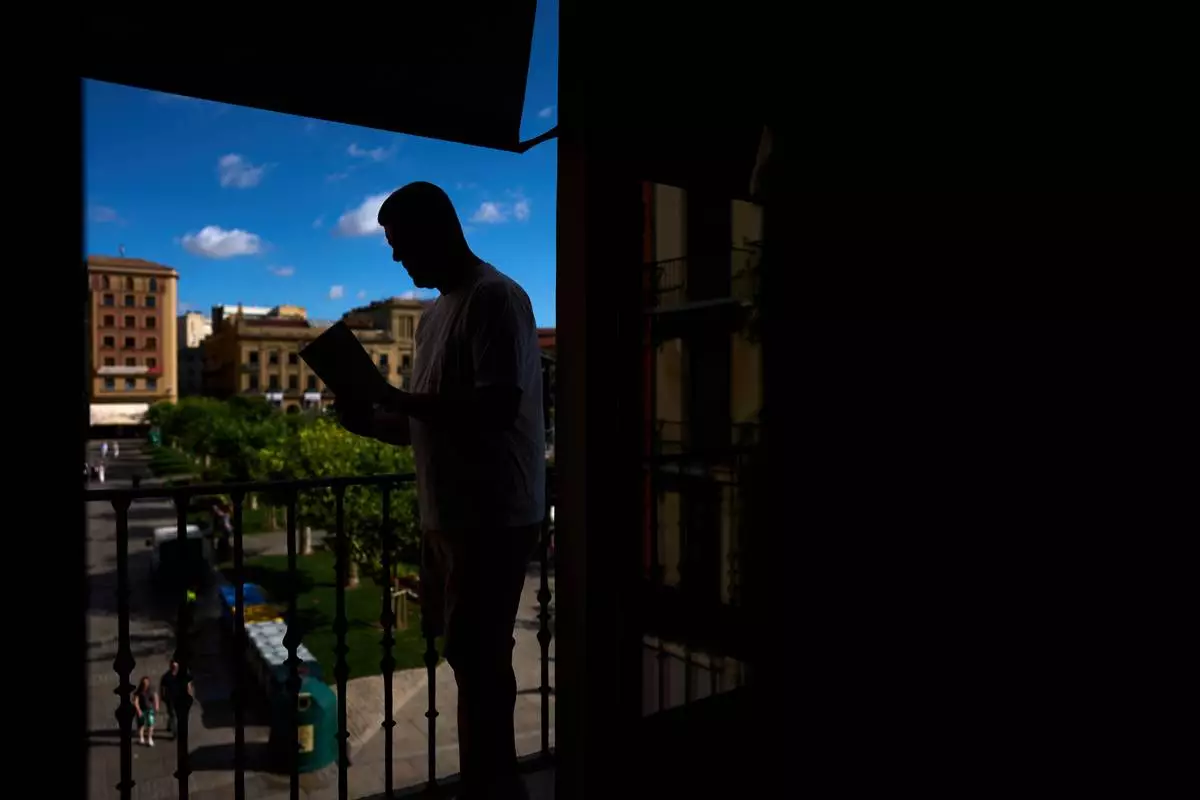
Former concierge and receptionist Fernando Hualde reads Ernest Hemingway's novel Fiesta in the Ernest Hemingway Suite at the Gran Hotel La Perla in Pamplona, northern Spain, Thursday, July 2, 2026. (AP Photo/Miguel Oses)
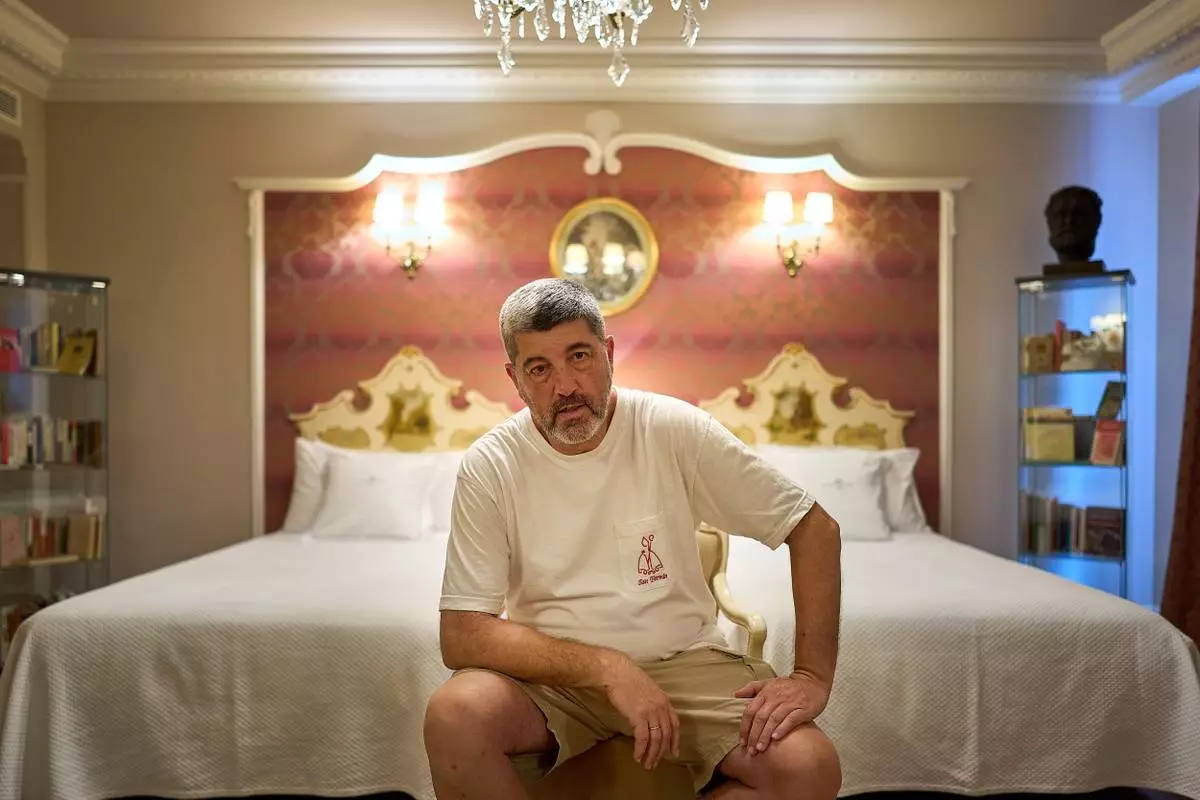
Former concierge and receptionist Fernando Hualde poses at the Ernest Hemingway suite at the Gran Hotel La Perla in Pamplona, northern Spain, Thursday, July 2, 2026. (AP Photo/Miguel Oses)
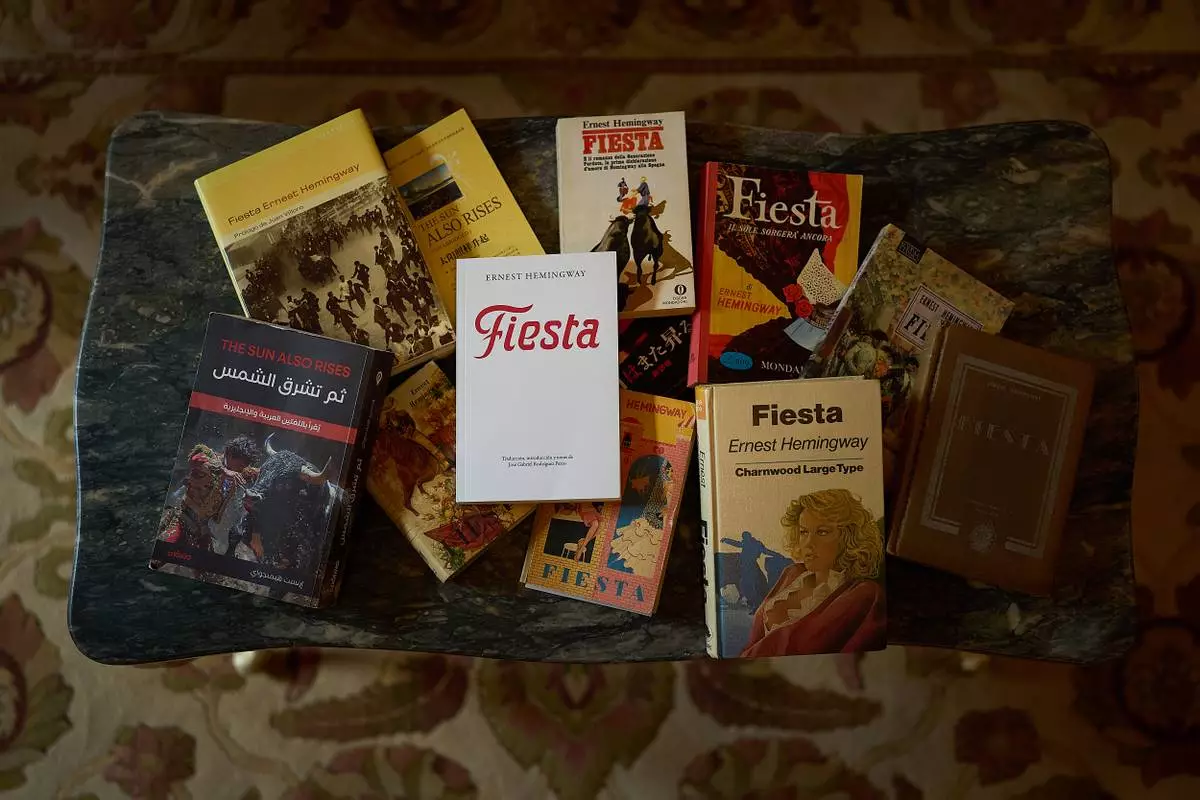
Books by Ernest Hemingway are photographed in the Ernest Hemingway Suite at the Gran Hotel La Perla in Pamplona, northern Spain, Thursday, July 2, 2026. (AP Photo/Miguel Oses)