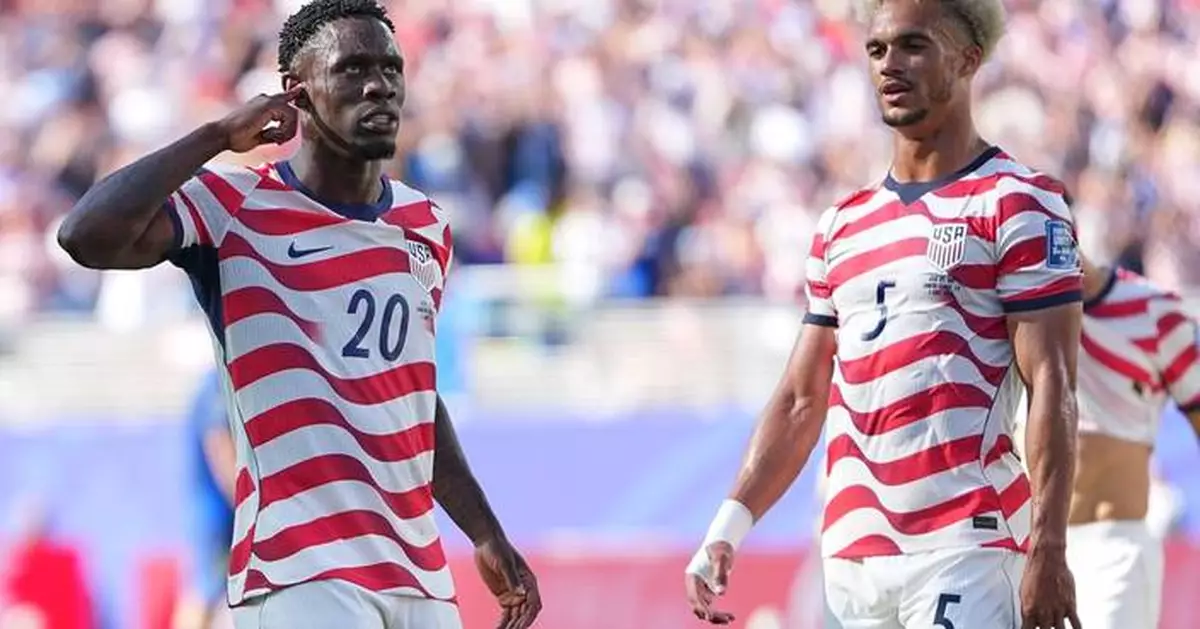
FIFA’s stunning decision to lift the suspension of a star U.S. player has riled the host country's next World Cup opponent, Belgium, and sent soccer fans -- and political leaders -- into a frenzy over the influence President Donald Trump may have had over the extremely rare ruling.
Hours before kickoff, FIFA dismissed Belgium's challenge to the most-debated political intervention in a World Cup in decades. That means forward Folarin Balogun is eligible to play on Monday night in Seattle. A win would send the U.S. to the quarterfinals, which would be the best U.S. result at a men’s World Cup since 2002.
FIFA lifted Balogun’s suspension on Sunday following a call Trump made to the global soccer organization's president, Gianni Infantino.
Here’s a deeper look at the controversy.
Born in New York to Nigerian parents, raised in London, and playing in the French league, Balogun's birthright citizenship made him eligible for the U.S.
Securing his commitment to play on the American team was a coup and it has paid off; the 25-year-old leads the team's World Cup scoring with three goals.
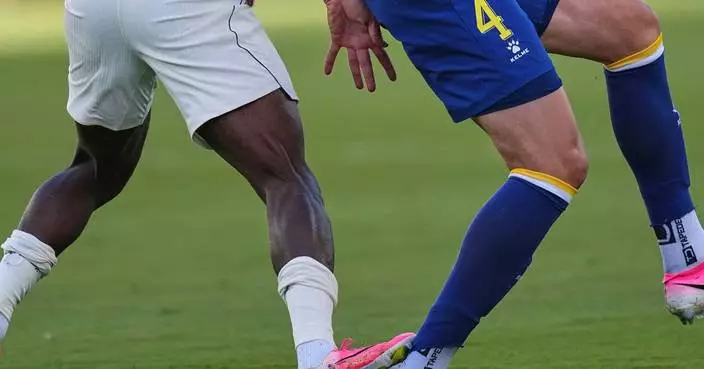
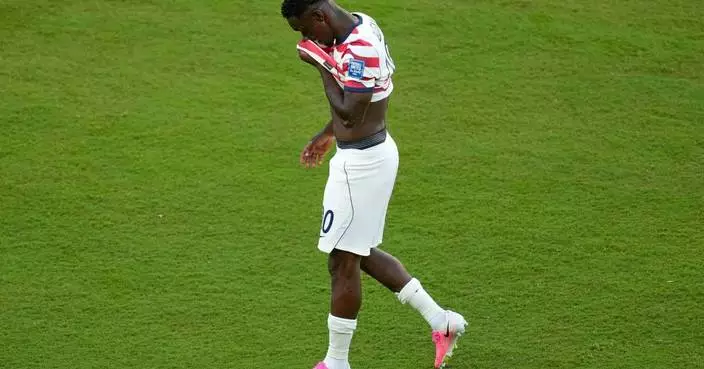
All was well until Wednesday when he stepped on opponent Tarik Muharemovic's ankle in a 2-0 win over Bosnia-Herzegovina in the round of 32.
The decision to send off Balogun was disputed — his movement seemed clumsy but not malicious. But once a referee decides to issue a red card, the punishment is usually straightforward: the player is excluded from the rest of the game and — until now, at least — a suspension for the next game is automatic.
If the ban had stayed in place, replacing Balogun in the lineup posed a big challenge for coach Mauricio Pochettino.
The U.S. has plenty of attacking players in wider or deeper roles, but few with the combination of physical power and goal-scoring ability for the center-forward role that the rest of the offense focuses around. Likely replacement Ricardo Pepi hasn't scored in four World Cup games.
There is typically no appeals process against the automatic one-game ban, only for longer sanctions usually applied to the most serious fouls like violent conduct or racism.
In its decision to let Balogun play against Belgium, FIFA cited article 27 of its disciplinary code, which says a “judicial body” can “fully or partially suspend the implementation of a disciplinary measure.” Balogun could yet get that one-game suspension on top of any future punishment if he commits a similar offense again in the next year.
While FIFA didn't elaborate on how it reached its decision, Infantino insisted in a social media post that FIFA’s disciplinary committee acted with independence and judged cases such as Balogun’s on “applicable regulations and the specific facts.” Article 27 doesn't lay out any requirements for which cases are eligible under the rarely used rule.
Last year, FIFA suspended two games of a three-game ban for one of soccer's biggest-ever stars, Cristiano Ronaldo. That left him free to play in the opening games of the World Cup for Portugal. He did serve the remaining one game ban in a qualifier.
Balogun's case seems to be the first since 1962 in which a sending-off during a World Cup match didn’t result in a suspension. On that occasion, the president of host nation Chile argued for Brazilian midfielder Garrincha to be allowed to play the final after he had kicked a Chilean opponent.
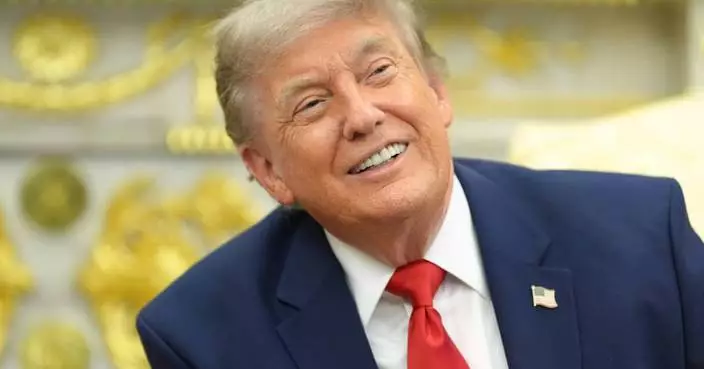
“Thank you to FIFA for doing what was right, and reversing a great injustice!” Trump said Sunday on social media after Balogun's suspension was lifted. On Monday, Trump defended his outreach to Infantino, saying he merely pointed out that the referee's call against Balogun seemed like a bad one and warranted a closer look.
Infantino and Trump have developed a well-known relationship. The Swiss soccer official became a regular visitor to the Oval Office as the U.S. prepared to host the World Cup. He gave Trump a FIFA Peace Prize at the World Cup draw in December, an award the organization hasn't presented to anyone else before or since.
FIFA’s statutes prohibit governments from intervening in the independence of soccer bodies managing their own affairs. FIFA regularly suspends member federations where governments have interfered in decision-making.
Pochettino, the U.S. coach, applauded FIFA’s move Sunday and said the initial on-field ruling against Balogun was “completely unfair.”
The Belgian soccer federation said it was “astonished” when the news of FIFA's intervention broke. Coach Rudi Garcia likened the decision to April Fools' Day.
On Monday afternoon, a FIFA appeals judge dismissed Belgium’s legal challenge fewer than eight hours before kickoff. The Belgian soccer body “is not a party to the proceedings and, as such, has no standing to appeal the decision,” FIFA said in a statement.
FIFA’s disciplinary code says suspensions of two games or less typically can’t be appealed — though that would generally apply to teams wanting a suspension lifted, not re-imposed.
It was unclear if Belgium can, and how soon, pursue an appeal to the Switzerland-based Court of Arbitration for Sport which is on standby to rule on urgent World Cup cases.
As Europe woke to the news Monday, the Instagram account of Belgian Prime Minister Bart de Wever's cat, Maximus — a social media celebrity in his own right — weighed in with a picture captioned: “Red card? I'm still going to play!"
European soccer body UEFA criticized FIFA for an “incomprehensible and unjustifiable decision” and warned “the integrity of the game is at stake.”
Norway coach Ståle Solbakken weighed in after his team stunned Brazil on Sunday to reach the quarterfinals.
“What about the next red card? What happens then?” he said. “Is there going to be some committee somewhere that is going to take that card away?”
Former England great Wayne Rooney said on the BBC: “Infantino, he should be ashamed of this because I think the sportsmanship of this game is in question here.”
Ex-Sweden striker Zlatan Ibrahimovic was a prominent voice welcoming the decision.
“First of all, he should not get a red card and then they should have come quicker, this call," Ibrahimovic said on Fox Sports. "I’m happy for the U.S. team because the U.S. team has been amazing but Balo has been super-amazing.”
England coach Thomas Tuchel predicted this could set off a flood of complaints and appeals over other on-field decisions affecting key players at the World Cup.
“Where to draw the line is the question that I ask,” he said after England beat Mexico 3-2 for a quarterfinal spot.
“Our yellow card from the first minute against Declan Rice, we can now debate endlessly. I think it's not a yellow card. Do we get this back?”
Graham Dunbar in Geneva contributed to this report.
See more of AP’s World Cup coverage here
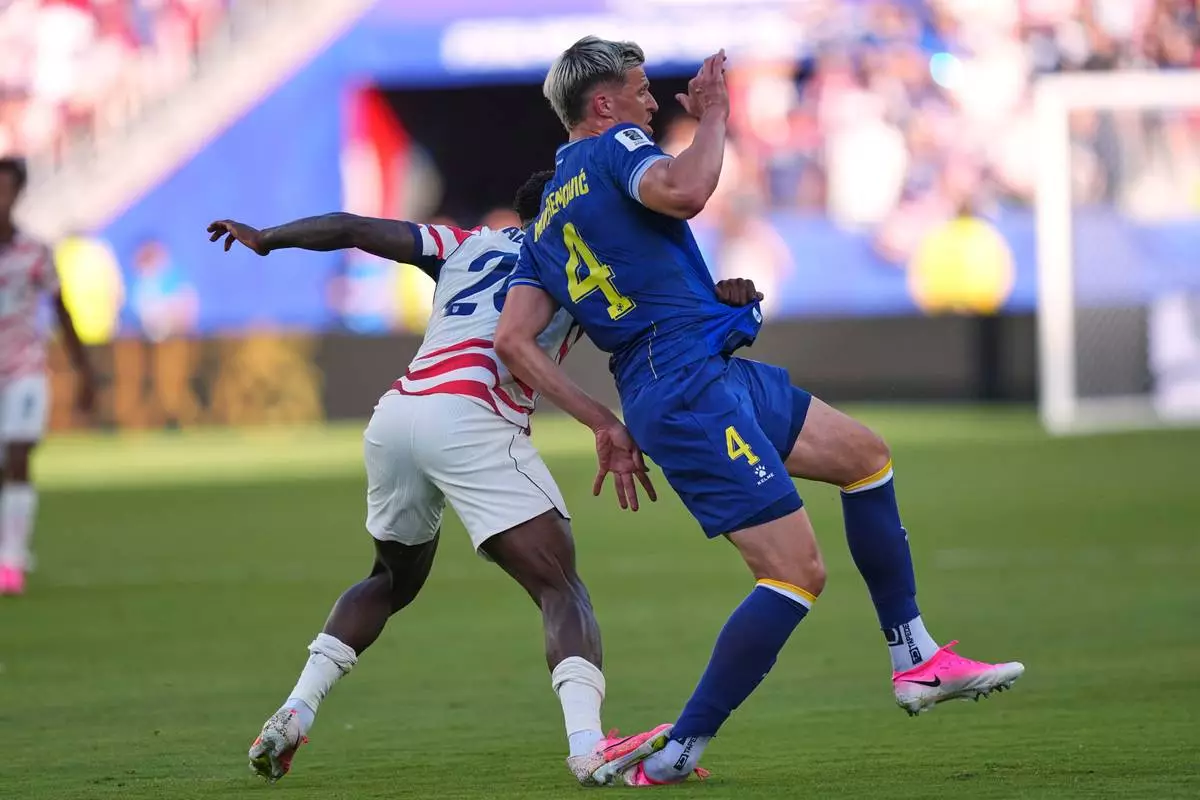
United States' Folarin Balogun (20) puts his foot down on Bosnia's Tarik Muharemovic (4) for which he received a red card during the World Cup round of 32 soccer match between the United States and Bosnia in Santa Clara, Calif., near San Francisco, Wednesday, July 1, 2026. (AP Photo/Martin Meissner)
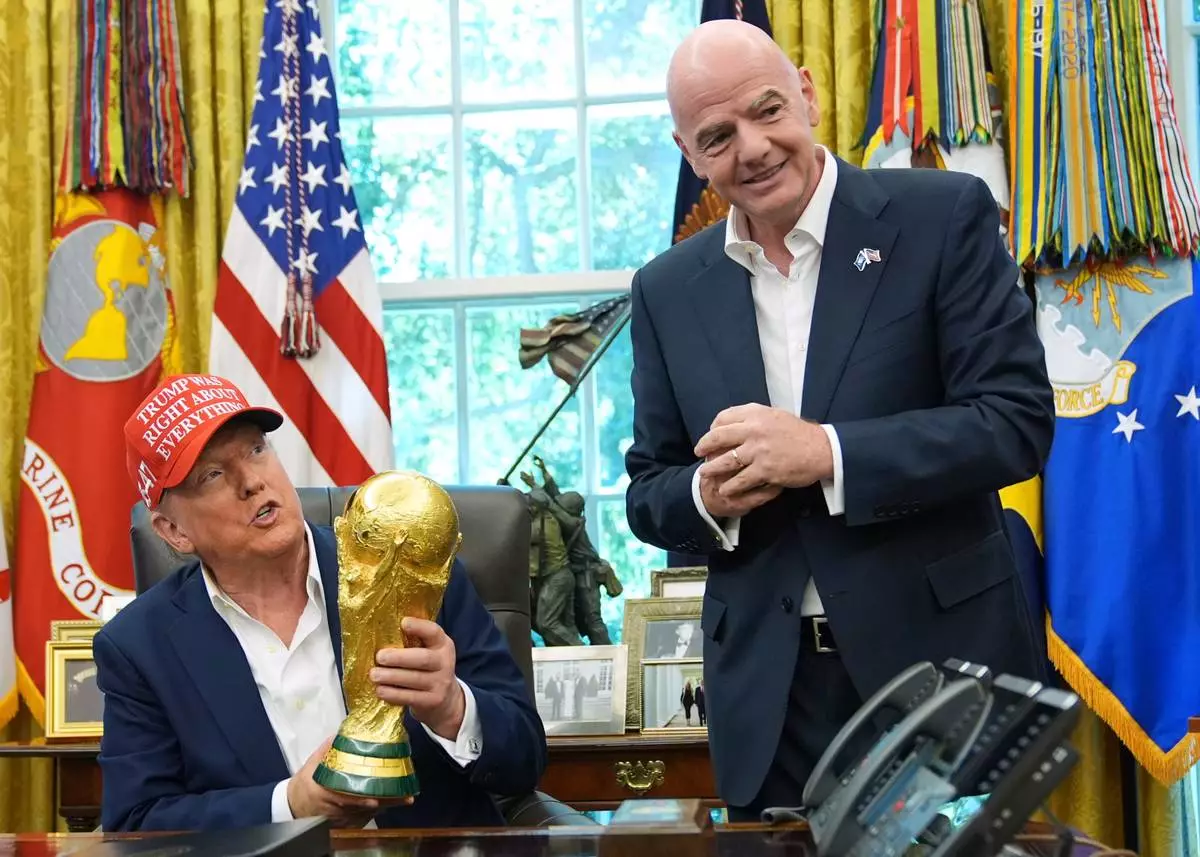
FILE - President Donald Trump holds the FIFA World Cup Winners Trophy as FIFA President Gianni Infantino looks on during an announcement in the Oval Office of the White House, Aug. 22, 2025, in Washington. (AP Photo/Jacquelyn Martin, File)
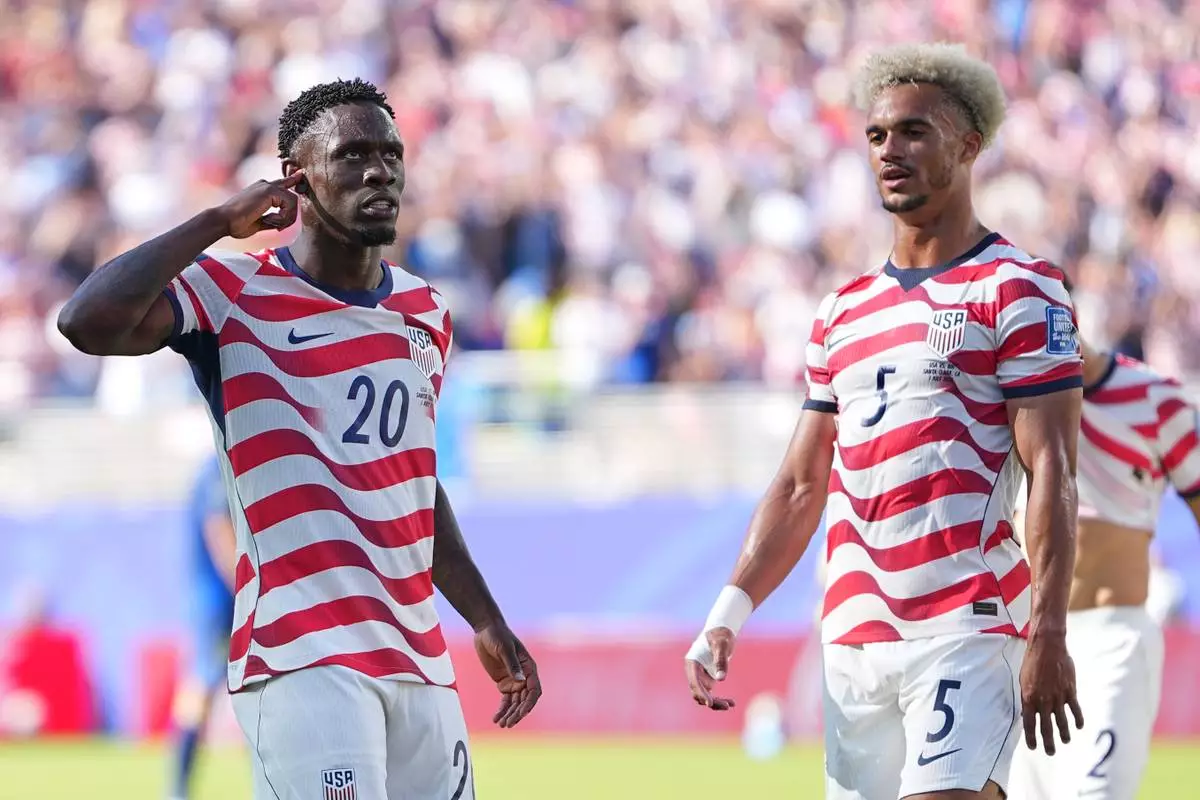
United States' Folarin Balogun (20) reacts after scoring his team's first goal during the World Cup round of 32 soccer match between the United States and Bosnia in Santa Clara, Calif., near San Francisco, Wednesday, July 1, 2026. (AP Photo/Julio Cortez)
A weeklong preliminary hearing for the man accused of killing conservative activist Charlie Kirk is underway in Utah.
Prosecutors are seeking to convince a state judge this week that they have enough evidence against 23-year-old Tyler Robinson to proceed to a trial.
Robinson is charged with aggravated murder in the assassination of Kirk on the Utah Valley University campus last September. Kirk’s parents and widow, Erika Kirk, were in the courtroom for the first time, along with Donald Trump Jr., President Donald Trump’s son.
The hearing marks the most significant presentation of evidence in the case so far. After the hearing concludes, state District Judge Tony Graf must determine if the case should proceed.
Here's the latest:
Television crews, photographers and writers are camped outside the Fourth Judicial District Courthouse in Provo, Utah.
Seats inside the courtroom are limited, so many members of the press are covering Tyler Robinson’s preliminary hearing from the sidewalks outside. They’re watching the building entrances to see who is coming and going, hoping for any opportunity to interview those involved with the case.
Security is tight, and surveillance teams can be seen on rooftops. A drone buzzes overhead occasionally.
Charlie Kirk’s parents and his widow, Erika Kirk, are at the hearing today. So is Donald Trump Jr. and far-right influencer Jack Posobiec.
Robinson’s parents have also been attending the hearing.
The judge has called a break for lunch. Tyler Robinson’s preliminary hearing will resume after the hourlong break.
Utah is an open carry state, former Utah Valley University police Officer Chris Bagley told defense attorney Kathryn Nester.
Utah state laws allow adults to carry guns openly or conceal them without a permit, though there are restrictions for people ages 18 to 20.
There are some exceptions at public colleges, however. Utah Valley University says it follows state law and allows gun owners to carry a concealed firearm if they have a permit.
Nester is questioning Bagley about the report he wrote after the shooting, including his observation about finding an empty pistol holster on the ground after the crowd fled.
Bagley acknowledged that he never took custody of the holster and doesn’t know if it was ever fingerprinted.
Defense attorney Kathryn Nester is cross-examining former Utah Valley University police Officer Chris Bagley.
She asked Bagley if he ever attended a meeting to discuss how officers would keep people safe on the day of the shooting. Bagley said he did not.
Bagley said there were six officers working that day. Thousands of people attended the event.
There were no metal detectors being used to screen the crowd, and no drones being used for security, Bagley said.
He also said there were no law enforcement officers on the roof, stairway or walkway when he arrived to work that day.
Former Utah Valley University police Officer Chris Bagley says he saw a disturbance in the gravel rooftop of the Losee building that looked like a “sniper pad,” where someone might have been lying in a position that would allow them to shoot a weapon.
The disturbance included spots that looked like they were made by two elbows and two knees, as well as a spot where someone might have laid a gun down. Bagley says he put police tape around the scene to keep people from going near it.
He then realized that they probably did not have a shooter in custody, Bagley said, and so called to have the building searched and secured.
Bagley also went to watch some surveillance video, which showed an individual run to the edge of the roof and drop down. He found a shoe print in the grass on the north-east side of the building, he said.
Court is back in session after a 15-minute break. Judge Tony Graf is talking to attorneys about how exhibits are being handled in court.
The three of them walked out of the courtroom about a minute after former Utah Valley University police officer Chris Bagley started testifying about Kirk’s arrival on campus the day he was shot.
Kirk’s mother, Kathryn Kirk, clutched a pocket-sized packet of tissues. She had been listening to the proceedings with her head bowed and eyes closed. Widow Erika Kirk had been leaning her head on the shoulder of a blonde woman sitting to her right.
Defendant Tyler Robinson has meanwhile been sitting quietly between his attorneys at the defense table, looking at the exhibits on a monitor and occasionally taking notes. He’s wearing a gray suit, a pale pink shirt, and a tie, with his wrists shackled to a chain around his waist.
Before a 15-minute recess Monday, former Utah Valley University police officer Chris Bagley said that shortly after the shooting last September, he ran up a public staircase to reach the roof of the Losee Center building, which he knew had a clear line of sight to the location where Charlie Kirk was sitting when he was shot.
On the roof, he spotted something “that looked out of place to me,” Bagley said. It was a red-and-black screwdriver.
Bagley says he could see the right side of Charlie Kirk as the conservative activist spoke on campus.
Kirk was answering a question when Bagley heard a gunshot, he said, and chaos erupted.
People got up and started running.
Within a few moments, Bagley says he heard officers over the radio say that someone was in custody, so he began assessing the crowd for injuries.
Then he began working to “preserve the crime scene,” Bagley said.
He spotted a pistol holster that had been left on the ground, but knew that he had heard a rifle shot rather than a pistol shot, Bagley added.
Bagley says that on the day of the shooting, he got to work around 11 a.m., and his job was to secure an area near a campus building called the Hall of Flags.
Bagley is using aerial drone photos to describe the layout, including whether there is a clear line of sight or view between different places on campus and the courtyard where Charlie Kirk was shot.
Former Utah Valley police officer Chris Bagley is describing the university campus where Charlie Kirk was shot.
He is using a drone image of Utah Valley University taken in December to set the scene, including a parking garage and campus buildings.
But Robinson’s defense team says he hasn’t adequately shown that he took the photo or that it accurately depicts the campus.
State District Judge Tony Graf says Bagley has first-hand knowledge of the area, so he is allowing it to be used as evidence.
They are a few rows behind Kirk’s parents and his widow, Erika Kirk, who is watching the proceedings with a furrowed brow.
Prosecutors have called Spanish Fork Police Officer Chris Bagley to the stand. Bagley was an officer at Utah Valley University when Charlie Kirk was shot there last year.
Trump Jr. was among the conservative political figures who spoke at Kirk’s memorial service last year.
Robinson, 23, is charged with aggravated murder in Kirk’s assassination. Robinson’s attorneys have not commented on his guilt or innocence, and the preliminary hearing will determine whether there is enough evidence to allow the criminal case to proceed.
Chief Deputy Utah County Attorney Chad Grunander told state District Judge Tony Graf that the exhibits will include several videos of the Sept. 10, 2025, shooting, which occurred as Kirk was addressing a crowd of thousands at Utah Valley University.
The videos will be shown on a courtroom monitor that is being set up so that it won’t be captured by the press videographer in the courtroom, Graf said.
The judge says people in the courtroom need to show proper decorum during the preliminary hearing.
Spectators aren’t allowed to display pins, clothing, photos or other visible demonstrations of support for anyone involved in the hearing. That includes things like shaking heads, Graf said.
Decorum rules like these are common during court proceedings.
Most witnesses will also be kept out of the hearing until it is time for them to testify, Graf said.
The hearing will run from 9 a.m. to 5 p.m. MT each day, with two 15-minute breaks and a one-hour lunch break at noon. It is expected to last a week.
State District Judge Tony Graf is going over his rules for the hearing, including some limitations on the use of technology such as cellphones and laptops.
Graf says the court has the duty to protect and uphold the rights of Tyler Robinson, the man accused of killing the Turning Point USA founder, and those of Kirk’s widow, Erika Kirk.
Erika Kirk has arrived at the Utah courthouse for the preliminary hearing of the man accused of killing her husband, Charlie Kirk.
Three men escorted her into the building several minutes before the hearing was expected to begin.
Charlie Kirk’s parents, Robert and Kathryn Kirk, arrived separately.
Armed officers with binoculars are on the roof of the courthouse where Tyler Robinson faces a key hearing in the fatal shooting of Charlie Kirk.
More officers are on the ground outside the courthouse. A drone was also flying overhead. Robinson’s defense team arrived at Utah County court with a dolly to move boxes of documents.
The focus of the hearing is whether there’s enough evidence to send Robinson to trial and whether the death penalty will be an option if there’s a conviction.
Shelly Juber, who lives nearby in Orem, got one of the 14 courtroom seats set aside for the public.
“I’m a trial watcher, true-crime enthusiast. … My grandson’s girlfriend was there the day it happened,” she said, referring to Utah Valley University.
For Tyler Robinson to be found guilty at trial, prosecutors will have to prove without any reasonable doubt that he killed Kirk. But the criteria for this week’s preliminary hearing are less strict.
Mark Kouris, who was a prosecutor and state judge in Salt Lake City, says there’s a low threshold for prosecutors to show the case against Robinson should proceed to trial.
“Effectively, it’s 51% — there’s a 51% chance they did it,” Kouris, now an adjunct professor at the University of Utah’s S.J. Quinney College of Law, said in an interview. “This standard is extremely low, and the chances of them not getting through it are, quite frankly, almost nothing.”
Charlie Kirk’s family thanked supporters for their kindness and prayers ahead of Monday’s preliminary hearing.
“Every court proceeding serves as a painful reminder of his death,” Erika Kirk, his widow, said in a statement posted on X, “and the loss that has irrevocably impacted our lives and the lives of his children.”
She added that the public outpouring “has sustained us during the darkest days of our lives.”
The statement was posted on behalf of Kirk’s parents, Robert and Kathryn, his widow and his sister Mary.
“Out of respect for the judicial process, we will not be commenting further at this time,” the brief statement said.
Erika Kirk forgave defendant Tyler Robinson during her husband’s memorial service in September.
“My husband, Charlie, he wanted to save young men, just like the one who took his life,” she said as she struggled to hold back tears.
“I forgive him because it was what Christ did. It is what Charlie would do,” she added.
Her declaration was an outlier among prominent conservatives, including President Donald Trump, who said in September on Fox News that he hopes Robinson gets the death penalty.
Erika Kirk took the helm of Turning Point USA, the conservative youth movement that her husband co-founded, shortly after her husband’s death.
She is expected in court throughout the week with her husband’s parents, Robert and Kathryn Kirk.
State District Judge Tony Graf said recently that prosecutors violated his restrictions on talking outside the courtroom when Deputy Utah County Attorney Christopher Ballard told a media outlet his office had ample evidence to convict Tyler Robinson of killing Charlie Kirk.
Robinson’s lawyers argued the comments were intended to influence potential jurors. As a punishment, they wanted the judge to block prosecutors from seeking the death penalty.
But Graf said that was too severe, and that Ballard's comments weren’t malicious.
The judge said any potential bias issues could be addressed by expanding the jury pool or more closely questioning potential jurors when the case goes to trial.
Starting with today’s hearing, the focus of the case shifts to whether there is enough evidence for a trial and whether the death penalty is warranted, said Paul Cassell, a University of Utah law professor and former federal judge.
Cassell said evidence made public to date in court filings suggests prosecutors have “an overwhelming case.”
“This seems like the proverbial slam dunk at this stage of the case, where the only issue is whether there is a sound basis for moving forward with a trial on the merits,” he said.
A death sentence is an option in Utah only when a crime has aggravating circumstances. Prosecutors will argue in Robinson’s case that Kirk’s shooting endangered others in attendance.
Authorities have said DNA consistent with Robinson’s was found on the trigger of the rifle used to kill Kirk, the fired cartridge casing, two unfired cartridges and a towel used to wrap the rifle.
Robinson’s parents had confronted him after authorities released a surveillance photo of the suspect and details about the rifle, authorities have said. His parents convinced him to meet with a family friend, a retired sheriff’s deputy who reportedly helped arrange for Robinson to turn himself in.
Prosecutors have said Robinson left a note for his roommate, who was also his romantic partner, that read: “I had the opportunity to take out Charlie Kirk and I’m going to take it.” They also said he wrote to his roommate in a text message about Kirk: “I had enough of his hatred. Some hate can’t be negotiated out.”
Defense attorneys unsuccessfully sought to block prosecutors from using recorded statements from Robinson’s roommate during the hearing. The defense wanted the roommate to testify in person so Robinson could exercise his right to challenge the credibility of witnesses against him. Graf said the time for challenging witnesses would come later.
The proceeding will resemble a mini-trial, with prosecutors planning to offer DNA evidence linking Robinson to the suspected murder weapon, testimony from investigators, autopsy findings, witness statements and video of Kirk’s killing. They are not required to present all their evidence and can use secondhand information or hearsay.
After the hearing concludes, state District Judge Tony Graf must determine if the case should proceed.
Prosecutors need only demonstrate that there are reasonable grounds to believe Robinson killed Kirk. The standard is lower than for a trial, where prosecutors have to prove guilt “beyond a reasonable doubt.”
Charlie Kirk’s widow and parents are expected this week in a Utah court where prosecutors seeking the death penalty will argue that the man charged with killing the conservative activist should stand trial for murder.
The five-day preliminary hearing that starts today will be the first time members of Kirk’s family are in the Utah courtroom with defendant Tyler Robinson. The hearing will be livestreamed.
Robinson turned himself in after the shooting. Prosecutors allege that he also sent a text message confession to his partner and left a note saying he had an opportunity to kill one of the nation’s leading conservative voices, “and I’m going to take it.”
He has not entered a plea in the case, however.
Robinson, 23, is charged with aggravated murder in the Sept. 10 assassination of Kirk, who was addressing a crowd of thousands at Utah Valley University. His attorneys have not commented on his guilt or innocence.
▶ Read more
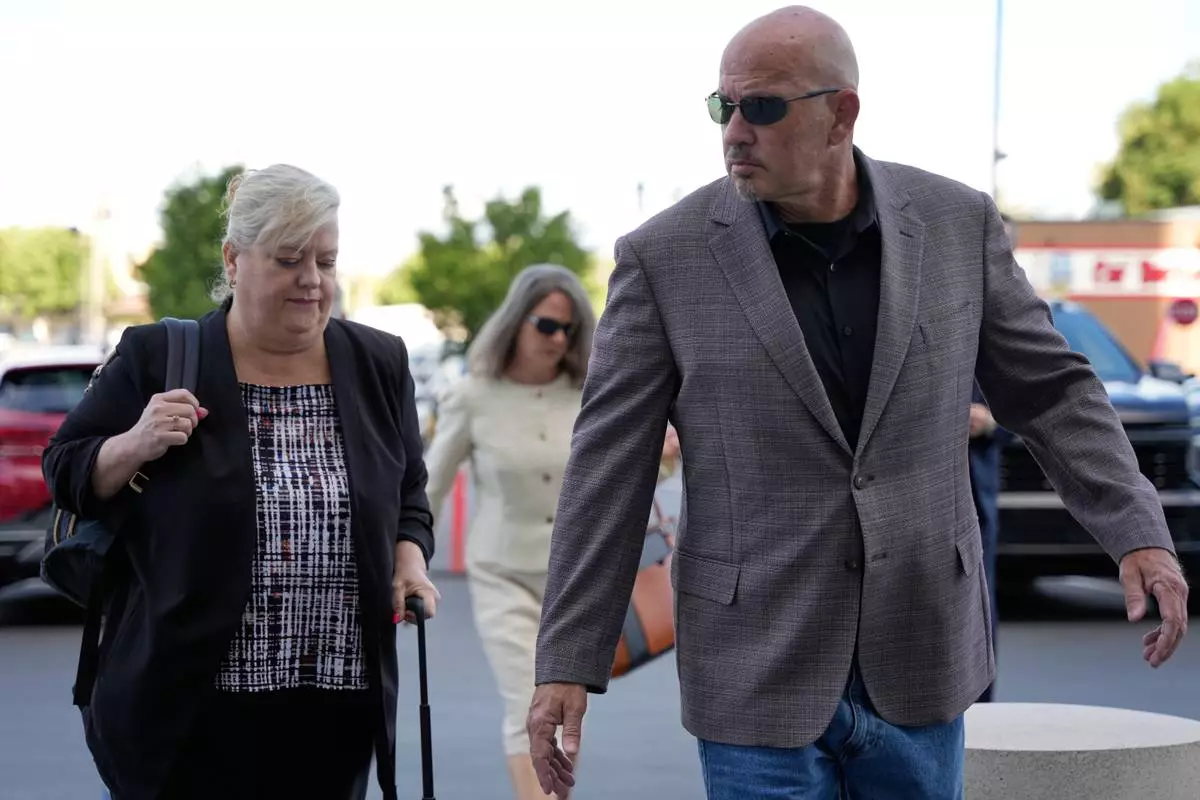
Attorney Kathryn Nester, left, arrives at the Fourth District Courthouse for a hearing for Tyler Robinson, accused in the fatal shooting of Charlie Kirk, Monday, July 6, 2026, in Provo, Utah. (AP Photo/Marielle Scott)
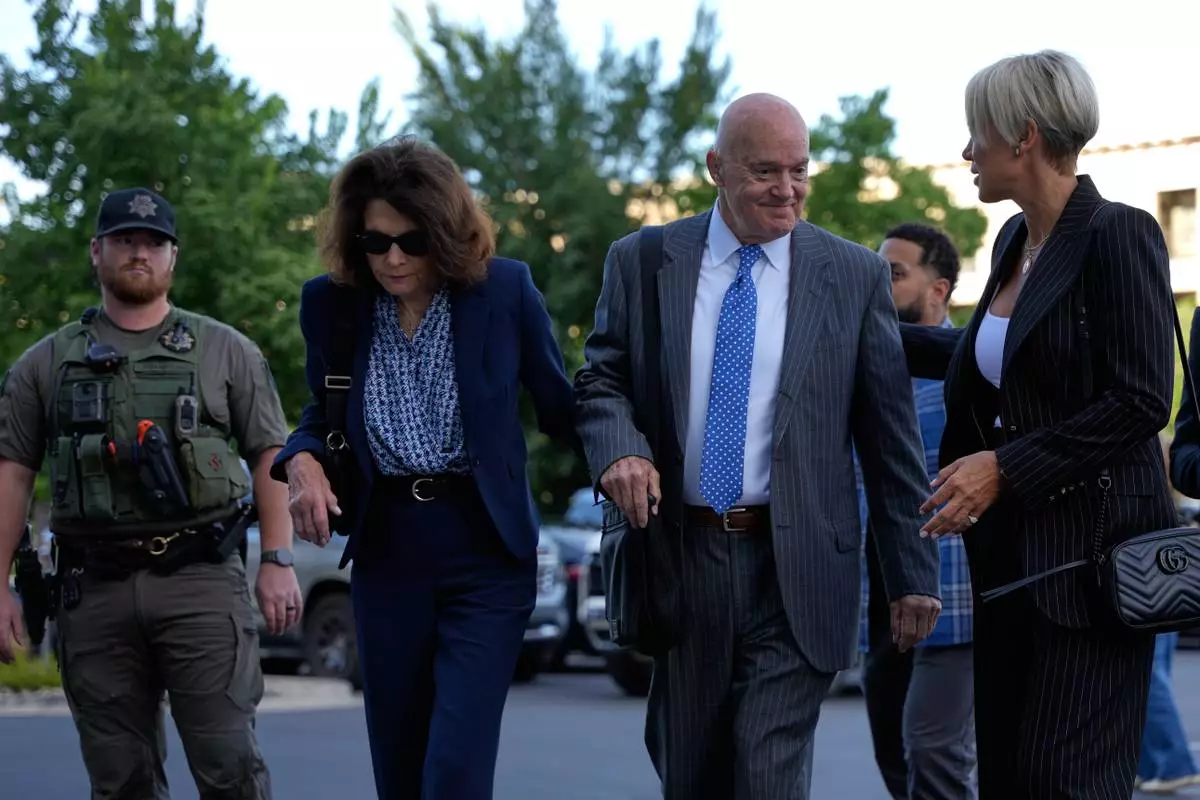
Charlie Kirk's parents, Robert and Kathryn Kirk, arrive at the Fourth District Courthouse for a hearing for Tyler Robinson, accused in the fatal shooting of Charlie Kirk, Monday, July 6, 2026, in Provo, Utah. (AP Photo/Marielle Scott)
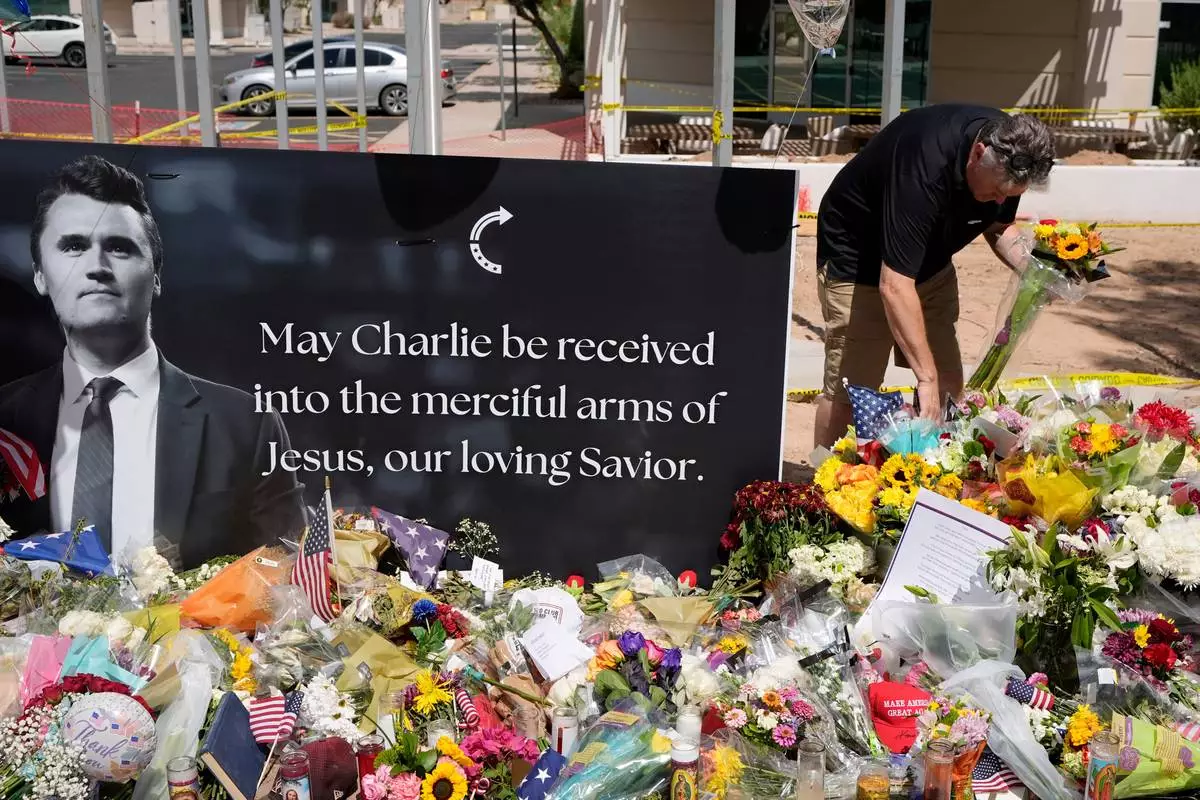
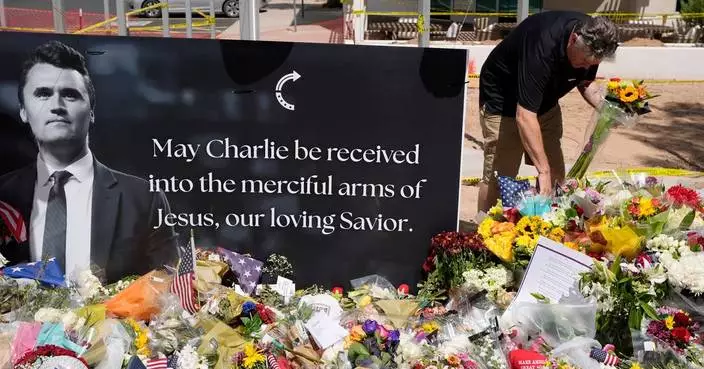
FILE - A well-wisher places flowers at a makeshift memorial set up for Charlie Kirk at Turning Point USA headquarters, Sept. 11, 2025, in Phoenix. (AP Photo/Ross D. Franklin, File)
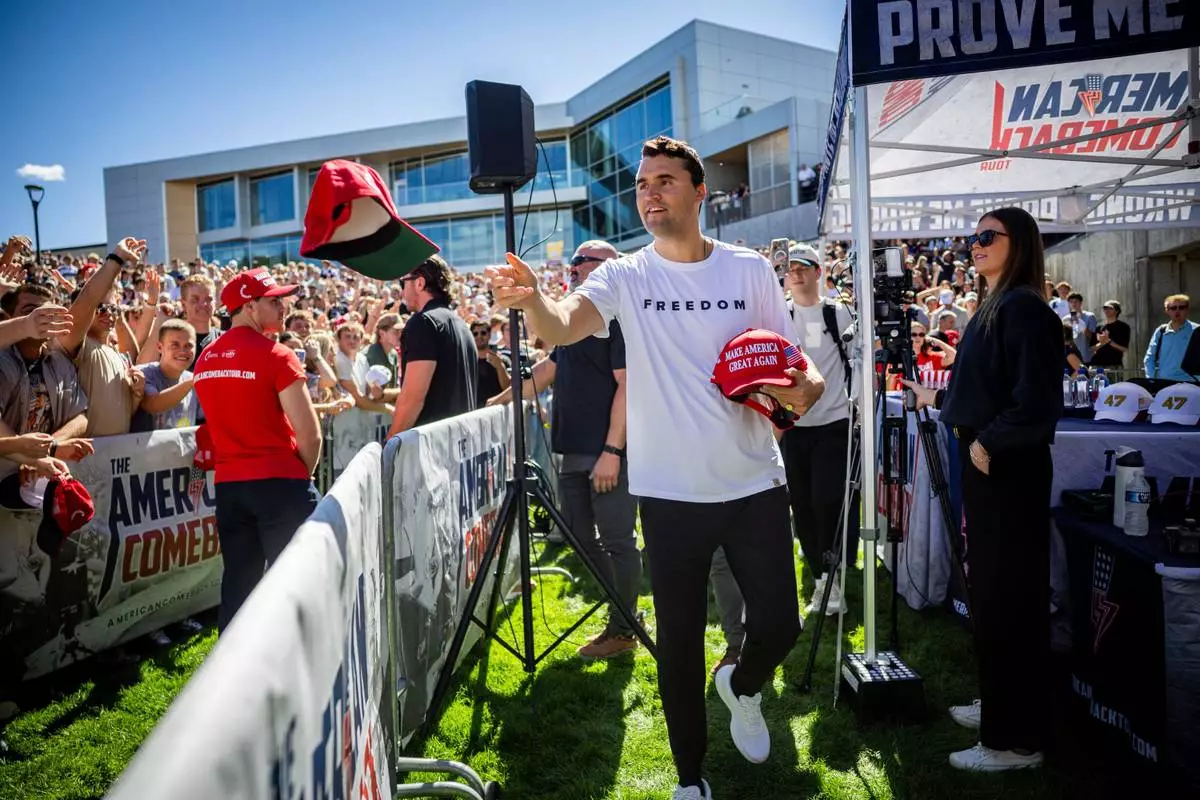
FILE - Charlie Kirk hands out hats before speaking at Utah Valley University in Orem, Utah, Sept. 10, 2025. (Tess Crowley/The Deseret News via AP, File)