Skip to Content Facebook Feature Image

The calm before (and during) the storm: When tornadoes near, Nashville turns to informed volunteers

TECH

The calm before (and during) the storm: When tornadoes near, Nashville turns to informed volunteers
TECH

TECH

The calm before (and during) the storm: When tornadoes near, Nashville turns to informed volunteers

2026-07-07 12:05 Last Updated At:13:19

NASHVILLE, Tenn. (AP) — Anyone who has watched an episode of “9-1-1: Nashville” could be forgiven for thinking the city is constantly beset by tornados that turn outdoor concerts into scenes of carnage and blow scooter-riding tourists onto the tops of water towers.

That may be a TV exaggeration, but tornados and other dangerous storms do hit the city regularly. When they do, many people here turn to Nashville Severe Weather.

More Images
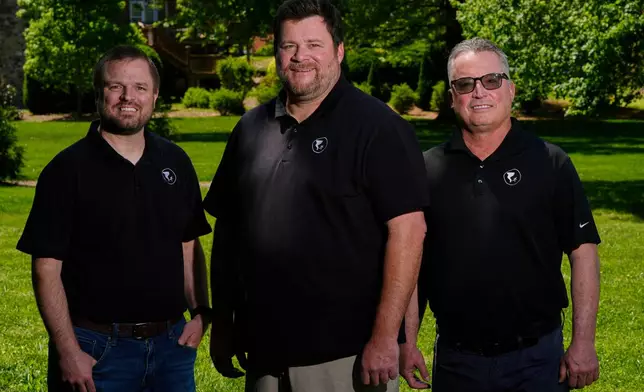
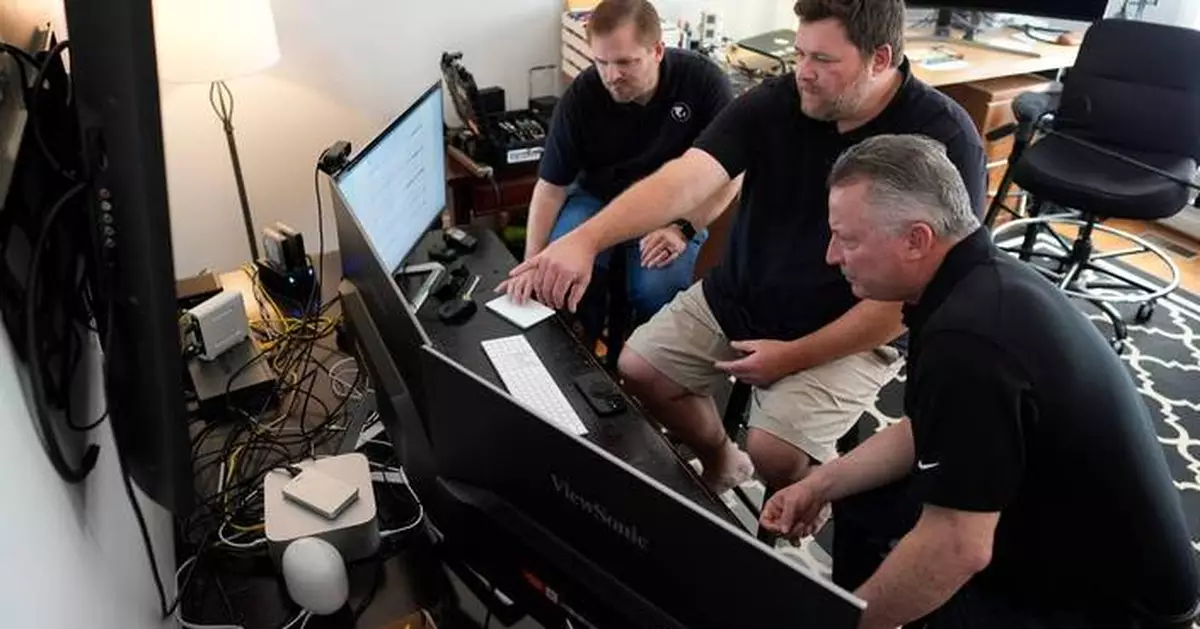
Andrew Leeper, left, Will Minkoff and Tom Johnstone, right, of Nashville Severe Weather, pose for a portrait Monday, April 20, 2026, in Nashville, Tenn. (AP Photo/George Walker IV)
Andrew Leeper, left, Will Minkoff and Tom Johnstone, right, of Nashville Severe Weather, pose for a portrait Monday, April 20, 2026, in Nashville, Tenn. (AP Photo/George Walker IV)

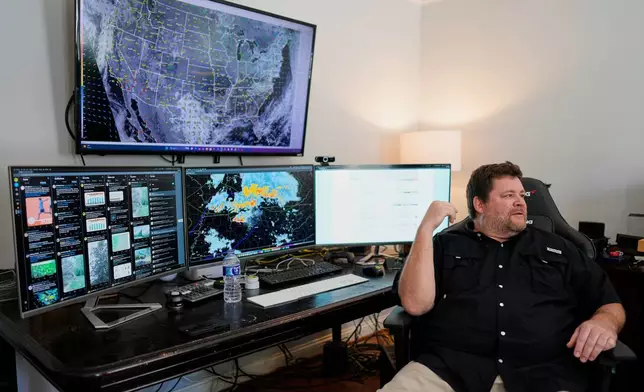
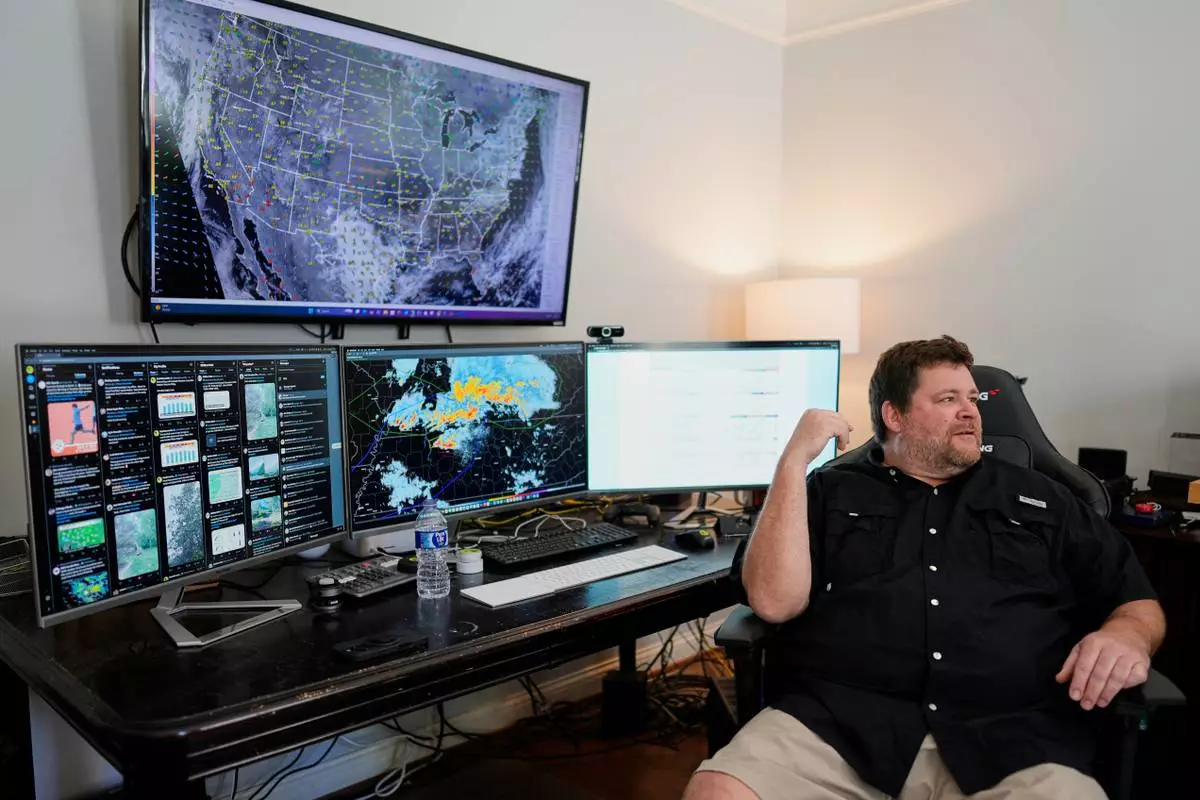
Will Minkoff of Nashville Severe Weather sits at his desk Monday, April 20, 2026, in Nashville, Tenn. (AP Photo/George Walker IV)
Will Minkoff of Nashville Severe Weather sits at his desk Monday, April 20, 2026, in Nashville, Tenn. (AP Photo/George Walker IV)

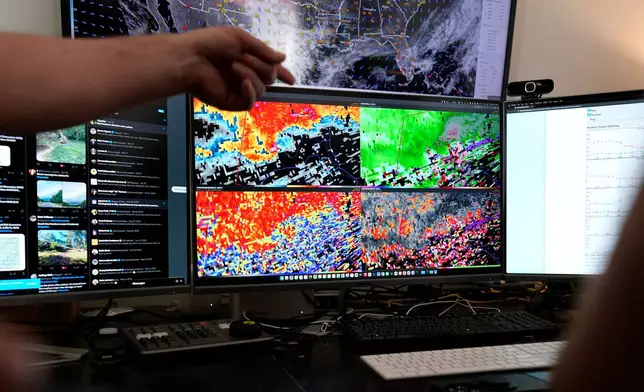
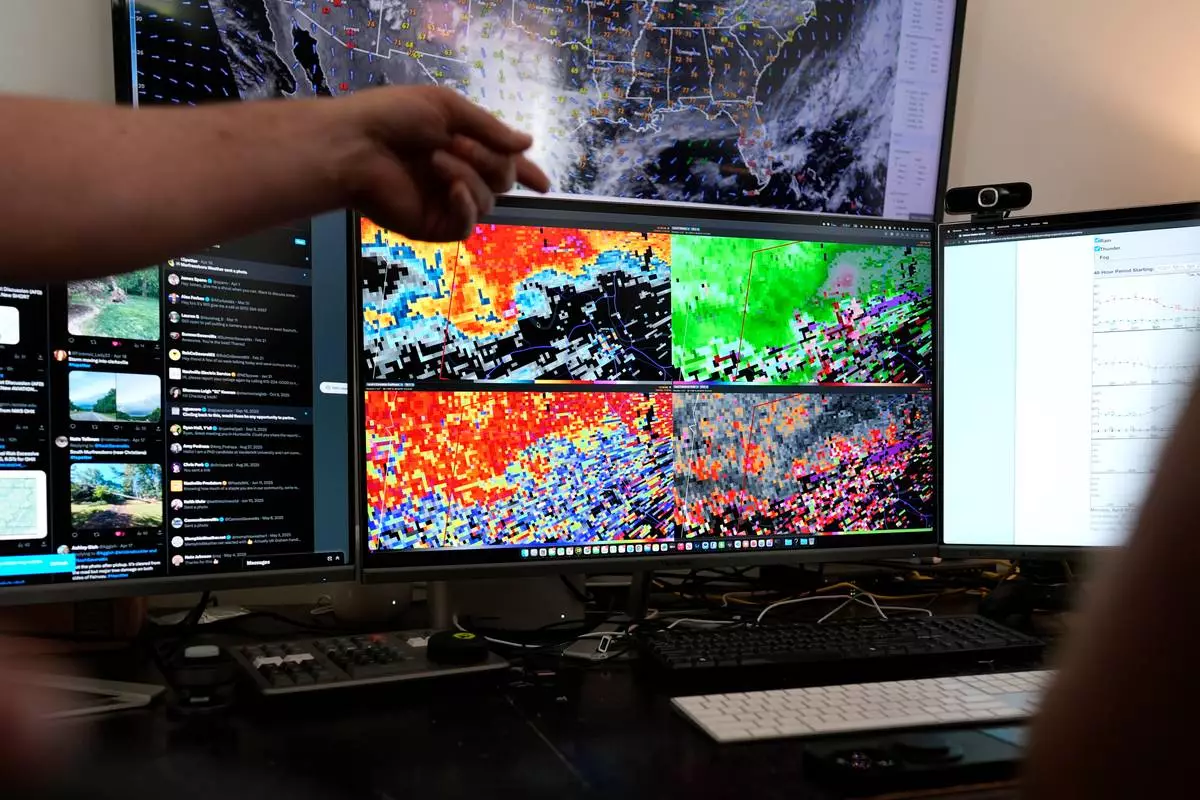
Weather information is displayed on a monitor at the Nashville Severe Weather headquarters Monday, April 20, 2026, in Nashville, Tenn. (AP Photo/George Walker IV)
Weather information is displayed on a monitor at the Nashville Severe Weather headquarters Monday, April 20, 2026, in Nashville, Tenn. (AP Photo/George Walker IV)

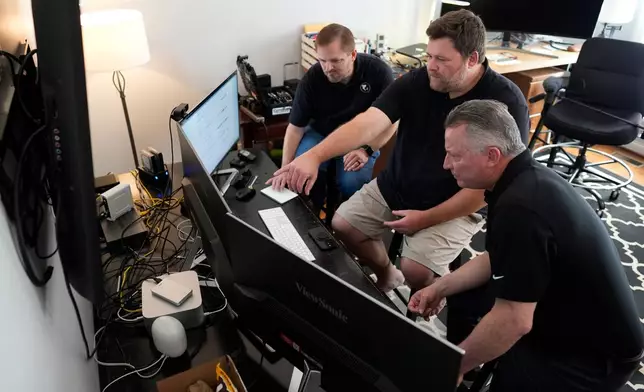
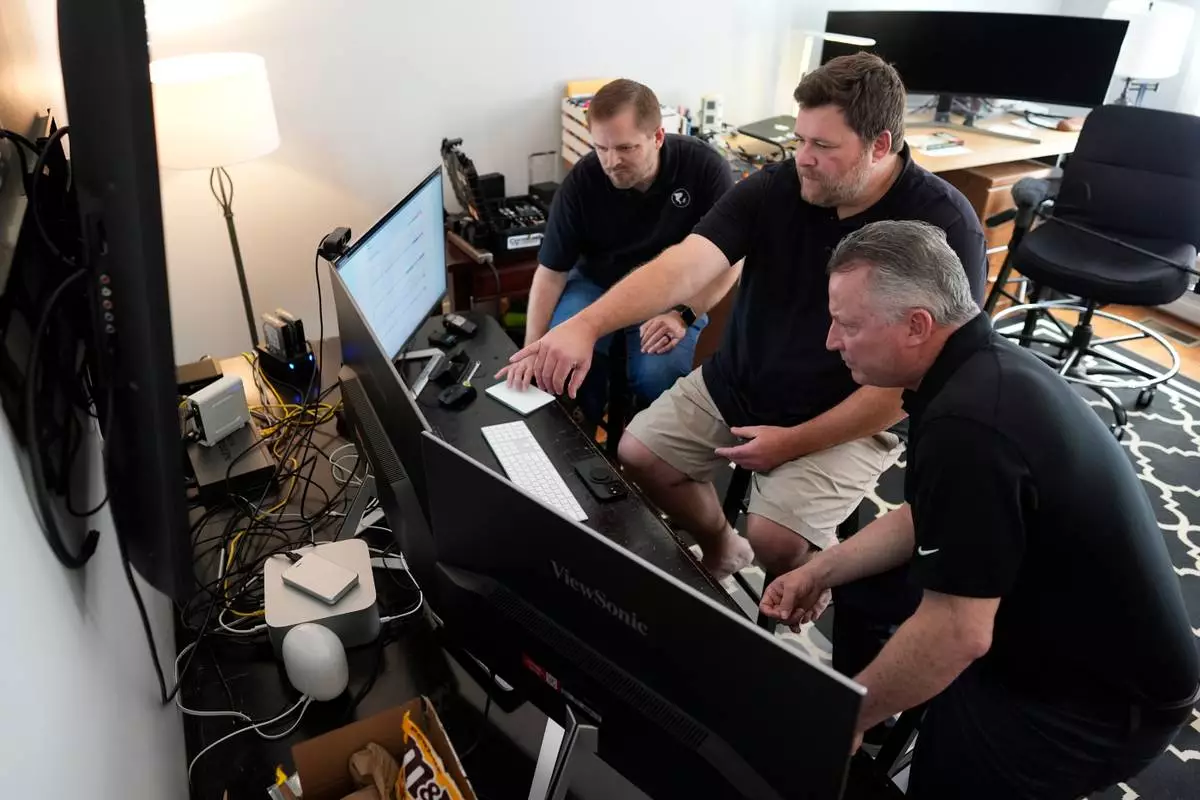
Andrew Leeper, left, Will Minkoff and Tom Johnstone, right, of Nashville Severe Weather, look over weather data Monday, April 20, 2026, in Nashville, Tenn. (AP Photo/George Walker IV)

Andrew Leeper, left, Will Minkoff and Tom Johnstone, right, of Nashville Severe Weather, look over weather data Monday, April 20, 2026, in Nashville, Tenn. (AP Photo/George Walker IV)

This group of dedicated volunteers can be found on social media, calmly explaining the storm movement, advising when to take cover and giving the “all clear.” The coverage by Will Minkoff, Andrew Leeper and Tom Johnstone draws tens of thousands of viewers who interact with them in real time. It’s a service that evokes the early promise of the internet, before the rise of the influencer.

This is happening at a time when many people no longer watch local news and weather reports. Yet Kevin Trowbridge, who teaches strategic communication at Belmont University in Nashville, says an informal survey of his students found many are tuning in to Nashville Severe Weather.

“The millennials and Gen Z — and teaching college students, I know this all too well — their source of information is that handheld device,” he says. “It’s not turning on a TV. And it’s not even looking at a traditional media outlet’s online presence. It’s finding sources that provide them quick information when they need it.”

The rise of Nashville Severe Weather is a modern case study in multiple areas — a shifting tornado alley, a changing climate, the prevalance of social media and the value of instantaneous, hyperlocal information that can save the day or save lives.

The initiative has evolved over more than a decade from its origins as a Twitter feed and blog. Today, volunteers livestream on their YouTube channel whenever Nashville or surrounding counties face severe weather. Because Leeper, Minkoff and Johnstone all live here, they are facing the same threats as their audience.

“There’s something about Nash Severe Weather that’s different from the hobbyist enthusiast,” Trowbridge says. “I think that’s why people are following them. That’s why they are trusting them. That’s why they’re tuning in and turning to them. ... It is authentic and real.”

Leeper, a church pastor, has a soothing voice and a sign on a shelf behind him that reads “prepared not scared.” He has had to leave the stream to wake up his family and hunker down in their safe space. He did so calmly, modeling the behavior of his motto. After the threat passed, he rejoined the stream.

Katherine Moffat, who works as the executive director of the Tennessee Academy of Physician Assistants, says local TV weather can be “a little over-the-top” when storms are threatening. Nashville Severe Wether, she says, is different.

“They’re a little more calm and telling it to you straight,” she says. "They don’t get people overly excited."

The need for their service has never been greater. “Tornado Alley” has been shifting from the Midwest plains to states further east, says Johnstone, a meteorologist who joined the group last year after 33 years with the National Weather Service.

“The mid-South, especially down through Alabama, Mississippi, and into Tennessee and western Kentucky, has been where tornadoes have been most frequent ... and people have been dying in the highest numbers,” he says.

Michelle Stewart gets all her weather information via push notifications from Nashville Severe Weather on her phone. It's a service she found invaluable during an ice storm that left much of the city without power or internet service for days.

“They are very informative about, not just what to expect, but how to be prepared, and just giving everybody the lay of the land without it being too science-y. You know, it kind of feels like you’re talking to your neighbor,” says Stewart, a project manager at a healthcare research company. “They are so calming to me during those live events."

Brett Withers, a former Nashville city councilman who saw two people die in his district during a 2020 tornado that killed 24 people in Tennessee, calls Nashville Severe Weather a “godsend.”

“We have so many people moving to Nashville, and they might move from places where tornadoes are rare, if they ever happen,” he says.

The popularity of Nashville Severe Weather defies much of the received logic about how to build an audience on social media. There's nothing fancy or highly produced about their livestreams. They don't try to play up danger or excitement. They certainly don't try to chase them down or run around outside in hurricane-force winds.

Their streams are visually dominated by weather radar. Minkoff, Leeper and Johnstone, sometimes joined by other volunteers, each stream from their own homes and appear in little boxes at the bottom or side of the screen. Graphics, when they have them at all, look like they could have been drawn by a 5-year-old.

Take the beloved “Dry Air Monster,” a stick figure with an huge head and chomping Godzilla jaws.

Nashville Severe Weather co-founder David Drobny drew this to explain how dry air could “eat” snow that was headed towards Nashville. In a Southern town that usually sees snow on the ground only a few days each year, many people look forward to it as a mini-vacation. The monster's motto is “No Snow for You.”

Their hyperlocal focus allows Nashville Severe Weather to fill a niche left open by the local TV meteorologists who have to report on dozens of counties.

“One of the things that Nash Severe can do that even the TV stations have trouble doing is really bring it down to intersection level, school level, church level to let people know where the danger and the threat is,” Johnstone says.

Their coverage is a two-way street. Audience members provide photos and video showing on-the-ground conditions and comment in the chat. Nashville Severe Weather shares that information with the National Weather Service and TV meteorologists. They also try to answer people's questions as they stream.

Leeper remembers a day when schoolchildren were sent home because of a tornado threat. When one child commented in the chat about being home alone, his heart sank.

“We just stopped what we were saying on the stream, and I said, ‘Hey. It dawns on me that we’ve got a bunch of kiddos at home that are maybe by themselves. Hey. Here’s what you do’,” Leeper recalls. “I love those moments where we can just sort of put everything else aside to talk to the people who are listening, in whatever situation they’re in.”

It's moments like that that help them stay grounded.

In 2023, a tornado killed a mother and young child here who lived in a trailer. Leeper didn't know them, but he attended the visitation.

“It just creates a whole other emotion when you walk into a funeral visitation for hurting families when it’s a weather event that you covered,” he says. “It’s not all action and adventure. It really affects people’s lives forever.”
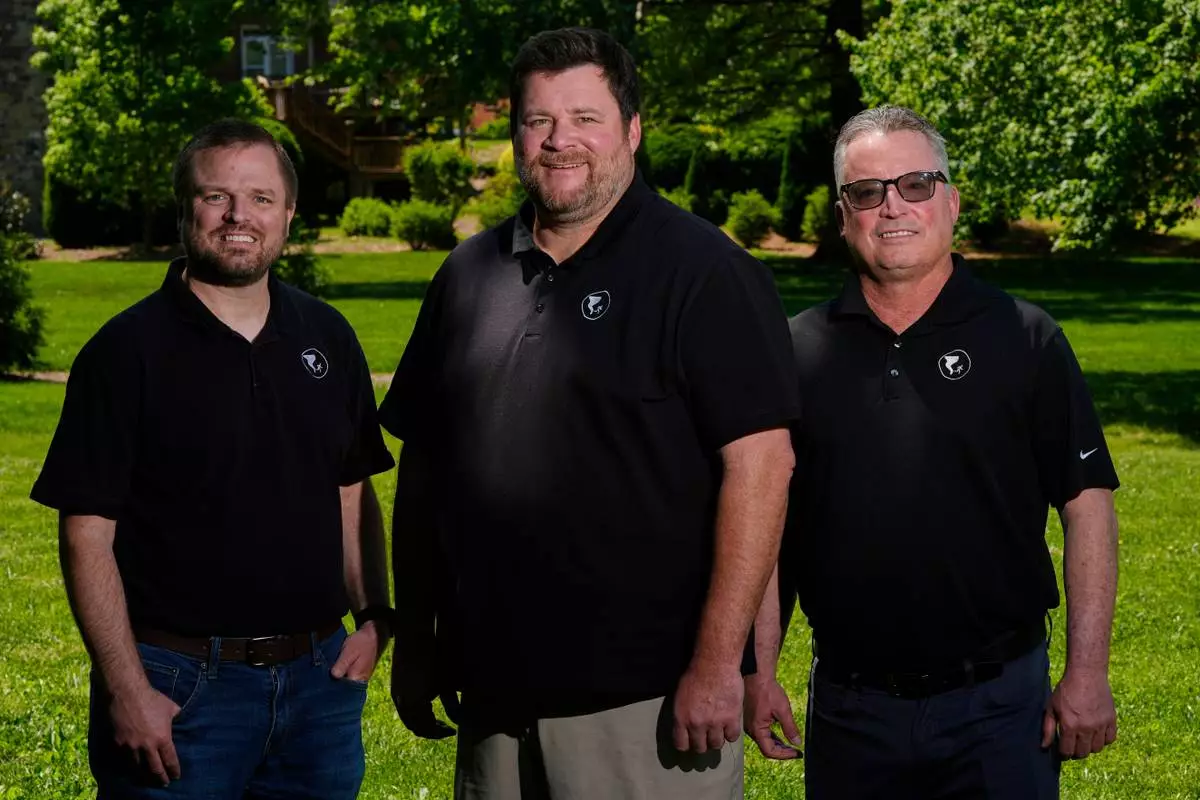
Andrew Leeper, left, Will Minkoff and Tom Johnstone, right, of Nashville Severe Weather, pose for a portrait Monday, April 20, 2026, in Nashville, Tenn. (AP Photo/George Walker IV)
Andrew Leeper, left, Will Minkoff and Tom Johnstone, right, of Nashville Severe Weather, pose for a portrait Monday, April 20, 2026, in Nashville, Tenn. (AP Photo/George Walker IV)

Will Minkoff of Nashville Severe Weather sits at his desk Monday, April 20, 2026, in Nashville, Tenn. (AP Photo/George Walker IV)
Will Minkoff of Nashville Severe Weather sits at his desk Monday, April 20, 2026, in Nashville, Tenn. (AP Photo/George Walker IV)

Weather information is displayed on a monitor at the Nashville Severe Weather headquarters Monday, April 20, 2026, in Nashville, Tenn. (AP Photo/George Walker IV)
Weather information is displayed on a monitor at the Nashville Severe Weather headquarters Monday, April 20, 2026, in Nashville, Tenn. (AP Photo/George Walker IV)

Andrew Leeper, left, Will Minkoff and Tom Johnstone, right, of Nashville Severe Weather, look over weather data Monday, April 20, 2026, in Nashville, Tenn. (AP Photo/George Walker IV)

Andrew Leeper, left, Will Minkoff and Tom Johnstone, right, of Nashville Severe Weather, look over weather data Monday, April 20, 2026, in Nashville, Tenn. (AP Photo/George Walker IV)
DUBAI, United Arab Emirates (AP) — The U.S. military attacked Iran early Wednesday after it said Tehran struck three ships in the Strait of Hormuz, part of an American effort that also revoked the Islamic Republic’s ability to openly sell crude oil in the world market. Iran retaliated with strikes targeting Bahrain and Kuwait.

The regional crossfire raised the risks that an interim agreement to halt fighting in the war could break down, putting the Middle East again at risk of a wider conflict.

The attacks on shipping and the resulting strikes came during the dayslong funeral for Iran’s Supreme Leader Ayatollah Ali Khamenei, who was killed Feb. 28 in the war’s first moments at age 86. The funeral, which ends Thursday, had been thought to be a period of lower tensions — though mourners have repeatedly called for the killings of U.S. President Donald Trump and Israeli Prime Minister Benjamin Netanyahu.

Negotiations to reach a final deal had been due to start after Khamenei’s burial and focus on the toughest matters, including fully reopening the strait and rolling back Tehran’s disputed nuclear program. But the new attacks threw that into question.

“The era of bullying and extortion is over,” Iran’s Parliament Speaker Mohammad Bagher Qalibaf wrote on X. “It leads nowhere. We don’t fold.”

The U.S. military’s Central Command said American forces launched the strikes “to impose heavy costs for targeting and attacking commercial shipping crewed by innocent civilians in an international waterway.”

It said it hit Iranian targets including air defense systems, radars and over 60 small boats used by Iran’s paramilitary Revolutionary Guard. Those boats have been key in harassing ships in the strait.

The U.S. military remains “postured and prepared to hold Iran accountable when the agreement is not adhered to or obeyed,” it added, saying this round of attacks had ended.

Iran acknowledged the strikes, but offered no word on any losses. Iranian state media reported the sound of explosions in Bandar Abbas, Qeshm and Sirik.

Wednesday morning, both Bahrain, home to the U.S. Navy’s 5th Fleet, and Kuwait, home to U.S. Army forces, sounded missile alerts. The Guard issued a statement acknowledging targeting U.S. military installations in both countries.

“The child-killing and terrorist U.S. army ... openly violated the ceasefire and violated the Islamabad understanding by launching an airstrike on a number of coastal bases and civilian stations on the coasts of Hormozgan and Mahshahr provinces,” it said, without addressing the attacks on ships in the strait.

Bahrain sounded its alert a second time later Wednesday morning.

A similar spate of Iranian attacks on shipping and U.S. retaliatory strikes occurred late last month — which similarly drew Iranian attacks on Bahrain and Kuwait. Wednesday’s strikes also came as Trump was in Turkey for a summit of the NATO military alliance.

The U.S. also revoked a license that authorized the sale of Iranian oil as part of the interim deal. That had allowed Iran for the first time in years to conduct oil sales openly on the international market for U.S. dollars. Iran long had been suspected of selling sanctioned crude oil at below-market prices to China.

The decision came after the strikes on shipping. One tanker was traveling off the coast of Oman when it was hit and caught fire, the United Kingdom Maritime Trade Operations center said. Iranian state television said the liquefied natural gas tanker came under attack after ignoring warnings but did not directly claim the assault.

The other two ships sustained some damage, but no one was injured, and both continued on their way in the Strait of Hormuz, the U.K. maritime agency said. Iran has maintained a chokehold on the Strait of Hormuz since the war, disrupting global energy markets as a fifth of all traded oil and natural gas passed through the channel in peacetime. The ships attacked Tuesday all appeared to be using a route close to Oman’s shore, rather than one ordered by Tehran.

Tehran repeatedly has declared that only its approved route through the strait is safe and is suspected of attacking other ships that have used the Oman route.

Majed al-Ansari, a spokesperson for the Qatari Foreign Ministry, said the Qatari tanker Al Rekayyat was targeted in an “unacceptable attack” on international navigation and global energy security. He said Qatar holds Iran “fully legally responsible.”

Iran and the United States agreed as part of the interim deal to allow ships to pass without paying charges for 60 days. But Tehran insisted it must control the vessels’ routes and later charge fees for passage, which would upend decades of practice in the waterway.

The U.S. and many Gulf Arab states say they will not agree to Iran charging for passage through the strait.

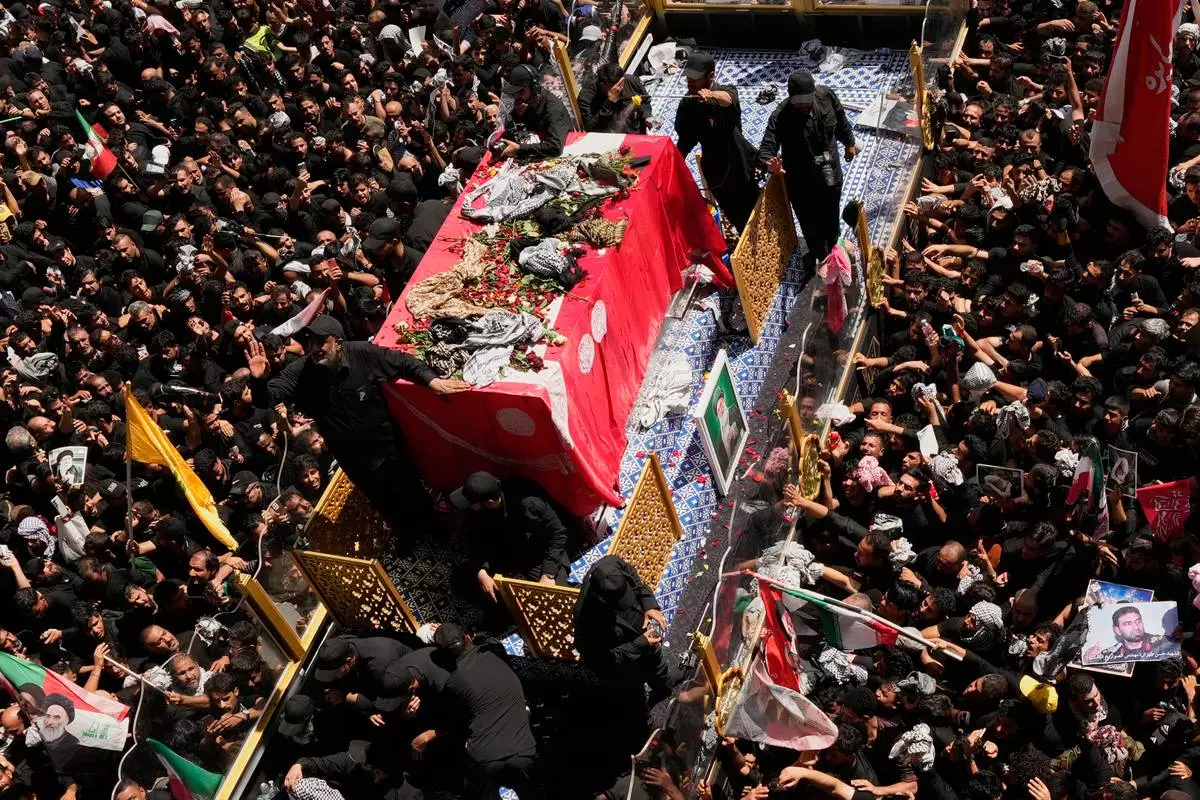
Mourners surround a truck carrying the coffin of Iranian Supreme Leader Ayatollah Ali Khamenei during a funeral procession in Najaf, Iraq, Wednesday, July 8, 2026. (AP Photo/Hadi Mizban)

Mourners surround a truck carrying the coffin of Iranian Supreme Leader Ayatollah Ali Khamenei during a funeral procession in Najaf, Iraq, Wednesday, July 8, 2026. (AP Photo/Hadi Mizban)

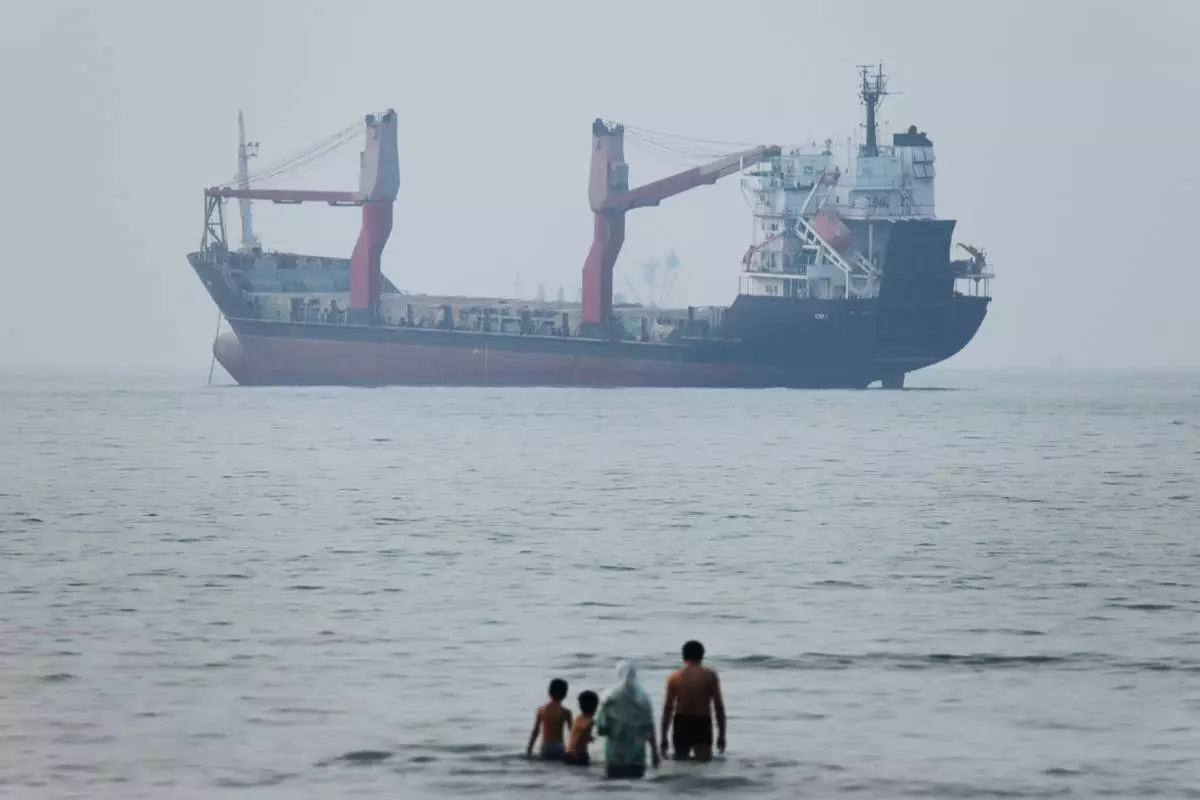
A group of people stands in shallow water as a cargo ship appears anchored in the Strait of Hormuz off Bandar Abbas, Iran, Tuesday, June 30, 2026. (Amirhosein Khorgooi/ISNA via AP)

A group of people stands in shallow water as a cargo ship appears anchored in the Strait of Hormuz off Bandar Abbas, Iran, Tuesday, June 30, 2026. (Amirhosein Khorgooi/ISNA via AP)

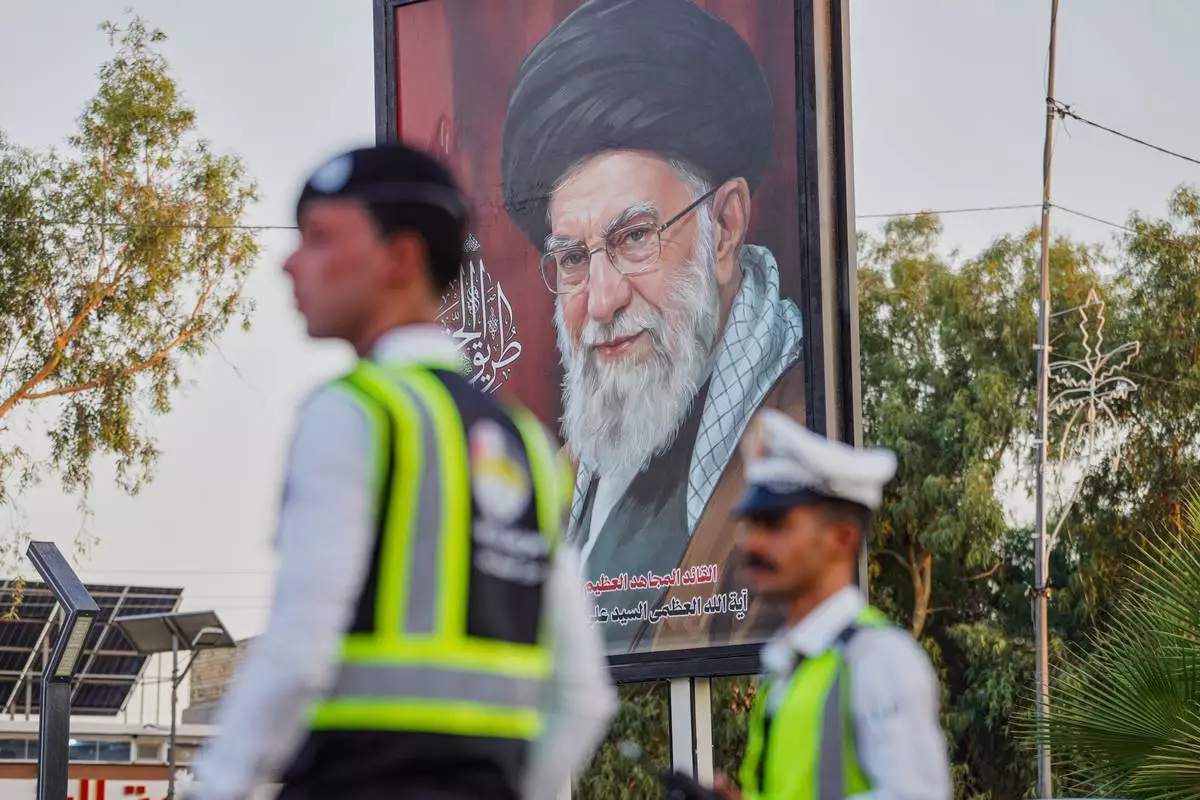
Posters of Khamenei are displayed along the main streets ahead of the funeral ceremony for Iran's former leader Ali Khamenei, who was killed in the U.S.-Israeli attacks in Najaf, Iraq, Tuesday, July 7, 2026. (AP Photo/Anmar Khalil)

Posters of Khamenei are displayed along the main streets ahead of the funeral ceremony for Iran's former leader Ali Khamenei, who was killed in the U.S.-Israeli attacks in Najaf, Iraq, Tuesday, July 7, 2026. (AP Photo/Anmar Khalil)

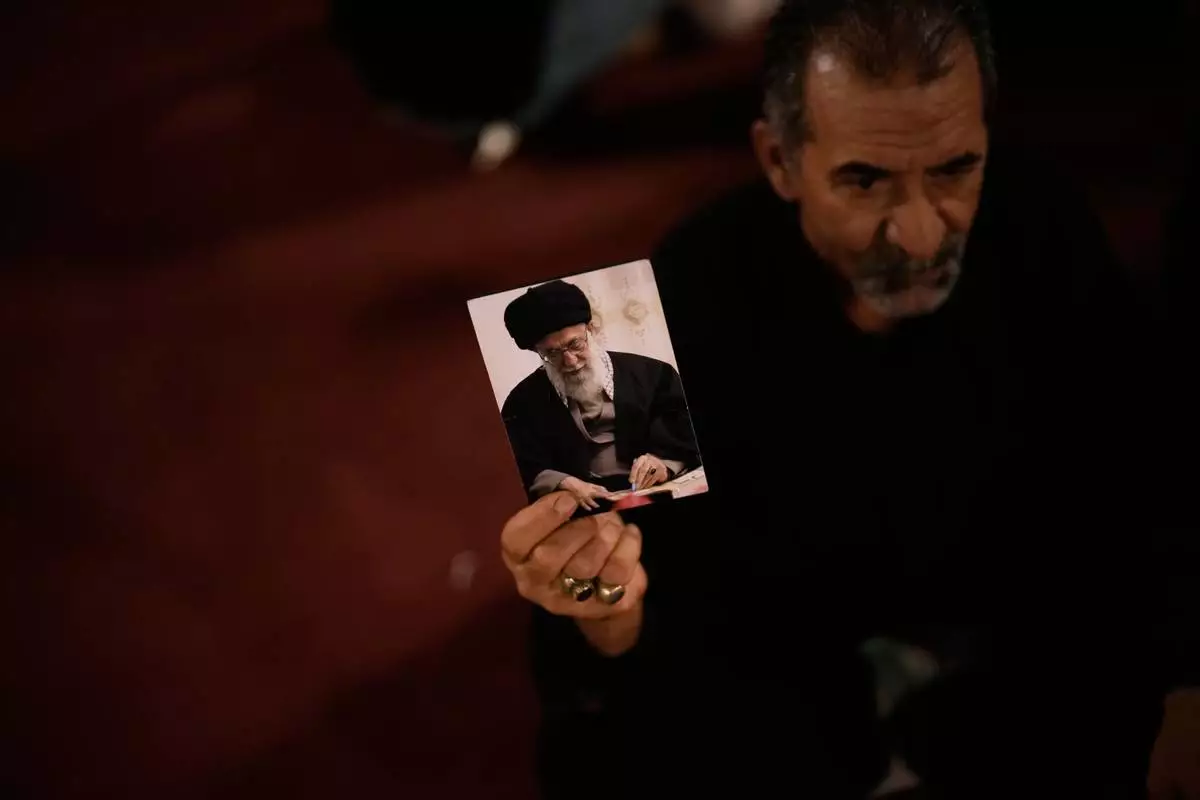
A man holds a picture of the late Iranian Supreme Leader Ayatollah Ali Khamenei on the eve of funeral ceremonies in Karbala, Iraq, Tuesday, July 7, 2026, as the dayslong funeral ceremonies continue in Iraq with events in the Shiite holy cities of Karbala and Najaf. (AP Photo/Khalil Hamra)

A man holds a picture of the late Iranian Supreme Leader Ayatollah Ali Khamenei on the eve of funeral ceremonies in Karbala, Iraq, Tuesday, July 7, 2026, as the dayslong funeral ceremonies continue in Iraq with events in the Shiite holy cities of Karbala and Najaf. (AP Photo/Khalil Hamra)

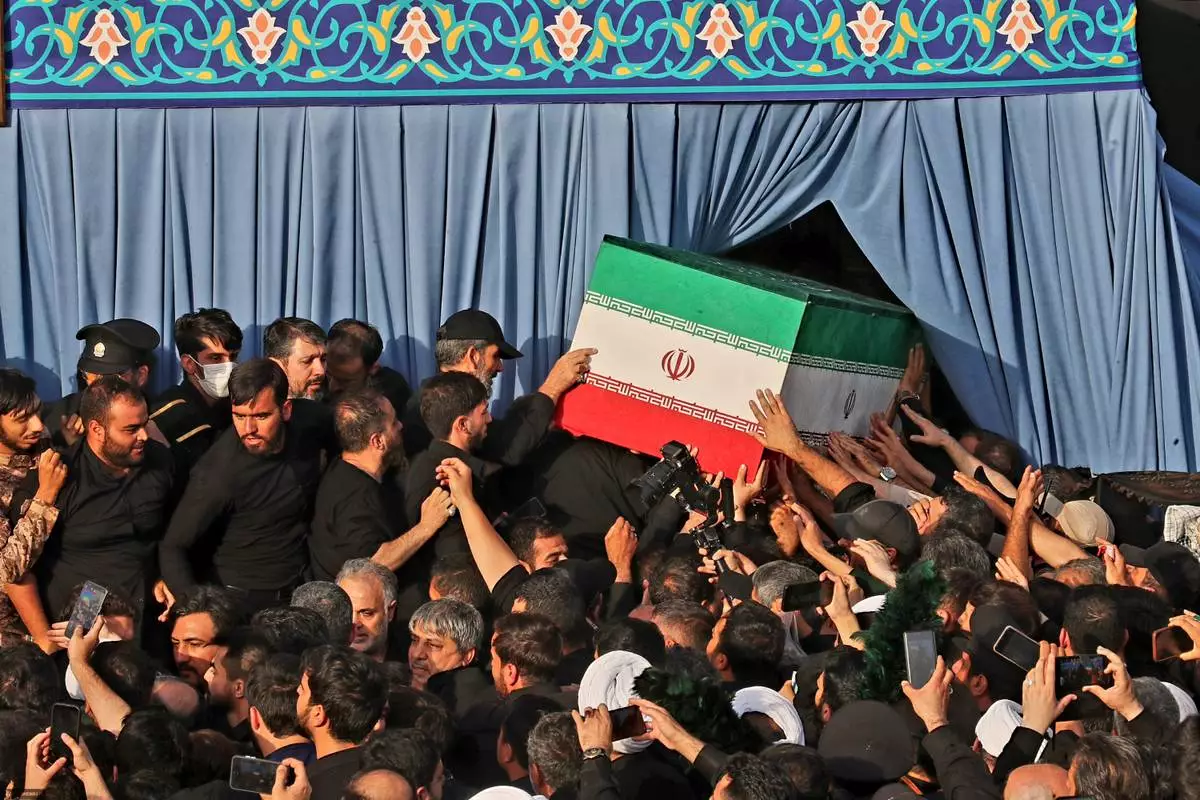
In this photo released by Iran's Supreme Leader's office, mourners carry the coffin of the late Iranian Supreme Leader Ayatollah Ali Khamenei during funeral prayers held as part of the dayslong funeral ceremonies at the Holy Jamkaran Mosque in Qom, Iran, Tuesday, July 7, 2026. (Office of the Iranian Supreme Leader via AP)

In this photo released by Iran's Supreme Leader's office, mourners carry the coffin of the late Iranian Supreme Leader Ayatollah Ali Khamenei during funeral prayers held as part of the dayslong funeral ceremonies at the Holy Jamkaran Mosque in Qom, Iran, Tuesday, July 7, 2026. (Office of the Iranian Supreme Leader via AP)

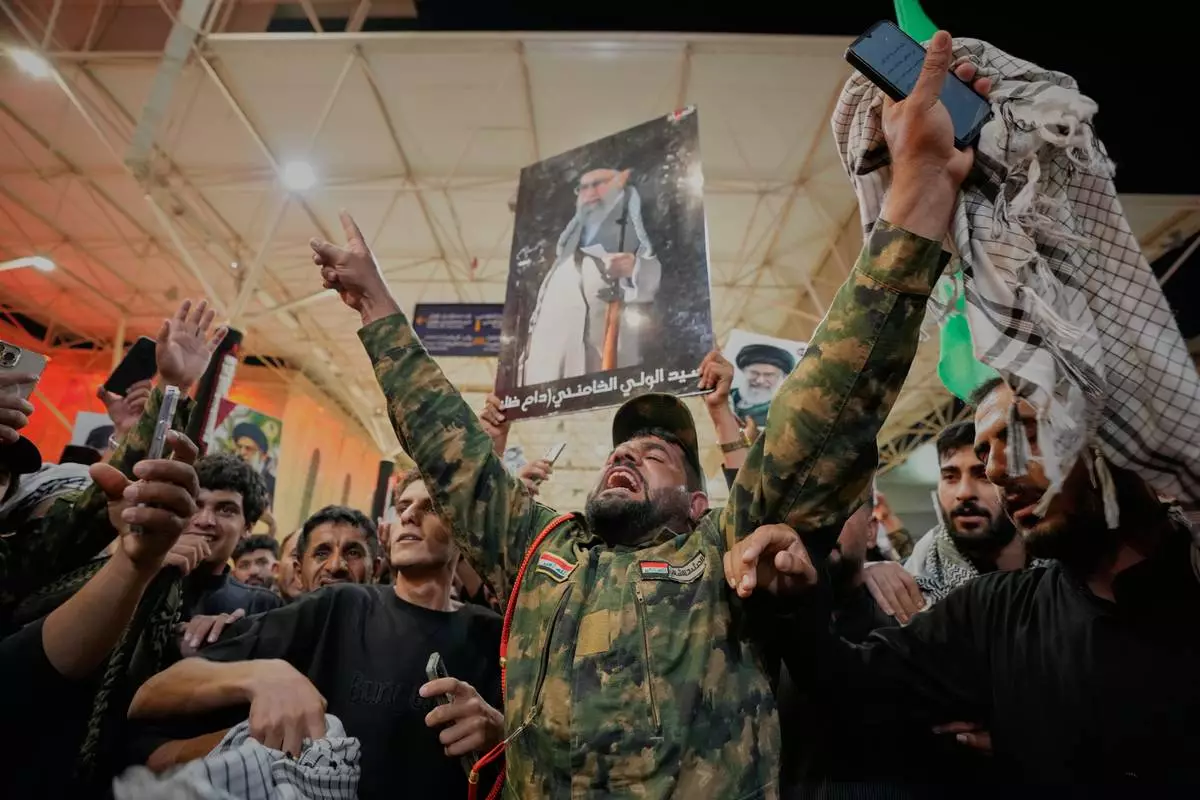
An Iraqi Shiite soldier chants on the eve of funeral ceremonies for the late Iranian Supreme Leader Ayatollah Ali Khamenei outside the Imam Ali Shrine in Najaf, Iraq, Tuesday, July 7, 2026. (AP Photo/Hadi Mizban)

An Iraqi Shiite soldier chants on the eve of funeral ceremonies for the late Iranian Supreme Leader Ayatollah Ali Khamenei outside the Imam Ali Shrine in Najaf, Iraq, Tuesday, July 7, 2026. (AP Photo/Hadi Mizban)

Recommended Articles