SEOUL, South Korea (AP) — South Korea began enforcing a law Tuesday that allows steep punitive damages against news outlets and social media influencers for spreading false information as journalist groups warned it could chill public discourse and invite censorship.
Journalists and civil liberties groups say the vaguely worded law fails to clearly define what information it prohibits and lacks adequate safeguards for the media, warning it could potentially discourage critical reporting about government officials, politicians and large businesses.
The law allows courts to award damages of up to five times the proven losses against news organizations and large social media channels, including YouTube creators, that circulate illegal, false or manipulated information to cause harm or generate profit.
In addition, those who distribute information more than twice after a court has confirmed it to be false or manipulated could be fined up to 1 billion won ($656,000) by the country’s media regulator. Internet companies operating large social media platforms with more than 1 million daily users are required to take measures such as removing content or suspending user accounts when they receive reports of false or fabricated information.
The law was backed by President Lee Jae Myung’s liberal Democratic Party and passed by the National Assembly in December over a boycott by the conservative opposition. The liberals, who unsuccessfully sought to pass similar legislation under previous governments, say the law is necessary to combat fake news and disinformation, which they argue is posing a growing threat to democracy by fueling division and hate speech.
The Journalists Association of Korea said the mere prospect of news organizations repeatedly facing massive damage claims or legal disputes could have an “unavoidable chilling effect.”
“Even if a law’s objective is legitimate, it could erode the foundations of democracy if it’s enforced in a way that discourages the media and ordinary citizens from freely criticizing and scrutinizing those in power,” the group said in a statement.
The Seoul Foreign Correspondents’ Club also expressed concern about the potential impact on the work of the media and the free flow of information.
The push for the law came as Lee expressed concern about South Korea’s online discourse and information environment after then-President Yoon Suk Yeol briefly imposed martial law in 2024. He was later impeached and removed from office. He was convicted and sentenced to life in prison for rebellion, a ruling that he appealed in February.
Yoon, who faces other criminal cases as well, has promoted unsubstantiated election fraud claims circulated on YouTube to defend his botched power grab and rally conservative supporters against the Democrats. Critics say Yoon’s campaign further polarized the country by injecting falsehoods into already bitter political disputes and making compromise increasingly difficult.
The Korea Media and Communications Commission has downplayed concerns that the law could be used as a tool for state censorship. It would be private operators of online platforms, not the government, deciding whether reported content qualifies as false or manipulated information, and the law exempts reporting conducted in the public interest from damages claims, the commission said last week.
But Kim Hong-yeol, a professor at Seoul’s Duksung Women’s University, said the law could encourage widespread self-censorship and discourage reporting or discussions on sensitive issues. Internet companies could end up acting as online censors, adopting overly aggressive moderation policies to avoid liability and removing legitimate content in the process, Kim wrote in an article for the news website Medius.
While major South Korean internet companies like Naver and Kakao have reportedly been updating their systems for reporting and handling false information in line with guidelines from the Korea Internet Self-Governance Organization, it’s unclear how major foreign platforms, like Google’s YouTube, would comply. Google did not immediately respond to a request for comment.
After the law was passed in December, U.S. Under Secretary of State Sarah B. Rogers criticized it in a post on X, writing that the revised law endangers tech cooperation and that “it’s better to give victims civil remedies than give regulators invasive license for viewpoint-based censorship.”
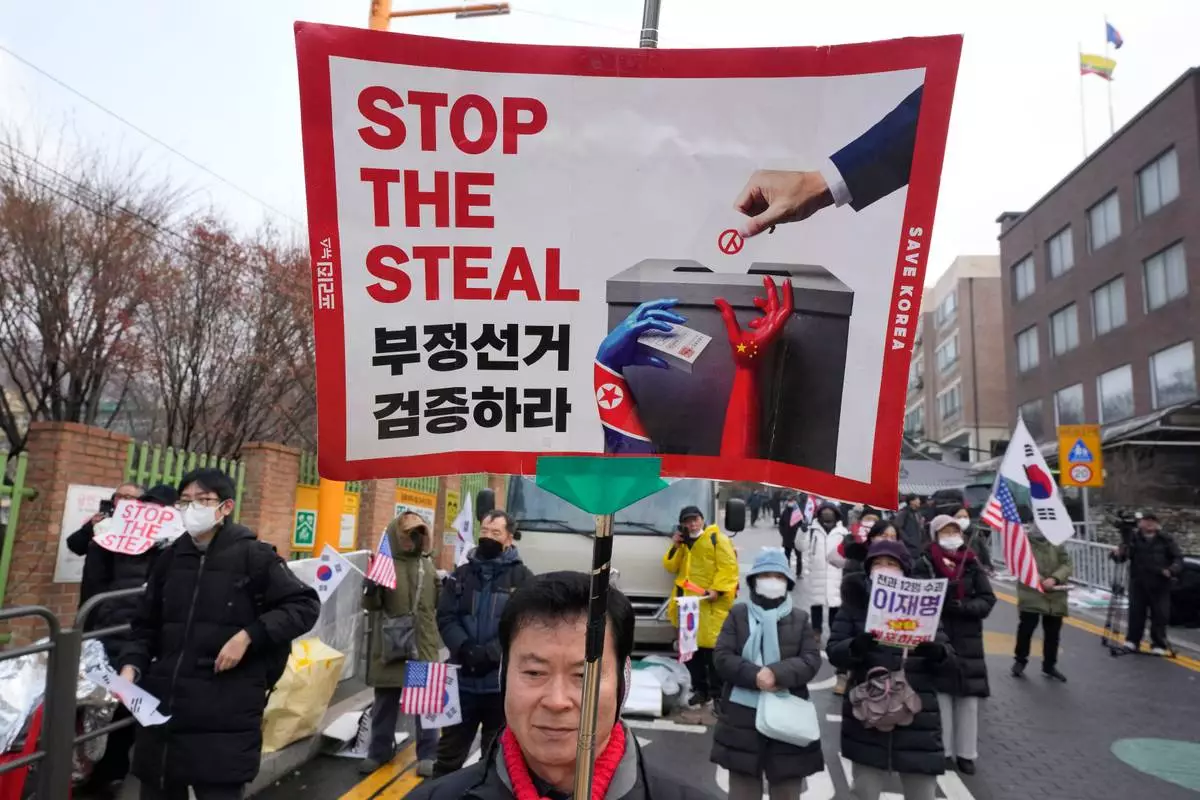
FILE - Supporters of impeached South Korean President Yoon Suk Yeol attend a rally to oppose his impeachment near the presidential residence in Seoul, South Korea, Jan. 6, 2025. (AP Photo/Ahn Young-joon, File)
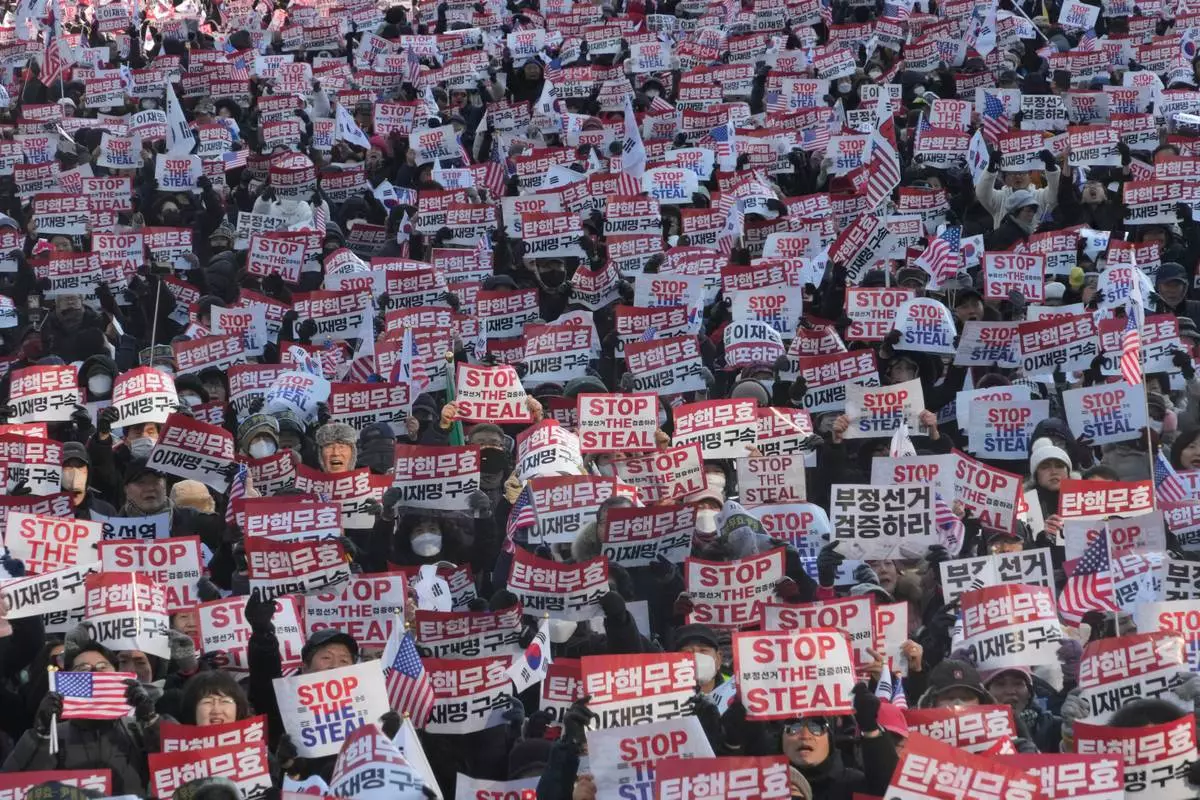
FILE- Supporters of impeached South Korean President Yoon Suk Yeol stage a rally to oppose his impeachment in Seoul, South Korea, Jan. 11, 2025. The letters read, "Impeachment is invalid." (AP Photo/Ahn Young-joon, File)
ANKARA, Turkey (AP) — NATO on Tuesday will showcase a series of new military projects worth billions of dollars in an attempt to convince U.S. President Donald Trump that the allies are stepping up defense spending and converting investment into real firepower.
At an event dubbed the “big reveal,” several leaders are due to announce new deals with defense companies, plenty of them in the United States. Trump has branded NATO a “paper tiger” that would cease to function without American arms and leadership.
“We will announce tens of billions in new contracts that will provide the crucial kit we need to deter and defend,” NATO Secretary-General Mark Rutte told reporters on the eve of the military alliance’s two-day summit in Turkey.
The defense industry splash comes a few weeks after Rutte tried to ease U.S. concerns about military spending at NATO with a new pitch using a chart labeled the “The Trump Trillion” — showing $1.2 trillion in spending by European allies and Canada since 2017.
Far from being impressed, Trump appeared unmoved, saying he was still disappointed at some NATO allies’ refusal to join the Iran war, which he had launched alongside Israel without consulting them.
“We don’t need their money — we don’t need anything,” Trump said. “I just want loyalty.”
Among the contracts to be unveiled, many of them drawn up and some signed long before the summit, is expected to be one to replace NATO’s aging fleet of surveillance planes.
NATO as an organization does not own any weaponry — these are the property of the 32 member countries — but it does have a fleet of AWACs aircraft that are about 50 years old and some newer surveillance drones.
Some of the other projects will notably be paid for with funds from a system of cheap loans for defense purposes set up by the European Union, comprising up to $170 billion raised on capital markets.
“We need to ensure that we are translating our economic might into military capabilities, putting the cash to work from defense plans to drones, from money to missiles and interceptors,” Rutte said.
The summit is being held in President Recep Tayyip Erdogan’s sprawling palace compound in Ankara and Trump has suggested he would come bearing gifts for the Turkish leader.
But speaking Monday on the morning show “Fox & Friends,” Israeli Prime Minister Benjamin Netanyahu urged the U.S. not to sell F-35 fighter jets to Turkey, saying that Erdogan “calls openly for the annihilation of Israel.” Turkey and Israel have acrimonious relations. Erdogan frequently accuses Israel of committing genocide in its war in Gaza, triggered by the deadly Oct. 7, 2023 Hamas-led attack on southern Israel.
Turkey was barred from the F-35 program in 2019, after it purchased Russian-made S-400 missile defense systems. However, Trump, who has warm relations with Erdogan, has hinted ahead of his planned visit to Ankara for the NATO summit that the sales could soon resume.
Netanyahu said selling Turkey F-35s would “upset the power balance in the Middle East, which is ultimately guaranteed by Israeli air superiority and also, I think, by America’s posture in the Middle East.”
Israel’s Air Force depends on hundreds of U.S. fighter jets, including F-35s, F-16s and F-15s.
The focus of the summit is a stronger Europe for a stronger NATO. The Trump administration has warned the allies that they must handle Europe’s security alone as the United States focuses on China and the Indo-Pacific region.
The Pentagon wants a reboot and is promoting what it calls “NATO 3.0,” a vision of the alliance in which Europe assumes greater responsibility for its own defense, freeing the U.S. to concentrate on other priorities.
But hiking defense spending means increasing taxes or diverting resources from other priorities. U.K. Defense Secretary John Healey unexpectedly quit last month, saying the government was not willing to spend at a time of rising threats.
Concern is mounting among some northern and central eastern countries that Russia might be preparing a hybrid attack — a combination of conventional warfare with tactics like cyberattacks — on the continent as Russian President Vladimir Putin struggles to secure victory in Ukraine.
Keir Starmer’s office said the British leader will be “focused on building a stronger and more European NATO” on what is likely to be his last foreign trip as prime minister.
Starmer, who announced his resignation June 22, has faced criticism from military leaders, opposition politicians and some in his center-left party for the slow rate of increase in U.K. military spending.
His government has committed to reach the NATO budget target of spending 3.5% of gross domestic product on defense by 2035 but does not have a concrete plan to get there. Its current spending plan will see that spending hit 2.7% of GDP by 2029.
Associated Press writer Jill Lawless in London contributed to this report.
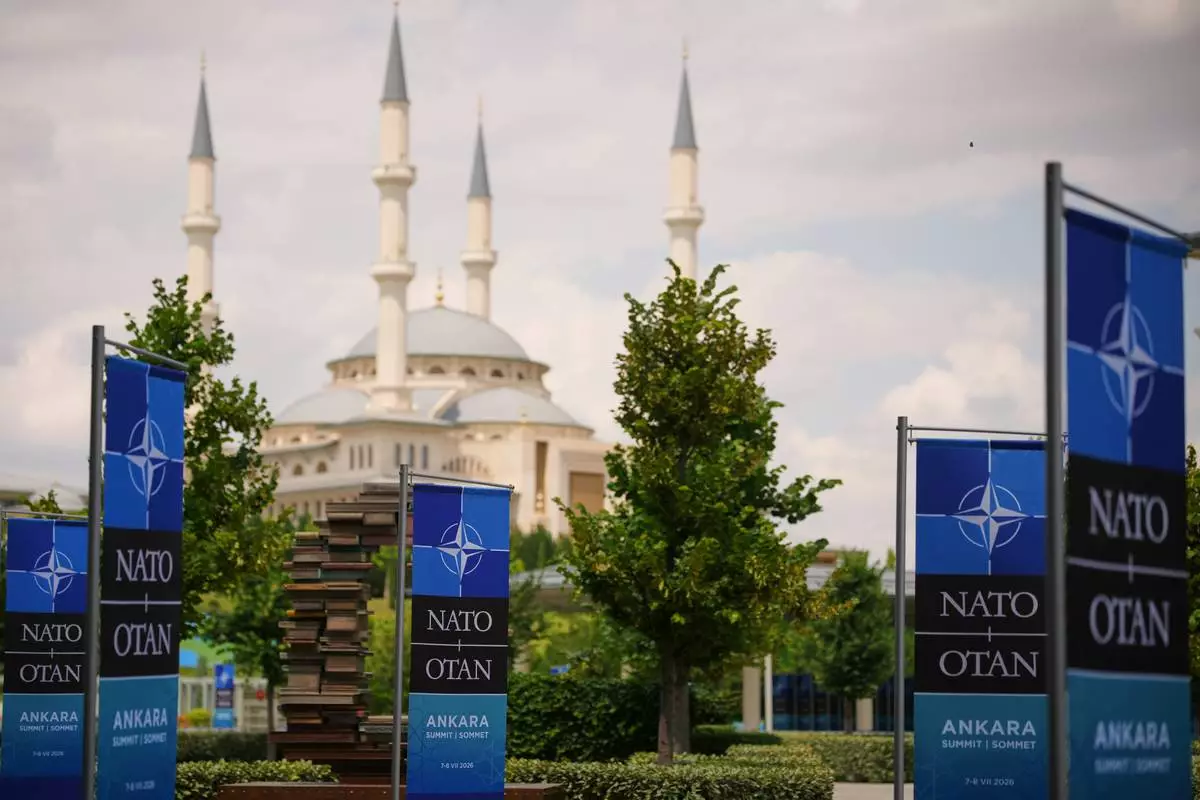
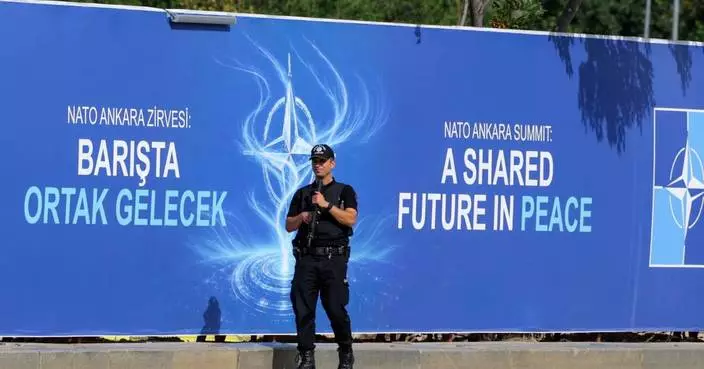
NATO banners in front of the Bestepe National Mosque ahead of the NATO Summit in Ankara, Turkey, Monday, July 6, 2026. (AP Photo/Emrah Gurel)
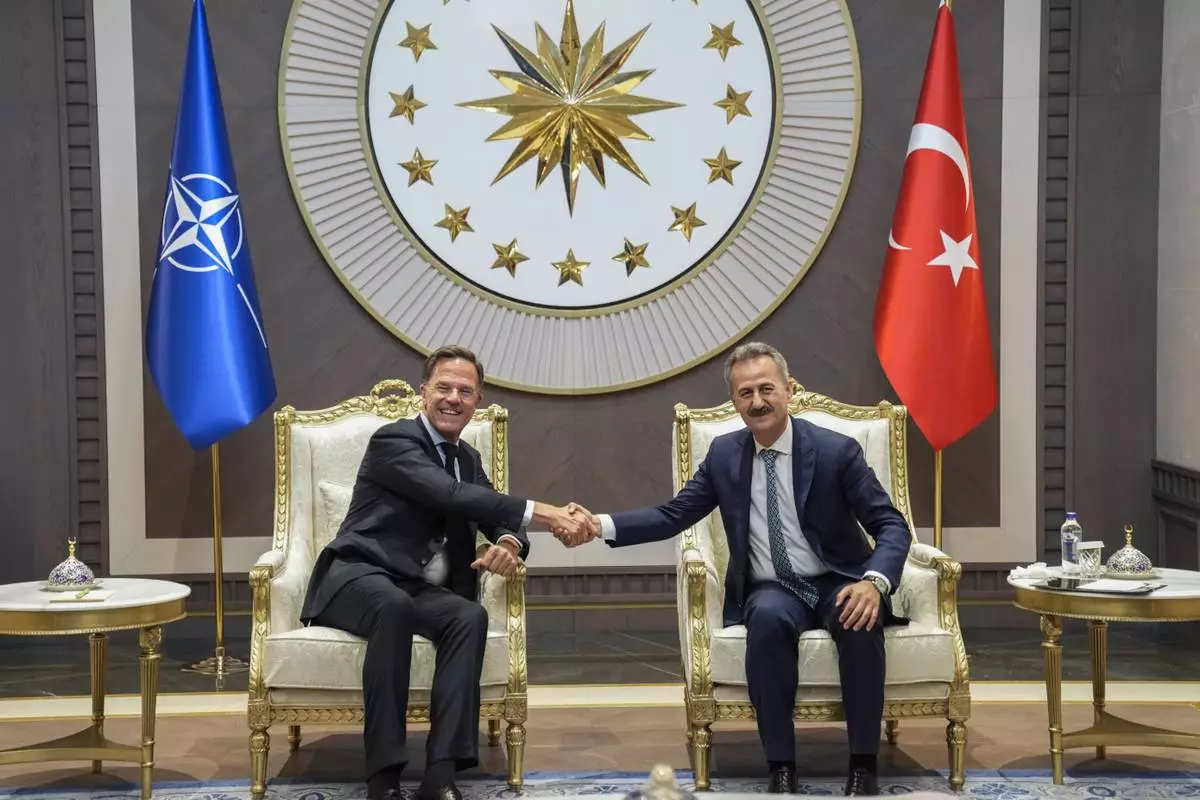
NATO Secretary General Mark Rutte, left, meets with Turkish Presidential Defense Industries Directorate Haluk Gorgun as he arrives ahead of the NATO Summit in Ankara, Turkey, Monday, July 6, 2026. (Osmancan Gürdoğan, Pool Photo via AP)
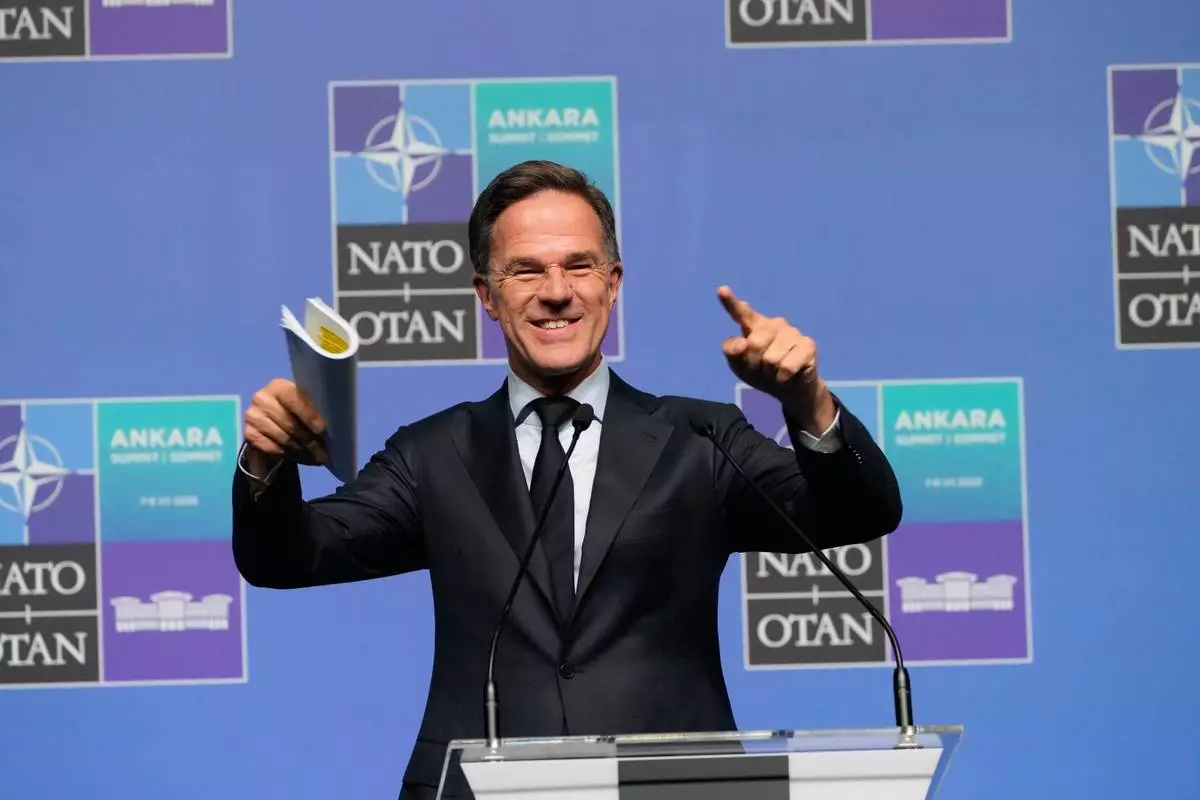
NATO Secretary General Mark Rutte speaks during a media conference at the International Media Center ahead of the NATO Summit in Ankara, Turkey, Monday, July 6, 2026. (AP Photo/Hussein Malla)
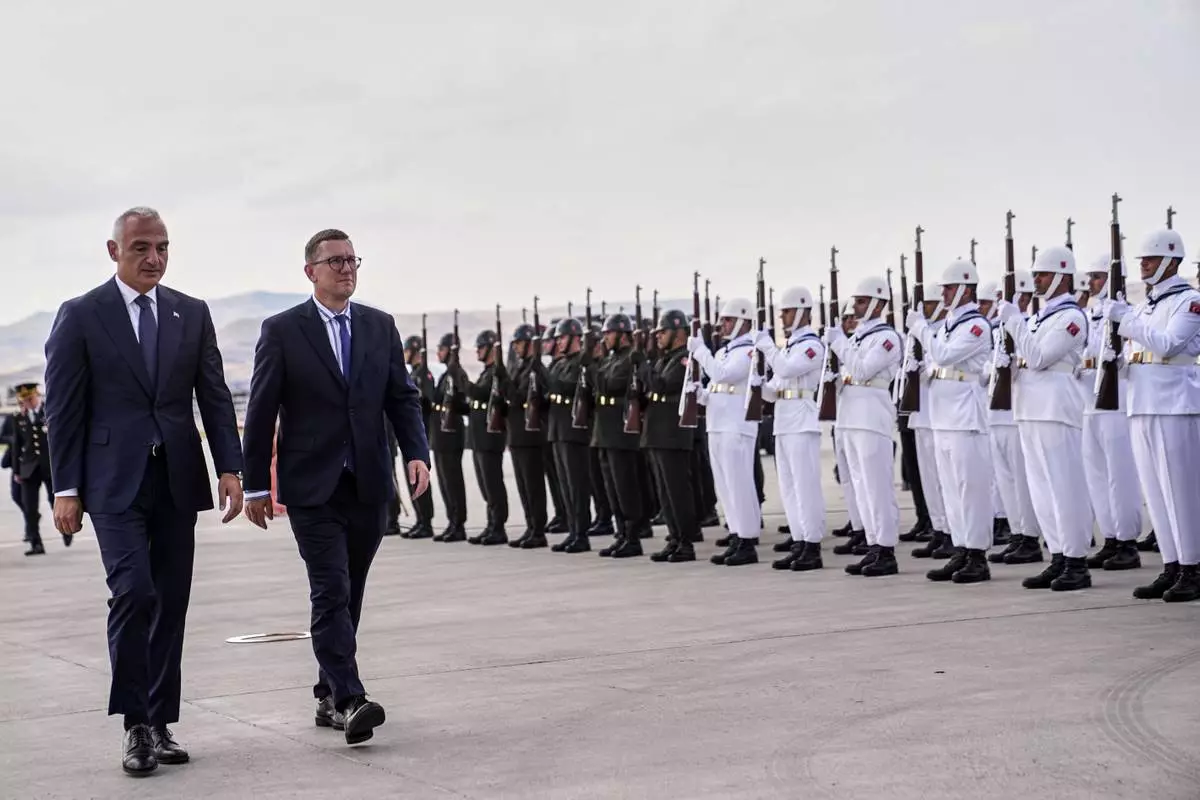
Estonia's Prime Minister Kristen Michal, center left, walks with Turkish Culture and Tourism Minister Mehmet Nuri Ersoy, left, during airport arrivals ahead of the NATO Summit in Ankara, Turkey, Monday, July 6, 2026. (Metin Aktas, Pool Photo via AP)
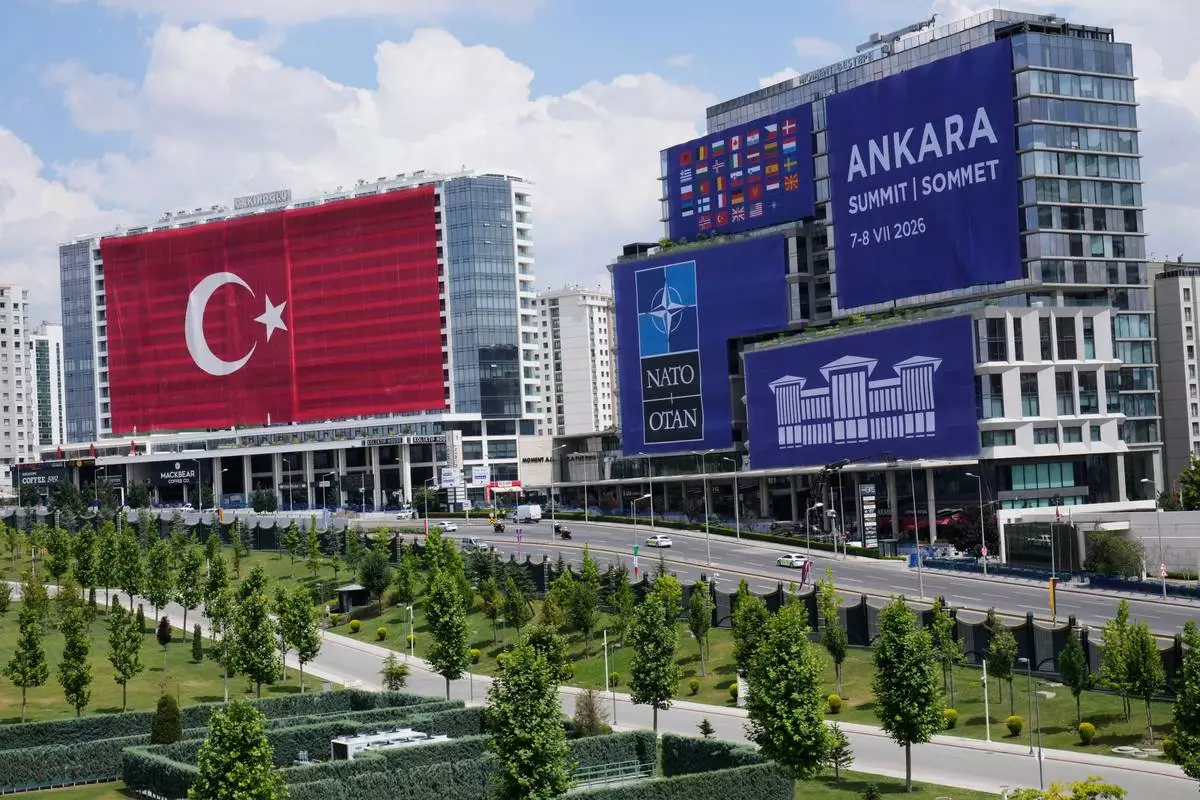
A Turkish flag and NATO banners cover buildings ahead of the NATO Summit in Ankara, Turkey, Monday, July 6, 2026. (AP Photo/Hussein Malla)