A document detailing personnel from Unit 516, a Japanese chemical warfare unit during World War II, was unveiled in Harbin, the capital of northeast China's Heilongjiang Province, on Monday, one day before the 89th anniversary of the July 7th Incident.
The July 7th Incident, also known as the Lugou Bridge Incident, which occurred in 1937, is recognized as the start of Japan's full-scale invasion of China, and China's Total War of Resistance against Japanese Aggression.
As the base camp of Japan's chemical warfare, Unit 516 was set up by the Japanese army in May 1939 in Qiqihar City of Heilongjiang, and developed a range of toxic agents and used them during warfare.
The 148-page document, released by the Exhibition Hall of Evidences of Crime Committed by Unit 731 of the Japanese Imperial Army, contains detailed information on 108 individuals in Unit 516, including civil officials, military-affiliated employees, army technical warrant officers, army medical lieutenants, and chemical technicians.
The document recorded information on their names, family details, and military service trajectory, as well as their activities after the defeat of Japan in August 1945.
"We can determine and outline the size, scale, personnel composition, and rank structure of the special forces unit [from the document]. The research into the historic facts of this unit will provide important, irrefutable evidence with strong persuasive power," said Jin Chengmin, director of the Exhibition Hall of Evidences of Crime Committed by Unit 731 of Japanese Imperial Army.
By studying the document, researchers discovered the personnel transfers and collaboration between Unit 516 and other chemical warfare units.
"The document reveals the transfer and rotation of personnel as well as collaborative experiments conducted among Unit 731, Unit 516, and Unit 100 -- the three chemical and biological warfare units established by Japan in northeast China during its invasion. This demonstrates that these three units set up in northeast China constituted an integrated chemical and biological warfare system," said Jin Shicheng, head of the Education and Exhibition Department of the Exhibition Hall of Evidences of Crime Committed by Unit 731 of Japanese Imperial Army.
Researchers also found out that many members of Unit 516 were from Japan's medical universities and research institutions.
"The collaboration between the military and academia, and between the military and medical professionals, and the exchanges involving chemical warfare troops and members of specialized bacteriological units -- these could only be realized through coordination and organization at the national or high-command level. This further demonstrates that Unit 516 was a state-sponsored entity, which operated in a top-down, organized, systematic, and collaborative approach. Thus, it constituted an act of state-sponsored crime," said Jin Chengmin.
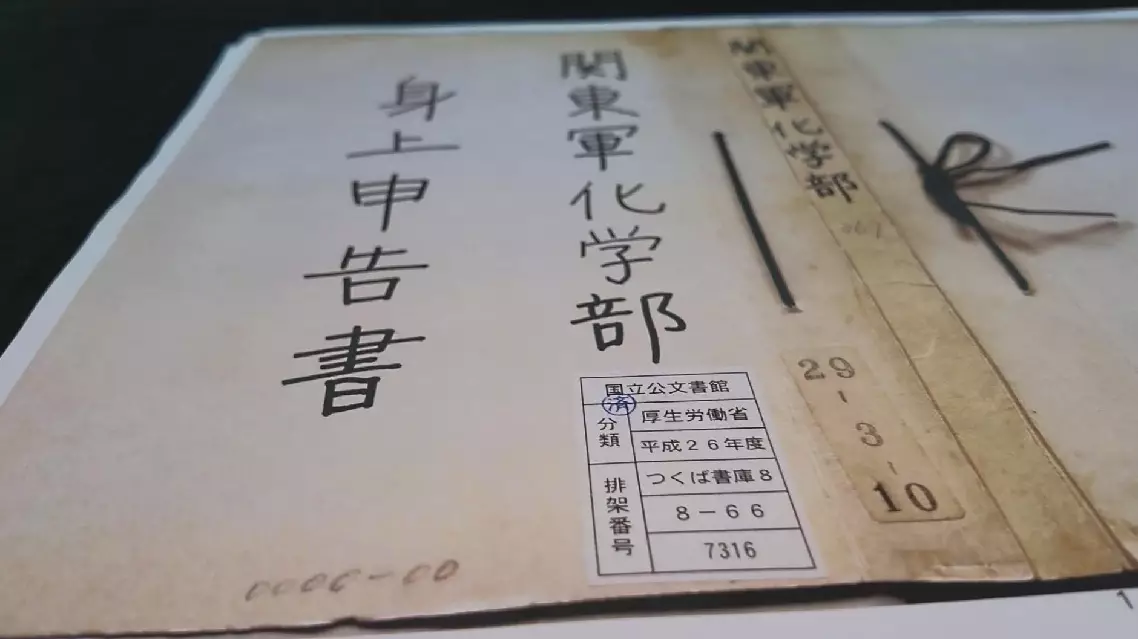
New document reveals further details of Japanese chemical warfare unit