SAN RAMON, Calif.--(BUSINESS WIRE)--Jul 7, 2026--
This press release features multimedia. View the full release here: https://www.businesswire.com/news/home/20260707648783/en/
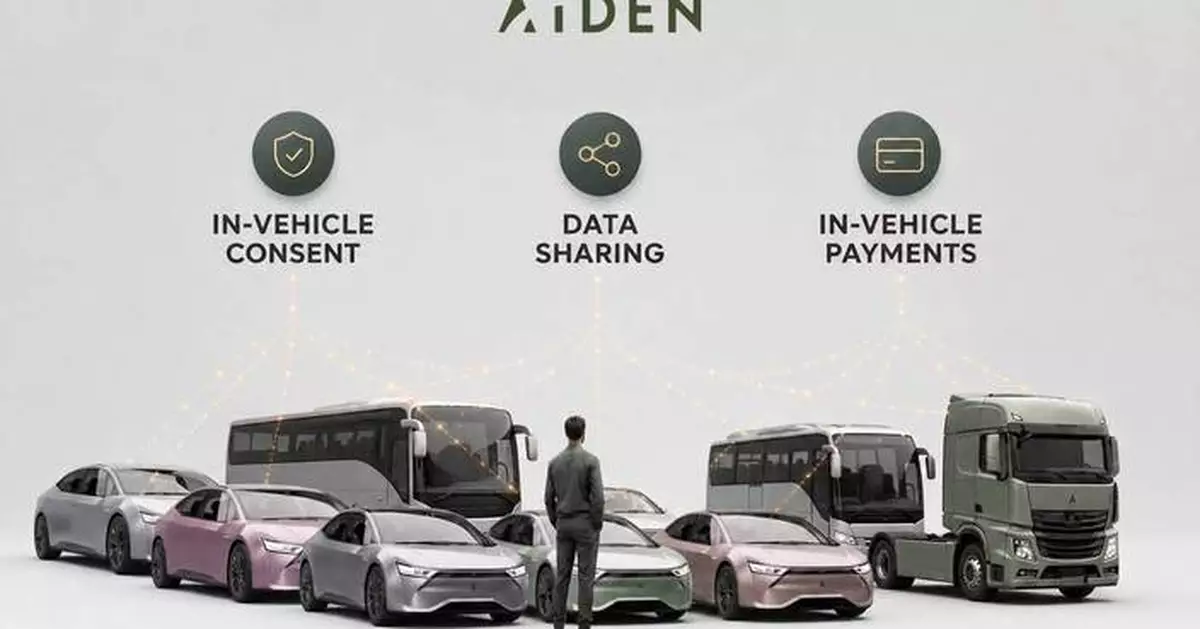
Together, the patents reflect AiDEN’s early leadership in building the foundational software layer needed to support the next generation of software-defined vehicles. As vehicles become increasingly connected, intelligent and service-driven, automakers, fleets, drivers and third-party service providers need a secure, scalable way to exchange data, authorize services and enable commerce directly through the vehicle experience. AiDEN’s patented technologies address three essential building blocks of that future.
“Software-defined vehicles will only reach their full potential if drivers, fleets, OEMs and service providers can connect in a way that is trusted, secure and useful,” said Niclas Gyllenram, CEO of AiDEN Automotive. “These patents validate core parts of the platform we have been building from the beginning: real-time vehicle data sharing, transparent consent and the foundation for in-vehicle commerce. We are not here to compete with OEMs—we are here to complete their connected vehicle ecosystem so they can deliver more value to their customers.”
Data Sharing Technology for Real-Time Vehicle Connectivity
AiDEN’s data sharing patent covers the ability to share data directly from vehicles, rather than relying solely on traditional telematics systems or third-party data aggregators. The technology enables data sharing to be configured in real time, allowing a cloud-based system to determine what data should be shared from the vehicle and then route that data securely through AiDEN’s cloud to approved third parties.
This capability is especially important as OEMs look to expand the value of software-defined vehicles beyond infotainment and diagnostics. By enabling direct, configurable vehicle-to-cloud-to-service provider connectivity, AiDEN helps create a more flexible foundation for new services in areas such as fleet management, insurance, maintenance, fueling, compliance, safety, roadside support and driver convenience.
For OEMs, this creates a way to activate new revenue-generating services without having to manage every service provider relationship or build every application internally. For fleets, it opens the door to more actionable, real-time vehicle intelligence. For drivers, it can enable more personalized services that are delivered in the right place, at the right time, through the vehicle interface.
"As vehicles become increasingly software-defined, the ability to securely share data with user consent will be fundamental to delivering the next generation of mobility services," said Petter Djerf, Sr. Director of Automotive, EMEA at HERE Technologies. "Creating a trusted environment where drivers understand and control how their data is used benefits everyone in the ecosystem—from automakers and fleet operators to service providers and consumers. AiDEN’s patented approach to consent management and data sharing helps establish the foundation for deeper collaboration across the mobility ecosystem, enabling more seamless, personalized and intelligent experiences throughout the journey."
Consent Management Technology for Privacy-First Services
AiDEN’s consent management patent covers a system in which data-sharing configurations automatically generate consent requests inside the vehicle, giving the driver or vehicle user visibility and control over what data is being shared. As privacy regulations become more complex and consumers become more aware of how their data is used, consent will become a defining issue for connected vehicle services. AiDEN’s approach is designed to move consent out of long, static terms and conditions and into a more transparent, contextual in-vehicle experience.
This method also helps OEMs and service providers support GDPR compliance and other evolving data privacy requirements by creating a clear, auditable consent process tied directly to each data-sharing event or service activation. Rather than relying on broad, one-time permissions, AiDEN enables consent to be requested, recorded and managed in context, helping ensure that vehicle data is shared only when users understand and authorize how it will be used.
This means drivers can understand what they are being asked to share and why. It also gives OEMs and service providers a more trusted way to offer connected services that depend on vehicle data. Instead of treating privacy as a barrier to innovation, AiDEN’s technology makes consent part of the service experience itself.
Payment Technology for the Future of In-Vehicle Commerce
AiDEN’s third patent covers technology related to issuing a payment token to a vehicle, enabling the vehicle to support payments directly. This capability represents a foundational step toward the future of in-vehicle commerce, where the vehicle becomes more than a mode of transportation—it becomes a secure, intelligent transaction point for services that support drivers, fleets and OEMs.
As vehicles become more connected, software-defined and increasingly autonomous, payment capabilities will play a central role in how drivers and fleets interact with the world around them. Future use cases could include a vehicle enabling payments for parking, tolling, charging, fueling, maintenance, food pickup, parts ordering or other services with limited driver friction. Instead of requiring a phone, card or separate app, the vehicle itself can become the interface through which commerce happens.
This is particularly relevant for fleets, where payments, compliance and vehicle operations are often closely connected. A commercial vehicle could help streamline recurring operational transactions, reduce manual processes and create more efficient workflows between drivers, fleet managers and service providers. For OEMs, this creates a powerful opportunity to turn the vehicle into a commerce-enabled platform—one that can support new services, strengthen customer relationships and unlock recurring revenue opportunities.
By securing intellectual property in this area, AiDEN is helping define what in-vehicle commerce can become. The company’s leadership in connected vehicle services, consent-based data sharing and vehicle-integrated commerce positions it at the forefront of a market where payments, services and software-defined vehicle experiences will increasingly converge.
"For years, the connected vehicle industry has talked about unlocking new revenue streams through data, digital services and in-vehicle commerce, but realizing that vision requires more than connectivity alone," said Roger Lanctot, Director of Strategy Analytics at StrategiaNow. "Drivers must have confidence in how their data is used, service providers need secure access to vehicle information, and automakers need scalable platforms that can support a growing ecosystem of partners. AiDEN's patents demonstrate a forward-looking approach to solving these challenges. By combining consent management, real-time vehicle data sharing and the foundations of in-vehicle commerce, AiDEN is positioning itself at the forefront of one of the most important developments in automotive technology: turning connected vehicles into trusted platforms for services, transactions and customer engagement throughout the ownership lifecycle."
Advancing the Value of Software-Defined Vehicles
Software-defined vehicles are creating a new competitive landscape for automakers. The value of the vehicle is no longer defined only by hardware, performance or brand experience, but also by the services that can be delivered over time.
AiDEN’s patented technologies help enable that shift by providing critical infrastructure for:
Rather than competing with OEM software strategies, AiDEN is designed to complete them—helping automakers activate more services, connect more partners and deliver more value through the vehicle interface.
About AiDEN Auto
AiDEN Auto is a connected vehicle software company delivering essential mobility services — including tolling, parking, fueling, compliance and fleet applications — directly to vehicle infotainment screens. Built for Android Automotive, AiDEN helps OEMs, fleets and service providers activate in-vehicle services through a software-only, OEM-branded and consent-based platform. AiDEN enables automakers and fleets to connect drivers with the services they need while keeping vehicle owners in control of their data. Learn more at www.aidenauto.com.
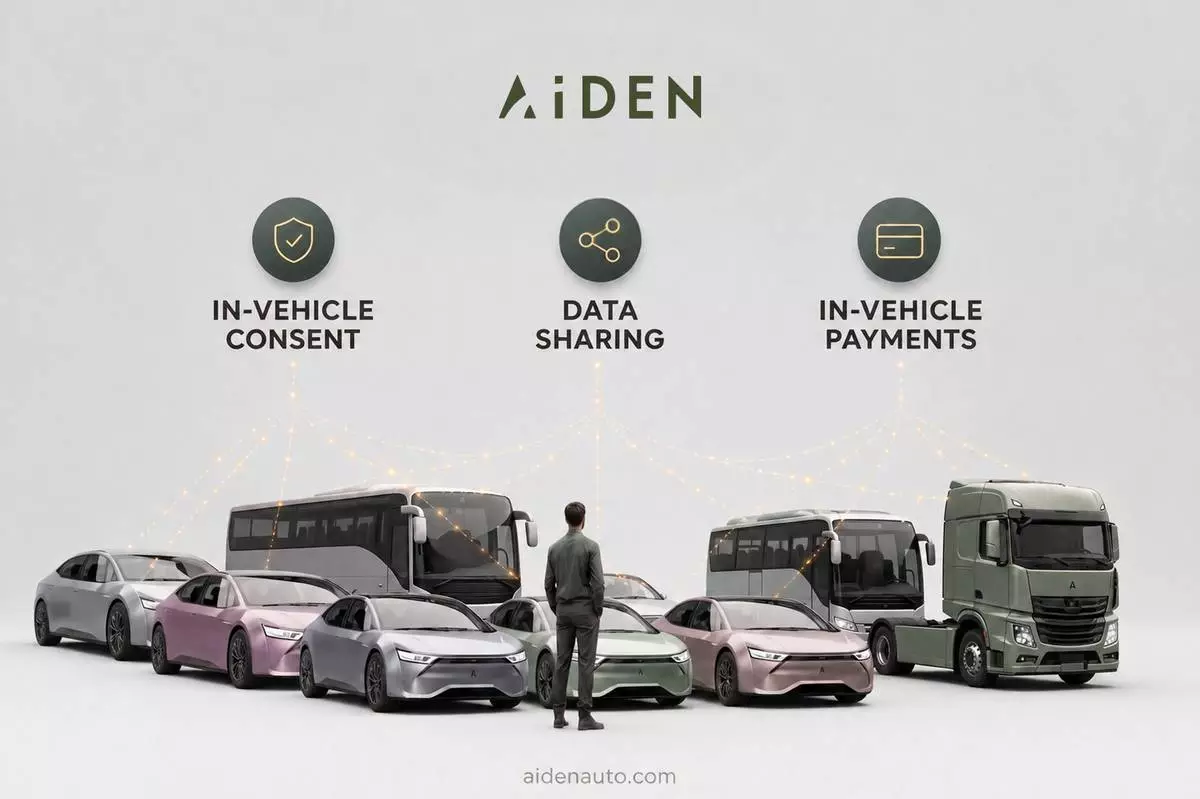
AiDEN Automotive, a privacy-first connected vehicle software company, today announced that it has been granted three patents covering key technologies related to in-vehicle consent management, data sharing and payments. All three patents have been granted in the United States and Japan, the data sharing patent has been granted in India, and the consent management and payment patents are pending in Europe.