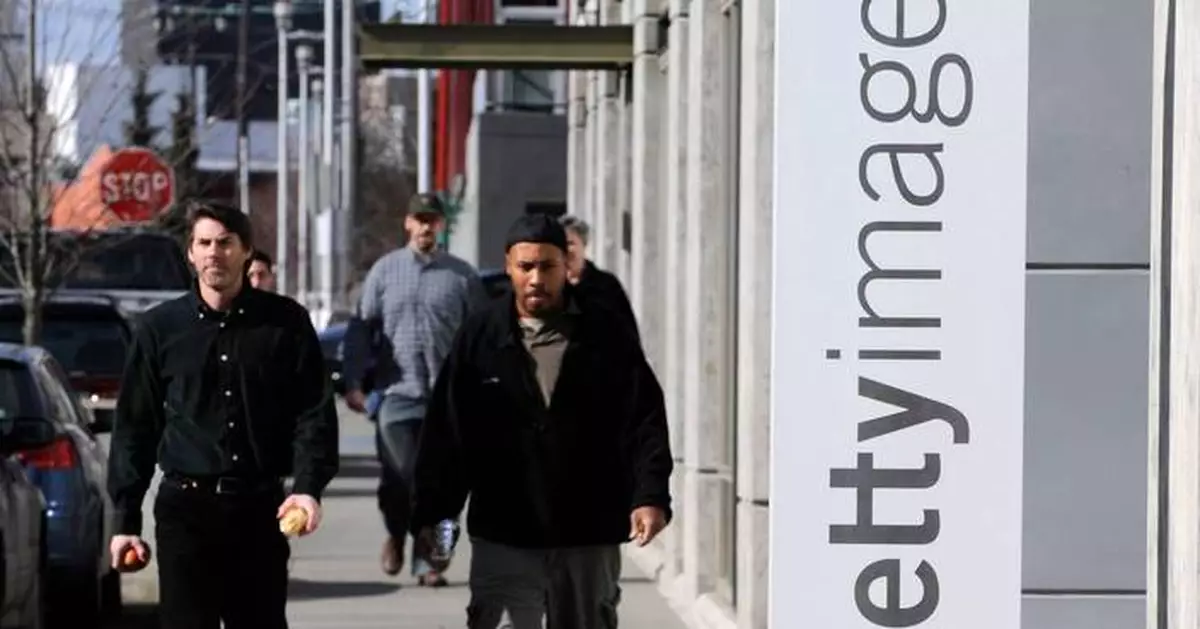
Getty Images notified Shutterstock on Tuesday that it's scrapping plans to combine the companies in a $3.7 billion deal because it didn't want to comply with a key condition laid out by Britain's antitrust regulator.
In a filing, Getty said that it “delivered a written notice to Shutterstock terminating the Merger Agreement," which was announced last year as part of a plan to create a visual content giant.
Britain's Competition and Markets Authority had approved the deal following an investigation but only on condition that Shutterstock's editorial business be sold to an approved buyer. The regulator was concerned that the combined company would result in a substantial lessening of competition resulting in reduced choice and higher prices for U.K. media outlets.
Getty's board had voted unanimously last week against proceeding with the deal if it required selling Shutterstock's editorial business.
Both companies license content including photos, illustrations, music and videos to major British media companies, advertisers, publishers and designers, as well as small and medium businesses in the creative industry, according to the CMA.
In morning trading, Getty Images shares shed 6.8%. Shutterstock shares fell 2.4%.
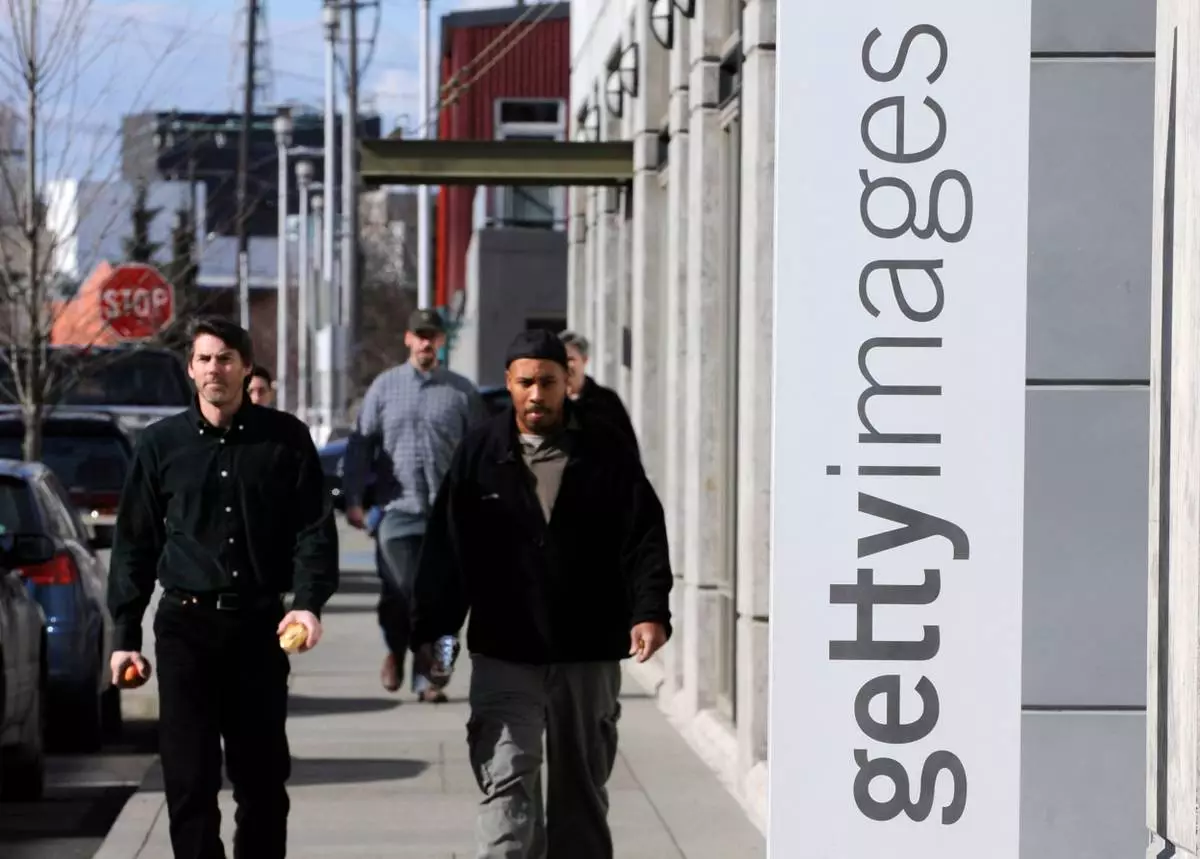
FILE - A sign for the Seattle office of Getty Images Inc., is shown Monday, Feb. 25, 2008, in Seattle. (AP Photo/Ted S. Warren, File)
NEW YORK (AP) — The roller-coaster ride for AI stocks is snapping lower again Tuesday and weighing on Wall Street.
The S&P 500 fell 0.6% even though the majority of stocks within the index rose. The drops for stocks in the artificial-intelligence industry dragged the Nasdaq down 1.2%, as of 10:15 a.m. Eastern time, while the Dow Jones Industrial Average was down 107 points, or 0.2%.
The weakness began in Asia, where Samsung Electronics tumbled 6.9% in Seoul. The tech giant gave a preliminary look at its performance for the second quarter, and the numbers were strong. Samsung Electronics said it expects to say its operating profit surged roughly 1,800% from a year earlier.
Analysts called the numbers surprisingly good, but they still weren’t enough for investors after its stock came into the day having well more than doubled in the year so far.
On Wall Street, AI stocks have been under similar pressure in recent weeks on worries that their prices shot too high and that AI may not produce enough productivity and profits to make all the investments in chips and data centers worth it.
Micron Technology fell 7.8% and was the heaviest weight on the S&P 500. Nvidia sank 1.4% and was just behind Micron in influence. Because the AI boom has made it the largest stock on Wall Street by value, a 1.4% move for Nvidia has more effect on the S&P 500 than a similar move by any other company.
SpaceX, which owns the xAI business, fell 6% in its first trading after getting included in the Nasdaq 100 index.
Outside of tech, Vertex Pharmaceuticals fell 2.3% after saying it agreed to buy Crinetics Pharmaceuticals for $85 per share in cash. Crinetics, which develops therapeutics for endocrine diseases, soared 98.8%.
Stocks also generally felt pressure from a rise in oil prices after the British military said a tanker traveling in the Strait of Hormuz was struck by a projectile and caught fire.
Iranian state television said the liquefied natural gas tanker came under attack after ignoring warnings but did not directly claim the assault. That upset hopes that the war in Iran may be winding down and that the Strait of Hormuz may fully reopen to oil tankers bringing crude to customers worldwide from the Persian Gulf.
Brent crude, the international standard, rose 2.7% to $73.94.
Higher oil prices put upward pressure on inflation, and Treasury yields climbed higher in the bond market. The yield on the 10-year Treasury rose to 4.51% from 4.48%
High yields worldwide have been rattling investors after oil prices burst above $100 per barrel earlier in the summer because of the war. The worry is that high inflation may force the Federal Reserve and other central banks to hike interest rates. High rates can keep a lid on inflation, but they also slow the economy and hurt prices for all kinds of investments.
In stock markets abroad, South Korea’s Kospi tumbled 4.9% because Samsung Electronics alone makes up more than a quarter of the index.
Other Asian indexes also fell, including a 2.1% drop for Japan’s Nikkei 225 index, while European indexes were mixed.
AP Business Writers Matt Ott and Elaine Kurtenbach contributed to this report.
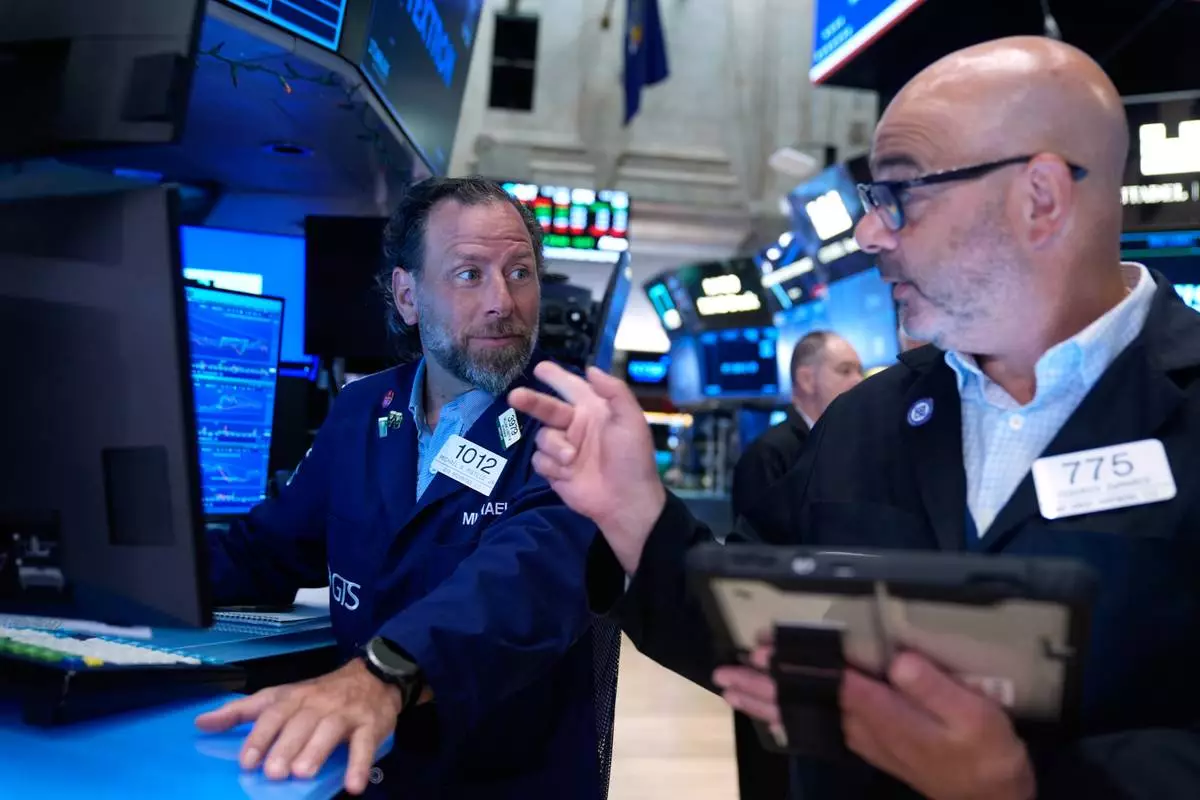
Michael Pistillo, left, and Federico DeMarco work on the floor at the New York Stock Exchange in New York, Monday, July 6, 2026. (AP Photo/Seth Wenig)
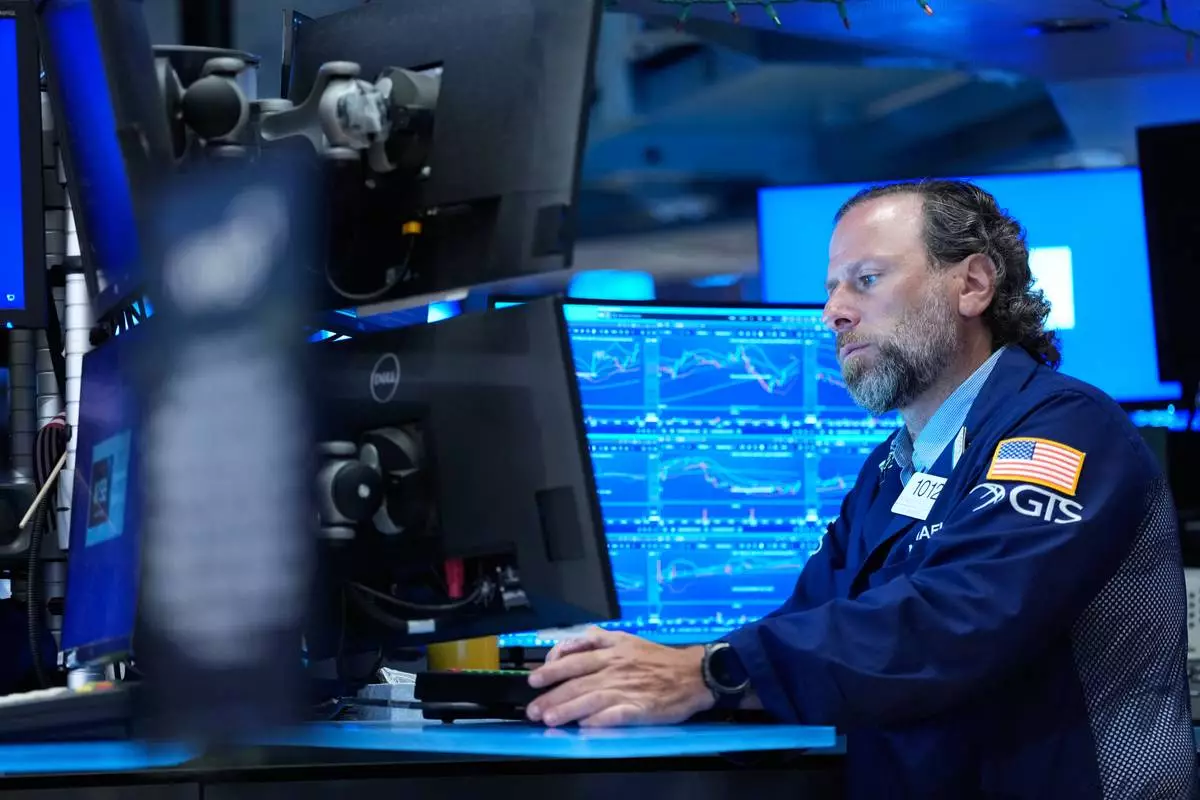
Michael Pistillo works on the floor at the New York Stock Exchange in New York, Monday, July 6, 2026. (AP Photo/Seth Wenig)
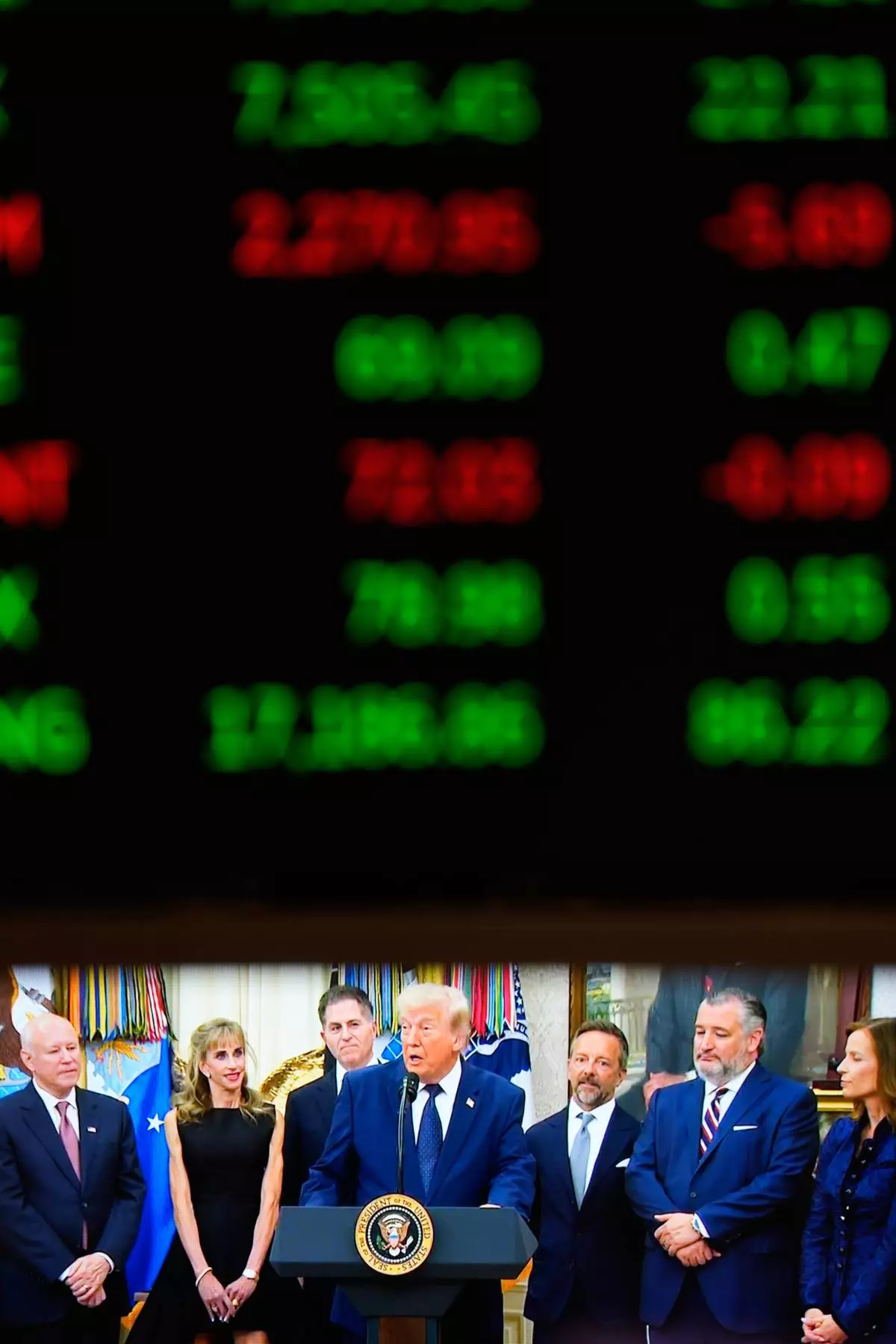
After ringing the opening bell from the White House, United States President Donald Trump is seen on a screen on the floor of the New York Stock Exchange, in New York, Monday, July 6, 2026. (AP Photo/Seth Wenig)
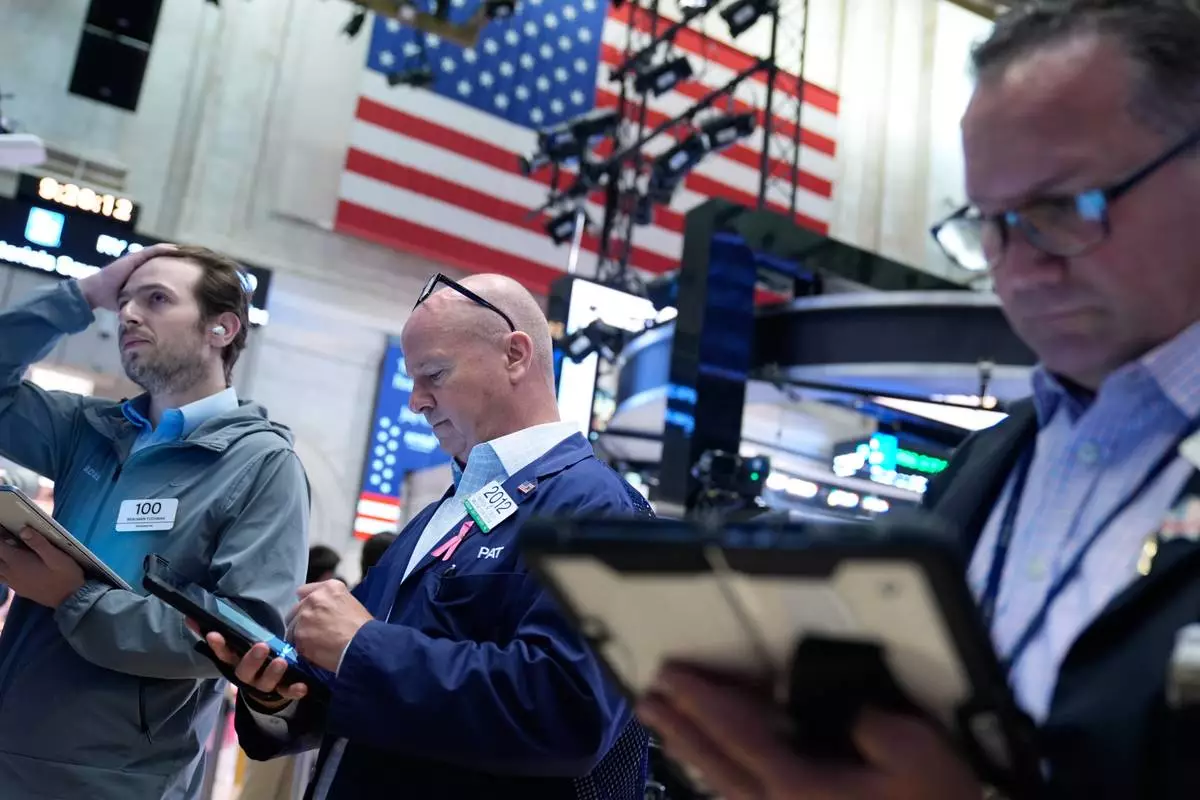
Traders work on the floor at the New York Stock Exchange in New York, Monday, July 6, 2026. (AP Photo/Seth Wenig)
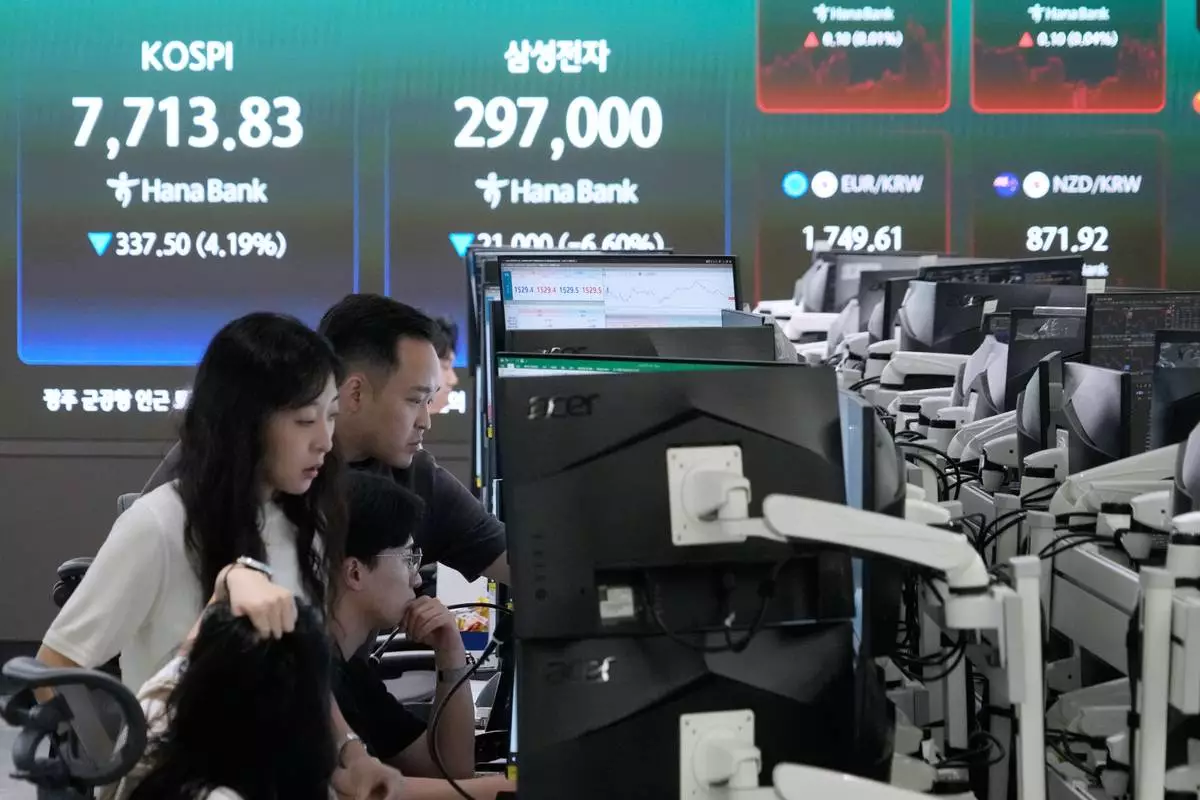
Currency traders watch monitors near a screen showing the Korea Composite Stock Price Index (KOSPI) at the foreign exchange dealing room of the Hana Bank headquarters in Seoul, South Korea, Tuesday, July 7, 2026. (AP Photo/Ahn Young-joon)
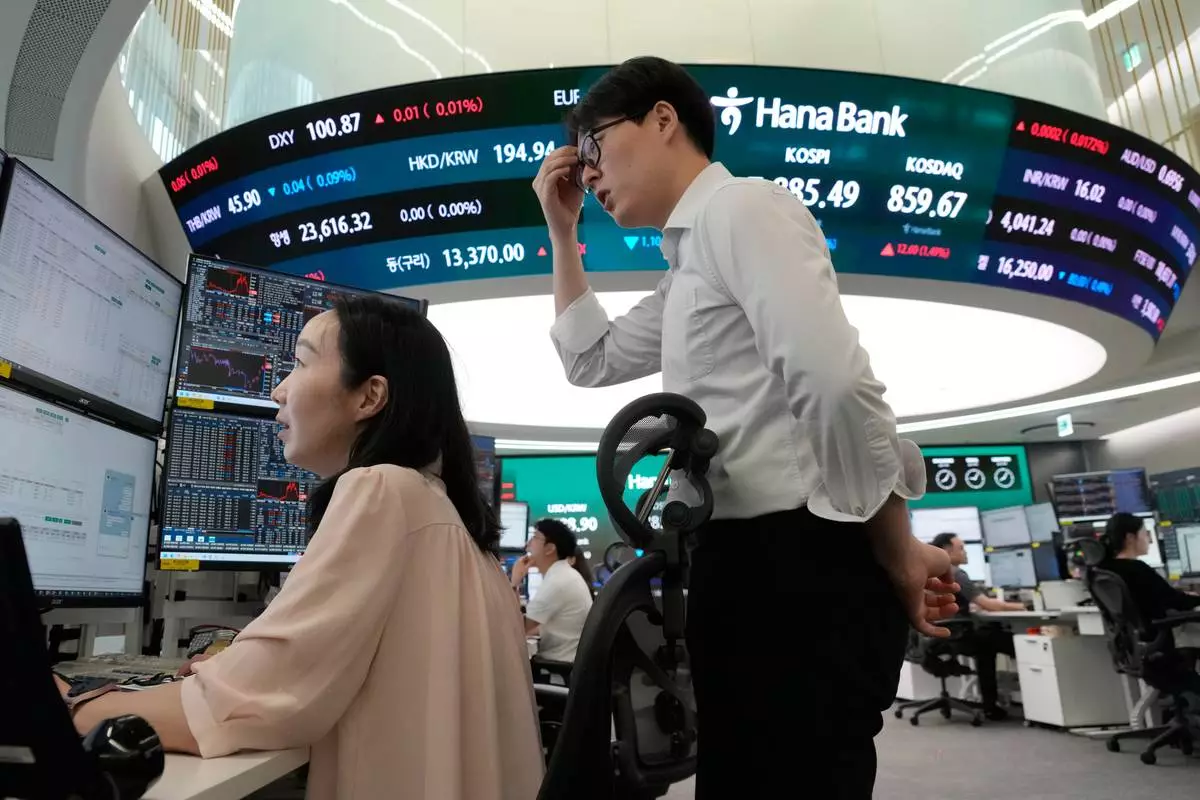
Currency traders watch monitors at the foreign exchange dealing room of the Hana Bank headquarters in Seoul, South Korea, Tuesday, July 7, 2026. (AP Photo/Ahn Young-joon)