LONDON (AP) — It may not come as a surprise that the oldest Grand Slam tennis tournament has a somewhat antiquated process when it comes to getting tickets.
Wimbledon is one of the few major sporting events where fans can get tickets in person on the day of the match. But doing so requires plenty of patience, and many hours of waiting in line.
Click to Gallery
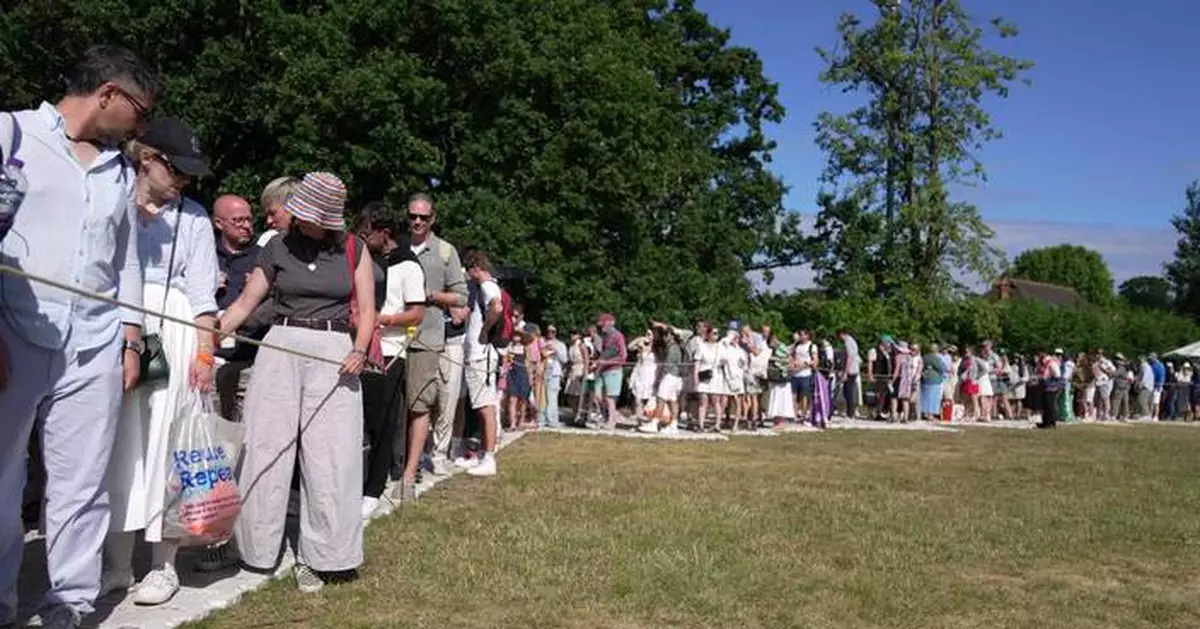
Members of the public queue for entry on day four of the Wimbledon Tennis Championships in London, Thursday, July 2, 2026. (Andrew Matthews/Pool Photo via AP)
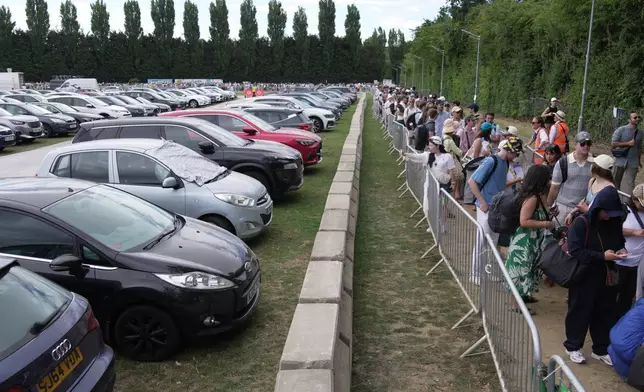
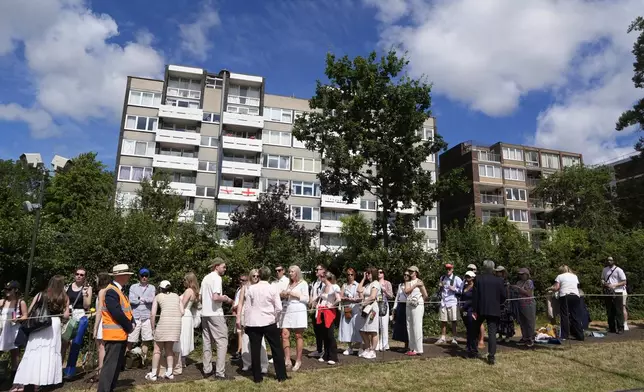
Tennis fans queue in the early morning to buy tickets for the Wimbledon Tennis Championships in London, Saturday, July 4, 2026.(AP Photo/Brian Inganga)
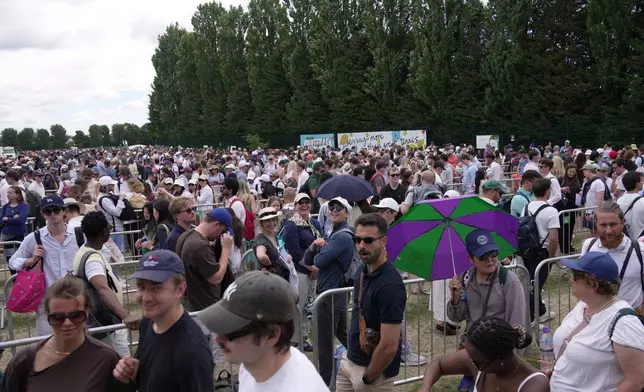
Tennis fans queue in the early morning to buy tickets for the Wimbledon Tennis Championships in London, Saturday, July 4, 2026.(AP Photo/Brian Inganga)
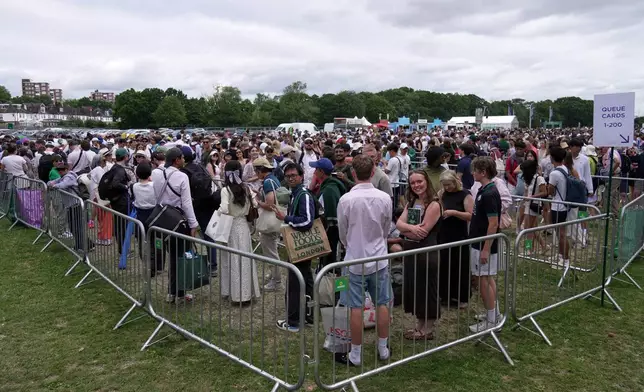
Tennis fans queue in the early morning to buy tickets for the Wimbledon Tennis Championships in London, Saturday, July 4, 2026.(AP Photo/Brian Inganga)
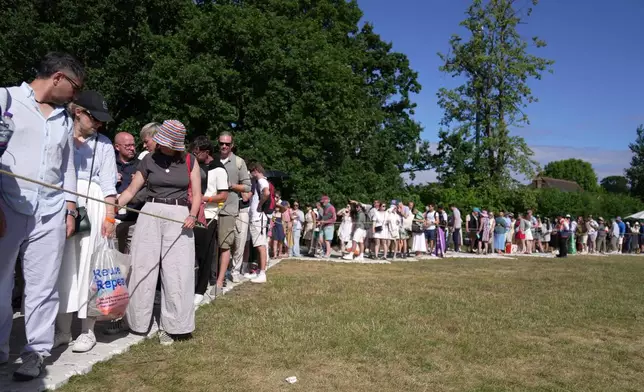
Tennis fans queue in the early morning to buy tickets for the Wimbledon Tennis Championships in London, Saturday, July 4, 2026.(AP Photo/Brian Inganga)
The tradition has become so famous, it’s known as simply “The Queue.” Hopeful fans will even go so far as to camp out in line overnight in hopes of securing one of the first spots that could grant access to Centre Court.
Upon arriving at The Queue, you are given a card with a number that tells you your place in line. This year, some fans have reported waiting up to seven hours before making it inside the grounds, arriving as early as 4 a.m. to get a spot in line.
Fans say the crowds feel bigger this year compared to recent editions, but officials say the 2026 numbers reflect those of 2018 and 2019.
“The queue was growing until COVID, then we had two years with no queue,” said James Mendelssohn, Wimbledon’s Chief Steward. “It has gotten busier every year since COVID, so we’re now roughly back up to pre-COVID numbers.”
Those who choose to queue arrive prepared with water, snacks, games, books, umbrellas, sunscreen and blankets. Everything you need for a long day of waiting outside, whatever the weather.
“(We) brought a lot of food,” said Sebastian Wooff. “Made a few sandwiches, froze some beers overnight so they would stay cold, definitely do that.”
For those who are willing to brave the heat and crowds, The Queue is a cherished tradition.
“I think queueing is part of the Wimbledon experience, a rite of passage in a way,” said first-time queuer Alex Conrad. “You can chat to people around you, have a laugh with your mates while you’re still a bit delirious at the early hours. I’d say the queue was definitely worth the wait, at least for me.”
Even the players acknowledge how much time is dedicated to waiting to see them play.
“Some of you may wait many hours to even see us play; sometimes days. So I always work hard and try my best on the court. It gives me a little bit more motivation, knowing that so many people put their lives aside to watch me play,” Coco Gauff told the crowd on Centre Court after her quarterfinal win Tuesday.
There are only about 500 tickets up for grabs for the tournament’s main show courts: Centre Court, No. 1 Court and No. 2 Court, where all the big names play. Once those are gone, fans are offered grounds tickets, which give fans access to the rest of the courts as well as the famous Hill, where they can gather to watch matches on the big screen.
“(Fans) know that the queue works and that it works well,” Mendelssohn said. “If you come to the queue and you get in, you will get in in the right order.”
“People trust the system, they know it works, it’s something that is quintessentially English.”
Of course, not everyone who attends Wimbledon needs to wait in The Queue. Months before the tournament, the public ballot opens, and those who are selected have the opportunity to purchase tickets in advance.
But for many, The Queue is about more than getting a ticket. It makes the end result of walking through the gates, taking that first sip of a Pimm’s or that first bite of strawberries and cream, feel like a reward.
“(My) favorite part would just be the anticipation of it all. And I think the waiting around makes getting into Wimbledon’s grounds that much more special and exciting because you’ve been waiting so long to get in, rather than simply swanning in with a ticket from the get-go,” Conrad said.
AP tennis: https://apnews.com/hub/tennis
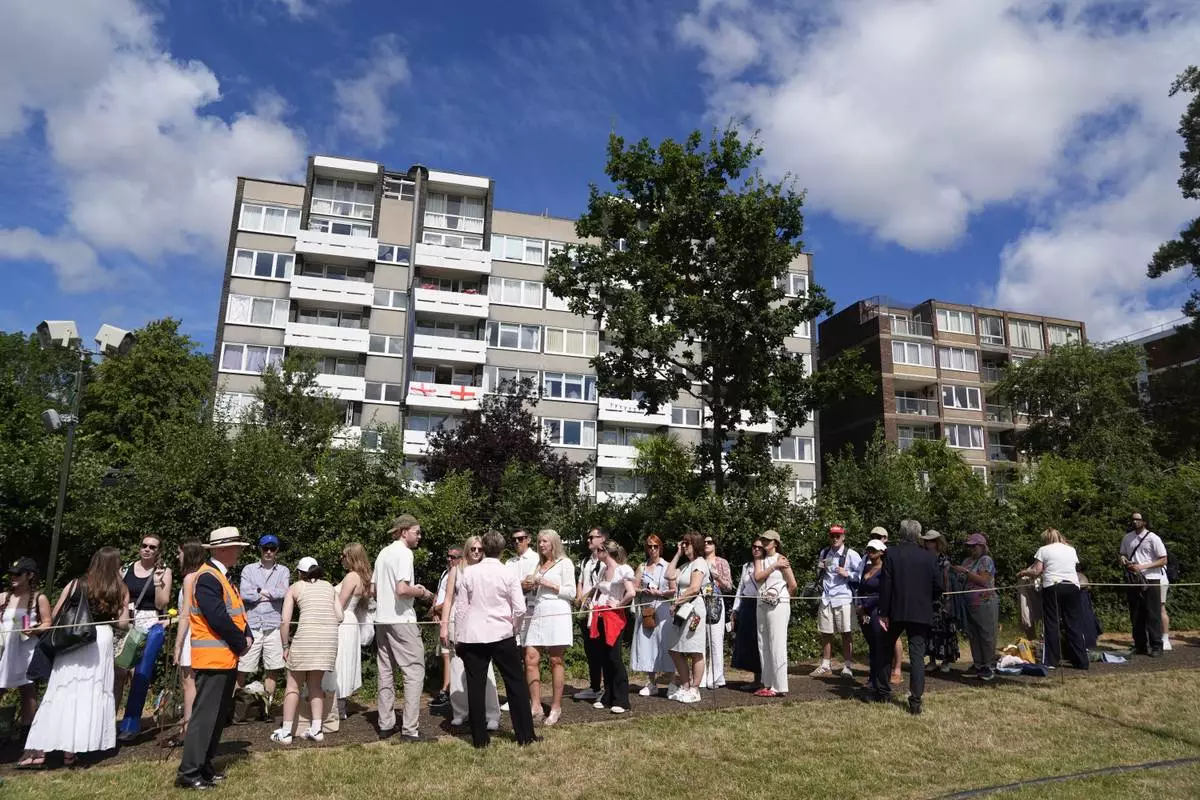
Members of the public queue for entry on day four of the Wimbledon Tennis Championships in London, Thursday, July 2, 2026. (Andrew Matthews/Pool Photo via AP)
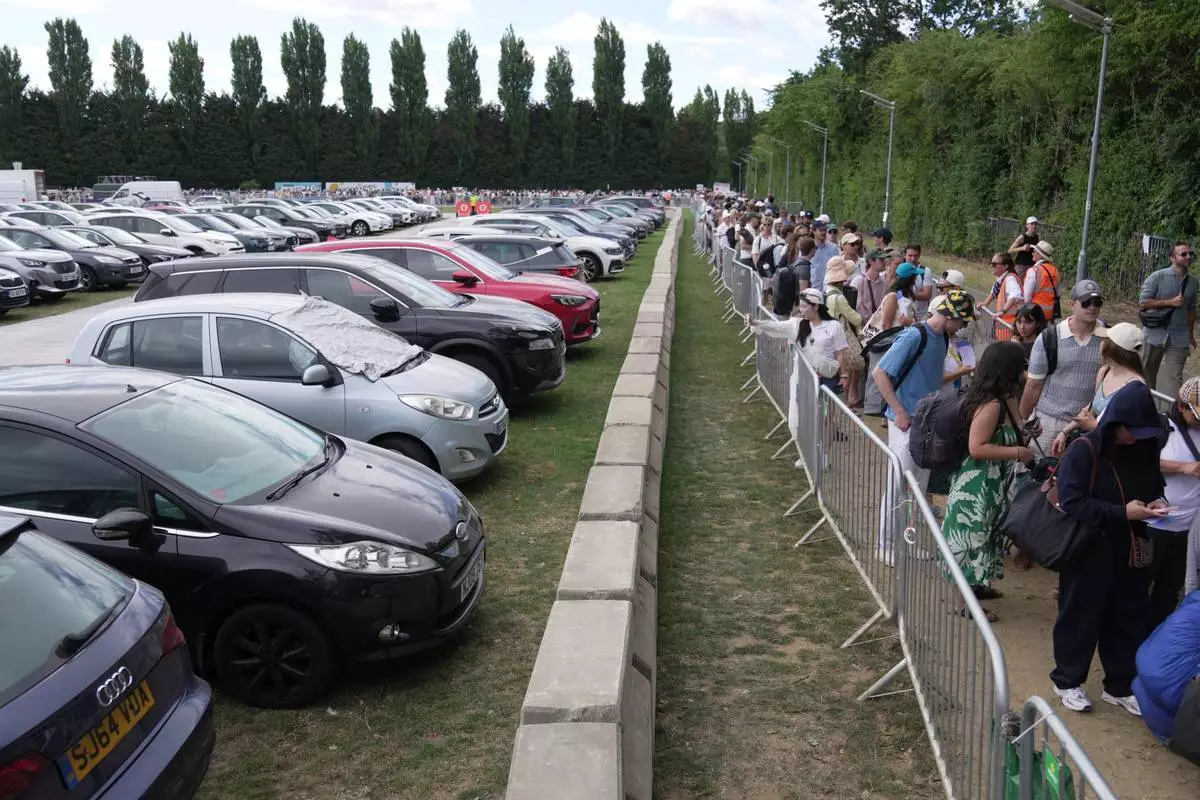
Tennis fans queue in the early morning to buy tickets for the Wimbledon Tennis Championships in London, Saturday, July 4, 2026.(AP Photo/Brian Inganga)
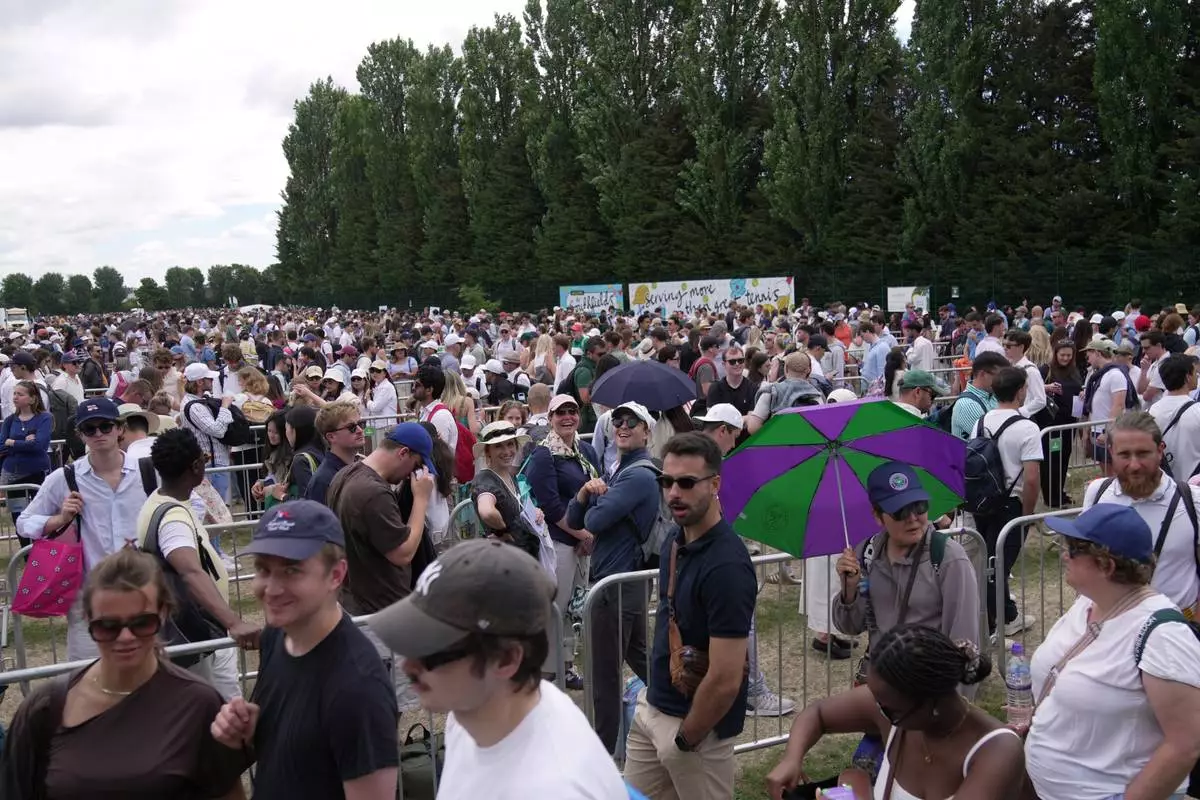
Tennis fans queue in the early morning to buy tickets for the Wimbledon Tennis Championships in London, Saturday, July 4, 2026.(AP Photo/Brian Inganga)
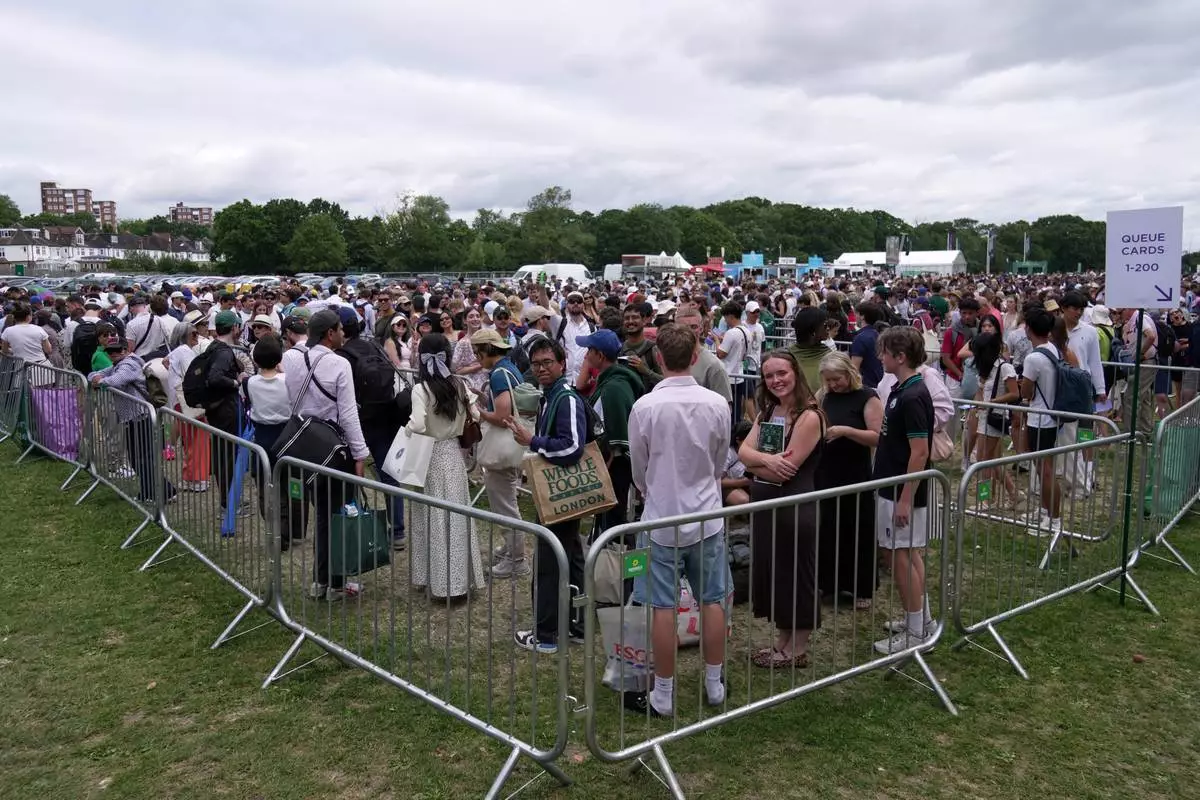
Tennis fans queue in the early morning to buy tickets for the Wimbledon Tennis Championships in London, Saturday, July 4, 2026.(AP Photo/Brian Inganga)
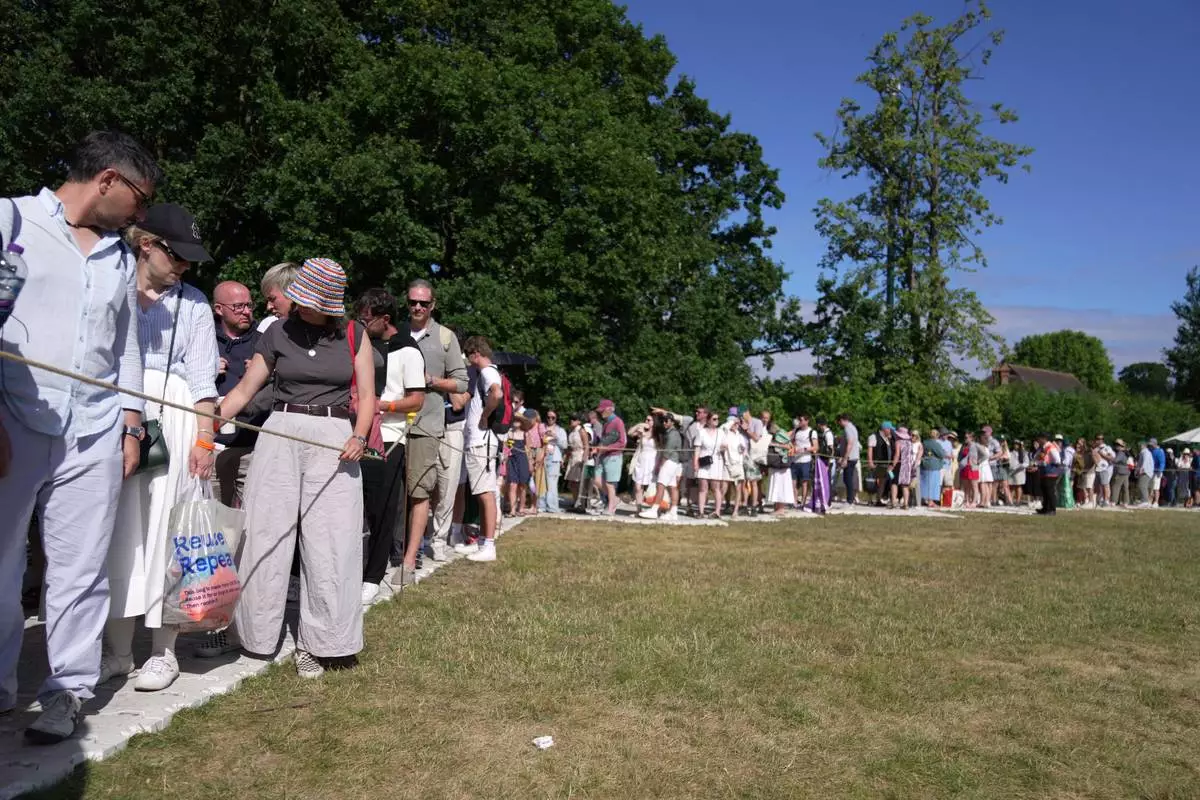
Tennis fans queue in the early morning to buy tickets for the Wimbledon Tennis Championships in London, Saturday, July 4, 2026.(AP Photo/Brian Inganga)