Skip to Content Facebook Feature Image

Judge rejects Justice Department attempt to get names of 2020 election workers in Fulton County

News

Judge rejects Justice Department attempt to get names of 2020 election workers in Fulton County
News

News

Judge rejects Justice Department attempt to get names of 2020 election workers in Fulton County

2026-07-08 04:41 Last Updated At:04:50

ATLANTA (AP) — The U.S. Department of Justice cannot have the names and personal contact information for every person who worked during the 2020 election in Georgia’s Fulton County, a federal judge ruled Tuesday.

The Justice Department in April served a grand jury subpoena seeking the names and personal contact information of county employees and volunteer poll workers. President Donald Trump has long claimed without evidence that widespread voter fraud in Georgia's most populous county, a Democratic stronghold, cost him victory in the state in 2020.

Fulton County asked a judge to quash the subpoena, arguing it was meant to “target, harass and punish the President’s perceived political opponents” and that it was “grossly over broad and untethered to any reasonable need.”

“Given the low need for the subpoenaed information and the highly burdensome nature of the disclosure of the same, the Subpoena is unreasonable and must be quashed,” U.S. District Judge William Ray wrote in his ruling, calling the scope of the request “staggering.”

Emails seeking comment were sent to both the Justice Department and Fulton County.

While grand juries often work with federal prosecutors to investigate alleged crimes, “that does not give the DOJ the right to use the Grand Jury to do whatever the DOJ wants,” wrote Ray, who was nominated to the bench by Trump.

Even if the records sought by the Justice Department could help find people who worked for the county during the 2020 election who support the theory that the election was unfair, the information couldn't be used to charge anyone, Ray wrote.

“That is because the statute of limitations for any possible crime arising from the 2020 Election has long expired,” he wrote.

The subpoena came after the FBI in January served a search warrant at the Fulton County election hub and seized hundreds of boxes of ballots and other documents from the 2020 election. A federal judge in May denied the county's request to force the federal government to return the ballots.

The Justice Department argued in a court filing that the subpoena was the “next step in the normal investigative process” and that it seeks “records identifying persons with relevant knowledge.”

Kamal Ghali, a lawyer for the county, argued that the subpoena “will chill participation by election workers” and that the statute of limitations for any of the alleged misconduct had already lapsed.

Justice Department lawyer William McComb argued the statute of limitations issue is not relevant at the investigative stage. The point of the investigation is to figure out what charges can be brought, he said.

“My point is, as we sit here now, we are not sure what charges can be brought. That's the whole point of the investigation,” he said.

The judge noted that the Justice Department had expressed concern about possible criminal actions in the years that followed the election, including an alleged failure by the county to preserve electronic ballot images. But he pointed out that the subpoena seeks information related to what happened during the 2020 election and its immediate aftermath.

“In these hyper-political times in which we currently live, there are sure to be some who disagree with this decision because they believe the allegations of fraud in the 2020 Election and believe that ‘light’ should be brought to those claims,” Ray wrote.

He added that nothing prevents continued investigation into those allegations by people who believe those claims — such as Congress or even the Justice Department — but the power of the grand jury, “which exists to investigate potential crimes and to bring viable indictments” cannot be used for that purpose. Otherwise, anyone in power could use the grand jury process to subpoena personal information of citizens “with no legitimate law enforcement purpose,” he wrote.

“Thus, everyone, whether you support the President or you do not, or whether you believe the 2020 Election was fair or believe that it was not, should be concerned about the DOJ’s ability to utilize the power of the Grand Jury to appropriate your private information without a legitimate purpose,” Ray wrote.
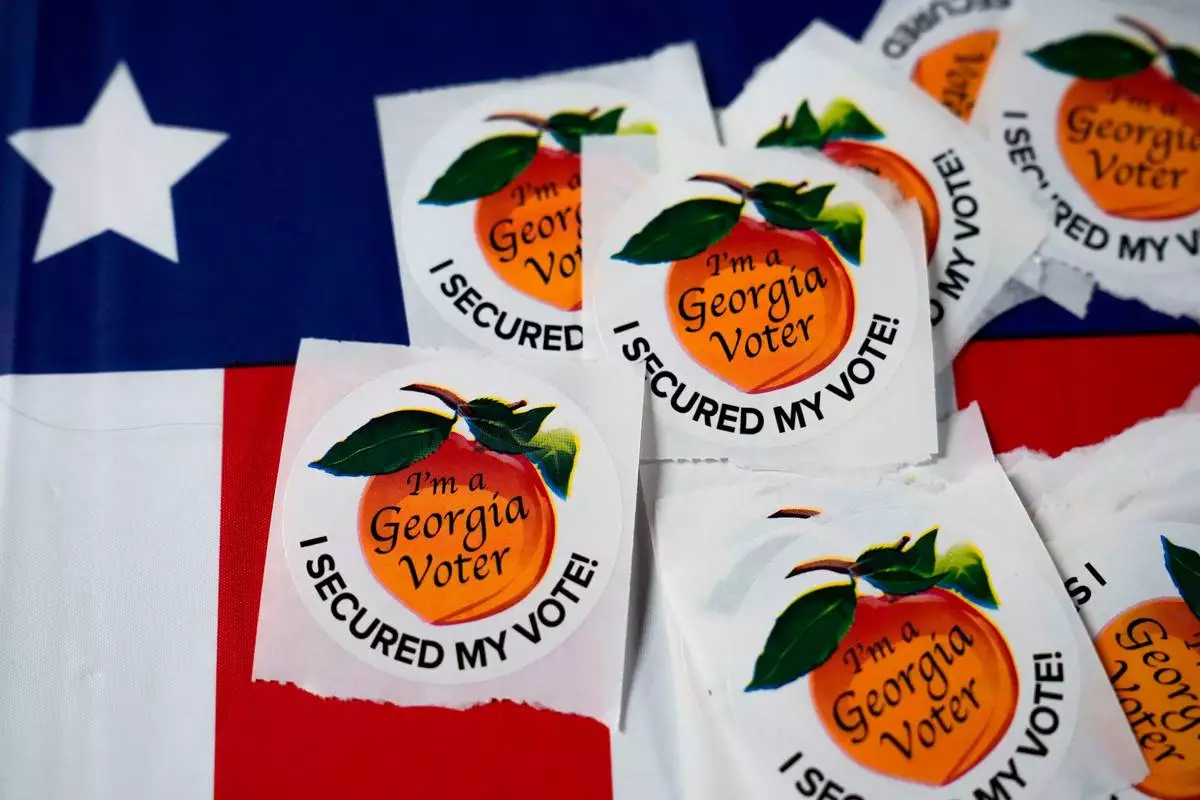
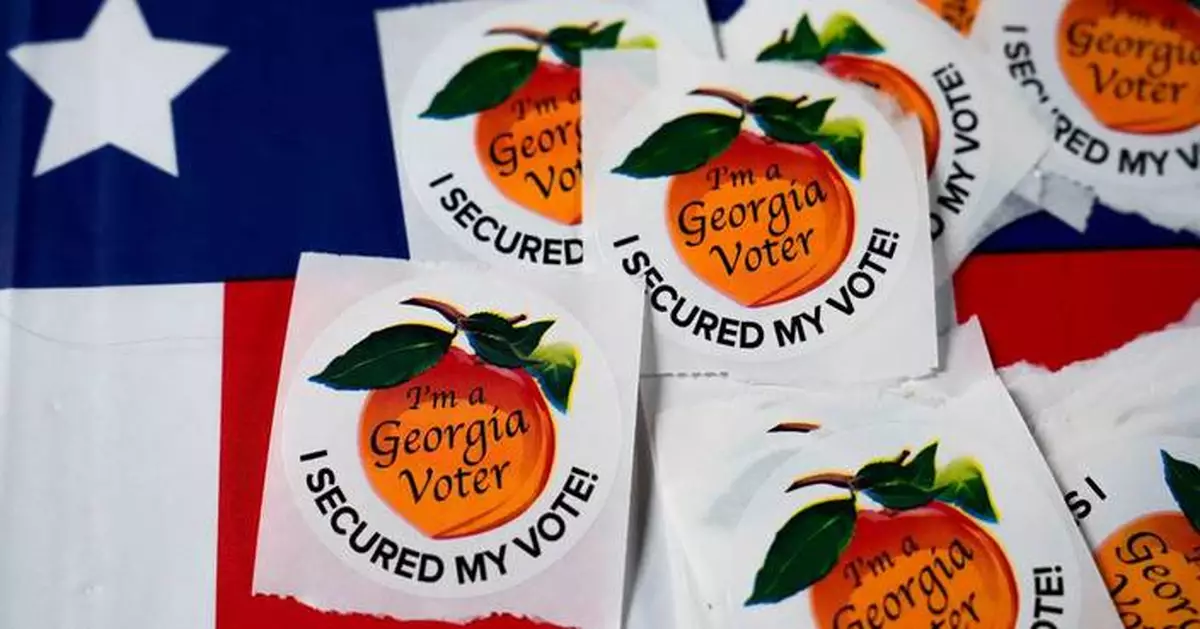
FILE - Stickers sit on a table inside a polling place, Nov. 5, 2024, in Atlanta. (AP Photo/Brynn Anderson, File)

FILE - Stickers sit on a table inside a polling place, Nov. 5, 2024, in Atlanta. (AP Photo/Brynn Anderson, File)
CHICAGO (AP) — George E. Johnson Sr., a pioneer in Black hair care whose multimillion dollar business was the first Black-owned company to be listed on the American Stock Exchange, has died at age 99, according to his family.

Johnson died Monday at his home in downtown Chicago. A cause of death was not released.

Johnson and his late wife, Joan, started Johnson Products in 1954 on Chicago’s South Side after securing a $250 loan. It grew into a hair care empire catering almost exclusively to Black people, with brands like Afro Sheen and Ultra Sheen.

His company was a national sponsor of the hit 1970s music and dance television show “Soul Train.”

“Johnson Products became a fixture in homes and salons around the world and a source of pride throughout Black America,” his family said in a statement.

Johnson's trajectory started from humble beginnings.

He was born in 1927 in Richton, Mississippi. Johnson’s mother, Priscilla Dean Johnson, was just 18 when she left her husband, took her children to Chicago and found a job at a local hospital, said Hilary Beard, a Philadelphia-based author who worked with Johnson on his memoir.

Their move occurred during what’s called the First Great Migration, between 1910 and 1940, when tens of thousands of southern Blacks moved to northern and midwestern cities for jobs and to escape racial oppression.

“There was just enough money for food, clothing and shelter, but not for anything extra,” Beard said.

Johnson and his older brother, John, would collect cigarette packages, peel out the aluminum linings, roll it into balls and sell it to people who collected junk for resale, Beard said. Johnson also shined shoes, cleared tables in eateries and set up pins in a bowling alley.

As an adult, Johnson worked for the Black-owned Fuller Products Co. in Chicago. Beard said Johnson met a barber who was distraught because he couldn't convince Fuller to back a product he was working on that straightened men's hair. The drawback was the product burned the scalp.

Johnson worked with Fuller's chemist to revamp the barber's formula and started his business after ultimately convincing a bank he needed a $250 loan to take his wife on a vacation, Beard said. That business would become Johnson Products.

Johnson's company offered above-market salaries, profit-sharing for its workers, healthcare and other benefits at a time when many companies didn’t provide such perks, Beard added. Johnson Products was sold in 1993 to a pharmaceutical firm in a deal worth more than $60 million.

Johnson later founded Independence Bank, and he became the first Black person to serve on the board of directors of the Illinois electric utility Commonwealth Edison. The George E. Johnson Educational Fund awarded more than 1,000 college scholarships.

Johnson’s memoir, “Afro Sheen: How I Revolutionized an Industry with the Golden Rule, from Soul Train to Wall Street,” was published in 2024.

Williams reported from Detroit.

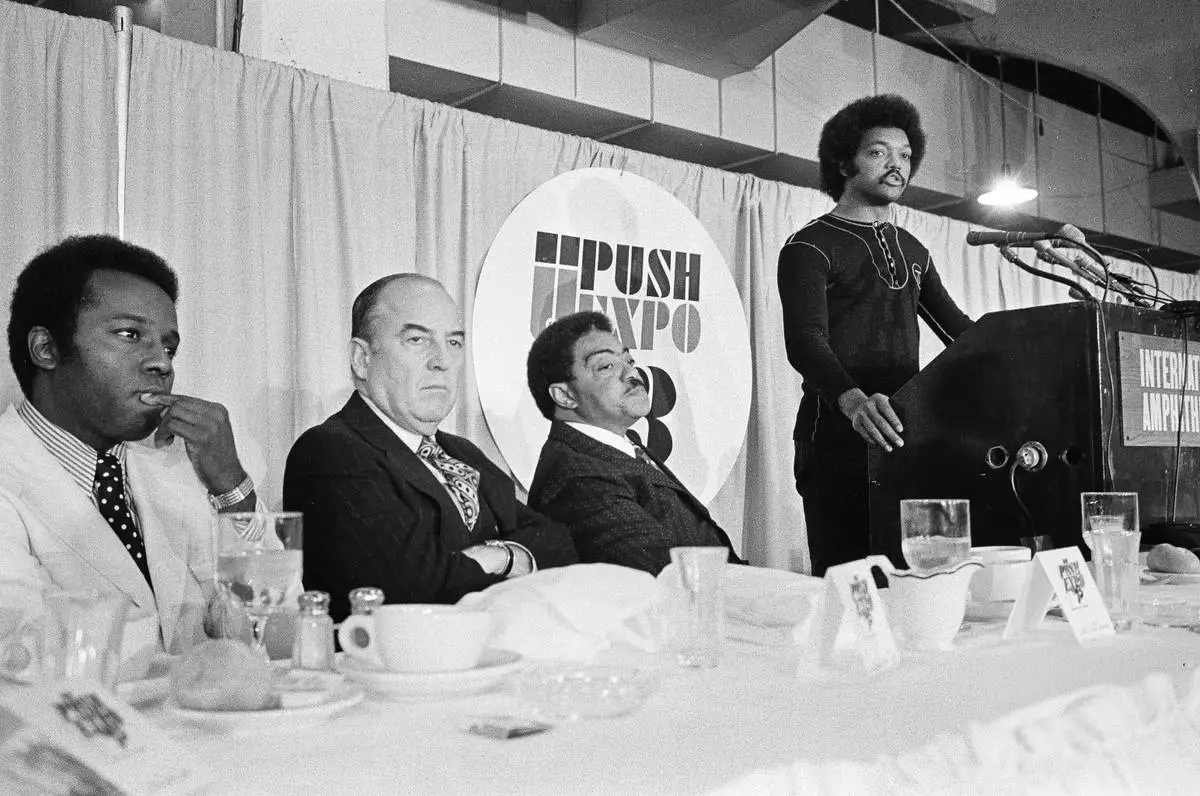
Rev. Jesse Jackson speaks at the PUSH Expo businessmen's breakfast as, from left, Richard G. Hatcher, mayor of Gary, Ind., Emmitt Dedmon, and George E. Johnson Sr., listen, in Chicago, Sept. 19, 1973. (Chicago Sun-Times via AP)

Rev. Jesse Jackson speaks at the PUSH Expo businessmen's breakfast as, from left, Richard G. Hatcher, mayor of Gary, Ind., Emmitt Dedmon, and George E. Johnson Sr., listen, in Chicago, Sept. 19, 1973. (Chicago Sun-Times via AP)

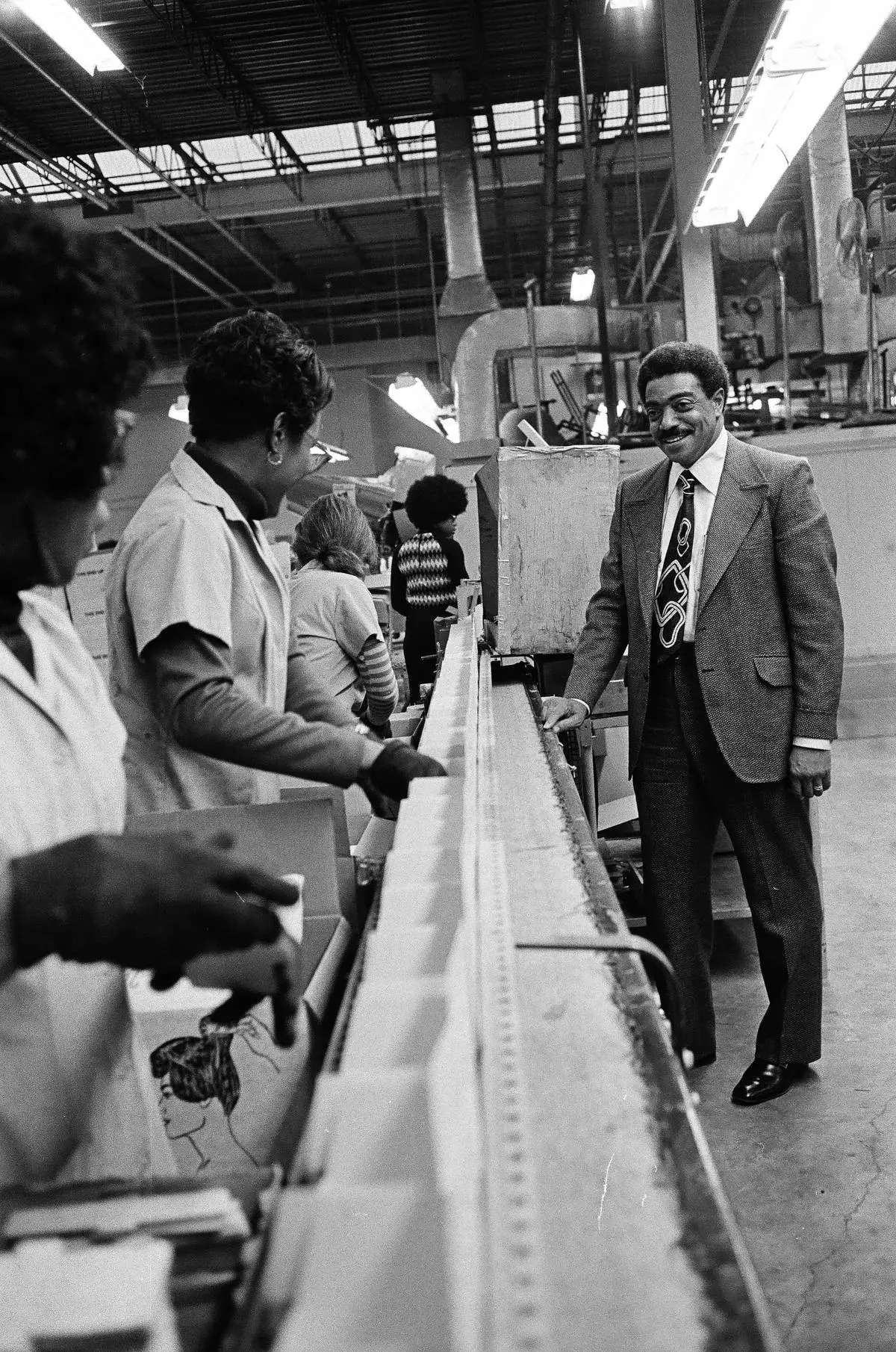
George E. Johnson Sr., who founded Johnson Products Company, is photographed at his company on the South Side of Chicago, Jan. 8, 1973. (Chicago Sun-Times via AP)

George E. Johnson Sr., who founded Johnson Products Company, is photographed at his company on the South Side of Chicago, Jan. 8, 1973. (Chicago Sun-Times via AP)

Recommended Articles