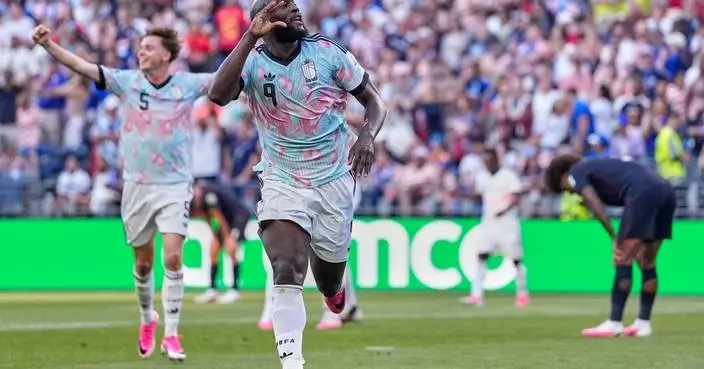
ATLANTA (AP) — For Mohamed Salah and Egypt, what could have been a glorious celebration turned ugly at end.
On the cusp of upsetting the defending World Cup champions, the Pharaohs squandered a two-goal lead late in the game and lost to Lionel Messi and Argentina 3-2 in the round of 16 Wednesday.
Click to Gallery
Egypt's Haissem Hassan (12) defends against Argentina's Nicolas Tagliafico (3) during the World Cup round of 16 soccer match between Argentina and Egypt in Atlanta, Tuesday, July 7, 2026. (AP Photo/Jacob Kupferman)
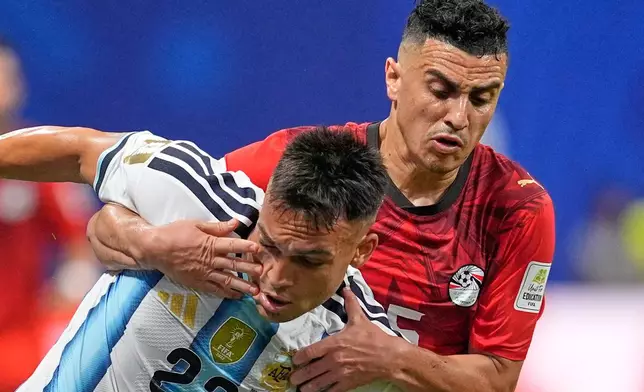
Argentina's Lautaro Martinez (22) is challenged by Egypt's Karim Hafez (15) during the World Cup round of 16 soccer match between Argentina and Egypt in Atlanta, Tuesday, July 7, 2026. (AP Photo/Mike Stewart)
Argentina's Lionel Messi (10) celebrates scoring their second goal during the World Cup round of 16 soccer match between Argentina and Egypt in Atlanta, Tuesday, July 7, 2026. (AP Photo)
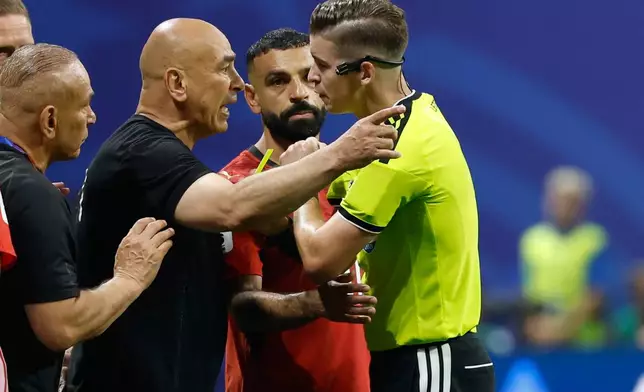
Egypt head coach Hossam Hassan argues with referee Francois Letexier, of France, during the World Cup round of 16 soccer match between Argentina and Egypt in Atlanta, Tuesday, July 7, 2026. (AP Photo/Erik S. Lesser)
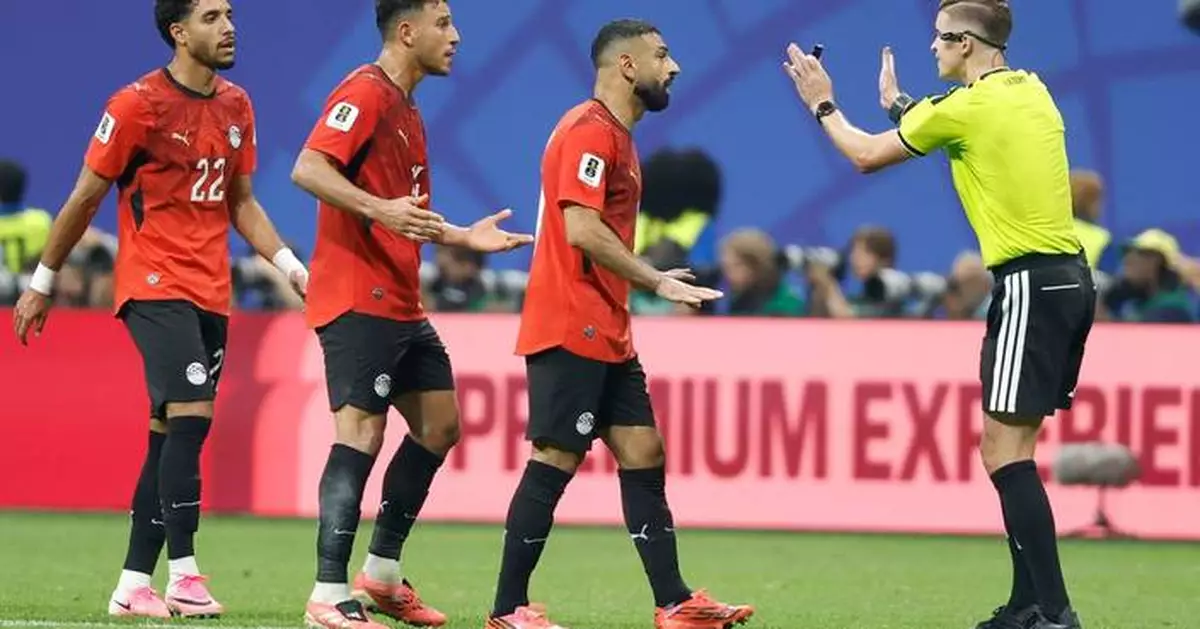
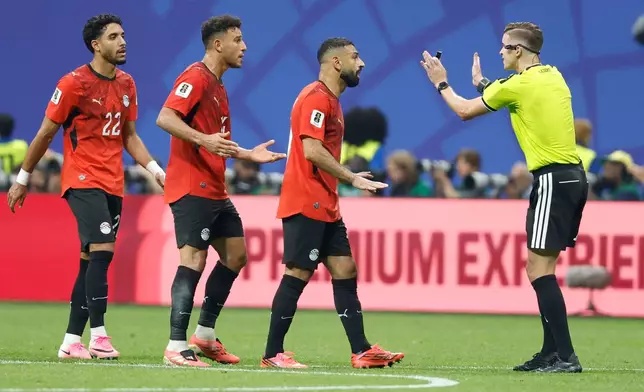
Egypt's Mohamed Salah (10) talks with Referee Francois Letexier, of France, during the World Cup round of 16 soccer match between Argentina and Egypt in Atlanta, Tuesday, July 7, 2026. (AP Photo/Erik S. Lesser)
The winning tally came two minutes into stoppage time and set off a wild scene in front of the Egyptian bench. A red card appeared to be shown to an irate staff member, who had to be physically restrained from going after French referee Francois Letexier. Two players on the field received yellow cards for griping vehemently about Argentina's final goal.
Egypt coach Hossam Hassan crossed his arms — the signal for calling out racial abuse — and stated flatly that his upstart squad was victimized by a soccer establishment that wanted Messi and Argentina to advance to the quarterfinals in their pursuit of a second straight title.
“We have been treated unfairly today,” Hassan said. “We have suffered injustice.”
In a tournament already marred by allegations that U.S. President Donald Trump influenced FIFA to overturn a one-game suspension for an American player, Egypt turned up the heat on soccer's governing body.
“I just would like to say that we would have deserved to earn this win," Hassan said, “but we are leaving with honor, with pride, regardless of this defeat.”
Hassan, who has been outspoken in his support of the Palestinians during the tournament, was upset that a potential second goal was overturned by a video review that showed a foul on Egypt at the start of an end-to-end play.
Egypt came back to take a 2-0 lead anyway on Mostafa Zico's goal in the 67th minute, but there was still enough time for Argentina to pull off a comeback for the ages in the stadium that is normally the home of NFL's Atlanta Falcons.
Cristian Romero gave the champions hope in the 79th. Messi blasted in the typing goal off the crossbar just four minutes later. And Enzo Fernández won it for Argentina in the second minute of stoppage time — a play that began at the opposite end of the field with Salah being stripped of the ball as he tried to dribble into the penalty area, winding up face down on the turf.
Even retired NFL quarterback Tom Brady took note of the comeback, going on social media to point out this rivaled the one he pulled off against the Falcons in the 2017 Super Bowl, when the New England Patriots rallied from a 28-3 deficit late in the third quarter to win 34-28 in overtime.
"Yeah so that might top 28-3," Brady wrote on X.
Hassan couldn't care less what Brady had to say. The coach was still seething that the video assisted referee didn't feel a need for Letexier to review what Egypt felt was a foul in the penalty area, denying what could've been a shot at a tying kick in the waning seconds.
“The effect of this outcome goes way beyond the defeat itself because we haven’t seen neither respect nor fair play,” Hassan said. “There has not been respect or fair play because a penalty was ruled out. A second ball that should have been called as a penalty for us was not even checked by the VAR.”
When Salah led a break out of the Egyptian zone that led to Zico’s goal, it appeared the African underdog — a team that had never won a World Cup game until this tournament — was headed to the quarterfinals.
Egypt fell into a defensive shell, looking to protect its seemingly safe lead, only to have Argentina pull off another wild escape. La Albiceleste needed extra time to beat Cape Verde 3-2 in the round of 32. This was an even closer call for Messi & Co.
It was all too much for Hassan and his players to bear.
“What I told the referee was just that this is unfair,” the coach said. “I was saying maybe he’s carrying a scar, maybe he has something to hide. Whoever has something to hide sometimes fails to hide what he is hiding and this was exactly what I felt during that conversation.”
Argentina moved on to face either Switzerland or Colombia in the quarterfinals.
For Hassan, the tournament is over.
He has no intention of watching any more soccer.
“I promise you, from the moment I go back, I’m not going to continue following the matches of this FIFA World Cup,” he said. "This is my internal fight, my internal objection, my own way of speaking up and standing up.
“I am not going to watch, not a single match of this tournament.”
AP Soccer Writer James Robson contributed to this report.
See more of AP’s World Cup coverage here

Egypt's Haissem Hassan (12) defends against Argentina's Nicolas Tagliafico (3) during the World Cup round of 16 soccer match between Argentina and Egypt in Atlanta, Tuesday, July 7, 2026. (AP Photo/Jacob Kupferman)
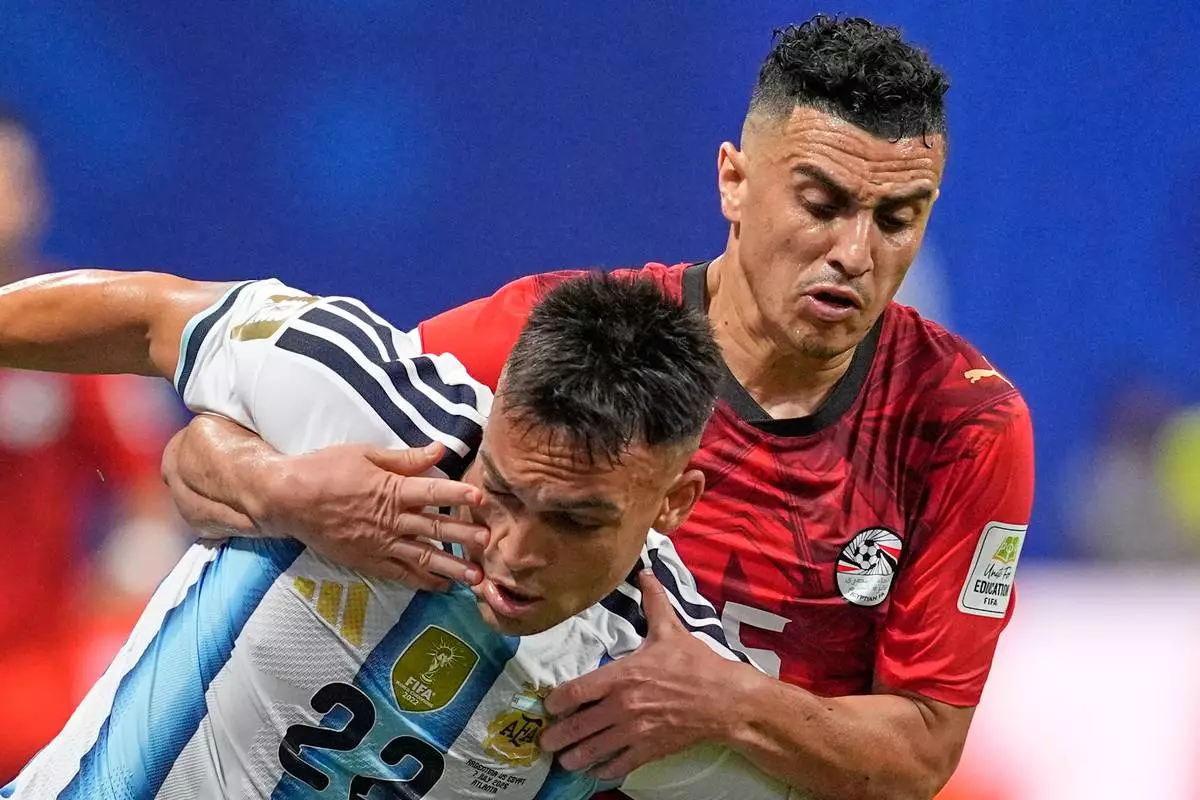
Argentina's Lautaro Martinez (22) is challenged by Egypt's Karim Hafez (15) during the World Cup round of 16 soccer match between Argentina and Egypt in Atlanta, Tuesday, July 7, 2026. (AP Photo/Mike Stewart)

Argentina's Lionel Messi (10) celebrates scoring their second goal during the World Cup round of 16 soccer match between Argentina and Egypt in Atlanta, Tuesday, July 7, 2026. (AP Photo)
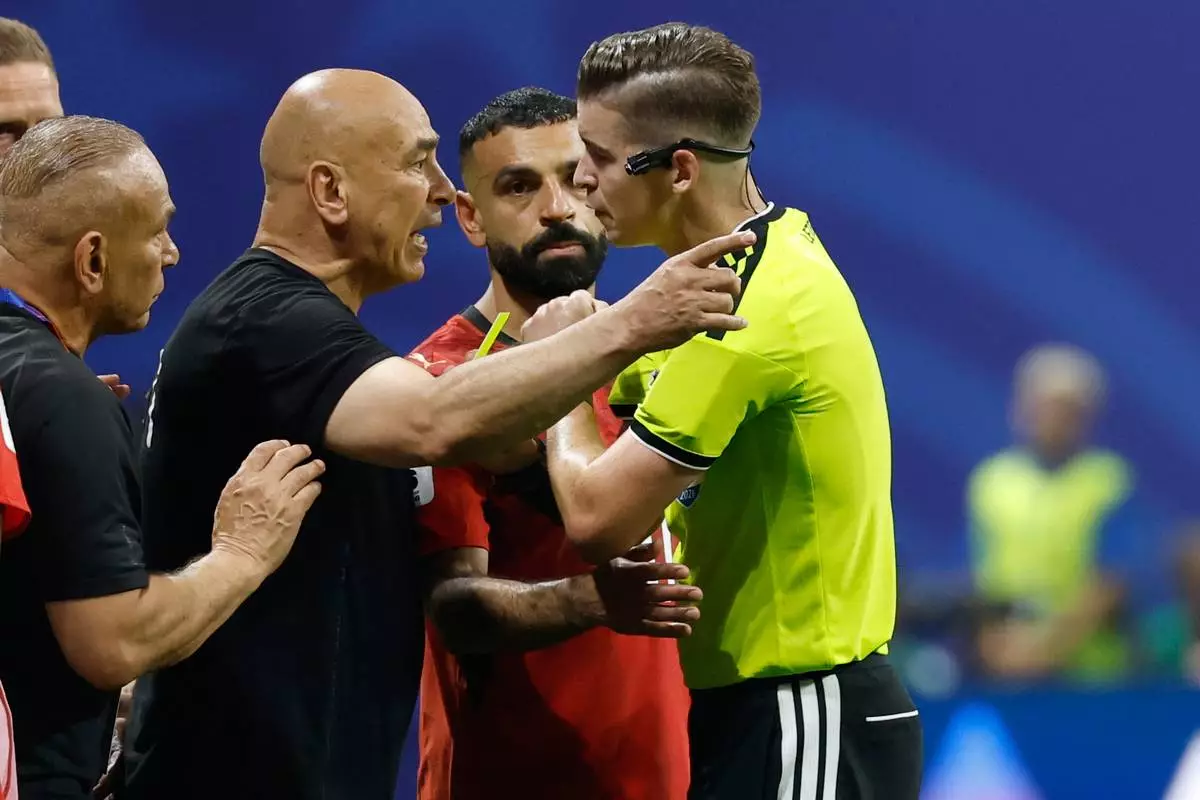
Egypt head coach Hossam Hassan argues with referee Francois Letexier, of France, during the World Cup round of 16 soccer match between Argentina and Egypt in Atlanta, Tuesday, July 7, 2026. (AP Photo/Erik S. Lesser)
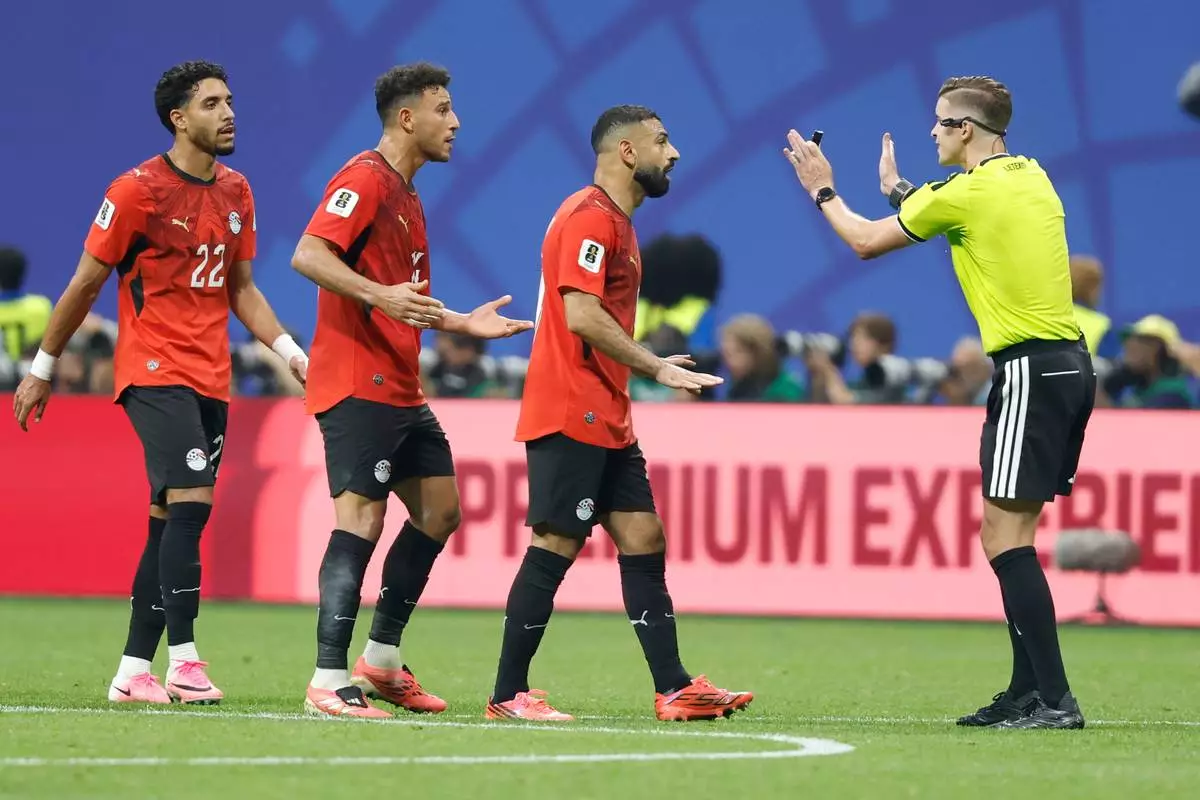
Egypt's Mohamed Salah (10) talks with Referee Francois Letexier, of France, during the World Cup round of 16 soccer match between Argentina and Egypt in Atlanta, Tuesday, July 7, 2026. (AP Photo/Erik S. Lesser)
The weeklong preliminary hearing for the man accused of killing conservative activist Charlie Kirk enters its second day on Tuesday. Prosecutors aim to show that they have enough evidence against Tyler Robinson to proceed to a trial. After the hearing concludes, state District Judge Tony Graf must determine if the case should proceed, which experts say is likely.
Robinson, 23, is charged with aggravated murder in Kirk’s Sept. 10 assassination on the Utah Valley University campus, for which prosecutors are seeking the death penalty. Robinson’s attorneys have not commented on his guilt or innocence.
Here's the latest:
Defense attorney Michael Burt is asking DNA analyst Amanda Bakker about the software program she used for the DNA samples, and about overall accuracy of the results.
Both samples tested in this case had minor contributors below 20%, Bakker says. Burt asks her about a study that found results can be less accurate when analyzing DNA contributions at that level.
She agrees that can sometimes be the case, but says in the samples she analyzed there were only two contributors total, which makes the process more accurate.
Deputy Utah County Attorney Ryan McBride has objected to this line of questioning. He says it’s irrelevant to the preliminary hearing since at this stage the evidence is supposed to be viewed in a light that is favorable to the state.
But Burt says the judge needs to weigh the accuracy of Bakker’s determination that Tyler Robinson and his roommate both contributed DNA to some of the evidence. Burt notes that Bakker originally believed there were three DNA contributors.
Judge Tony Graf tells Burt to wrap up this line of questioning.
Defense attorney Michael Burt is questioning FBI DNA analyst Amanda Bakker about the limitations of DNA testing, including situations where DNA might not be found or the results might be somewhat misleading.
Finding DNA on an item doesn’t necessarily mean that the person matched to that DNA actually touched or used an item, FBI DNA analyst Amanda Bakker says.
Sometimes, DNA mixtures from different people might be found on an time, says Bakker.
It’s also not necessarily possible to determine how long DNA has been on an item, she says, though DNA does degrade over time.
There was some degradation to the DNA found on the screwdriver, Bakker says.
She’s giving a technical explanation of the different measurable components of DNA, and some of the testing processes used.
FBI DNA analyst Amanda Bakker says Tyler Robinson was included as a “possible contributor” of the DNA on the screwdriver and towel.
She let the local investigators know about that result on Sept. 13, she says.
U.S. Department of Justice policy is that examiners don’t use language like “absolute identification” or “reasonable degree of scientific certainty,” she says.
Examiners also can’t imply that forensic autosomal DNA examinations are infallible.
Amanda Bakker is called to the stand by defense attorney Michael Burt.
Jennifer Faumuina will be back to continue testifying later, but attorneys on both sides agreed to have Bakker testify now.
Jennifer Faumuina worked for the State Bureau of Investigation at the time of the shooting.
She says a bolt-action rifle, wrapped in a dark-colored towel, was found in a wooded area near campus.
The gun was documented, and then packaged and taken to the FBI and eventually provided to a Bureau of Alcohol, Tobacco and Firearms laboratory, Faumuina said.
A screwdriver found on the rooftop of the Losee building on the Utah Valley University campus was also collected as evidence, she says.
DNA found the towel was matched to two people. One of them was Tyler Robinson’s roommate, she says.
Court is back from the lunch break and Utah Department of Public Safety Sgt. Jennifer Faumuina is on the stand.
Denae Branch, who had lined up with friends at midnight to get some of the few public seats in the courtroom, said she teared up during the hearing, and Erika Kirk reached over to offer her a tissue.
“She doesn’t know if I’m Team Erika or not, yet she handed me a tissue, and I lost it,” Branch said during the lunch recess. “She didn’t know if I was a friend or not, and she showed love.”
Branch said she observed Erika Kirk crying at times during the proceeding and fidgeting with her bracelet. Seeing Kirk’s widow get emotional made Branch emotional, too, she said.
Before the lunch break, State District Judge Tony Graf said the statement from Turning Point USA board member David Englehardt is relevant as it relates to Charlie Kirk’s political expression.
Graf said prosecutors allege Tyler Robinson targeted Charlie Kirk because of Robinson’s beliefs about Kirk’s political expression.
Determining the difference between religious expression and political expression is a different matter, the judge said, but he also noted the statement contains additional information about the tax status and practices of Turning Point USA.
Graf said the statement is “provisionally admitted,” and he will decide later if it will be fully admitted as evidence.
Defense attorney Richard Novak says the statement from Turning Point USA board member David Englehardt won’t help the court decide whether the “victim targeting penalty enhancement” is valid.
The state law allows penalty enhancements if a defendant targeted a victim because of the defendant’s perception of the victim’s political expressions, Novak says.
But Englehardt’s statement is all about what is in Englehardt’s head, he says, and that’s not relevant to the case. Englehardt’s mention of Bible passages also isn’t relevant, Novak says, and won’t help the court make any decisions about the case.
Deputy Utah County Attorney Ryan McBride says the statement is relevant, because it clarifies what Charlie Kirk’s business does. It also goes to motive, McBride says.
Kirk engaged people in debate on religious and political issues, McBride says, and encouraged people to follow specific values.
Deputy Utah County Attorney Ryan McBride wants a “self-authenticating statement” from Turning Point USA board member David Englehardt to be admitted as evidence. The statement is notarized, McBride says.
But defense attorney Richard Novak says he’s concerned about the authenticity of the statement, and he doesn’t think some of the information contained in the statement is relevant to the case. He doesn’t want it to be admitted as evidence.
Novak says he doesn’t intend to question Englehardt’s beliefs or what Englehardt says were Turning Point USA founder Charlie Kirk’s religious beliefs. The document contains Englehardt’s opinions, Novak says, and references a Utah law that deals with a “victim targeting penalty enhancement.”
Under redirected questioning by the prosecution, former State Bureau of Investigation agent David Hull says he saw Tyler Robinson enter a wooded area twice when reviewing surveillance video.
Investigators later recovered a rifle from that same area, Hull says.
Under questioning by defense attorney Kathryn Nester, former State Bureau of Investigation agent David Hull acknowledges that he wasn’t present for Charlie Kirk’s autopsy, but interviewed the person who did it.
He also didn’t directly handle the processing and shipping of a gun collected during the investigation, Hull says.
Nester also asks about video from a doorbell camera shown in court on Monday. Hull says the person who had the doorbell camera told investigators that they thought the person captured in the video was bald and that there were three people in the vehicle.
When it was presented in court, the video was described as showing Tyler Robinson’s vehicle, with just one person exiting the vehicle.
Former State Bureau of Investigation agent David Hull acknowledges that the surveillance video showing a person on the roof of the Losee building doesn’t reveal any distinguishing facial features.
Defense attorney Kathryn Nester asks Hull how some witnesses who took a separate video of the person on the roof described him to authorities. The witnesses thought the person was an officer doing an “overwatch,” or maintaining a security position on a roof, Hull says.
The person on the roof appeared to be in a prone position for 15 to 30 seconds, Hull says.
Denae Branch and Jean Rivera were among the first people lined up outside the courthouse around midnight, trying to snag one of the 14 seats available to the public. The Utah County residents camped out overnight Tuesday, both wearing “FREEDOM” merchandise from Charlie Kirk’s podcast, after they did not get seats inside on Monday.
They were in the crowd at Kirk’s event at Utah Valley University when he was shot, and both said they think about it every day.
“It feels like a lot of the world just kept spinning and we’re still dealing with the trauma of it,” Branch said. “Our hearts and minds are still trying to process it and, yeah, it kind of helps being here.”
Rivera said she hoped to hear testimony about defendant Tyler Robinson’s alleged confession note.
The windows on the fourth floor of the courthouse, where the preliminary hearing is taking place, have been covered with black plastic sheeting.
They were not covered yesterday.
Defense attorney Kathryn Nester is asking former State Bureau of Investigation agent David Hull about how he handled the crime scene at Utah Valley University on the day of the shooting.
Hull says he arrived on campus about 1:30 p.m., after Charlie Kirk had been rushed to a nearby hospital. He learned around 2:30 p.m. that he was going to be in charge of the investigation, Hull says.
He says he was made aware that the amphitheater area had been cordoned off and preserved as best as possible given the large number of people present when the shooting occurred.
He says a bullet found on scene was attributed to a law enforcement officer who had “cleared” his weapon, ejecting an unused bullet.
Hull says there was another firearm found at the scene: a handgun in a backpack.
Defense attorney Kathryn Nester is cross-examining former State Bureau of Investigation agent David Hull.
Deputy Utah County Attorney David Sturgill has introduced a video with circled highlights, zooming and other alterations apparently designed to help viewers understand what they are seeing.
Defense attorney Kathryn Nester objected to the video being introduced as evidence, saying she is concerned about its authenticity and that it will be unduly prejudicial against her client.
State District Judge Tony Graf agrees to admit the video as evidence, but says he’ll view it without showing it to the public or the media since it’s essentially the same footage as the previous video.
Hull says a Spanish Fork police officer had an interaction with the vehicle early on Sept. 11. When Hull spoke with that officer later, the officer was able to look up vehicle records via a partial license plate number.
The plates showed Robinson was one of the registered owners of the vehicle, Hull says, and the Spanish Fork police officer said the driver was a male whom he believed to be Robinson.
Former State Bureau of Investigation agent David Hull says Robinson is shown in another video returning to campus in different clothing and walking with a limp, with one leg held mostly straight.
Video clips show him walking in front of the Losee building, Hull says, and then to the area where he could access the building’s roof.
Yesterday, former Utah Valley University Officer Chris Bagley testified that he saw a “sniper pad” in the gravel atop the Losee building roof.
Additional clips show an individual climbing onto the roof, running across it and then laying prone in the corner of the building. Hull says he believes the person to be Robinson.
The individual then lowers himself off the roof and leaves the area while carrying something in his hand, Hull says. The time stamp is 12:44 p.m.
Former State Bureau of Investigation agent David Hull is narrating the video as it plays in court.
Some clips from various Utah Valley University surveillance cameras show Tyler Robinson driving into a parking garage, walking away, returning and leaving, Hull says.
Other clips show Robinson walking with a backpack. Robinson purchased a meal from Chick-fil-A at one point in the day, Hull says. Later, as Robinson moves across campus, he is no longer carrying a backpack.
He leaves campus for a second time around 11 a.m., Hull says.
The defense team wanted the video published only to the court and not to the press videographer in the courtroom. Allowing news coverage of the video would taint the jury pool for any future trial, violating Tyler Robinson’s constitutional rights, defense attorney Michael Burt said.
But David Reymann, an attorney representing news organizations, asked the judge to allow this and other non-graphic videos in evidence to be shown to people in the courtroom and in media coverage of the case.
“The spectators in the courtroom have a right to know what the court is viewing, so they can understand how you’re making your decisions,” Reymann says.
The compilation video is expected to show Tyler Robinson walking around the Utah Valley University campus on the day of the shooting. That’s relevant, Reymann says.
Judge Tony Graf says he recognizes the importance of balancing Robinson’s constitutional rights as well as the importance of transparency. He says this video is different from the three videos of the shooting introduced as evidence yesterday, and so it can be shown publicly.
Deputy Utah County Attorney David Sturgill is questioning Hull, the former Utah State Bureau of Investigations agent who testified yesterday about surveillance videos and other footage gathered during the shooting investigation.
Sturgill is asking Hull about a compilation video that includes clips from several different videos. The prosecution team wanted to introduce the compilation as evidence yesterday, but the judge declined after the defense team said the prosecution had not established “foundation.”
The process of establishing “foundation” for evidence generally includes having someone testify about exactly what an item is, including its authenticity and relevance.
Tyler Robinson’s parents were also seen entering the courthouse this morning.
State District Judge Tony Graf is giving attendees a reminder of his rules for behavior, including “maintaining a courtroom environment that is safe, respectful, orderly and faithful to the rights and dignity of every person involved.”
It’s warm in the courtroom, so the judge says everyone should feel free to drink from their water bottles.
Defense attorney Kathryn Nester’s attempts were largely overruled by the judge Monday.
When Nester asked Bagley about finding an empty pistol holster on the ground after the crowd fled, he acknowledged he never took custody of the holster and didn’t know whether it had been fingerprinted.
Utah is an open carry state, meaning people can carry guns openly or conceal them without a permit.
Graf sided with the defense to block the introduction of a compilation of surveillance videos from Utah Valley University because some had been altered to zoom in on individuals or had circles drawn around them.
Prosecutors said they would try again Tuesday to introduce that video with the alterations removed.
The proceeding resembles a minitrial, but prosecutors need only demonstrate that there are reasonable grounds to believe Robinson killed Kirk and should stand trial. The standard is lower than for a trial, where prosecutors must prove guilt “beyond a reasonable doubt.”
Prosecutors, as a result, should have little trouble advancing their case, said Mark Kouris, a former prosecutor and state judge in Salt Lake City.
“This standard is extremely low, and the chances of them not getting through it are, quite frankly, almost nothing,” said Kouris, now an adjunct professor at the University of Utah’s S.J. Quinney College of Law.
The defendant sat quietly between his attorneys throughout the hearing, looking at the prosecution’s exhibits on a monitor and occasionally taking notes. His wrists were shackled to a chain around his waist.
Monday marked the first time Kirk’s parents, Kathryn and Robert, and his widow, Erika, were in the courtroom since the case began. Robinson’s parents also were present, sitting a few rows behind the Kirks.
Prosecutors showed several graphic videos of Kirk’s shooting, including the moment he was shot and security administering first aid, as they made their case.
Kirk’s family briefly walked out of the courtroom twice — when Bagley, the university officer, started testifying about Kirk’s arrival on campus and again when prosecutors introduced the videos. Each time, they returned.
If prosecutors follow the order of an exhibit list they submitted earlier this year, they will present a video from the Washington County sheriff’s office from Sept. 11 — the day Robinson turned himself in — and recorded testimony from Robinson’s roommate.
Prosecutors allege Robinson confessed in a note left for his roommate, who was also his romantic partner, that read: “I had the opportunity to take out Charlie Kirk and I’m going to take it.”
Robinson also reportedly texted his roommate that he targeted Kirk because he “had enough of his hatred,” prosecutors have said.
Prosecutors have also said they plan to present DNA evidence linking Robinson to the suspected murder weapon, autopsy findings, witness statements and video of Kirk’s killing. In addition, they are expected to argue the shooting endangered others at Kirk’s campus event — an aggravating circumstance that could make the crime punishable by death under Utah law.
The court proceedings on Monday produced no major revelations but marked the most significant presentation of evidence to date in the case against Robinson, who is charged with aggravated murder in the assassination of Kirk.
Former Utah Valley University Officer Christopher Bagley testified that he witnessed the shooting while the conservative activist was speaking to a campus crowd of thousands on Sept. 10. Soon after, Bagley went to a nearby gravel rooftop, where it appeared someone had been lying prone with a clear sightline to Kirk’s location, he said.
“It looks like a sniper pad,” Bagley told the court.
Prosecutors seeking to convince a Utah judge to put the man accused of killing Charlie Kirk on trial are expected to present more law enforcement video and a recorded statement from the defendant’s roommate as a weeklong preliminary hearing continues Tuesday.
The court proceedings began Monday and so far have produced no major revelations but marked the most significant presentation of evidence to date in the case against defendant Tyler Robinson, 23, who is charged with aggravated murder in the assassination of Kirk, an ally of President Donald Trump.
▶ Read more
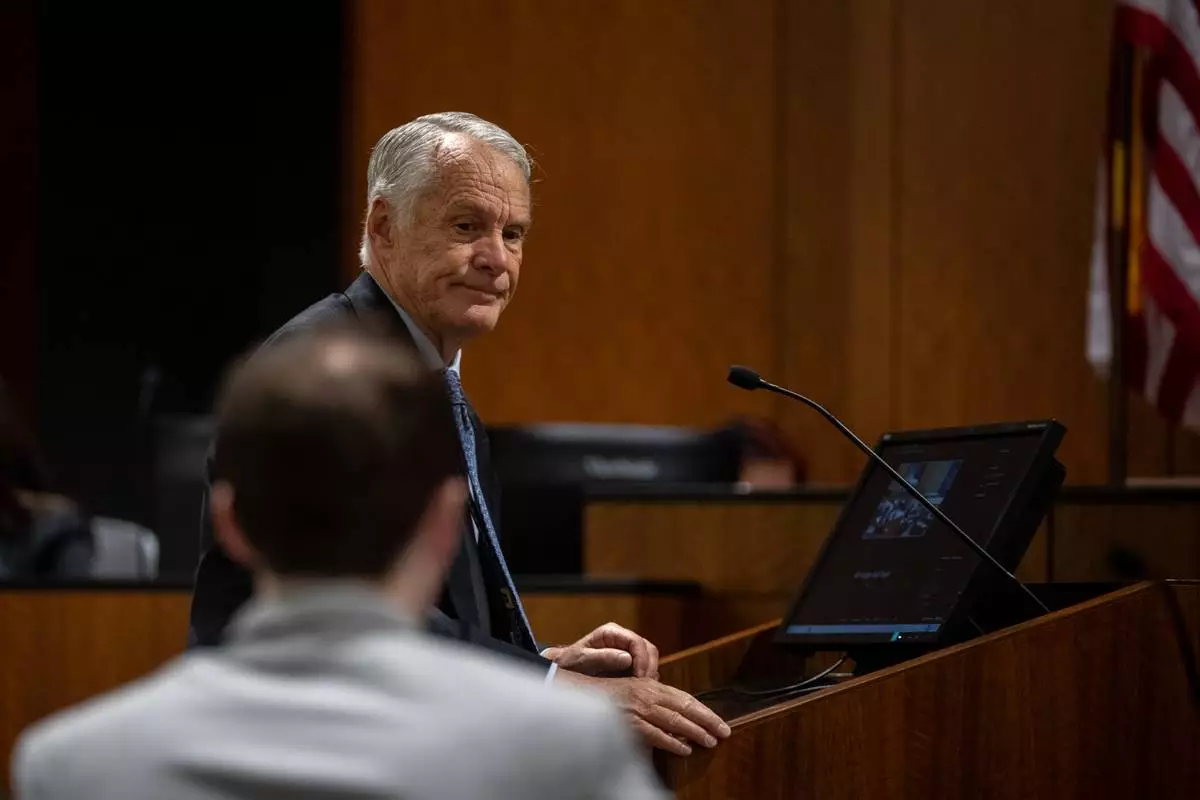
Defense attorney Michael Burt attends a preliminary hearing for Tyler Robinson, the Utah man accused of fatally shooting Charlie Kirk, Tuesday, July 7, 2026, in Provo, Utah. (Trent Nelson/The Salt Lake Tribune via AP, Pool)
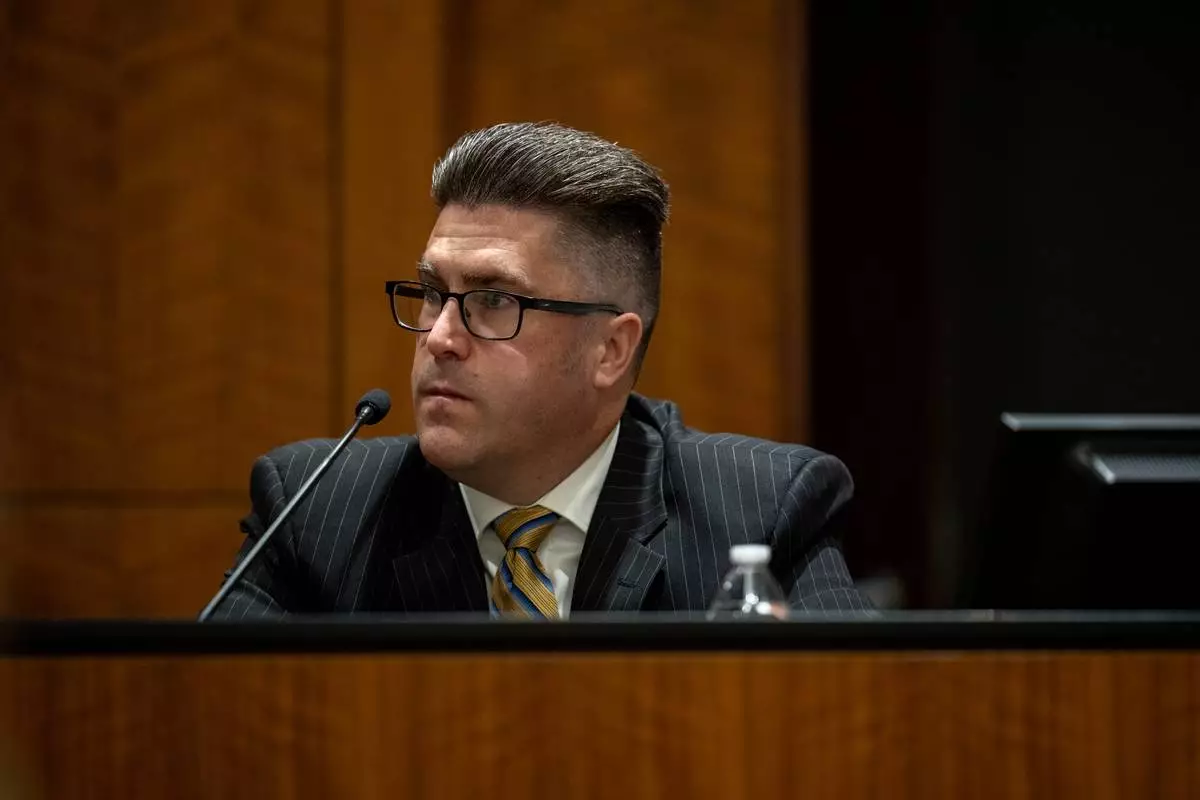
Utah Department of Public Safety agent David Hull testifies during a preliminary hearing for Tyler Robinson, the Utah man accused of fatally shooting Charlie Kirk, Tuesday, July 7, 2026, in Provo, Utah. (Trent Nelson/The Salt Lake Tribune via AP, Pool)
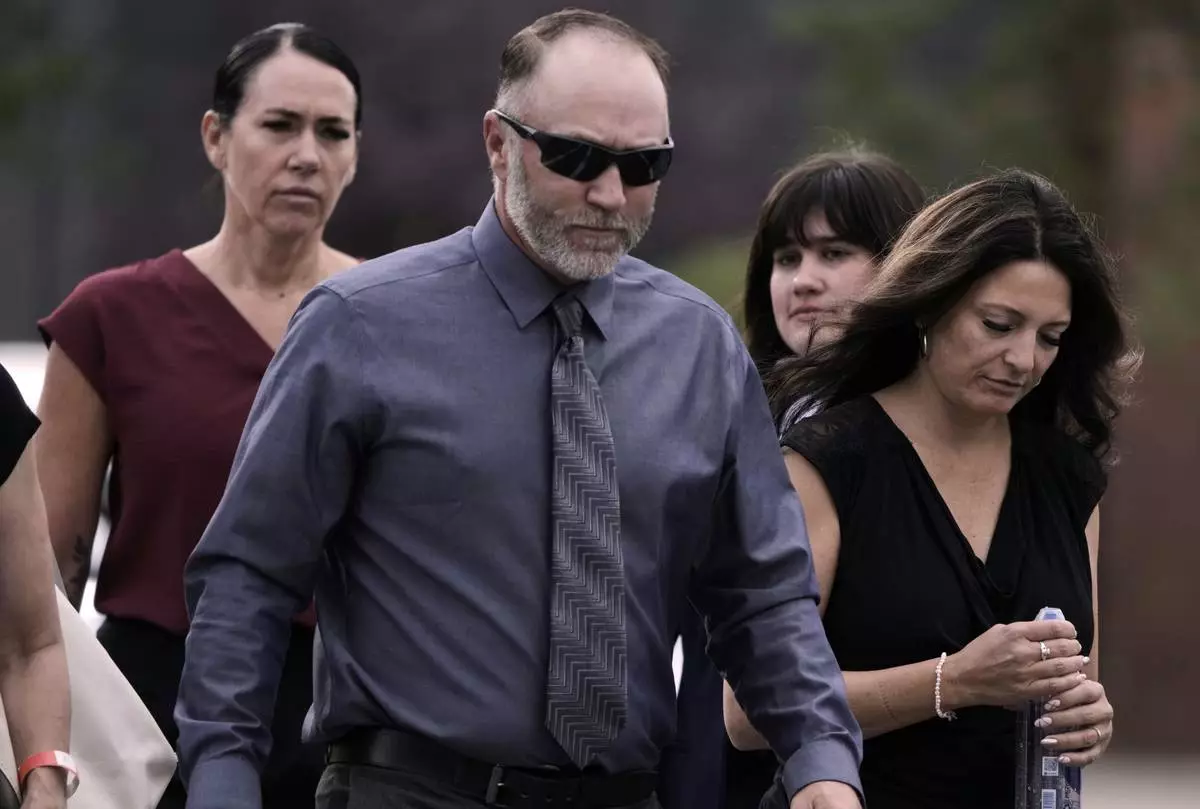
Matt Robinson, father and Amber Robinson, mother, right, of Tyler Robinson arrive at the Fourth District Courthouse, Tuesday, July 7, 2026, in Provo, Utah, ahead of a hearing for Tyler Robinson, accused in the fatal shooting of Charlie Kirk. (AP Photo/Spenser Heaps)
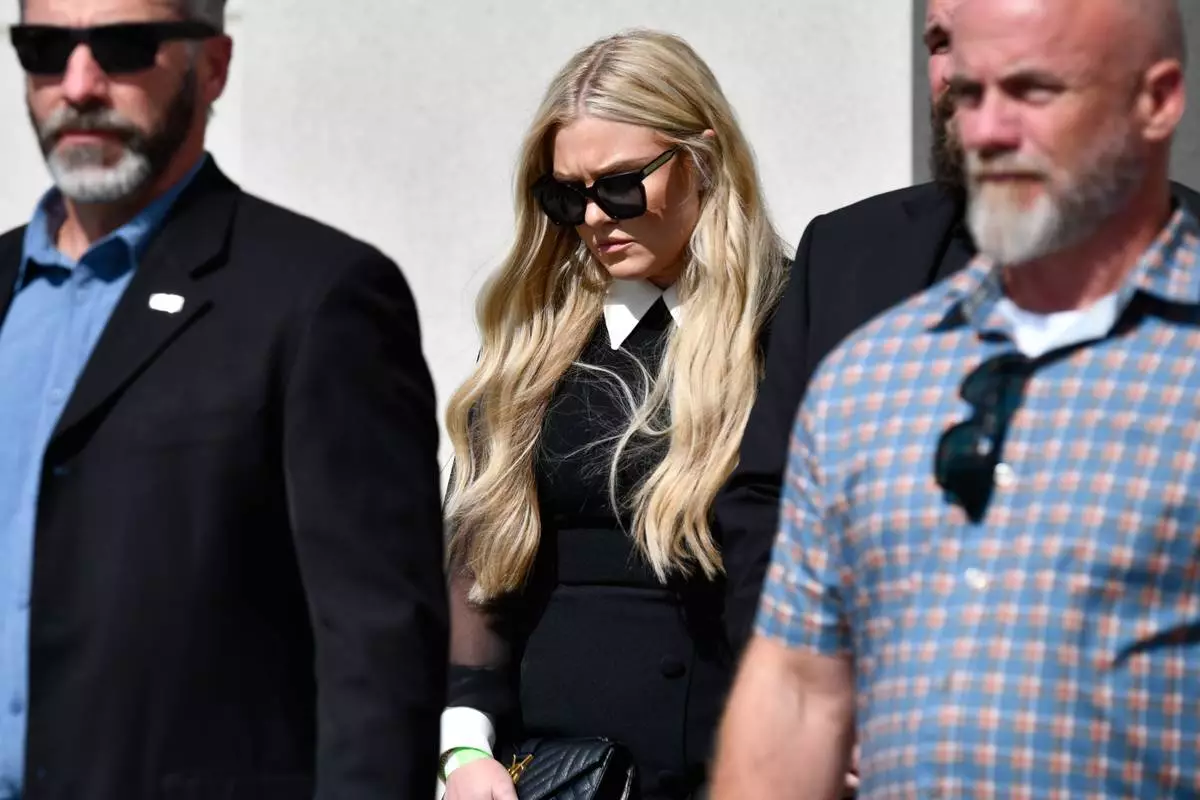
Erika Kirk leaves the Fourth District Courthouse, Monday, July 6, 2026, in Provo, Utah, after a hearing for Tyler Robinson, accused in the fatal shooting of Charlie Kirk. (AP Photo/Marielle Scott)
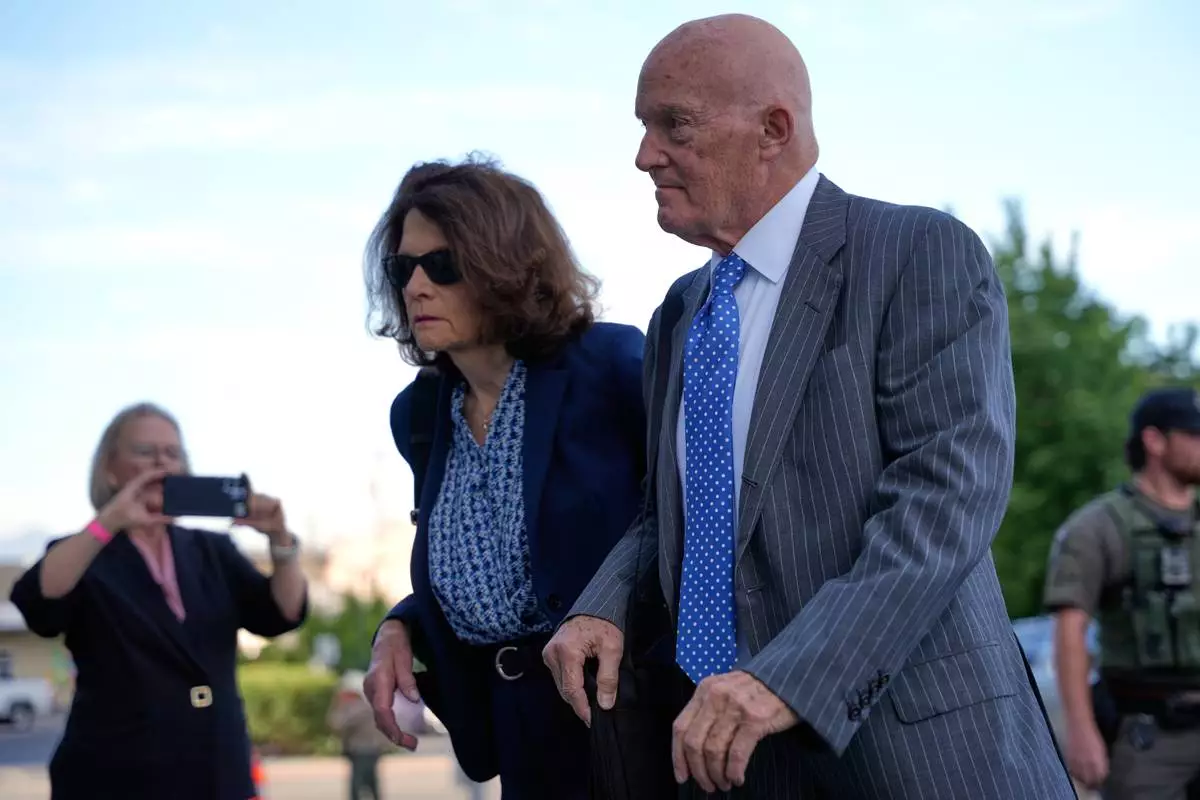
Charlie Kirk's parents, Robert and Kathryn Kirk, arrive at the Fourth District Courthouse for a hearing for Tyler Robinson, accused in the fatal shooting of Charlie Kirk, Monday, July 6, 2026, in Provo, Utah. (AP Photo/Marielle Scott)
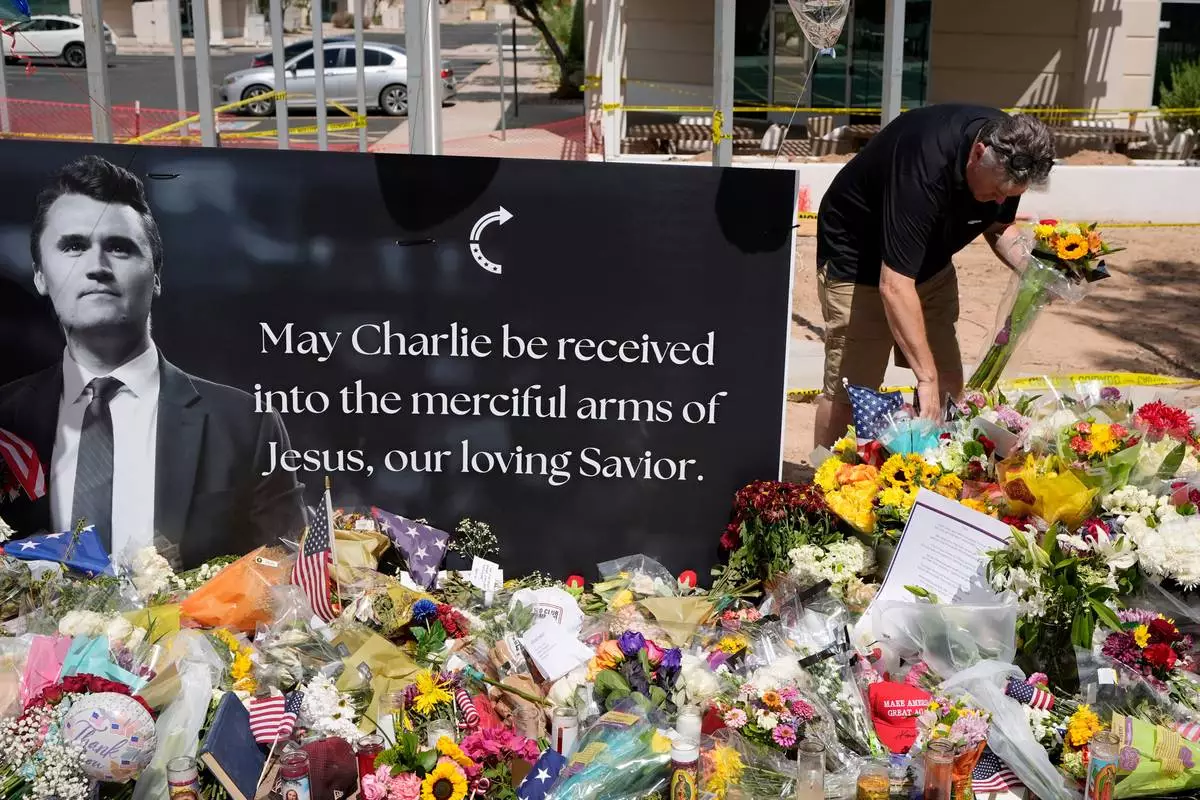
FILE - A well-wisher places flowers at a makeshift memorial set up for Charlie Kirk at Turning Point USA headquarters, Sept. 11, 2025, in Phoenix. (AP Photo/Ross D. Franklin, File)