Skip to Content Facebook Feature Image

New Wisconsin AD Shawn Eichorst hopes to bring some Texas swagger to Madison

Sport

New Wisconsin AD Shawn Eichorst hopes to bring some Texas swagger to Madison
Sport

Sport

New Wisconsin AD Shawn Eichorst hopes to bring some Texas swagger to Madison

2026-07-08 11:05 Last Updated At:11:10

MADISON, Wis. (AP) — New Wisconsin athletic director Shawn Eichorst, who spent the last eight years at Texas, believes his new and old schools have much in common.

Both are well-regarded research universities in state capitals that belong to major conferences and have relatively similar enrollments.

He also pointed out one difference.

“There’s swag at Texas, right?” Eichorst said Tuesday during his introductory news conference. “There’s 30 million people in Texas. We’ve got swag, too, but we have a little humility with that deal. We need to get our shoulders up. We need to feel good about what it is that we’re doing.”

Wisconsin could gain more of that Texas swagger if its football program gets back to winning the way it did the last time Eichorst was employed in Madison. Eichorst, who most recently worked as a deputy athletic director at Texas, received a five-year deal worth $1.6 million annually, with provisions for increases and incentives. He was hired 2½ months after Chris McIntosh left to become the Big Ten’s deputy commissioner for strategy.

Eichorst worked at Wisconsin from 2006-11 when Barry Alvarez was AD and Bret Bielema was leading the football program. He followed that up with stints as an athletic director at Miami (2011-12) and Nebraska (2012-17) before Texas athletic director Chris Del Conte hired him in 2018.

He returns to Wisconsin with the Badgers coming off back-to-back losing seasons in football, a notable fall for a program that had 22 straight winning seasons from 2002-23. Wisconsin coach Luke Fickell has gone 17-21 after posting a 53-10 record with one College Football Playoff appearance in his last five years at Cincinnati.

Eichorst hasn’t worked with Fickell before but said he’s encouraged by their initial conversations.

“Obviously he’s won every place he’s been,” Eichorst said. “My expectation is more of me than him, meaning I need to pour into him, learn more about his program, how he has things set up, how his athletes are taken care of, how we’re supporting that endeavor. And then we can figure out, as we move along, what that might look like.”

Football struggles led to Eichorst’s downfall the last time he was an athletic director.

He fired Nebraska coach Bo Pelini in 2014 and hired Mike Riley, who had gone 93-80 in 14 seasons at Oregon State. Eichorst was dismissed shortly after Nebraska suffered an early-season loss to Northern Illinois in 2017. Riley was fired at the end of that season after going 19-19 in three years.

When Eichorst’s hiring was announced last week, he spoke about how much he had grown from that Nebraska stint. Wisconsin interim chancellor Eric Wilcots led the search and has emphasized Eichorst’s accomplishments at Texas, which has won the Learfield Directors’ Cup all-sports standings five times in the last six years.

Texas ranked anywhere from fifth to ninth in the Directors’ Cup standings in the five years before Wilcots’ arrival. Texas’ football team went a combined 23-27 from 2014-17 but has made two College Football Playoff appearances in the last three years.

“Everybody looks at the end result of what we did at Texas,” Eichorst said. “When we got there in 2018, we weren’t very good in a lot of areas. And that didn’t change overnight.”

Eichorst said one thing that has caught his attention about Wisconsin is the overall quality of its head coaches.

“You’re going to be as good as your coaches,” Eichorst said. “That’s it. If you have an elite group of coaches who are working together and uniting and galvanizing and learning from one another and taking it out to their individual programs, I think you can start to build something special. I go back to Texas. We built a room of really elite head coaches and put them at the top of everything we did to help guide us.”

Eichorst said this job is particularly important to him because of his Wisconsin roots. He was born in Lone Rock, about 45 miles northwest of the Madison campus.

He treasured his previous stint at Wisconsin and says he believes this school “represents everything that is great about higher education and college athletics.”

“Nobody will work harder for Wisconsin athletics,” Eichorst said. “I love this state, and I love everything that it represents. The passion is there. You can see it. I don’t have to make it up. I’ve lived it. It’s in my heart.”

AP college sports: https://apnews.com/hub/college-sports
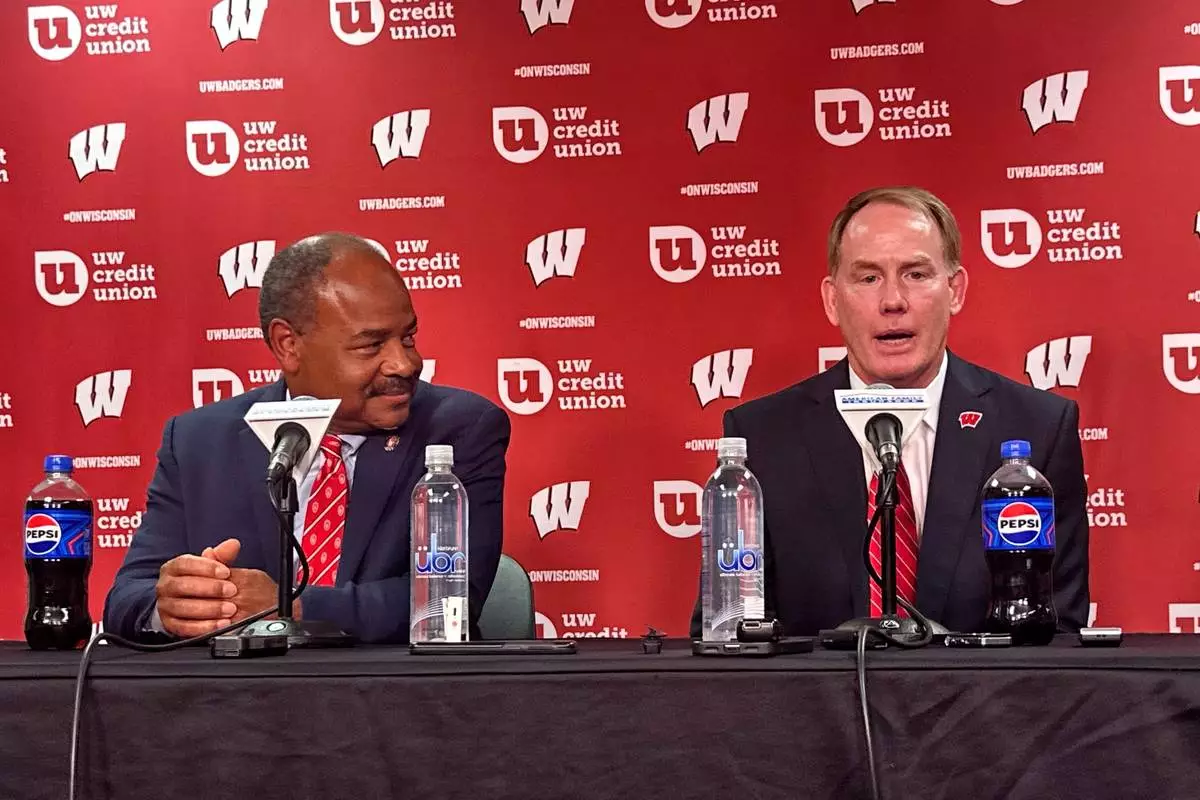
Wisconsin athletic director Shawn Eichorst, right, speaks at his introductory news conference while sitting next to interim chancellor Eric Wilcots on Tuesday July 7, 2026 in Madison, Wis. (AP Photo/Steve Megargee)
Wisconsin athletic director Shawn Eichorst, right, speaks at his introductory news conference while sitting next to interim chancellor Eric Wilcots on Tuesday July 7, 2026 in Madison, Wis. (AP Photo/Steve Megargee)

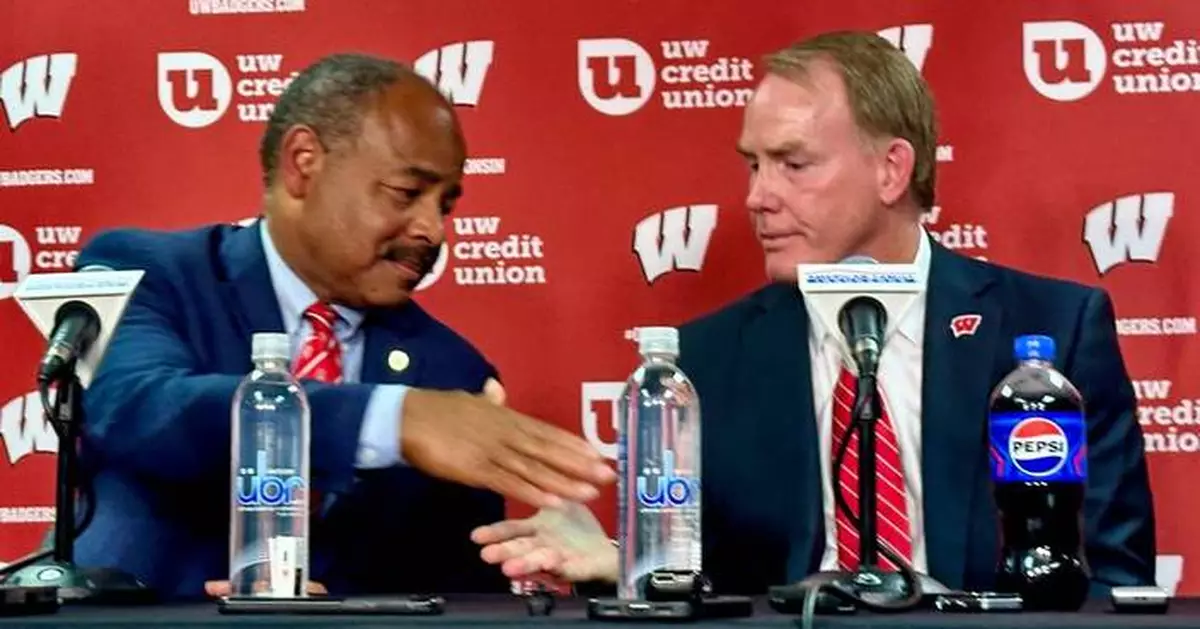
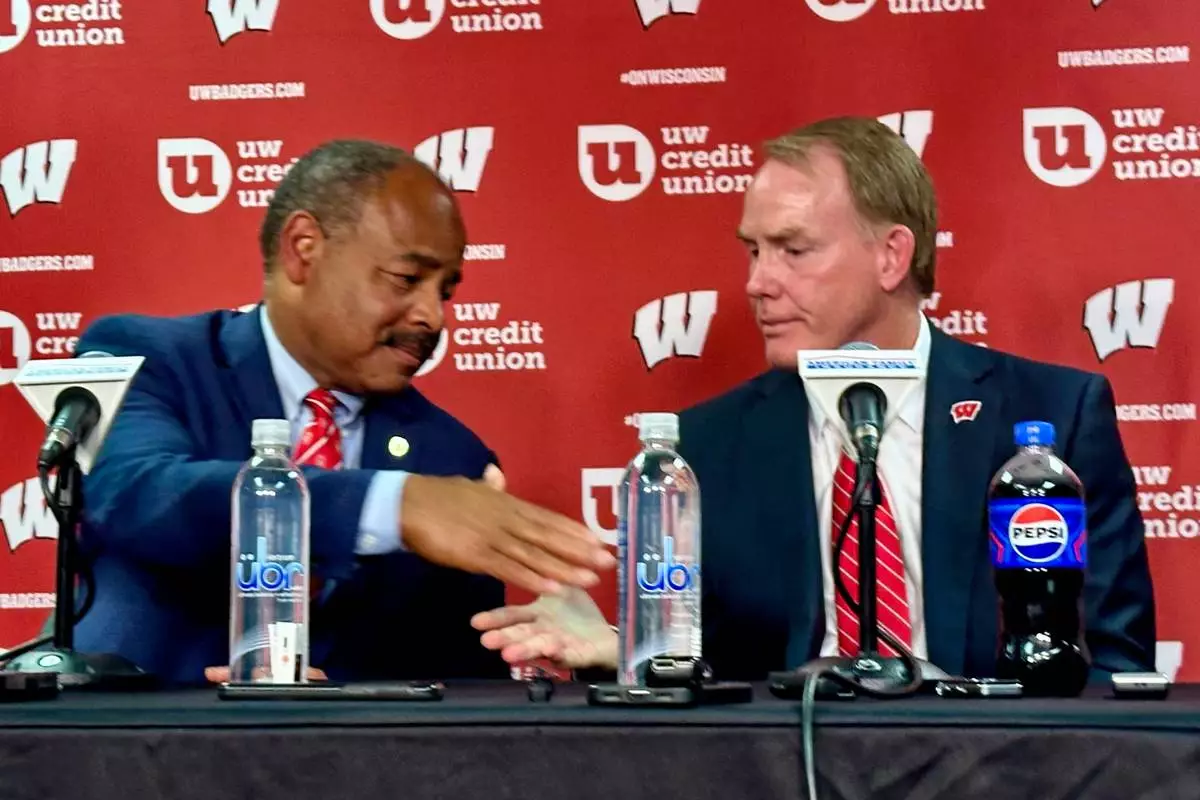
Wisconsin athletic director Shawn Eichorst, right, shakes hands with Interim Chancellor Eric Wilcots at an introductory news conference on Tuesday July 7, 2026 in Madison, Wis. (AP Photo/Steve Megargee)

Wisconsin athletic director Shawn Eichorst, right, shakes hands with Interim Chancellor Eric Wilcots at an introductory news conference on Tuesday July 7, 2026 in Madison, Wis. (AP Photo/Steve Megargee)
CHICAGO (AP) — George E. Johnson Sr., a pioneer in Black hair care whose multimillion dollar business was the first Black-owned company to be listed on the American Stock Exchange, has died at age 99, according to his family.

Johnson died Monday at his home in downtown Chicago. A cause of death was not released.

Johnson and his late wife, Joan, started Johnson Products in 1954 on Chicago’s South Side after securing a $250 loan. It grew into a hair care empire catering almost exclusively to Black people, with brands like Afro Sheen and Ultra Sheen.

His company was a national sponsor of the hit 1970s music and dance television show “Soul Train.”

“Johnson Products became a fixture in homes and salons around the world and a source of pride throughout Black America,” his family said in a statement.

Johnson's trajectory started from humble beginnings.

He was born in 1927 in Richton, Mississippi. Johnson’s mother, Priscilla Dean Johnson, was just 18 when she left her husband, took her children to Chicago and found a job at a local hospital, said Hilary Beard, a Philadelphia-based author who worked with Johnson on his memoir.

Their move occurred during what’s called the First Great Migration, between 1910 and 1940, when tens of thousands of southern Blacks moved to northern and midwestern cities for jobs and to escape racial oppression.

“There was just enough money for food, clothing and shelter, but not for anything extra,” Beard said.

Johnson and his older brother, John, would collect cigarette packages, peel out the aluminum linings, roll it into balls and sell it to people who collected junk for resale, Beard said. Johnson also shined shoes, cleared tables in eateries and set up pins in a bowling alley.

As an adult, Johnson worked for the Black-owned Fuller Products Co. in Chicago. Beard said Johnson met a barber who was distraught because he couldn't convince Fuller to back a product he was working on that straightened men's hair. The drawback was the product burned the scalp.

Johnson worked with Fuller's chemist to revamp the barber's formula and started his business after ultimately convincing a bank he needed a $250 loan to take his wife on a vacation, Beard said. That business would become Johnson Products.

Johnson's company offered above-market salaries, profit-sharing for its workers, healthcare and other benefits at a time when many companies didn’t provide such perks, Beard added. Johnson Products was sold in 1993 to a pharmaceutical firm in a deal worth more than $60 million.

Johnson later founded Independence Bank, and he became the first Black person to serve on the board of directors of the Illinois electric utility Commonwealth Edison. The George E. Johnson Educational Fund awarded more than 1,000 college scholarships.

Johnson’s memoir, “Afro Sheen: How I Revolutionized an Industry with the Golden Rule, from Soul Train to Wall Street,” was published in 2024.

Williams reported from Detroit.

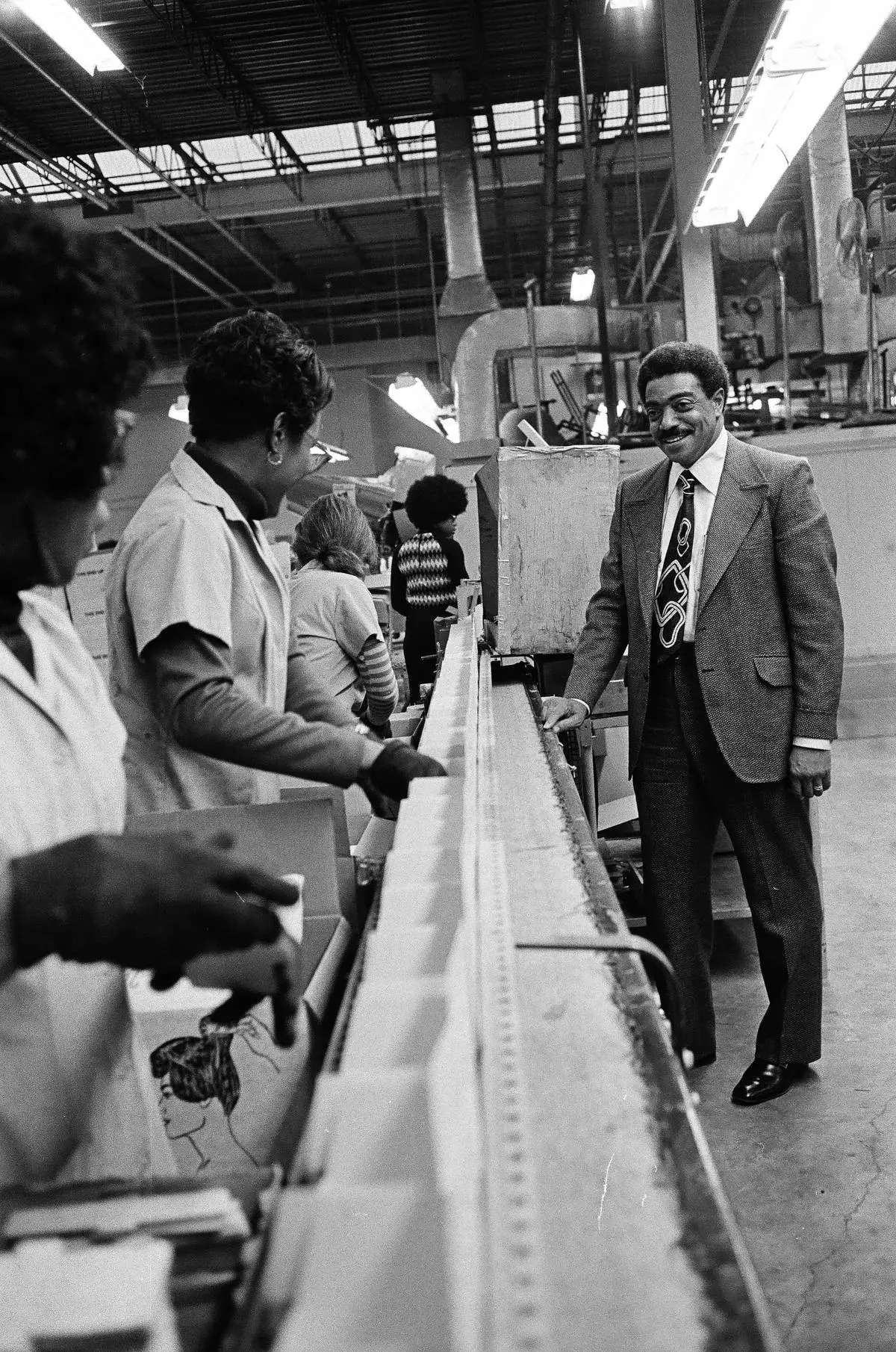
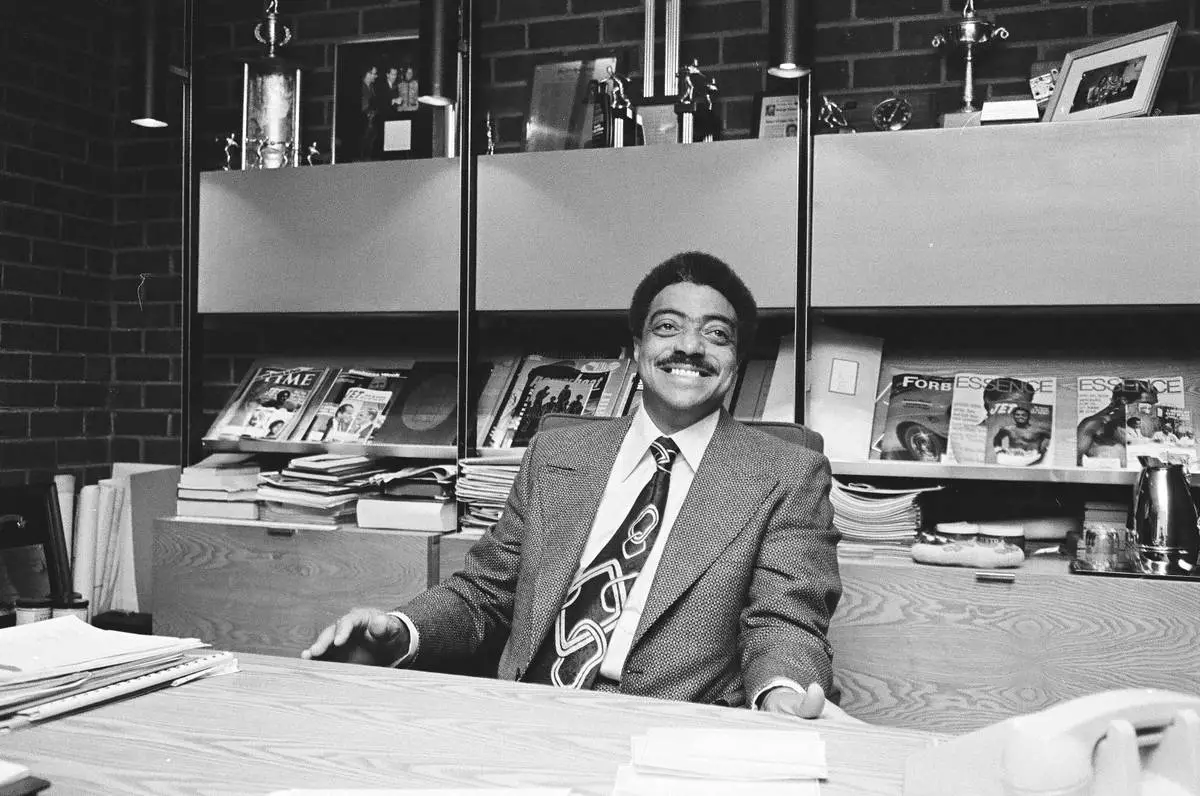
George E. Johnson Sr., who founded Johnson Products Company, is photographed at his company on the South Side of Chicago, Jan. 8, 1973. (Chicago Sun-Times via AP)

George E. Johnson Sr., who founded Johnson Products Company, is photographed at his company on the South Side of Chicago, Jan. 8, 1973. (Chicago Sun-Times via AP)

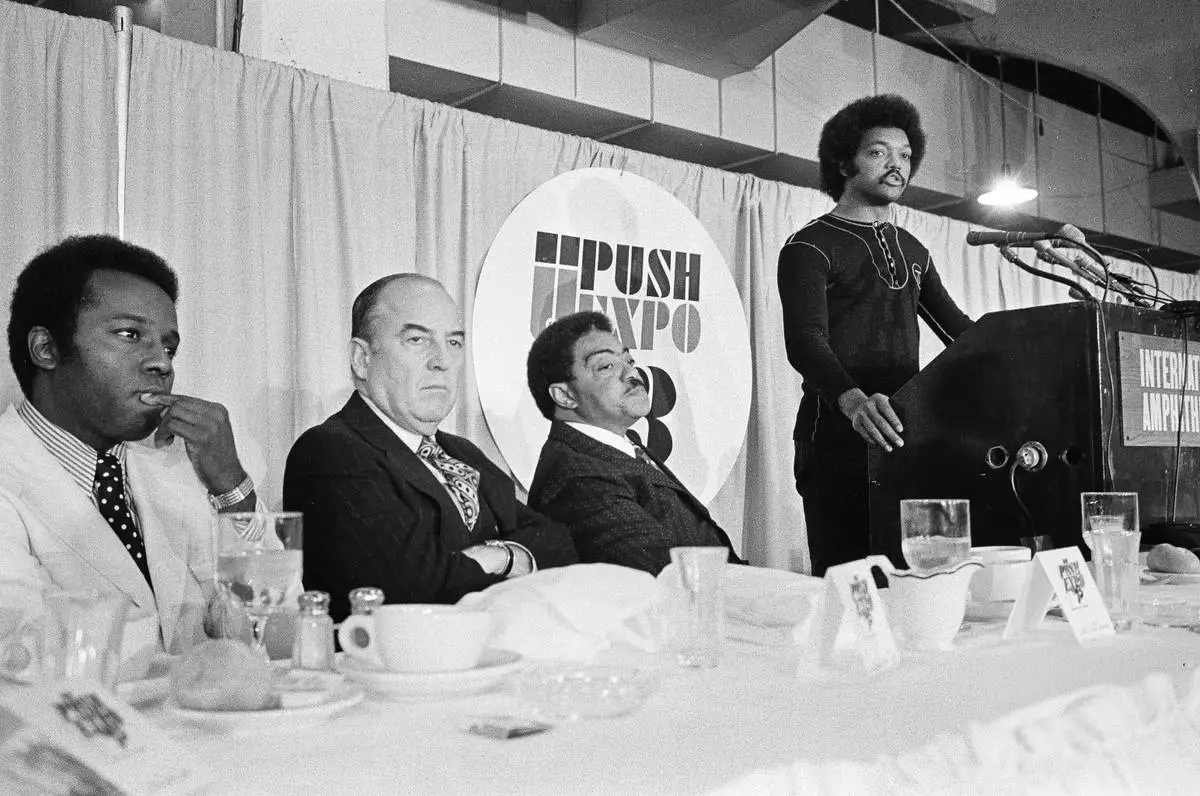
Rev. Jesse Jackson speaks at the PUSH Expo businessmen's breakfast as, from left, Richard G. Hatcher, mayor of Gary, Ind., Emmitt Dedmon, and George E. Johnson Sr., listen, in Chicago, Sept. 19, 1973. (Chicago Sun-Times via AP)

Rev. Jesse Jackson speaks at the PUSH Expo businessmen's breakfast as, from left, Richard G. Hatcher, mayor of Gary, Ind., Emmitt Dedmon, and George E. Johnson Sr., listen, in Chicago, Sept. 19, 1973. (Chicago Sun-Times via AP)

George E. Johnson Sr., who founded Johnson Products Company, is photographed at his company on the South Side of Chicago, Jan. 8, 1973. (Chicago Sun-Times via AP)

George E. Johnson Sr., who founded Johnson Products Company, is photographed at his company on the South Side of Chicago, Jan. 8, 1973. (Chicago Sun-Times via AP)

Recommended Articles