Global demand for natural gas is expected to decline by 0.5 percent, or 20 billion cubic meters, in 2026, as tighter supply and higher prices amid geopolitical tensions in the Middle East weigh on consumption, according to a gas market report released by the International Energy Agency (IEA) on Tuesday.
The report said the U.S.-Iran conflict has triggered a sharp decline in liquefied natural gas (LNG) shipments through the Strait of Hormuz, a waterway that previously handled roughly 20 percent of global LNG transportation.
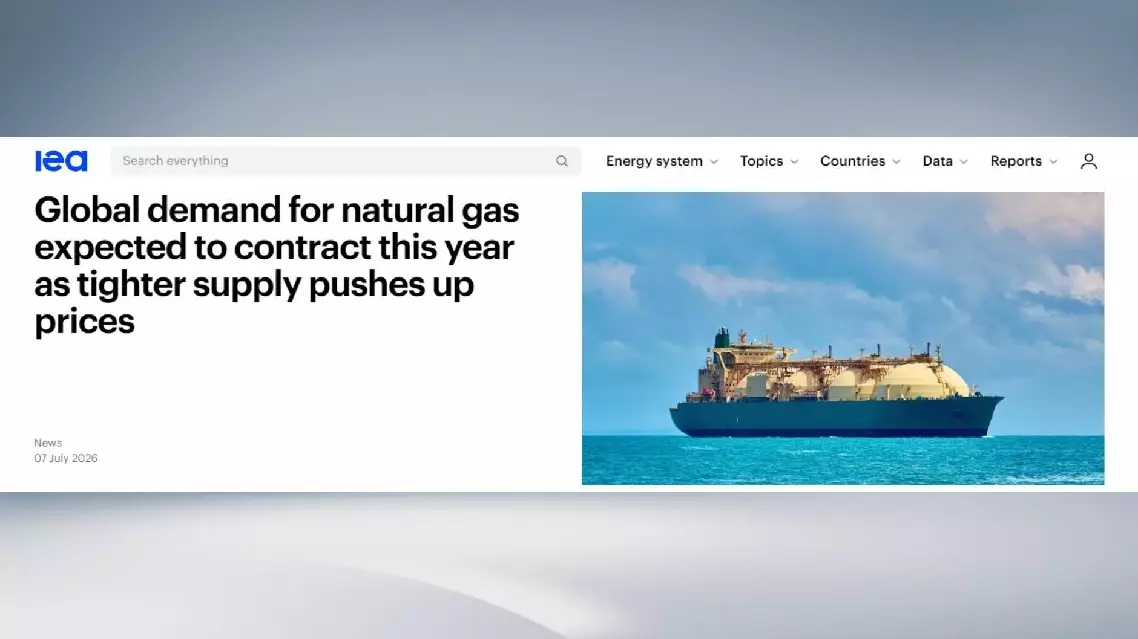
IEA sees global natural gas demand falling amid Mideast tensions
Iran's Ministry of Foreign Affairs on Wednesday strongly condemned the U.S. Department of the Treasury's decision to lift the temporary exemption from sanctions on Iranian oil exports.
In a statement, the ministry said the U.S. move "constitutes a flagrant violation of Paragraph 10 of the Memorandum of Understanding (MoU) on the Cessation of Hostilities, signed on June 18, 2026," adding that Iran "holds the U.S. government responsible for the consequences of this breach of faith."
The U.S. Department of the Treasury's Office of Foreign Assets Control (OFAC) on Tuesday revoked a license that had authorized the sale of Iranian-origin oil until August 21.
A new general license, titled "Revocation and Wind Down of June 21, 2026 Authorization for the Production, Delivery and Sale of Crude Oil, Petrochemical Products, and Petroleum Products of Iranian Origin," signed by OFAC Director Bradley Smith, became effective on Tuesday.
The new license requires that transactions authorized under the previous sanctions waiver wind down by July 17.
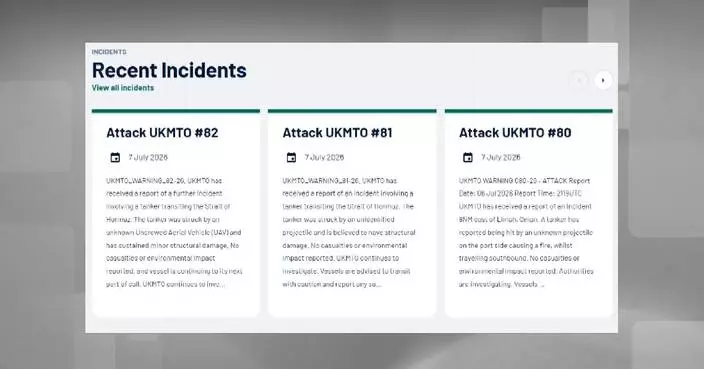
The U.S. side said the decision came after Iran's attack on three oil tankers near or in the Strait of Hormuz.
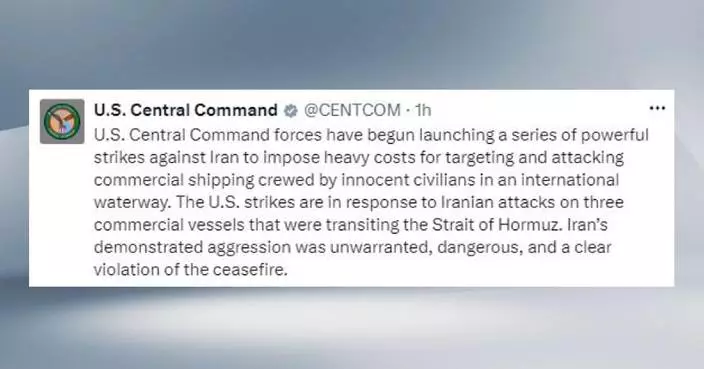
While revoking the waiver, the U.S. military announced Tuesday that it launched a series of powerful strikes against Iran in response to alleged attacks by Tehran on three commercial vessels.
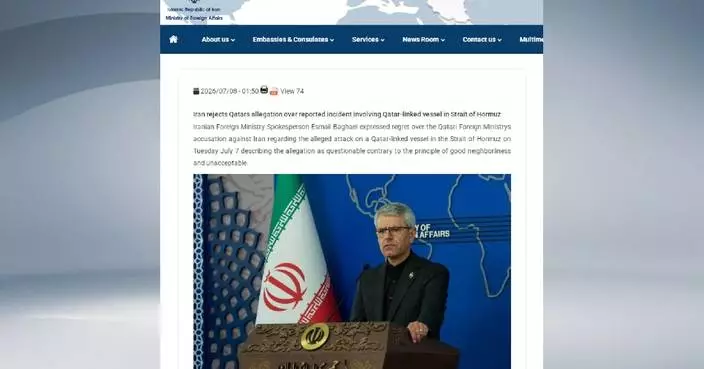
"Less than 20 days after the signing of Islamabad Memorandum of Understanding, the U.S. announcement revoking the general license issued on June 21 once again exposes the ill intent, inconsistency, and unreliability of the U.S. administration," the Iranian foreign ministry charged in its statement.
It also accused the United States of repeatedly "committing violations, both major and minor, of various provisions of the Memorandum of Understanding."
While warning of the consequences of America's breach of faith, Iran "will take any action it deems necessary to safeguard its national interests and security," the ministry added.
Iran's Deputy Foreign Minister for Legal and International Affairs Kazem Gharibabadi on Wednesday also denounced the U.S. move in a post on X.
"The United States' action in revoking the waiver for the exemption of sanctions on Iran's oil sales constitutes a blatant violation of Article 10, and the subsequent military operations of this country against Iran also constitute a serious violation of Article 1 and 2 of the Islamabad Memorandum of Understanding," the post read.
The United States had waived sanctions on Iranian oil after the two parties signed a ceasefire Memorandum of Understanding in June. The waiver had allowed the import of Iranian crude to the United States and payment to Tehran in U.S. dollars, among other provisions.
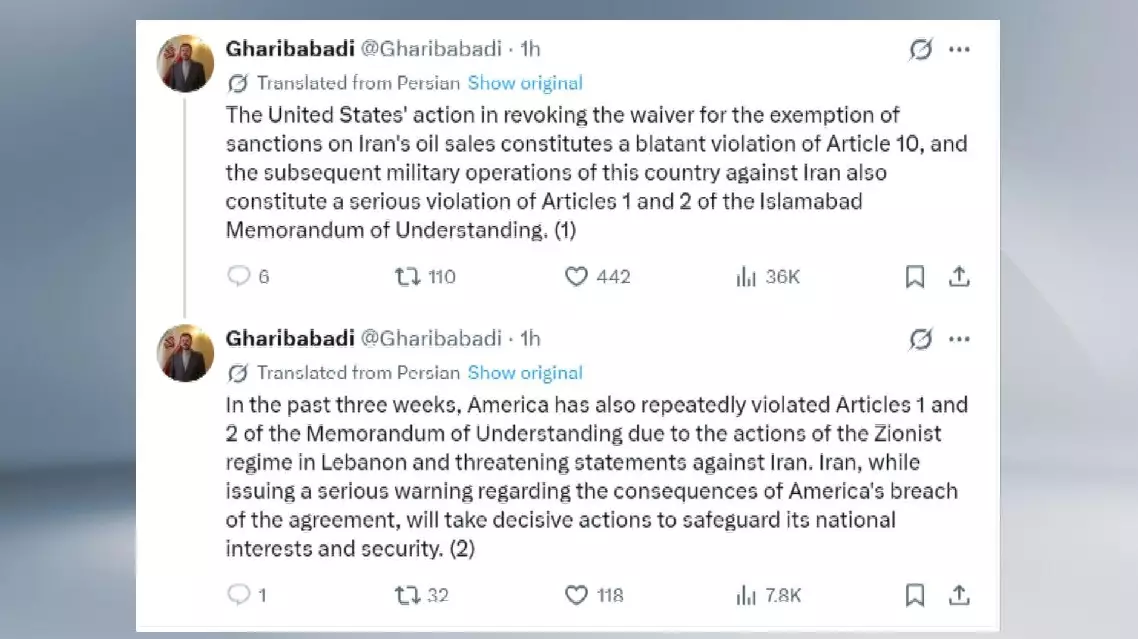
Iran condemns US for revoking license authorizing sale of Iranian oil