TOKYO--(BUSINESS WIRE)--Jul 8, 2026--
Axelspace Corporation (“Axelspace”), a leading developer and operator of microsatellites dedicated to realizing its vision of “Space within Your Reach,” announced that the seven GRUS-3 next-generation Earth observation microsatellites were successfully launched and that the first radio signals were successfully received.
This press release features multimedia. View the full release here: https://www.businesswire.com/news/home/20260707291751/en/
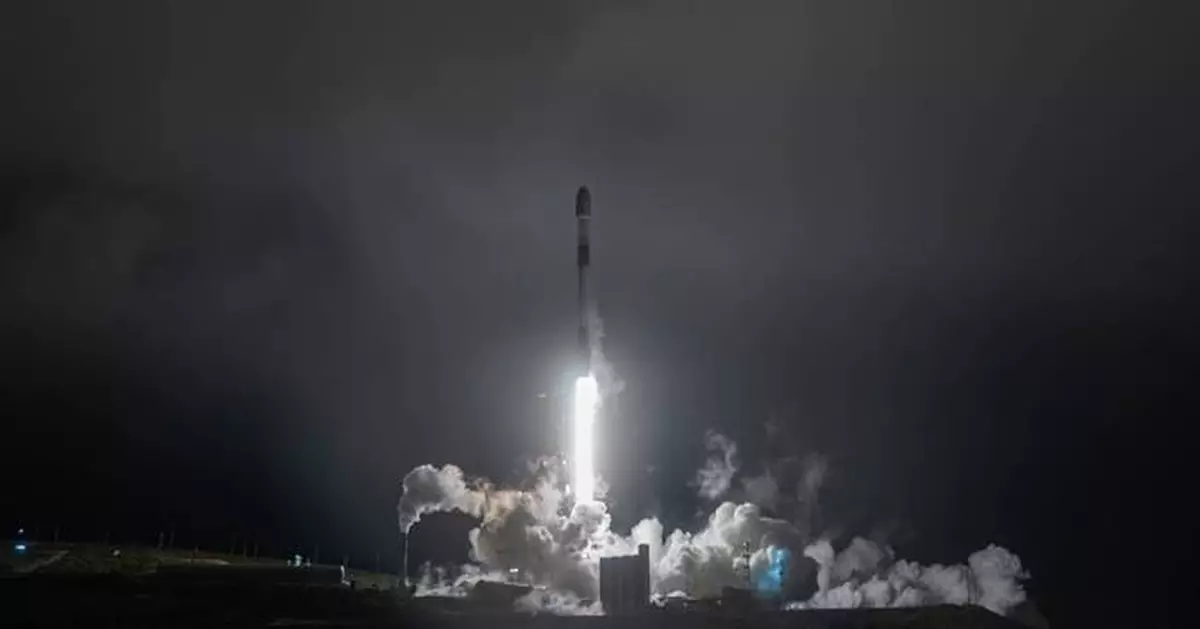
GRUS-3 was integrated via Exolaunch and launched aboard a SpaceX Falcon 9 rocket from Vandenberg Space Force Base in California, USA, on July 7, 2026 at 07:12 (UTC) during the Transporter-17 rideshare mission. The satellites were successfully put into their intended orbit. Axelspace received the first radio signals from all the seven satellites in orbit. The satellites are currently operating normally.
Axelspace is working toward completing the critical operation of the GRUS-3 microsatellite to ensure proper functioning in orbit, in preparation for future services based on Earth observation data acquired by them.
The initial announcement regarding the GRUS-3 can be found here:
Launch Date Confirmed for Seven GRUS-3 Earth Observation Microsatellites
Axelspace Equip Seven GRUS-3 Earth Observation Microsatellites with Nikon Telescopes
Axelspace Announces Launch of Seven GRUS-3 Earth Observation Microsatellites, No Earlier Than July 2026
Note: The development of a versatile satellite bus system for GRUS-3 is based on results obtained through the following projects subsidized by NEDO (New Energy and Industrial Technology Development Organization):
“Development and Demonstration of General-Purpose CubeSat and Microsatellite Buses” (FY2023-2026) *This project was supported by the Ministry of Economy, Trade and Industry (FY2021-2022)
About Axelspace
Guided by its vision—“Space within Your Reach”—Axelspace has been at the forefront of microsatellite innovation since its founding in 2008. Leveraging cutting-edge expertise in microsatellite design, manufacturing, and on-orbit operations, the company is redefining how people and industries access space. Its flagship businesses, AxelLiner, which provides satellite development and operation services to help customers realize their space missions, and AxelGlobe, which delivers Earth observation data through Axelspace’s proprietary optical satellite constellation, are driving a new era of space utilization. Through these initiatives, Axelspace is shaping a future where space is accessible and within reach for everyone.
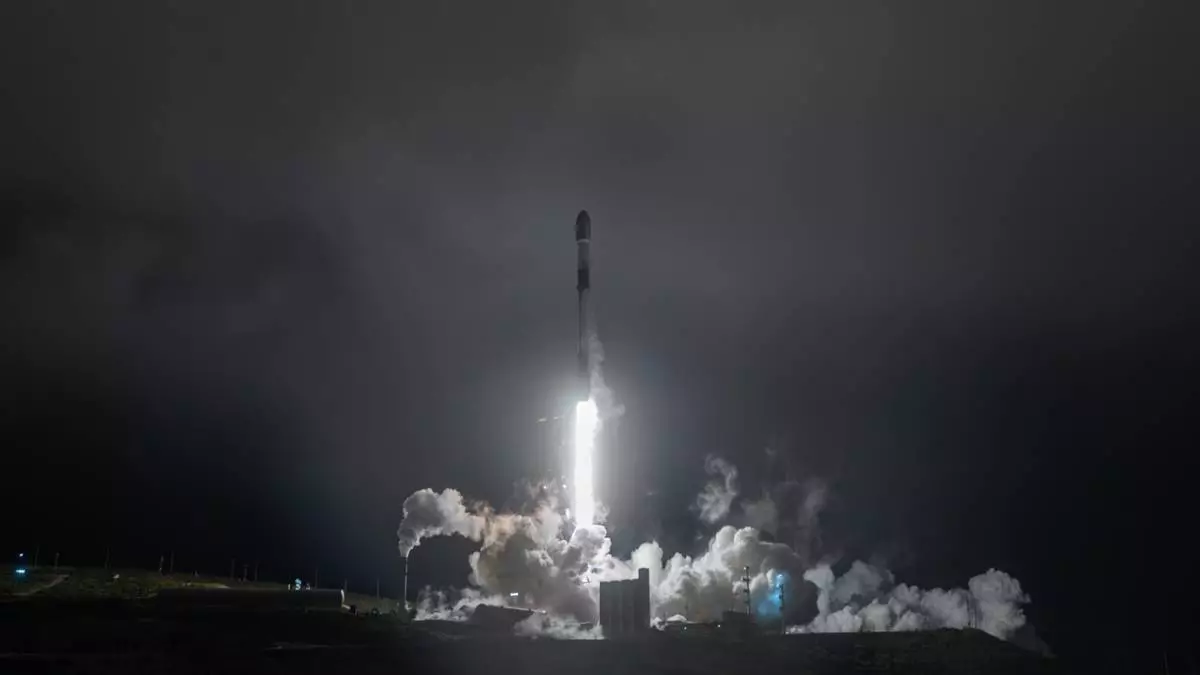
The successful launch of Falcon 9 ©SpaceX
DUBAI, United Arab Emirates (AP) — The U.S. military attacked Iran early Wednesday after it said Tehran struck three ships in the Strait of Hormuz, part of an American effort that also revoked the Islamic Republic’s ability to openly sell crude oil in the world market. Iran retaliated with strikes targeting Bahrain and Kuwait.
The regional crossfire raised the risks that an interim agreement to halt fighting in the war could break down, putting the Middle East again at risk of a wider conflict.
The attacks on shipping and the resulting strikes came during the dayslong funeral for Iran’s Supreme Leader Ayatollah Ali Khamenei, who was killed Feb. 28 in the war’s first moments at age 86. The funeral, which ends Thursday, had been thought to be a period of lower tensions — though mourners have repeatedly called for the killings of U.S. President Donald Trump and Israeli Prime Minister Benjamin Netanyahu.
Negotiations to reach a final deal had been due to start after Khamenei’s burial and focus on the toughest matters, including fully reopening the strait and rolling back Tehran’s disputed nuclear program. But the new attacks threw that into question.
“The era of bullying and extortion is over,” Iran’s Parliament Speaker Mohammad Bagher Qalibaf wrote on X. “It leads nowhere. We don’t fold.”
The U.S. military’s Central Command said American forces launched the strikes “to impose heavy costs for targeting and attacking commercial shipping crewed by innocent civilians in an international waterway.”
It said it hit Iranian targets including air defense systems, radars and over 60 small boats used by Iran’s paramilitary Revolutionary Guard. Those boats have been key in harassing ships in the strait.
The U.S. military remains “postured and prepared to hold Iran accountable when the agreement is not adhered to or obeyed,” it added, saying this round of attacks had ended.
Iran acknowledged the strikes, but offered no word on any losses. Iranian state media reported the sound of explosions in Bandar Abbas, Qeshm and Sirik.
Wednesday morning, both Bahrain, home to the U.S. Navy’s 5th Fleet, and Kuwait, home to U.S. Army forces, sounded missile alerts. The Guard issued a statement acknowledging targeting U.S. military installations in both countries.
“The child-killing and terrorist U.S. army ... openly violated the ceasefire and violated the Islamabad understanding by launching an airstrike on a number of coastal bases and civilian stations on the coasts of Hormozgan and Mahshahr provinces,” it said, without addressing the attacks on ships in the strait.
Bahrain sounded its alert a second time later Wednesday morning.
A similar spate of Iranian attacks on shipping and U.S. retaliatory strikes occurred late last month — which similarly drew Iranian attacks on Bahrain and Kuwait. Wednesday’s strikes also came as Trump was in Turkey for a summit of the NATO military alliance.
The U.S. also revoked a license that authorized the sale of Iranian oil as part of the interim deal. That had allowed Iran for the first time in years to conduct oil sales openly on the international market for U.S. dollars. Iran long had been suspected of selling sanctioned crude oil at below-market prices to China.
The decision came after the strikes on shipping. One tanker was traveling off the coast of Oman when it was hit and caught fire, the United Kingdom Maritime Trade Operations center said. Iranian state television said the liquefied natural gas tanker came under attack after ignoring warnings but did not directly claim the assault.
The other two ships sustained some damage, but no one was injured, and both continued on their way in the Strait of Hormuz, the U.K. maritime agency said. Iran has maintained a chokehold on the Strait of Hormuz since the war, disrupting global energy markets as a fifth of all traded oil and natural gas passed through the channel in peacetime. The ships attacked Tuesday all appeared to be using a route close to Oman’s shore, rather than one ordered by Tehran.
Tehran repeatedly has declared that only its approved route through the strait is safe and is suspected of attacking other ships that have used the Oman route.
Majed al-Ansari, a spokesperson for the Qatari Foreign Ministry, said the Qatari tanker Al Rekayyat was targeted in an “unacceptable attack” on international navigation and global energy security. He said Qatar holds Iran “fully legally responsible.”
Iran and the United States agreed as part of the interim deal to allow ships to pass without paying charges for 60 days. But Tehran insisted it must control the vessels’ routes and later charge fees for passage, which would upend decades of practice in the waterway.
The U.S. and many Gulf Arab states say they will not agree to Iran charging for passage through the strait.
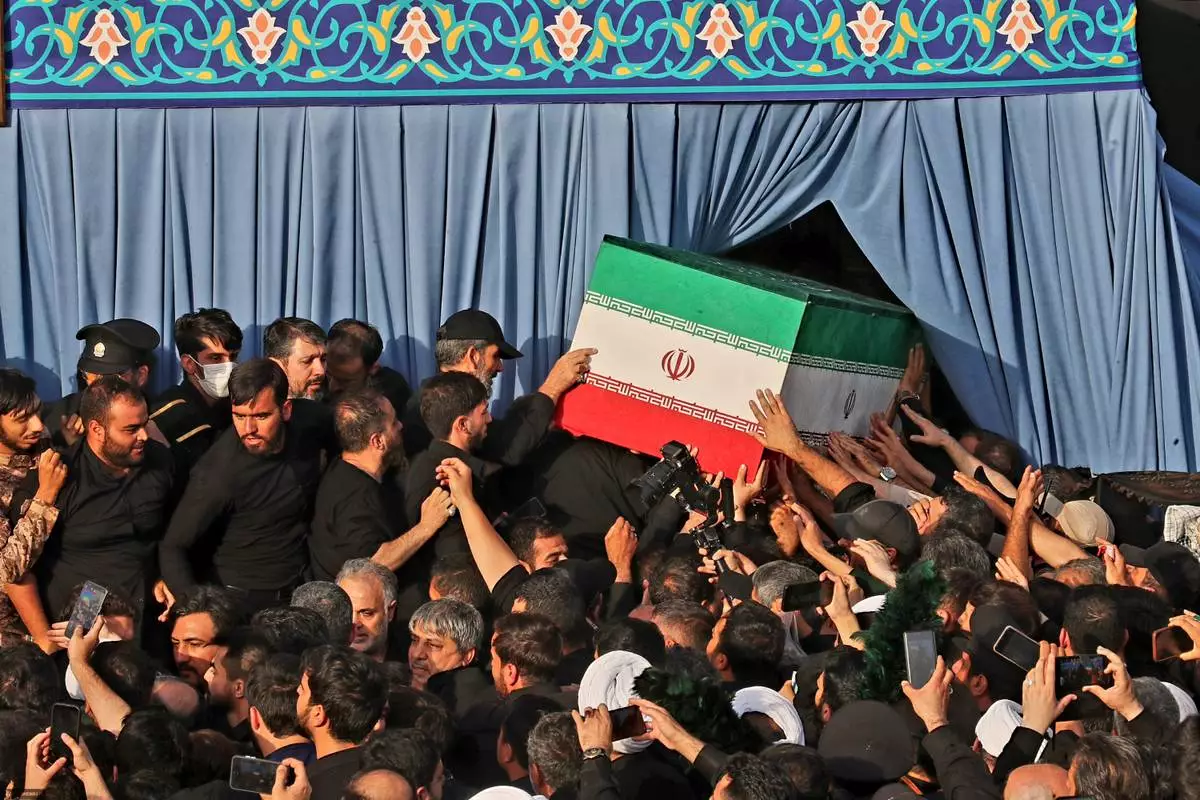
In this photo released by Iran's Supreme Leader's office, mourners carry the coffin of the late Iranian Supreme Leader Ayatollah Ali Khamenei during funeral prayers held as part of the dayslong funeral ceremonies at the Holy Jamkaran Mosque in Qom, Iran, Tuesday, July 7, 2026. (Office of the Iranian Supreme Leader via AP)
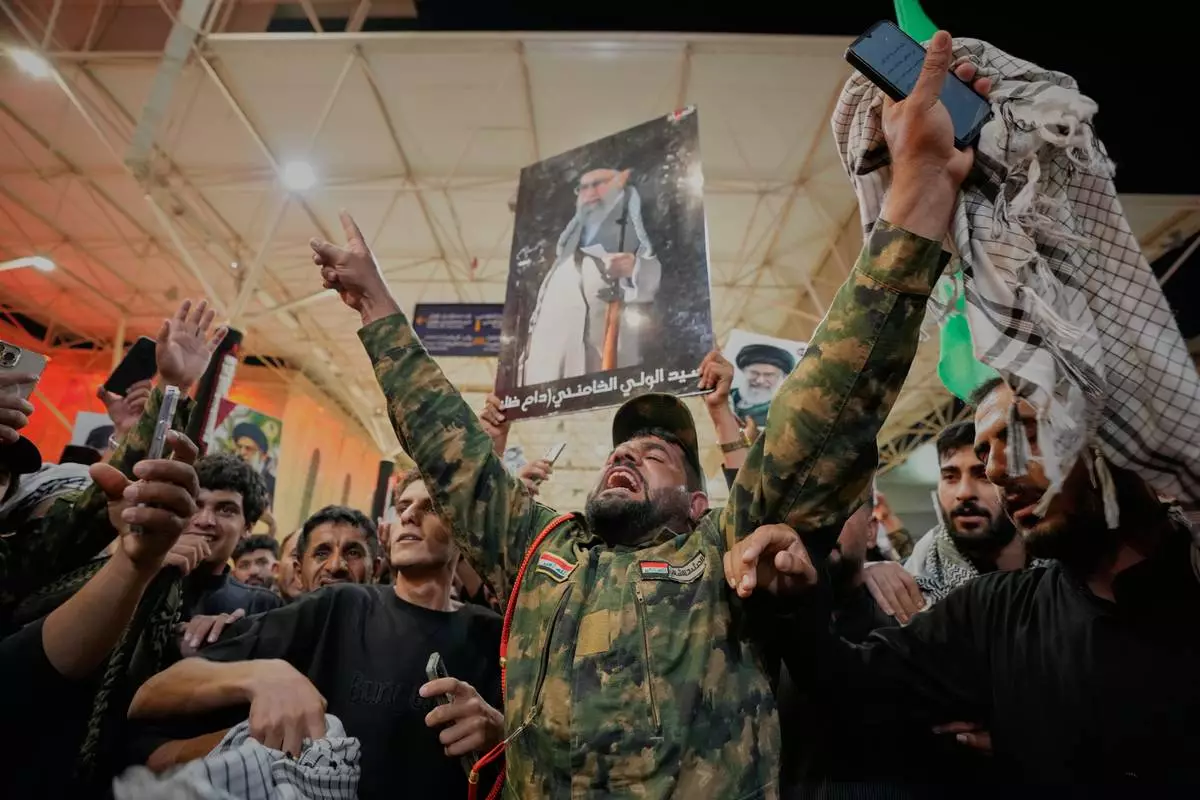
An Iraqi Shiite soldier chants on the eve of funeral ceremonies for the late Iranian Supreme Leader Ayatollah Ali Khamenei outside the Imam Ali Shrine in Najaf, Iraq, Tuesday, July 7, 2026. (AP Photo/Hadi Mizban)