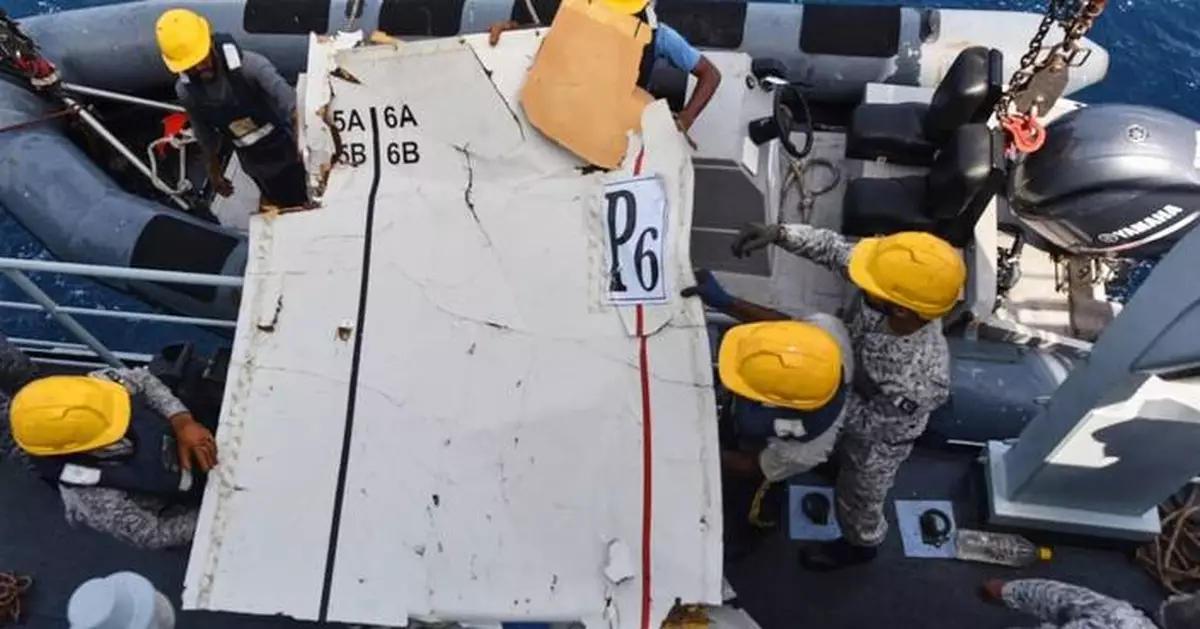
ISLAMABAD (AP) — Civilian and navy searchers off Pakistan's coast Wednesday located and recovered wreckage of a cargo plane that disappeared while approaching the southern port of Karachi while the search continues for five missing crew members, officials said.
The aircraft operated by the private carrier K2 Airways had departed from Sharjah in the United Arab Emirates and reported a navigational system problem before losing contact with air traffic control late Tuesday.
Click to Gallery

Ghulam Nabi Bahrani, left, father-in-law of missing cargo plane crew First Officer Faisal Jatoi, with others pray for Jatoi at his home in Karachi, Pakistan, Wednesday, July 8, 2026. (AP Photo/Ali Raza)

Ghulam Nabi Bahrani, father-in-law of missing cargo plane crew First Officer Faisal Jatoi, showed his picture on a mobile phone in Karachi, Pakistan, Wednesday, July 8, 2026. (AP Photo/Ali Raza)
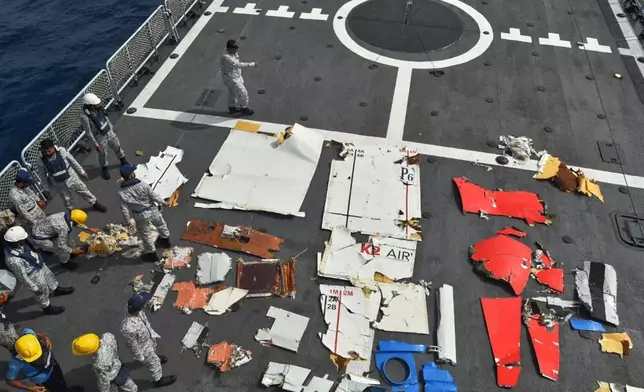
In this photo released by Pakistan Navy, Pakistan Navy personnel examine the wreckage of a cargo plane of the private carrier K2 Airways on a naval ship after recovering them from deep sea near Omara, a town some 360 kms. (220 miles) west of Karachi, Pakistan, Wednesday, July 8, 2026. (Pakistan Navy via AP)
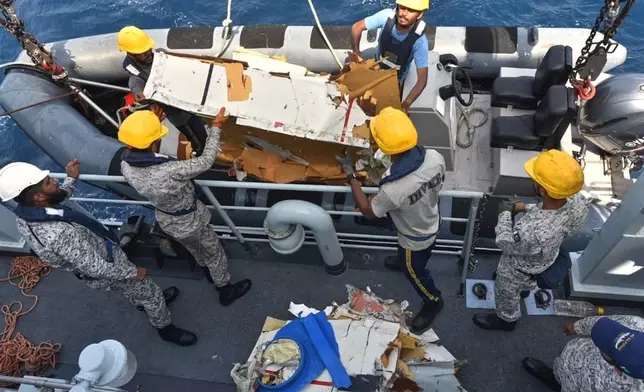
In this photo released by Pakistan Navy, Pakistan Navy personnel shift the wreckage of a cargo plane of the private carrier K2 Airways into a naval ship after recovering them from deep sea near Omara, a town some 360 kms. (220 miles) west of Karachi, Pakistan, Wednesday, July 8, 2026. (Pakistan Navy via AP)
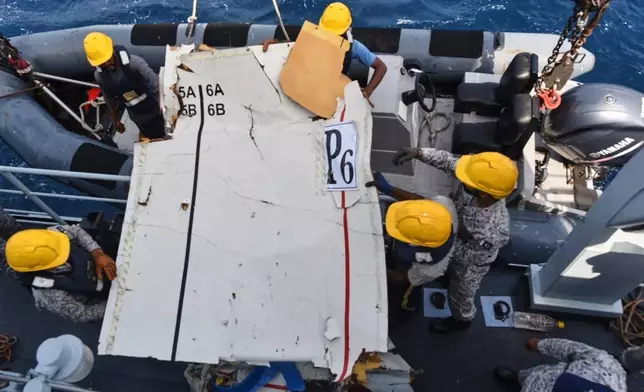
In this photo released by Pakistan Navy, Pakistan Navy personnel shift the wreckage of a cargo plane of the private carrier K2 Airways into a naval ship after recovering them from deep sea near Omara, a town some 360 kms. (220 miles) west of Karachi, Pakistan, Wednesday, July 8, 2026. (Pakistan Navy via AP)
The Pakistani navy and civilian teams in planes and ships found the plane debris after about 12 hours of searching in the Arabian Sea, Pakistan’s Airports Authority said in a post on X.
Retired Rear Adm. Faisal Shah said searchers were dealing with rough seas and that they were still looking for the main wreckage of the plane, which could prove much more difficult to find because the area is believed to be about 3,000 meters (9,800 feet) deep, requiring specialized equipment.
He said recovering debris does not necessarily reveal the aircraft’s exact crash site because ocean currents, waves and wind can carry the floating wreckage far from where the aircraft went down.
In a statement, K2 Airways identified the missing crew as Capt. Muhammad Rizwan Idris, First Officer Faisal Jatoi, flight engineers Muhammad Hamid and Muhammad Arif Siddiqui, and aircraft loader Muhammad Taufiq Khan.
“We continue to pray earnestly for the safety of our colleagues,” it said.
Ghulam Nabi Bahrani, the father-in-law of co-pilot Faisal Jatoi, said the family was in regular contact with him while he was in Sharjah, and that he had called his wife shortly before departure Tuesday. Bahrani said government officials have been in contact with the family since the aircraft disappeared.
“All we can do is wait and pray for a miracle,” he said.
Pakistani Prime Minister Shehbaz Sharif released a statement expressing sympathy with the families of the five crew members, and directed the government to deploy all available resources for the search effort.
Pakistan’s Airports Authority said earlier on X that radar data showed the aircraft making a sharp change in heading and rapidly descending before radar and radio contact were lost at about 9:21 p.m., approximately 155 nautical miles (287 kilometers, 178 miles) west of Karachi.
Aviation expert Imran Aslam told local broadcaster ARY News late Tuesday that it remained unclear what caused the aircraft to disappear from radar. He said that even if an aircraft suffered an engine failure, it would normally continue gliding rather than plunge suddenly. He said the exact cause would become clear only after investigators gathered more evidence.
In May 2020, a Pakistan International Airlines flight carrying 98 people crashed into a densely populated neighborhood near Karachi airport while attempting to land. All but one of the 99 people on board were killed. A government investigation later concluded that human error by the pilots and air traffic controllers caused the crash.
Associated Press writer Muhammad Farooq contributed to this story from Karachi, Pakistan.

Ghulam Nabi Bahrani, left, father-in-law of missing cargo plane crew First Officer Faisal Jatoi, with others pray for Jatoi at his home in Karachi, Pakistan, Wednesday, July 8, 2026. (AP Photo/Ali Raza)

Ghulam Nabi Bahrani, father-in-law of missing cargo plane crew First Officer Faisal Jatoi, showed his picture on a mobile phone in Karachi, Pakistan, Wednesday, July 8, 2026. (AP Photo/Ali Raza)
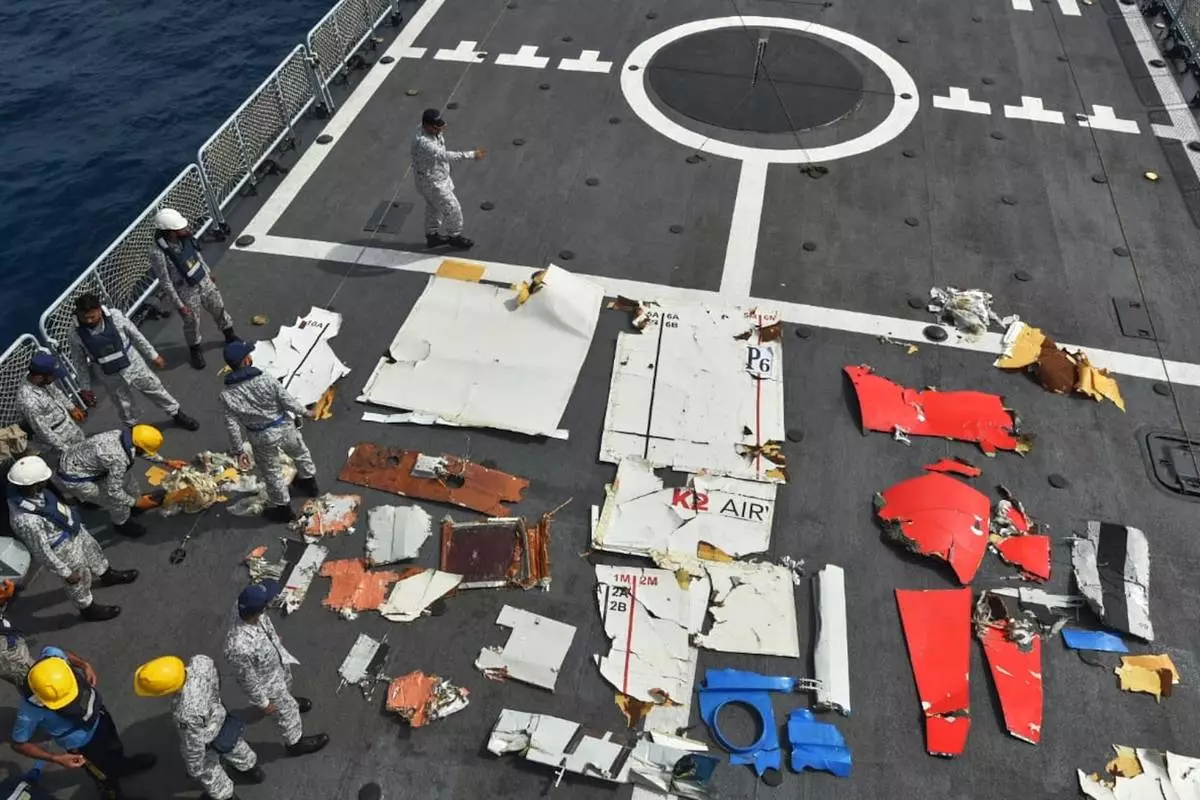
In this photo released by Pakistan Navy, Pakistan Navy personnel examine the wreckage of a cargo plane of the private carrier K2 Airways on a naval ship after recovering them from deep sea near Omara, a town some 360 kms. (220 miles) west of Karachi, Pakistan, Wednesday, July 8, 2026. (Pakistan Navy via AP)
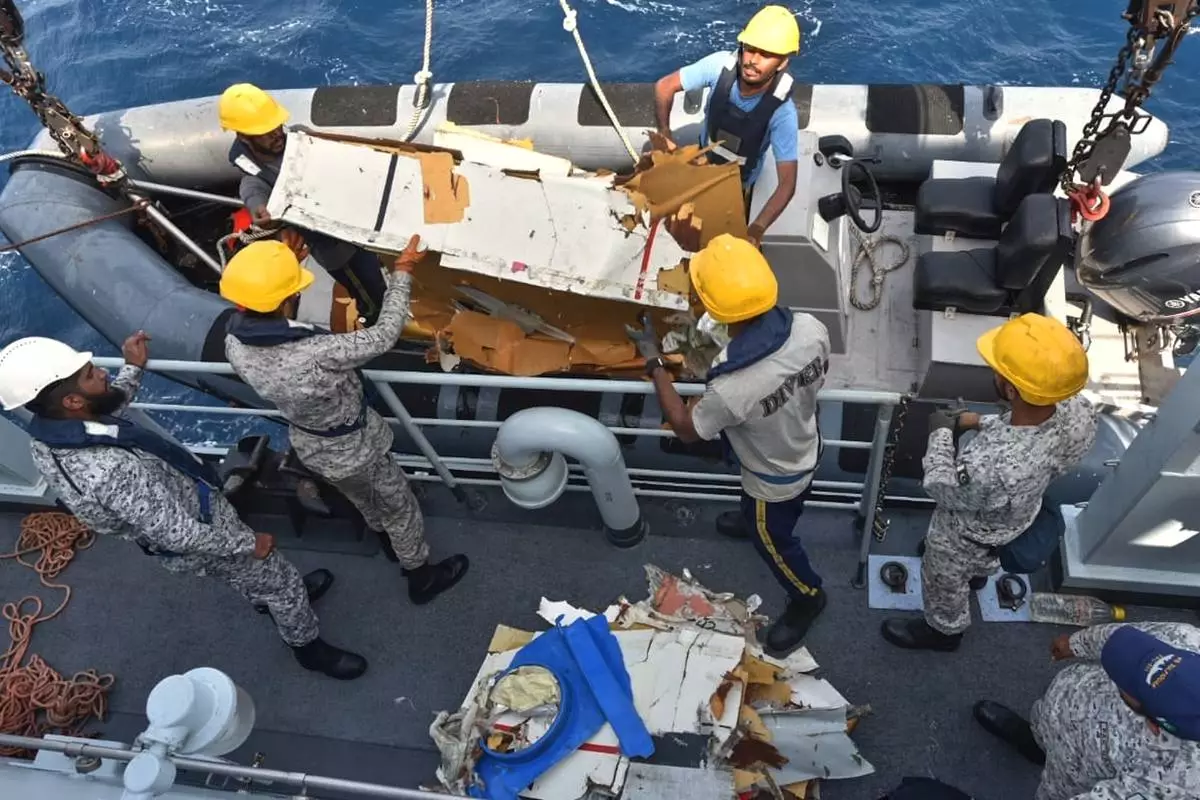
In this photo released by Pakistan Navy, Pakistan Navy personnel shift the wreckage of a cargo plane of the private carrier K2 Airways into a naval ship after recovering them from deep sea near Omara, a town some 360 kms. (220 miles) west of Karachi, Pakistan, Wednesday, July 8, 2026. (Pakistan Navy via AP)
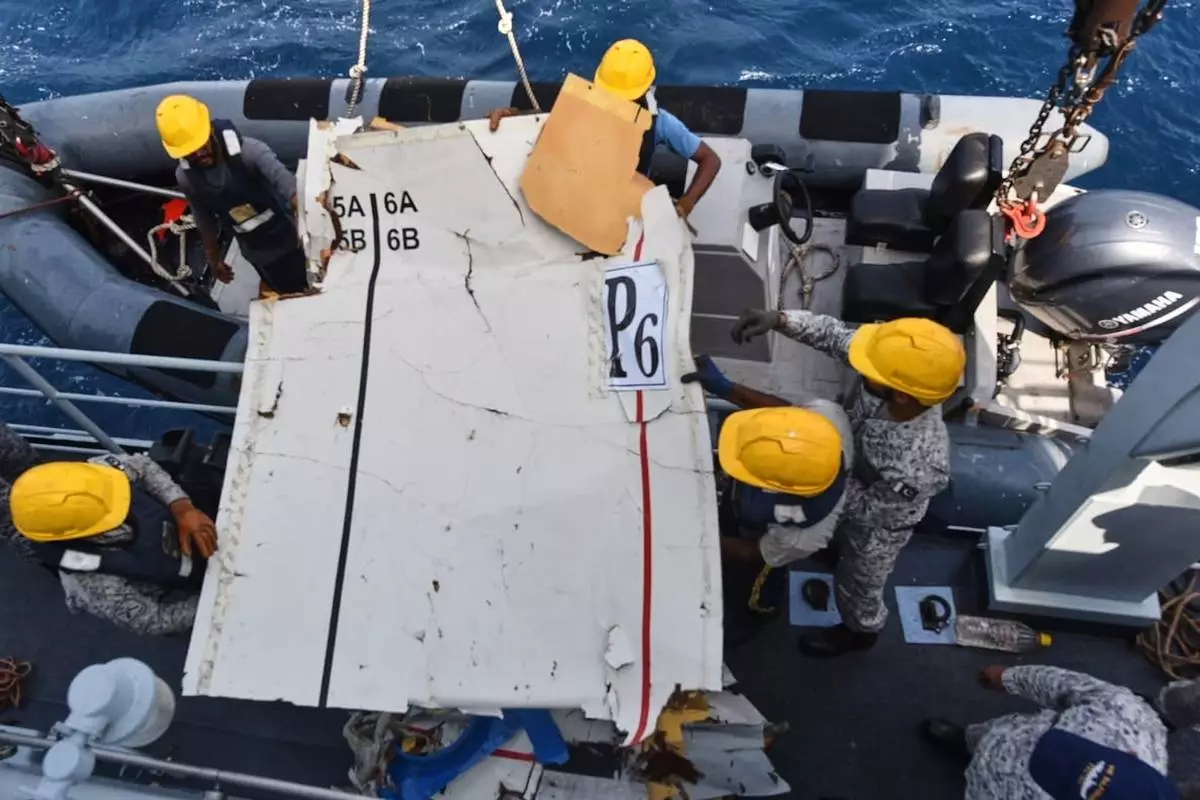
In this photo released by Pakistan Navy, Pakistan Navy personnel shift the wreckage of a cargo plane of the private carrier K2 Airways into a naval ship after recovering them from deep sea near Omara, a town some 360 kms. (220 miles) west of Karachi, Pakistan, Wednesday, July 8, 2026. (Pakistan Navy via AP)