TOKYO--(BUSINESS WIRE)--Jul 8, 2026--
Rigaku Corporation, a global solution partner in X-ray analytical systems and a group company of Rigaku Holdings Corporation (headquarters: Akishima, Tokyo; CEO: Jun Kawakami; “Rigaku”), has opened the Rigaku Solutions Center Osaka (RSC-Osaka) at its Osaka Plant. The new facility centralizes and expands practical training for field service engineers supporting semiconductor metrology systems, strengthening Rigaku's global service capabilities.
This press release features multimedia. View the full release here: https://www.businesswire.com/news/home/20260708402770/en/
As semiconductor manufacturing processes continue to advance toward finer geometries, higher layer counts, and more complex three-dimensional structures, semiconductor metrology systems require ever greater precision and operational stability. X-ray analytical technologies play an increasingly important role in meeting these demands through highly accurate, non-destructive measurements.
As Rigaku's shipments of semiconductor metrology systems continue to grow, the need for highly skilled field service engineers is also increasing. Practical, hands-on training is essential to maximize instrument performance and minimize customer downtime.
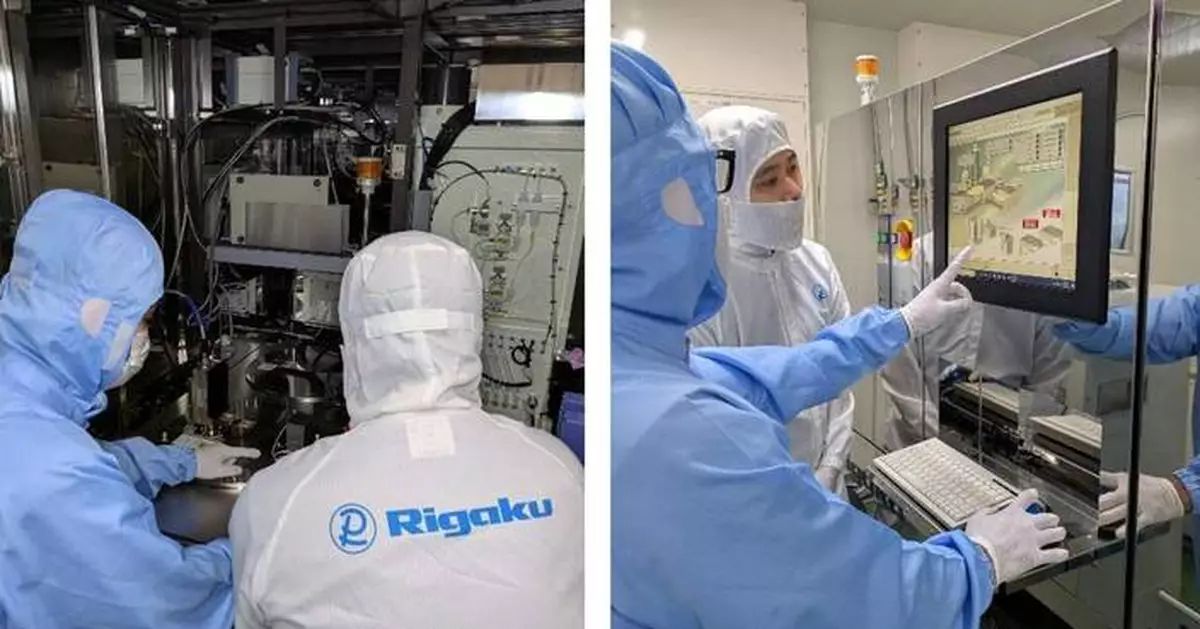
To address this need, Rigaku opened the RSC-Osaka, a dedicated training facility for semiconductor metrology systems. The newly constructed cleanroom within the Osaka Plant houses multiple semiconductor metrology systems, allowing trainees to gain hands-on experience in equipment disassembly and assembly, system adjustment, and performance verification. This enables service engineers to develop advanced maintenance and troubleshooting skills under conditions that closely replicate those encountered in the field.
"Our customers rely on Rigaku systems in some of the world's most demanding semiconductor manufacturing environments," said Markus Kuhn, Executive Officer and General Manager of the Semiconductor Metrology Division of Rigaku. "By bringing multiple training systems together at RSC-Osaka, we can provide more efficient and flexible training tailored to different skill levels and technical needs. The facility provides practical, hands-on learning opportunities for service engineers and distribution partners from around the world, helping strengthen technical expertise and standardize service practices across our global network. Its location within the Osaka Plant also enables us to train more engineers and further enhance the high-quality support we provide to customers worldwide. "
Going forward, Rigaku will continue expanding the range of systems covered by its training programs and increasing training opportunities for service engineers. Through these efforts, the company will further strengthen its global service capabilities in support of the semiconductor industry.
About the Rigaku Group
Since its establishment in 1951, the engineering professionals of the Rigaku group have been dedicated to benefiting society with leading-edge technologies, notably including its core fields of X-ray and thermal analysis. With a market presence in 136 countries and regions and some 2,000 employees from 9 global operations, Rigaku is a solution partner in industry and research analysis institutes. Our overseas sales ratio has reached approximately 70% while sustaining an exceptionally high market share in Japan. Together with our customers, we continue to develop and grow. As applications expand from semiconductors, electronic materials, batteries, environment, resources, energy, life science to other high-tech fields, Rigaku realizes innovations “To Improve Our World by Powering New Perspectives.”
For details, please visit: rigaku-holdings.com/english
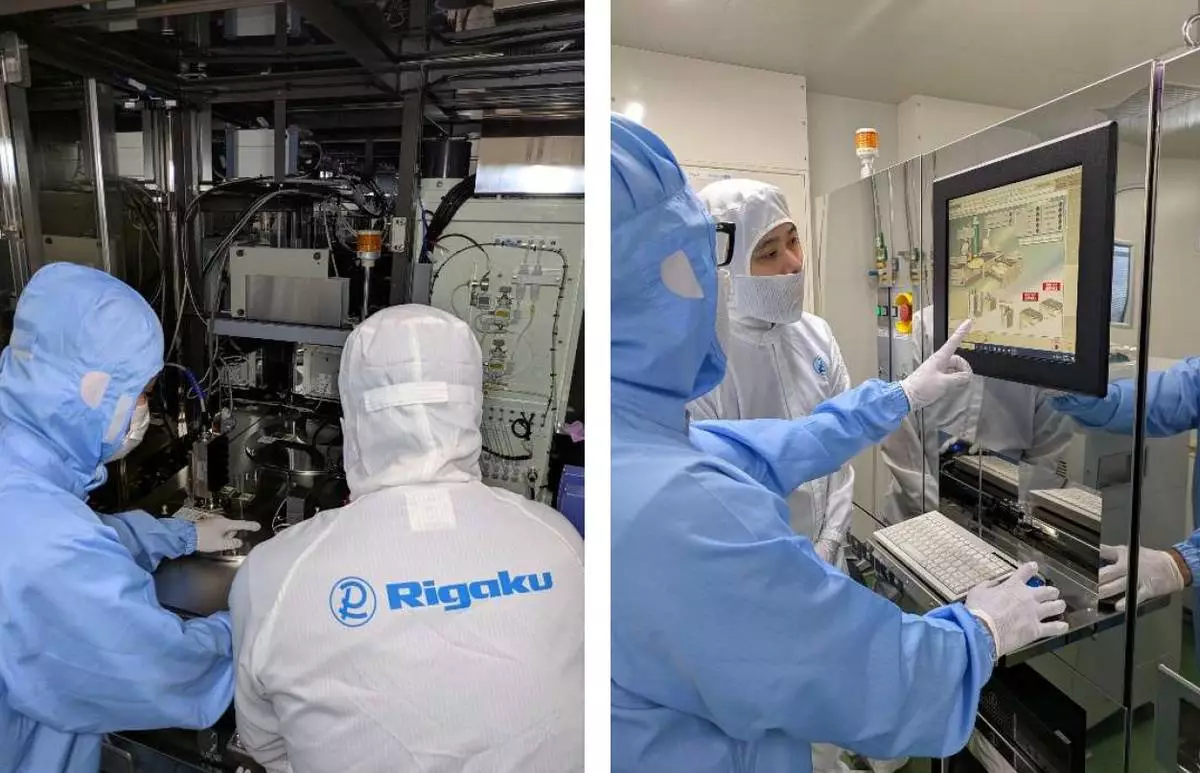
Photo: Hands-on training using the TXRF-V310 at RSC-Osaka
NEW YORK (AP) — Oil prices are rising, and stock markets are dropping worldwide Wednesday after President Donald Trump raised doubts about the temporary truce in the war with Iran.
The S&P 500 fell 0.8% after Trump said the agreement to pause fighting was “over,” though he added that he would allow negotiations to continue. The Dow Jones Industrial Average was down 745 points, or 1.4%, as of 11 a.m. Eastern time, and the Nasdaq composite was 0.7% lower.
The action was stronger in the oil market, where the price for a barrel of Brent crude climbed 7.2% to $79.48. That’s still well below its peak from earlier in the war, when the price for the most actively traded contract reached nearly $120. But the jump is unsettling because oil prices had just dropped back to where they were before the war.
The worry is that a continuation of the war will block the Strait of Hormuz and prevent the delivery of crude from the Persian Gulf to customers worldwide. That could worsen inflation, which economists expected would ease with oil prices, and in turn force the Federal Reserve and other central banks to raise interest rates.
Higher rates can keep a lid on inflation, but they also slow the economy and hurt prices for all kinds of investments.
Losses for stock markets in Europe accelerated, and oil prices climbed immediately after Trump said, “For me, I think it’s over” about the status of the ceasefire. He added that U.S. representatives can continue negotiations, but he cast doubt on the outcome. “They can talk, but I think they’re wasting their time,” he said.
Trump later said the United States was preparing for another night of strikes against Iran.
On Wall Street, companies with big fuel bills fell sharply. American Airlines lost 5.7%, and Norwegian Cruise Line Holdings fell 3.1%.
Stocks of companies in the housing industry were also weak. They were hurt by worries that rising Treasury yields in the bond market will lead to higher rates for mortgages and chill the industry.
Builders FirstSource, which sells counters, windows and other building supplies, fell 6.3%. Homebuilders PulteGroup fell 4.8%, and D.R. Horton sank 4.8%.
Drops of 3.9% for Sherwin-Williams and 3.5% for Home Depot were two of the biggest reasons the Dow was heading toward its worst loss in at least a month.
Helping to offset those losses was a steadying for some influential stocks in the artificial-intelligence industry. They’ve been under pressure in recent weeks on worries that their prices shot too high and that AI may not produce enough productivity and profits to make all the investments in chips and data centers worth it.
Their swings carry a lot of weight on Wall Street because AI stocks have grown into some of the U.S. market’s biggest, giving their movements more effect on the S&P 500 than other stocks.
Nvidia rose a modest 0.8%, for example, and was the second-strongest force pushing upward on the S&P 500 because it's the largest stock on Wall Street.
The strongest push upward came from Broadcom, which rose 4.4%. Apple announced a multiyear commitment with Broadcom to design and produce custom components for its products. Apple said the agreement's value could top $30 billion.
In the bond market, Treasury yields rose with the price of oil. The yield on the 10-year Treasury climbed to 4.59% from 4.55% late Tuesday and from just 3.97% before the war with Iran began.
In stock markets abroad, losses for European markets worsened after Trump made his comments, and Germany’s DAX lost 2%.
In Asia, South Korea’s Kospi dropped 5.3% and continued its sharp swings amid dueling worries and euphoria about the AI stocks that dominate its market.
Hong Kong’s Hang Seng index was an outlier and rose 3%.
Shares that trade in Hong Kong of Chinese AI startup Zhipu, known also as Z.ai and traded as Knowledge Atlas Technology, jumped 13.4%.
A six-month lock-up period for “cornerstone” investors following its January trading debut in Hong Kong expires this week. China National Radio reported late Tuesday that nearly 70% of Zhipu’s cornerstone investors are committed to stay on, despite previous worries that the lock-up period expiration could trigger a sell-off.
Zhipu’s share price has risen more than 1,300% since its debut.
AP Business Writers Matt Ott, Chan Ho-him and Elaine Kurtenbach contributed to this report.
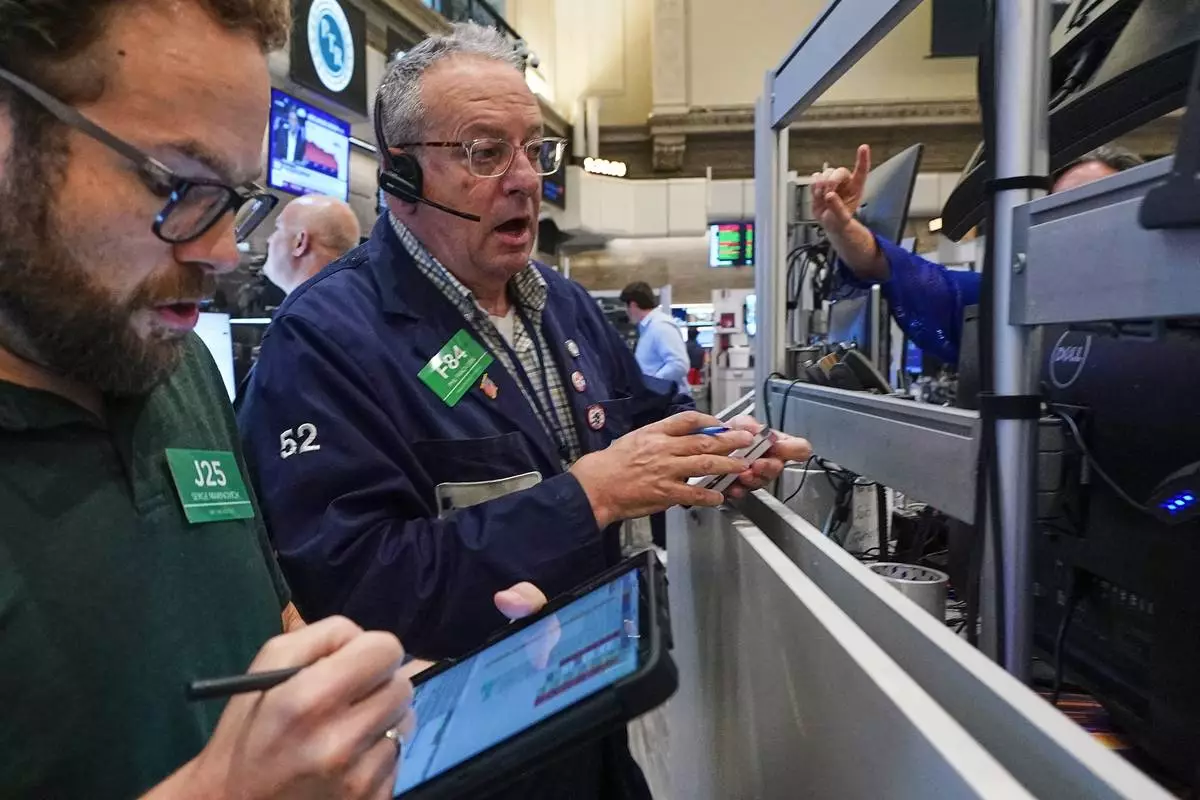
Options traders Serge Marinovich, left, and Phil Phil Fracassini work on the floor of the New York Stock Exchange, Friday, June 26, 2026. (AP Photo/Richard Drew)
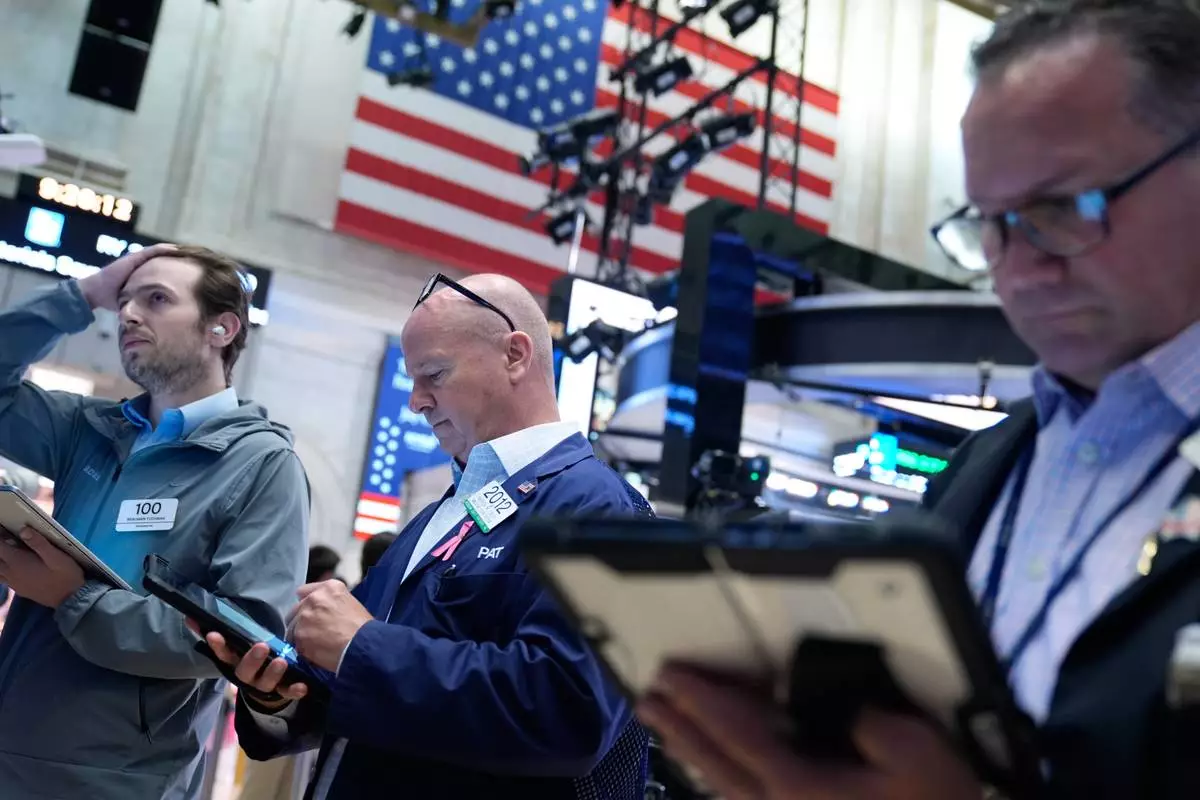
Traders work on the floor at the New York Stock Exchange in New York, Monday, July 6, 2026. (AP Photo/Seth Wenig)
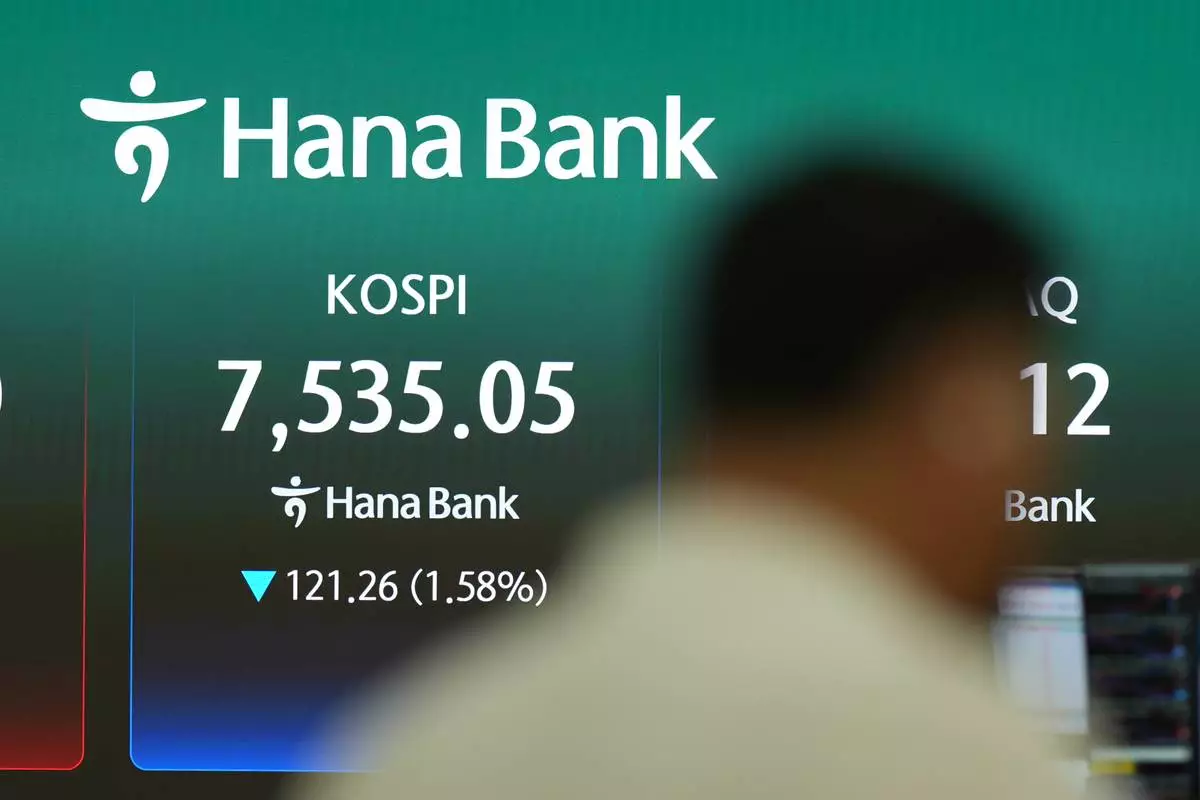
A member of media stands near the screen showing the Korea Composite Stock Price Index (KOSPI) at a dealing room of Hana Bank in Seoul, South Korea, Wednesday, July 8, 2026. (AP Photo/Lee Jin-man)
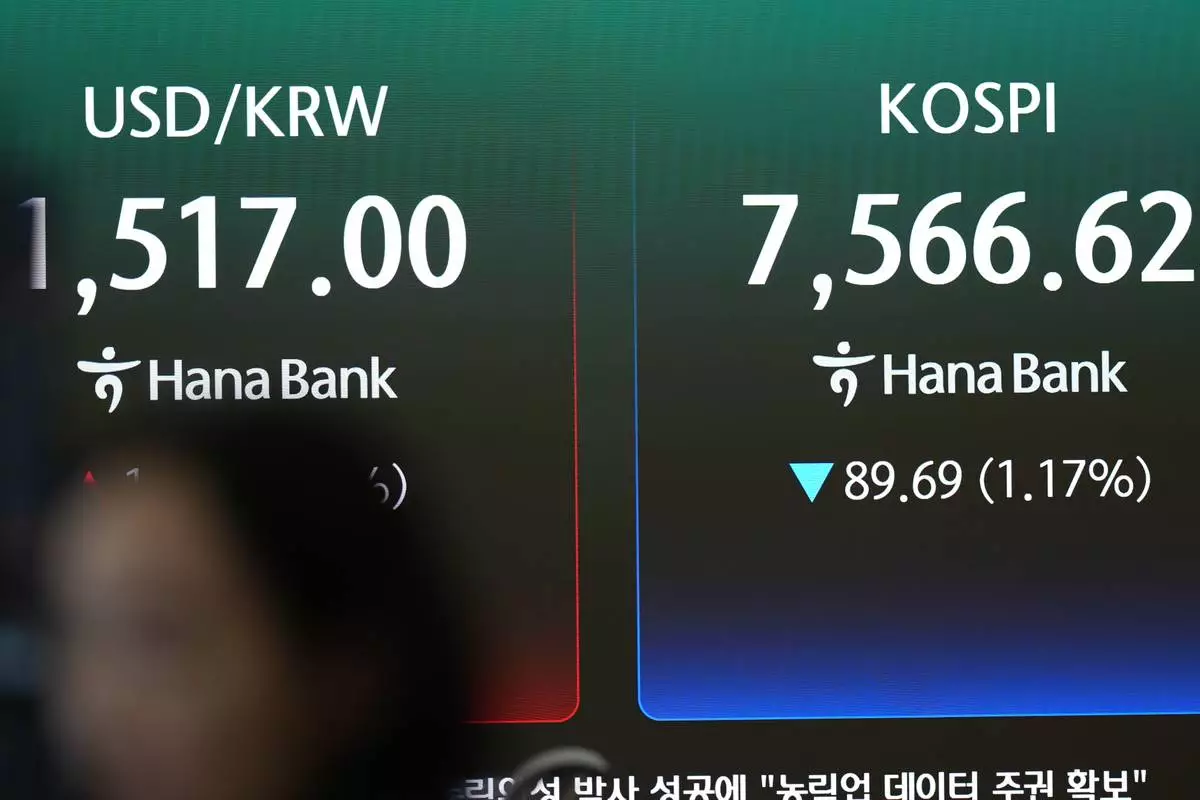
A dealer watches computer monitors near the screens showing the Korea Composite Stock Price Index (KOSPI) and the foreign exchange rate between U.S. dollar and South Korean won at a dealing room of Hana Bank in Seoul, South Korea, Wednesday, July 8, 2026. (AP Photo/Lee Jin-man)

Currency traders pass by a screen showing the Korea Composite Stock Price Index (KOSPI), left, SK Hynix and Samsung Electronics Co., right, stock price at the foreign exchange dealing room of the Hana Bank headquarters in Seoul, South Korea, Tuesday, July 7, 2026. (AP Photo/Ahn Young-joon)
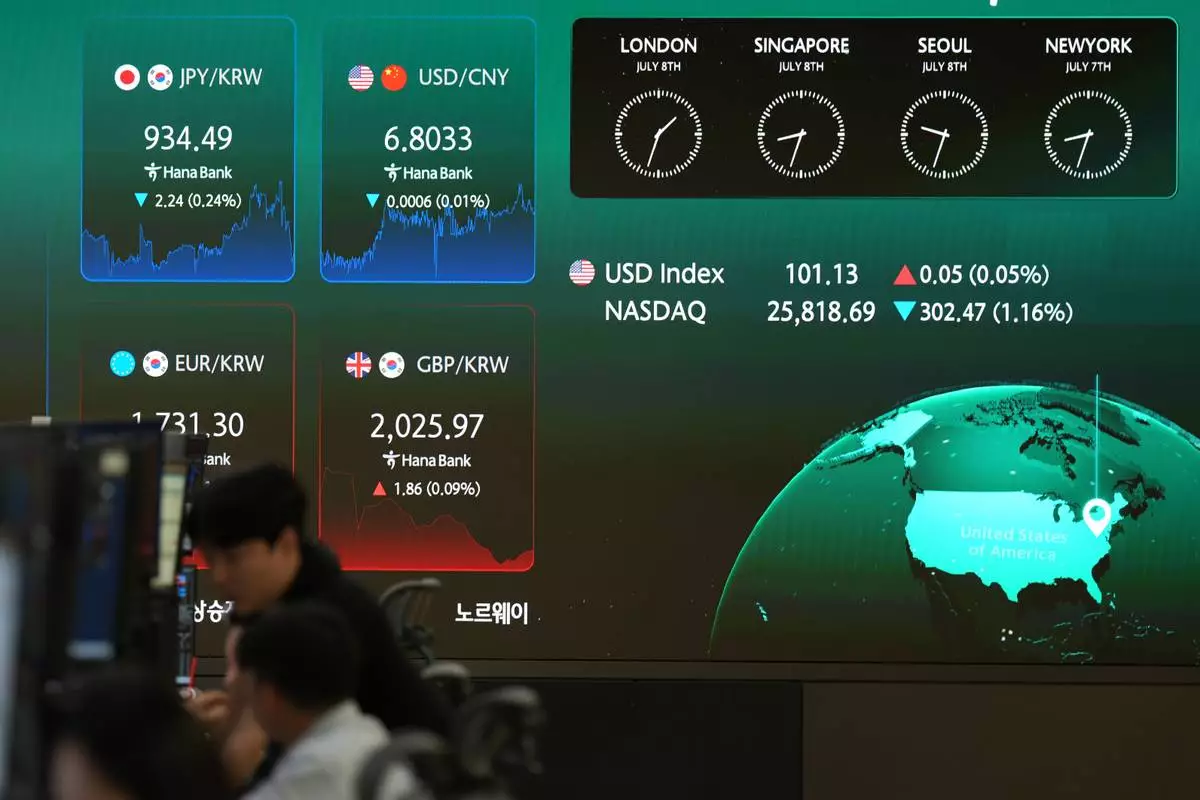
Dealers talk near the screens showing foreign exchange rates at a dealing room of Hana Bank in Seoul, South Korea, Wednesday, July 8, 2026. (AP Photo/Lee Jin-man)
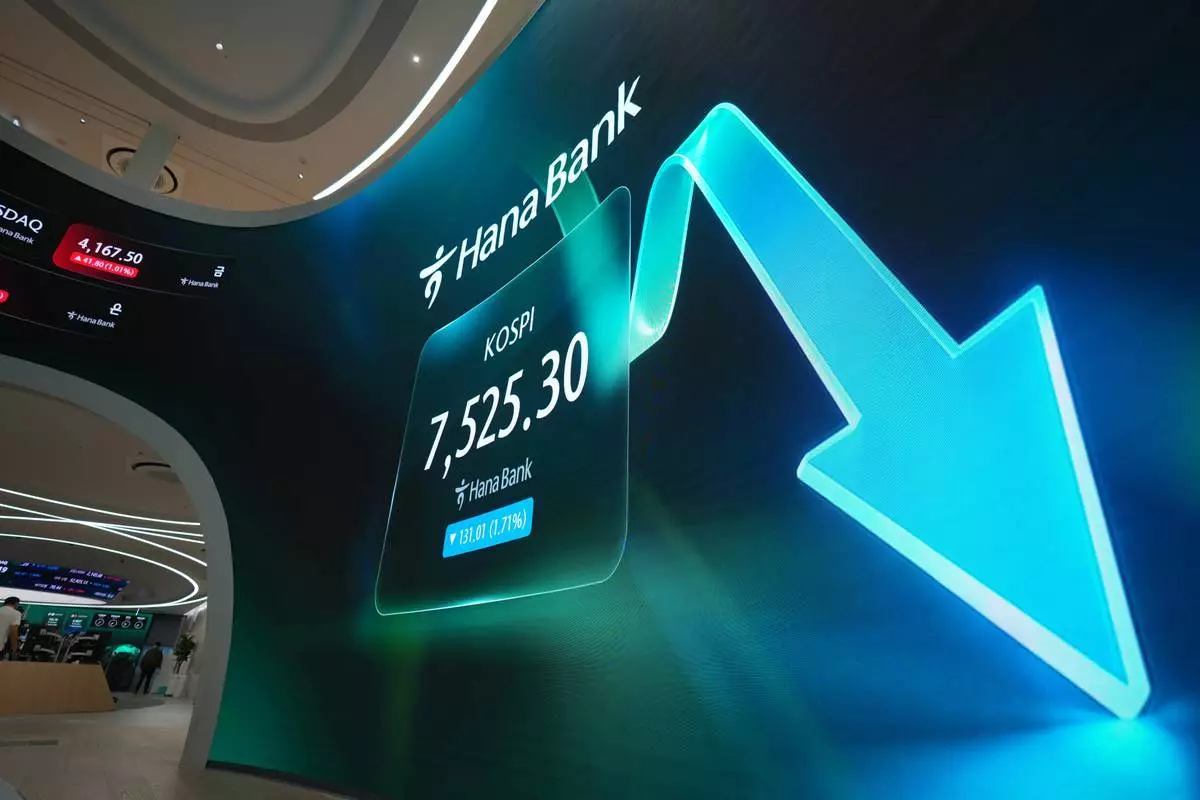
A screen shows the Korea Composite Stock Price Index (KOSPI) at a dealing room of Hana Bank in Seoul, South Korea, Wednesday, July 8, 2026. (AP Photo/Lee Jin-man)