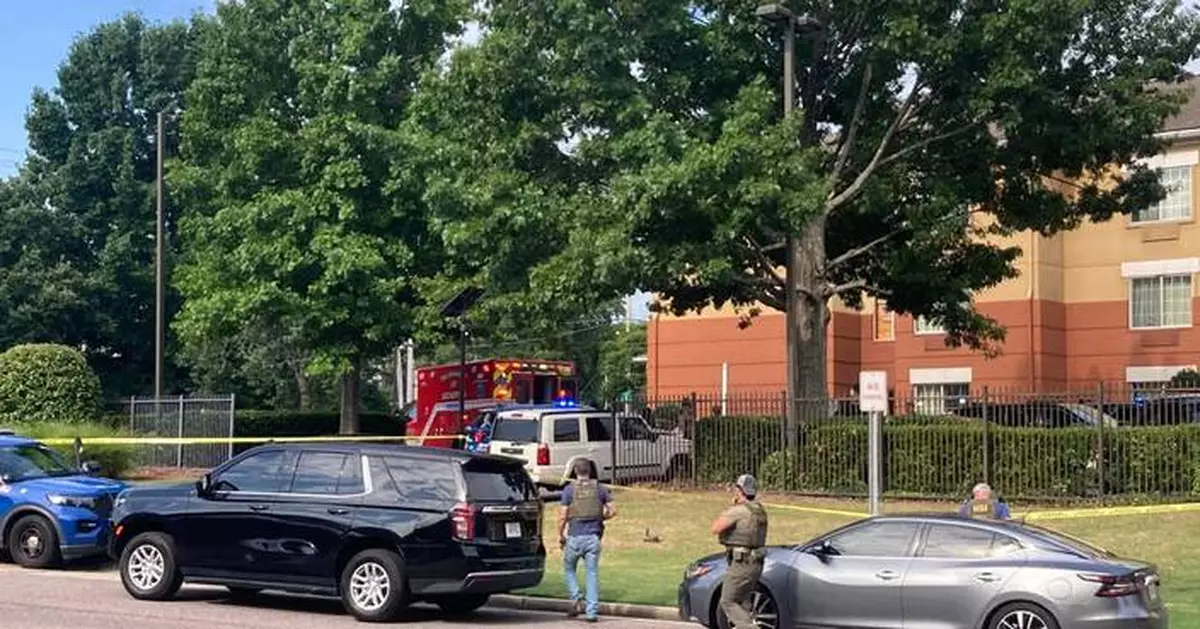
NASHVILLE, Tenn. (AP) — A member of a federal crime-fighting task force in Memphis shot and killed a person there on Wednesday, the second fatal shooting by a task force member in four days, and the fourth death involving the unit since it started in September.
The shooting occurred while U.S. Drug Enforcement Administration agents were serving a drug warrant at a hotel room, U.S. Marshals Service spokesman Brady McCarron said. When the suspect refused to open the door for agents, they knocked the door down, McCarron said.
A news release from the Marshals Service sent out earlier in the day said the man was killed after pointing a handgun at task force members. A later news release from the Tennessee Bureau of Investigation, which is probing the circumstances of the shooting, is less specific. It says only that, “For reasons still under investigation, the situation escalated, resulting in a DEA agent firing into a room, striking a man and killing him.” The Memphis Safe Task Force created by President Donald Trump was part of an effort to place National Guard troops and federal agents in Democratic-run cities he described as crime-ridden. Although plans to send troops to some other cities were blocked by the courts, Tennessee National Guard troops have been serving in Memphis as part of the task force since last fall.
Tennessee’s Republican Gov. Bill Lee has embraced federal intervention while Democratic Memphis Mayor Paul Young took a pragmatic approach, saying they were coming regardless of his opinion so he wanted to find ways to use them effectively.
Wednesday's shooting follows another one early Sunday by two members of the Tennessee National Guard assigned to the task force. Authorities said 20-year-old Tyrin Johnson was killed after he turned toward them with a gun during a downtown pursuit. Johnson's family is calling for the release of video evidence that would show what happened.
Data from the Tennessee Bureau of Investigation shows that at least four people have died in encounters with officers tied to the federal task force, including at least one other fatal shooting by a DEA agent.
In mid-May, when task force members were serving an arrest warrant, the agent shot and killed 41-year-old Darrin Pigram, who had allegedly reached for a gun in his waistband, the TBI said in a preliminary statement.
Later that same month, a Homeland Security special agent fired her weapon when task force members “responded to a report of a man armed with a gun, threatening to harm himself.” Jonah Neal, 25, was pronounced dead at the scene, but TBI said at the time it was not “immediately clear whether Neal died as a result of the agent firing upon him or if it was self-inflicted stab wounds.”
In a fifth shooting in December, a Tennessee Highway Patrol trooper assigned to the task force opened fire at a vehicle and struck one person, after the car didn't pull over in a traffic stop. The person was taken to the hospital in stable condition, according to information released by TBI at the time.
All five shootings are being investigated by the Tennessee Bureau of Investigation.
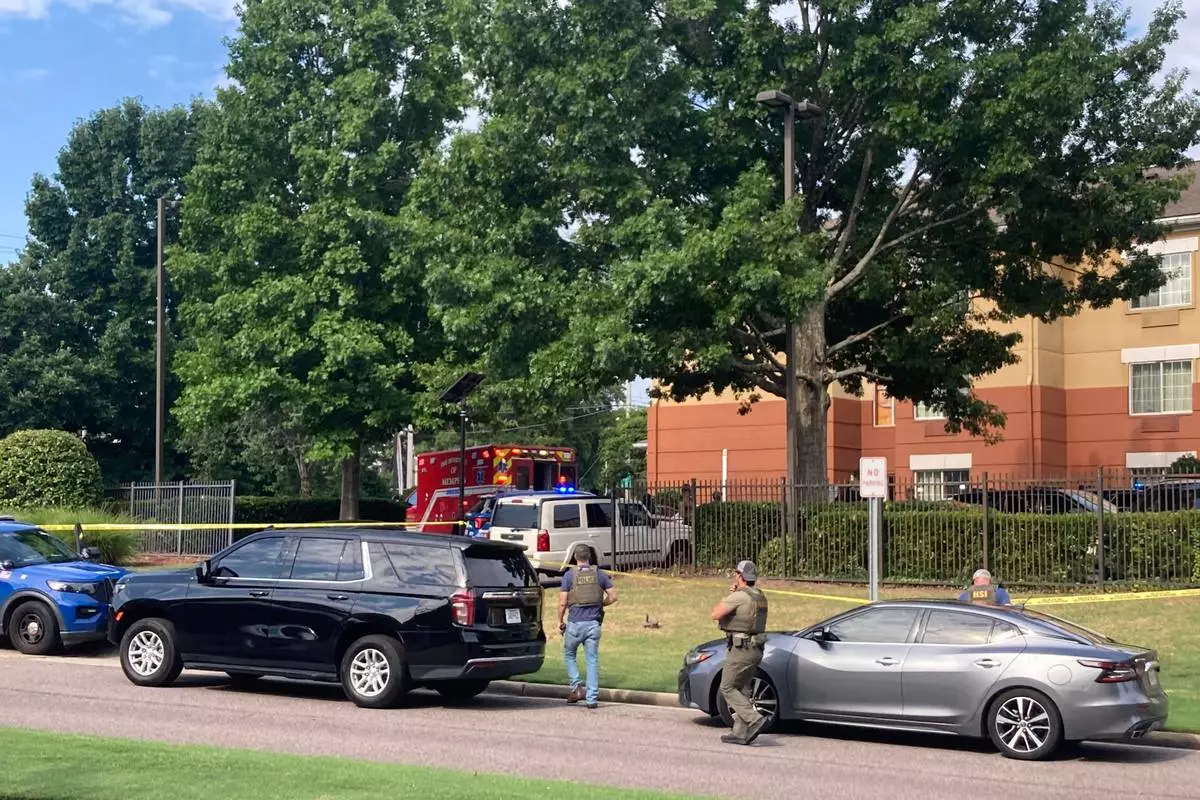
Law enforcement officers work the scene after a federal agent with the Memphis Safe Task Force shot and killed a person at a hotel in Memphis, Tenn., on Wednesday, July 8, 2026. (Natalie Van Gundy/Daily Memphian via AP)
Dr. Anthony Fauci, the U.S. scientist who helped lead the nation’s COVID-19 pandemic response, is set to face off — again — with a Republican senator probing the origins of the coronavirus.
Sen. Rand Paul of Kentucky subpoenaed Fauci to appear before a Senate committee Wednesday. It’s part of Paul’s yearslong accusations that the now-retired infectious disease expert had lied about the pandemic, something Fauci has called “preposterous.”
Leading up to the hearing, Paul released more than a thousand pages of Fauci’s personal diary covering the pandemic years. Pointing to some notes about early efforts at understanding how the virus emerged, Paul wrote on the social media platform X that what Fauci “wrote privately and what he told the country are two different stories.”
Some of the diary entries — including his uncertainty in the pandemic’s earliest days as scientists around the world raced to understand the new virus and how best to curb it before vaccines could be created — already were reflected in Fauci’s 2024 memoir and in interviews at the time.
But they’re likely to further inflame a partisan divide that, years after the pandemic, still makes Fauci a target of vitriol from people who blame him for mask mandates and other policies they believe infringed on their rights as hundreds of thousands of people were dying.
In an earlier letter to Paul, Fauci’s attorneys called his allegations “absolutely baseless” and part of an “obsessive and groundless vendetta.”
Scientists scrambled to Fauci’s defense ahead of the unusual hearing — the second time the longtime National Institutes of Health scientist has been back before Congress to discuss pandemic origins since leaving the government in 2022. While the COVID-19 pandemic introduced him to millions of Americans, he talked the nation through numerous outbreaks over decades, including HIV, Ebola and the 2001 anthrax attacks, while advising seven presidents.
In a public letter, more than 150 infectious disease experts and other scientists wrote that “no credible evidence has been produced to support these absurd charges” and that they are “urging our elected representatives in Congress stop these witch-hunts.”
The expected crux of Wednesday’s hearing: whether NIH-funded research in China may have played any role in how the pandemic started.
Many scientists believe the virus most likely emerged in nature and jumped from animals to people, coming to light when it spread at a wildlife market in the Chinese city of Wuhan. There’s no new scientific information supporting that the virus might instead have leaked from a laboratory, a theory Paul champions. A GOP-led subcommittee that studied the question in 2024 did not find any evidence linking Fauci to wrongdoing.
Fauci has long said publicly that he was open to both theories, but that there’s more evidence supporting COVID-19’s natural origins, the way other deadly viruses including coronavirus cousins SARS and MERS jumped into people.
Republicans also have accused Fauci of lying about whether his agency funded “gain of function” research — the practice of enhancing a virus in a lab to study its potential real-world impact — at a lab in Wuhan.
NIH for years gave grants to a New York nonprofit called EcoHealth Alliance that used some of the funds to work with a Chinese lab studying coronaviruses commonly carried by bats. But the definition of “gain of function” covers both general research and especially risky experiments to “enhance” the ability of potentially pandemic pathogens to spread or cause severe disease in humans. Fauci has previously stressed he was using the risky experiment definition and that "it would be molecularly impossible” for those bat virus experiments to have turned into the pandemic virus.
The Trump administration last year paused some federally funded gain-of-function research and on Tuesday announced new rules to tighten oversight.
The Associated Press Health and Science Department receives support from the Howard Hughes Medical Institute’s Department of Science Education and the Robert Wood Johnson Foundation. The AP is solely responsible for all content.
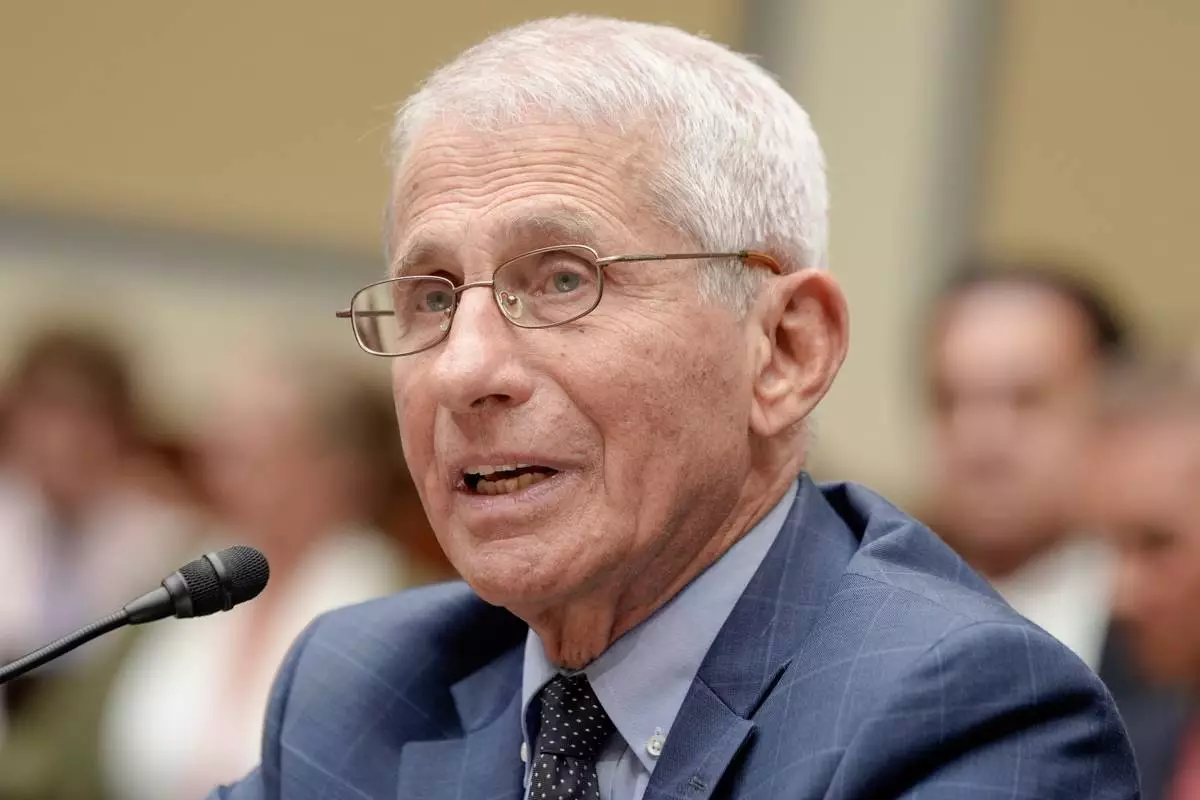
FILE - Dr. Anthony Fauci, former director of the National Institute of Allergy and Infectious Diseases, testifies during a House Select Subcommittee on the coronavirus pandemic on Capitol Hill, June 3, 2024, in Washington. (AP Photo/Mariam Zuhaib, File)