DALLAS (AP) — Mark Cuban is accusing Dallas Mavericks governor Patrick Dumont of freezing the team's former majority owner out of business opportunities in a proposed move of the club out of downtown, according to a newspaper report.
The Dallas Morning News reported Wednesday that Cuban alleges Dumont has engaged in “adversarial business practices” in his bid to move the team about 10 miles north of downtown to the former site of a Dallas mall.
A Mavericks spokeswoman and Cuban declined to comment to The Associated Press.
The billionaire businessman sold his majority stake in 2023 to the families of Miriam Adelson and Dumont, who is Adelson's son-in-law.
Cuban said he had an agreement to continue running basketball operations, but Dumont gave former general manager Nico Harrison full control of the basketball side.
The newspaper reported that Cuban said in the filing he was unaware of Harrison's plan to trade superstar Luka Doncic to the Los Angeles Lakers in February 2025 until it was too late to object and call off the trade.
The shocking trade backfired on the Mavericks, and Harrison was fired in November after the team's slow start to the 2025-26 season.
Cuban owns 27% of the Mavericks, but the newspaper reported there is a clause in the purchase agreement that the Adelson and Dumont families can buy another 20% of Cuban's stake.
The filing by Cuban comes a little more than a month after the Mavericks signed an option agreement to purchase approximately 104 acres in north Dallas, part of a plan to build an arena that would open in 2031.
The Mavericks' lease at American Airlines Center expires in 2031. The team has been downtown since it debuted as an expansion franchise in 1980.
Cuban said his businesses were “contractually entitled to participate” in the move to the new site, which the filing describes as “a unique investment opportunity.”
AP NBA: https://apnews.com/nba

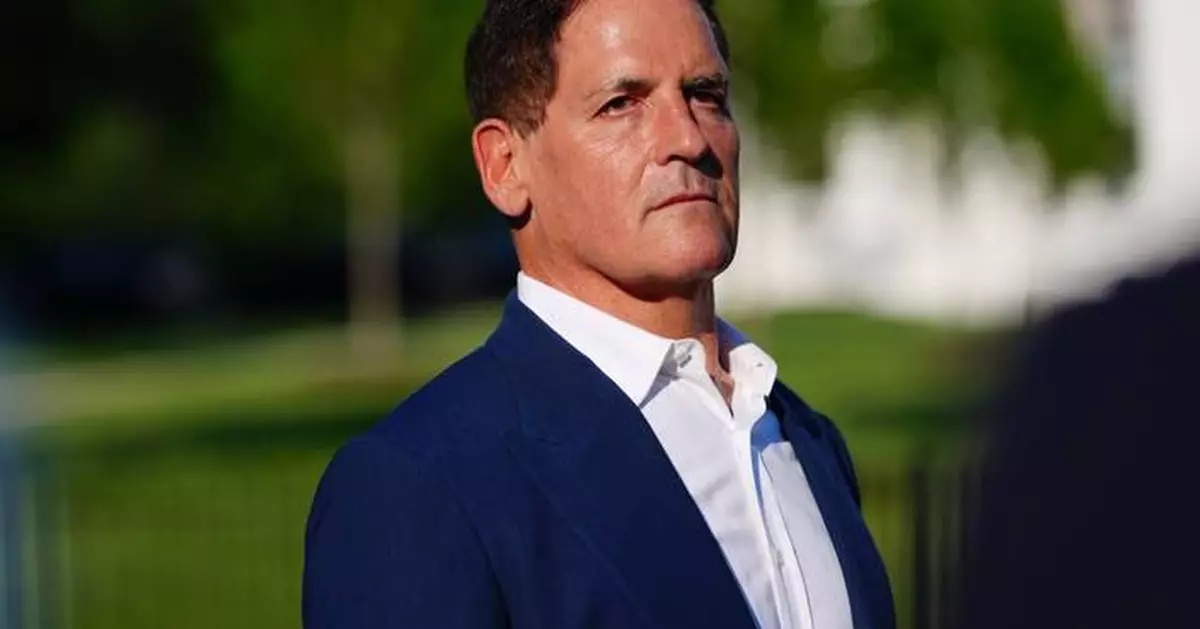
FILE - Dallas Mavericks Gov. Patrick Dumont, center, arrives for a news conference at the team's basketball practice facility, June 27, 2025, in Dallas. (AP Photo/Tony Gutierrez, File)
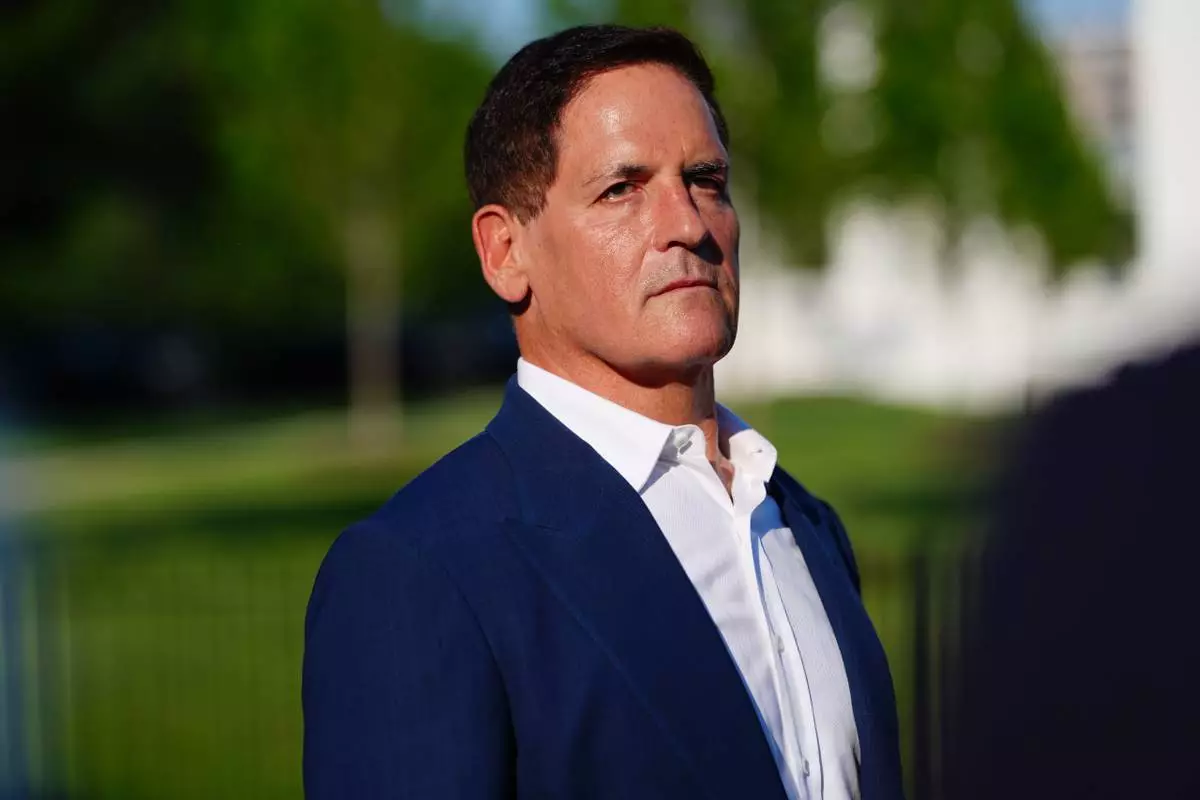
FILE - Mark Cuban talks with reporters after an event at the White House, May 18, 2026, in Washington. (AP Photo/Julia Demaree Nikhinson, File)
SAN JUAN, Puerto Rico (AP) — A nearly 10-year battle for gay rights in Trinidad and Tobago is in the hands of a final appeals court in England.
Supreme Court judges in London held a hearing Wednesday on a landmark human rights case that could decriminalize gay sex in the eastern Caribbean nation, potentially setting a precedent for the largely conservative Caribbean region.
The case was filed in February 2017 by Jason Jones, who argues that so-called “buggery” laws in the twin-island nation that prohibit gay sex, dating from when the country was a British colony, are unconstitutional. Those found guilty could receive up to five years in prison.
Jones is represented by lawyers including Anand Ramlogan, the former attorney general of Trinidad and Tobago.
“Who are we to volunteer that gay people should starve because we don’t like the meat that they eat?” Ramlogan told the panel of judges. “Constitutional rights exist precisely because majorities are not always right. They ensure that the dignity and equality of every citizen are not left to the changing tides of public opinion.”
Opposing Jones are Trinidad and Tobago’s government, backed by the country’s Council of Evangelical Churches and its largest Hindu organization, Sanatan Dharma Maha Sabha.
The case has wound its way through several courts. In April 2018, Trinidad’s High Court found the laws unconstitutional, but a local appeals court partially reversed that ruling in March 2025. Four months later, Trinidad's Court of Appeals allowed Jones to seek a ruling from the final court of appeals in England.
Attorneys representing Trinidad and Tobago's government are seeking a decision that upholds the March 2025 ruling. A majority of justices in 2025 found that the High Court erred by allowing judges to change a law. A provision in some Caribbean constitutions protects colonial laws from legal challenges, including in Trinidad and Tobago.
The case, which is now before the Judicial Committee of the Privy Council in London, is being closely watched by activists across the Caribbean.
Trinidad and Tobago is an independent country but also a republic within the British Commonwealth, so the Privy Council is its final court of appeals. The country has pushed for the Trinidad-based Caribbean Court of Justice to replace the Privy Council.
In an October 2023 speech, Justice Adrian Saunders, former president of the Caribbean Court of Justice, argued for that change, noting that the provision protecting pre-independence laws is especially tricky in Trinidad and Tobago.
“Caribbean judges being naturally ‘closer to the ground’ than their British counterparts in the (Privy Council) may well be keener to be more sensitive to and proactive in remediating the debilitating consequences of constitutional or legal provisions that deprive Caribbean people of the full enjoyment of their human rights,” he said.
In 1991, the Bahamas decriminalized homosexuality, while the U.K. government repealed such laws in 2001 in Anguilla, the British Virgin Islands, the Cayman Islands, Montserrat and the Turks and Caicos Islands. Elsewhere in the Caribbean, judges have recently struck down similar laws in Barbados, Dominica, St. Lucia and Antigua and Barbuda.
Gay sex remains a crime in Grenada, Jamaica, Trinidad and Tobago and St. Vincent and the Grenadines — all former British colonies. In the U.K., gay sex was decriminalized in 1967, more than 400 years after buggery laws were passed during the reign of King Henry VIII, with the last executions associated with the crime occurring in 1835.
“Jason Jones asks for no special privilege. He asks that the Constitution protects him as it does every other citizen,” Ramlogan said.
Jones, 61, who has been openly gay since age 16, left Trinidad and Tobago in 1996 because of what he described as homophobic violence and discrimination.
“His experience is part of a wider picture,” LGBTQ groups supporting Jones said in a recent court filing. “(He) is unable to fully express his sexuality without being branded a criminal.”
Jones argues that criminalizing gay sex is a moral stance, asserting that “Trinidad and Tobago is a secular society and a multiracial one. Christian morality is neither universal nor superior.”
While the country’s so-called buggery laws have not been enforced in recent history, attorneys and activists say they still send a message.
“A law of this kind operates not only through arrest and conviction, but through the stigma, fear, concealment and exclusion,” according to a recently filed written argument by activists in favor of Jones.
It asserted that criminalizing gay sex “compounds stigma at precisely the stage at which young people may be forming identity, seeking support, accessing education and healthcare, and deciding whether it is safe to disclose abuse, bullying or self-harm risks.”
It's unclear when the Privy Council might issue a ruling. Justice Robert Reed, president of the Supreme Court, said at the end of the hearing that the case is “of great concern to many people on both sides of the debate” and that it raises some very complex legal questions.
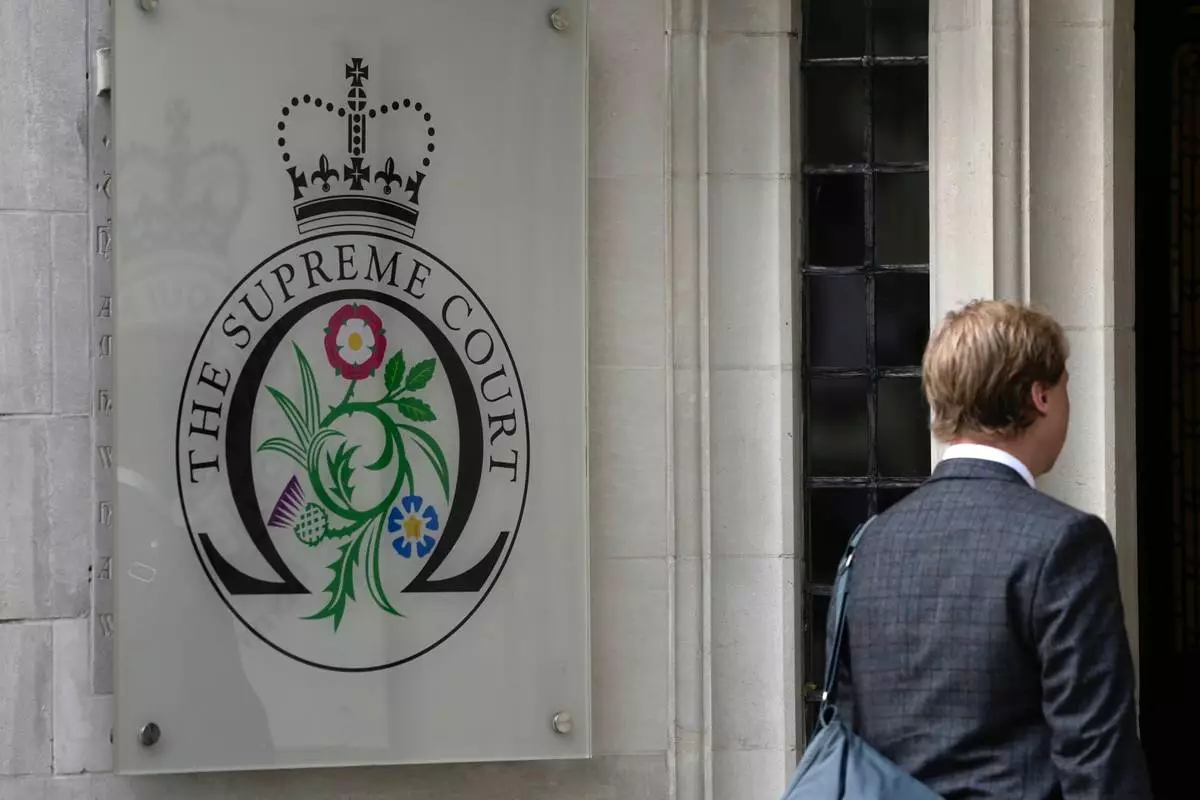
FILE - A man enters the Supreme Court in London, on Oct. 9, 2023. (AP Photo/Kin Cheung, File)