China and Russia have completed the harbor-based planning phase of their "Joint Sea-2026" naval exercise, with participating warships scheduled to depart from a military port in Qingdao on Thursday morning to begin the at-sea phase featuring joint reconnaissance, air and missile defense, maritime strike and submarine rescue operations.
During the harbor phase, the joint directing group and the joint command organized multiple rounds of command simulations and tactical coordination.
Commanders from both sides agreed on key operational actions and exercise rules, while refining procedures for maritime coordination and contingency response plans.
At the Chinese People's Liberation Army (PLA) Naval Submarine Academy, participating officers and sailors from the two countries, together with experts, held professional exchanges on submarine rescue technologies, equipment development and maritime training.
At the naval port, the Chinese and Russian sides mutually opened their vessels for visits and held discussions on topics including propulsion system maintenance, blue-water navigation experience and routine training management.
"This is my first time participating in a China-Russia joint exercise and also my first time aboard a foreign naval vessel for a visit. I'm delighted to experience the unique naval culture of another country. It is not only an opportunity for mutual understanding and learning, but also a valuable experience," said Chinese soldier Cong Fanyu.
"Your ships are very beautiful, very modern and very well maintained. It is a great honor for me to visit your vessels," said Russian soldier Mikhail.
According to the exercise plan, the at-sea phase will include joint reconnaissance, air and missile defense, maritime strike operations, and joint submarine rescue exercises.
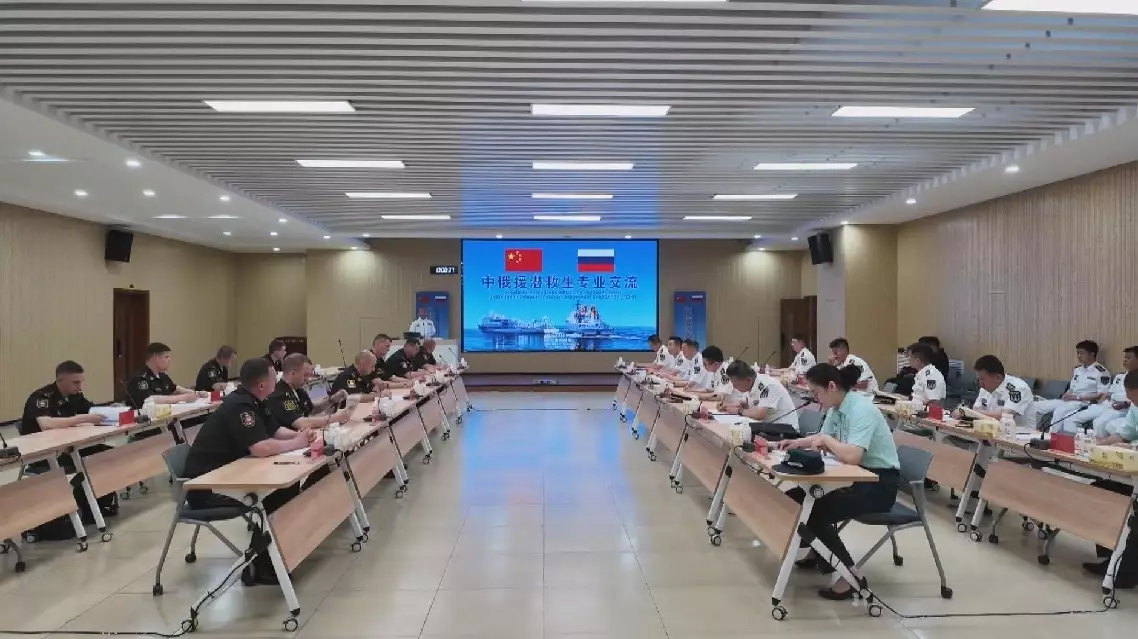
China, Russia complete harbor phase of joint naval exercise, set for at-sea drills
China's consumer price index (CPI), a main gauge of inflation, rose 1 percent year on year in June, official data showed Thursday.
The core CPI, which excludes food and energy prices, also increased 1 percent year on year, according to the National Bureau of Statistics (NBS).
On a month-on-month basis, CPI edged down 0.3 percent in June, according to the NBS data.
Affected by price fluctuations in international market, gold jewelry and gas prices in China fell by 8.7 percent and 4.9 percent, respectively, month-on-month, with the decline widening compared to the previous month.
In the food sector, seasonal fruits and vegetables hit the market in large quantities, ensuring ample supply, with the prices of fresh vegetables and fruits, as well as pork and aquatic products, all decreased month on month in June.
As for service prices, hotel rates, airfares, and travel agency fees dropped due to factors such as lower fuel surcharges and a decline in off-season travel demand.
The 1-percent growth of CPI in June was 0.2 percentage points lower than May's figure, as the growth rates of gold jewelry and gas prices fell to 28.1 percent and 17 percent, respectively.
However, in the tertiary sector, prices for medical services, education services, domestic services, and restaurant services all increased in June.
In the first six months, CPI rose 1 percent year on year, indicating stable operations in the consumer market, the NBS said.
"In the first half of the year, the CPI increase was larger than that of the same period of last year. Among the eight major categories of goods and services that make up the CPI, six saw price increases and two saw declines. Specifically, prices of food, tobacco and liquor, and restaurant and hotel services declined year on year, while prices of the other six categories all increased year on year," said Liu Nancun, an economist at the Analysis and Forecasting Division of the Price Monitoring Center under the National Development and Reform Commission.
Thursday's data also showed that China's producer price index (PPI), which measures costs for goods at the factory gate, declined 0.3 percent month on month and went up 4.1 percent year on year in June.
This was driven by improved supply and demand in some industries and the impact of fluctuations in international commodity prices, the NBS said,
In the first half of the year, PPI went up 1.5 percent year on year, showing a widening growth.
Meanwhile, prices improved across industrial chains to varying degrees, according to the NBS.
"PPI reversed a downward trend in the first half of the year, posing the first year-on-year growth after 41 consecutive months of decline in March and climbing further to a new high over recent years in June. A main factor driving this increase was the surge in energy prices, particularly in the crude oil chain, due to geopolitical conflicts. In the meantime, tightening global mining supply, continued inventory reduction, and rising demand from AI, computing, and new energy industries led to sustained price increases in the mining and smelting of non-ferrous metals such as electrolytic copper, tin, and aluminum in the first half of the year, also boosting PPI," said Peng Xiaozhen, a researcher at Sublime China Information, a leading commodity information service provider in China.

China's CPI up 1 pct in June